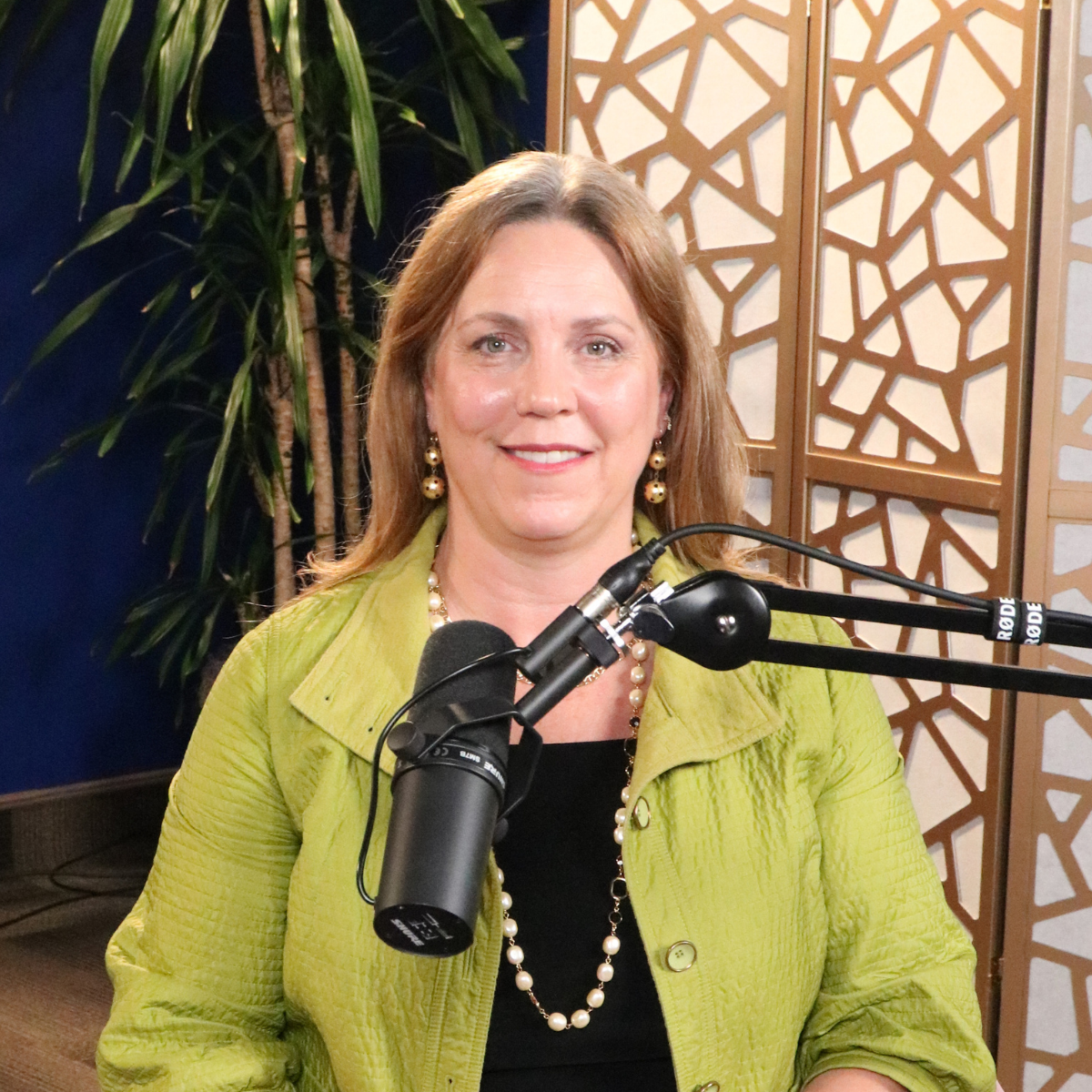
Introduction: [00:00:00] You shouldn’t have to wreck your health to do good in the world. After decades leading big mission nonprofits, like the Rothko Chapel to Planned Parenthood to the Houston Area Women’s Center, Emilee Whitehurst hit pause at the top of her career. Burned out, raising two teens, and caring for a mom in breast cancer treatment, she walked away from the grind to ask what she’s really worth without the title. In this episode, she talks about the courage it took to step off the hamster wheel, and why a power pause may save more than your job. It may save your life. Share this episode with the nonprofit warrior in your life, and with family and friends, and consider making a donation at therose.org so women who give everything don’t lose their health.
Dorothy: Welcome to Let’s Talk About Your Breasts, a podcast brought to you by The Rose Breast Imaging Center of Excellence and a Texas treasure. I’m Dorothy Gibbons, your host and co-founder of The Rose. During [00:01:00] this season, you’ll also be hearing from co-host Roxann Hayford and others as we bring you stories from survivors, physicians, caregivers, researchers, employees, and supporters. These are real people sharing difficult times, celebrations, and personal stories of hope, despair, and faith. We welcome your suggestions, and we would also love to hear about your story. Thank you for joining us, and thank you for supporting The Rose and our mission. Together, we are saving lives.
Emilee, it is so wonderful to have you here today. You are a big part of my life, my ALF buddy, my American Leadership Forum, and we’ve known each other now since 2011. Thank you so much for coming.
Emilee: Thank you so much for having me.
Dorothy: So tell us a little bit about you.
Emilee: Okay. Well, but first, as I told you, I have to start with the fact that you are my, one of my [00:02:00] heroes.
Dorothy: Oh.
Emilee: Uh, and what you’ve done here at The Rose is so extraordinary, and both my grandmothers and my mother, uh, have had breast cancer. So, um, I’m just deeply indebted to you, and when I look at the difference in the kind of care my mother received compared to my grandmothers, it’s night and day. And I know that you’ve been a part of a movement to make that possible for women, and I just think you’re amazing.
Dorothy: Oh, thank you, Emilee.
Emilee: Yeah, yeah.
Dorothy: That’s so sweet.
Emilee: So, okay, uh, and now about me.
Dorothy: All right.
Emilee: Right? Uh, let’s see. I studied human biology.
Dorothy: Which, you know, I didn’t know what that was.
Emilee: Well, it would … just kept me from having to study plants and animals.
Dorothy: Oh.
Emilee: I just did biology of humans.
Dorothy: Okay.
Emilee: It was very focused. But that’s actually not true. What, what that program was, was, uh, it was com- a combination of the biological life sciences as well as the social sciences. So I … It was a combination of psychology, sociology, anthropology, and biology, and it was really a wonderful [00:03:00] foundation for everything I’ve done, although you might not know it just by looking at it because, uh, people don’t know what human biology is.
Dorothy: I know.
Emilee: And I, I thought maybe I would do medical school, but in the end, I got, uh, sucked into social justice community organizing and, uh, didn’t have time to take the MCATs.
Dorothy: Yes, but you did go on to Harvard-
Emilee: Yes …
Dorothy: to get a degree in divinity, is that correct?
Emilee: Yes, yes. So human biology, then to, to get a master’s of divinity. And ultimately, I got ordained as a Presbyterian minister, um, which was the denomination I’d grown up in as a child, and I was very fortunate to have grown up in a church with one of the very first, uh, ordained women.
Dorothy: Oh.
Emilee: So I grew up with a… She was the associate pastor, and, um-
Dorothy: Really?
Emilee: Yeah, she was remarkable, a remarkable woman, and I’m sure that that planted a seed of a possibility for me. Um, although when I told my parents that I was gonna go to divinity school, they were really surprised, ’cause at that point I hadn’t really been a church-type person for many [00:04:00] years, you know? But I was doing community organizing in Oakland around, um, youth incarceration and police violence, and I felt like the churches ought to be…
You know, I had heard of churches involved in social- justice struggles, and I didn’t, I didn’t really see the churches standing up for these young people who were being thrown into jail. The state was putting more money into prisons and youth incarceration than education, and I felt like what really… something is going on here that’s so profound and deep, uh, that I really, I wanna understand it, and I also wanna cultivate my own spiritual reserves to take on what obviously at that point had become clear to me was gonna be a long-term struggle. So yeah.
Dorothy: Yeah.
Emilee: That’s why I went to divinity school. And then I did end up getting ordained, and I served a church in Lawrence, Kansas-
Dorothy: Okay.
Emilee: Among other places. I, uh, but I was the associate pastor at the First Presbyterian Church in Lawrence, Kansas.
Dorothy: Oh, my goodness.
Emilee: And then moved on to doing more nonprofit leadership. I directed the Interfaith Action of Central Texas, which [00:05:00] is a multi-religious organization that provides direct services and, um, community building across religious differences, and then worked at, moved to Houston to be the executive director of the Rothko Chapel- which is this extraordinary-
Dorothy: Beautiful place, yes …
Emilee: institution, and it sort of integrates art, spirituality, and human rights around a sanctuary that Mark Rothko, the auth- the artist, designed. And from there I went to Planned Parenthood to advocate for women, full, the full range of women’s reproductive health, and most recently I was the CEO at the Houston Area Women’s Center, which is, uh, Houston’s primary domestic and sexual violence assault center. Um, and we, uh, while I was there, built 135 apartments for families fleeing violence and created a five-and-a-half acre campus called One Safe Place Houston.
Dorothy: Wow. And you, didn’t you go there right after COVID or during COVID or-
Emilee: Yes, I was there during COVID, before-
Dorothy: During …
Emilee: I started before COVID.
Dorothy: Yeah.
Emilee: And, uh, so that was… but one of the interesting things about that experience, I mean, there’s so many things that came out of that, but I remember in those early days, we [00:06:00] had to… You know, we weren’t even supposed to be out on the streets, and our folks-
Dorothy: Mm …
Emilee: our folks have to be out. I mean, we’re running a shelter with-
Dorothy: Right.
Emilee: Hundreds of people. Right. We ended up, during the COVID times, running three separate shelters because the spike in violence was so acute.
Dorothy: Really?
Emilee: And, and we got our staff designated as, in effect, first responders so that we could be out doing-
Dorothy: Right …
Emilee: the work that we do.
Dorothy: Right. Amazing. Mm. Amazing. Well, now it sounds like you have worked for a very long time. I mean, really. And what did you decide to do this last year or so that is just incredibly profound for a woman to, to do?
Emilee: Mm.
Dorothy: And I’m, I’m so interested in how did you get to that decision? What motivated it? How did you know you could do it? So let’s talk about this intentional pause, this power pause- sabbatical that you decided. I mean, you were at the peak of your career, Emilee. And you [00:07:00] said, “I’m gonna take some time off.”
Emilee: I think when I emailed you that, that I had made that decision, you sent back something like, “You always were a rebel.” So you said something like that to me. Um, well, you know, I had, um, I had worked obviously very hard, but that, anything of that magnitude is a team effort. It’s a collective- effort, so. Uh, but really what happened on my account was I have two daughters- two teenage daughters. I’m a single mom.
Dorothy: Mm.
Emilee: And I, you know, I really started to, um, think about what- what kind of regret I might have if I ha- if I had, uh, spent the remaining years of their time at home
Dorothy: Now let’s talk about how old they are. They’re not driving yet, right?
Emilee: No.
Dorothy: Okay.
Emilee: And this was a key part of my decision, actually, Dorothy- Okay … because as long as I’m the chauffeur, I get key quality time in the car. And if I had waited, you know, even just a little, just a, you know, a year longer or [00:08:00] something-
Dorothy: Right …
Emilee: you know, my eldest would be driving, and, uh, I really felt like if I didn’t take this time for, for them, I would regret it. And the other thing is, you know, I was so, I was so in this work that I didn’t realize I was, I was kind of not doing so good. You know? I was… I didn’t have time to exercise. I didn’t have time to, um, n- leisure. Every, every relationship in my life, every moment of my life was organized around helping the Houston Area Women’s Center- achieve this objective, and I think, uh, I feel so indebted to my family for helping. They bought into this goal-
Dorothy: Right …
Emilee: and this vision. Uh, but there was a point at which it felt like I, I, I need to shift gears or else I might have, um, a lifetime of regret, and I had to con-
Dorothy: Was this in meditation you discovered that or just an overnight thing? You woke up one day?
Emilee: Well, you know-
Dorothy: How do we trust that kind of feeling?
Emilee: Yeah [00:09:00] Well, I, I’ll say this. Once I had this thought, “You know what? Um, I don’t have to keep doing this.”
Dorothy: Mm.
Emilee: Just, I just had this, like, you know, I, I, I, I felt so, uh, committed to doing, finishing it. Uh, and, you know, I had the, I had additional objectives, and we would open this new One Safe Place Houston, but there was still always, there’s always more money to raise- and always more capital improvements- Always,
Dorothy: yes …
Emilee: to make, and always more, more, more, more. Um, but I, I definitely had this moment where I, I thought to myself, “I, I don’t, I don’t have to do this.” Interesting. And, and the next, by the next day, you know, just chronic pain in my shoulders had relented a little bit. I still had some, but I mean, I had a pretty, pretty palpable physical response of elation and rela- rela- relaxation-
Dorothy: Interesting …
Emilee: just to the idea that this is not necessarily something I need to continue to do. Um, and what has ultimately transpired has been a very interesting kind of personal healing journey, uh, for the [00:10:00] last now 10 months. Uh, and I just wanna stop and say, we were talking about this before we got on the, the podcast, that this is an extraordinarily privileged decision to be able to make. Um, I’m living off my retirement, which is not awesome if you’re not quite at the retirement age-
Dorothy: Yeah …
Emilee: ’cause you’re taking a big tax hit, but nevertheless, I had, I had some money saved to live on.
Dorothy: Right. Right.
Emilee: Uh, and I know that’s not true for everybody. And so, um, it, it, it felt like a real, uh, fortunate moment to be able to decide to do this, and, um, I had to relearn how to rest. I didn’t know how to rest. I truly did not. Really? I didn’t know how to-
Dorothy: How do you not… What… Give me an example.
Emilee: Because I would s- I would… If I sat still for a minute, so I’ve dropped my ki- And also, just to say, I’m now doing all the things that I had had people help me do. So we’re driving carpool, doing laundry, doing this.
Dorothy: Mm.
Emilee: So I’m, it’s a, it’s not like I’m just laying around eating bonbons, right? I’ve still got stuff to do, but there is this window of time-
Dorothy: Right.
Emilee: In the middle of the day, theoretically, where I could [00:11:00] just, uh, do re- do whatever I f-
Dorothy: Right …
Emilee: wanted to do or needed to do, and I made this deal with myself that if I didn’t have to do it right then, like leave to pick up carpool- and what I’d rather do is rest, that I would rest, and that meant I wouldn’t do the laundry, and I wouldn’t do the dishes in the sink, and I would, I would feed the dogs. That felt like critical. But, you know, all those things that I was just so used to doing, doing, and my mental, uh, life was spent cataloging all the things I needed to do, uh, and hadn’t yet done, and I didn’t know how to sit and be still, and I didn’t… And I’ve, I remember, you know, s- it’s sort of, in a way, silly now, but I just, I can remember f- laying on the couch thinking, “Oh, my God” If I just let myself lay here, I w- I may never get up.
I may never, ever wanna do anything ever again. I’m just, I’m just gonna be a sloth for the rest of my life. And w- you know, so then it, things that, you know, you start kinda getting in touch with questions about worth. W- i- is my worth [00:12:00] something that is inherent to me, or is it contingent on my ability to deliver and produce? Uh- I mean,
Dorothy: that’s a-
Emilee: And I had to really-
Dorothy: … deep question …
Emilee: I had to really wrestle with it. It’s very deep-
Dorothy: Yes …
Emilee: because if I’m just laying on the couch instead of producing or doing or, you know, delivering or accomplishing, um, it, uh, it, it made me realize that there was some internal struggle around worth that was driving me. Not, uh, I, I was so passionate about all the work that I’ve done.
Dorothy: Oh, yeah. Oh, yeah.
Emilee: So I d- I don’t wanna say that it came out of, uh, only an insecurity, but the, but to drive myself at the pace that I had been driving myself- and to, um- R- r- it really required me to set aside my, uh, health and wellbeing. And that, that starts asking, begging some questions about what, who, who, what do you think you’re worth? And it was like I woke up from a spell, honestly, Dorothy. I felt like, “I can’t believe I, uh, [00:13:00] felt like I had to live every minute calculated so that I could deliver,” you know? Every minute. Um, I was always thinking, “Well, that’ll take five hours, and this will take six hours. I bet that’s a two hours- and I don’t have the hours, so how am I gonna get…” There’s just, you know, on and on. Uh, and I just was like, “I don’t, I don’t have to live like that.”
Dorothy: So in your opinion, do you think the nonprofit aspect of nonprofits contributed to that hamster wheel-type being?
Emilee: No, I think it’s our culture.
Dorothy: Okay.
Emilee: I think it’s our general culture around work. Um, but I will say I think being in the nonprofit arena is, uh, has a different, adds a different valence to it because, in my mind, um, I… It was worth doing. You know? It was worth putting myself-
Dorothy: Right …
Emilee: uh, aside consistently for years and years- um, and potentially compromising [00:14:00] my family’s, uh, quality of life just because I’m always going, going. It was worth it because the cause demanded it. And, uh, and I, you know, I don’t regret anything of, of, of what I did.
Dorothy: Right.
Emilee: But I’m very, very grateful to have, uh, kind of woken up from the spell just in time, uh, to spend at least 20 hours a week doing carpool with my daughters. I mean-
Dorothy: Right, right …
Emilee: who knew how much that much fun that was gonna be?
Dorothy: Uh, but- And that is interesting because that is a… Talk about a luxury.
Emilee: Right.
Dorothy: That is very much a luxury for a working mother.
Emilee: It really is. It is.
Dorothy: And you’re not-
Emilee: And I have- …
Dorothy: having to go, and the others aren’t doing it, and all that.
Emilee: Yeah Yes. No, tho- those talks in the car have been priceless. Um, and I had never had that because since I’ve worked full-time always, so-
Dorothy: Yeah …
Emilee: um, it’s been a real blessing to get to do this.
Dorothy: So how did you- Once a spell- … or you realized you’d been under a spell, talk about how you knew you were getting back in touch with [00:15:00] Emilee.
Emilee: Mm. Well, um, that’s been a process. Uh, I kind of remember th- tracking back, like it was between high school and college. Okay. The last… That was sort of the last time I can remember where, at least for my own self, I didn’t feel like I had some major goal or objective that I had to accomplish.
Dorothy: Mm.
Emilee: That was this wonderful period of… it was like the last-
Dorothy: Yeah …
Emilee: experience of youth.
Dorothy: Right.
Emilee: And so I don’t know, uh, who Emilee is. Like, she’s not that person anymore, uh, but she’s certainly more than these roles that, uh, I’ve been undertaking. So it’s been a process of kind of reconnecting with myself and reintroducing myself to myself.
Dorothy: Women are gonna relate to this similarly.
Emilee: Okay.
Dorothy: I mean, I-
Emilee: Okay …
Dorothy: I, I just-
Emilee: I’ve, I haven’t really talked about it with anybody. This is my first time to, like externally process. I don’t-
Dorothy: I know. I know …
Emilee: I don’t have a therapist yet, so.
Dorothy: But, well, you’ve been your therapist.
Emilee: Yeah, I’ve been my own therapist.
Dorothy: Yes.
Emilee: Been my own loving companion- trying to figure out, uh, how to be my own best friend instead of my own worst enemy, [00:16:00] you know-
Dorothy: Ooh.
Emilee: In our mind.
Dorothy: That’s, that… Well said. Well said. And I, I know you shared this about realizing these emotions that were coming up.
Emilee: Oh, right. Yeah, right.
Dorothy: And talk about that.
Emilee: You know-
Dorothy: I, I… That’s what struck me so much because I thought- And I’m, I’m gonna go to how I’ve been feeling-
Emilee: Sure …
Dorothy: you know, over these last few years. There’s just a part of you that goes a little numb.
Emilee: Oh, yeah.
Dorothy: There’s a part of you that just, ugh, you know, “I’m just gonna get up and do this. I know what I gotta get done the next day.”
Emilee: Yeah,
Dorothy: yeah,
Emilee: yeah. Yeah. Yeah. Yeah, so, um, I, uh, remember o- one day I was laying, I think I maybe was sort of taking a midday nap- doing my rest practice. And I r- I was just like, “Oh my gosh, what is going on with me?” I’m having all these physical sensations that are unpleasant, and I’m having all these emotional… I just, what is the matter? And then I realized, oh my gosh, I think I’m having a feeling. [00:17:00] I am being present- … to my feelings. This-
Dorothy: Ah …
Emilee: is a feeling.
Dorothy: Right.
Emilee: This is what a feeling is. It’s an embodied experience. It’s not just a word or an idea. A, right. It’s an actual embodied experience of, you know, whatever that feeling was at the time, rage or anger or sorrow or grief-
Dorothy: Oh, yeah …
Emilee: or regret, all these things that, you know. I, and I really, I mean, I would say kind of jokingly but not really that I don’t have time for feelings. Feelings get in the way. They are not part of my-
Dorothy: You compartmentalize.
Emilee: Y- you put them over here.
Dorothy: Yeah. You, and you say, “Someday I’m gonna go back and- Yeah … and work on that,” but not today.
Emilee: Yeah. And, and let me just say, uh, uh, you know, one, I, I do have a practice of yoga, and I’ve been practicing tai chi and qigong with a wonderful teacher. Um, and so-
Dorothy: But that wasn’t what drove you to this.
Emilee: No, but it has been hugely helpful in this process-
Dorothy: Okay …
Emilee: because what I now want to, people to hear, if there’s anything- which is that the, the body has profound wisdom. It knows so much. It’s not just your head. Your head is your body. Your body is your head. There’s an integrated creature that’s moving through the [00:18:00] world. Right. And if, m- if, uh, in my case, I’ll just speak for myself, if my, um, premise is that any bodily sense of feeling or emotion is a liability, then I’m not actually, uh, u- leveraging all of the wisdom that I can access because the body is wise.
Dorothy: Sure.
Emilee: It knows, but, but if I’m cut off and I don’t pay attention, then I’m missing cues. And in my case, I missed cues about that I wasn’t feeling good. You know, I, I wasn’t feeling good. And I, uh, I wasn’t on the right trajectory for my wellbeing.
Dorothy: You know, there’s a lot of talk now in some circles about the heart coherence- that if we’re not in touch with that heart part of us- and I mean, this is what it’s sounding like you’re saying. How do we, how do you even describe that? We all know what that means or feels like, but-
Emilee: Yeah …
Dorothy: being able to live from your heart, uh, you know, it’s, it sounds really We [00:19:00] would in a way
Emilee: We will. Well, and this is where I think that nonprofit, um, sector can, can be a little confusing, ’cause I would say I was living from my heart. I mean, I was living my passion. It felt like such an incredible privilege, an incredible privilege to be, uh, leading the Houston Area Women’s Center, to get to work with those incredible women, and to be a part of a longstanding movement to-
Dorothy: Yes.
Emilee: To provide safety, um, for people fleeing violence and healing in the wake of, of, of, you know, horrific harm. Uh, so it wasn’t that. It’s just that At some point, the grind of being a mom full-time- being a full-time CEO, and the culture that-
Dorothy: Requires …
Emilee: require, the way that requires you- to function, at least for me, and I, I suspect for many others, is not, uh, conducive to my holistic wellbeing.
Dorothy: Some folks are able to walk [00:20:00] that path, but after a while-
Emilee: Yeah. I think it’s different for everybody. Like, you know, some people don’t need but six hours of sleep. I need at least eight or nine. You know? That, that’s part of it, is just… And we’re never the same person from day to day, so what you need changes, and that’s what I’m talking about.
Dorothy: Right.
Emilee: This practice of being in tune with your wise whole self- so that you can, uh, attend to what those needs are, um, is a practice. It’s a practice.
Dorothy: You know, I keep having this image of you stepping out of this old body energy into something new, but you, you’re still making that step.
Emilee: Yes, I think I’m still in this, uh, liminal state, this sort of threshold.
Dorothy: Yeah.
Emilee: Uh, but it’s, I’m doing g- better than I think I was in terms of just wellbeing and, uh, feeling good, not having chronic headaches, not having chronic stress- not feeling like, you know- I’m, uh, suffering.
Dorothy: Yeah.
Emilee: Yeah. But then my whole sort of zeitgeist is [00:21:00] not healthy.
Dorothy: So have your girls commented on any difference in you, or-
Emilee: Yeah. They, I think they really notice. Like, you know, for a while there, I was so used to everything being just almost like a crisis that the laundry not getting done felt as dire as, like, us not making goal in our fundraising budget- or, like, you know, there, the security breach at our campus. You know, I couldn’t-
Dorothy: Right.
Emilee: Really tell the difference between… Everything was like, “Ah.”
Dorothy: Yeah.
Emilee: Cause it was just habit, habit. And I remember my daughter saying, “Hey, Mom, it’s laundry.” “It’s just laundry. Nobody’s gonna die. You’ve got to just chill out.” And I was like, “You’re right, you’re right, you’re right.”
Dorothy: Yeah.
Emilee: “But the laundry’s not done, it’s not…” It’s just laundry. So yeah, just trying to be able to- amp it down. And, um, so I think they can tell that, uh, I’m much more present and attuned to them than I have been able to. And I, you know, I, I’ve… They’re very generous [00:22:00] and loving with me, so they don’t, like, say, “Yeah, you were a total nightmare. Thank God you left that job.” It’s not quite like that, but, but I think this, it has been a very good time for us. Yeah. And my parents, you know, my parents are aging. My mother is going- through breast cancer treatment. So, um, you know, the demands on me as a daughter, as a mother, as a sister, as a partner, um, really became Uh, where I wanted to put my focus at least for, for now.
Dorothy: So as you’ve gone through this last 10 months, and I know, I know you just said you’re still in that stepping into- or out of… give us a, a description of you right now as compared to that first month.
Emilee: Mm.
Dorothy: The end of that first month-
Emilee: Mm …
Dorothy: when you’d made this decision.
Emilee: Well, I think I’m much more relaxed. I really can feel myself breathing better.
Dorothy: Mm.
Emilee: And I can, if I’m, uh, getting agitated, I [00:23:00] c- I can sort of… I have a baseline. What I, what I really wanted to do was find a baseline, because I had lost my baseline. I had lost a, a sense of where the baseline needed to be. And so if I was below my baseline in terms of just being able to function and feel good and cover- attend to the things that are the most important to me, I didn’t even realize it.
Does that make sense? So I wanted to establish a baseline. This is what feeling good l- feels like. This is what it feels like to have, uh, the systems in my house in place so I can deliver, you know, on managing a household-
Dorothy: Mm …
Emilee: without it feeling like always something that has to get back-burnered ’cause there’s all these 10 other things that have to get done-
Dorothy: Right
Emilee: or-
Dorothy: That’s interesting. That’s an interesting word for it.
Emilee: Yeah. So, so, uh, so I felt like I need t- I now feel like I get, have a better understanding of what my baseline is. And every day you may, you m- now, there may be some days that are tough, and at the end of the day, I dip below that baseline, but by the mar- tomorrow, I’m gonna be able to get back.
Uh, and, uh, so I feel like right now I’m still, I’m getting a pretty [00:24:00] consistent baseline of health and wellbeing, uh, joyful, joyfulness. And so when I take on my next thing, whatever that may be, I will be able to better track if I’m overexerting or overextending or, um, putting more energy out than I have to spare, I’ll know it.
Dorothy: So Emilee, one time you said you wanted to have a women’s retreat.
Emilee: Oh, yeah.
Dorothy: What would that be like?
Emilee: Well, what I really wanna do is have, uh, some version of a retreat center that’s dedicated to love, healing, and liberation. That’s my, that’s my vision, and I, uh, a- and maybe it’ll happen. It, I’m working on it.
Dorothy: Oh, I, I think it, I think this whole experience of yours has brought you into-
Emilee: Yeah …
Dorothy: something else.
Emilee: Yeah. Yeah.
Dorothy: Yeah.
Emilee: Yeah.
Dorothy: You don’t see yourself going back into that, that functioning, grinding-
Emilee: No, I, I don’t think I- … nonprofit world … I don’t think I can now. I think, I think that phase is done.
Dorothy: [00:25:00] Yeah.
Emilee: But there, you know, you can talk sp- about this. You’re, you’re at, I’m at- I’m at 53 now, so there’s a… I’m entering into a different life stage where the level of my stamina’s different and my, um, sensibility’s different. I proved to myself what I needed to prove to myself, uh, so that now I can do whatever I do next at, without a sense of, um, worth in question. You know? Yeah.
Dorothy: And how would you talk to someone who’s thinking about this?
Emilee: Um, well-
Dorothy: Or would you counsel?
Emilee: You know, it’s hard to say. I, I, I would hope somebody wouldn’t be at the place that they would need to do a, do a break the way I needed to do a break. Like, ideally, we would not get there in the first place necessarily, but-
Dorothy: So a month could have been as long, you could have been out for a month or three weeks and-
Emilee: Yeah, I think it just depends. So in my case-
Dorothy: Did you ever take vacations when you were-?
Emilee: Yeah, that’s the, that was, that’s the thing.
Dorothy: Okay.
Emilee: If I, if I had could have designed it, [00:26:00] uh, maybe, I, I would have loved to have sort of a month or two where I just convalesced- in a beautiful setting. Like as if I had… was recovering from tuberculosis or something. Just like, “Oh, I need to convalesce.” Um, but I didn’t really get to do that ’cause, you know-
Dorothy: Right …
Emilee: I’m still, like, I’m now, really now have a full, a different full-time job. It’s just not compensated and it’s not p-
Dorothy: Right …
Emilee: paid. Right. It’s not, it’s not seen. But, um, so I think probably the journey of re- healing, recovery took a little bit longer maybe for me than it might if somebody was in a position to just truly, truly rest. Uh, I get to rest here and there, you know, between this and that hour, you know. Um-
Dorothy: I don’t know any woman that’s working that feels like they ever really rest.
Emilee: Yeah.
Dorothy: I mean…
Emilee: Yeah. It’s so important- to really know how to rest. And honestly, I needed to rest so, uh, severely that it was, it was almost just now after 10 months of rest, I start, now I can start really figuring out how to take care of [00:27:00] myself. ‘Cause that takes energy, taking care of yourself takes energy.
Dorothy: Oh, yeah.
Emilee: I didn’t even have the energy to do really that. Like I just was like-
Dorothy: No …
Emilee: down. Yeah. You know, unless I was-
Dorothy: Yeah …
Emilee: going and doing for the kids or the house, I just was sort of down. Um, and now I feel like I have the energy to kind of take care of myself consistently, what, and figure out what that looks like at this age. It’s different than before. Um, and so that’s what I mean, like establishing a baseline. I think, um, for anybody considering taking this kind of a break, um, you know, there’s a lot of, uh, anxiety that can come up, I think for women especially, that if, if they’re in their late 40s or mid-50s or somewhere there, that if they step out of the workforce, they’ll never be able to get back in.
Dorothy: That’s a huge concern.
Emilee: It’s a big concern. It is. And I can’t, I’m not back in the workforce yet, so I can’t assuage those concerns- um, necessarily. Um, I just, I just want to believe there is a way to do life that doesn’t require us to, uh, function counter to our best [00:28:00] interests. I would like to believe we can find ways of working together and to get the things that need to get done in our-
whether it’s getting, uh, breast healthcare to women or-
Dorothy: Mm …
Emilee: protecting women from violence or, I don’t know.
Dorothy: But we don’t even know what is best for us.
Emilee: That’s right. That’s that baseline. That’s me just trying to figure out, just for my own self, what does that actually look like?
Dorothy: Right.
Emilee: What does it look like?
Dorothy: How would we know?
Emilee: It take, well, that’s that body wisdom I’m talking about. Your, your body actually really does know what it needs. It’s just having a practice of tuning into it-
Dorothy: Are you- …
Emilee: and listening to it.
Dorothy: Are you gonna write about this year-long experience?
Emilee: Oh, I’m gonna sing about it, Dorothy. I’m just gonna sing about it.
Dorothy: Sing? No, seriously.
Emilee: Oh, I don’t-
Dorothy: Have you kept journals? Have you-
Emilee: I have not. I’ve, I’ve, I have not kept a journal. I have this little bed t- table, uh, desk by my bed that- I will, I want to do it, but I haven’t-
Dorothy: No … [00:29:00] been able to make myself do it. It’s not, it’s not that time then.
Emilee: Yeah, it’s not that time. Yeah.
Dorothy: Yeah. Yeah. And I just, I just think there’s so many pieces of, uh, encouragement here that women don’t hear this often.
Emilee: Yeah, okay.
Dorothy: You know, we hear, “Oh, go take care of yourself. Stop putting yourself last.” How do you do that?
Emilee: How do you do it?
Dorothy: Yeah. We know we should.
Emilee: And, and if you don’t, if you don’t… you’re right. And if you don’t have a retirement to s- you know, squander- Far from … for the next … Well- For 10 months … the- Yeah. No, I know. I do think there are some pretty simple basics, and I’ve learned this from my Tai Chi teacher. Uh- there are some pretty simple basics that if you can do, uh, can make a huge difference, and that is just simply stop and breathe. And line up-
Dorothy: Hmm …
Emilee: your body, your bones, relax your muscles, and tune your mind into your body self. Um, that can provide just glimpses of, uh, [00:30:00] rest and in some cases, if you start doing that as a practice, you can kinda get underneath the mindsets that are driving you. You can start to see ’em operating. And, uh, it’s really liberation from these mindsets that are driving our, uh, our convictions about work and, uh, that, that really is counter to our wellness that we need to look at. Because if we can’t shift those mindsets, then we can’t really get a different outcome. Just.
Dorothy: Right, we’ll fall back into them.
Emilee: Yeah.
Dorothy: Wow.
Emilee: But really, people, uh, I mean, you know, I, I come out of a spiritual background. And so I, I do, whatever language feels right for people, we’re all children of God. If we’re-
Dorothy: Right …
Emilee: unique expressions of all that is. The great cosmic mother has blessed us- from the beginning. However you wanna say it. Like-
Dorothy: Right …
Emilee: we don’t, we don’t have to prove our worth. We shouldn’t feel like we have to prove our worth.
Dorothy: We are worthy.
Emilee: We are worthy.
Dorothy: Is that what you’re saying?
Emilee: Yes, yes. [00:31:00] And so, um, decisions about, life decisions come out of, of, you know, a, a fundamental conviction about one’s own worth, and that’s a very empowering position to be in- even if you don’t have a high-paying job or a career.
Dorothy: Right.
Emilee: You know?
Dorothy: Right. Just knowing your own worth.
Emilee: Know your worth.
Dorothy: Hmm. You don’t have to prove anything.
Emilee: And be, and be in community. You know, and be in community with people who reflect that back to you.
Dorothy: Oh, so important.
Emilee: That’s key.
Dorothy: Yes.
Emilee: It’s hard to kind of know my worth alone. Uh, it’s, it’s important to be in community of people who reflect you, that worth back to you.
Dorothy: Great advice.
Emilee: Yeah.
Dorothy: Wow. I think we could have another session.
Emilee: Anytime.
Dorothy: But I am so delighted you were able to come today.
Emilee: Thank you for having me.
Dorothy: These, these are such, um, important things for women to hear now.
Emilee: I believe you.
Dorothy: And especially a young woman. See, you’re, to me, a young woman, and, uh, it’s hard when you’re in that age-
Emilee: Yeah …
Dorothy: to make this kind of decision, [00:32:00] so-
Emilee: Yeah
Dorothy: you know, kudos. You did it.
Emilee: Thank you.
Dorothy: And you do look very different.
Emilee: Do I?
Dorothy: Yes. Yeah, not
Emilee: like-
Dorothy: yeah.
Emilee: Like, ah.
Dorothy: Oh, no. Yeah, so…
Emilee: Oops, sorry, that may not be pleasant to some people.
Dorothy: I will.
Emilee: But that’s what it felt like to be. You know, that’s the feeling. You don’t, you know- Yeah. Trying to choose differently.
Dorothy: And, and you were like that.
Emilee: Oh, I know.
Dorothy: Well, thanks again.
Emilee: Little bit of both.
Dorothy: So appreciate you being here.
Emilee: Thank you. Thank you for having me.
Post-Credits: Thank you for joining us today on Let’s Talk About Your Breasts. This podcast is produced by Speke Podcasting and brought to you by The Rose. Visit therose.org to learn more about our organization. Subscribe to our podcast, share episodes with friends, and join the conversation on social media using #letstalkaboutyourbreasts. We welcome your feedback and suggestions. Consider supporting The Rose. Your gift can make the difference to a person in need. And remember, self-care is not selfish, it’s essential.