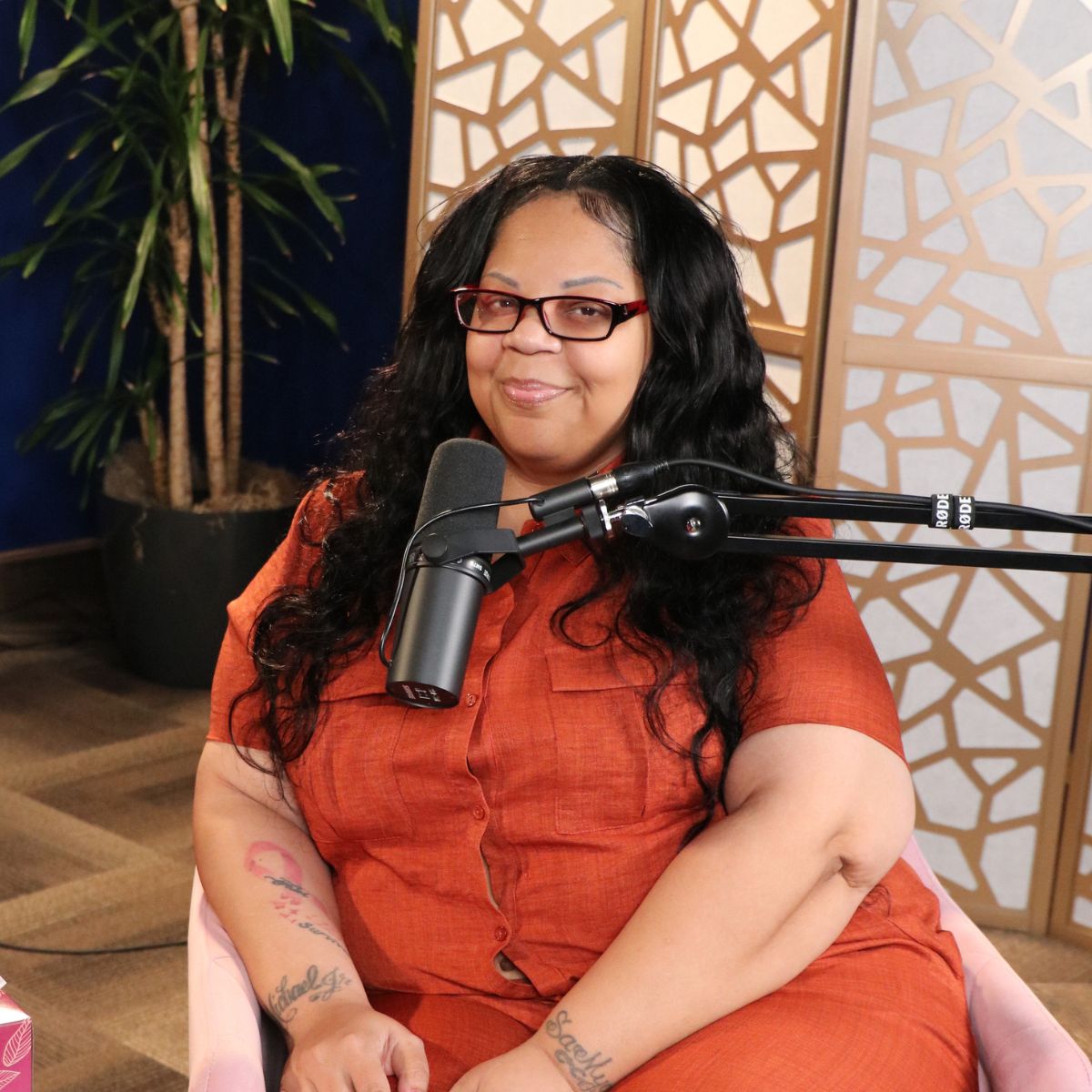
Dorothy: [00:00:00] Today I’m talking to survivor and advocate Safiya Hill. Unfortunately, Safiya found a lump at age 36, but she had no insurance. She was referred to The Rose just 10 days after her daughter turned 13. She shares how our team helped her qualify for Medicaid, and how she was able to get into breast cancer treatment at MD Anderson, and it only took a few weeks. She also says that our navigators walked with her through chemo, through surgery, through radiation, through her hair loss, and helped her with those hard conversations that she needed to have with two young children. Now, nearly 11 years later, she calls herself a survivor who refuses to whisper. Showing up in clinics, in churches, in treatment rooms, she wears these T-shirts that provide humor and faith. If her voice makes you think of someone who has delayed making an appointment because of money or fear, then [00:01:00] share this episode with them. And always consider making a donation to The Rose, because it really helps us to care for another woman.
Welcome to Let’s Talk About Your Breasts, a podcast brought to you by The Rose Breast Imaging Center of Excellence, and a Texas treasure. I’m Dorothy Gibbons, your host and co-founder of The Rose. During this season, you’ll also be hearing from co-host Roxann Hayford and others as we bring you stories from survivors, physicians, caregivers, researchers, employees, and supporters. These are real people sharing difficult times, celebrations, and personal stories of hope, despair, and faith.
Thank you so much for being with us here today, Safiya.
Safiya: You’re so welcome. Thank you for having me. It’s a honor.
Dorothy: You know, I’ve never heard of the, what was it, the Phenomenal Women event? And that’s where you met Shannon McNair?
Safiya: Yes, ma’am. [00:02:00] That’s where I met her. They actually go to, uh, it was done at a church I grew up at.
Dorothy: Oh.
Safiya: And my family still goes there, so my cousin had put me in a hat to be one of their, um, guests for the event.
Dorothy: Oh.
Safiya: And prior to her reaching out to me, the day that I finally talked to Miss Nicole, she was like, “Well, we, you know, we changed our sponsor. We’re gonna, um, actually, the funds we raise, we’re gonna donate to The Rose.”
Dorothy: Oh.
Safiya: And I was like, “You know what? You have me.”
Dorothy: Oh.
Safiya: And then I kinda broke down my story for her, and she was like, “Oh, my goodness.” I said, “Yes, they’re the reason that I’m here today.”
Dorothy: Mm. Well, tell me that story.
Safiya: Yeah, so in 2015, like any other, I just felt something. I’ve never really been a home checker, to say. But this time I was like, eh, this- don’t feel right. And so I went to… ‘Cause at the time I didn’t have insurance, so I w- I [00:03:00] had, but, like, I had, like, the women’s Medicaid- where you can at least get your yearly checkups. And so I went for that, and she felt it as well, and she was like, “Well, we’ll refer you to The Rose.” And in all honesty, I had never heard of The Rose before prior to then. And, um, I got my appointment, and, you know, I came by myself, and it was right after my daughter turned 13. She had just turned 13- on January the 2nd, and this was January the 5th. And I went in, and they saw, you know, felt the lump too, and-
Dorothy: Did you come here?
Safiya: Yeah.
Dorothy: To the one at-
Safiya: I went to the one that’s on, um-
Dorothy: Bellaire.
Safiya: The Bellaire … the Bellaire.
Dorothy: Yeah.
Safiya: Yes, ma’am. That’s where I went. And so they wanted me to come back. Um, after they felt the lump, they wanted to do a biopsy. And they wanted me to come back in February, and I was, I, but by the same token, I had a situation going on with my daughter where we were gonna be in court, and it started [00:04:00] February the 2nd, and that’s the day they wanted me to come back.
Dorothy: Oh, no.
Safiya: And I was like, “Well, unfortunately,” explained it to them. They came back, and the lady said, “Can you be here Wednesday?” And I said, “Yes, ma’am.” She said, “Please be on time. We don’t do biopsies on Wednesdays.”
Dorothy: Mm.
Safiya: They fit me in, you know? Oh. So for me, that was, th- that was, like, a God moment. Like, okay, you know? And once they got me in, they did the biopsy, and then January 12th of 2015 is when they called me back out and told me it was, um, breast cancer. Invasive ductal carcinoma is what they told me.
Dorothy: So you were not thinking at all that way?
Safiya: No. I mean, I wasn’t, no. I was like, you know, maybe it’s just something, but-
Dorothy: Like a cyst or-
Safiya: Yeah.
Dorothy: Something benign.
Safiya: Yeah. I was, and you know, I had told my sister when I first found it, I said, “Well, I’m not gonna tell anybody, but just so you know” “Oh, it’s nothing” I said, “You’re right. It’s probably nothing, but it’s best to [00:05:00] just at least see” and, um-
Dorothy: Now, how did you know that? You know, a lot of women would’ve said, “Oh, I’ll just watch it a while” or, you know. I mean, so many times women will wait thinking it’s gonna go away, but you knew that you needed to get in.
Safiya: It, you know, and I think just because of how things unfolded because now prior to me going, um, that October for them to feel it, I had went a couple of months before because I was, um, I had got a tooth pulled, and so I was taking some medicine that had caused some irritation. And when I went It was my lady’s time of the month-
Dorothy: Ah …
Safiya: and they couldn’t fully see me.
Dorothy: Mm.
Safiya: So had they seen me, then I wouldn’t have been able to go back, ’cause that would’ve been my one time already-
Dorothy: Right …
Safiya: ’cause you only get… So it was just, to me, little things like that that was just God-driven.
Dorothy: Oh, I get it. Yes, I get that gives me chills.
Safiya: And it was like, yeah, [00:06:00] you… No, this is something. And then I had a, a coworker, and we’re the best of friends. Known her for years. And, um, we were at work, and I was like, “Sis, let me let you feel something.” And she touched it, and she instantly started crying. And for me, that was another, okay, you know, kinda like, “Eh, take this a little more serious.”
Dorothy: Yeah.
Safiya: And so it was like, you know, I, I stayed ahead of it to try to, you know, just because I… It could- It, it might not be nothing. But you still have that chance it could be. And-
Dorothy: Right …
Safiya: it was. But look at us.
Dorothy: Oh, yes. You are, you are, gosh, 10 years?
Safiya: Yes, ma’am. It’ll be-
Dorothy: That is amazing …
Safiya: 11 in, um, July, cancer-free.
Dorothy: Wow. So now how did you tell your daughter?
Safiya: Hey, um, that was a difficult one. I, you know, I really didn’t know, because again, I didn’t know much about cancer. [00:07:00] I, you know, and, and this is gonna sound silly, but I always knew hair fall out. So for whatever reason, I thought it was like with radiation that-
Dorothy: Oh.
Safiya: You know, I didn’t know. And so when they told me I had to do chemo first, and that’s when it falls out, I knew that was gonna be a dynamic for her and her brother. She was 13, and he was 7 when I found out.
Dorothy: Oh.
Safiya: So I told her first. And, and I, honestly, she was a trooper. Like, I mean, to be 13 years old and have to take on that type of responsibility and role, and she did it with su- such grace. Like, if I… She, she could be sleep, gotta get up for school in the morning, and if I get up and maybe got a little moan, trying not to be too loud, “Mama, what you need? Don’t get up by yourself, you know. I, I, I’ma help you. You gotta go to sc- Mama, I’m gonna get up for school, but I’m gonna help you.” And she’s just been my rock [00:08:00] always.
Dorothy: Oh.
Safiya: But she stepped up in ways, not only with me, but helping me with her brother.
Dorothy: Oh, yeah. Yeah, a big, big responsibility at that age-
Safiya: Yeah, yeah …
Dorothy: really.
Safiya: Yeah.
Dorothy: So what was your treatment like?
Safiya: So we did chemo.
Dorothy: You did the chemo.
Safiya: and then we did surgery. And then we did the radiation.
Dorothy: Okay.
Safiya: And then-
Dorothy: So you had the whole- Gambit.
Safiya: Yes, ma’am.
Dorothy: Yes.
Safiya: Whole kaboom.
Dorothy: Did you, did your hair fall out?
Safiya: It did. It did.
Dorothy: Aw.
Safiya: But you know what? In all honesty, I felt like I kinda took control of it. Like, I knew it was gonna fall, so what I did is prior to my first round of chemo, I cut it short. And rocked that look. And then after chemo started, it started coming out. So my sister, she’s a beautician, and so we went wig shopping and made it a fun event. And then, um, I had MD Anderson to go ahead and cut the rest of it off one day when I was at an [00:09:00] appointment. And, you know, we rocked the wigs. Um, I was a little more nervous. I kinda rocked the short hair a little more. I wasn’t one that was bald-headed too often out in public. I was gonna keep a wig. But, um, once it kinda started growing back in and that little s- short look, I, I loved it.
Dorothy: Yeah.
Safiya: Rocked the full one.
Dorothy: Yeah. Well, it is, it is such a traumatic time no matter what, but-
Safiya: It is. Yes, it is …
Dorothy: but it sounds like you did something different with it and made it fun.
Safiya: Yes, ma’am. We tried to. Tried, you know, keep the kids as, as normal as possible, um, you know, to where it’s, it’s not too traumatizing to them or- you know, could still keep them in a good space despite what we were going through.
Dorothy: Now, did The Rose help you get into treatment, or had you found insurance at that point or?
Safiya: No. So when I came here and, um, I didn’t have insurance. And so, and it’s [00:10:00] funny because I was about to g- So I had signed up for it in December. And so I was gonna pay my portion, like, I think it was, like, the 22nd, and then when the date that they told me, sh- um, she was like, “No, there’s a breast cancer, um, Medicaid that I believe you’ll qualify for. Let me fill this out for you and do that.” And I said, “Okay.” She said, “Don’t pay it just yet. Let me see what happens.” And I was steadfast about going to MD Anderson. I’m like, “I don’t wanna go anywhere else. I want to go to MD Anderson.” And they called me and said they had got everything approved, so, no, like, literally The Rose saved me.
Dorothy: Oh.
Safiya: Like, in all honesty, there’s no other way to put it.
Dorothy: Mm.
Safiya: Like, you know, not come, if n- for not coming here and then everything. I was, I got diagnosed January the 12th, they told me, and I had my first appointment at MD Anderson January the 27th. [00:11:00]
Dorothy: Ooh, that is fast. Who is your doctor? Do you remember?
Safiya: Doc… Oh, Lord. I don’t remember her name, and it was a whole one. Ran- I, I think it was Ramsamy. Um- And she was phenomenal. Um, I mean, they just, you know, and then with the, the treatment plan they did, um, ended up in the hospital a couple of times, but in all honesty, like no major complications, um-
Dorothy: And how long did it all take? About a year?
Safiya: Yes, ma’am, ’cause I had to do chemo for a year.
Dorothy: Uh-huh. Okay.
Safiya: The, um, I did the two, then I did Herceptin for a year.
Dorothy: Oh, okay.
Safiya: So I went back for that one after- Yeah … but yes, ma’am, so pretty much about a year. And then, um, ’cause I had my surgery, and then I started radiation, then the next year I did my, um, [00:12:00] reconstruction. And I think we did one revision after that, um-
Dorothy: That’s good …
Safiya: yeah. Wow. And it was, you know, it’s just, hey, they, I mean, you know, I’m going for, they’ve been to my knees all my life. I, I want ’em as little as possible. So-
Dorothy: Well, that is one of the choices you have, I mean-
Safiya: Y- yeah …
Dorothy: yeah.
Safiya: My sister laughs at me all the time. She said, “All you cared about…” ‘Cause they told me, they said, “Well, ma’am, you know, you do your surgeries and stuff, I mean, you could get a tummy tuck” And so that was my highlight of my twilight. Like, that was, you know, hey, I mean, I’m fighting for the kids too- but baby, a tummy tuck.
Dorothy: Oh, yeah.
Safiya: You know, just something to keep you engaged- and everything, you know- when your, your body is going through so much.
Dorothy: Right.
Safiya: And so-
Dorothy: Right …
Safiya: that was, that’s what we stayed on on that one.
Dorothy: Oh, my goodness. Oh, my. Now, you were working though still? [00:13:00]
Safiya: No.
Dorothy: Oh, you didn’t.
Safiya: Actually, I had stopped working, um, after my first round of chemo. I ended up in the hospital, and I just, um-
Dorothy: Which happens. I mean.
Safiya: There’s a lot- It does. It does … of And so that’s how I, I ended up stopped working. I just couldn’t anymore. And so then it was just fighting to be here for the kids- and then being a mom, you know? And then it helped me be able to become a m- more, I was a hands-on mom, but even more of a hands-on mom, ’cause now I’m at home when they go to school-
Dorothy: Right.
Safiya: When they come in.
Dorothy: Right.
Safiya: And then once I did get back to working, you know, now I work from home. My son’s a senior in high school now, so.
Dorothy: Oh, what a success story, or what a, that is, that’s just so good to hear.
Safiya: Yes, ma’am.
Dorothy: You know?
Safiya: Thank you.
Dorothy: I want to know why you described yourself as a survivor who refuses to whisper. What’s that all about?
Safiya: That’s just simply being a voice to remind others that [00:14:00] you don’t have to walk alone. It’s others who go through this, who went through this. Sometimes, you know, you get the word cancer, and you, it feels like a death sentence. And it’s truly not.
Dorothy: Right.
Safiya: You know, I tell people, I literally tell people I’m a walking, talking testimony. And you know, and not just with cancer.
Dorothy: Hmm.
Safiya: Um, but I feel like those other things set me up for this, to be able to, um, speak and let them know it’s not easy, but it’s worth it. The fight is truly worth it. You know? Um, every day isn’t gonna be a good day, but in every day you can find something good.
Dorothy: Well, that’s good. I mean-
Safiya: Yeah …
Dorothy: that’s a great way of looking at it.
Safiya: It’s just perspective. That’s what life is, it’s perspective. You know, um, if we tweak our [00:15:00] perspective about certain things, um… For instance, say w- we just said job. With a job, “Okay, I wanted this job, but I didn’t get it. Okay, well, if I didn’t get it,” j- just that perspective, “it wasn’t for me.” “Something better coming” you know? So it’s just little things like that, that, um-
Dorothy: Did you develop this personality or this approach or this- … attitude, or s- Um … did you inherit it?
Safiya: I wanna feel like I’ve always had a optimistic attitude.
Dorothy: Hmm.
Safiya: I’ve always been a very optimistic, happy person. Um, I love speaking hope, speaking love, speaking light into others. Like, sometimes I think I see in others something that they don’t see themselves. And you know, I, I, I love to be an encouragement. Um, like, I don’t, I don’t go to MD Anderson anymore, but I’m in a [00:16:00] program. They reach out to me at times because of my story. “Can you speak to this person? Would you mind speak… they’re looking…” You know, and I do that regardless. And like I said, I don’t go there anymore. But, uh, they still have my unwavering support. Um, because when you’re going through such an situation, it’s hard to be optimistic, for one. But by the same token, you know, if you allow others in and not try to be so private about it…
One thing I tell people, you have to know your family history. And back when I was coming up, certain things you didn’t know. It was swept- They didn’t talk about it … you know, you, you ju- you just knew grandma, grandpa, whatever, they just wasn’t feeling good. You didn’t know your family history. And now I feel like if you know that [00:17:00] now, and you know more about that, you could be more vocal for yourself. ‘Cause we have to be our own advocates.
Dorothy: Oh, yes. Oh, yes. That’s so true.
Safiya: You can’t tell me my body hurting.
Dorothy: Mm-mm. Mm-mm.
Safiya: You know, I have to be able to voice that. Like, I was 36, so they say my daughter need to start checking at 26. You know?
Dorothy: That’s true.
Safiya: But she know my whole family history.
Dorothy: Right.
Safiya: My son, he knows everything, so once he branches out, then we know men can get it, too. So you know-
Dorothy: Yeah …
Safiya: you, you have to know those things. I, I didn’t know, you know?
Dorothy: Yes.
Safiya: I found out once. Well, y’all couldn’t have told nobody that? But you know, it is what it is. But it was a, it was a learning experience to know, so as my kids’ll know, no, there’s nothing you hide. There’s nothing you keep. It’s a part of your story.
Dorothy: It is. And, and that’s so true. If we know, then we’re gonna be more aware.
Safiya: Yes, ma’am.
Dorothy: And we’re gonna do [00:18:00] that surveillance, and we’re gonna go have those mammograms and everything. This wasn’t your first mammogram, though, that… Was it? Oh, ’cause 36 you wouldn’t have had.
Safiya: Yes, ma’am.
Dorothy: Mm. That’s very young.
Safiya: Yeah.
Dorothy: Yeah.
Safiya: My goodness. And then the thing for me, my, th- from my understanding, my mom had found a lump when she was, like, 40. But it was so small, and I think it was, they just removed it. She- you know, but she never told anybody. Well, had she said something, then, you know, I would’ve started a lot younger, but…
Dorothy: Yeah. But it sounds like you had this whipped going in almost.
Safiya: Mm. Absolutely. Absolutely.
Dorothy: Like, you were determined.
Safiya: Yes, ma’am. Yes, ma’am.
Dorothy: Yeah.
Safiya: Yes, ma’am. You know, the, I just, I didn’t wanna leave my kids. I needed to… I, I, I, you know, God has started me on a journey of raising, as I like to call them, [00:19:00] thing one and two. Um, and I, I, you know, in my heart I just wanted to see that through.
Dorothy: So talk about your faith. Talk about how much that helped you through.
Safiya: Oh, that helped me so much. So, like, so the day that I found out, my sister gonna kill me. So she, I called her and told her, and you’da thought I had just told that woman I had 60 days to live, the way she hollered on this phone. And I called my dad afterwards, and my dad read a prayer to me called Let Go and Let God. And that was the, that was the game changer because- We can only control what we can control. And I knew in order for my family to be okay, for my kids to be okay, ’cause that’s the main focus, my kids to be okay-
Dorothy: Right …
Safiya: they had to see me [00:20:00] be okay. They had to see me walk in faith and me truly trust the process. Despite of what I was going through, and despite of what I was going to go through, ’cause I’ve never been through this before. I didn’t know what type of toll it was gonna take on my body mentally or physically.
Dorothy: Right.
Safiya: And after he read that, I mean, that was it. And then like I say, as things started progressing, it would, it would be little things that would show me that let go and let God. So like I say, when I got… When after I came here, again, like I said, ’cause I didn’t know. Before I came here- when the little clinic on Chitwell, they, you know, s- referred me over to you guys. There’s the, okay, let me get this insurance. So like remember I was telling you- I was in the process of getting it. Well, a [00:21:00] coworker, to my understanding, had told us, like, “You gotta say one thing when you’re getting the insurance”, and it was just… and, and for whatever she said, I didn’t mention it. So that’s why mines didn’t kick in until December, and then I was gonna pay it in January.
Dorothy: Mm.
Safiya: But then we got diagnosed, and then she said, “Don’t pay it. I think you qualify for this Medicaid.” Okay. Well, we did. So then the day that we get in, the situation with my daughter, they ended up just signing for they time, and we didn’t have to go to court.
Dorothy: My goodness.
Safiya: So I could start my treatment and just focus on my treatment now. Um, and so like I say, it would just be little things that it’s out of my control. It’s nobody but God, so I don’t have nowhere else to put my faith but in him. And then that’s how we’re here talking. And then, like, [00:22:00] doors that have opened prior to this, and I tell people I’m scared to…
Me and my daughter were just laughing, ’cause I tell her when we going on the freeway, I don’t like going over overpasses. I’ve just always been scared since I was little. And I always been scared to fly. Well, after breast cancer, ma’am, I don’t… Baby, you… Now, can I get a jet to the store? Can I… Can… I don’t wanna drive no more. I want a airplane everywhere. You know? Can we just fly me everywhere? Just fly me out. You know? But so many other doors, and I was able to see and do things with my kids. Now, do I wish cancer on anybody? But again, it’s the outlook that you have. It happened. So you gotta be- Open. Like, you know, use me.
Dorothy: And I know when you’re encouraging people, I, you can just feel it, that you know the words to say, and they come to you easily effortlessly.
Safiya: And s- now, sometimes I do get a little choked up. I can get a little choked up, but [00:23:00] I’m always looking for the right words to say. You know? I d- I def- I m- I s- I, I try my best, not only just m- pouring to my kids, m- my nieces, nephews, um, cousins, my cousins’ kids, like anybody I come in… I, my daughter would tell you I’m one of those people, don’t just make us make eye contact and we stop somewhere, ’cause now my kid’s looking upside my head like, “Ma’am, can you come on?” ‘Cause I’d, I’ll just sit and I’ll start talking to a stranger. You know, um, everybody deserves respect- no matter what. And so I just feel like sometimes you don’t know what people are battling up here in their head. So your kind word, just a moment of listening. I understand. I’ve never been in that situation, boo. I’m, I’m a boo, hun, babe, handsome, pretty, whatever. But to get that compassion across, you know? But I’ve been through this [00:24:00] situation, so you keep going. I promise. It, it doesn’t… Um, I, I had got a shirt made this one time, and it says, “You too can survive” But it’s Y-O-U T-O-O C-A-N… It’s C-A-N-C-E-R V-I-V-E. You too cancer, but you too can survive.
Dorothy: Oh, can survive. Interesting.
Safiya: Yeah. So like-
Dorothy: Yeah …
Safiya: you know, so it’s- That’s- And it doesn’t, it, you know, it reflects the word cancer, but that m- that could be for anything. Anything, right No matter what you’re going through, you too can survive.
Dorothy: Yeah. Yeah. And so that’s part of your message when you’re talking to people.
Safiya: Yes, ma’am, at all times.
Dorothy: I bet your name is on the top of the list at MD Anderson to have- … “Let’s, let’s get her. She’s the one that’s can pick this person up”
Safiya: Yes, ma’am.
Dorothy: Yeah. When, and that’s, [00:25:00] you know, when you think about it, that’s a volunteer service that is truly a service.
Safiya: Yeah.
Dorothy: I mean, it’s something you’re doing that nobody else can do like you do.
Safiya: Yeah. And until I have family member, if they have a friend or somebody they know- I’ve met so many people just from family members reaching out, “Hey, I know somebody, my coworker- such and such, you know, I think your story is phenomenal. Can you talk to them?” You know, I have situation, I went and met one of my aunt’s c- cousins on her dad’s side. I went… She was having chemo treatment. I got her a shirt made, said, “Cancer chose the wrong diva” You know. I g- I have this shirt, one shirt I got made for somebody say, uh, “Tell cancer bye Felicia”- … like on Friday. I’ll just You know? We, we find different ways. Because for me, when I was going to radiation and treatment, T-shirts were my thing. [00:26:00] I love going in with a shirt, ’cause then you had a u- you don’t… Everybody’s reading it. You’re in MD Anderson getting ugly news potentially. That makes people smile as they see it.
Dorothy: Right.
Safiya: They get a chuckle, you know?
Dorothy: Right.
Safiya: And then let’s, we all fighting together. So I would meet ladies there. Like with radiation, because it was daily, I had one lady, we would sit and talk every day, and my last day of radiation when I rung the bell, she happened to be there. Like, I still have pictures in my phone with her and I.
Dorothy: Oh, really? Goodness.
Safiya: Yes, ma’am. So that, that’s just what I do.
Dorothy: So here, here you are on our podcast on your birthday.
Safiya: On my birthday.
Dorothy: I- happy birthday.
Safiya: Thank you.
Dorothy: And- I appreciate it … I just, I’m so tickled. You know, this is the other thing. Remember we had you scheduled before.
Safiya: Right. Right.
Dorothy: And it didn’t work.
Safiya: It didn’t. And so when [00:27:00] she sent the, um, sched- when she sent me the new days for this month- Uh-huh … and I looked at it, and I saw March 4th, I said, “That’s why. That’s why February 4th didn’t work out,” ’cause it was, it was written to be March 4th. And yes, March 4th is, is my birthday, you know, but you gave, you guys gave me new life day on January the 12th, 2015-
Dorothy: Oh …
Safiya: because I am a survivor. So I keep this right here with faith.
Dorothy: Yes. That is so-
Safiya: Right. So I can always, you know, when I got on a jacket and that, or a long sleeve, just look down and remind myself that, you know, there’s purpose.
Dorothy: Well, I tell you, you’ve been a gift to us today, that’s for sure. Well, I- 10 years out, almost 11.
Safiya: Yes, ma’am.
Dorothy: Yes.
Safiya: Almost 11.
Dorothy: Oh, my gosh.
Safiya: Yeah.
Dorothy: Wow, great story.
Safiya: Well, I appreciate that.
Dorothy: Thank you-
Safiya: And I appreciate- …
Dorothy: so much for sharing.
Safiya: Oh, absolutely.
Dorothy: And I hope we can have your name as someone that we can [00:28:00] have speak to other people.
Safiya: That’s… Y’all got my information.
Dorothy: Yes, we have your information. We, we… I’ll make sure the navigators know how good you are.
Safiya: Yes, ma’am. I mean, that’s what I’m here for. I, I do… Honestly, I truly believe in pouring into what poured into me. And again, you guys give people life. You give them hope. I told you, like, how quick my turnaround was, you know? And again, everybody’s story’s written differently, you know, through God, but He uses you guys in ways that- It j- if it weren’t for you, there are so many of us who wouldn’t be able to share or tell a story.
Dorothy: Mm.
Safiya: So we are truly thankful for you- Oh … for loving on us and loving, just loving the, the human creation enough to create such an organization that does this, you know what I’m saying, off of a [00:29:00] referral. You know.
Dorothy: Thank you.
Safiya: You are so welcome. You guys are a blessing, so- That’s it … yes, ma’am. And I love your pink again.
Dorothy: Oh, thank you. All right, that’s, that’s our story today. Thank you again for being with us.
Safiya: Absolutely.
Post-Credits: Thank you for joining us today on Let’s Talk About Your Breasts. This podcast is produced by Speke Podcasting and brought to you by The Rose. Visit therose.org to learn more about our organization. Subscribe to our podcast, share episodes with friends, and join the conversation on social media using #Let’sTalkAboutYourBreasts. We welcome your feedback and suggestions. Consider supporting The Rose. Your gift can make the difference to a person in need. And remember, self-care is not selfish, it’s essential.