Roxann: [00:00:00] Her first mammogram at 40 changed everything. Diane found The Rose through a mobile screening event, then faced breast cancer, surgery, and a recovery that didn’t end when treatment did. Today, she talks honestly about asking questions, accepting help, and putting her health first. Share this episode with family and friends, and consider making a donation at therose.org
Diane, thank you so much for joining us here on Let’s Talk About Your Breasts. We are honored to have you on our podcast. Um, and so I’d like to just jump right into how you found The Rose. Tell us a little bit about how you came to find us.
Diane: So I found The Rose through an organization called I’ll Have What She’s Having, and they would post about offering free mobile mammogram services. [00:01:00] And as a Asian person, anything that free is free kinda, like, piques my attention. Um, but also just, uh, my mom worked at MD Anderson, and so I understand the importance of, uh, preventative screenings. So, um, it was always in the back of my mind, so that’s how I found out about it.
Roxann: And now the organization you’re referring to, that’s I’ll Have What She’s Having, correct?
Diane: Yes.
Roxann: Okay. And I know they are a longtime partner, mobile partner, with The Rose. Um, and from what I understand, um, they primarily help, um, workers in the food service industry, correct?
Diane: Correct.
Roxann: Okay. Okay. So, um, we talked a little bit about mobile. So was this your first time on a mobile mammography coach?
Diane: Yes, because I had just turned 40.
Roxann: Okay.
Diane: I just revealed my age. Yeah.
Roxann: Okay. So was this your very, very first mammogram then?
Diane: Yes.
Roxann: Okay. So for our listeners who are not familiar with what a mobile mammography coach is, could you share with, with our listeners [00:02:00] what that experience was like for you?
Diane: Sure. So, um, it kinda looks like a tour bus, right? That coach bus. So I went in, and they did intake, right? So like a normal, um, they’ll ask you your personal information, whether you have insurance or not. There’s a little private dressing room so that you can get changed. What I really appreciated was there were two ladies there, and they were really explaining everything before it happened, which, uh, for me as a teacher, I find that very helpful and important because I find the unknown very scary.
And so, um, when they were like, “Okay, so this is gonna happen, and then I’m gonna put your boob here, and da-da-da-da-da,” that was really helpful ’cause you look at this big machine, and you’re just like- “What are they gonna do?” Um, and you also hear horror stories about, like, “I don’t get my mammogram ’cause I’m really afraid.”
Um, and so I walked in, um, not super scared, I guess ’cause it kinda looks like a food [00:03:00] truck, and I’m like, “Ooh, food.” And it was, it was in the parking lot of Tacos A Go Go, so I was, like, game for it. Um, and so we went in, and everyone was really helpful and nice. And honestly, when I walked out of there, I was like I don’t understand why people are so scared of it. Like, it just felt like a little boob panini. I was like- … it’s just, it’s just a little pressure. It’s a little pressure. It’s a little weird that, you know, they’re touching your boob. But, like, I had a, I had a baby too, so, like, a lot of that is, like, you’re apologizing for, like, “I’m sorry that there’s fluids.
I’m sorry that it smells.” “I’m sorry that I didn’t shave,” right? So it’s like, and they’re like, “Girl, I have seen everything.” And I’m like, “Still, but, like, you’ve seen everything, but I’ve done this only once.” So for me, there’s a lot of anxiety. So I thought it was great.
Roxann: Right. And I think you actually touched on quite a few things that we do hear often, whether it’s somebody hasn’t gotten their screening mammogram yet just because they’re intimidated by whether it’s the equipment, because you’re not used to seeing this type of equipment.
It’s [00:04:00] not in your normal doctor’s office, um, or it’s not in your normal clinic. So that is one thing that can be intimidating. And then secondly, you do hear horror stories about it, whether it’s, you know, painful or it’s very uncomfortable. Um, so I think sometimes that does keep women from going and getting those screening mammograms.
And of course, we know that early detection really, really is important in the fight against breast cancer, um, because it gives you, you know, more treatment options. There’s better outcomes. So being that this was your first mammogram, um, tell us what happened afterwards.
Diane: See, that’s the question that’s gonna make me cry. Ugh. Okay. So you know how where you, you get a screening, and then you don’t wanna get, like, called back right away?
Roxann: Yeah.
Diane: I’m just gonna let it… I’m, like, an emotional person.
Roxann: That’s okay. It’s f- Totally understandable. You… That’s fine.
Diane: Um, so I guess I didn’t know that my OBGYN was gonna call me, first of all. Like, you never really kinda know [00:05:00] when they’re gonna call and where you’re gonna be and what- what they’re gonna say. Like, you wish that people would give you a heads up, but that’s not how it works. So, um, my OBGYN called me, and she works, she works at a clinic, but she also works at a hospital. So when my phone went off, it said St. Joseph’s. And so I’m like, “Why is St. Joseph’s calling me?”
“Is this spam? Do they want my money?” Right? So, um, I thought it was a little weird. And at the time, I was in the car, um, passenger seat. My husband was driving. My daughter was in the back. Um, it was a day off, HISD, right? So we had plans. Um, and I think my daughter wanted to listen to a song off my phone, so my phone was connected via Bluetooth-
Roxann: Oh
Diane: to the car. So I get a call, and I answer it, and I forget that it’s on Bluetooth.
Roxann: [00:06:00] Oh, okay.
Diane: But of course, it’s important, so I don’t wanna get flustered, turn off the Bluetooth, you know, lose the call. So we just kind of keep going.
Roxann: I haven’t thought about it in a while.
Diane: Um.
Roxann: That’s okay. Take your time.
Diane: I think it was just shock, right? ‘Cause I’d like to think I’m relatively young, relatively healthy, and I’m so used to people calling back for screenings to be like, “You’re fine. No cavities this time Cholesterol’s fine. You don’t have diabetes yet, right? So like, or you know, when there’s a ad on the TV for medicine and you hear these side effects, you’re like, “That’s not me.” Right? “That, that’s somebody else,” right? So I think I’m so used to hearing stuff about other people that like nothing major has happened to me before. So when I got the call, I think I was just… Oh, [00:07:00] also ’cause like my mindset was, “We’re gonna have a great day with my daughter.” And all of a sudden hearing this and also being like, “Oh my God, my husband is driving. Good thing I’m not driving, because if I were driving, who knows what would’ve happened.” Um, I thought about later like, ” what did my daughter even hear? What did she understand?” ‘Cause like I don’t think I even fully understood it, ’cause I think doctors speak very quickly. Like I love my OBGYN, but I think in general, doctors speak like you know the terms as well as they do.
Um, and I know that time is precious, so they’re not gonna like really break things down the way that like I would break down the algebraic, you know, like the algebraic equa- like how to solve quadratic equations, right? So like I have time to break things down for people. I have time to like, “This is gonna be a really hard topic, y’all, but I think we could…” You know? Like I, I have that time. [00:08:00] And so yeah, that was a shock, and I think we were driving on the way to have dim sum with, um, Will’s parents, so I basically had to hold it in. Uh, compartmentalize, and then after that, ’cause I’m a planner, um, we had a play date with my daughter’s friend. So it was a full day of compartmentalizing, but also in my head being like, “Oh my God, I have cancer. I need to do so many things right now.” But I can’t, because I’m trying to be in the moment, but I can’t.” Um, so I think that was kind of hard, um, at the beginning.
Roxann: Well, I’m sure it’s, you know, you use the word shock, and I’m, I’m sure, like you said, y- you know, you are young, you are healthy, and, and for a lot of women, that’s the farthest thing on their mind. They’re not thinking about breast cancer. They’re not thinking about any other kind of cancer, because I think a lot of times women, maybe they don’t recognize what some [00:09:00] of those symptoms might be, or if the cancer-
Diane: Yeah …
Roxann: is so early, you don’t, you’re not aware that that is developing inside of you. So I think that’s a very natural reaction to have, to be shocked and like, “Are you, are you sure we’re talking about me?” You know? Like, so, um, I think it’s a very natural thing. It’s, it’s, it’s, um, it’s so unfortunate the way that it happened, the way you mentioned with the Bluetooth and you’ve got your family listening and, and things like that. But do you think The way you just explained how you had to compartmentalize things, you know, you had the dinner, you had the play date. Looking back now, do you think that that helped you be present in the moment? Like, did that help?
Diane: I don’t know-
Roxann: Okay …
Diane: that it helped, because I think kind of like being a mom, when you’re in the presence of your child, you try to be in the moment. Right? You try to put your phone aside. You try to put your to-do list aside. But then what happens is that that is on, [00:10:00] on the back of your mind somewhere.
Roxann: Yeah.
Diane: Right? So it’s still there. And so I was thinking, “I need to do my research. I need to contact my insurance.” Well, first of all, I need to understand what DCIS is, because I don’t understand. I’ve never heard of it. Um, and you know, because I’m a teacher, I just, I like to know things. Right? And so– And because I am lucky enough to have insurance, I wanted to see, do I have access to MD Anderson? Turns out I don’t, because I’m Marketplace. Um, what surgeons do I have access to? Do my friends know anybody, right? So it’s like all these things I wanted to do but I couldn’t- I think created a little bit of anxiety. And so I remember very clearly after the play date, my daughter wanted to go to Michaels. And I’m not a crafty person, but I knew that I needed to take my mind [00:11:00] off the things that I just couldn’t- do in the moment. So I bought this like dinky mini Lego thing to keep me busy. ‘Cause I was like, “Normally this is trash for me. I hate mini Legos.” But I was like, “I just need to do something really basic so that my daughter doesn’t know what’s going on, and like-“
Roxann: Yeah.
Diane: “… I don’t freak out.”
Roxann: Now, you mentioned DCIS. Now, it– Can you tell us the type and stage and everything like that, those details?
Diane: Yes. So I actually wrote it down because, like, I-
Roxann: That’s okay …
Diane: sometimes don’t remember. Okay. So this is as a result of pathology, right? ‘Cause earlier on they said three centimeters, then it became five centimeters. So this is as, as a result of the final report after they’ve taken it out. It was originally stage zero. Um, after surgery, it was labeled as stage 1A, um, ductal– I feel like this is a test. Ductal [00:12:00] carcinoma in situ. I didn’t write that one down. Um, and then it turns out I also had small invasive cancer, so they had no idea that that was there until they did the, a surgery, and that was seven millimeters. And then the DCIS was two centimeters. Um, and the lymph node that they took out was negative, and it is HER positive, I think. So it’s like estrogen positive.
Roxann: Okay.
Diane: They throw a lot of stuff at you and I’m like-
Roxann: Yeah …
Diane: I’m college educated and I read words, but I’m not getting meaning.
Roxann: No, I understand. It is. It’s a lot to take in. It’s, it’s a, it’s a big emotional thing that’s happening and then like you said, it’s a, a brand-new world of terminology that you’re-
Diane: Yeah.
Roxann: Gonna start to learn. And as you mentioned, it sounds like y- you’ve mentioned that you’re a planner, you’re a researcher, so- is that something that you think helped you a little bit in your journey was being able to go online? ‘Cause we have some guests that we have spoken with that say they stayed off the internet. They stayed off because, as you know, you [00:13:00] can go down a rabbit hole. You can find the absolute- You can … worst case scenarios of everything, and then of course there’s a lot of misinformation as well. But is that something that you think helped you cope through your journey, was being able to gather as much information as you could and advocate for yourself with your doctors and your team?
Diane: I think the internet is a double-edged sword, right? I think that having access to the information is great, but you have to be able to know w-what’s a good source- and maybe what’s a rabbit hole.
Roxann: Right.
Diane: And as someone who, um, you know, did a little bit of graduate school and whatnot- I learned to do that, and I currently have a sixth grader, and I’m teaching, I’m trying to teach her the difference- between don’t just click the first link, it’s sponsored, et cetera, et cetera. Um, that is a skill, and it [00:14:00] is a skill that you have to constantly hone because they’re getting better at pretending to be real websites. So I think for me personally, it was good because I knew, okay, if it ends in .gov, I’m reading it. You know, like there are certain things I was, I was gonna read for information and then stop. And, uh, before I forget, I did wanna give a shout-out to somebody.
Roxann: Sure.
Diane: So Dr. Susie Sun, I’d never met her before. Um, she, uh, turned out to be the across the street neighbor of one of my daughter’s, uh, really good friends and, uh, good friends with the mom. And she– The moment I told her, she was like, “I have a friend. She’s a surgeon at MD Anderson. Let me connect you. Let me see if she can help you.” Right? ‘Cause at the time I didn’t know that MD Anderson- wasn’t covered. So I started talking to her, and she immediately responded, and she’s like: “Let me talk to you later. You know, I’m at work.” So she spends a good [00:15:00] 30 minutes of her time. 30 minutes. I know f- I know she’s busy. She has two kids. And she really just explains things, explained things to me in a way that I appreciated so much because as a teacher, right, like I know how to break things down and I c- you can read someone’s face and you can tell when, like, they don’t understand, and you can feel comfortable to ask them questions.
I’d never met her. And she just gave me so much information, which wasn’t overwhel- it was kind of overwhelming, but it was like, “Wow, okay. I didn’t know I had to maybe get a reconstruction surgery, find a plastic surgeon,” da, da, da, da, da. It was a lot of information, but it was necessary to prevent me from going down a rabbit hole. Right? Because if you don’t know how to properly interpret what it is that you have, you can be misinformed. And so I think having [00:16:00] that information is crucial, but also having it in a way that’s, like, very digestible for you, right? So, like, the way that I like to have information may not be the way that somebody else likes, just like we have different types of learners.
You’re a visual learner, right? You’re an auditory learner. So I really appreciated that she took time out of her day and, like, I would always text her if I had an appointment, and I walked out with no questions, but then, you know, later was like, “Actually, I don’t quite understand.” And I tried to contact the nurse practitioner. They said they’d get back to me in 24 to 48 hours, but, like, my mind’s spiraling. I need to know right now.
Roxann: No, I definitely, definitely understand that, that wait for somebody to give you that call back, and it, it inevitably always happens, right? You walk out and you’re like, “Oh, darn. I actually did not understand what this was,” or, “Is this really what they meant? Let me clarify.” So I think that’s something-
Diane: Yeah …
Roxann: that’s pretty common with, with a lot of doctor’s appointments, um, that people can have. So [00:17:00] talk to me a little bit about treatment. You mentioned a couple of different things. Um, so what does your treatment regimen look like?
Diane: So originally it was supposed to be just a lumpectomy.
Roxann: Okay.
Diane: Right? Which it was still surgery, so I was like, “Oh my God, what is that?” But i- in contrast to a mastectomy, I was like, “Phewf, I don’t have to have a mastectomy.” Um, and then I got the follow-up, um, MRI, right? So prior to- seeing the breast surgeon, they have to do the MRI. So I did the MRI, which, um, I don’t wanna necessarily scare people, but I barely made it through. It was very hard for me. Um, I never thought I was a claustrophobic person, but I, like, really wanted to move. Um, anyway, so after the surgeon looked at that, it was like, even though something about size, but position, da, da, da, close to your nipple, da, da, da, and they’re like, “Actually, it has to be a full mastectomy,” which again, was another like…
I could, I could handle the [00:18:00] lumpectomy. I was getting around like, oh, it’s like popping a pimple but on your boob, but like obviously way worse. But now I have to cut it all off. Okay. Let me process that. I mean, if that’s what you’re saying and I trust you, I’m not gonna fight it. But so that’s what happened, right? And then because the lymph node came back negative, then, and they had like a little bit of the, uh, invasive cancer, that meant like, “You’re clear for now.” And then, um, no radiation ’cause it was a mastectomy instead of a lumpectomy, and then they prescribed, uh, tamoxifen.
Roxann: Okay.
Diane: I think it’s 20 milligrams. Well, that’s a long story, but it was originally 20 milligrams daily, uh, for five years, which to me, I’m like, “Oh, I just take a pill every day. It’s like birth control.” And then I forget, oh yeah, you know, remember how birth control has side effects? Um, this like had major side [00:19:00] effects that- really kicked me in the butt.
Roxann: Each of these drugs, they interact with people differently. You know, some people have more of a negative reaction than others, so I definitely, definitely understand that. Um, so let’s back up. I know you said you’re gonna be doing that for five years. When, when was the mammogram? I didn’t, we didn’t talk about that. I know that was recent.
Diane: Yes.
Roxann: Um, so when were you diagnosed?
Diane: So this all happened last year, 2025.
Roxann: Just last year. Okay.
Diane: So my birthday is in February. So it was pretty recent last year. Timeline-wise, I think I got it done between February and April. My mind- is like a little fuzzy. And I got surgery in July, and then I had-
Roxann: Okay
Diane: reconstruction, I think it was like in November. I could be way off, which is really weird to say ’cause like it happened to me. Uh, yeah.
Roxann: Okay. So this was all 2025?
Diane: 2025.
Roxann: Wow.
Diane: I think. Yeah.
Roxann: So, so very recent, yeah. Now-
Diane: Yes …
Roxann: you [00:20:00] mentioned, um, your husband’s parents. Um, what-
Diane: Yes …
Roxann: was that, what was that circle of support that you had, or did you have a network? Um, who were some of those people that were supporting you through things, and how did they support you? That’s another question I’d like… You know, what were some of these people doing for you?
Diane: So I think because I have Asian in-laws and Asian parents- So what our parents would do to us is they would withhold information because they didn’t want us to worry.
Roxann: Oh.
Diane: And that’s not an Asian thing, that’s a parent thing. And so it kinda became a role reversal, I guess, a reversal to be like… I literally, once I found out, I typed it up as a text, text message with, like, a link to American Cancer Society, um, and said, it was, I was just like, “This is what I have,” and I just paste, paste, paste, paste, paste, right?
Because I don’t think I could’ve made phone calls, so it’s easier to just copy and paste. So I, I told family. [00:21:00] Um, and I think going back to withholding information, um, I didn’t necessarily lean on them, even though my mom is really qualified because she used to work at a community nursing home, my sister’s a doctor.
You don’t want them to worry. So the people that I actually leaned on were either people that reached out to me once they found out and they had had personal experience, or people who were readily accessible during the day, ’cause that’s when I was texting people. Um, and like two friends, so my two friends, uh, Grace and Hillary. So Grace is a physician’s assistant and Hillary is an OBGYN. So they have this medical knowledge, so whenever I have a question, I trust them 100%.
And so that allows me to not spiral. So I leaned on them a lot, and then I leaned on people who, who had gone through it [00:22:00] recently, and I hadn’t talked to them in forever, and they just messaged me and then say- they said, “I’m here for you. I will get on a call with you. I will, I will tell you everything.” Um, and that was really helpful as well.
Roxann: No, definitely sounds like it. And, you know, it, it– we speak to a lot of different women and they’re… who’s supportive of them, um, who supports them through things, um, it’s not always who you think it’s gonna be. Um, and it, and it can be for different reasons, and it might be for something like that, where you don’t wanna, you don’t wanna worry them and you, you want them to be aware, uh, but you don’t wanna-
Diane: Sure …
Roxann: worry. You don’t wanna feel like you’re putting any kind of pressure on them. Um, so sometimes it is, it is an old friend who you haven’t spoken with in a very long time, or sometimes it is your, your daughter’s friend’s mom, you know, however that can be.
Diane: Oh yeah, and I forgot. So my daughter, my daughter’s in Girl Scouts, and so the two other troop leaders- um, one mom is a doctor and the other mom- is, um, a researcher [00:23:00] at- I’m not gonna say for privacy reasons. I didn’t ask for consent. So the people I mentioned, I already asked for consent.
Roxann: Okay.
Diane: Um, and they were okay. Um, but Girl Scout troop leader mom friends who I could be completely honest to. And so I think that in that moment, you kind of find who you can talk to and about what.
Roxann: Right. No, I understand. Well, we all know that, you know, cancer, hearing that word, um, you know, it can cause a lot of different emotions, a lot of different– You know, it can paralyze some people with, you know, with that fear. It can make people jump right into action. You talked a little bit about what that was like for you when you first received your diagnosis, but what– how did that change your perspective on things? I know you were busy. You’re still, you’re still a busy woman. Um, I know you’ve made some big changes in your life just recently as well. Um, but how did that change your perspective on things? Um, whether that was [00:24:00] family, coworkers, customers, how did that change your outlook?
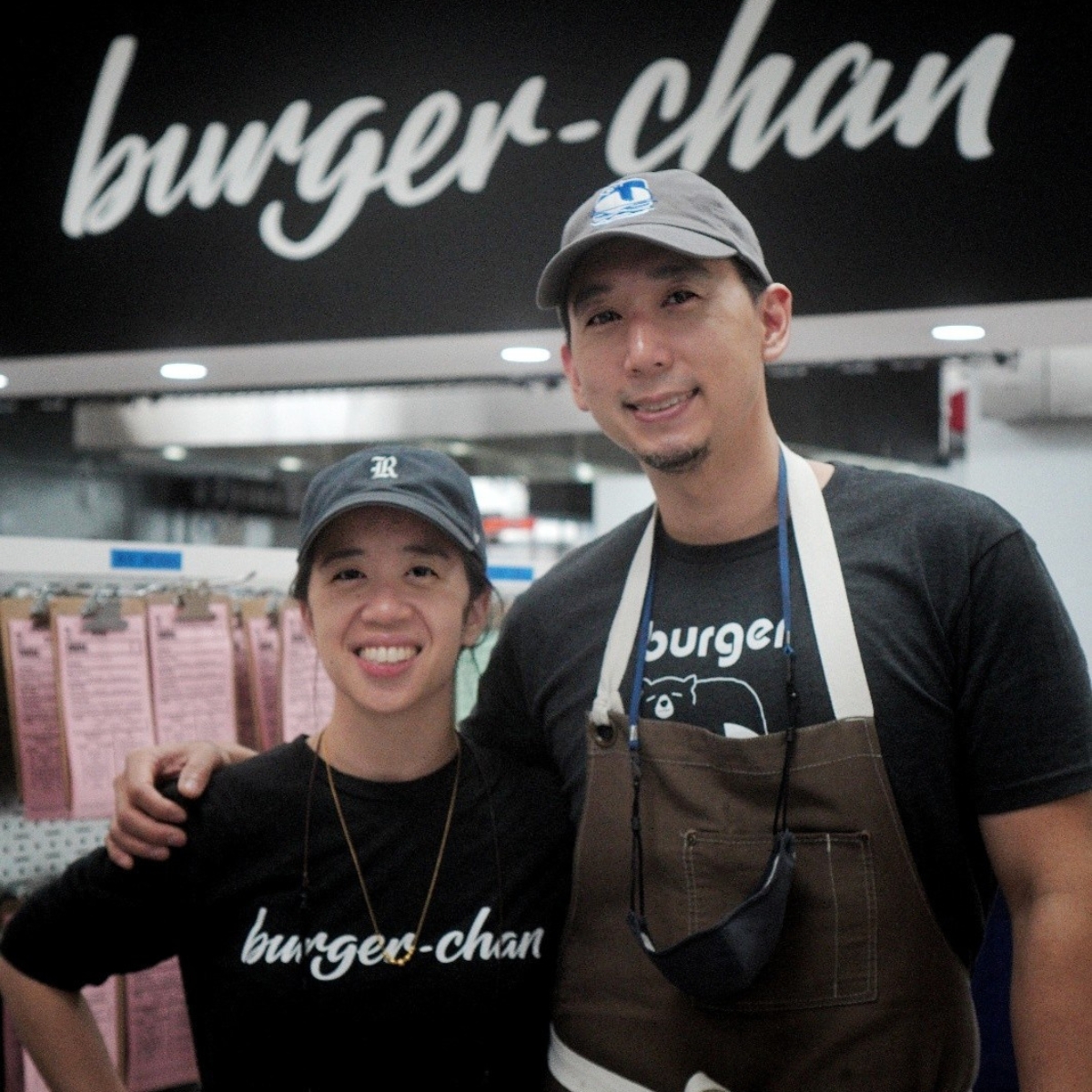
Diane: Oh, okay. So how did it change my outlook? So I’ll kind of backtrack to say, um, for the past 10 years, my husband and I have been running a restaurant, a burger restaurant, Burger Chan. And that was a lot. It was a lot of stress, not a lot of free time. And so, um, what was funny is in April of last year, my husband and I were finishing up inking the deal to partner with, uh, a restaurant group to basically hand over operations- so that we could take a step back, have some breathing room, reconnect with our daughter, and kind of reevaluate, “Okay, what do we wanna do next?” And literally at the same time, for better or worse, really for better, I was like, “Oh, I, [00:25:00] I can do all these things that I’ve put off.” I’m like, “Well, actually, I need to take care of this.” So I’d like to say it was perfect timing, right? Because I think it’s really difficult when you’re really busy with work and you have family stuff, you have kids, to make time for yourself.
You tend to put yourself on the back burner. Um, and so that’s why I was really thankful to Christine to say, “No, you need to take care of yourself, because if you can’t take care of yourself, you can’t take care of other people.” And so I find that really true. And so once I got the diagnosis, um- I think it really forced me to be honest with myself because I’ve always been a striver, um, and I’ve always been a [00:26:00] workaholic And I knew my daughter was only getting older. And I knew I already sacrificed a lot of stuff with the restaurant. So with this, right, the prognosis was great. I wasn’t really worrying about dying, but I was more concerned with, what am I doing with my life? Right? So I think that caused me to… I was already kind of, I’m a very reflective person, but when I was busy, I stopped journaling. You stop thinking about big picture, and you just focus on day to day, hour to hour. Can, you know, like who’s showing up to work? Can I get it through the next day, the next week- whatever. But now it’s like, okay. [00:27:00] It just forces you to- Be really honest And so I think that is part of the reason we moved here to Taiwan. Um, which is funny because last year, so in between diagnosis and surgery, my husband had already planned a trip to Taiwan because our daughter had never gone. And it had already been 10 years.
And we hadn’t even inked the deal yet, and I was really nervous. I was like, “How can you already book this trip?” And he’s like, “Look, if I don’t book this, we’re not gonna go.” Like- “… you are so wishy-washy.” And I was like, “Okay, fine. Whatever.” Um, and so I was actually really anxious ’cause he booked the tickets, and I was like, “But I need surgery. Like, do we need to cancel this?” And my surgeon, my breast surgeon was like, “Look, it’s gonna be the same.” [00:28:00] From June and July, you need to go to Taiwan, enjoy family time, and come back.” So I think when I was here, what’s funny is I, I explicitly said to Will, my husband, I was like, “I don’t think I could ever live here.”
But then when I came home, I just thought this would be a great place to experience the food culture, um, the language- immersively. Um, and kinda just cut and paste myself so far away from my comfort zone that I can truly focus on what it is that I wanted to focus on, which is what is it that you’re really trying to do? And I can truly still [00:29:00] focus on being there for my daughter, being there for Will. And I know it seems weird to say because my parents live in Houston, his parents live in Houston, and so it seems like a very unfilial thing to leave. But I think I just needed, I needed to focus on myself and our little unit- for a little bit.
Roxann: Wow, that’s amazing how everything played out, right? All of the timing, the way the kind of those chips kinda fell into place and worked out for, for you to have this experience, and I’m glad that you had a doctor who, I don’t wanna say gave you permission, but kinda gave you permission to keep living your life.
Diane: Yeah.
Roxann: You do have this diagnosis, and we do have to take care of it, but that doesn’t mean you have to stop doing these things, whether that’s-
Diane: Yeah …
Roxann: enjoying your family. It’s taking that trip. [00:30:00] Um, and not in a morbid way, but in a way, you gotta keep going. You gotta keep living your life. Um, and as he said, “June, July, we’re gonna get this taken care of,” but But don’t stop yourself. Don’t limit-
Diane: Right …
Roxann: yourself. And I think that can be really hard, as I’m sure it was hard for you as well to find… I mean, I know you weren’t just like, “Okay, sure.” You know, I know there, there was…
Diane: Right.
Roxann: But, um, I think, you know, you also mentioned, you know, women tend to put themselves on that back burner. I think that’s definitely true. Um, taking care of everybody else. Who, who, you know, which kid has a doctor’s appointment? Which, which, you know, parent needs to go here and there? And we’re, we’re real good about getting all that figured out, but when it comes to us, “Oh, you know, I can do that one later,” or you know- Later … “I have to take care of this first.”
Um, so I’m glad that you had somebody, um, I think you said it was Christine, um, that said, “No-” “… you gotta get this done.” Um, so I’m glad that you had somebody that kinda put their foot down, um-
Diane: Yeah …
Roxann: and made sure that you got that done, um, because you caught it early. [00:31:00] Um, you caught it-
Diane: Yeah …
Roxann: um, you know, in, in a, i- in a better situation than you could have caught it, um, had you waited. Um-
Diane: Correct …
Roxann: so what would you say then to other, other women who might be 40, 41? We know that 40 is when we recommend people’s… You know, women start getting those annual, annual screening mammograms, but, but they’re too busy. You know, they’re running around, they’ve got a lot to do. They’ve, you know, whether it’s work life, it’s family life.
What would you say to those women with your experience of how everything worked for you? First mammogram, you’re on a coach, the convenience of it there is what is really, you know, what got you there was you, you didn’t even have to go to, to a diagnostic facility. You didn’t have to go to, you know, one of our clinics, our standalone cl- You know, you, the coach was there. So-
Diane: Yeah …
Roxann: what would you say to those women who, you know, they’re listening to this story now?
Diane: Well, first of all, I also wanna add that an added perk, and I hope they still have it, I also got a free taco. [00:32:00]
Roxann: Tacos A Go Go?
Diane: Yeah. Like, I did it in the morning, and then they’re like, “Here’s a voucher for a taco.” And I’m like, “Why don’t more people do this? This is amazing.” I had so much fun. Um, and so I think that, um, whenever you get a serious diagnosis, you can either be private, or you can- be public and vulnerable. So I’m kind of answering your question but going on a tangent. Um, and I’m private about some things, but I chose to be vulnerable about this because I thought it was important For people to know that you can do this pretty simple thing, and people and organizations make it pretty convenient. And, and at– for I’ll Have What She’s Having, I think they even do it at 35, so earlier. So many people are trying to make it so [00:33:00] convenient so that you can get this done, so that if something happens, the earlier you catch it, the less you have to do. I mean, my mom preached this. Thank you, Anna Wu. My mom preached preventative from a very early age, right? It’s, it’s better to brush your teeth well so that you don’t have to have cavities. And if you have a cavity, it’s better to take care of it before it becomes, I’m not a dentist, root canal.
Roxann: Yeah.
Diane: Whatever, right? It’s like the sooner you can address something, the better. And so with the food and beverage industry, we’re so busy taking care of other people. If you’re a stay-at-home mom, you’re so busy taking care of other people. If you’re fill in the blank, you’re so busy taking care of other people that we forget ourselves, right? We think, “Oh, self-care is like getting a [00:34:00] manicure and getting massage.” No, it’s self-care is keeping yourself alive and healthy, right? And so I posted for that reason, and then I got inundated with well wishes and texts and whatnot, and I got overwhelmed, and I had to really, like, give my phone to my husband to be like, “I can’t deal with this right now.” But it was worth the, like, slightly overwhelming anxiety feeling if I could get a handful of people… and people reached out to me, they’re like, “I’m really glad you posted about it. I scheduled my mammogram.”
Roxann: Good.
Diane: “I’m really glad you posted about it. I shared your post to X, Y, and Z, and they got their mammogram.”
Roxann: Good. Good.
Diane: I mean, my sister got a mammogram. Sh- I was like, “Amy, you’re older than I am. Why didn’t you get your mammogram?” She’s like… She’s a doctor. Ugh. Ah. Ah. Sorry, Amy, if you’re watching this and you’re just like, “I got thrown under the bus like that,” but it’s like, y’all, [00:35:00] just do it. Like- it’s not that bad. Um, yeah.
Roxann: You know, I think you touched on a lot of really good, good messages there as far as self-care. Um, we used to-
Diane: Yes
Roxann: say all the time self-care isn’t selfish, that it’s essential. That’s something that we used to say a long time ago on the podcast. And, um, self-care doesn’t always look like a manicure, um, which is great if that, you know, that’s part of it as well. Um, but it’s keeping up with those annual screenings or exams that you’ve gotta do, um, not just for, you know, breast cancer, but other, other tests, and staying up on what those guidelines are to make sure that you’re taking care of all the things that you need to be taking care of, in addition to, you know, your, your, your family and friends and all, uh, you know, all the other people that you’re helping.
So I’m, I’m really glad that you, you know, that you mentioned, mentioned those things, um, because it, it is hard. Um, but when you have so many options now and it’s… It can be, it can be convenient. There are a lot of opportunities to get these things done, and you can always call The Rose, um, [00:36:00] you know, if you don’t have insurance, um, either way. Um, but I, I think you’re right. Sometimes it’s just that reminder like, it’s, it’s only gonna take a few minutes. It’s only gonna take 20, 30 minutes, um, to get this done, and hopefully you get the all clear. If you don’t, well, you know what? Hopefully you caught it early. Um-
Diane: Yeah …
Roxann: that way we can get this, you know, uh, taken care of as, as soon as we can so that your treatment looks a little different. It’s not as, uh, complex, um, as maybe somebody who, who unfortunately was diagnosed at a much later stage, and they have a whole different, um, treatment plan ahead of them. Um, those outcomes look a lot different as well. So, um, I’m glad to hear that your, you know, your mom really instilled that preventative, uh, um, mantra for you. So I’m glad to hear that too. So, um, I’m glad that you were able to share your story, and I’m especially glad to hear that you had others saying that they went ahead and got theirs scheduled too, because you never know. Um, you never know whose life you could be saving,
Diane: Yeah …
Roxann: to get that mammogram. So is there anything else you would like to share with our, with our [00:37:00] listeners? Um, is there anybody else you would like to say thank you to, um, for this journey? H I know you still have a, you know, you still have a long road ahead of you, but it sounds like you’ve got a good, good handle on things. You’ve got good people around you. You just made this move overseas.
Diane: Yes. Oh, I did wanna plug one more person and say one more thing.
Roxann: Okay. Go for it. You got it.
Diane: So I’m plugging, I’m plugging a friend, um, from my childhood days. Her name is Dr. Anne Kuo. And no, I don’t… My friends are not all doctors. A lot of them are. Um, I didn’t know this, so I knew she was a doctor. I knew she lived on the West Coast. Um, but because I had posted, she reached out to me, and she specializes in… Sorry, Anne, if I’m not, you know, saying the medical term for it, but she specializes in breast cancer survivorship. I didn’t know that was a thing. And I think that what she [00:38:00] really helped me with was after everything was done When the f- first, the first surgery happened, when reconstruction happened, after I was, you know, uh, everything was done and I should be, “Check, you’re free,” um, I didn’t feel done. I didn’t feel well. And I, I find it akin to, um, after you have a child, and I had a C-section unplanned, and you go home and you’ve got your baby, so you’re done, right?
But I’m like, “Uh, I can’t get… Like, this stitch hurts. I can’t get out of bed.” And we go back to breast cancer. Um, I’m having all these terrible side effects I don’t know who to tell. So my friend Anne reached out and she’s like, “You need to contact your medical oncologist, and you need to see if maybe they can reduce the dosage.” [00:39:00] And I’m like, “That’s an option?” Right? Like, I’m an educated person, and like I have a good network, and even I didn’t know a lot of the times which doctor I was supposed to ask which questions. And I’m relatively– thank you again, Anna Wu. I’m– She taught me from an early age to speak up, to be an advocate, right? She would be there in the doctor’s office and she would ask questions. She didn’t care, right? She was j- if she had a question, she would ask, and then she’d be like, “Diane, do you have any questions?” Right? So I was raised to ask questions. I was raised to advocate for myself, and even then I wasn’t sure. Even when I was suffering mightily at home with debilitating side effects, I didn’t know who to talk to. And so I confided in my friend Anne. I said, “Look, [00:40:00] brr, I am at the lowest I’ve ever been.” I didn’t even know it was possible. Like, I wasn’t even the person that I was before, right? ‘Cause I wasn’t getting sleep. And so when you don’t get sleep for like a month, which I didn’t even realize, my brain was like fried. I like jokingly said at the beginning that I had brain fog, and I’m like, “Actually, I think I do.” I couldn’t function. I wasn’t who I was, but I didn’t know why, right? ‘Cause if you’re in that, you can’t self-diagnose.
And so she really kind of threw me a buoy to say, “Actually, you’re not done,” right? “And you can get back to normal, and that doesn’t mean you’re gonna be who you used to be.” Right. I’m not the weight I used to be. My fat is not in the places they used [00:41:00] to be. They’ve, they’ve migrated. And I’ve had– I’m still like working on coming to terms with that, and I think that knowing when to give yourself grace, when to push yourself, all these things, like I was done at a certain point physically, but mentally- I was a mess. And to navigate that, because you look, I look, I look fine, right? And, and people with like the best of intentions, and I’m sure I’ve said it to people, they’re like, “You look great.” I’m like, “Thanks.” And then, and then they just said, “So when are you gonna go back to climbing? When are you gonna go back to this?” And I’m like, they don’t even know that like I can’t turn off a light switch- because I can’t reach. I can’t reach a cup. And I think that was hard for my husband to see too.
Roxann: I’m sure.
Diane: Right? Because he wa- he [00:42:00] wanted me to get back. And so I think for him, and I think for my daughter, I really pushed myself and like hid certain things so that they wouldn’t worry. But again, that goes back to not taking care of yourself because you’re taking care of others. And if you try to put on this front that you’re fine and you’re not, it doesn’t end well. Let me tell you. Um, and so I think it’s important to like push through the anxiety of like I got this. I don’t need to tell anybody. I’m fine. Don’t worry I mean, there’s so many people out there who are willing to help you. And, and sometimes it goes the other way where, like, a friend is like, “Are you sure you’re okay?” Like, maybe sometimes say it even if you’re, like, [00:43:00] afraid that they’re gonna get mad at you. It might be worth it. So I think that’s my final thing.
Roxann: Well, thank you so much, Diane, for sharing your story, and thank you for being so honest, um, and open about it. You used the word vulnerable earlier, and I can, you know, definitely see that. And I think that’s one really good thing about the podcast is we, we really want our guests to, to be that way, to share their story in its, in its fullness.
You know, the good, the bad, the ugly, the sad, um, the triumphs, uh, y- you know, the victories, the setbacks, because it helps, uh, the next person understand a little bit more about what they might be facing. And like you said, you, you know, you’re done with treatment, and people think, “Okay, good. We’re,” like you said, “We’re moving on.” It’s like, actually, there’s all these other things that I still have to get through, these other hurdles- Yeah … that I gotta get over. Um, and it’s gonna take time, you know, to get through them, and everybody works through things differently. Everybody has different support groups, you know, that they’re leaning [00:44:00] on.
Um, but I think it’s helpful to know that, um, that, that it- nobody’s expecting you to bounce back immediately afterwards. You know, there’s, there’s a lot that just happened. There’s a lot that you just went through, and not only was it your breasts, like you said, it’s mental, it’s, it’s emotional, it’s, it’s a whole lot of things. And especially if you’re not very familiar with, with cancer or breast cancer, you don’t know. Um, and you thi- and even you going through it, you didn’t even know to ask these questions. You don’t realize- Yeah … that what is normal and what’s abnormal, um, what is, what is a little too much, um, that maybe you should ask for help.
Um, and the brain fog that you mentioned, that’s definitely something that we hear time and time again that just, that, you know, that processing just isn’t the same or maybe isn’t as quick. Um, you know, a little bit of, you know, some of that memory loss, so different things, um, that we hear on the podcast. So, um, I really do appreciate you, you know, opening the, the door on that to, to let people know about what are some of those other things that they might experience. And not everybody will, but some might. Yeah. Um, so I [00:45:00] just really appreciate you coming on and, and sharing everything about your family, about your friends, everything that you experienced.
Um, and we’re glad that you’re now a year, a year out. Um, you know, we’re definitely rooting for you, Diane, and, you know- Thank you … definitely wanna keep in touch with you, and we’ll see how things are going in a year and see what other new stories you have for us or adventures. Um, since you’re certainly not letting this, letting this define you, we’ll see if you have another, another move on the horizon for you. But thank you so much.
Diane: Can I do one last plug?
Roxann: Oh. Sure.
Diane: And this is an unpaid plug for The Rose, where, uh, because of all my treatment and everything, I had to get follow-up mammograms- through the hospital system. And this is not meant to… Like, I’m not gonna name names, hospitals, whatever, but- They didn’t walk me through as much- um, to know what to expect. They weren’t as [00:46:00] gentle, right? They just took my boob, and they put it in, and they smashed it-
Roxann: Oh no …
Diane: and they opened it, and they smashed it again. And I was like- Oh my gosh … “Oh my gosh, I was so lucky to have The Rose as my first experience.”
Roxann: Right.
Diane: Because I thought, “Oh man, mammo- mammograms are great.” I’m like, “No, mammograms are not created equal.”
Roxann: Well, I’m glad you-
Diane: The Rose is high quality.
Roxann: Well, I’m glad you were treated as well as you were at The Rose, and every patient can experience that good treatment at The Rose. So thank you. Thank you for that, and, um, I’m glad that it went, it went well, that part of The Rose.
Diane: Yeah.
Roxann: And then your journey started from there. But once again, just thank you so much, uh, for, for everything. It was really a pleasure meeting you, e-meeting you, virtually meeting you, um, to, you know, to discuss everything. And, and please do, uh, keep in touch with us, and I’m sure our listeners are going to, um, enjoy hearing your [00:47:00] story, learn a lot, uh, from your story. And hopefully, um, you know, somebody will schedule their mammogram from listening to your story. So thanks again, Diane, and we really appreciated you here on Let’s Talk About Your Breasts.
Diane: It was my pleasure.
Post-Credits: Thank you for joining us today on Let’s Talk About Your Breasts. This podcast is produced by Speke Podcasting and brought to you by The Rose. Visit therose.org to learn more about our organization. Subscribe to our podcast, share episodes with friends, and join the conversation on social media using #Let’sTalkAboutYourBreasts. We welcome your feedback and suggestions. Consider supporting The Rose. Your gift can make the difference to a person in need. And remember, self-care is not selfish. It’s essential