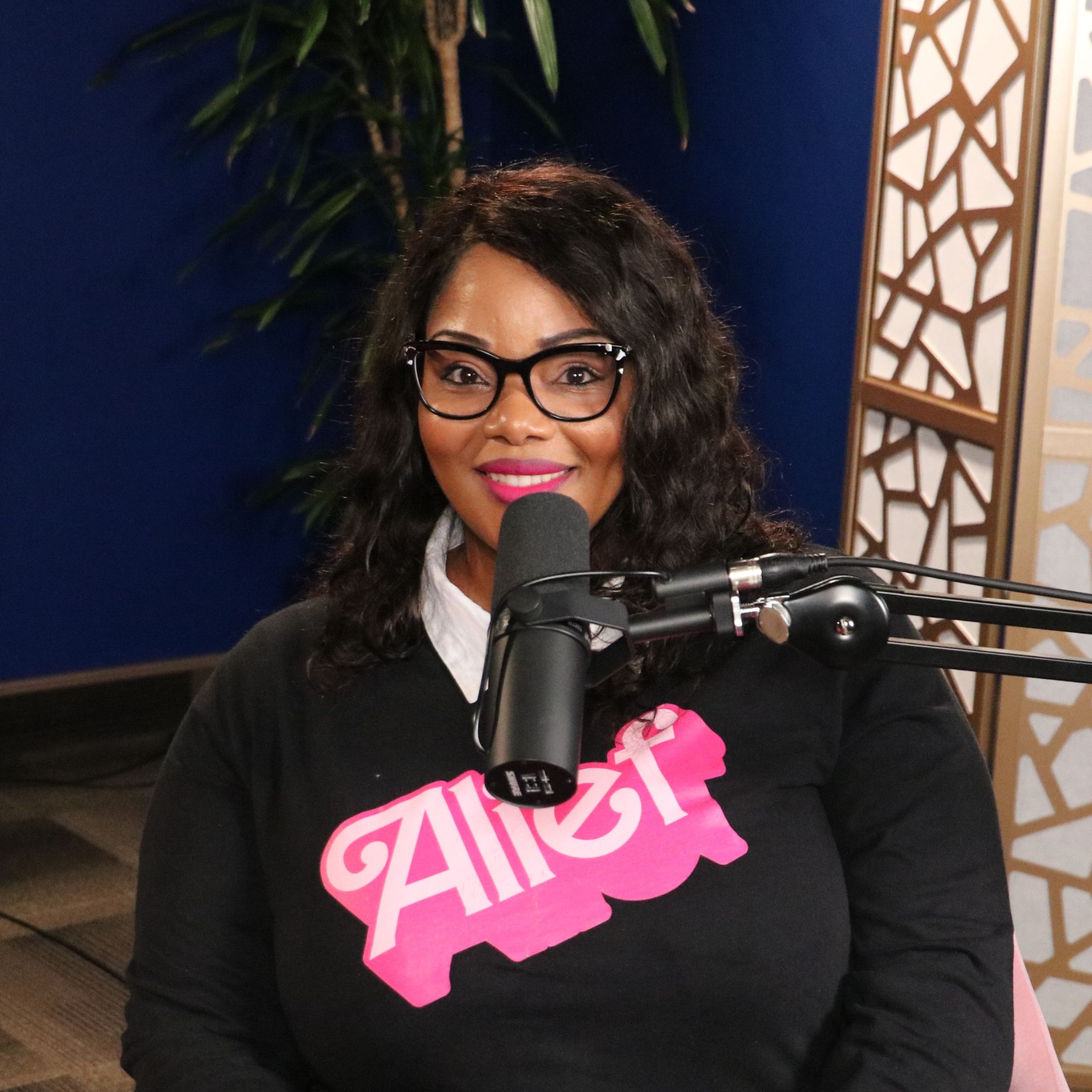
Dorothy: [00:00:00] Currently a preventive and safe school specialist in ALIEF ISD, Tiffany Tatum has been an educator and advocate for kids for the last 23 years, but the way that we know Tiffany is because she’s the one that coordinated ALIEF goes pink breast cancer walk, and it’s all about raising money for breast cancer awareness and to support The Roses Mobile mammography coach that goes to ALIEF every year, all year round, and it provides mammograms to the staff. Everything’s done on site, and this event helps that.
When you subscribe to our show, you help us grow. Someone you know may need to hear this story. So please share with your family and friends and consider. Supporting our mission at therose.org.
Let’s Talk About Your Breast, a different kind of podcast presented to you [00:01:00] by The Rose, a breast center of excellence, and a Texas treasure. You’re gonna hear frank discussions about tough topics, and you’re gonna learn why knowing about your breast could save your life.
Tiffany, we’re so glad to have you here today. I mean, you know, you’re kind of a legend around on here.
Tiffany: Okay.
Dorothy: Just because of all the things you’ve done at ALIEF and all the ways that you’ve helped The Rose, but I was so fascinated by how you described yourself, wife, mother. You know what? Tell us a little bit about yourself. Like where were you born? Where’d you go to school?
Tiffany: Okay.
Dorothy: Those kind of things.
Tiffany: Well, I consider myself a reborn Houstonian. However, my husband and I are actually natives of Michigan. I’m originally born and raised in Saginaw, Michigan, and he’s from Muskegon, Michigan, which is right on the Lakeshore. And we met and married in 2005. So we recently settled, celebrated our 20th wedding [00:02:00] anniversary.
Dorothy: Oh, congratulations.
Tiffany: And that August 20th, not that long ago. Uh, we’re both educators and we are actually here in Houston by way of West Palm Beach, Florida, where we spent two years teaching with a friend and getting a football program off the ground there. Long story, very short. Florida paid in peanuts.
Dorothy: Oh!
Tiffany: The pay was atrocious. And so we decided long term with us both being educators that we probably would have a better chance of raising our kids if we moved. And so we came here to Houston, Texas, and we’ve been here ever since. My first and only job has been with ALIEF ISD.
Dorothy: Oh.
Tiffany: Um, and so my Chi, two kids, Kirsten and Kj, my daughter is 18 and she just went to Prairie View. Oh, she graduated this past May and then my son is a junior and he’s at school with my husband at Manville, ISD, where he is a member of the varsity football team. So I’m a Friday Night Lights mom. Um, and that’s just who we are, you [00:03:00] know, family, faith. School education. That’s all we know. And so that’s just a little bit about who I’m.
Dorothy: I, I tell you what, that’s, that is a great thing to be all, you know. I mean, that is wonderful.
Tiffany: Thank you.
Dorothy: So glad you got here. So tell us a little bit about what you do at ALIEF.
Tiffany: Well. This year I see my 26th year in education. However, ALIEF only gives me credit for 25 because my very, very first teaching job was at a maximum security level five prison where my, in my, uh, students were inmates and they were mALIEFs, ages 14 to 19, and they were all incarcerated for anything that you could think of that an adult mALIEF will be incarcerated for. It’s 25 years plus later. Some of them are still incarcerated because they had a life sentence or upwards of 30, 40 years. And so that’s kind of where I got my knack for classroom management. I decided that once I went into the actual public school classroom, that it would be a safe haven for [00:04:00] kids and so I spent the first 15, 16 years of my teaching career in the classroom. I got my start here in Houston and an ALIEF in the classroom at Hastings High School, after which a couple of years later, I went across the parking lot to Hastings Ninth Grade Center to be an English content specialist. And that led me to this role that I serve in now. The proper title was Prevention and Safe School Specialists. However, the acronym use throughout the district is Pass, Pass Specialists. And the four of us, we work on a team and essentially what we do is we divide the district. Um. All of the campuses. So I serve a total of 10 secondary campuses along with my other teammate. And then the other two teammates take the elementary campuses and we provide all of the district training, coaching, and support for teachers in classroom management and relationship building. And so that’s.
Dorothy: Interesting’s. So this is all of ALIEF?
Tiffany: Yes. All of Alief. We serve all, and.
Dorothy: It’s not something Houston ISD doesn’t have that, do [00:05:00] they?
Tiffany: They probably have a similar role with a different title.
Dorothy: I’ve never heard of this before.
Tiffany: You know, I get that a lot. I get that often. So maybe the role in this capacity is a little um, something that’s exclusive to a lead. But we do our ran— Nobody is really out of our range. We serve different departments throughout the district. Like we’ve done true colors training, love languages, training, our code of civility, interactions, relationships. Um, anything that falls under that wheelhouse comes out from my team.
Dorothy: How interesting. So the. I, and I know we’re gonna get into how ALIEF and The Rose are all in partnership, but you know, classroom management is a skill.
Tiffany: Yes.
Dorothy: And a lot of what happens in schools goes back to not having that ability.
Tiffany: Absolutely.
Dorothy: To manage that class and, and children, I mean, it’s so important. They have somewhere they feel safe or respected or, or that’s theirs.
Tiffany: Absolutely. It’s [00:06:00] definitely a work of heart teaching in and of itself. Being an educator in general and in our district, we have this belief that meaningful relationships plus meaningful work, equal student success. And so everything that falls under the wheelhouse of meaningful relationships, most of that work in conjunction with our counseling department and our family engagement department. Most of that work comes out of our department, the meaningful relationship piece because, um, as hopeful as we are, that our students will learn and that they will continue to gain if you can’t keep kids in the seat.
Dorothy: Right. Mm.
Tiffany: There’s no teaching, so it’s important. You know, we perpetuate that, um, thought process that you have to connect before you can correct kids. You have to connect before you can do content with kids, and we just want to make sure and assure that all of our students feel like they are a part of a community.
Dorothy: Fascinating. You know, I, the more I read on this, ’cause like I said, I’d never heard about it. I [00:07:00] thought that’s pretty progressive. I mean, it sounds like ALIEF has always kind of been out there.
Tiffany: Ahead of the game.
Dorothy: They have been.
Tiffany: You know, this was the third school district. The third I think that I’ve worked in, and I’d never heard of the role either, but, um, there used to be one of our former retired past specialists, um, her name was Laura Kubert. And I took her class during my first year here in ALIEF and I was just enamored with the work that she did. And so, um, you know, it’s kind of subconsciously at the back of my mind because I love my classroom so much and being with those kids. It was something that I always thought maybe I could do. So when the opportunity presented itself, it just seemed to be my time and so I took it well.
Dorothy: And congratulations for you for having that goal, and.
Tiffany: Thank you.
Dorothy: Thinking ahead and getting it. So The Rose has been in partnership with ALIEF since like 2007. We used to bring our portable mammogram machines there. And [00:08:00] that’s before your time, I think. Yes.
Tiffany: Yes ma’am.
Dorothy: And, uh, we would unload that mammogram machine and, and set it up. And we had one of your rooms that we just did the mammograms in and then kind it, that went on for years and years. ALIEF was always like our favorite. because. You know, taking a mammogram out, even in the old little portable ones or the big bus, you have to have that facilitator. You have to have someone within the company or the organization, or the school district that is helping you. Push it, helping make sure that the, you know, it’s, the news is out.
Like, here’s our date we’re coming, we need to sign up. ALIEF always didn’t have no shows. They were always like, had a full coach and, you know, so that, that makes a big difference. And in what we do. So in 2017 we brought our first coach out there. Again, ALIEF was one of our first people to [00:09:00] use the coach. So, uh, long, long history, but. When you came in, you decided to uplevel that, that relationship and tell us what you did.
Tiffany: Well, I actually got my very first mammogram on The Rose bus. I believe it was either two SE 2017 or 2018.
Dorothy: Oh, you were in that early group.
Tiffany: Yeah, and so it was a really great experience for me. Um. I, I have, I’m adopted. Um, so I don’t know much about my biological family, but what I do know of my paternal family is that one of my aunts, my dad’s sister passed away from breast cancer. And so, um, it’s always been at the back of my mind to do it, participate in a breast cancer walk or a breast cancer fundraiser.
And so, um, it started out just as a thought, you know, and then it became, you know, sometimes you have to create what you wanna be a part of. And so, um, one of my former teammates when I was a content specialist, [00:10:00] actually her life was saved. She found out through her mammogram, her 3D mammogram on The Rose bus that she had cancer. And had it not been for that 3D mammogram that she was able to get while she was at work on The Rose bus, she probably would’ve never known that she had it. And so that just kind of sparked me even more and my piqued my interest. And so fast forward a few years coming into this position, it was my, um, supervisor, Dr. Courtney Marshall, who approached me about being in charge of our district Girls club. And so. Basically what that is. Every campus at the elementary through intermediate and even some of our junior high school levels have a club that’s an SEO or Social Emotional Learning club for kids on their campus.
And so. Even though each campus has a club, there was nothing that really brought them all together. And so she asked me to spearhead and be the district coordinator of all of the clubs and kind of create the curriculum that brought us [00:11:00] together. So the first thought that came to my mind was, wouldn’t it be a wonderful thing to give these girls, or provide these girls an opportunity to have a community service event? And what better community service event. Than of course, a breast cancer walk. And so that’s kind of just where the idea bloom. The first year I had key people that were essential to helping me kind of organize the committee and put things together. I was scared out of my mind. I had no idea how the community would receive it, how the district would receive it, how well it would go. However, it exceeded my expectations. And so since that time. The last three years we’ve been able to raise a total of over $15,000 to donate.
Dorothy: That is amazing.
Tiffany: Yeah, it is. And so, um, you know, this year our goal is to raise a little more and to try to up the ante every year, but that’s where we got here. And so I was telling, um, someone else earlier, it’s become a thing.
Dorothy: Yeah.
Tiffany: In ALIEF. And so.
Dorothy: It’s an event, it’s a [00:12:00] community event that they look forward to.
Tiffany: Absolutely. People look forward to it. People ask questions about it. People want to volunteer. I’ve had so many people, even in the ALIEF community that aren’t a part of the school district to contact me this month and ask me, can they volunteer? Is there something that they can do? So it’s become a real big event.
Dorothy: So are the funds raised through like registration or through?
Tiffany: Yes. So all funds are raised through the registration process. We actually don’t even have a budget for the event to date. Um, everything pays for itself. And so all of the funds are raised solely through the registrations. And the only fee or cost that is actually deducted from the funds is probably for the T-shirts.
Dorothy: Right.
Tiffany: That’s it.
Dorothy: Right.
Tiffany: The souvenir t-shirts that we give our participants.
Dorothy: How, how many people participate?
Tiffany: There have been upwards of between four and 500 people every year.
Dorothy: Every year!?
Tiffany: Every year.
Dorothy: Oh my gosh.
Tiffany: Absolutely. All walking.
Dorothy: That’s huge.
Tiffany: One way on one track.
Dorothy: Oh my gosh. [00:13:00] And are there other events that day or is it just the walk? What happens?
Tiffany: So actually we have, um, started this process where each year we seek out any ALIEF staff members who are currently or either have survived, are currently struggling with, or have survived breast cancer. And we have an an honoree ceremony at the beginning of the walk where we honor them. And so each year we’re looking for a different group of women who have not been honored at the walk yet, just to honor them and to let them know that we support them and their struggle, or we applaud them for their fight and survival. Um, and then upstairs in Crump Stadium we have this big reception where they and their families can go and they’re celebrated with the big honorary breakfast, and we give them plaques and different tokens of our appreciation for their fight.
Dorothy: Oh, that is nice. Very nice. Now I want you to. Uh, do something for me.[00:14:00]
Tiffany: Sure.
Dorothy: And I know I didn’t prepare you for this.
Tiffany: Okay.
Dorothy: But I, I want you to do a little commercial on why it’s important for that bus or that coach to come to the school.
Tiffany: Okay.
Dorothy: Is it, I mean, Ooh, you know, that’s a big commitment of the school.
Tiffany: It is.
Dorothy: But.
Tiffany: But you know, one of the greatest gifts that you can ever give anybody is the gift of life. And I know firsthand that bringing that bus to ALIEF ISD has given several people a second chance at life. Um, I know of at least one person even in the last year whose life was saved because her breast cancer was detected on The Rose bus. But what I also know about women, what I know about mothers, what I know about educators, what I know about professional. Women in general is that we often put ourselves secondary to everything else in life. And so had it not been for that provision of the bus coming to us, many of us probably wouldn’t have regular [00:15:00] mammograms at all. And so that bus literally saves lives.
Dorothy: And it, it’s the convenience of it.
Tiffany: Absolutely. You don’t have any time deducted from, um, your workday. You know, you schedule your appointment with ease online and there’s really no other excuse. There’s no excuse not to go. So it eliminates the excuses that we often make as we try to wear many hats and juggle and multitask. And it allows us to put ourselves in position to be safe.
Dorothy: Oh, that is so important. And there’s no, um embarrassment. There’s no, it is.
Tiffany: No, it’s, it’s so private and it’s so personable and I was concerned about each of those elements my very first year because I was a first timer. Um, and I couldn’t imagine going anywhere else to do it, actually. Like I couldn’t imagine what it might feel like to walk into a doctor’s office or to walk into a hospital and have a mammogram done because I’m so, um, accustomed to the, the welcoming spirit of The [00:16:00] Rose bus and the privacy and, you know, just the process and how smooth the ladies on the bus make it for you. It’s just been a really, really good experience for me.
Dorothy: And so then women wanna come back. I mean.
Tiffany: Absolutely.
Dorothy: Because that’s the other thing that we have seen a lot of people don’t have a good first experience. Or experience at all wherever they go, and then they go, I don’t wanna have to do that again. You know?
Tiffany: Absolutely.
Dorothy: And that’s so important. That return visit is so important.
Tiffany: Interactions matter. Interactions matter. And environments matter. And I think that The Rose bus checks out on the positive end of both of those. Thank you. From my experience, you and the experiences of my peers. Yeah.
Dorothy: That’s what I wanted. I, because, you know, we, we often talk to, uh, business owners and corporations and, and it’s kind like, uh, why do we really need to bring this out? Without recognizing just having it, there is a benefit all on its own.
Tiffany: Absolutely.
Dorothy: I mean, it, you [00:17:00] don’t, your staff doesn’t have to leave for half a day to go somewhere. You know, it’s 15, 20 minutes. Go downstairs. Get it done.
Tiffany: Absolutely.
Dorothy: You’re outta there.
Tiffany: And you know, the bottom line for me is that it saves lives. It saves lives. It does. For people who otherwise probably would have never even suspected that anything was wrong.
Dorothy: Well, that is when we want to find it. You know, we, there’s a lot of different studies and, and you know, we serve insured and uninsured women and, you know, have, uh. Uh, collaborative, uh, you know, things like with ALIEF, but what we know in our uninsured population is they will not have screening mammograms because it’s just not a priority and there’s not money. And you know, it’s all of those barriers that if you have insurance, you don’t even think about. But when we have the coach there and we have funding for our uninsured women. Their [00:18:00] outcomes are the same as the insured.
Tiffany: Yes.
Dorothy: Now, you know, I don’t need to know anything else to know that that is an equalizer.
Tiffany: Absolutely.
Dorothy: That, that makes that, that makes all the difference in the world, that convenience. Getting rid of the barriers of financial and being sure that woman has a good experience no matter what.
Tiffany: Absolutely. It’s definitely a contribution to the equity of life. For everybody.
Dorothy: I think that is just so important. And you know, we come out and stay about a week there, don’t we?
Tiffany: Yes.
Dorothy: We have a bus there, or a coach out there? Yeah.
Tiffany: Several different days, several different options. So it’s like, take your pick.
Dorothy: Yeah.
Tiffany: Yes, absolutely.
Dorothy: Like I said, it’s always been one of our favorite places to go.
Tiffany: Good.
Dorothy: Yes.
Tiffany: Well keep coming.
Dorothy: Oh, well we, we will. We will. You know, talk a little bit about your girls club.
Tiffany: Well, the girls clubs are a collaboration of all the campus social emotional learning groups throughout the district, and what we seek to do is provide an opportunity. [00:19:00] For kids to have an outlet each month or biweekly, depending upon which campus that they’re on, where they can reflect on something from their lives, they can connect with other people around them about something, and then they can explore a new topic or a new concept or idea. And we are seeking to contribute to a positive inner self in each child so that they are empowered to be leaders. They are empowered to behave in class, they are empowered to take their education more seriously and just be overall better people. And so that’s the goal of the club, you see?
Dorothy: Is it open to all, all girls or is it a certain?
Tiffany: Well, it depends on the, um, campus level. I think that in the elementary level, it probably starts about second or third grade. Once they’re a little bit more mature. And then at each grade level, I guess it progresses at our intermediate campuses, it would be both grade levels.
And then if they’re in our middle schools, I think it’s [00:20:00] all three or both grade levels as well. So I guess an answer to your question, um, in some is that it starts about. Third grade as an opportunity.
Dorothy: So could anyone, could, any girl could be a part of it?
Tiffany: Oh, absolutely, absolutely. However, we do try to focus on those tier two kids, those kids who, um, could go either way depending on the connection that they have with the people around them at school. Yes. We want the tier one. Kids who are self-sufficient, who are the leaders, because those are the kids that serve as the role models in the club, right? But our target audience are those kids who could go either way.
Dorothy: And does this impact those girls’ self-esteem? Do you.
Tiffany: Absolutely. It impacts their self-esteem. Um, it allows for them to have go-to people. It allows for them to have somebody that can pull them and do check-ins with them. It allows for them to build connections with their peers that they probably otherwise wouldn’t have been able to build.
Dorothy: Do you think it, [00:21:00] it, uh also has a positive impact impact to bullying or to the mean girl stuff and
Tiffany: Oh, absolutely.
Absolutely.
Dorothy: You know, that’s amazing how that could start. I mean, it can go on.
Tiffany: Absolutely. Absolutely. Because it creates, um, a platform for them to be united. It creates this opportunity for them to see the power in being a girl, the power in being positive, the power in being a leader. And so I think that all of those different values are instilled in them each time that they meet. And I think that it allows for us to just contr, continue to contribute to the next generation of leaders among women in our society.
Dorothy: And that is so important. We really need to focus on that. And, and does it also give them, oh, a safe place to go and talk if things are bad.
Tiffany: Oh, absolutely.
Dorothy: At home or.
Tiffany: Absolutely. Yes. Um, that is like one of the pennants of the organization is actually, that’s actually a bullet line item, I believe, is that you, the, the [00:22:00] facilitator or the sponsor of the club serve as a safe. Place for each of the girls. So if the girl is having just a bad day, or if a girl is having in a hard spot in life
It’s a, if a girl is up against a difficult decision, um, not only are the sponsors and mentors there, but then they also find the sisterhood of the other girls involved in the club. And so that’s, yes, very much so, one of the expectations for the organizations.
Dorothy: So when you have your walk, do you do any kind of breast cancer awareness? Uh, training during that time or offerings or.
Tiffany: So we usually have our nurses in our district.
Dorothy: Ah-huh.
Tiffany: They are, they have our, “boo boo” table for anyone that gets hurt, um, that’s probably not the right name, but we call our boo boo table. And then we also have information available for not only breast cancer, but they put out pamphlets about different health awareness issues such as high blood pressure, diabetes and those [00:23:00] different types of things.
Dorothy: Right.
Tiffany: And so we wanna. Since we have such a large population of communi- community members present at the walk We wanna make sure that we have a little something for everybody available.
Dorothy: Right.
Tiffany: So, absolutely.
Dorothy: And you know, I, I have a dozen stories that I could tell about that child who brought something home from school and the mother looked at it and said, oh my gosh, I didn’t know this was available. Or, I didn’t know I could get this done. And so we never know. You know, you have to put it out there.
Tiffany: Absolutely. And then I also, I’ve also found, um, that a lot of our parents who have no idea.
They get up in the morning that morning and they bring their kids and they have no idea what the event is until they get there. And then they get there and they wanna participate.
Dorothy: Ah.
Tiffany: And so it’s amazing just to see how many people and parents and women that we capture just from bringing their kids to the event.
Dorothy: To the event. Now, when is this event? Is it always a certain time of year or.
Tiffany: So it has [00:24:00] kind of begun to fall the first weekend in October.
Dorothy: Oh.
Tiffany: Um, and so this year is going to be October 4th. Last year was October 5th, and I remember that succinctly because it was one day prior to my birthday.
Dorothy: Oh.
Tiffany: And so this year is going to be two, two days before my birthday, Saturday, October 4th and the event is actually scheduled from 9:00 AM to 12 noon. However, I’m probably out there about 6:00 AM setting out the cones for the different campuses. So that the girls club sponsors can meet their arrivals and it’s just a morning, deal with joy.
Dorothy: It’s held in more than one campus.
Tiffany: No. All of the campuses I set out calls the.
Dorothy: Oh, I see. For the different ones?
Tiffany: So that when parents are dropping their kids off, they know exactly where their child sponsor is going to be located, and there’s no trouble trying to find who you’re supposed to be at the walk with. And it’s just a morning of excellence. My team is so amazing. They’re upstairs the night before getting that honoree ready, room ready, and everybody is coming in by 7:00 AM [00:25:00] helping to make sure that everything is established. We also have vendors. One of the things that I wanted to do with this platform is to create an opportunity for ALIEF ISD employees who have small businesses to be able to promote their business.
And so you can register for the walk, either as a participant or you can register as a vendor. And so we have, um, shirt, t-shirt vendors, candle vendors, fruit vendors, um, almost anything that you could think of. But we want to give our ALIEF staff an opportunity to showcase their small businesses. And so lining the stadium, you’ll see tables and you’ll have an opportunity to do a little shopping once you finish your lap and just.
Dorothy: And that always is nice.
Tiffany: Absolutely. Absolutely.
Dorothy: That’s a great idea.
Tiffany: It is. I thought so too. I thought so too. If I had a small business, I would love for someone to provide me an opportunity to.
Dorothy: Right.
Tiffany: Showcase that.
Dorothy: And it’s such a great time of year because we’re all thinking holidays [00:26:00] coming up. And if you can purchase from someone that it’ll make a difference, then.
Tiffany: Absolutely. Absolutely.
Dorothy: Yeah.
Tiffany: Yes.
Dorothy: As a founder of this. As the beginner of this, what, what makes you most proud?
Tiffany: Hmm. What makes me most proud is being able to model for the girls in our girls clubs, what it looks like to be a philanthropist, what it looks like to give to something that is bigger than you, what it looks like to contribute to something that’s positive or something that is helpful to other people.
I think that’s what makes me most proud is for them to not only be involved in the process, but then to have this exemplar before them of what this work looks like. You know, good one of the future coordinators of ALIEF Golds Pink could be sitting in the audience. I never know, right? Either one of those girls could be me, you know, several years from now. And so [00:27:00] just the opportunity to model for them what this work looks like and to show them how positive and powerful it is when people come together. I think that’s what makes me most proud.
Dorothy: So did you have that experience as a child?
Tiffany: Not exactly, not exactly, you know, um, I had a lot of great women and a lot of great and powerful people in my life that were good examples of who I should ultimately become. But in my immediate life for the first years of my life, I didn’t have that example so much. And so I think that’s why it’s always been so important to me to provide something for kids that I didn’t have.
Dorothy: Yeah.
Tiffany: And so that’s kind of where that place in me, where it comes from.
Dorothy: Interesting. Now you talked of your children, but I thought I heard boys’ names. Do you have a daughter?
Tiffany: I have a daughter. Kirsten.
Dorothy: Okay.
Tiffany: Yes. She’s 18 years old. That’s my prairie view freshman.
Dorothy: Oh, that’s your Prairie View. Okay.
Tiffany: And then our son, Kevin Junior. Affectionately dubbed as kj. He is my social [00:28:00] butterfly. He is the junior in high school slash varsity football player. And both of them are my world. They’re, and I, you know, I just endeavor as a parent to provide for them everything that I didn’t have. Sometimes it’s a little overwhelming trying to keep up and I have to kind of bring myself back into subjection and recognize that their lives are good as it is, you know?
But I, I do find myself subconsciously just kind of always making sure that they get to experience all the things in life that I didn’t.
Dorothy: So go 10 years in the future.
Tiffany: Okay.
Dorothy: What do you hope for them?
Tiffany: Ooh, 10 years in the future, hopefully. Um, for Kirsten, she is studying psychology, but she wants to be a dentist, and so she’s doing her undergrad in psychology because she says she would love to be, she wants to be a pediatric dentist and she would love to be able to understand her patient’s body language and, you know, work with special, um, children that need, have special needs.
And so she’s going to be a dentist. I’m saying that.
Dorothy: Okay, so now 10 years from now, [00:29:00] she’s already in practice.
Tiffany: Already in practice. And then my son, 10 years from now, he’s two years behind her, so he’ll be 26. So hopefully if he has his way, he’ll be in the NFL playing football. Uhhuh. Um, but prior to that, he will have going to college on a full ride scholarship for football and earned his degree in whatever his respective area of interest is, and just really being, um, great models in society. That’s what I want, you know, at the end of the day, I want happy children. I want happy children who are productive members of society, who understand the necessity to treat people with kindness and to do what’s right. Yeah. And so, you know, if I could.
Dorothy: So that’s your real wish.
Tiffany: If I could get that out of both of them, I think that mission accomplished.
Dorothy: Great. That is a, a great way to close this conversation. And again, thank you for everything that you’re doing there at ALIEF and all of the help you’ve given The Rose and, and the way that you’re introducing young girls [00:30:00] to this very important part of their body and their health.
Tiffany: Well, the pleasure is all mine, and thank you so much for having me.
Dorothy: Oh, of course.
Tiffany: It was so nice to meet you today.
Dorothy: Yes, it was great to have you here. Thank you.
Post-Credits: Thank you for joining us today on Let’s Talk About Your Breasts. This podcast is produced by Speke Podcasting and brought to you by The Rose. Visit therose.org to learn more about our organization. Subscribe to our podcast, share episodes with friends, and join the conversation on social media using #LetsTalkAboutYourBreasts, we welcome your feedback and suggestions. Consider supporting The Rose. Your gift can make the difference to a person in need. And remember, self care is not selfish. It’s essential.