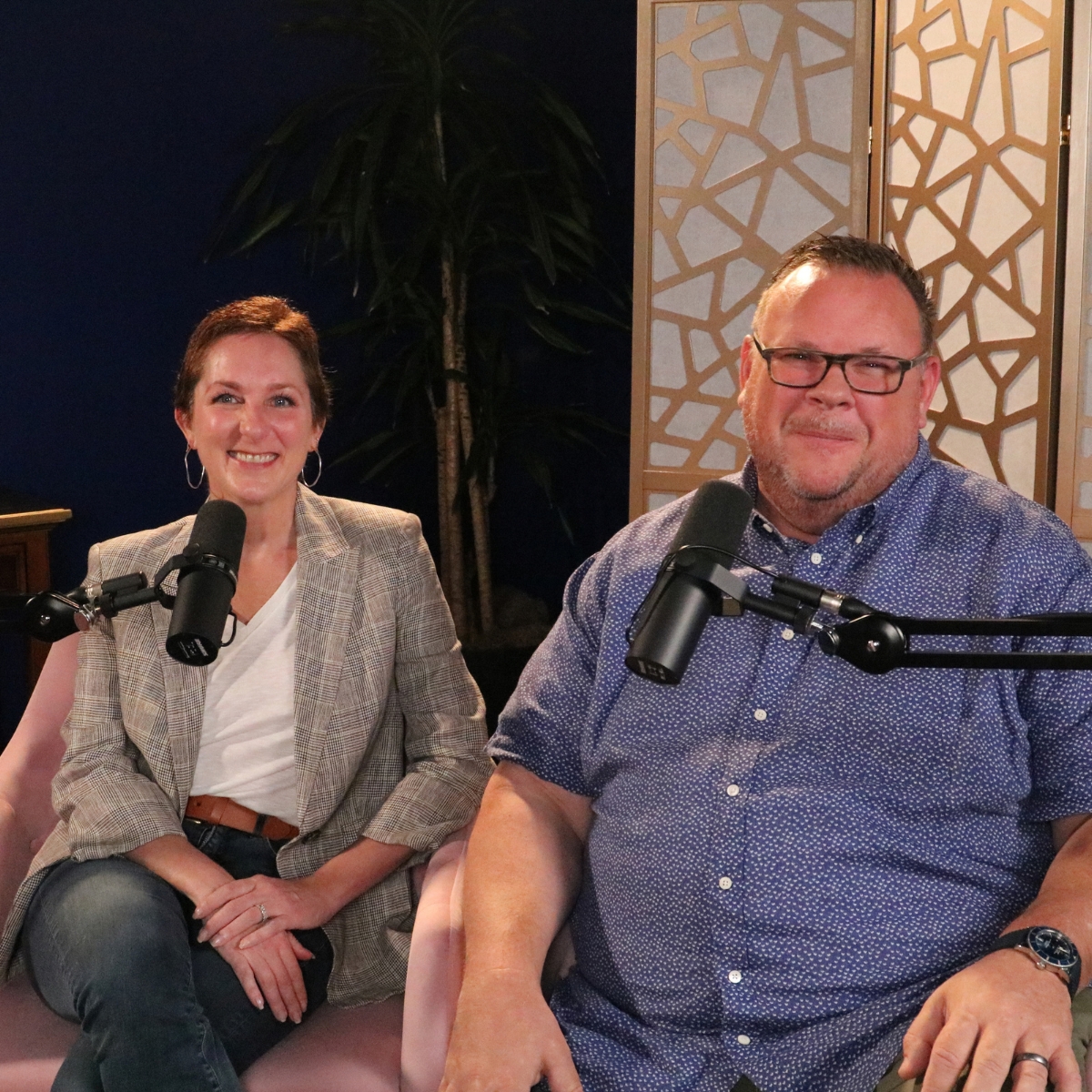
Angie: [00:00:00] A breast cancer diagnosis changes everything, but no one should have to face it alone. Today, Lindsey Brown of Southern Smoke Foundation shares her breast cancer journey, and Chef Chris Shepherd talks honestly about supporting the person you love through treatment. We’ll talk about early detection, caregiving, community, and why asking for help takes strength. If you enjoy this conversation as much as I did, please consider sharing with the advocate in your life and making a donation at therose.org.
I’m gonna jump right in and, um, ask you about the day that everything changed.
Lindsey: It was September of last year, and I had had the biopsy, and we had just been in New York for 10 days, and I was… We were spending some time with a friend of mine who had just gone through-
Angie: Oh …
Lindsey: breast cancer, and, you know, she was telling me that, you know, either way it’ll be fine. You know, it… But honestly, I did not expect the phone [00:01:00] call, because they had told me that it would take a couple of days. It would probably be Monday before, you know, the biopsy came back, and I got the phone call. It was end of day on Friday. And at this point, we were two weeks out from Southern Smoke Festival, which is the busiest time of year, which to be honest, was a blessing. Because-
Angie: Right …
Lindsey: at that point I found out, they said it was early, but they don’t know much, you know, ’cause the markers weren’t back, and, you know, all of, all of the th- th- the words that I didn’t know what they meant before. You know, HER2 positive, HER2 negative-
Angie: Yeah …
Lindsey: progesterone, you know, all of these things, hormone positive. And in the midst of, you know, leading up to festival, we started with our meetings. You know, the Monday morning first thing, we went to Baylor Breast Clinic, and then Wednesday we were at MD Anderson. But still, it takes… One thing I learned is it takes a really long time to get all of the testing from hospital to hospital.
Angie: Yeah.
Lindsey: So [00:02:00] because my original mammogram was at Solis Mammography, I think it was, what, two weeks or something?
Chris: Yeah.
Lindsey: To get all of that information to MD Anderson, so I’m meeting with people and they’re like, “Hi, but we can’t tell you anything because we don’t have any of your information yet.” And so we were in limbo for, I would say, a good three weeks. The good news is, while we were in limbo, I could just only focus on getting through festival. And it wasn’t… And I, you know, in my head I was like, “Oh, it’ll be, it’ll be fine. It’ll be a little surgery. You know, it’s early.”
Angie: Highly treatable when it’s caught early.
Lindsey: Yes.
Angie: Right.
Lindsey: You know, everything of… You know, chemo, no, I’m not gonna have to do any of those things. So that, at least that kept me going. Yeah. That sort of denial of what could happen, and then it was the Monday after festival, um, we were literally still standing in Discovery Green, finishing the cleanup, and that’s when, you know, I got the call from MD- MD Anderson that I had [00:03:00] to get a port put in for chemo.
Angie: Oh, my goodness.
Lindsey: So it was, that was, that day was almost- It was harder than the day I found out I had breast cancer because, you know, thanks to organizations like The Rose, you hear all these things, that early detection, um, breast cancer isn’t that scary anymore. And-
Angie: Many advances.
Lindsey: Yes. And so when I got the news, w- I mean, we were definitely scared, but not as scared as, you know, the dreaded- You could have a good plan chemo. You know-
Angie: Yeah …
Lindsey: that kind of thing, so.
Angie: And you’d been diligent about, about your mammograms.
Lindsey: Oh, yeah. It’s funny ’cause I, I credit it to Katie Couric.
Angie: Oh.
Lindsey: When she was diagnosed with breast cancer-
Angie: Oh …
Lindsey: a couple of years ago, she was really putting out all this information about if you have dense breasts, ask for an ultrasound in addition to a mammogram. And so I did. That was a couple of years ago, and so I was, uh… My very first ultrasound I got, they [00:04:00] found just a little benign, I wouldn’t even call it, um, just a little benign thing, and so they were like, “It’s fine. It’s normal.” “Just to watch it.” “Let’s watch it. Come every six months.” And so that is, was not the tumor that they found.
Uh, but because of it, I was going every six months, and it’s, it’s really interesting, um, ’cause I had, I had two tumors that were connected by, um, concerning tissue, I think is what they called it. And so because of that, they measured from one side all the way to the other, which made it very big. It was eight centimeters. And so that is why, even though they did find it early, even though they did check me six months before that, that the size of the two with the connector-
Angie: Right …
Lindsey: that’s why it was such an aggressive treatment.
Angie: Oh, my goodness. And Chris, how, what did y- what were you feeling when you found out about Lindsey, when you heard this news?
Chris: We got back from New York, and I [00:05:00] had to go do a dinner in Greenville, South Carolina, and I was supposed to fly from Greenville, land back in Houston, but then catch another flight straight to San Francisco. It was the wine thing in Healdsburg.
Lindsey: Oh, yeah, you were supposed to go to SommCamp.
Chris: I was supposed to go to SommCamp.
Lindsey: Which sounds really fun.
Chris: Yeah. Um, and I literally just checked my coolers to go to the dinner, and she called me and told me, and I was like, “I’m not getting on this plane.” And she was like, “Yes, you are. You’re going on that. You have to do this dinner.” I was like, “Well, then when it brings me back, I’m not getting on the plane to San Francisco.”
And she’s like, “No, you’re gonna do that.” And we called her f- doctors, and they were like, “Yeah, you should probably be there for the meeting.” And I was like, “Yeah. Yeah, I think so too.” You know, I walked in, and she looked at me, and I started to cry, and she’s like, “You cannot cry.” She’s like, “You’re the one person that can’t.” And so Here we are.
Lindsey: Yeah, and you still have it.
Chris: Well, not that you don’t know, but yeah.
Lindsey: But I mean, but they were right because two [00:06:00] sets of ears are always better than- one.
Angie: Yeah. It’s really hard to take in in that moment. Like you were just saying, language that you might not be familiar with, you know, people hear different things. Uh, what are some of the things that sort of Chris helped you with at, in that moment?
Lindsey: I think the main thing at that time that I was very concerned about is, “What is the plan? What is the pl-” I am, I am very Type A.
Chris: Yeah.
Lindsey: You can say that. And and I wanted to know the plan, and what I learned throughout this process is that it takes you a while to come up with said plan. You know, you have to take steps first before everything’s laid out, and I think it was a practice in patience for me- Yeah … and it really helped, and I think that was part of what he was trying to remind me, is like, “You are not in control of this.”
Chris: No. The, your des- your journey is not something you can control, and, uh, you know, [00:07:00] it was… I think those three weeks of not knowing because waiting on things to get shipped from one hospital to the other-
Lindsey: Yeah …
Chris: I mean, it got to the point where we’re… And I’m just like, “Just tell me where to go, tell them I’ll be there, and I’ll go get it.” “And then I’ll bring it back here. You just, you guys set up…” And she was like, “We may get to that point.” And I was like, “Just tell me when. It doesn’t matter.” Like, I, I’m at the point where, you know, I don’t have restaurants. I, I, like, was filming shows, and I can just be there, you know. I could be there for whatever it needed to be, and that was very beneficial for th- for me personally, I think.
Angie: Can you talk a little bit about what your treatment was like when you had a plan, how that sort of came together?
Lindsey: So-
Chris: Seemed very aggressive at the beginning, but I’m glad it was- And,
Lindsey: and I, I said that to my oncologist over and over and over again. I’m like, “Isn’t this a little aggressive?” Yeah. F- and she said, “Do you want a recurrence in the next 20 years, 30 years, 40 years?” I’m like, “No.” And she’s like, “Okay, then.”
Chris: Because her, t- to Lindsey’s, [00:08:00] reason why she’s asked so many times is because her mother went through kind of the same thing in the same year.
Angie: I see. Oh.
Chris: And she only went through a certain amount of ch- chemo treatments and a certain amount of radiation and then surgery and done.
Lindsey: Yeah, so my mom had… So my mom got her first clean scan a month before I was diagnosed, so it was a crazy- That fast?
Angie: Oh, my goodness …
Lindsey: a crazy year. And you know, we were there when, like, I went to, she lives in Dallas, I went to Dallas to, like, get her fitted for her wig, and so we did all these things, and it just felt surreal that it was literally-
Angie: You were her caretaker?
Lindsey: Right afterwards. Yeah.
Chris: The fact that her mother was giving her the wigs-
Lindsey: Yeah …
Chris: was a little bit-
Lindsey: Oh, my gosh …
Chris: awkward, you know?
Lindsey: And, you know, the, the booties and the, um-
Chris: Freeze your hands … m-
Lindsey: the mittens to freeze my hands during chemo. So going back to your question about the first thing I did, so let’s see. It was probably October 4th or something like that where I found out that I would… that was the [00:09:00] first line of treatment as I was going through chemo, and it was 16 rounds. It was 12 rounds of the Taxol and then four rounds of the AC. So the Taxol was every week, AC was every other week. And, um, so Wednesday was my day, and, you know, Chris took his job very seriously to, like, freeze my hands and my feet.
Chris: Maybe too serious.
Lindsey: I did get some freezer burn on one of my hands.
Chris: But there’s things that nobody will tell you, is like, okay, when you have these mittens and
Lindsey: b- Booties …
Chris: booties that you have to put frozen gel packs in, like, get two pairs, and bring the extra gel packs that are frozen with you. And make sure you have-
Lindsey: Switch them out halfway through.
Chris: Make sure you have a proper cooler. I mean, w- we found… Can I say it?
Lindsey: Yeah.
Chris: Yeah, we found that YETI is the greatest, like, thing for, like, battling this, this, [00:10:00] this, this thing. Like, you-
Lindsey: And we… You know, YETI’s a big partner of ours at Southern Smoke, and they have been forever. And so we were, like, messaging our contact at YETI, and we’re like, “You know what? You guys really, you know, hunting, fishing, cooking, cancer. Like, that should really be one of your-
Chris: Like, rolling in with, like, just the
Lindsey: soft-sided- …
Chris: one of your verticals … coolers packed with- Yeah, that’s not funny … frozen gel packs. And if, you know, ’cause y- when you get to, you know, whatever, wherever you’re at, we were at MD Anderson, but, you know, you go do blood work, and then you have to sit there and wait. And, you know, if you don’t have the proper, like, things, like, it would be really hard to keep her hands cold, and to the point of, like, one day, I gave her freezer burn on her- on her hands. But you know what? Y- y- you didn’t have any repercussions from it?
Lindsey: No, I didn’t have any neuropathy, which is the reason- That would do- for the freezing, and, you know, we, we talked around and around and around about the cold capping.
Angie: Yeah.
Lindsey: You know, my mom tried it, and she has really, really thick hair. I have really, really thick [00:11:00] hair, and it, it didn’t work. And I’m not saying that because it didn’t work for my mom it wouldn’t have worked for me, but just the reason, ultimately the reason I chose not to is that it sounded like one more level of stress and anxiety on top of everything else.
Angie: Yeah.
Lindsey: And again, there’s a lot of denial in this process, so I still had it in my head that maybe I’ll be like that 1%-
Angie: Yeah …
Lindsey: that, you know, you don’t lose your hair during chemo. You alway- I mean, all the things, you think that it’s gonna be you. Um, it wasn’t, but it… One, one of the pieces of advice that I’ve given to a lot of people that have gone through this after me is that the anticipation is worse than the actuality in every situation that I’ve had so far, and the chemo is not that scary. It’s actually, and this sounds so weird to say, but chemo day is actually kinda nice and relaxing. You know, you [00:12:00] get in there and you’ve got your electric blanket, and they give you an Ativan. And you’re like, “I’ve got my book on tape that I’m listening to.”
Angie: A quiet moment to yourself-
Lindsey: Yeah … in some way. And, you know-
Chris: It was a quiet two hours.
Lindsey: Yeah. And Chris, Chris came with me to every chemo, and I, I wa- he wanted to be there, but I liked him being there, too, because I didn’t feel the need to chat with him, and I feel like if friends came you feel like you sort of have to entertain them a little bit. Any- we just, we just chilled out in there. It was, it was kind of-
Chris: It, it was you knew what you needed to do. And to go back to the, the cold capping, I, I think that, uh, every human has to make their, their choices, and I think Lindsey, we were walking home one night and we were talking about it from a friend’s house, and it was like she was… That was the big, I call it a pinch point, where it was like that was gonna be the moment.
Like, how does this happen? And we discussed and it was like- Well, if it starts to come out from this, it’s better for you to [00:13:00] give it than for it to be taken from you. And I think internally they think that’s a powerful thing to have to say. And we got home, she took a shower, she called her hairdresser, and she’s like, “Be here tomorrow. Can you be at our house tomorrow? Can you shave my head?” Because it wasn’t the fact that you were going to f- be felt like you were defeated by this. You were going to own it and make the choice on your own. And I think a lot of this is those kind of decisions.
Lindsey: Yeah.
Chris: It’s attitude and how you go through it. I would say that with her, her attitude was always like, “This is a job. We’re getting it done. I’m not gonna let anything take anything from me.” And smiles. It was always smiles.
Lindsey: And, you know, we have one of our biggest events of the year for Southern Smoke in the spring. Um, it’s our wine auction, and I mean, during Decanted, I had no hair, no eyebrows, no eyelashes, and-
Chris: Which you don’t think about it until you don’t have them [00:14:00] all.
Lindsey: Yeah.
Chris: And then you’re
Lindsey: like- And the eyelashes and the eyebrows were-
Chris: “Whoa, I look like a potato” …
Lindsey: the hardest, I think. But I, you know, a friend of mine had this like $20 pink wig, and it felt festive. It felt a little like rosé.
Angie: Yeah. Absolutely.
Lindsey: Yeah. And it didn’t, I didn’t feel like I was pretending to be the me that I was before.
Angie: Yeah. ‘
Lindsey: Cause that was, that, you know… We went and got a bunch of wigs, and they looked okay.
Chris: Yeah, but when it came-
Lindsey: They looked okay …
Chris: when it came down to it-
Lindsey: But it felt like I, I felt fake. I felt like I was pretending to be the old me and not the new me. And so-
Chris: You’re only putting a wig on to make everybody else feel comfortable.
Lindsey: Yes.
Chris: And it just- And that’s, when you decide that-
Angie: Yeah …
Chris: and you’re like, “I can just put on a hoodie or a noggin cap or whatever you wanna call it- and I can live my life the way I want to,” but by putting on a wig that’s kinda s- stuck to your head, and it’s kinda uncomfortable, you’re only doing that for the person that’s across from you.
Lindsey: Yeah. And it just doesn’t feel natural. The pink wig, though, was fun.
Angie: Absolutely.
Chris: And it was so cute.
Lindsey: Yeah.
Chris: Sh- uh, uh, b- [00:15:00] You look really good. Like everybody’s like, “Dang.”
Angie: So it strikes me that you all, and we’ll talk about Southern Smoke in a moment- that you both have spent years taking care of other people through Southern Smoke and in your work as a restaurateur, and I’m wondering what was it like now, a very visible display at one of your events, and, and what was the community support like and, and how did that affect you?
Chris: Well, I think for a while you didn’t really wanna talk about it for- Well- It took a couple weeks …
Lindsey: I wasn’t sure.
Chris: Yeah.
Lindsey: You know? And we’d, we talked about it, you know, is this something that we wanna share? I mean, obviously close, close friends knew, but is, do we wanna like put it out there on the internet? And ultimately it was, I can’t fully go into hiding during this. You know, I-
Angie: As you just described.
Lindsey: Yes. Yeah. I mean, and I- It’s not possible … other than five weeks after surgery, I, I worked the whole time. And it was really helpful for me to work the whole time, but that also means, you know, I’m gonna be on calls, and I’m gonna have meetings, and it was [00:16:00] easier for me to put it out there first than have to explain, you know, every single time I’m meeting someone new or, um, on a call with someone new. And so we did, and I think still I’m overwhelmed-
Chris: Yeah …
Lindsey: by By our friends, our family, our community, people, people that came out of the woodwork, and I say it all the time that I had all of these cancer angels, people that I knew before, but I- many of them, I wouldn’t even say we were friends. We were acquaintances, and then now we are more than friends because they were the ones that were checking on me. You know, every single Wednesday, I would get a text from, like, a handful of people that knew exactly what I was going through.
Angie: Mm.
Lindsey: Vice versa, I could, you know, text them and be like, “Okay, so how long after starting [00:17:00] chemo did you, you know, lose your hair? How long did it take for your eyelashes to come back? Did you have any… Like, w- what other symptoms did you have?” You know, ’cause you- For every drug that you’re on, you get like a list of 100 symptoms, and they all sound terrifying and horrible.
Chris: It’s like listening to a commercial on the TV-
Lindsey: Yeah …
Chris: where like this could cause ba, ba, ba, ba, ba.
Lindsey: Yeah.
Chris: And at some point you’re just like, “I can’t pay attention to this anymore,” and I don’t know if I really wanna take it because… But these are just, they’re possibilities.
Lindsey: Possibilities.
Chris: They’re not exactly what’s going to happen.
Lindsey: Yeah.
Chris: And I think that’s very important to remember-
Lindsey: And- …
Chris: is that not everything-
Lindsey: Yeah …
Chris: that they’re saying can or even will happen.
Lindsey: It, yeah, exactly. Like, I just, I just started on a drug two weeks ago called Kisqali that was originally supposed to be for metastatic breast cancer. It’s, it, they say it’s not a chemo drug, but it says chemo on the packaging.
Chris: I went and picked it up, and [00:18:00] it literally came in a big bag that-
Lindsey: So it’s- …
Chris: had the big sign and was like chemo.
Lindsey: So I mean- And it was like, oh, it’s- … it was definitely my most recent hurdle of, you know, anxiety and fear, and I only know one person, now two, that have, that were on it, have taken it, and so that was like, hair loss again is one of the symptoms. And, um, so I, you know, I text my friend who is on it. I’m like, “Okay, which of these did you have?” She’s like, “I feel great.”
Chris: Yeah.
Lindsey: And I mean, I’m only two weeks in, knock on wood, but I feel great, and nothing’s coming out. And, and you know, we’ll see. After this actually is my first blood work and echocardiogram, ’cause it can be hard on your heart, just, you know, to make sure that it’s doing what it’s supposed to be doing and my body’s tolerating it, and, you know, I’m nervous. Like, we’re going straight to MD Ander- MD Anderson after this, and I’m just like, I feel good, so I really hope [00:19:00] that my blood work and my echo turns out great because I wanna stay on this drug because there, there is research that says if I take this drug for three years, the chance of recurrence is even lower.
Angie: Oh my gosh, yeah.
Lindsey: And if I feel great this whole time, who cares what three years is, you know?
Chris: I would say, I would say going back to, like, the support of people-
Lindsey: Yeah, sorry.
Chris: I- No, you’re good. You’re good …
Lindsey: jumping around.
Chris: I, I think that every human that has to go through this has a choice to be vocal about it or not, and to let people know what’s going on or not, right? And that’s a, that’s a very hard choice.
Lindsey: It’s a personal choice.
Chris: It’s a very personal choice, but I will say for those that are nervous about that- There will be signs, and people will wonder what’s going on with you, and then they just don’t say anything. And then they don’t call you, they don’t check on you. They, ’cause they’re like, they don’t know what to do. But if you choose to be vocal, like, we put it out there. Um, ’cause she’s like, “I’m gonna put it out there.” And I was like, [00:20:00] “Should I?” And she’s like, “Yes, because we’re both doing this together.” And the support system that happened was 100 times stronger than I thought it would be.
Lindsey: It was, it was incredible.
Chris: And when people know, then there’s no questions.
Lindsey: Right.
Chris: And if you’re very vocal about, like, th- then they’re, then they’re calling and checking on you, instead of making the decision of like, “I don’t know what’s really going on. I’m not gonna reach out.”
Lindsey: I mean, we had friends who, I had college girlfriends that flew in to be with me, like, on the off week of my AC chemo. We had friends that flew in in between the Taxol and the AC. We had 40 people there-
Chris: Well …
Lindsey: when I rang the bell after chemo, and-
Chris: I, I asked …
Lindsey: multiple people traveled in for it.
Chris: Yeah, I a- asked when, when, when she was gonna ring the bell. I was like, “Can we have people in?” They’re like, “Yeah, as many as you want.” And I [00:21:00] was like, “Are you sure about that?” And they was like, “Yeah.” And I invited 40, and all 40 showed. And like, I was like, “Hey, so where’s this bell thing happen after this? ‘Cause we might wanna get some thi-” He’s like, “How many people do you have?” And I was like, “40.” And he goes, “Oh, it’s a small room, but we’ll make it work.”
And they- It’s nice … and the team at MD Anderson was absolutely fantastic. They, every moment that we went there, from the valet par- the valet guys, who were like ch- like, “How are you doing, Lindsey? You doing good? Don’t let anything take your smile away,” you know, to just the people checking you in, to the people saying goodbye, and the people doing the work, absolute true professionals.
And they are there on your journey with you. And, um, the guy was like, “Yeah, what’s your song?” And then it was like, what are you talking about? And so he went and got a music box, and he played all these ring the bell songs and like, and just made it very cordial for everybody, even though that room could only fit probably 12 people, we got everybody there.
Lindsey: We [00:22:00] did. And I don’t know, like, I don’t know how many times we’ve said through this process how lucky we are to live in Houston. I mean, we, we know someone right, literally right now, who has traveled in from many states away to get a second opinion at MD Anderson, and I can’t imagine- The added burden of having to travel and even if you’re staying with family, that’s a lot-
Angie: Yeah.
Lindsey: To have to, to have to do while you’re going through treatment. The fact that I could come home and sleep in my bed every single night after treatment, or, you know, radiation is The schedule is intense because you’re there every single day, and it’s only for 30 minutes, but it still is a commitment for you to leave what you’re doing, drive over. Like, you, you have to be here.
Chris: Yeah. For her, it was three weeks, five days a week.
Angie: Wow.
Chris: And- At the same time every day.
Lindsey: Yeah.
Chris: And it was just [00:23:00] bam, bam, bam, bam, bam. So if you’re not here…
Lindsey: You got… You have to be here.
Angie: Yeah.
Lindsey: And the team, I mean, I think I have the best team of doctors, like truly in the world, and, you know, we’d… I had a… I got an infection after surgery, so I had to go back into the hospital, and like my, my breast surgeon, she’s, she’s the chair of breast surgery at MD Anderson. Her n- name is Kelly Hunt. She is wonderful. She came and checked on me every single day. I mean-
Chris: It’s not even, we weren’t even in the wing.
Lindsey: No, we were, like they had to put me in like the gastrointestinal wing because the breast wing was full, and every single day-
Angie: Wow …
Lindsey: she was there.
Angie: Sounds like the personal touch really made a difference to be able to have a, a, a good experience in a really challenging time.
Chris: Well, and I would say that the majority of this is attitude.
Lindsey: Yep. Well, and like my, our next door neighbors, which Again, like Houston is such a small town. They’re [00:24:00] researchers at MD Anderson, and he researches breast cancer, she reaches, researches colon, and it just so happens that my neighbor has worked on research projects with my oncologist. And when you think about how big MD Anderson is, not every- I mean, people do not…
Everyone doesn’t know each other. So that was pretty wonderful at the beginning, especially when I had a lot of questions, and he could look at my chart, and I gave him permission to get into my chart. And he, his piece of advice for me, which is so correct, is that of all your team, you have to love your oncologist because that’s the person that you’re gonna be with for decades. And he’s like, “And if you don’t, you need to change one- change and find one that you do.” I mean, I am so lucky. My, my oncologist, Dr. Lim, she is, she is amazing.
Chris: And he asked, and she was like, “Dr. Lim.” He goes, “Bora? Amazing.” You know, it was-
Lindsey: But we’re just, we’re so [00:25:00] lucky to have the medical professionals and- It’s a blessing, so lucky the teams here in, i- in this t- in this town. Like, we are… It is literally the best in the world.
Angie: Yeah. You talked a lot about sort of the friends and the community of support. For people just starting, who have friends that are just starting out on this journey, what advice would you give them, uh, Chris, as sort of a caretaker that you saw was really impactful for people just starting out on this journey and their friends are s- you know, thinking about how they can be supportive?
Chris: I, I, I, you know, because even to this day, like, uh, we have, I have friends going through different ranges of whatever stage of cancer or what may be, and it’s like, “Hey, you want me to come hang out with you? I don’t, we don’t need to talk.” Like, I don’t, I know what that is now, right? And, and I feel like just being there and being supportive and, like, whatever you need, um, I, I, I think is just keeping people with a positive attitude Is, is very [00:26:00] helpful, and having a, you know, just being there. “Hey man, you good? Like, what do you need? Like, whatever, you want me to talk to your wife? Like, I’ll do that. You want me to talk to your husband? I’ll do that.” Like, because being… I had people call me as caregivers that had gone through this. Some were really good, some were like, wow.
Angie: Like It’s hard to know what to do, right?
Chris: And so I think- It, it really is, but it’s just, it’s showing up and being there-
Lindsey: But I think that- … is the most important thing … I think one good piece of advice that Chris got that we tried to adhere to was you have to talk about other things besides cancer.
Chris: Yeah, it gets all-consuming.
Lindsey: It- and it’s hard because it does feel like-
Angie: And you had an aggressive treatment. I mean-
Lindsey: Yeah …
Angie: you were there every day. That’s what you’re living. It-
Lindsey: It, it’s hard to-
Angie: It’s natural to talk about what you’re going through.
Lindsey: Yes.
Angie: Yeah.
Lindsey: Um, but it was really good advice, that there are other things going on in this world that [00:27:00] do not involve cancer, and we should focus on them.
Chris: Um- Yeah, we did a little, you know, it was like one day we were sitting in, uh, having chemo and, you know, it’s the fall, and so I just, I do little things of kindness that aren’t normal. We got home one day and there was a massive pumpkin patch on our front porch because I found somebody just sitting while she was doing treatment, and I was like, oh, for not… It was so cheap to have it done, and they just came and they put all the pumpkins and all these gourds out and decorated everything, and then they came and picked them up in a month and a half.
And but we sit on the front porch and just be part of the neighborhood and, like, and have those conversations with people instead of hiding and not doing… You know, we had to be very diligent about how far we were and who may, how many people we were with and, and things like that ’cause your immune system’s kind of shot. But, um, understand that you still are living.
Lindsey: Yeah. And finding things that bring you joy, you know? [00:28:00] Like, I, uh, for Christmas I bought myself one of those little free libraries for our front yard. And it is the best thing I’ve ever done, ’cause I, I had very strict, again, type A, even during chemo and also after surgery, I had like very strict reading goals, and-
Chris: That doesn’t change though. Yeah.
Lindsey: And so then, you know, we were… I was constantly having more things to like put in the library, but then the part that brings me the most joy is seeing other people that are seeking out our street to see what’s in there or to put their own books in there, and that just, that made me really happy.
Chris: Sitting on the front porch and people walk up and they’re like, “Thank you so much for doing this. You made this part of the neighborhood amazing because of this, because we can have interactions.”
Angie: Yeah, really building that.
Chris: And now it’s like we see, oh, they’re looking for kids’ books, and I’ll go like to Quarter Price Bookstore and buy kids’ books.
Lindsey: Yeah.
Chris: And just to put them in there.
Lindsey: Yeah.
Chris: You know, ’cause I want, we want everybody to enjoy what [00:29:00] this is, and I don’t read a lot of books. I watch more football than I ever have in my life.
Lindsey: I had, I had some girlfriends from college. It was the night before surgery. We had gone out… or two nights before surgery. We had gone out to dinner, and so we’re s- we’re up later than normal, and we w- we’re getting ready for bed, and Chris was like Come here. And so we went to the front window, and somebody was installing these giant arcs of pink balloons
Chris: It’s like two big pink-
Lindsey: Boobs …
Chris: zeros.
Lindsey: Basically. Yeah. Yeah.
Angie: Oh, that’s so funny.
Chris: And it was like, it was like 12:15.
Angie: Oh my gosh.
Chris: And I look out and I’m like, “What is this person doing?”
Lindsey: What is happening? And it l- it took us about 24 hours to figure out who did it. And so they, they stayed up until I got home from the hospital, and our next door or two doors down, our neighbor was having a bat mitzvah that weekend, so they had [00:30:00] tons of family coming in town. And later on, our neighbor said that they had two family members that had gone through breast cancer, and so seeing two giant boobs on the lawn, like, made them so happy. Yeah. You know? So it’s just like-
Angie: A moment of joy.
Lindsey: Yeah.
Angie: Yeah. A way to, yeah. Way
Lindsey: to make- It was, it was so cool and so thoughtful, and we said to ourselves, “We need to remember that,” because-
Chris: It’s a good thing to-
Lindsey: It was a good thing to do just to surprise people with. Yeah.
Angie: You mentioned before we said we would come back to Southern Smoke.
Lindsey: Yeah.
Angie: Um, and I’d love to hear about how Southern Smoke started and, and sort of what, how it’s formed into what it is today.
Lindsey: Definitely. So it started in 2015 just as, you know, a single fundraiser for a friend of ours who was a sommelier in town who was diagnosed with MS. And the idea was to, you know, raise awareness. Um, there was a chef who was in Houston at the time who a couple [00:31:00] months prior was also diagnosed with MS and lost the ability to hold his knife, and instead of telling people, he died by suicide. So it was a really sh- huge shock to the community. And so when our friend was diagnosed, he said, “I wanna be the face of it.” You know, it’s kind of similar to sort of what we’re doing now.
Angie: I see, yeah. The parallels.
Lindsey: And yeah.
Angie: Yeah. And so for t- for two years we just, we threw, you know, a festival in the backyard of Underbelly, and it was in 2017 when it, we changed our focus. That was when Hurricane-
Chris: We call it the backyard of Under- Underbelly, but it was literally we shut all the streets down.
Lindsey: Yes.
Chris: Yeah.
Lindsey: Like between Underbelly and Legacy. It was big.
Chris: Yeah.
Lindsey: And then in 2017 when Hurricane Harvey came through, we realized that all of this money that was being fundraised- was going to go to infrastructure. It wasn’t going to the bartender, the busser, the cook that really needed that money because they were paycheck to paycheck.
And so that’s when we changed our focus. And so now we have two programs. We [00:32:00] have a, an emergency relief fund where we have granted about 16 and a half million to individuals in the food and beverage industry nationwide.
Angie: That’s amazing.
Lindsey: And then we also have, uh, Behind You, which is a– we provide access to mental health care to the food and beverage industry. And so that one, because therapists are licensed state by state, we’re in 14 states growing, um, but we partner with universities that have psychology and social work programs, and they’re the ones that provide the counseling services. So we grant the university, and then they provide 20 sessions to food and beverage workers.
But what we, what we have seen in the past couple of years is, is medical cases are our largest grant funding category, and of that, cancer is a very large piece of it, and that has really hit home for me because, you know, we’re lucky we have health insurance, and [00:33:00] yes, like we’ve had to pay some out-of-pocket, but it hasn’t been terrible. But we see cases come through where they don’t have health insurance, or their deductibles are so high they can’t afford to pay them. And I’m so glad that we’re here, that we can step in and provide that funding for them because-
Angie: A, a safety net-
Lindsey: Absolutely …
Angie: for those who really, who really need that-
Lindsey: Absolutely
Angie: kind of support and service. Can you talk a little bit about sort of restaurant workers and, and, and what they mean to you and how you certainly have been involved in the rest– in with food and beverage workers for a long time?
Lindsey: Abso– I mean, food and beverage is the… I think it’s the backbone of every community. You know, restaurants are where people go to celebrate. It’s where people go to close deals. It’s where people go to when they’ve had a bad day. And, you know, that’s, that’s the place where people can take– can feel taken care of, and we wanna be the ones that [00:34:00] take care of them. I mean, that’s actually one of our tagl-taglines is: Who takes care of us? Well, it’s us. And it’s, it’s a reminder to- People that sometimes can be overlooked
Chris: And so it’s pretty amazing. You can be overlooked when you’re right there.
Angie: One of the things that struck me is how you’ve become a real spokesperson for, uh, particularly in this community, for early detection and make it, you know, based on the experience you’ve gone through with Lindsey and really promoting that message. Um, and of course, that’s one of the things The Rose is really focused on is removing barriers for early detection, having … helping those who might not otherwise have insurance or ability to pay, to be able to, to access not only mammograms, but also ultrasounds- biopsies, to be able to be a safety net in the same way. And so I wonder what the reaction to that has been, or if you’ve heard, um, it’s been, it’s been very notable to me that, uh, uh, about a spokesperson for early detection.
Chris: Uh, you know, I didn’t know how important it was. [00:35:00] Um, but I think when you start talking about it, knowing is better than not knowing, and it’s the fear that we turn, generally always have of the unknown will make us not put ourselves into that light. And I think that going and getting it, uh, you know, whatever it needs to be done, do it, because it’s better to know now than later because those things earlier can be fixed way easier than later. And, um, you know, it’s, it’s, it’s amazing the amount of people that have been like, “Oh, I’m going to get my first one now because of the things that you’ve said.”
And, you know, and for us to come out and talk about going and getting it done, getting your scans done, getting your mammograms done, going, whatever it may be People feel so much better when they do it. Instead of the fear of it, it’s, it makes you more comfortable. And even if th- the scenario like [00:36:00] what we went through, and Lindsey was going all the time, and it, it, that to me was a proof of early detection, right?
She’s still going all, you know, very diligent about it, and always has been. And if we weren’t this diligent, how fast would that have gone? It’s a different direction, right? Yeah. And so taking the fear away from that and breaking down that wall of like, “Well, I’m too young,” or, “I’m too this,” well, you don’t know.
Angie: Right.
Chris: Just do it.
Angie: Well, I liked what you said before about you had a plan. Right? You were able to find it, you were able to address it- and be able to have a plan, and you’ll be able to move forward-
Chris: Yeah …
Angie: in a way that, uh, I think we hope everyone has that opportunity-
Lindsey: Yeah …
Angie: as well.
Lindsey: I hope so, too. I mean, it’s, you know, it’s, it’s the, the concept of you buy a car and you see it on the road everywhere. Yeah. It definitely feels like we’re seeing that car on the road everywhere, that, and I think maybe because we have been so vocal- . people are reaching out to us, you know, letting us know that they’ve been diagnosed, or their [00:37:00] partner has been diagnosed, or, you know, something like that, um, where we can provide a advice.
But it, it definitely seems, and maybe it is, it’s early detection. More people are getting their mammograms, so that means more people are getting diagnosed. It’s, it’s sort of this circle, but as long as it’s early enough, it can be, you know, it can be treated. But I just, there definitely seems like there’s a lot of cancer out there right now.
Chris: And, and I think that before, before we went through the scenario, when we had heard somebody had been diagnosed or whatever, like, “Man, that’s really… So sorry to hear that.”
Angie: Yeah.
Chris: And that was the end of it, right?
Angie: But now you have a whole wider perspective.
Chris: But now we have a bigger perspective, and now it’s like, “I’m gonna check in more. I’m gonna make sure you’re going- through with things.” And, and I think when people understand that, that it’s okay to do that, when you feel supported by your friends or peers or whatever, just people you’ve maybe never met before, probably haven’t, it [00:38:00] feels amazing.
Lindsey: Yeah.
Chris: Like you have the whole world with you.
Lindsey: Yeah.
Chris: And you can, you can conquer- You can do it … anything. And I, and I would say that to, to this aspect, like yes, it is a, it’s a terrible thing to have to go through, but you can also do it. Like, you as a human being can defeat this. You guys, y- you, you can battle through these things. It… Just the attitude of it and getting it taken care of, it’s, it’s, it’s a, me watching Lindsey was one of the greatest feats I’ve ever seen. Just the power.
Angie: Lindsey, if there’s one thing you would leave our listeners with, what, what would you, what would be, what would be your parting words today?
Lindsey: I think it would be, I’ve already said it once, but that the anticipation is worse than the reality. That it’s scary, but [00:39:00] we can do it, and we can get through it, and we have the tools and the attitude to get to the other side. Even though sometimes it does seem like the other side is really far away. Even now, you know, it feels like the other side is- it’s never gonna, it’s never gonna be over. But that’s okay, because life is pretty great.
Angie: Thank you so much for sharing your story, being so open with us, for Chris, for y- coming, being here- … today as well. And giving us such good insight, and really sharing your s- perspective. We, we really appreciate it.
Chris: I think the one thing, you have to enjoy the small victories, right?
Angie: Yeah.
Chris: The anticipation of all of these things, but enjoy moments on the front porch. Enjoy a little walk in your neighborhood. Enjoy just getting out. Enjoy all of the things that forever you have just overlooked, and take happiness in those moments, and it really will help you get through the things that are dark.
Lindsey: A cup of broth at Kenny and Ziggy’s. [00:40:00]
Chris: That was every week-
Lindsey: That was it
Chris: after we got back.
Lindsey: Every chemo.
Angie: Nice tradition, to be able to, to celebrate the moment-
Lindsey: Yeah …
Angie: being over.
Lindsey: Exactly. Yes.
Angie: Nice little rituals. Well, thank you again. Appreciate you being here.
Chris: Our pleasure.
Lindsey: Thank you for having us.
Post-Credits: Thank you for joining us today on Let’s Talk About Your Breasts. This podcast is produced by Speke Podcasting, and brought to you by The Rose. Visit therose.org to learn more about our organization. Subscribe to our podcast, share episodes with friends, and join the conversation on social media using #Let’sTalkAboutYourBreasts. We welcome your feedback and suggestions. Consider supporting The Rose. Your gift can make the difference to a person in need. And remember, self-care is not selfish, it’s essential.