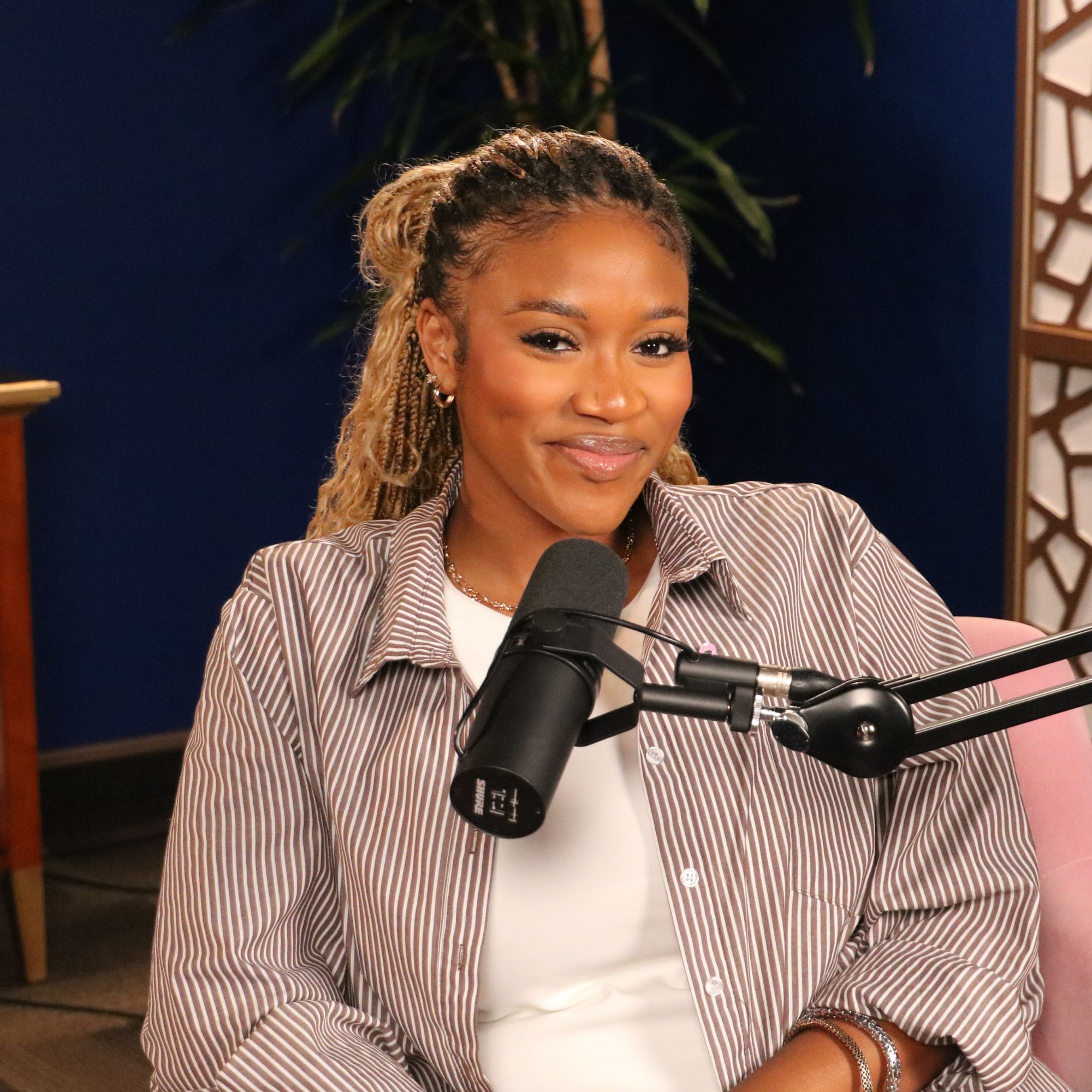
Dorothy: [00:00:00] Keyanna McKenzie turns a long history of having breast health scares and a strong family history into a powerful wake up call. She talks about her lumpy, bumpy breast, about fear, about delay, and what finally pushed her to act. Her message to young, black and brown women is simple. Your dream life depends on your health, and early detection belongs in every plan.
Please share this episode with your family and friends. And if it’s on your heart, consider making a donation to The Rose. We appreciate every supporter, we appreciate every donation, and all of it helps us serve more women.
Let’s Talk About Your Breast, a different kind of podcast presented to you by The Rose, a Breast center of excellence, and a Texas treasure. You’re gonna hear frank discussions about tough topics and you’re gonna learn why knowing about your [00:01:00] breast could save your life.
Keyanna, we are so happy to have you here, and I was just totally blown away by your email to us how you wanted to do this event, but it was so deliberate and you had, you’ve got almost too many goals for this event. I, I’m gonna have you talk about it in just a minute.
Keyanna: Yeah.
Dorothy: But tell us your history, how did you even know about The Rose?
Keyanna: Well, I’m also very excited to be here, so thank you for that. I found out about The Rose when I moved to Houston a few years ago. Actually. I’ve been battling with a early detection kind of breast cancer scare talk since about 17. So when I moved here for college, it was only right to set up medical care and things like that.
We found about The Rose because it’s like the only cancer specific facility to me here in Houston that was like easier to find, like the [00:02:00] easiest to find. My first appointment, I went in and I do all my research. As you can tell, I’m very obsessed with, you know, The goal. Um, and they would not give me a mammogram. And so I had to start off with ultrasounds. And that was my first interest into The Rose, was my first breast ultrasound.
Dorothy: Ah, now, so you’ve had like issues with your breast. You’ve had, you’ve found cyst or Lumps or that kind of thing? Okay. Did you come to this location or the gallery of one?
Keyanna: I, you know, funny enough, when I first walked in here, there was, this was the first location I had went to.
Dorothy: Oh, okay. Okay.
Keyanna: Because seemed familiar, and I said, wait, I’ve been here before. So absolutely. This was the first location that I went to.
Dorothy: And so it just, for our listeners, it’s. Often recommended that we start with an ultrasound.
Keyanna: Yes.
Dorothy: On a younger woman, but it doesn’t mean that a younger woman can’t have mammograms if we’d found anything. You know, that’s, that’s just the next step. It’s the gold standard. So, so, but. [00:03:00] Then you, did you, am I remembering right, your grandmother was also?
Keyanna: Yes.
Dorothy: One of our patients?
Keyanna: Yes, ma’am. My grandmother. Um, and I have two grandmothers who both had breast cancer, but my grandmother on my father’s side, she actually recently, um, went through, I believe stage two during COVID OD with The Rose.
Dorothy: Oh my gosh.
Keyanna: Yeah. So, yeah.
Dorothy: Tough time to go through that.
Keyanna: It was such a wild experience. You know, I, I always say my biggest fear is waiting for like the hair to fall out to be the first sign. Um, and I’ll never forget the day my grandmother, who, you know, older women roller set every night. Walked into the house, shaved all her hair off and just accepted it.
Dorothy: Oh.
Keyanna: And I just was like, you know what, girl? You got that like.
Dorothy: Right. Yeah.
Keyanna: It’s not as like, she just, she was so fearless about it and she talked about The Rose so much. You know, like she thanks The Rose all the time in a regular conversation. If I don’t go to the doctor, she’s always fussing [00:04:00] like. You could just call The Rose. You could just go to The Rose and I’m like, girl, like I gotta book an appointment. Or like, girl, I’m busy. Like I gotta go to LA next week. Like, I’m sorry. But she is like you guys’, number one advocate, if anything, because of how much it changed her life, especially during COVID.
Dorothy: That was a terrible time to have any kind of illness. And uh, I know our navigators really had to do different kind of things just so the patients knew that we were still supporting them.
Keyanna: She went through, um, I believe she got the mastectomy as well as, um, the treatment. Um, and that was an experience in itself and all during quarantine. Like COVID times. Yeah.
Dorothy: Alright, now let’s go back to you.
Keyanna: Mm.
Dorothy: Uh, so you have family history and you have these lumpy, bumpy breasts.
Keyanna: I do.
Dorothy: And so. Do you do your self exam? I’m just curious.
Keyanna: I never do them, um, [00:05:00] until I found the first lump.
Dorothy: Oh.
Keyanna: And I bumped into the lump. So that was how I found out.
Dorothy: Now, how do you bump into a lump?
Keyanna: You know, when you’re rushing and you’re like, you know, you kinda like putting on your bra in the morning. And you’re just like, uh, and then I kind of ran into the bump. I wasn’t looking for her, and that was like my first detection of.
Dorothy: Oh.
Keyanna: Oh, it’s, it’s larger than they say that they should be. And kind of your world just kind of freezes for a second. So yeah, they’re lumpy, they’re bumpy. They’re in there.
Dorothy: So are you on a regular surveillance? Do you come every year?
Keyanna: Yes. I actually got my first biopsy with The Rose.
Dorothy: Oh.
Keyanna: It was a very, I, I can remember the day like it was yesterday. I was terrified. Um, and I was just beginning my career, I was so excited. Um, the post grad job, like you’re just so, like, and I bumped into the lump and I didn’t tell anybody for two weeks. [00:06:00] I just was like, I’m not going to say anything. You kind of wanna pretend like it’s not happening. And also I’m like, 27.
Dorothy: Right.
Keyanna: I’m just like. No. You know.
Dorothy: What’s the chances? Yeah.
Keyanna: No. And then I, I think I went to Nashville for my good friend’s wedding, and I’m in Nashville. I was actually in the midst of launching my own podcast, so I was like, the timing, this is just, this is not good timing. Like God can wait, like God wouldn’t do anything crazy. He just wait like a month. And then a month went by and I started to feel the pain, um, in my arm. So I wouldn’t be able to, because my job is so physical, I wouldn’t be able to use my left arm at times. And that was what the kicker was. Eventually I found out it was due to poor eating habits. Um, drinking so much caffeine, it can agitate the cyst in your breast. Which causes pain in certain areas, which at the time I didn’t know, [00:07:00] but, in that moment, the pain was what made me have to go to The Rose and just kind of like face my reality, so to speak.
Dorothy: And, and I think that’s an important part because while we’re pretty sure the cancer will not be painful having pain is still no guarantee, it might not be in there somewhere.
Keyanna: Yeah.
Dorothy: So you did the right thing. I mean that’s, did you have an ultrasound guided biopsy or.
Keyanna: At first it was just the ultrasound, and then it was the lead up to the biopsy.
Dorothy: Yeah.
Keyanna: And you know, so dramatic, like just. I was, I’m such a dramatic person, but I was 27. Like, I’m just like, I’m just a silly girl. Like I don’t have time for this. That’s, you know, it was just so much for me. I think I was like dating at the time, so it was just like, how do you bring this up in conversation that if I go to the doctor and they find something in this, like my, my world changes, you know, my job changes my, I was working on set. From like sometimes 9:00 AM to [00:08:00] 7:00 PM and I loved it. I love my job, I love production, but it was just like my body and unfortunately my breasts, you know, they didn’t like that. So the sit down caused such a trickling effect after the biopsy.
Dorothy: So what does that mean?
Keyanna: So for me, once I found out there was no cancer, you know, it was like deep breath, but it was just the, the waiting and the confusion and just, it was just so lonely being that, like I said, I was just getting into my career. I was just getting on the scene and I was so just kind of, I like to say hungry, like I have so much grit for what I’m doing in my life. I’m always 10 steps ahead. I’m in 2030 while everyone is still, you know, here in 2025.
And I think this whole situation even now was the thing that made me kind of be present. I kind of try to tell myself, be where my feet are these days. Even now I’m 29, I’m about to [00:09:00] turn 30, you know? And so even now I struggle with being over there when I need to be here. I think as much as it was terrifying, it was lonely. It was, it was just, it was so lonely, but it was the blessing that like grounded me in the whole situation. So now I, I try to be more focused on my health. ’cause my health is going to be the thing that allows me to do the job and the dream. Like I have to take care of my breasts so I can live the dream.
Dorothy: Right.
Keyanna: That’s my thing now.
Dorothy: So in your 29th year.
Keyanna: 29th.
Dorothy: This was particularly important to you and you wanted to do something special.
Keyanna: Yes.
Dorothy: So let’s talk about that.
Keyanna: Yes. So turning 30 to me is such a huge thing. I’m such a, like everything must be dramatic and romanticized. And when I was 13, all I’ve ever wanted to be was 30. Just similar to the movie 13 going on 30. I’ve always wanted to be the girl [00:10:00] downtown, living her life, like having this fabulous, you know, life, and I basically do. And so turning 30 for me, the biggest thing wasn’t about a guy. It wasn’t kids, it wasn’t buying a home. It was, I had a breast cancer scare. I’ve been dealing with breast cancer scares since 17, you know, since I graduated high school. And now I’m just like, I’m talking to my friends, I’m telling them what’s going on with me, I’m teaching them how to check themselves, and I’m just like. I hear my grandmothers all day who both experienced breast cancer. Talk about how my early detection and how it’s so normal to find it in younger women and even men and, it, the conversation isn’t brought to the dinner table or when we’re out for drinks, you know, like my health isn’t the topic. I don’t have a boy to talk about. I have a breast exam appointment that I have to get to because I have a lump in there. So I, I just want, I’m so passionate about, like I said, to bring it [00:11:00] back to earlier about how my breasts and my health are connected to the dream. And so if other women don’t know how to keep themselves checked or know that they have opportunities and they have access to appointments and the roles and facilities like this, they won’t know that they still can be able to live their dream and make sure that their wellness and their health is in check. And that’s inevitably what made me want to have this event, Boobies and Babes.
Dorothy: Oh no, I didn’t know the name of it. Oh my gosh!
Keyanna: Yes. It was a joke. It started as a joke and then it stuck and.
Dorothy: Wait, wait, wait. Now we’re here. Oh, okay. So that is it? The name of it?
Keyanna: It’s Boobies and Babes. I did not want it. I said, they’re not gonna take us serious. And my, everyone around me was like, even my grandma was like, you know what? Just say it. It’s gotta be bold.
Dorothy: Well, that is bold.
Keyanna: It’s bold.
Dorothy: Uh, so I remember in your email you said, um. Your mission was to reach those younger women [00:12:00] in a broader community. I think, I think that is, uh, so important. We are diagnosing women, young women, at a much higher rate than we ever had before. Our youngest, uh, patient was 18 and every year we have a 22, 25-year-old. I think just in the last month we had a 27-year-old. So, and invariably. We have more younger women who are black than Hispanic than white. And you know, I just seriously believe if we don’t pay attention to that, you know, I, I have always said if we could do an MRI on every young woman between 30 and 35, we’d be surprised. What we’d find. ’cause it seems to move at that time. Really strongly. So. Kudos to you, even though your name is a little bold. I mean, you know, we’re a very conservative organization here. [00:13:00] Alright, so tell us what’s gonna happen during this…
Keyanna: Boobies and Babes.
Dorothy: Yes. Tell us what’s gonna happen.
Keyanna: So, um, Boobies and Babes is really to attract the younger audience, you know, it has that bold name for a reason. And like I said. Pilates is all the rave. Now I’m not the best at Pilates. I’m still just trying to get my steps in, but we are, me and my trainer, who was one of the reasons why I went into this year. Um, my biggest goal turning 30 is I want to gift myself a new me and one of the main priorities is a healthier version of myself, and so that is why I ended up getting a trainer.
I ended up telling her about my story, and we decided to collaborate on an idea of the Boobies and Babes event. So it’ll be a mix of Pilates. We’ll also have someone here, of course, from The Rose to be able to talk to women about early detection and wellness. Um, we’ll also have a, a healthcare facility. Um. We’ll have physicians there. Um, we’ll also have someone there talking about other ways for you to be able to receive minerals in your body, so IV and things like that. Uh, [00:14:00] like you said, black women are often the most, I feel sometimes. Underlooked Black. Black and brown women in general are overlooked when it comes to going to the doctor.
And we hear about that with pregnancies. We hear about that with so many things. And I know I’ve even experienced situations where when I first felt pain in my arm, my doctor told me to go take some vitamins and I was 19 years old and I’m just like. Vitamins? Flintstone? You know, I’m like.
Dorothy: You’re 19 years old,
Keyanna: but still, it hurts, you know? So you should be able to give me, give me something.
Dorothy: You should be able to be heard.
Keyanna: I just deserve to have a voice and I, I feel like if we can come together and talk about our jobs and our careers and the men we’re dating and the shows we’re watching. Why can’t we sit around and talk about early detection and health and wellness? And I understand that Pilates is all the rave and we enjoy doing that physical thing, but I don’t feel like we talk about enough of what’s going on [00:15:00] inside of our bodies because you won’t know until you know. So yes, we can see the posters and we are in the digital age. You know, social media doesn’t it? It reaches more and my goal is with my voice, if that’s what I’m doing. Might as well advocate and bring this news to the platform as well, right? I just want women to be able to live the fullest of life, the fullest of dreams. If you want the career, have the career. If you want the man, have the man. If you want the family, have the family, but live long enough to enjoy it. Our grandparents live long lives and usually they’re coming to the rows at 50 and 60 and 70. I’m coming to the rows at, I think, I was 22 when I came the first time.
Dorothy: Oh my goodness.
Keyanna: And you sit in that room and you’re in your, in your smart and you know, you just half naked in there. And it’s a bunch of elderly women sitting around me. And I’ll never forget, I’m like, I’m the youngest one in here and this is the loneliest thing I’ve ever experienced in my life. And I, I would’ve [00:16:00] loved to have someone else my age to talk about this. I would’ve loved to have someone to be like, oh, you felt this or you noticed this. Like, we should be able to share notes and share stories about what’s going on inside of our ba, inside of our bodies and as well in our real lives.
Dorothy: So you’re gonna break that, you’re gonna break that stigma of talking about that’s your bodies.
Keyanna: That’s the goal. We gotta yap about it just gotta yap more.
Dorothy: Yeah. And. You’re absolutely right. We’ll talk about almost anything else.
Keyanna: Exactly.
Dorothy: But not that. Doesn’t really matter what age. No.
Keyanna: And the fact that you said 18, that’s.
Dorothy: Yeah.
Keyanna: That’s crazy. That’s the first time I’ve heard something like that.
Dorothy: Oh, yeah. Oh yeah. So let me think about some other things you’re gonna do there. Besides your other healthcare professionals. You wanted to explain risk factors.
Keyanna: Yes.
Dorothy: And genetic testing.
Keyanna: Yes, ma’am.
Dorothy: And things like that.
Keyanna: Yes ma’am. Um, there are opportunities to receive genetic counseling and I think that is so important. Because that is in fact the reason why I’ve been such an advocate and been able to stay at, on top of things. Um, I’m not sure if I mentioned [00:17:00] my grandmother on my mother’s side. Her and all five of her sisters all had breast cancer or ovarian cancer.
Dorothy: Good heavens!
Keyanna: Yeah. Tell me about it, girl. Genetics is just.
Dorothy: You do have a family history. My goodness.
Keyanna: You know, the genetics on the inside suck. The genetics on the outside. You know, amazing. I’m not gonna lie, but that’s what I like to tell people. It’s just not some good numbers. My neck is not great.
Dorothy: We do have genetic counseling.
Keyanna: Yes. I’ve received it.
Dorothy: Yeah. Okay.
Keyanna: At the age of 19, I received my first genetic counseling, which was able my cousins afterwards because my grandmother was so forward.
Dorothy: Yeah.
Keyanna: In knowing that. Me and my sisters experienced this. My granddaughter will not. Um, she had breast cancer twice, actually. She caught it when I was really young, about five years old. She caught it again when I was about 22 years old.
Dorothy: Mm.
Keyanna: So she’s been my biggest advocate. She’s the most excited about this today. Um, because.
Dorothy: Is she gonna be there?
Keyanna: Well, I’m trying to get her to be there. She’s so fake shy. You know, she’s so coy. But we’re, we’re [00:18:00] trying. We all want to see.
Dorothy: Wait, wait, wait.
Keyanna: Granny.
Dorothy: What did you say? She’s so. Fake?
Keyanna: She’s fake coy, you know, she’s fake shy. It’s like.
Dorothy: Oh my gosh.
Keyanna: She’s, she wants to hang out with my friends. She just pretends like, she doesn’t like, girl, you’re 76. Like you’re still cool. Like, don’t act like that. So I be trying to get her outside, like my friends love her. I talk about my granny all the time. And my mama, I talk about both of my grandparents, both of them experienced breast cancer and. You know, they’re like, they’re my besties.
So it’s just like they are so big on my health. They know my dreams. They hear me talk about it since I was a child, and they want me to live a long life. And so at the event, I would love for it to be a mix of old, older, I’m so sorry, older as well as younger. My grandmother’s trying to correct me on olds. She’s like, you know, seasoned. Seasoned, is the word seasoned, more seasoned women as well as that.
Dorothy: That sounds like something you, you put on your table for Thanksgiving.
Keyanna: You know, new Orleans people’s way.
Dorothy: No, don’t call me seasoned.
Keyanna: That’s the, [00:19:00] we’ll say, um, more defined women. Distinguished. That’s a good word right there.
Dorothy: You, you’re looking for it. You’re looking for it, woman.
Keyanna: We’ll have, um, women of all ages, shapes, and sizes there.
Dorothy: Okay.
Keyanna: Because you.
Dorothy: So you don’t have to be a Pilates expert?
Keyanna: No, not at all.
Dorothy: You don’t have to be all, all that fit?
Keyanna: Nope. We would really like it to just be, um, an opportunity to come together. If you would like to have Pilates, we have tickets for you to experience the Pilates class. If you would like to just come to the event, we have tickets just for that. Um, we’re going to have a scrapbooking station, so I’m asking everyone if you’d like to submit a picture of a loved one or you and a loved one that has experienced breast cancer, um, we’re gonna have an entire scrapbook spread so you guys can craft while the person is speaking.
You know, everyone likes to be stimulated as well as they. While they hear something, um, as well as love notes, we’ll have a love note station because we would love to, and that’s up to, I’m not sure who I would’ve to talk to about that, but we would love to bring love [00:20:00] notes to the patients here as well as we’ll have a florist. She’ll be there. I’m probably saying that wrong. We’ll have someone there making floral arrangements and we would love to deliver love notes as well as flowers to the patients and anybody experiencing things here.
Dorothy: So let’s talk about our holiday party for our sponsored women. That would be perfect.
Keyanna: Okay. I would love to do that. We, that was my biggest priority for the event, was for the people who came to have something to take away to have in their home. Similar to how our grandmothers have pictures up. We don’t really always have pictures up. And I think that’s a big thing to have, you know, in memory, whether they’re here. Or not here. What I’ve been saying is it’s for the ones we’ve lost and the ones we love. And just to have a moment to pay respect to them, whether they’re here or not here and give the ladies their flowers, give them love, give them encouragement, and we would love to deliver it to you guys. All right. So let’s work on that one. We will cook that up.
Dorothy: Back to the event.
Keyanna: Yes.
Dorothy: We have some great [00:21:00] prizes.
Keyanna: Yes. Um, so there’s a company here in Houston called Affordable Furniture. Um, and they are a local company. They are family owned and they are going to be doing a raffle. Uh, we, not a hundred percent sure, but they may be able to receive an entire sofa or maybe some type of item. Or they’ll be able to receive a large discount from the company. So we are so excited to partner on them, um, with them in the area.
Dorothy: So, and you had handbags and you had.
Keyanna: Yes. We have a lot of things, we’ll have a lot of beauty products, so, um, raff.
Dorothy: Raffles or buy or?
Keyanna: Raffles.
Dorothy: Okay.
Keyanna: We’ll be able to raffle off the opportunity to win more furniture as well. Uh, the apartment we are partnering with are looking to cook up something so people can maybe able to receive a discount on if they’re interested in that apartment. It’s a beautiful apartment, might I add now.
Dorothy: Is this the Mills residence?
Keyanna: Yes. It’s gorgeous.
Dorothy: And it’s close to downtown, isn’t it?
Keyanna: Yes, it’s right in the middle of Eddo, right [00:22:00] near the I believe it’s called the Daikin Stadium now. But it’s right near there. Um, and they are very excited about doing this. They’re a new build, um, and they have such modern furniture and it gives that perfect field of this age group, you know, that we’re in. So we wanna make sure we’re there. We’ll have a goodie bags. Beauty products, bloom Society, I’m sorry, Bloom Energy Drinks is going to be able to, um, give some stuff to us as well as Toute Sweet. They’ll be providing food and snacks and all type of goodies for the event, so you’ll be able to eat, drink, Pilates, talks, scrapbook. Just have a good time.
Dorothy: So is this gonna become an annual event?
Keyanna: I would love to. You know, I would love for it to be larger. My dream is to take it on the road. You know, I, you know, me 2030, I’m in 2030, I, I can’t help it. But my dream is for it to be more of a normal thing, like, how can we get girls here? How can we get young women in the [00:23:00] building, getting their breast exams on a more consistent basis? And not just breast exams, you know, overall wellness checkups because. I’m not sure if you know, women lead in entrepreneurship. We lead in pushing the dollar. We lead in a lot of things, as much as people don’t like to give us credit for, but we don’t take time enough to focus on our health. We kind of tend to everyone and everything and we don’t tend to ourselves and I wanna make that the new normal, especially for my age group, and as well as being a black woman.
Dorothy: Any other goals in there?
Keyanna: Uh, you know, president, maybe, I don’t know. Something.
Dorothy: Oh, well, I think that if it did become something annual, you’re gonna be an inspiration to a lot of other people who’ve never even thought this way. That, that is great. I’m, I’m really pleased you’re trying to reach that younger woman.
Keyanna: Thank you.
Dorothy: And you know, I think the other thing that. I don’t think [00:24:00] you said this, but when you knew you had a problem, you did your own advocacy. Absolutely. You were the one that said, I’m going to get this checked.
Keyanna: Absolutely.
Dorothy: And I, a lot of times young women will be told, you’re too young. And they’ll drop it. So how important do you think that part of it is?
Keyanna: I think if anything, that’s the most important thing to take away from this conversation is you have to be your own cheerleader in every way, in every part of your life, just for career before, when you go to those doctor visits, if something hurts, you know, if something is uncomfortable, you have to speak up for yourself.
I, if it wasn’t for me doing my own research, I don’t think I would’ve ever gotten this far. You know, even me doing research about you guys to be able to be here today. Um, once I felt the lump, I knew there was a issue, even though I tried to delay it and ignore it. I knew there was an issue.
Dorothy: But I think that’s, I think that was important that you shared that. Because if. You know, if we think, oh, I should have, I should have, should have. Then we’re just, we’re, you know, we’re criticizing ourselves [00:25:00] again. And we don’t need that. So I’m glad you shared it and you made the final decision to go get it done.
Keyanna: Absolutely. I women, we often live in the shame loop. That’s what I like to say. You know, and like I said, we tend to everything and everyone, and we don’t tend to ourselves, so. I had to take two weeks. I processed it and then it was go time. It was, How do we figure this out? Even in my current situation, my lump has went from probably a skittle to, I would say, a golf ball. My lump is a probably about that big now, and my biggest goal is to figure out a way to remove, as well as, hopefully figure out a breast reduction. ’cause you know, my back does hurt, but my biggest, that’s always my thing. I have to research, I have to figure it out and be, I would like for there to be an easier way for women to receive health and access to information. There’s so many walls up for us to get to the point, whether it’s insurance, whether it’s [00:26:00] time. All those things that has, I have always been met with delay, deny, regroup when it comes to this entire situation. I feel like The Rose, if anything, was the biggest opportunity opener for me to be able to get as much information as I needed. So my biggest goal is to create that pathway for other women to not as soon as it goes wrong, just quit because that, that opportunity can be the thing between you living a long life and you cutting your own life short.
Dorothy: Right. So, Keyanna, we are about to close this up. But I want you to tell us what you do. What’s this dream you’ve had that you’ve been looking forward to since you were a child?
Keyanna: Yes. Um, well, my dream is to honestly, I wanna have my own show. I wanna run my own show. The biggest dream is.
Dorothy: So right now you’re behind the scenes?
Keyanna: Right now I’m behind.
Dorothy: Okay.
Keyanna: But sometimes I dabble in the front. Everyone wants me to go in the front. This is my most in front [00:27:00] year, I would say. Um, but I love production. I love everything when it comes to the writer’s room, to behind the camera, to in front the camera. My biggest dream is to create my own show and build my entire ecosystem, whether it’s making my own print, whether it’s making my own digital, whatever that is, I really want to create my own production company where we’re able to besides women’s women’s health being my passion, my next passion is being able to create safe spaces for young creatives so they don’t feel exploited or they don’t feel taken advantage of in this new space I work in the digital space, it’s very fast paced. Um, especially in the social media, digital space.
It’s, it’s a lot of things out there and we don’t have a lot of rules and regulations just yet. Um, and so my biggest goal is to not only help women. To help young people coming up behind me to build their own platform to showcase their own voice and [00:28:00] talents. And I really pray that I can do that with my own production company.
Dorothy: You’ll get to.
Keyanna: Oh, absolutely.
Dorothy: Yeah. Absolutely.
Keyanna: Absolutely.
Dorothy: Alright, well thank you for totally inspirational.
Keyanna: Thank you!
Dorothy: Talk. And we’re so pleased that you’re supporting The Rose and we know that, um, everything you’ve said today will really, really hit home for at least one listener.
Keyanna: If not all, we gotta hope is one.
Dorothy: Hundreds and hundreds. Thank you for being so bold.
Keyanna: Thank you.
Dorothy: And honest and vulnerable.
Keyanna: Yes.
Dorothy: Yes. All those things that make you who you are.
Keyanna: Thank you. I appreciate. We had a good time, girl. We did.
Dorothy: Even the oldie.
Keyanna: We gotta let that go.
Post-Credits: Thank you for joining us today on Let’s Talk About Your Breasts. This podcast is produced by Speke Podcasting and brought to you by The Rose. Visit The Rose dot org to learn more about our organization. Subscribe to our podcast, share episodes with friends, and join the conversation on social [00:29:00] media using #LetsTalkAboutYourBreasts. We welcome your feedback and suggestions. Consider supporting The Rose. Your gift can make the difference to a person in need. And remember, self care is not selfish. It’s essential.