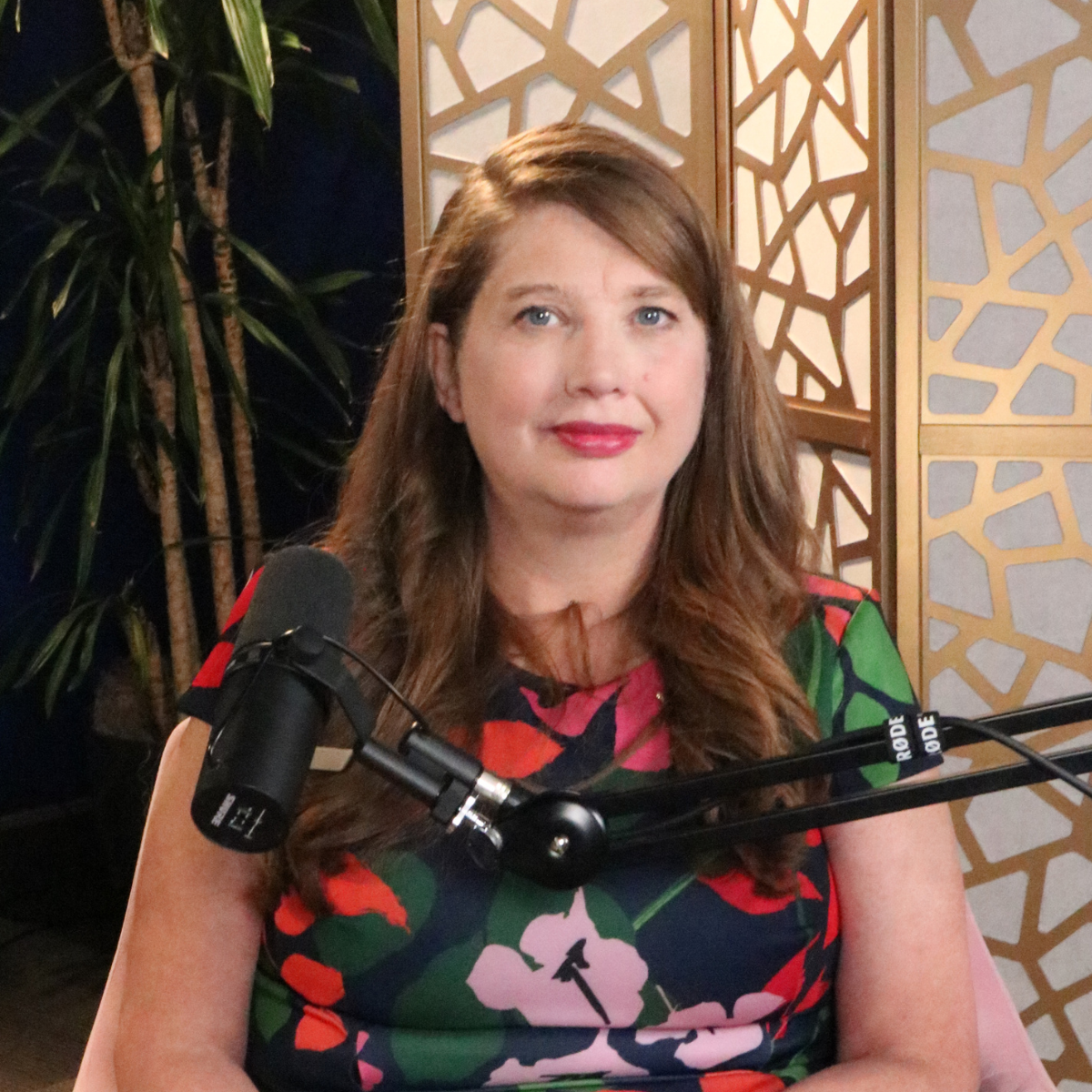
Jessica: [00:00:00] Hello and welcome to today’s episode. I’m Jessica Duckworth, COO of The Rose, and I’m thrilled to have our new CEO, Angie Lane, joining me today. Starting a new leadership role is always an exciting time, and we thought this would be a great opportunity to introduce Angie to our Rose family and community. We’ll talk about her background, what drew her to The Rose, and her vision for the future. Angie, we’re glad you’re here and looking forward to getting to know you better.
Angie: Thank you, Jessica.
Jessica: So you’ve been with The Rose for about six weeks. What have you learned?
Angie: What an amazing organization. I really didn’t appreciate the scope of what it takes to create to really serve 60,000 women a year. I think about the mobile fleet and how awesome that is, the largest fleet in Texas. Five RVs that are equipped with mammography units that go out, have to be air-conditioned 24 hours a day on bumpy roads.
Jessica: Mm.
Angie: Highly sophisticated machines to be able to serve our communities in areas where there are no freestanding [00:01:00] clinics. That was also a big shocker to me, that there are so many counties… How many counties? 22 counties in Texas?
Jessica: Twelve-
Angie: Or in, in Southeast Texas that don’t have mammo- freestanding mammography units?
Jessica: Uh, so out of our 45 counties, 26 of them.
Angie: 26 counties that don’t have freestanding mammography.
Jessica: And there’s 3D mammography. It’s not just mammography, it’s 3D mammography that’s on the mobile unit. So even in some of those counties, they haven’t got to that technology level yet where they’re offering 3D, which is the gold standard.
Angie: It’s just amazing to me, and having grown up in Houston in the shadow of the Texas Medical Center, that it’s such a privilege to have such wonderful access to healthcare. But then you think about the, the surrounding counties and how they’re really healthcare deserts, that they don’t have this access. And so that was one of the most interesting things coming in, is learning about what, not only what it takes to keep a mobile fleet on its wheels, um, but then also how they’re so… [00:02:00] how that really opens up access to women who, you know, as a mother, I can’t imagine, as a working mother, I can’t imagine what it would be to have to take a day off to drive to the medical center to do an annual screening just for an annual screening. And so I think I’m really inspired by the services we provide to those counties that wouldn’t otherwise have service.
Jessica: Yeah. And the further you get out, a lot of things that people don’t know is when you get out into those counties, you know, they’re really, not only is there a healthcare desert, but there’s really deserts as it relates to access to health insurance. Um, and so, you know, some of those very rural counties, um, you know, it’s, it’s a real, it’s a real issue for them to be able to, to find not only healthcare, but, um, you know, health insurance as well.
Angie: Another thing that’s been really surprising to me is the erosion of the payments from insurance and from Medicare, and that I believe it can cost us as much as [00:03:00] $300 to provide a mammography screening, but reimbursement can be as little as 150 or 175. So that’s not true in every case. That, you know, that financial disparity isn’t true in every case.
But- But really figuring out how we provide excellent services to every woman in a way that really keeps The, The Rose financially stable is a real priority over the next, over the next decade to make sure that we can continue to navigate what’s happening in healthcare, and also make sure that we provide a level of standard that every woman deserves.
Jessica: So you and I have had conversations, you know, about one thing that’s, that’s unique about The Rose is our patient navigation program, um, and being able to, once a patient is diagnosed, um, a- find access to treatment and navigate them into treatment. Um, and I know we’ve had conversations, and you’ve had conversations with, um, you know, different funders and, and [00:04:00] people and, you know, that’s one thing that, um, is only offered by The Rose. Um, and so what are your, what are your thoughts about that, or what do you see the future for patient navigation?
Angie: I really think patient navigation is a really important service that The Rose provides. I know I mentioned before that I have a child that has a condition, and I… When I heard that diagnosis the first time, it was, uh, very overwhelming, and you’ve spoken about your own personal diagnosis, and even being in this field, how overwhelming that is.
And I think that having, you know, a partner that, you know, obviously you want your family to join you in that moment, but having someone that really has experience in this, you know, with accompanying people with breast cancer, knowing what resources are available, helping fill out the paperwork, help whether you’re insured or uninsured, knowing how to navigate that system is really central to our commitment to providing access to all women.
And I’m excited to learn more. I’m still, you know, just [00:05:00] 30 days into The Rose, and I, I, um, have a lot more to learn about, um, about all of these programs, and I’m eager to, to really figure out how we ensure that we sustain and grow that service to our, our patients.
Jessica: And you had the opportunity to spend some time with staff. Um, as you, you’ve met the staff, what was– what’s your first impression?
Angie: What an incredible staff we have here at The Rose. I think about the work that they do every day to, to really, to get women in the door, to women who might be uncomfortable even talking about breast, let alone having time to be able to come in and to work around their schedule. Particularly women that might be coming back to hear results and making sure that they get in as quickly as possible so that they’re– It can be nerve-wracking waiting for test results, I know. And so I think about the work that our, our staff do here and just providing the sort of care on, on the continuity of a woman’s journey and how emotional that can be, how demanding that can be, and I really [00:06:00] have a lot of respect and admiration for the work that our team does every day.
I know the work can be emotional, it can be challenging. The healthcare systems, even our own systems, can be bumpy and sometimes frustrating. But our team shows up every day in the fight against breast cancer one patient at a time, meeting her where she is and w- to get her scheduled, to get her insurance verified, to get her sponsored, to stand with her when she hears results on what might be one of the toughest days of her life, and to help her get treatment, and always with the belief that every woman matters. The work of our team really inspires me greatly. I wanna acknowledge their dedication and also ensure that we continue to honor and celebrate the impact they are having in so many lives and in our community.
Jessica: So you’ve been in the arts world, you know, for quite a long time, over a decade. So I’m interested to know what were your friends’ reaction, um, when you decided to join a nonprofit healthcare organization?
Angie: I think at first people were, were a little surprised. I was twenty years [00:07:00] actually, uh, in the performing arts, really focused on building a wider community of support. Um, but I really think that, you know, people got right away that there are, you know, it’s about accessing what really makes our, our community strong and vibrant. And when I was in the performing arts, it was about access to high-quality arts and making sure that, you know, even young people, but people of all ages are able to, to have creative inspiration. Um, I really see a strong commonality with healthcare in that even more important perhaps than creative inspiration is being able to have access to life-saving care.
And we, we know you, you would be the first one to say that we know that breast cancer is highly survivable. Breast cancer is highly treatable when caught early, um, and we have the tools for early detection. And so being able to build a wider community of support, being able to look at how we ensure our mission is financially sustainable over time, and how we can, you know, work [00:08:00] together to make sure that we’re delivering as much impact as possible, that’s really exciting and something I’m really working forward– looking forward to working together on.
Jessica: I know you and I have had conversations about The Nutcracker and your time with The Nutcracker, and how you were able to, to support the growth of The Nutcracker, and how we can take that experience that you’ve had and bring that to The Rose, and what an amazing opportunity that is for The Rose to have that experience-
Angie: Yeah
Jessica: in front of us.
Angie: I was very honored, I was very blessed to be able to work on Nutcracker, Houston Ballet’s Nutcracker Market for a number of years, and it was, uh, quite the honor to be able to do so. And one of the things that I really learned from that experience is that looking at the different ways to enhance revenue.
And so whether it be sponsorship, looking at strategic ways to boost attendance, looking at levers that, that can be tweaked to be able to really grow and enhance a business, I think are really interesting to [00:09:00] ap- apply to this setting. And looking at how we can look at our freestanding centers and ensure that we are serving the greatest number of women, but we’re also doing it in the most financial responsible way possible.
And The Rose has a deep tradition of financial responsibility and stewardship. Um, but I think as the world is changing, as healthcare is changing, really digging in and working with our team about how, how we can continue to, to pull those levers and, and is really important, is exciting things to, for our future.
Jessica: The expansion of The Rose’s fleet of mobile coaches is the result of a huge donation from an anonymous donor. If someone were to walk through our doors today and offer us a million dollars, how would you spend it?
Angie: I think if we were so lucky to have such a large investment, we would want to look at how we could translate that into more services for women. We’re currently in conversations about opportunities to poten- … exploring opportunities to perhaps co-locate with Legacy Health [00:10:00] facilities. The mobile fleet is in demand, so being able to access, to be able to secure another coach, those opportunities are what’s ahead of us. And figuring out how we can really make either of those financially viable to be able to serve more women is something I know we’re both passionate about.
Jessica: So Angie, thank you for taking the time, uh, for this today. This is the first of many opportunities that our community and our, our patients, and our employees are, are gonna get to hear from you. I’m very excited, and I know our team is very excited about the future, and we’re all so grateful that The Rose chose you to lead us into this next chapter. And to everyone listening, thank you for your support of The Rose and the women and families we serve every day.
Angie: Thank you, Jessica.
Post-Credits: Thank you for joining us today on Let’s Talk About Your Breasts. This podcast is produced by Speke Podcasting and brought to you by The Rose. Visit therose.org to learn more about our organization. Subscribe to our podcast, share episodes with friends, and [00:11:00] join the conversation on social media using #LetsTalkAboutYourBreasts. We welcome your feedback and suggestions. Consider supporting The Rose. Your gift can make the difference to a person in need. And remember, self-care is not selfish, it’s essential.