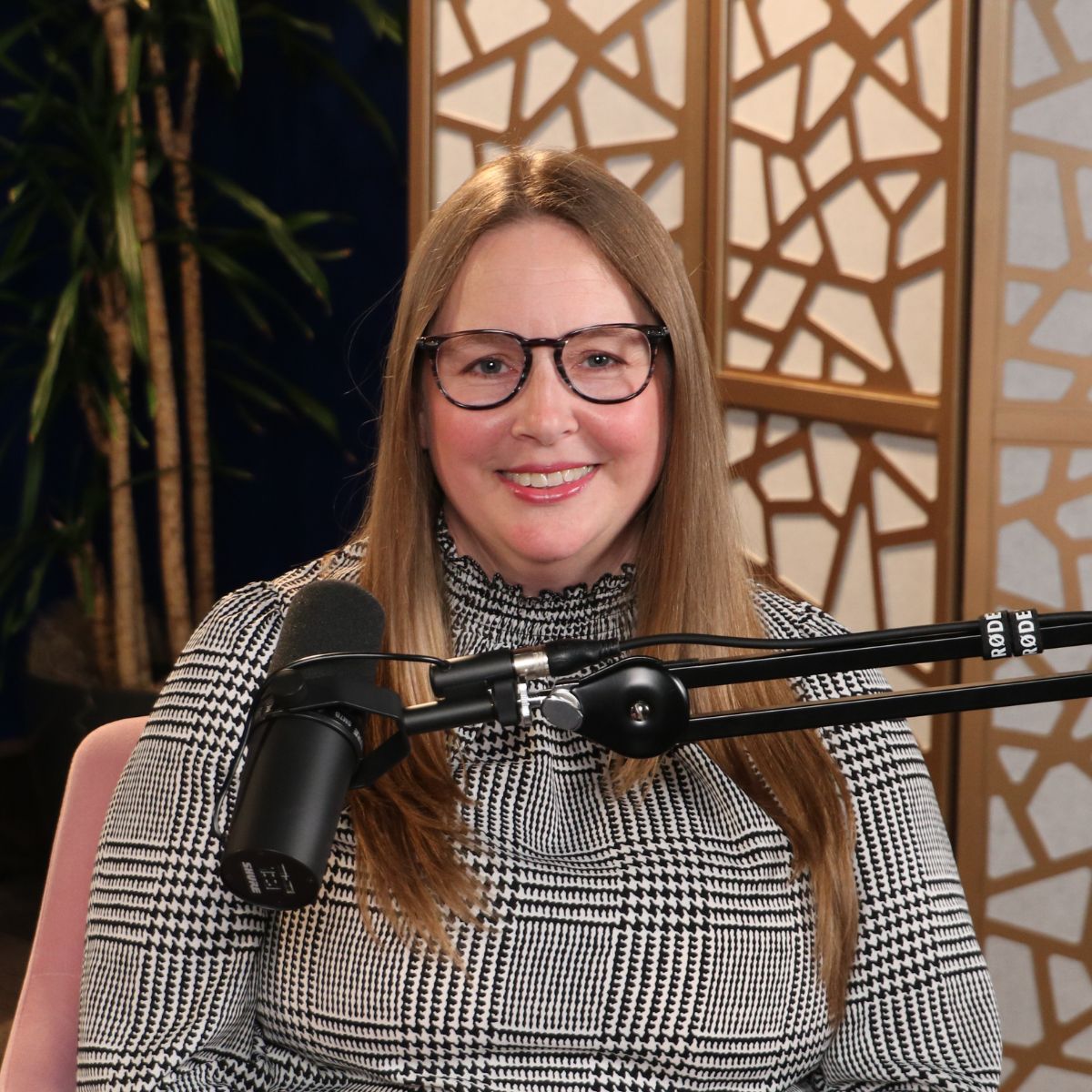
Dorothy: [00:00:00] Some women clear their calendars to have a mammogram, and then there’s others that go to the 40 foot pink coach that pulls up where they already are. In this episode of Let’s Talk About Your Breast, I talk with Shelly Kot, director of Mobile Mammography services at The Rose who leads a five coach Pink Fleet that brings the same 3D screening you’ll get in one of our centers to women across 45 counties in southeast Texas. She shares what it really takes to keep those rolling clinics on the road and how just one broken generator or a failed quality check can mean closing the day down and missing cancers in her mind. She also shares her own story as a mammo tech. Being raised by beloved grandmother and as being a mom herself, and she talks about how all of those things shape the way that she now tries to [00:01:00] teach women to advocate for themselves.
If Shelly’s work makes you think of a workplace or a church or a school that needs easier access to mammograms. Share this episode, and as always, your donation to The Rose helps us take care of another woman.
Welcome to Let’s Talk About Your Breast, a podcast brought to you by The Rose Breast Imaging Center of Excellence and a Texas Treasure. I’m Dorothy Gibbons, your host and co-founder of The Rose. During this season, you’ll also be hearing from co-host Roxann Hayford and others as we bring you stories from survivors physicians, caregivers, researchers, employees, and supporters. These are real people sharing difficult times, celebrations and personal stories of hope, despair, and faith.
Shelly, thank you so much for coming in this morning and being with us.
Shelly: Well, thank you. Thanks for having me. I’m excited.
Dorothy: Good, good. So [00:02:00] tell us a little bit about what you do here at The Rose.
Shelly: So I am the Director of mobile services now. Um, I’ve been with The Rose since 2007. Um.
Dorothy: A long time.
Shelly: A long time, yes. Yes. So right now in my position is just overseeing the mobile program. I’m, you know, responsible for a big team and five coaches getting out in the community and, you know, servicing the women out there in 45 counties.
Dorothy: So tell me a little bit, how does someone schedule the mobile?
Shelly: So they can either reach out through their doctor’s office. Um, we have certain doctor’s, offices, clients that we go to, partnerships where that particular facility is responsible for getting us a schedule for the mobile. And then we have like our school districts, our corporate sites that use an online scheduling system. And so they could schedule online.
Dorothy: But if they’re gonna, how do they even set a date [00:03:00] with you.
Shelly: So our community engagement team is, uh, responsible for reaching out to the different partnerships and telling them about The Rose mobile and seeing if they want us to come out. And then they are responsible for picking dates and getting it on a calendar. And then from there, you know, they’re on our calendar, which is booked out a year in advance. And then, um, we go out to the mobile event.
Dorothy: So are the services on. The mobile mammography coaches, are they the same as you’d get in a center?
Shelly: Absolutely, they are. So we.
Dorothy: Okay. Same machine?
Shelly: Same machine. Um, you know, the, the techs are all trained the same way. It’s the same equipment, same, uh, computer scheduling program. The pack system that we use, everything is the same. The only big difference right now is that on our mobiles, we only see screening. Where at the centers they do diagnostics, biopsies and then, uh, bone densities. [00:04:00]
Dorothy: But we’re looking forward to a time when we can at least do follow up on the mobile, right?
Shelly: Oh, absolutely. Absolutely.
Dorothy: Are you excited about that?
Shelly: I am excited about it, yes, I am. So it’s, it’s something that, I mean, that I think that we should offer, you know? I mean, we, we go out and we provide the screening mammogram. Why not, you know, do the follow up, you know?
Dorothy: Right.
Shelly: So, um, you know, it’ll be a little work and getting the procedure and the protocol set up, but I’m certainly excited about it.
Dorothy: And when you say 45 counties, how, how far away is the.
Shelly: The counties?
Dorothy: Counties that are the.
Shelly: So I mean, Rus County is Okay as far, um, matagorda, um, I mean we go as far as Beaumont, we go as far, we have gone to Victoria, we’ll go as far as La Grange, we go to Lufkin. Um, so we go quite a bit.
Dorothy: Quite a bit. Five of these coaches.
Shelly: Five of these coaches.
Dorothy: Okay. So what drives you nuts [00:05:00] as a director of this?
Shelly: As a director, when they break down and I have to cancel a site, you know, I mean, in these patients that are scheduled, they’ve been scheduled for a month to two months already. And so when I don’t have a coach that can go out and, you know, and with the coach, you have to, you have to think it’s, it’s big. It has a lot of moving parts and on. Or in the coach, you know, we’ve got the mammo equipment, we’ve got a UPS, it’s a big battery that powers the mammo equipment. We have the generator. So if something goes down. Then we can’t go out. Right. And so then we have to cancel the mobile event. Um, we obviously offer reschedule dates. But even when you offer a reschedule date, you don’t get all the women back on. And I just wonder, did we miss a cancer at that point? You know? So that is biggest, biggest. That’s a worry.
Dorothy: Yeah. But you’re right, it’s not just the coach itself, it could be any.
Shelly: Anything.
Dorothy: Anything.
Shelly: Yes. I mean, we could get to [00:06:00] a site and so our techs, our mammo techs, have to do daily qc. Because these coaches are constantly moving. They’re not in one place, and so if for some reason the QC doesn’t pass. And we’re not able to troubleshoot it or have a, uh, service engineer come out then we’re, we’re done. We can’t continue because then we’re not, we’re not providing the standard of care, um.
Dorothy: Right.
Shelly: To, to do the mammogram. So.
Dorothy: Now you know a lot about QC because you had that job at one time.
Shelly: I did. Yes.
Dorothy: You are a technologist.
Shelly: I am a technologist, yes.
Dorothy: So, and what made you go to a radiology school?
Shelly: To a radiology school? Well, you know, when I first got outta high school, I, um, I went to college, community college. I had no clue what I wanted to do. It was more of, you’re supposed to go to college, you’ve gotta get some type of training or a degree. You know, I went the first year, nobody was taking role. I fell outta place. I thought, I don’t really know what I wanna do right now. You know, [00:07:00] so I stepped back. I just worked, you know, some office jobs. And then, uh, later in life when um, my husband came to me and said he wanted to be a police officer, and I thought of all the jobs, why do you pick the dangerous job? And I thought, you know, I’ve really gotta do something. Um. To, to provide, you know, and, and grow. And so I started looking into different medical programs and radiology stood out.
Um, I liked that you could go into the different modalities. Um, I was, you know, I kind of was on the fence about maybe being a nurse, but then when I looked at, uh, radiology and you could do MRI, you could do ct, you could do mammo. And so I liked that. So.
Dorothy: I can’t imagine how that would equate. But that makes sense. ‘Cause it is very versatile.
Shelly: It is.
Dorothy: Yes.
Shelly: Yes.
Dorothy: Yes. And and it is the kind of job you can pretty much know you’re gonna have a job.
Shelly: Right?
Dorothy: Yeah.
Shelly: Absolutely.
Dorothy: Because there’s such a [00:08:00] need. Oh my goodness.
Shelly: Oh yes.
Dorothy: Yeah.
Shelly: Absolutely.
Dorothy: So, but mammo, how did you?
Shelly: So the, so X-Ray school was two years long. And then you had, mammo was a six week program, but in our last six months of x-ray ,school they, we were done with all of our comps and, and we could explore the other modalities. And so I spent a lot of time between pediatrics and mammo, and I just loved working with, with older women. And I, I shouldn’t say it like that, but, um.
Dorothy: Well, at the time you were, what, 20 something years old?
Shelly: Yeah, I was young, yes. And so, um, but I just enjoyed it, you know? Um, and I thought this is something that I could see myself doing. And so I. Stayed on that path and then did the mammo program, which was six weeks. And then that’s how I became a mammo tech.
Dorothy: And you didn’t come to us immediately?
Shelly: No, I did not. So, um, when I was in mammo school um, every, you know, all the, the tech or the students there had talked about how wonderful The Rose was and how hard it was to [00:09:00] get in and, and get a job, especially if you were a new tech. You know, you had to have lots of experience. So I, um, I did apply. And I got a call for an interview. Amy brought me in, interviewed me, and at that time I was working for another big hospital, just PRN.
It was where I did my clinicals for mammo. And so I was there and, um, you know, Amy offered the job, you know, pending. I, I still needed to take my mammo certification. And so, um. I went, I took it, I passed. And um, I told Amy I, you know, I accepted the job. And then when I went back to my current job and told them, you know, put in my notice and they were like, well, you know, what about if we make you full time, would you stay? And, you know, being young, and they were, you know, dangling money in front of me. I was like. Okay, I’ll, you know, yes, I’ll stay. And so I called up here and, um, Amy happened to be on vacation, and so I had to leave a message that, you know, I’m turning down the job offer, thank you, [00:10:00] but I’m gonna stay where I am.
And so, um, couple weeks went by and, um, and I was supposed to only be doing mammo at this new, at the, the other job. Well, I wasn’t, there were times that they put me in a regular x-ray and, I mean, and it’s, it’s not that I didn’t wanna do it, I just, I didn’t feel that I, I was really that great at it, and my heart was in mammo and I was new.
I really just wanted to do mammo. And so Amy called and, and said, Hey, out of the blue, outta the blue, she said, Hey, you know, I’m back from outta town and I see that you turned the job down. You know what’s, you know why I really want you to come And, you know, I mean, and she finally ended it with, don’t answer me right now. I want you to talk to your husband and then you call me back tomorrow and you tell me that you’re gonna start. And so, and so I.
Dorothy: That’s Amy!
Shelly: I know.
Dorothy: Yes.
Shelly: Yes. And so I, I did, you know, and because I, I really just wanted to do mammo. You know, and so, um, so I came and [00:11:00] started, uh, in 2007 mammo tech. And then I did, uh, qc, I was the lead qc, I was, uh, the lead stereo tech. And then in 2010, I stepped away. Well, I had, I had my daughter and I stepped, uh, from full-time and went part-time.
Dorothy: Mm.
Shelly: And then in, uh, 2014, I got an opportunity to be a part of opening a breast center at another new up and coming hospital. Um, and so I stayed PRN with The Rose. But, um, I went and did this, uh, for about a year and a half and it just, um, it didn’t sit well, you know, I kept sending the patients here, you know, like all of our diagnostics, I just kept going, sending them here. ’cause going from a nonprofit to a for-profit you really do see that it’s not about the patients. And so it was what was best for the doctors or the hospital, you know, not for the patients. And so, um, I came back [00:12:00] and I’ve been here ever since.
Dorothy: My goodness.
Shelly: Yes.
Dorothy: You’ve held every job you could.
Shelly: Yeah.
Dorothy: Probably.
Shelly: I have basically.
Dorothy: As a technologist.
Shelly: Yes.
Dorothy: Yeah.
Shelly: And so, and, and you know, in 2018 I was the lead, uh, tech upstairs. And then in 2020, the mobile position came open and I said, well, let me, you know, try that. Never gone out on mobile before. I just decided I’m gonna jump into this and go for it. And I mean, I just, I truly.
Dorothy: You had not gone out?
Shelly: I’ve never gone out on mobile once. Not once, so.
Dorothy: Oh my goodness.
Shelly: Yes. So, um.
Dorothy: And we already had the coaches in all.
Shelly: We had two coaches and then that we had, uh, Misty and Rosie Uhhuh, and then Hope was in the process of being built at that time.
Dorothy: Right.
Shelly: So, but yes, so, and I, you know, for mobile, I, I, either you love it or you don’t when you’re out there. So, um.
Dorothy: What makes it different though for, from a technologist point of view?
Shelly: From, um, I [00:13:00] think one, well, one is you’re just, you’re just doing screenings. There isn’t a lot of the, the outside or background noise out there. You have your schedule, your, your patients are one right after another. Um, it’s, it can be very monotonous.
Dorothy: You don’t have that collegiate thing going on like you would in.
Shelly: Yeah, right at center. So, but I love it and I can see why the mammo techs that are on mobile love it, so. Absolutely.
Dorothy: And they start very early in the morning.
Shelly: They do. So you’ve gotta be available as early as six A, and sometimes you’re as late as six P. It just really depends on where we go, you know, hitting 45 counties and not doing overnight trips. I mean, some of our, our drives are four hours. Sometimes five hours round trip.
Dorothy: Right.
Shelly: You know, we get to our, our fir our site, our first patient starts at nine, last one’s at 3:20. Um, we try to see, uh, between 25 and 27 scheduled, um, on there.
Dorothy: So do you still do mammograms?
Shelly: I do, I do. And [00:14:00] so, um, I wanna keep my numbers up, so yes I do. I actually, I take great satisfaction in being a manager and even now a director that can go out and still help. I, I, I, my, I want my team to see that I am, I’m part of them and I’m with them. And, um, so I, I hope that I can continue to, to do mammograms. I mean it know and fill in, and it’s also how I can interact with patients.
Dorothy: Right.
Shelly: I don’t get a lot of interaction being behind the scenes. You know, the big interaction I get is a couple complaints here and there, you know, so when I’m out there, you know, I, I say I’m, I’m a tech well, and I even tell my team now, I mean, you know, the, the manager and the director. It’s a title, but I will always be a mammo tech at heart, you know. Oh. So, um, it’s, you know, it’s something that can’t be taken away from me. Is, is that so.
Dorothy: So. Do you have any patients that you [00:15:00] particularly remember?
Shelly: There’s so many. You know, I remember, you know, doing biopsies was a, was a big thing, you know, and sitting there and holding a patient’s hand while they’re getting this biopsy and, you know, knowing that this is probably gonna be a cancer and this is gonna be life changing, you know, and just, you know, listening to them and, you know, trying to comfort them and trying to keep them to remain positive, you know? And that. You know, let’s just get through this biopsy and you know, everything’s gonna be okay and we’re gonna get this figured out. You know, let’s not worry until it’s time.
Dorothy: Right.
Shelly: But, um, I, I mean, I don’t have anyone in particular that stands out just because there’s just so many, you know.
Dorothy: Right.
Shelly: Um, but.
Dorothy: But you’ve seen plenty of women that were very scared, even even having a mammogram, which to us. Seems routine, right?
Shelly: Yes.
Dorothy: Yeah.
Shelly: Absolutely.
Dorothy: So how do you calm them down?
Shelly: And, well, I just, you know, let ’em know that I tell ’em what I’m gonna [00:16:00] do. Especially if it’s their first time, or if it’s a woman that’s coming back for additional imaging. I really just try to explain to them that, you know, let’s just get through this exam, let the doctor look at the images, make sure that there isn’t anything going on, you know, and, and remain positive. So.
Dorothy: So have you ever had to. Really guard yourself to not let that patient see what you’re seeing.
Shelly: Oh yeah. There’s been a couple times.
Dorothy: Yeah. So it’s hard.
Shelly: It is hard. So especially in the beginning I remember, you know, but as it, and being someone who doesn’t go out all the time, and when I do go out, I have to remember, I’ve gotta put that, that face on that, you know, I’m not showing them any worry and my look or you know, say something like, oh, oh. You know, ’cause then you, a patient hears that and they automatically think what? You know, so.
Dorothy: Right.
Shelly: But yeah.
Dorothy: Even if it’s just a look.
Shelly: Yeah.
Dorothy: I mean they’re watching.
Shelly: Everything.
Dorothy: Everything.
Shelly: Yep.
Dorothy: Your whole body. I know. I know. It’s, it’s, uh, [00:17:00] so fascinating ’cause I find myself, when I have other procedures doing the same thing.
Shelly: Yeah.
Dorothy: What is that? Did you do both stereo and ultrasound biopsies?
Shelly: No, just stereo. I would just assist the radiologist with ultrasound. So at one time I thought I might wanna get into ultrasound, but then. Um, it just, it wasn’t for me. I think you have to have special eyes, I say, for it. And so, so I stayed with, just with the mammo part.
Dorothy: Yeah.
Shelly: So.
Dorothy: So you touched on this before, but when you said there’s a difference in non-profit and for-profit. What do you think is the most important thing The Rose does?
Shelly: Well, our mission. I mean, you know what I mean? We are saving, you know, women’s lives and, you know, providing, you know, quality breast services through advocacy and access to care for all. I mean, we are, we’re there for them. So.
Dorothy: And it doesn’t matter. Insured or uninsured.
Shelly: Does not.
Dorothy: Do you even know? [00:18:00]
Shelly: No. There would be so many times, you know, when I worked upstairs um, I had no clue if a patient was insured or, or not. You know?
Dorothy: Same with the doctors.
Shelly: Yeah. Yeah. No clue at all. Mm. So it was a patient is a patient, she’s someone that needs to get in and get her mammogram and figure out what’s going on. Or if it’s just a screening, make sure that everything is good with her breast.
Dorothy: Right.
Shelly: So, yeah.
Dorothy: So does your department have fun?
Shelly: We have fun. Oh yeah, we have fun. We’re, yes. And so absolutely. We have little, little parties here and there and you know, we like to decorate.
Dorothy: Well, your department is kind of known as the rebels or the.
Shelly: We are.
Dorothy: Yes.
Shelly: Absolutely. So.
Dorothy: And you encourage that?
Shelly: I do. I’m competitive in certain things, you know.
Dorothy: And you’re also a bit of an actress.
Shelly: Oh yeah. I love to get up there and act.
Dorothy: You do though. I mean, you always raise your hand when we’re doing our holiday plays.
Shelly: Um, yeah. I love it. It’s [00:19:00] fun. I hope we can continue it. I worry, you know, so if, if you’ll come back and we’ll, and do it.
Dorothy: No, you’ll have someone else that
Shelly: that’ll put it together. It’ll.
Dorothy: Does a lot better script than I ever would.
Shelly: No, you do good. So it’s fun. So.
Dorothy: And do you do that kind of thing outside?
Shelly: No. And I’m as shy as can be, so, huh. I think it’s because I’m getting up there and I’m playing somebody else.
Dorothy: Yeah.
Shelly: And so I’m not even thinking about it, you know, it’s just, but most of the time I’m shy, you know, I’m behind the scenes. I. I sit there, I’m quiet. And so even, you know, just out in my personal life, I’m a real quiet person.
Dorothy: What’s it like being married to a policeman?
Shelly: Um, well, you know, the big thing is, is I don’t, I try not to think about it.
Dorothy: Ah.
Shelly: So, um, the, one of our strict rules at home is that we don’t bring work home. So we don’t talk about it. Every once in a while, my husband will tell me something, you know, funny, but nothing, nothing dangerous. And, [00:20:00] um, and so.
Dorothy: You’ve always had that rule?
Shelly: Yes. And so I, I pray that God watches over him and brings him home safe. And I have to leave it up to that. If I thought about it every single day, I would not be able to, to live a normal life.
Dorothy: Yeah.
Shelly: So, you know, he’s, he’s good at what he does, his skills, um, he’s got a very high set of skills and I just trust that he does the right thing. And like I said, God brings ’em home, so, yep.
Dorothy: Hmm. That’s kind of tough.
Shelly: Yeah.
Dorothy: Talk to me about your grandmother.
Shelly: Oh, my grandma. So I was raised by my grandparents. I went to live with them at the age of four, and, um, they raised me just like one of their own, you know, I had a very normal upbringing, very supportive. They, they loved me. They gave. Did whatever they could for me, you know? And, um, she’s always just played a big role in my life. She’s no longer with [00:21:00] us, but she taught me a lot. You know, she taught me about, you know, commitment and working hard and not asking for handouts. And you know, if you want something, you work for it and show up and, and do what you’re supposed to. And life’s gonna be hard, you know, it’s gonna throw some curve balls at you, but you’re gonna get up and you’re gonna keep going. You know, I mean, and literally, I mean, she saved my life. I mean, you know, I didn’t have anywhere to go and she stepped in and so yes. So she was, she was my mom, you know? So.
Dorothy: Was she a good cook?
Shelly: No.
Dorothy: No.
Shelly: That is one thing that she was not good at. And so I cannot cook. I try, but I cannot cook. Um, but no, I mean, and when she was raised and cooking, you know, it was during the depression and so, I mean, we ate a lot of salmon from cans. Um, spam. She made this spam casserole that was just horrible. But I mean, you know, I just, I ate it. I mean.
Dorothy: Right.
Shelly: So.
Dorothy: Right.
Shelly: But no, she was not a good cook.
Dorothy: Oh. [00:22:00] But you remember the values and things that she left you with?
Shelly: Absolutely. Absolutely.
Dorothy: How did she feel about your daughter?
Shelly: Oh, she loved, she loved Sadie. Ah, so that was her first great-granddaughter.
Dorothy: Ah!
Shelly: And so, um, yeah, so she was there, she was there with me when, uh, she was born. She came and, um, stayed a couple weeks before I had her, and then, um, a couple weeks after. You know, just ’cause being a new parent and not knowing, you know, right. I had said, I said, well, what am I gonna do with her when I get her home? And she’s like, oh, she’s gonna have some, uh, instructions attached to her toe. Don’t worry about that. You know? And so, and of course we all know that babies don’t come with instructions.
Dorothy: No.
Shelly: And so, but um.
Dorothy: But you believed her sort of.
Shelly: Yeah, I did. So, but she, she had order, so.
Dorothy: Yeah.
Shelly: Yes.
Dorothy: Yeah. So you see a lot of sad cases here. And you’ve seen a lot of women survive recover, totally. You have, even in your own [00:23:00] staff, you’ve.
Shelly: Seen that.
Dorothy: What do you hope for your daughter, Sadie?
Shelly: Well, I hope that, um, one is I want her to be. Happy, successful, and healthy. And I want her to be an advocate for herself. And you know, I want her to understand the importance of taking care of herself. You know, whether it be eating right, exercising, getting all of your routine, you know, checkups done as you get older. And just, you know, taking care of yourself. You know, you have one body, as Dr. Melillo says, you’ve got one carrying case and that’s it. And so you gotta take care of it. You know, and so, and I want her to grow up in a, in a, in a world where there’s services out there, preventative services out there for, for the women, you know, so.
Dorothy: So what does being an advocate for yourself mean to you?
Shelly: Standing up and for, for something. If you feel, or you think that something is wrong with your body then speaking to your doctor and, and [00:24:00] telling them. And then if that doctor just, blows you off, then you need to find a different doctor. You’ve gotta keep going, so.
Dorothy: Right.
Shelly: Don’t let someone say, oh, you’re too young. This couldn’t be you. Or, this doesn’t happen to women like you, or, you know, I mean, Mm. So.
Dorothy: No, we know our own bodies.
Shelly: Right.
Dorothy: If you had one life lesson that you’ve learned over all these years of serving and being a mother and being a wife and all the other things, what, what is that one life lesson that has really carried you.
Shelly: Um, just being the best that I can, being kind to others. You know, um, you never know what someone’s going through. You know, what their situation is and, you know, just, just being kind to them. Yeah.
Dorothy: Yeah. You know, I’m so surprised when people don’t realize the impact of their words are there. Yeah.
Shelly: Absolutely. Yeah. ’cause people don’t forget [00:25:00] ’em. You know, I mean, and we’ve all, everyone has said and done things right, you know, that they regret. Um, you know, um, I remember there was a time when my mom was ill in the hospital and I had said something that wasn’t very nice, you know, and at that time she was not able to communicate back with me. And, um, and I, you know, I said to myself, I’ll never say something mean to someone again. You know, I mean, because you never know if you’re gonna get the chance to apologize or.
Dorothy: Oh.
Shelly: Or, or make it right. You know. So.
Dorothy: What a strong life lesson that one was.
Shelly: Yeah, it was. It really was. Yes.
Dorothy: Oh.
Shelly: So. Yep.
Dorothy: Well, thank you so much for being with us today. Is there anything else that we need to know about mobile?
Shelly: I mean, I could go on for hours. I, it’s about mobile. I know. Um, I mean.
Dorothy: But it’s the same service. You’re gonna get.
Shelly: Same service that you’re gonna get at the center, um, you know. The big, the big difference is, is we’re just doing screenings right now. The other difference is, is if the [00:26:00] coach goes down or the mammo machine doesn’t pass It’s just one coach and one mammo machine we have to cancel.
Dorothy: Right.
Shelly: Where here at the centers, you know, you’ve got multiple rooms, right? Um, you’re not having to worry about a moving, you know, vehicle.
Dorothy: Vehicle.
Shelly: Right. So, um, but. Yeah.
Dorothy: Hard to miss those.
Shelly: Oh yeah.
Dorothy: What are they, 40 feet? 45?
Shelly: Um, I have three 40s and then I have two 46.
Dorothy: Ah.
Shelly: So, yep.
Dorothy: And are you looking forward to the next one?
Shelly: Oh, absolutely.
Dorothy: I thought you were gonna say, don’t you dare get another one for us.
Shelly: Oh my. You know, I can’t even imagine, but yes. I mean, so.
Dorothy: You’re ready?
Shelly: I’m ready. We’ll get it.
Dorothy: Okay.
Shelly: Yep.
Dorothy: Well, thank you for being with us today.
Shelly: Well, thank you for having me.
Dorothy: Yeah.
Shelly: Yes.
Post-Credits: Thank you for joining us today on Let’s Talk About Your Breasts. This podcast is produced by Speke Podcasting and brought to you by The Rose. Visit therose.org to learn more about our organization. Subscribe to our podcast. Share episodes with friends and join the conversation on social [00:27:00] media using #LetsTalkAboutYourBreasts. We welcome your feedback and suggestions. Consider supporting The Rose. Your gift can make the difference to a person in need. And remember, self-care is not selfish. It’s essential.