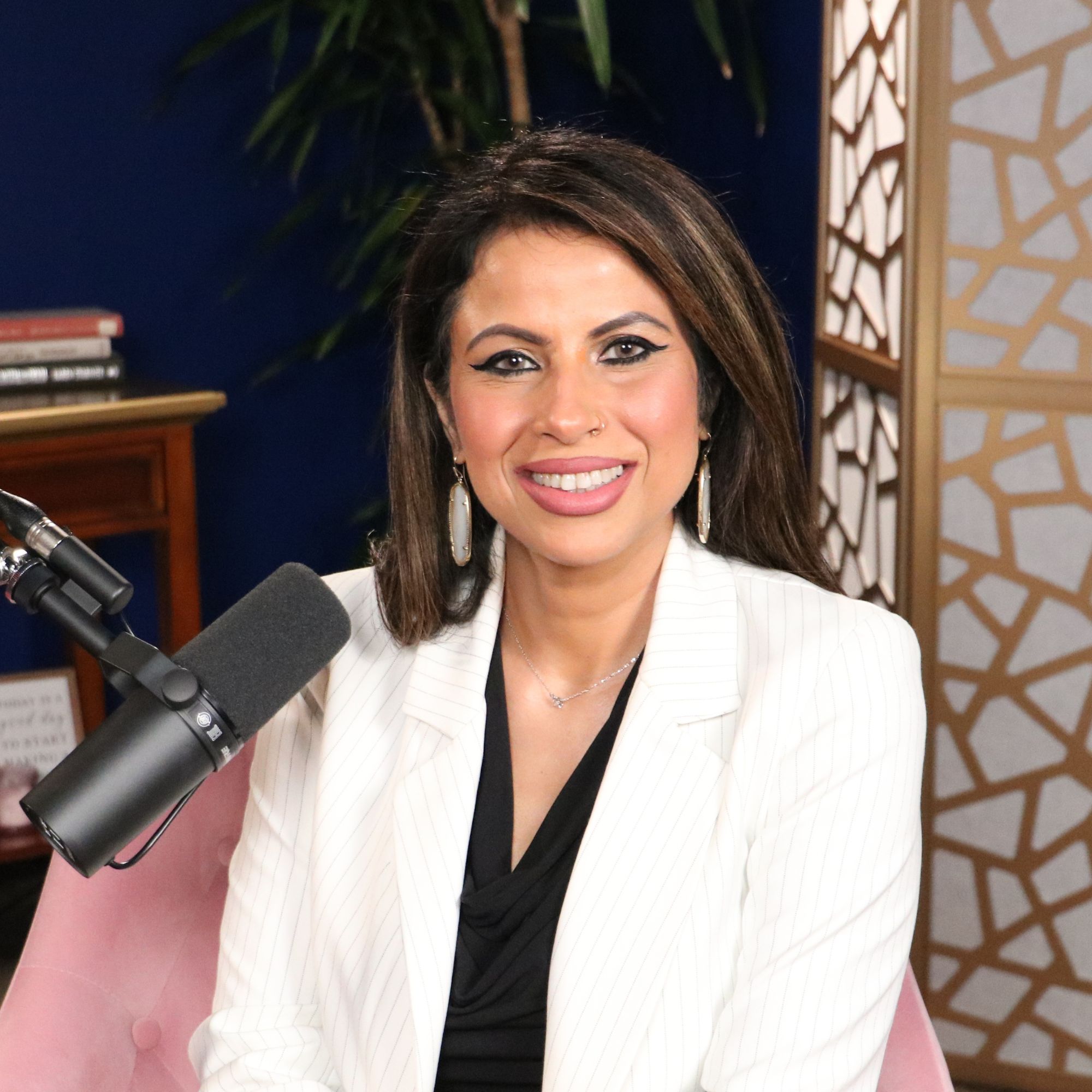
Dorothy: [00:00:00] Today I’m joined by Amber Jamshed, who is an entrepreneur who founded the Houston Professional Women Organization. She is deeply involved in the Multicultural Center. She’s a TV and radio host. She’s a journalist. She has so many talents, and today Amber shares her story of building platforms for women’s empowerment. She does that through mentorship, through networking and how her experience as a first generation immigrant fuels her dedication to supporting women from all backgrounds. Her journey shows the impact of leadership, advocacy, and community. Amber demonstrates how one woman’s vision can lift up so many.
When you subscribe to our show, you help us grow. Someone you know may need to hear this story, so please. Share with your family and friends and consider supporting our mission at [00:01:00] therose.org.
Let’s Talk About Your Breast, a different kind of podcast presented to you by The Rose, a breast center of excellence, and a Texas treasure. You’re gonna hear frank discussions about tough topics, and you’re gonna learn why knowing about your breast could save your life.
Amber, thank you so much for being with us today, and I, I’m just so pleased that you’re joining us. You’ve been such a great supporter of The Rose. My goodness.
Amber: Thank you so much for having me, Dorothy. It’s always been good seeing you either here or, uh, out of the studio. Mostly I’ve seen, this is first time I’m seeing you in the studio. But I have met you. In the events, you know, hat and Hena and the Pasadena events.
Dorothy: Right.
Amber: And I know that I’ve interviewed you as well.
Dorothy: Right?
Amber: So it’s, it’s always player seeing you.
Dorothy: So it’s a little nervous being trying to interview someone who does this all the time. But thank you so much.
Amber: It’s [00:02:00] really good to see you here as well.
Dorothy: So talk a little bit about, uh, your background, how you came to the United States. And some of the things that you’ve done since you’ve been here. You’ve been here a long, long time.
Amber: Yes. Almost like, um, over 20 years. I’ve lived in Houston. And you can say, Houston is my home now.
Dorothy: Oh, yes. Yes.
Amber: So I will definitely introduce myself as a proud Pakistani American, mom of two amazing adults. And, um, a person, you know, you can see, um, more into community work, women empowerment, and also in communication.
Dorothy: So why did, why do you have such a passion for empowering women? I mean, you started this, this organization, tell us about it first.
Amber: Yeah. I started this Houston Professional Women organization in 2019. First thing was, it was my passion. Of course, because [00:03:00] you can’t do anything if you don’t have the passion or that passion does not drive you to do or make any changes. The second thing is, like I can see the change, you know, is when women, you know, they’ve been given the chances to thrive or the spaces where they can be supported or they can share themselves freely or they are given the platforms where they can professionally or personally grow. You can see the, they, they, they really thrive. And also when the women thrive, the communities thrive.
Dorothy: That’s so true.
Amber: So that’s that, that was a passion, you know, that led me to open that Houston Professional Women Organization.
Dorothy: Now is this a national group?
Amber: It’s, it’s locally, but right now we have two chapters. One in Houston and one in Dallas. You know.
Dorothy: Oh well, congrat, congratulations. You’ve grown.
Amber: Thank you so much. It’s, it’s, it’s kind of, um, I would say is, is a place where women, you know, feel safe to tell [00:04:00] their stories, to be supported and above all where they feel the major thing, I want them to be celebrated, you know?
Dorothy: Right.
Amber: ’cause it’s, it’s hard when there are women and mostly we, we find that they’re jealous or they are like these kind of emotions, you know? They’re known for, but I really want to break that stigma that we really, women want to support each other and we can celebrate each other, you know?
Dorothy: So why do you think that is though?
Amber: Because it’s, it’s natural. I would say it is natural that women have these emotions, but I think with the time we are changing. We know that we cannot grow if we are not supporting each other. Such we, we need to support each other. We need to, um, help each other to grow. So I think.
Dorothy: And how, what are some of the ways that you see even within the organization that y’all provide that.
Amber: You know, uh, we have mostly business women on the platforms. Like I see the women, so many women [00:05:00] capable around me. I’ve seen so many professional women. The only thing I think that was lacking was the lack of the resources; mentorship. But when they see the other women next, sitting next to me, she has the resources, she can connect me with the other resources. How, that’s how I think they, they’re supporting each other. If I have the connection, I’m definitely gonna introduce you to the connection and that connection can help your business to grow.
Dorothy: Right?
Amber: So this is how we are growing.
Dorothy: So do you think. The woman that is in business has a uh, advantage over the woman who may never have been in business.
Amber: It’s not being advantaged, but I would say that if you are a business woman, you need to have connections. You need to connect with the other women, you know, who are in the same feed or even, not in the same field, but in the other fields because that’s how you can connect with the other community. And if you wanna grow, you have to connect with other industries, other [00:06:00] communities, and you have to spread your wings, you know, to fly.
Dorothy: But that’s hard sometimes.
Amber: It is. It is hard. Yeah, it is hard. You have to come out of the box. You have to face challenges. So if you, if you wanna grow.
Dorothy: Do, do you challenge the members to grow that?
Amber: Definitely. That we give them the challenges that this is your weekly goals. Set your goals.
Dorothy: Ah!
Amber: Set your weekly goals. Set your, uh, monthly goals. Set your short-term or long-term goals because it is. Start. It depends, you know, some are small businesses, some are really large businesses. So depend everyone has their separate goals.
Dorothy: Right.
Amber: So depending on, we coach them, we provide them the coaches, we provide them the education, we provide them the resources, the right resources, I would say. So that’s how they can achieve them step by step and grow to the next level.
Dorothy: So you started this in 2019?
Amber: Yes.
Dorothy: What happened during 2020?
Amber: You know, the, I know everybody was like, hit by the COVID, [00:07:00] so we, we had to take a little break, but of course the Zoom meeting was, was there, were there.
Dorothy: Right.
Amber: And um, the other, uh, we were connected through the telephone network, so we, we were still, we were still connected. It was not the in persons meetings. And the businesses. I know there was a little pause. But of course, you know, we were, at that moment, we actually get more educational trainings, so we, we kept ourselves busy.
Dorothy: So you were able to pivot?
Amber: Yes. Of course. That was the only way to pivot. Pivot was the only, I think two because everybody, and some of them, they changes their paths too, you know? They changes their businesses like I did. I was in the bati, I was an entrepreneur at that time. I was in the boutique business, but then I, I knew that the, the in persons businesses were not working. So I pivot from, in entrepreneurship to the real, I stepped into the real estate, uh, world. You know, I got my license. And then I stepped into the, I became a realtor, you know? [00:08:00]
Dorothy: I know you went from these gorgeous, gorgeous gowns and, and they were absolutely beautiful. They were really high-end and very much that special occasion type gown.
Amber: Yes. Especially Pakistani women, you know?
Dorothy: Yeah, yeah, yeah. And then, gosh, to move into real estate, what a different world.
Amber: Yeah, but I think every challenge give you a kind of opportunity to grow. That’s what I believe. You have to learn how to change or how to pivot, or how to mentor yourself or to adjust or adapt yourself to the new situation. You should be ready for it.
Dorothy: Yeah, but sometimes that’s hard.
Amber: It’s hard. It’s always hard.
Dorothy: Of course.
Amber: It’s always hard.
Dorothy: Alright. But women are not very good, and I’m saying this from my perspective, we’re all, we’re not always very good about reaching out and saying, I need some help, especially if it might make us look like we don’t know what we’re doing. You’ve seen that? I’m sure you know, [00:09:00] but.
Amber: Yes.
Dorothy: And that’s. That’s where your organization fills a real gap.
Amber: Yes. Because I know being a woman, some of them are vocal. Some of them are not vocal. So that was the motive, or that was the goal behind Houston Professional women. To fill that gap, to hire those voices, which are not being there or people are, you know, especially immigrant voices. I would say the South Asian women, you know, we are not vocal about our issues, health issues. We are, we are, we don’t feel safe or we don’t feel to be open about it still is stigma, uh, to be open about some healthcare issues. There are maybe, uh, the cost involved, the insurance or cultural barriers, I would say. So it’s, it’s, it’s hard. So that’s why I think I wanted to create a space for the women where they feel that she is. She’s like me. She’s my, my sister. She has the same background. She’s an immigrant like me. If she can [00:10:00] do this, I can definitely do this too. So this was the passion, you know, that drove me to open this organization.
Dorothy: So Amber, do you think there’s been a lot of change when it comes to healthcare with your community?
Amber: It’s, I would say, you know, it is, it’s not that fast. It’s not happening that fast.
Dorothy: And, and you know, something that I, I try to share with my guests and my listeners, uh, these are the same issues we faced in the eighties. You know, when mammography was just coming out and women didn’t wanna talk about having a breast issue, or in fact, and I know this is hard to believe, but back then we couldn’t even say the word breast.
Amber: Exactly.
Dorothy: On TV or radio. I’m not sure what we thought we were talking about, but we had to be very careful. But at the same time, it took a long time for women just in general to start talking, and I hear every culture, every community [00:11:00] say the same thing, so, you know, it’s almost like it’s a woman thing.
Amber: I totally agree with you, but I, I can see the change. With the media. With the social media exposure.
Dorothy: Oh, that’s true. Yeah.
Amber: So it’s, it’s happening. And now I think things are changing, but I would say it still have the cultural barriers in different communities, you know? It’s, it’s being taken differently. It’s still, as I mentioned, still a stigma to talk about the breast, to talk about openly about the, the breast stuff, you know, it’s like, but um, it’s, it’s happening. I have the hope. I am I’m, I can see the hope, you know?
Dorothy: Right.
Amber: Especially like the educational, like that’s why I think, I love The Rose because the educational stuff, because being open about it, and even now the men are talking about it, the men have go, been, go going through the same thing. That’s, so they, I’ve seen like the last Hats and Henna, there was like the, the males [00:12:00] too who shared their stories, you know? So that means that change is happening. All it’s slow, but, it is happening. I would say.
Dorothy: Now Hats and Henna, for our listeners that don’t know Hats and Henna High Tea is a once a year event that we have. A lot of our guests are South Asian, but it’s a very diverse, uh, group.
Amber: Yes.
Dorothy: And I think that our board member, Ashma Moosa, does a great job of bringing different things to the group that we all are interested in. And I never realized how important something like that could be as a part of an education process.
Amber: Exactly. That’s, I would definitely give this credit of connection of you and me to Ashma because that’s how I did connect with The Rose and it’s been, I think three to four years that I’ve been connected with Rose and I’m going and attending that program and that’s how I came to know. And we are spreading the awareness. Like, this is nothing unusual [00:13:00] that you can talk about it. You can’t talk about it. It’s like the women thing, and it’s, it’s, it’s like your body part, you know, like you are, I have seen like in cosmetic industry, people are paying so much for the other stuff for breast augmentation, for enhancement. This is important, you know, to do the mammograms, to do your physical and healthcare, you know, to take that much importance to this thing as well. Like you are paying for the physical beauty. But to the internal part of the body too.
Dorothy: Right.
Amber: So I think the educational part is very important because that’s how we can spread the word out and tell the people that this is as much important as, you know, the other stuff, the, so I think The Rose’s doing a great job.
Dorothy: Oh, thank you. Do you, do you ever find yourself saying to a woman it’s okay to touch your breast? Or is that something you wouldn’t say?
Amber: I can, uh, in our, you know, probably is, is still difficult. Like I, I would say [00:14:00] it still feel not comfortable, you know? Yeah. It’s not comfortable. But of course if she’s being seen by a physician or seen by, um, a medical person, I don’t think so. There should be any, any issues, you know?
Dorothy: But still, we know our bodies and, you know, I can’t believe that that intuition isn’t in every, every community where a woman says something’s not quite right.
Amber: Yes. I think, um. Still, as I mentioned, you know, it’s like we need more awareness. We need more educational sessions and we need to talk more about it.
Dorothy: Right.
Amber: It’s nothing we should hide about it. Yeah.
Dorothy: So you, you have, do you know anyone that’s going through breast cancer right now?
Amber: I have seen a couple of, like, lately, my friends, you know, like, like my age. They have gone through it. They have fought against it. And I must say it’s hard. It’s really hard, [00:15:00] especially being a woman, you know? Um, this, this is the, the beautiful part of the body. Beautiful is like, you know, for a woman, I think I, any, any women can understand how beautiful she feels with, with this part of her body. So if it’s taken away or if it’s going anything bad with this part of the body, how she feels. The pain, the, the, the acne. You know, it’s like all the family go through it. It’s like, but the, I think if it’s diagnosed at the early stages, so I think definitely I can see like they, they have fought against it.
So there are preventions, there are ways to fight against it. The only thing is like, you have to do the yearly, you know, um, checkups, you know, the mammograms, you know, it’s, it should be part of your thing, you know, that we, I have to do it. Make it your priority. Every woman, you know, I would say who is listening or who, who, um, actually can advocate about it. Make this your [00:16:00] priority, you know?
Dorothy: So do you think our, our spouses are, are male figures can help us make those decisions to take care of ourselves? Can they be the encourager or.
Amber: Yes, yes. Especially in our community. Ah, in a South Asian community, mostly as I know, it’s always like in a professional, uh, environment, we say it’s a male dominated environment or you You have to navigate through it. But I think in our houses too, especially if the women is not professionally or is not a working women, they mostly are under the influence of the male who are actually is the responsible for bread and butter, you know? So if that person is. Encouraging you that you have to go through it and you, you need to do this. I think that she will do it.
Dorothy: That may be another way that we can really encourage and be a support. Absolutely.
Amber: Right. It’s interesting.
Dorothy: So do you think the women that you know [00:17:00] who are battling it right now, do you think they will be able to open up and talk about their experience?
Amber: Some of them, yes. And some of them are still. Still, they don’t wanna tell to anybody, you know, they are still. They’re still not comfortable talking about it.
Dorothy: Yeah. Right.
Amber: But I think the only way to spread awareness is to share your stories.
Dorothy: Right.
Amber: It’s always you learn. What you have gone through, you know, as a woman, you know, and I can feel the same if you have gone through. And if you want me to, to not to go through this, of course you’ll share your story. So if you have gone through this, you definitely should share your story. Tell what should the other women do and what they can do to prevent it at the early stages, right? So I think that’s a good way, if you can share your story.
Dorothy: Right.
Amber: More often.
Dorothy: And. And it just lets someone else know that, that you’ve been there.
Amber: Exactly.
Dorothy: Or you, you can empathize. You can be a part of their [00:18:00] journey.
Amber: Right.
Dorothy: You can, because you know what it’s like not to feel good enough to get up and go to the store or to do whatever, you know? I think some of the sweetest stories I’ve ever heard were not where the friend said, what can I do to help? But where the friend just brought a load of, you know, a sack of groceries or.
Amber: Right.
Dorothy: Or took the dog to walk or, you know, took, picked up the kids at school, whatever it was, you know, it was something that they just took on themselves because they knew their friend just wasn’t feeling good enough right then.
Amber: Exactly. And I think that on not only the physical, but the, emotional support.
Dorothy: Oh, yes.
Amber: The mental support, because it’s, it’s, it’s a double, I would say it is, it’s a really hard battle to fight. Physically, mentally, emotionally, you’re gone. You, you actually going through three or four different things at a time.
Dorothy: Absolutely.
Amber: So if someone is there, because whenever you are sick, whenever you’re going through some something, you need someone to [00:19:00] st, stand by you. Either as a family member, friend or any person, you feel closer because I, you know, that you, if that even the gesture of being there of someone makes you com comfort, you know, gives you comfort.
Dorothy: That is true.
Amber: So, and especially this kind of, you know, um, big thing if you’re going through you off. Of course you need a support. A support group. And I think you guys have the support groups and you guys have like the women, like Ashma always shares her stories and the other women who have gone through, um, this pain, they share their stories. I think these stories gives courage to the other women who are going through these kind of stuff or going through this cancer, of course is like, for them, I think it’s, is, is kind of strength they can get from these stories.
Dorothy: Right. And whoever’s telling the story also gets stronger.
Amber: Exactly. Exactly.
Dorothy: Uh, I mean, it, it, it’s very hard to say, I’ve been through this.
Amber: Yeah. [00:20:00] You have seen mostly when they are sharing this story, you can see the pain, the, the tears in their eyes, you know? Because it’s easy to say, it’s been challenging to share your story. It’s not easy. It’s not easy.
Dorothy: But it’s your story. It’s your story.
Amber: It’s your story, and you, you know, the pain, how much pain you have gone through. Nobody can, I think the pain is the only thing nobody can share. That’s the only element. You know, your body and you are going through.
Dorothy: Interesting. Right.
Amber: That’s, that’s, that’s what, that’s why I always say every, make health your priority. I can stand by you, but I cannot share your pain.
Dorothy: No.
Amber: Only you and your body has to go through it. So it is better to take prevention instead of, you know, going through it, because I can give you mentally or physical support, but the pain your body is going through is only you.
Dorothy: That is so true. That is so true. Amber, how do you take care of you?
Amber: I do with my medical, like the yearly [00:21:00] checkups. And of course, you know, I eat, I try to eat right, walk, exercise, drink a lot of plenty of water, you know? So, maintain my weight, you know, and balance my work and my. Family life and also.
Dorothy: Oh, now how do you do that?
Amber: That’s hard.
Dorothy: I know. Yeah.
Amber: That is hot. But I try my best. I try my best to balance it, you know? I know it’s for women, it’s always a challenge. To balance her work life, home, her ambitions, career, all that stuff. But I think God has gifted us, um, or we given us these kind of potential as a women that we can balance. Men can do, only they, they are not, we are multitasking, I would say. Women are multitasking all the time. So we are like, we know how we, we try our best. I wouldn’t say I’m a hundred percent. Like I have, I’m, I’m perfect in it, but I, I, I, I can see myself. I’m, I’m not too bad.
Dorothy: Yeah.
Amber: I’m not too bad.
Dorothy: Yeah. Well, and you have to [00:22:00] be somewhat to be a role model in your professional world and in the, the role you took on with the Houston professional women. I mean, that’s.
Amber: Yes.
Dorothy: You know.
Amber: Even the job currently I am with, is a, is a nonprofit organization in web Texas Multicultural Center is also a leadership position. You know, it’s, it’s, it’s a place where I am trying to create a space, you know, for youth, for women, you know, more programs, uh, for the youth that’s more focused. I focus on youth here because most of the. Youth programs we are including here at Multicultural Center. It’s a beautiful space. I would definitely love you to come and sessions.
Dorothy: You know, actually I’ve been there, but I’ve not, I’ve not had the opportunity to come for any of your sessions. Now, is that. Tell me exactly where it is.
Amber: It’s in Webster, Texas.
Dorothy: Webster.
Amber: Yeah, it’s right here in the southeast area and we have.
Dorothy: And it’s a large facility.
Amber: It’s, it’s a 40,000 square feet building.
Dorothy: Oh.
Amber: It’s a beautiful building for the events, for the youth [00:23:00] programs. We have a couple of women program, uh, going on there and, you know, the, the main focus is on youth and which is great because there are the youth, you know, they need a space to be mingle and mixed and you know, we have food programs, we have food pantry, we have free medical checkups, you know, for insured and uninsured people. So there are multiple great programs running under multicultural center.
Dorothy: So tell us a little bit more about the ones for women.
Amber: Uh, for the women we have, you know, they, they have more cultural and religious programs. They are, they are the greeting classes and also we, the mental health programs.
Dorothy: Ah.
Amber: Yes.
Dorothy: How do you handle mental health in, in that environment?
Amber: We have, we, it’s, it’s, it’s a very great environment. I would say. It’s peaceful and then we have a lot of amazing volunteers. And the team, you know, mostly the team is all the doctors, the board is the doctors, so they, they are involved in it and they, they’re paying attention to run that nonprofit [00:24:00] organization. So it’s, it’s great. So far it’s, it’s great.
Dorothy: And how long have you been there?
Amber: It’s been a year now.
Dorothy: Oh, wow.
Amber: It’s been a year now. Yeah. I joined them last, uh, July. Yeah.
Dorothy: Yeah. No, they have great.
Amber: May. May, may.
Dorothy: Yeah.
Amber: May of 2024. Yes. Yeah.
Dorothy: They have some great, great programs.
Amber: They’re managing all these programs. You know, so it’s, it’s a great place. I’m enjoying my work there. Yeah.
Dorothy: Yeah. And it’s one more outlet for you to be able to.
Amber: Exactly.
Dorothy: Help that, uh.
Amber: Empower women, empower youth, you know? Because when you have the passion to empower others, you know, it’s, is you always find your ways. You always find your ways.
Dorothy: Right.
Amber: Because that’s gives you happiness. That’s give you a kind of, you know, um, you know, the challenge to, to live happily, you know?
Dorothy: Right. Yeah. So, so share with us a favorite story about someone you’ve mentored. You don’t have to say names or anything.
Amber: Okay. Um, there was a woman, you know, I would say she, she just, [00:25:00] um, moved from Pakistan to here and she wanted to start her own business, and she was like, I never did in Pakistan, but I’ve seen a lot. But she, I can see the spark in her. I definitely could feel that she, she could do a lot of things. The only thing she needed was to the right resource and the mentor and the support. Sometime you only need a push. Sometime you have everything inside you. The only need is just the push. And then you even couldn’t see the things you ever experienced about yourself. Like I’ve seen people who never spoke in front of the cameras or in, in front of the public, but just a little push. No, you can do it. I think only one sentence you can do it. It’s, it’s a magical it’s a magical sentence.
Dorothy: It, it’s magical. I never thought about that.
Amber: It’s a magical Yeah, because, yeah. Sometime you can’t see yourselves to be there, but someone believed in you and someone pushed you. You can definitely do it. So that gives you that kind of [00:26:00] courage. Yes, I can do it. So that woman was, she just need a little push. And she started her own business and I helped her to, especially with the media and marketing is like my niche. You know, because I’ve done masters in, uh, media and communication.
So it wasn’t hard for me. I told her, do this, this, these are the steps. And now is the world of social media. You don’t have to be personally everywhere you, you can have your presence, so on social media and you can sell your products. It’s a lot easier than it was in the past.
Dorothy: Right.
Amber: And she followed the steps and I can see her hearing.
Dorothy: Oh, that’s a great story. So great story.
Amber: It’s like. Uh, it, it gives me happiness, you know, it’s like when you help others, of course you’ve, it’s, it’s like helping yourself to grow.
Dorothy: Right. So I am so glad you’re a supporter of The Rose, and, and I know you’ve mentioned several times you love The Rose, but what is it specifically you like about The Rose? What is it that makes you want to donate to The [00:27:00] Rose to bring your products and be a part of our events?
Amber: I would say I don’t, I see rows not just, uh, an organization screening and doing, um, mammograms or, um, just helping. I see you are providing hope to the women. So that the motive, the goal, the vision, you know, it’s like hope I think is the one thing, if we lose hope, we lose everything. So.
Dorothy: That’s so true.
Amber: So you guys are providing hope.
Dorothy: Thank you.
Amber: So, which makes me to support Rose EV, all the time, you know?
Dorothy: Right.
Amber: Anything I can do within my talent, within my resources, with financial support, you know, it’s like I’m, I would love to contribute.
Dorothy: Oh, welcome. And you have, yes. Thank you so much. Any parting words for someone who’s watching this today? For especially a woman [00:28:00] who’s watching this today?
Amber: I would say make your health priority. We don’t, do that. We are. We are way behind in this, you know? We, we should make our ourself priority self-care. You know, I know self-care, we just hear this word, but, include that. Include that in your life routine, balance out, you know, because give yourself time as a woman, celebrate yourself.
Dorothy: I love that word. Celebrate. Yes. And we don’t.
Amber: We don’t. No. You need to celebrate yourself because with the celebration, actually you see yourself way higher than anything, you know? When you see yourself higher, when you see yourself being confident to do anything, then you make the priorities for yourself. So, celebrate yourself.
Dorothy: Yes. Great. Great advice. Thank you so much for being with us today. We really appreciate you coming down and, and just sharing what you know about women.
Amber: [00:29:00] Thank you so much. Thank you so much for having me.
Dorothy: Of course.
Amber: It was great talking to you.
Dorothy: Yes.
Amber: Thank you.
Post-Credits: Thank you for joining us today on Let’s Talk About Your Breasts. This podcast is produced by Speke Podcasting and brought to you by The Rose. Visit therose.org to learn more about our organization. Subscribe to our podcast, share episodes with friends, and join the conversation on social media using #LetsTalkAboutYourBreasts. We welcome your feedback and suggestions. Consider supporting The Rose. Your gift can make the difference to a person in need. And remember, self care is not selfish. It’s essential.