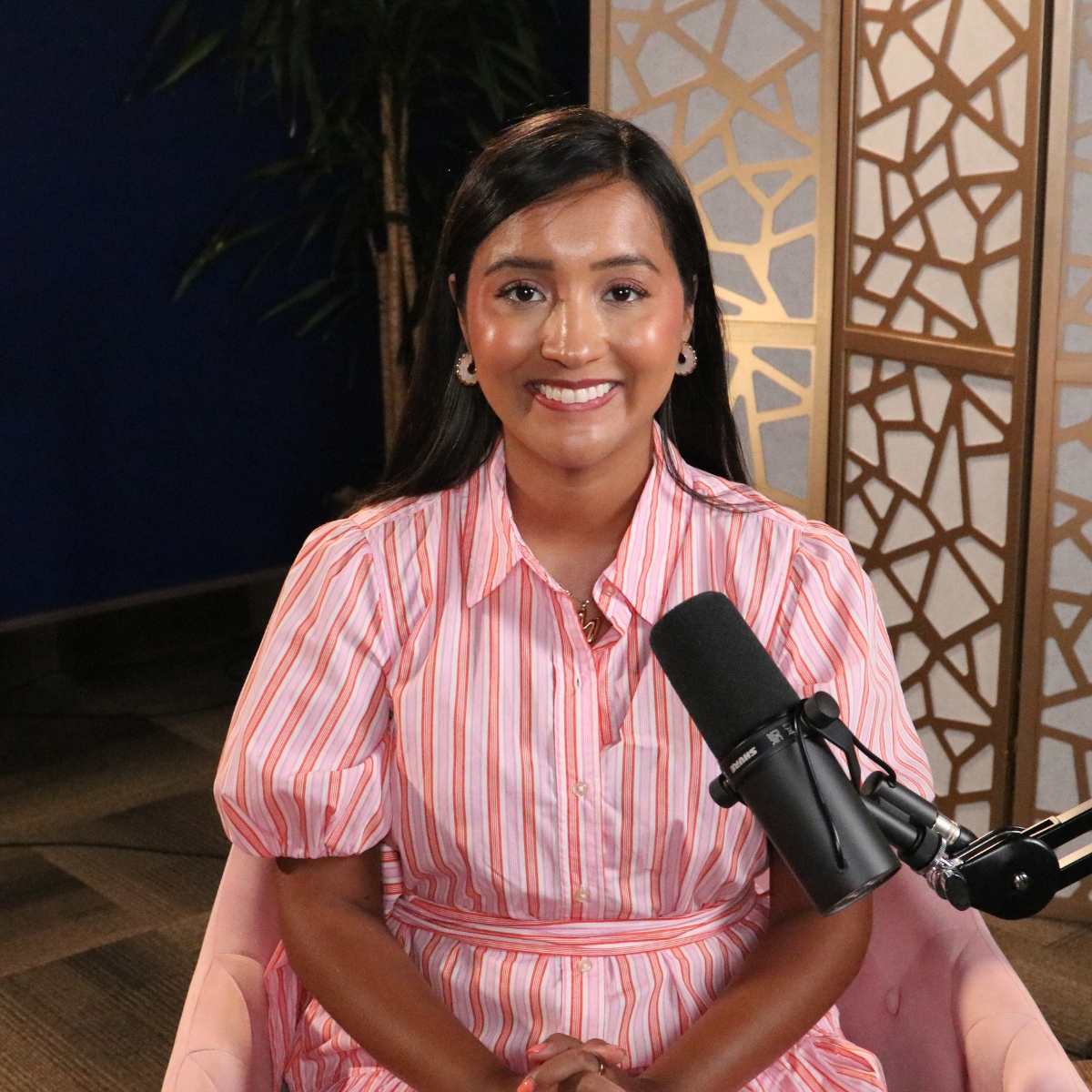
Shannon: [00:00:00] Hi, this is Shannon McNair, your guest host on The Rose’s Let’s Talk About Your Breasts podcast. Today, we’re talking to Montsy, who at the young age of 18 found a lump in her breast, and now we’ll reflect on her 10 years as a survivor, what it was like to learn lessons at such a young age that she can apply now as an adult, and how important it is for that self-breast check you have at any age to make sure you can catch cancer early and get on with your life. You can do hard things.
Hi, Montsy. Welcome back. We know you’ve been on the podcast before.
Montserrat: Yes.
Shannon: And so for folks who maybe haven’t listened to that podcast or aren’t familiar with your story, ’cause you’re what, 32 now-
Montserrat: Yes …
Shannon: as we’re talking. But you were diagnosed with breast cancer long time ago-
very young. Talk about that, back when you were 22, 20?
Montserrat: I was 21 when I got my mastectomy, but it all kind of-
Shannon: Yeah …
Montserrat: started when I was, like, around 18 or 19.
Shannon: 18. And so tell people about that story. We’ll do a little recap of how you found it and what that experience was.
Montserrat: Yeah. So it’s not [00:01:00] in my family. I was the first person in my family to encounter any issues with, like, breast tumors and anything. I found out when I was a senior in high school.
Shannon: And- Did you find a lump? How did you-
Montserrat: Yeah, so I did self-examination-
Shannon: Perfect …
Montserrat: which I didn’t know what w- what that was at all.
Shannon: Right.
Montserrat: But The Rose has a partnership with ALIEF, and they had, like, a little booth during a college fair.
Shannon: Okay.
Montserrat: And I got, like, a little bag that said things about self-examination. I went home, showered. I did it, and then I found a lump. I didn’t think I was gonna find anything.
Shannon: Right.
Montserrat: And then that’s where my journey started, and it took me to The Rose because we didn’t have insurance. It was just me and my mom.
Shannon: Right.
Montserrat: And then it went from there on from there.
Shannon: So- So you heard the word cancer at a very young age.
Montserrat: Yeah, so it was a phyllodes tumor-
Shannon: Okay …
Montserrat: um, that Dr. Bonefas, who operated on me for multiple times, basically she said they can grow as big as … Like, they continue to grow [00:02:00] and grow and grow, um, and they never stop. So I was constantly getting the same phyllodes tumor.
Shannon: Okay. And so you had a mastectomy-
at 21?
Montserrat: Yes.
Shannon: At 21. And what other treatment did you go through?
Montserrat: I didn’t go through anything else.
Shannon: Okay.
Montserrat: Um, thankfully every time that I would get a, a new tumor, I would find it right away. Dr. Bonefas was able to do lumpectomies right away. It wasn’t until I already had, like, maybe three or four lumpectomies, um, that they kept coming back within months, that Dr.Bonefas, she didn’t even know how to tell him, how to tell me.
Shannon: Right.
Montserrat: But that fourth time I was already in college, and I was like, “I, I keep stopping my life. I can’t.”
Shannon: Right. So you’re, when you’re finding these tumors that fast- everything stops, right? Everything stops.
Montserrat: Yeah.
Shannon: And then you have to go through a treatment process- to get through that. So the mastectomy was the best option at that point.
Montserrat: Yes.
Shannon: Is that the recommended? So that’s now 10 years ago, right?
Montserrat: Yes.
Shannon: Or a little more than 10 years ago now. What would you tell that person then [00:03:00] where you are now? What would you say to her?
Montserrat: I think I would tell her that it’s all gonna be okay. I think it didn’t feel like that.
Shannon: Right.
Montserrat: It didn’t feel like I could see, like, a end of it. I would go to college, and it was like, “Oh, wait, now you have to drop out and go take care of your health.” And after my mastectomy, it was, like, when I felt like my life kinda started.
Shannon: Yeah, and that’s a recovery process in itself.
Montserrat: Oh, yeah.
Shannon: You know? I think p- people think, “Oh, a mastectomy, great, no chemo,” but-
Montserrat: It was a lot …
Shannon: that is a major surgery to go through-
Montserrat: Yes, it was a lot
Shannon: … anywhere, any, for anyone at any age.
Montserrat: Yeah.
Shannon: Um, and obviously you don’t know people your age who have been through it- to rely on.
Montserrat: No.
Shannon: Who, who did you rely on?
Montserrat: My mom. Um, I’m an only child. She, she dedicated herself to me. My grandma came from Mexico. My best friend, who’s still my best friend, um, took care of me as well, both my best friends. And just God, to be honest with you.
Shannon: Right. Oh, yeah.
Montserrat: Um, because I… [00:04:00] It just felt like a, I was never gonna be able to get my life in, like, in order.
Shannon: In order.
Montserrat: And I didn’t know that I w- if I was gonna have, like, a… From the start, I, I wasn’t counting on a, um, a repairing surgery where, um, like, they fix everything- A re- a reconstruction … yeah, a reconstruction.
Shannon: Yeah.
Montserrat: And Dr. Bonefas, who was a great surgeon, and, like, she, I think we just really grew together.
Shannon: Yeah.
Montserrat: She said she was not gonna do the mastectomy if she didn’t find somebody that would do the reconstruction right away.
Shannon: And she found that for you.
Montserrat: Yes.
Shannon: Yeah. She’s a great partner of The Rose, too-
Montserrat: Yeah … Dr. Bonefas. She’s amazing.
Shannon: Yes.
Montserrat: Yeah. Um, so because I was 21, and she, she was like, “You’re just starting out.” Like, it’s, she said it was unethical for her to do that.
Shannon: And not have the reconstruction- … for you-
Montserrat: Yeah …
Shannon: to feel about. So 10 years later, how do you look at what you were feeling in your body then, obviously out of control- and feel about yourself now, and h- how did that mastectomy and that reconstruction, more importantly, make a difference?
Montserrat: I think for me, [00:05:00] it gave me a reason to, like, not give up-
Shannon: Yeah …
Montserrat: for anything that I did. And I think I vowed to myself, and, like, any- everything that I saw Dr. Bonefas do, and obviously, like, God, like, all the doors He was opening for me, I knew, like, I couldn’t take it for granted.
Shannon: Mm.
Montserrat: So I had to I had to do everything that, like, didn’t seem normal to me, just in, like, in my upbringing. Um, nobody in my family had gone to college, and I was like-
Shannon: Right …
Montserrat: I’m gonna finish what I started.
Shannon: Right.
Montserrat: You know, I am a leader now at the organization that I work for, and I’ve never had anyone in my family, especially women, like, lead, either. Like, be a professional. But it just felt like if I had this chance, like, I have to really make the best out of it and change the trajectory of my family.
Shannon: Yeah. So you, you changed that. How’d your priorities change after going through what you’ve been through?
Montserrat: [00:06:00] I think I prioritize my health a lot more, just, like, what I take into my body. I also am, like, more cautious of, like, just anything that is not good for you. Like alcohol-
Shannon: Right …
Montserrat: drugs.
Shannon: Yeah.
Montserrat: Anything. I think I’ve always been scared of those things, but even more now. Like, it just made it feel like it was so much more precious.
Shannon: Right. Your life was- … in jeop- yeah, and your priorities- … become yourself-
Montserrat: Yeah …
Shannon: and taking care of yourself. And so what did you get a degree in? So you graduate college-
Montserrat: Yeah
Shannon: first in your family?
Montserrat: I became first in my family to graduate from U of H. I graduated with an HR-
Shannon: Okay …
Montserrat: a human resource degree, and now I’m an, a director of HR.
Shannon: Director of HR.
Montserrat: And I like it. I, I work for an education system. I’ve always worked for education as well, and it’s like, I also work with a lot of Title I schools.
Shannon: Okay.
Montserrat: Which is, like, where we have more underserved communities. Under-
Shannon: right.
Montserrat: And it feels like I’m making an impact, and I’m giving back to [00:07:00] kids that were just like me.
Shannon: So you’re, so you’re giving back now. And how does that fulfill you and-
Montserrat: I think for me, I can see myself in a lot of the kids that we serve, and it gives me a sense of purpose. And since I’ve met Dorothy, actually through my job, through a leadership, woman leadership conference- … um, it kind of all came full circle, and then I, like, been, you know, partnering with The Rose for different things. And it’s like my life feels fulfilled. I have a kid now, too, and I just, I feel like I can, I can do anything to be honest.
Shannon: So you, so you came to The Rose ’cause you didn’t have insurance. Those initial steps.
Montserrat: Yeah.
Shannon: So did you plan to meet Dorothy, or was that by chance at that conference?
Montserrat: It was by chance.
Shannon: By chance.
Montserrat: She was a speaker. So I was in the audience because through the organization that I work through, they had invited a few of the leader, like-
Shannon: Okay
Montserrat: women leaders into that or that, um, it was like a, a lunch.
Shannon: Okay.
Montserrat: And Dorothy was a speaker-
Shannon: Okay …
Montserrat: that day, [00:08:00] and she was talking about when she founded The Rose with her partner, and, like, everything that they had gone through as women- for a cause that they really believed in. And when I heard that, I was like, “Wait, that’s like Dorothy.”
Shannon: So that would be inspiring, I think-
Montserrat: Yeah …
Shannon: the story to anyone.
Montserrat: Yeah.
Shannon: And then you’re realizing the connection you have-
Montserrat: Yes …
Shannon: to the organization itself- Yes … she’s talking about.
Montserrat: And then she was talking about how to give back, like, with insurance, how that impacts the organization, and she asked if anyone had questions. And I told her, like, “Hey, um- You know, this is like full circle for me. It was kind of unreal. I didn’t know she was gonna be there. I had no idea.
Shannon: Right.
Montserrat: Um-
Shannon: Well, I’m sure you come to The Rose, you don’t know her name, right?
Montserrat: Yeah, I- Yeah.
Shannon: You’re coming, you’re coming to The Rose like all of our patients. It’s not like, you know, she’s the one greeting people at the door-
Montserrat: Correct …
Shannon: obviously, right?
Montserrat: Correct.
Shannon: So you, you had no idea who she was till-
Montserrat: Yes …
Shannon: she’s saying it and telling the story of it.
Montserrat: Yes, and, um, my partner at work, she’s the director of benefits, I was like, “Hey, like, we could help. Like, [00:09:00] we could find some way to, like, you know, bring this into the organization.” So I asked Dorothy, and when Dorothy came down, she started crying.
Shannon: Yeah.
Montserrat: Like, she just… And I was just, like, in shock. And then I met Dorothy, and she connected me again with Dr. Bonefas, which I hadn’t seen in years.
Shannon: Right. So how are you using that as you’re, you’re a leader now. So what lessons did you maybe hear there or just learn from your own experience that you think you’re imparting on other people that you come in contact with, both in education but also in your own job?
Montserrat: I think in my own job, even, like, with my colleagues, I’m very like, “You have to go get your mammogram.” And if you go to Rose, a lot of people don’t know, um, I think more people that don’t have insurance know about The Rose, but-
Shannon: Or they find out-
Montserrat: Yeah …
Shannon: unfortunately quickly because they are in a situation-
Montserrat: Yes.
Shannon: Where they, they need help.
Montserrat: And to me, it’s like, a lot of the people that I work with, I know that they have insurance. And I’m like, “If you go, then you’re gonna be able to give back to other people.” So that’s kinda been more my intention. And just-
Shannon: A lot, yeah, a lot of [00:10:00] people don’t know that, that-
Montserrat: Mm …
Shannon: insu- I’ve come to The Rose myself as an insured person since I was 40, don’t realize that that’s helping someone else who was in your situation without the insurance.
Montserrat: Yes. Yes.
Shannon: That that’s a way to give back. You gotta get your mammogram anyway.
Montserrat: Correct. And then, um, just always being open and available to support The Rose with whatever I can, I think that, to me, is very important.
Shannon: And what, uh, leadership skills do you think you learned from this lesson that maybe you weren’t expecting to learn from a, from a health scare?
Montserrat: Yeah. I think one of the biggest things just in my life generally was that- Even if it feels really bad, you’re going to get through it. Even if you’re really stressed at work, even if the situation is really hard, there is a light, even if you can’t see it right there and then.
Shannon: Yeah. Yeah. You can do hard things.
Montserrat: Yeah.
Shannon: Yeah. You know you can- cause you had to get through it. Um, is there anything else you wanna share with someone who maybe is, whether they’re 20 or 50, uh, when they hear that word [00:11:00] cancer, of any cancer- what advice would you like to give them?
Montserrat: You can do hard things. I feel like you can do hard things. I think we feel like we can’t, and, like, it feels like the world is, like, crashing on top of you. Um-
Shannon: Do you even remember that moment?
Montserrat: I try not to, to be honest.
Shannon: Right, yeah, yeah.
Montserrat: I try not to. Um, it was really hard. I think as, like, a woman too, I think because I was barely growing into my woman body.
Shannon: Right.
Montserrat: So I try not to, but yes, it’s gonna feel like the world is crashing. Uh, but it’s gonna, it’s gonna get better. It takes time, but it does. You do get through it.
Shannon: Yeah.
Montserrat: And it’s a relief. Like, for me, the relief was just having my mastectomy.
Shannon: So that was the relief part for you, was that?
Montserrat: Yeah. Even though it was really hard, it was a really hard recovery. It was a very long recovery.
Shannon: How long was the recovery? People
Montserrat: don’t know. It was, like, a [00:12:00] year-
Shannon: Okay …
Montserrat: because we had to get expanders, so we had to go every week, and, like, the expander process is very painful too.
Shannon: Mm.
Montserrat: I think also I was, like, really slim. I really didn’t have much breast.
Shannon: Right.
Montserrat: So they were expanding my skin. It was very, it was very painful. It was about a year.
Shannon: Were you in college during this time?
Montserrat: Yes, I was in-
Shannon: So, so trying to be-
Montserrat: Yeah … right … I was in college and working.
Shannon: And working. And going to a doctor once a week too.
Montserrat: Once a week on a Friday.
Shannon: For a year.
Montserrat: Um, and then we had to go, um, we had to do another surgery.
Shannon: Yeah, so the reconstruction surgery-
Montserrat: Yeah
Shannon: at the end of that year. And then that’s recovery time as well- Yes … I assume.
Montserrat: Yeah.
Shannon: Yeah.
Montserrat: It was very hard. Um, but I mean, it’s been 10 years, and now I’m just like, it was the best decision I’ve ever made.
Shannon: Yeah. So how do you feel 10 years later-
Montserrat: Yeah …
Shannon: about the person you are today?
Montserrat: I’m just strong. I really do. Like, I look back, and, like, I look at my, like, just [00:13:00] family history and the things that I’ve accomplished and, like, the ceilings that I’ve broken that I never thought I could even imagine.
Shannon: What ceilings are you talking about there?
Montserrat: Like going to college. Yeah. Being the first one in my family. Me and my mom immigrated to the United States. Um, you know, I became a citizen. I became an American citizen, something I never even dreamed of. I lead a great team at work of women that are strong and, like, really capable, very smart, and that, um, they look to me for guidance, and not only through the work. Like, I push them to grow. And I see our students, too- that, um, like, it’s important for them to see people that look like them in leadership roles, too.
Shannon: Right, right.
Montserrat: So yeah, I can. Like, I, I’ve broken so many ceilings for myself that I never thought I would.
Shannon: That’s wonderful. Well, we’re proud of you, too, and we’re grateful for everything you do here at The Rose. I know you [00:14:00] support us in so many way, in unsung ways. Like, we’re just talking about your experience in, outside of this podcast room, but I know you talk about it often, and you share your story with folks and make sure they know a self exam, I mean, really- Save things for you.
Montserrat: Yeah.
Shannon: You know, being that young, mammograms aren’t what we, we do- you know, before 40 unless there’s family history. So how important is that for you to make sure people get that message at a young age to take care, to know their body?
Montserrat: Yes. Know your body, trust your body, trust your instincts, trust your gut, um, and don’t be scared. Don’t be scared even if it feels really scary. You have to go headfirst. And, you know, for me, it was my mom that I trusted and that I knew she would guide me- … ’cause I was a kid. But find that person that will help you get the help that you need.
Shannon: So when you found… I’m gonna go back again to this. When you found that first lump, 18, was your first thought, “Oh, this is cancer,” or was it, “Let me wait and see if it change”… you know, [00:15:00] did you go immediately to someone and say- I, I- … there’s something?
Montserrat: Yeah, I called my mom. She was working. I didn’t know what it was.
Shannon: Right.
Montserrat: Um, ’cause I never even-
Shannon: ‘Cause you knew to call somebody right away.
Montserrat: Yeah, I knew I had to tell somebody.
Shannon: You didn’t let fear stop you from-
Montserrat: Yeah, I think that’s the thing jumping in. Yeah Don’t have fear of, like, “If I just don’t say anything, it’s gonna go away.”
Shannon: Right. Right.
Montserrat: It’s not gonna go away.
Shannon: I know. And a lot of people get-
Montserrat: Yeah …
Shannon: frozen, if you will-
Montserrat: Mm …
Shannon: with the fear of they don’t want to hear bad news, so they… Or it doesn’t hurt, so surely it’s nothing, and ignoring things.
Montserrat: Yes. So. And that would’ve been the case for me. But just be proactive with your health, because it impacts you, but it also impacts a lot of people around you.
Shannon: Right.
Montserrat: I know it was very hard for my mom to see me go through that. But it’s, I mean, it’s over now, and I have a kid now.
Shannon: Right. So talk about that as a mother now. Motherhood.
Montserrat: Yeah.
Shannon: You know, when you were 18 years old, finding that lump, being afraid-
Montserrat: Mm …
Shannon: of all of those things, and now here you are, not just a leader and a great woman, but a mom.
Montserrat: Yes.
Shannon: [00:16:00] Yeah. So talk about that and that health, so are there things that you think, going through what you went through, does that make you different than what you think you might’ve been as a mother?
Montserrat: Oh, yes. Yes. I think it pushes me more to, like, have, like, more of, like, that relationship that my mom had with me- so that he can have the confidence to tell me anything, and that I know that I, like, God will give me the strength to do the right thing for whatever it is.
Shannon: I didn’t think about that. So you weren’t embarrassed to tell your mother, either?
Montserrat: No.
Shannon: Like, you would think about that.
Montserrat: Mm-mm.
Shannon: You, I didn’t think about that till you said that, that he, you want your child to feel they can tell you anything. Yeah. And you felt that with your mother.
Montserrat: Yes.
Shannon: Like, “This is not something I’m embarrassed about talking- … to,” or even a doctor about.
Montserrat: Correct. I think it got a little bit embarrassing once I started getting treatment.
Shannon: Sure.
Montserrat: Cause I was young, and, like, I had to, like, just show my breasts to everybody.
Shannon: Right. Yeah, yeah. Yeah, modesty goes out the window-
Montserrat: Yes …
Shannon: when it, it’s your body.
Montserrat: Yeah. Um, and it did feel uncomfortable. You know, no other men had seen my body-
Shannon: Right
Montserrat: … at that point. Um- [00:17:00] But you, like, also start to understand, like, the medical field too, and how there’s great professionals, like, whether it’s men or women that are there to take care of you and, you know, just do it for your best interests. Um, so that was a learning experience too within itself, to be honest.
Shannon: Right. Oh, I bet. I didn’t think, but yeah, 18 years old. Yeah. Uh, yeah, you did your first self-exam- Yeah … which was new to even- do that and, and feel confident.
Montserrat: Yeah.
Shannon: Yeah, looked at a… You were looking at a brochure. And just to do that on your own, um, and then you were immediately jumping into the deep end because of what you found with that- first self-exam.
Montserrat: Yes.
Shannon: But still important that first step was taken, obviously.
Montserrat: Yes, yes. So it’s not comfortable. It’s not, it’s not easy, but it does guarantee you, like, a, a better life at the end of the day.
Shannon: Right. Yeah, early detection is- so key. Anything else-
Montserrat: And that’s why we were able to catch everything.
Shannon: Right.
Montserrat: That’s why Dr. Bonfest was able to, like, get in there fast and take [00:18:00] every… Like, I was go in there one day, the next day almost I was already in surgery.
Shannon: Wow, so that fast.
Montserrat: Yeah, because we were able to catch everything before they became fully, like, malignant.
Shannon: Right.
Montserrat: So she would do a mastectomy. She was like, “We’re just, like, in time. Let’s go in and take it out.”
Shannon: Yeah, but you had to do a biopsy every time.
Montserrat: All the time, yes.
Shannon: You found those, yeah.
Montserrat: But it was so… She would move so fast. She would make sure that nothing got worse, so that I never, I never went through chemo treatment.
Shannon: Right.
Montserrat: I never went through anything. Um, I mean, the most invasive thing was the full mastectomy.
Shannon: Right.
Montserrat: But I know, like, chemo treatment. I’ve, I’ve, you know, I’ve talked to people. It’s, it’s a lot. Well, yeah.
Shannon: I’m sure you’ve talked to people now- … who are survivors. And of course, they’re going through a different experience-
Montserrat: Yeah …
Shannon: than what you went through, um, with that.
Montserrat: But I was proactive, so it was always very… and I had a good health-
Shannon: All because that brochure.
Montserrat: All because of that brochure.
Shannon: Was in a, was in a- In a bag … in a bag that you got at an event. And we’re, yeah, we’re great partners with ALIEF- … and ISD. They do [00:19:00] mobile days there. They fundraise for The Rose. Um, so they’ve been great supporters, so, but that’s amazing that just a simple thing like that, not just that you read it.
Montserrat: Yeah.
Shannon: You know, a lot of people read brochures and might even, or may even hear- on the news or from, “Hey, you should do a self-exam.” Or your doctor probably tells you, you know- Yes … when you start going to a doctor as a woman, you know, “Do your breast exam,” ’cause that’s, um, important. You know, obviously, they do a clinical one once a year. That’s once a year.
Montserrat: Things happen. Yeah, things happen-
Shannon: That’s once a year
Montserrat: … in between.
Shannon: And, and, and things can happen at any point. But for you to see that brochure and actually act on it-
Montserrat: Yeah …
Shannon: I think is what’s so clear to get through to people- … that it wasn’t just, “Oh, I should do a breast exam,” or I- or if I do them, “Oh, did I do it this month?”
Montserrat: I mean, we shower every day, so, I mean, just do it.
Shannon: Right. Yeah, do it. So yeah, there’s no reason not to do it- Yeah … you know, um, regularly- and, and know your body. So, um, is there anything else you wanna share, anyone?
Montserrat: I think that, that, I think that sums it up. Um, just know that it can happen really early, it can [00:20:00] happen later in life, and be proactive every single time. Don’t be scared, and don’t take it for granted. Every step that you take, it will make you stronger, and you will do amazing things.
Shannon: Yeah. You will get through it.
Montserrat: You’ll get through it. You can get through this.
Shannon: Yeah. That’s great. We’re so grateful for you to come, come back and do this again with us-
Montserrat: No, you’re… thank you for having me
Shannon: … and share that story of as, you know, it’s, it’s hard to believe that it has been 10 years. I bet it’s hard for you to believe and think back.
Montserrat: I know. I-
Shannon: Of course, you still feel it-
Montserrat: Yeah.
Shannon: … Like it was-
Montserrat: I’m thinking about, like, you know, change my implants now, ’cause, you know, just to keep everything good.
Shannon: Yeah.
Montserrat: But, like, now I’m in that stage of, like, what’s next-
Shannon: Yeah …
Montserrat: uh, so that I can make sure I continue to stay healthy.
Shannon: Great. Wonderful. We’re so grateful. Thank you so much for coming in, Montsy.
Montserrat: Thank you. Thank you for having me. I’m really, I’m always here to help-
Shannon: Great …
Montserrat: with whatever you guys need.
Shannon: That’s great.
Montserrat: This organization means a lot to me.
Shannon: Great. Thank you so much.
Montserrat: Thank you.
Post-Credits: Thank you for joining us today on Let’s Talk About Your Breasts. This podcast is produced by Speke Podcasting and brought to you by The [00:21:00] Rose. Visit therose.org to learn more about our organization. Subscribe to our podcast, share episodes with friends, and join the conversation on social media using #Let’sTalkAboutYourBreasts. We welcome your feedback and suggestions. Consider supporting The Rose. Your gift can make the difference to a person in need. And remember, self-care is not selfish, it’s essential.