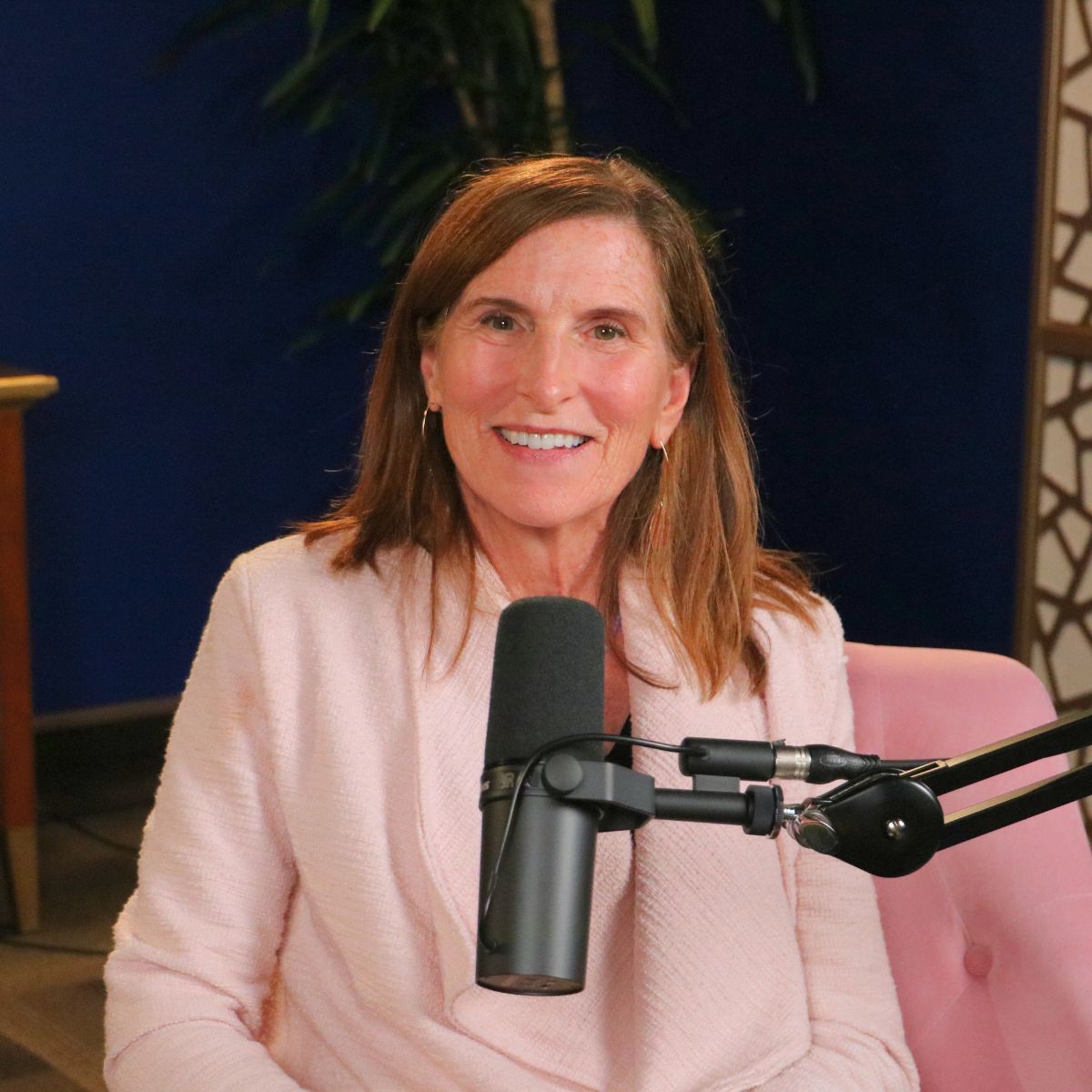
Dorothy: [00:00:00] There are so many stories that start with the diagnosis, but some go far beyond survival. Jenny Fitzpatrick remembers what it was like to be a young mother to be told she was too young for breast cancer, and then to have to insist that her concerns were real. Her experience shaped how she celebrates life, helps others and inspires friends to try to do new things. Today, Jenny talks about trusting your instincts about your own health, finding ways to celebrate each year, and building a life full of stories, friendships, and most of all, adventures.
Through stories like Jenny’s, we hope to reach as many people as possible so they could be inspired to take action when it comes to their health and wellbeing. So please consider sharing this with someone in your life. She or he may be the very person who needs to hear it, and we so appreciate you supporting our mission at [00:01:00] therose.org.
Let’s talk about your breast, a different kind of podcast presented to you by The Rose, a breast center of excellence, and a Texas treasure. You’re gonna hear frank discussions about tough topics, and you’re gonna learn why knowing about your breast could save your life.
Jenny, thank you so much for being with us here today. I, I’m just delighted that you were able to, to come and be a guest on Let’s Talk About Your Breasts.
Jenny: Thank you. It’s absolutely my pleasure to be here.
Dorothy: You know, we, we met dozens of years ago, it seems like.
Jenny: Yes, it was a long time.
Dorothy: A long time ago, but you had started to support The Rose and you were one of our special donors, and I just couldn’t wait to hear your story, find out why, but, but you’re also a very long time breast cancer survivor.
Jenny: I am.
Dorothy: And. You’ve gotta remember when you and I met years and years and years ago, we didn’t have that many [00:02:00] long-term survivors that had been diagnosed young.
Jenny: Absolutely.
Dorothy: And so you were already different in, in, in a way, and, and your story was, was so unique. So tell us about when you were diagnosed. How old were you? How did you find it?
Jenny: Okay. I was diagnosed in 1999 and I was 35 and I was misdiagnosed at 34 because at that time there weren’t people in their thirties ex with, I mean with very few exceptions, people in their thirties being diagnosed.
Dorothy: True.
Jenny: So I went to a breast surgeon because I found a lump. Uh, I had a, I had just had my third child at the time, I had a tiny baby. And I’d found out that a friend of mine had been diagnosed with breast cancer and I was so upset by it. She was my age. We’d had our third children, you know, at the same time. And I thought, [00:03:00] you know what, what makes us different? How is it that she has to go through all this? And I don’t. And I thought, well, I never do self-breast exams when I’m nursing. ‘Cause it just doesn’t, didn’t seem to make a lot of sense. But I thought, well, I’m gonna do one. And I found a lump.
Dorothy: Oh my goodness.
Jenny: And so I went to the doctor and she said that, matter of fact, there were two lumps. And she said, that’s not even what you’re supposed to be looking for. And why are you still nursing that baby?
Dorothy: Oh.
Jenny: And come back if you have a real problem. And I thought. Wow.
Dorothy: Wow.
Jenny: So, so I went home and thought, well, I didn’t like her at all.
Dorothy: I wonder why.
Jenny: But this is her, this is her profession.
Dorothy: Yes.
Jenny: I’ll continue to nourish that baby. Isn’t that supposed to be good for your breast health? Um, so I went then through the summer thinking everything’s fine. And at the end of the summer I thought something’s not right. The, you know, both of these lumps have grown and something just doesn’t feel right. And so [00:04:00] I then went back to my primary care physicians that I, I need somebody else to see. Um, kinda a long story short, I did go back, see somebody else. They said, gosh, don’t really know what these are, but we, we better figure it out.
And, uh, they were, they were both malignant tumors, two separate malignant.
Dorothy: Oh my goodness.
Jenny: Tumors in the same breast. Um, so that, um, kind of what ensued from there is, you know, first of all, I didn’t know, I knew it was probably very unusual to be in your thirties and get breast cancer. Um, I didn’t know quite how unusual and kinda, when you describe my experience as different, it was very different. And in some ways it was good because when I went into the clinic, every doctor or nurse knew me by name because I was half the age.
Dorothy: Of their normal, Yes.
Jenny: Of everybody else in there. The downside of it was they didn’t really know what to do with me. They couldn’t send a survivor to my house, who was in, you know, in my [00:05:00] same shoes. You know, how do you stop nursing a baby that abrupt. I had never given any, given any of my children a bottle. And now we have to start with this. And, you know, the, the daughter who nursed and played with my hair, she all of a sudden can’t nurse, she can’t, I don’t have any hair. It, it was a, it was, it was really a, it was really process. But I think because I was so young, the doctor said, we are going to do everything we possibly can. Um, and, and they did, and here I am. I just passed 26 years.
Dorothy: Oh, congratulations. Wow.
Jenny: Thank you. Thank you. And I, um, I celebrate all of those. My survival date is October 28th and every October 28th, I, um, it was very special to me.
Dorothy: Oh, yes. Now, go back when you said you knew something was wrong, was it a, a mental thing you knew? Had you been checking that those lumps had, was it just in the back of your mind all the time, or?
Jenny: It was slightly in the back of my mind, but I also, at [00:06:00] that point, I was young. I didn’t, hadn’t really had any experience with the doctors other than having babies. And, you know.
Dorothy: That’s a very different.
Jenny: Occasional, you know, flu or something. And so I, I trusted the process. Um, we’d had a wonderful summer. I remember the boys went off to school. I put my daughter down for a nap, and we had a full length mirror in the bathroom on the way to the shower. And I remember taking my shirt off and catching a glimpse of myself and thinking, I can see that.
Dorothy: Oh.
Jenny: I can, I can see that that’s, that doesn’t seem right and. You know, nothing had changed as far as nothing had shrunk. Nothing had gone away. And I thought, well, I don’t think I can trust what one person has said. I think I need to go back. And that’s what, what people talk about so much now is listen to your sixth sense. You know, what does your intuition tell you? If you think something’s not right, [00:07:00] go do something about it.
Dorothy: Right.
Jenny: Worst case scenario is that you’re wrong. And everything is fine. And then you carry on.
Dorothy: And back then, and I know we’re, we’re, we’re sounding like we’re really talking back.
Jenny: Yes. Back in the day, it was a long time ago.
Dorothy: It, it was a very different time. And for you to even say, I don’t like that doctor, because you know, you saw the doctor and you did what the doctor said and Yep. That was it.
Jenny: I trusted.
Dorothy: Yes,
Jenny: I trusted, and I like to think of myself as someone who trusts other people, but now when I’m looking at my health, I think, okay, listen. Take it in. If it doesn’t feel right, uh, figure out the next step.
Dorothy: Right. So you had all of the treatment. You had surgery, chemo, radiation.
Jenny: I did not have radiation.
Dorothy: You didn’t have radiation, okay.
Jenny: I did not have radiation. It was not in my lymph nodes. Interestingly, this was the very, very beginning of sentinel node dissection, and it was still in studies and so I had to sign and sign and sign. For them [00:08:00] to do sentinel node dissection, and they told me that I’d probably have one or two sentinel nodes. Ended up that my first mastectomy, I’ve had two, but my first mastectomy took eight hours because they found eight sentinel nodes and they kept going and they kept going and they were hard to find and they were buried. And of course I knew none of this since I was asleep.
Dorothy: Yeah. Right.
Jenny: But, um, afterwards understanding, well, the, it was part of the process. I was saying, yes, we can go ahead and do this because hopefully it will, you know, help somebody in the future. Um, now it sounds like maybe they’re able to dial in on Sentinel nose a little bit better. And pick the ones that might just be one or two.
Dorothy: Right.
Jenny: Instead of all eight of them.
Dorothy: Eight. Right.
Jenny: Because when I did have my second mastectomy, which was prophylactic we were treating, we were treating my head right. Which I felt like I needed treatment as much as my body. I would look at these children and think, I gotta be here to see you.
Dorothy: Right.
Jenny: Graduate from elementary school, right. Or high school or college or, you know, I [00:09:00] just, I wanted to make sure that my kids knew who I was and so I treated my head. You know, as much as I treated my body.
Dorothy: Was that even unusual though? You know, there was a time when we couldn’t ask for a, uh, mastectomy without it having some kind of disease or, you know, really being, uh, suspicious. So.
Jenny: Yes, I think it was unusual. I had a male breast surgeon. Um, he was fantastic. I just adored him. He got into the business because his mother passed away from breast cancer. So I think he had a lot of, I know he had a lot of personal involvement, and when I, when I’ve had my first mastectomy, I asked, I said, can we please just take the other side off? I said, I’m, I’m just afraid of it. And he said, Nope, I think you’ll become very attached to your other breast. And I said, i’m not sure you know me well enough to make that call, but let’s focus on, let’s focus on the diseased breast first. It was [00:10:00] actually very important to me to remove that breast and reconstruct nothing because I thought if I could look down and see nothing, then I might have the opportunity to see my kids grow up. And to me it was just a, it was just a mental, it was just a mental leap. If there’s nothing there and you’ve done everything you can, you can look at your kids in the face and just say, Hey, I’m, you know, I, I did the absolute best I could. So the following year, because my cancer was ER+ , the following year, my ovaries were trying to come back to life after all the, um, chemo.
Um, I just had way too much estrogen and they couldn’t tamp it down. So I did have to do a complete hysterectomy. And then the following year, one, I was healthy again. I went back to my breast surgeon and I said, okay, I am, I’m ready to work on the other side. And he said, are you sure? And I said, I definitely am. And he’s the one that said to me, you realize I’m treating your [00:11:00] head and not your body.
Dorothy: How interesting. Yeah.
Jenny: He’s the one who, he’s the one who kind of coined that frame phrase and I said, I didn’t really think about it that way, but I’m, I’m okay with treating my head.
Dorothy: Heck yeah.
Jenny: If that’s what it takes. And then at that point, I did undergo the, the whole reconstruction process then.
Dorothy: Well, so your, your original experience to what, three, four years here?
Jenny: It was a long time.
Dorothy: Yeah.
Jenny: It was a long time. And then I started with the expanders, and then we You know, we kind of moved from place to place and so I, the, um. I think maybe that first complete reconstruction process probably took 10 years.
Dorothy: Oh, that’s right.
Jenny: Was. It was a long time.
Dorothy: You were, and you were traveling into different cities. You had to set up with new doctors and.
Jenny: Yes. Every time, and I didn’t, I, I had the expanders in and I thought, well, I’m, I’m okay. This is, you know, if it’s a cosmetic procedure that needs to come next, that can, that can wait because, you know, raising kids life gets busy.
Dorothy: Oh yeah. Oh yeah.
Jenny: Yep. [00:12:00]
Dorothy: So you ended up in Houston now? That’s been what?
Jenny: Yes.
Dorothy: 18 years ago. 17?
Jenny: Next year. I just realized the other day. Next year it’s 20 years.
Dorothy: Oh my goodness.
Jenny: So I’m going to celebrate that. I really love Houston.
Dorothy: Yeah.
Jenny: And I’m going to, I’m gonna celebrate that. So May of next year, I will think of some terrific celebration.
Dorothy: Well, you’re good at that.
Jenny: You know what, I’m good at that.
Dorothy: I, I couldn’t believe that the way you celebrate in October. So let’s go to that for just a minute. Okay. Alright. How did you start that?
Jenny: I started in 2020. Actually. Um, I always do something to celebrate in October. I also became a mom for the first time in October. My eldest son is 33. He was born on October 10th. And I feel like that, uh, I, and I love the fall. I love cool weather. Um, I just feel like that is the month when I come back alive, um, after the, you know, the craziness in the heat of the summer.
Dorothy: Oh yeah.
Jenny: Um, and then I also had, you know, the breast breast cancer survivorship in that month as well. So I always do something to celebrate. And in [00:13:00] 2020 we were so limited in the way we could celebrate, and I thought, well, I can’t get a group of friends together. Um, I need to celebrate life in a different way.
So I thought, well, I love to do new things. I’m going to set out to do one new thing every day of the month. And during COVID, that was a little bit, you know, you weren’t going off to the theater.
Dorothy: No.
Jenny: You were, you were coming up with some different things to do. So I explored some great parks in town and did all sorts of, um, did all sorts of different things where I felt completely safe and everybody else stayed safe.
You know, every once in a while I’d find an open coffee shop or something. And I would try a different coffee shop. Uh, and I loved it. And at the end of the month I thought, well, this just, it just lights a spark in me to try. New things and to get outta the box and to get out of patterns. We all get busy and we all get, you know, we all stick in the same pattern sometimes. And so I just decided I would do it every year. So I [00:14:00] just finished, um, I just finished with, uh, I guess with my sixth one this year and I love it. And I have not run out of things to do in Houston.
Dorothy: Oh, wow.
Jenny: Um, I will tell you it’s exhausting by, by the end of October, sometimes I think, oh my goodness. I’m so glad Halloween has rolled around because I’m exhausted, but I have all these great new things under my belt.
Dorothy: All right, give me some, I gimme some examples. What are these new things?
Jenny: My goodness. Any kind of a museum that we’ve got so many great museums around, um, when I’m feeling like I’m out of time with work or different commitments. I will do something like a new restaurant or a new coffee shop, something like that. I’ve gone to, um, I’ve gone to different art galleries. I’ve gone to a Korean spa. Um, this year that was, it was so much fun. Um, this year I went to a head spa for the first time, and if you’ve never done it, I [00:15:00] highly suggest you go.
Dorothy: Okay.
Jenny: It was absolutely fabulous. Um, I will just look, I find, um, motivation online, different things people suggest I do. Um, I’ve been trying to do a ship channel tour for, I can’t tell you how long, and every year I can’t get tickets. So lots of times things keep rolling over on my calendar.
Dorothy: Right, right.
Jenny: To the following year. Um, different parts of town. Where I’ve never been. Um, this year I went to a couple of, um, like resale and antique stores. I’ve passed them so many times and I finally thought, okay, that’s it. I’m going in. Or someplace like those flower stores on famine that you pass all the time. Going into the med center in downtown. I’ve passed them year after year after year, and this time I thought, Nope, I’m not passing them anymore. So I’m like, bought a few flowers here, a few flowers here, a few flowers here. By the time I got home, I had all sorts of flowers and my new experiences.
Dorothy: Oh my, yes, yes.
Jenny: Yes. A lot of that.
Dorothy: Well, that, that is so inspirational. I mean, doing something [00:16:00] different every day. Something new every day.
Jenny: Yes.
Dorothy: That would take some creativity maybe.
Jenny: Creativity and scheduling.
Dorothy: Ah.
Jenny: Um, I have a lot of people that say, well, I would love to do these things with you. When are you going? So I, I probably fit maybe 10 or 15 things in on certain days. And the rest of them, I just have a list, because some days I might have an hour. Some days I might have 20 minutes.
Dorothy: Ah.
Jenny: So I have to pick and I have to pick and choose. Pick and choose what I do.
Dorothy: So recently one of our board members who we didn’t realize had any connection with you, uh, did a tea for you, right? At a new.
Jenny: Yes.
Dorothy: Uh, tea room or.
Jenny: Yes. It was so lovely. She had the idea of doing a fundraiser for The Rose. And called me and asked if there was something on my list of things to do. That I would like to turn into some sort of a fundraiser. And so I scanned the list and there is a new [00:17:00] tea room in the Heights and I thought, well, this, this might be perfect.
Dorothy: Yeah.
Jenny: Just a ladies tea. In a pretty place. It had just opened, neither of us had ever been there and so we just organized, we just organized a tea and it was.
Dorothy: Like in one week or something.
Jenny: In one week. It was very short notice.
Dorothy: And very successful.
Jenny: It was successful and everybody had the best time and um, a beautiful space and wonderful food, and wonderful conversation and. I looked around, there were 13 of us.
Dorothy: Mm.
Jenny: And I looked around the room and I kind of very quickly did a count of the number of years that I had known people, and I added them up because I’ve, I’ve moved and I’ve moved and I’ve moved, and, you know, sometimes I’ve, I’ve lived in Houston longer than I’ve lived any place else. And when I counted the number of friend years of friendship in that room, I came up with 92 years of friendship.
Dorothy: Oh [00:18:00] my gosh.
Jenny: And um, and Ann, I’ve known maybe a year and a half. And then there was somebody there. I went to a very tiny high school in Canada, and a ha a classmate happens to live here in Houston. So I’ve got 40 years of friendship with her and then a little bit of everything in between. And not only did I have a lovely time, but there was. All these ladies made so many connections with each other. And said, oh, I love these people. Can we get together? And, you know, at different times. And I love that as well. Connecting people, I just think is, it’s is so much fun.
Dorothy: Well, now in your line of work, what in the world ever got you into real estate?
Jenny: That’s a great question. Um, my mom got her real estate license when the same year that I left for boarding school. My sister left for college. And so that’s when my mom decided. Okay. Enough. She was a, she was a stay at home mom. Um, I was a stay at home mom for many, many years. It is primarily what I wanted to do because I, I loved that my mom stayed at home and took care of [00:19:00] us. Um, and I looked, you know, I kind of looked at her career. I had come home from college a number of years, and I had worked in their office and I thought, you know, I think that this is something I would like to do. Um, I really hadn’t been able to jump into a career with all the years that we moved around. And like I said, I, I really did enjoy being home with my kids, but when we moved here, I thought, well, this, I want this to be the last move. I want to be able to, I want this to be able to, you know, I wanna set some roots down and I wanna start having something that I can build that will be my own.
So I think my daughter was in the fourth grade. And I just started very, very slowly because I wanted to still be able to go to all the basketball games and all the recitals and do the pickups and that sort of of thing. And I thought, well, I will learn bit by bit. And then by the time my daughter graduates from high school, because she’s the last of our children, by the time she graduates, my goal was to have a very full business and to [00:20:00] be busy with what I did.
So I didn’t quite feel the absence of empty nest. Um. I will say I was very busy and had a very full career, but I also realized that it doesn’t take this thing away from having an empty nest. Oh, it’s, it’s nice to be, yeah, it’s nice to be that busy, but my goodness, you know, having an empty nest is just a very, it’s a very different, it’s a very different situation.
Dorothy: Oh yeah. Yeah. So I read about your, is it a podcast you do or do you still do that when you’re going through a car wash?
Jenny: Oh my gosh.
Dorothy: And now, tell us this story. I thought, who in the world would start something like that in a car wash?
Jenny: That’s so funny. Well, I, I actually haven’t done it in ages, and that might mean my car is out there in the parking lot, very dirty. Um, I will occasionally go through the car wash now, but I started it because I thought, well, this. I can, there’s literally nothing else going on, and there’s nothing I can do at this moment. I can’t drive away, I can’t go empty my dishwasher, I can’t do anything. I’m, [00:21:00] I’m captive in my car. So I went through the car wash one time and I thought, well, I’m just gonna give a market update.
So I just turned the video on and I did a market update and I posted it and I got lots of comments from people. And one of my dear friends in the title industry said to me. You just need to name that the Car Wash Chronicles, and you just need to keep doing that. So for years I did that and then every year, um, I started in real estate in January of 2008.
And so every year in January for a long time, I did a party at the car wash and I’d get there oh, early in the morning and I’d have a to-go breakfast for everybody. So they would just drive up, I’d give them to go breakfast for whoever was in the car, give ’em a little car wash coupon, they could run through the car wash and, and that was that. So it was really, it was a really fun thing. I’m not quite sure why I stopped doing it, but I, I stopped, I stopped doing it.
Dorothy: So you’re just talking about the real estate market.
Jenny: I’m talking, just talking about the real estate market or anything. You know, one year I talked about rodeo and [00:22:00] all the neat things that were going on at rodeo and one year I talked about all the, um, you know, all the different things that I had been doing in October and inviting people to, you know, inviting people to join in.
Dorothy: So it’s in your signature block, you have realtor, or how do you, tell me what you have in that block?
Jenny: In my signature block for years just had my name. And I said, realtor and I not only started a very small side business, um, that is all about adventure, but I realized that “realtor” does not define me as a person.
Dorothy: Hmm.
Jenny: At all. That is my career and kind of one of my pet peeves is when you meet people and you know, what do you do for a living?
Dorothy: Right.
Jenny: Again, it’s not, I don’t think that’s what defines people. It’s what we spend a lot of time doing, but it’s not, you know, it’s not really perhaps what our core is about and I realize that my, my core is an adventurer. [00:23:00] And so, um, I changed my signature block to realtor and adventurer because I thought, now, now that makes, now that makes sense. And I, um, I’m kind of big into, I’m big into core values and figuring out what our core values are. And I realized that my, my career as a realtor very strongly hits three of the core values, my work as an adventurer. Or my, um, time spent as an adventurer hits five of those core values.
Dorothy: Oh.
Jenny: And, uh, the sixth one is all about family. And so that’s, you know, that That’s something that I’m not going to, you know.
Dorothy: Right.
Jenny: I, I, I have family time that has nothing to do with adventuring or, or real estate.
Dorothy: So, ex tell us some of these adventures that you coordinate or you take or.
Jenny: Well, the first one I did was to the Pacific Northwest, which is where I grew up. I grew up outside Seattle and my dad was the ultimate [00:24:00] adventurer and he was the one that, um, taught us how to sail and took us camping and took us skiing, and he would take us ice skating on frozen lakes in the winter, and he taught us, when I say us, I mean my sister and I. He taught us these things that, um, I feel like if you don’t learn as a child, you might feel afraid of it as an adult. Or not even know how to start. But that was, that was inside of me. And I spent a lot of years not doing those things when I was raising my kids and moving around to different places and, um, I, I just didn’t have as much time and didn’t spend quite as much time doing that.
And so. Now I get back into this full force. So I planned a trip to the Pacific Northwest and um, took a group of women kayaking in the San Juan Islands. Now let’s be clear, I hired a third party company who had the kayaks and everything else. We went, we went kayaking and camping in the San Juan and then we went [00:25:00] hiking in the Cascades and had just a fabulous time.
And I’ve done that a couple of times and so enjoy it. And, um. I think one of the things I really enjoy is watching women feel empowered. Um, lots of times people want the adventure, but they don’t quite know how to set up a trip and they’re not quite sure what to do and I love doing that sort of thing.
Dorothy: Oh, yes.
Jenny: Um, one of my, I would say one of my all time favorite trips is I took a group of women, dog sleddding. I had.
Dorothy: Dog sledding?
Jenny: Dog sledding.
Dorothy: Oh my goodness.
Jenny: I had wanted to dog sled. Um, I thought before I turned 50 years old, I’m gonna dog sled, and darn it, I, I didn’t do it. And so 60 was, I’m 61 now. 60 was creeping up and I thought. You are not gonna launch into another decade without dog sledding. You are going to do this.
Dorothy: Oh my goodness.
Jenny: So I found an outfitting company in Minnesota and planned this whole four day dog sledding adventure, which also included [00:26:00] a, um, a sauna and cold plunge experience in Lake Superior, ah, in January. It was a very cold, cold plunge, but to do that, it was just. It was so much fun and outta the box. I mean, that’s adventure with a capital A.
Dorothy: Oh, yes, yes.
Jenny: And we had the best time. And just to see a group of people do something that they never thought they would do otherwise, including myself, I just, it’s just one more reason to smile.
Dorothy: Oh my gosh. Well, you, you do have that, that soul and that spirit that’s really gonna get you out there. Jenny, do you remember, uh, how you found out about The Rose.
Jenny: I do remember how I found out about The Rose. Um, and this was a very long time ago. Um, we had first moved here and I was looking for a different dry cleaners and I don’t remember the timeline of all of it, but the woman who worked at the dry cleaners, uh, was going through cancer treatment at the time. And I shared with her my journey and I asked her about her [00:27:00] treatment. All of my treatment was in Dallas when we lived there, so I didn’t have any connections to, um, to any kind of treatment here in Houston. Um, and she told me about The Rose, and that’s how I very first found out about it.
And I don’t. I moved from the area. She stopped working there a long time ago, and I have not kept in touch with her, but every time I would go in, uh, we would, we would chat about it. And she was so grateful for the help of The Rose and the support of The Rose. And I thought, gosh, I’m getting firsthand experience from somebody.
Dorothy: Wow.
Jenny: Whose life is really being changed. So surely this must be a great organization.
Dorothy: How, and I remember how surprised we were when you started, uh, supporting us because, you know, usually our supporters were kind of very local and, and here you were and you were, oh, the gifts were wonderful. But the story always touched me, I thought, you [00:28:00] know, that is, that is the best advertisement. That is the best. Someone telling the story of coming to us.
Jenny: Yes, yes. And that, you know, it’s interesting. Our lives are all made up of stories. I mean, essentially we’re sitting here.
Dorothy: Yes.
Jenny: Talking about a story, and our lives are made up of that. And I feel like when people will share a story, same thing with why I don’t start with, well, what do you do for a living? Because that doesn’t lead to a story. Oh, it leads to a response.
Dorothy: I love that.
Jenny: And a response doesn’t necessarily keep a conversation going, but if somebody will talk about. What kind of feeds their soul. If you’re gonna talk to me about a hobby or you can talk about what you like to do when you’re not working, then it leads to a story, and that is literally how we get to know people and how we remember people.
Dorothy: That is great, Jenny. I’ve never thought of it like that.
Jenny: Yes. All about, we are all made up of stories.
Dorothy: All right, before we close.
Jenny: Okay.
Dorothy: I want to know if you have any special goals [00:29:00] for your children. Or what kind of life do, do you hope for them? Or what kind of world do you hope for them?
Jenny: That is an enormous question to finish, Dorothy?
Dorothy: Well.
Jenny: I will say, um. I look back on how little my children were when I was diagnosed and um, I always think about it in terms of the sum of their ages and the sum of their ages when I was diagnosed was 13.
Dorothy: Oh,
Jenny: the sum of their ages this year is a 26 year survivor is 91.
Dorothy: Ah,
Jenny: and I look at all of those years of extra. That is extra love I got to give. That is extra love I got to receive. It is extra adventure I could have with them, experiences I could have with them, be it good or bad. And I think what I really wish for them is, is extra. You know, [00:30:00] what, what do you, what do you want out of life and kind of what extra can you get that you, you know, none of us are guaranteed extra, but if I got all these years of extra love and extra time, and I just wish for them time in life so they have the opportunity to achieve their goals and meet their children and meet their grandchildren and things that, you know, things that I look upon every year as, um, a hopeful gift in the future.
Dorothy: Oh, that is great. Well, again, it was so wonderful to have you with us. Congratulations on this many years of survivorship. I don’t know how anyone could keep up with you in your October events, but we love it and.
Jenny: Come join me anytime. I love. I love.
Dorothy: No, no dogsleding. No camping. No, I’m a city girl. Come on.
Jenny: But I do have friends that say. Please [00:31:00] come up with the shopping and lovely hotel tour and we will sign up in a moment. So who knows, maybe that’s in our future too. ’cause that’s an, that can be an adventure.
Dorothy: Oh yes, it can be. And thank you for the great advice and, and for sharing your story. It was, it’s a special one for sure.
Jenny: Thank you. Certainly my pleasure. Thank you for giving me the opportunity.
Post Credits: Thank you for joining us today on Let’s Talk About Your Breasts. This podcast is produced by Speke Podcasting and brought to you by The Rose. Visit therose.org to learn more about our organization. Subscribe to our podcast, share episodes with friends, and join the conversation on social media using #LetsTalkAboutYourBreasts. We welcome your feedback and suggestions. Consider supporting The Rose. Your gift can make the difference to a person in need. And remember, self care is not selfish. It’s essential.