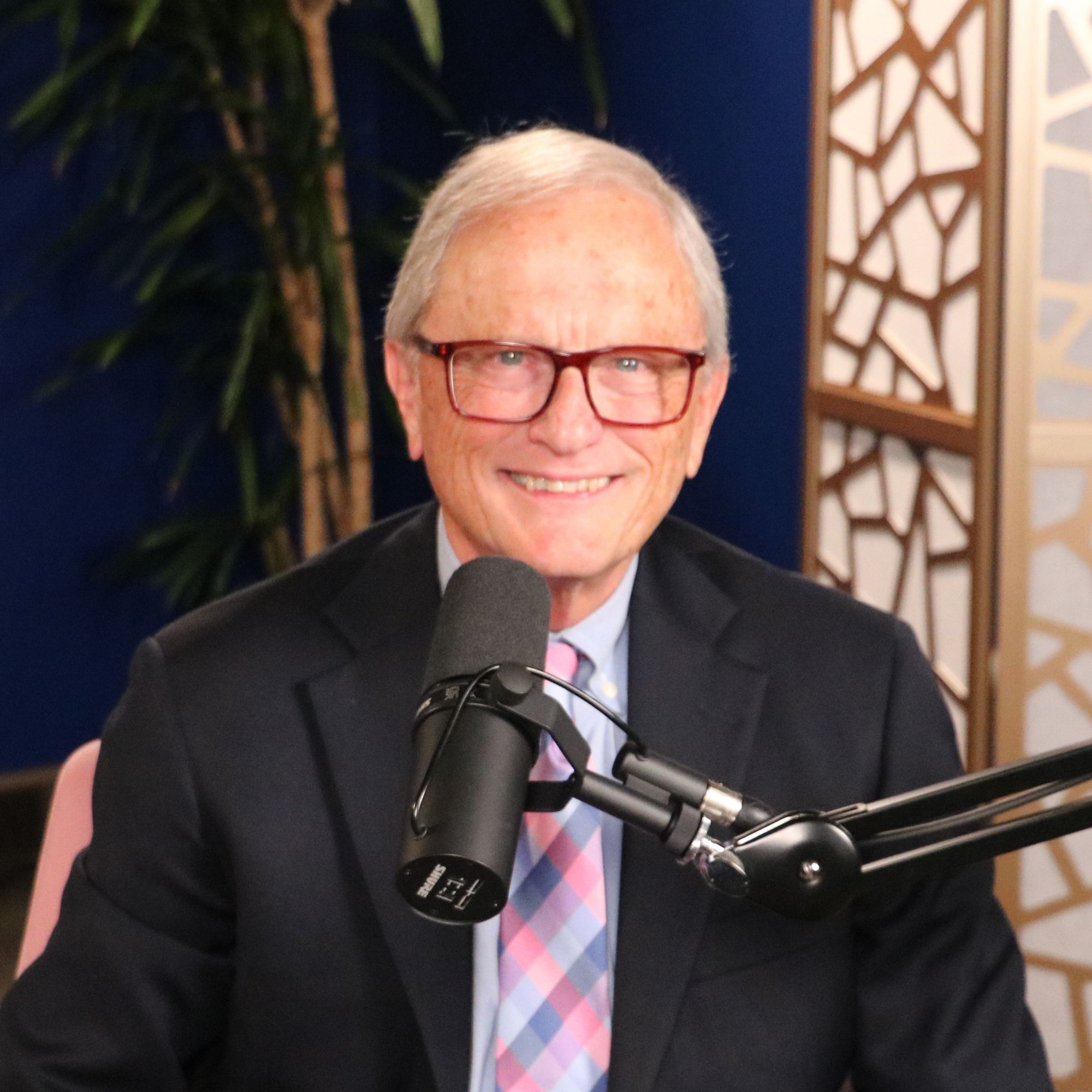
Dorothy: [00:00:00] Retirement sparked something new for Bob Tenczar. He traded spreadsheets for service and found purpose in giving back. Bob has been on our board for over a decade and he learned that all of his financial expertise and his experience had a place here at The Rose. He also had a deeply personal reason for being a part of The Rose, and when he learned that compassion carries as much value as any ledger, Bob made it a different kind of mission. Bob’s story shows how one person can change lives, starting with their own. Bob discovered the power of purpose after retirement and he is glad to tell anyone what it takes to change lives and how being a part of The Rose has changed his.
Please share this episode with Family and Friends and subscribe to our podcast on your favorite podcast platform. We [00:01:00] so appreciate you supporting The Rose’s mission. And most of all, we want you to take care of yourself.
Let’s Talk About Your Breast, a different kind of podcast presented to you by The Rose, a breast center of excellence, and a Texas treasure. You’re gonna hear frank discussions about tough topics, and you’re gonna learn why knowing about your breast could save your life.
So Bob, thank you so much for being with us today.
Bob: It’s a pleasure to be here. Pleasure.
Dorothy: And I want you to tell our listeners a little something about how you got involved. Was nonprofit anything, being a volunteer.
Bob: Well, you know, I, I realized too late that during my working career, uh, I was just devoted to work and not to more giving and doing other things. And so late in my working career, I realized that and I began to get involved with some [00:02:00] church organizations and activities. But then the big hinge for me was retiring. Okay. And so upon retirement, I had a lot of time coming available. I don’t play golf. Okay. And so I knew that I had certain talents and I had to keep busy. Okay? And so volunteering was obviously one of the things that was out there for me to do.
And so initially I had been a supporter of the United Way and so I raised my hand and said, you know, I’m here to volunteer United Way. Take me, and they did. And I got involved with the bi-annual analysis of the agencies that submit their requests for United Way funding and they assign me to, of all places the healthcare group of agencies. And so I went through that biannual process twice. Uh, it was very interesting as my introduction into [00:03:00] more of the details of healthcare because we would review, um, submissions from San Jose Clinic, legacy Healthcare, American Cancer Society, and others. Okay. And so. That was great. Okay. And I was, I was, you know, I got to do some work, but it was, it was mostly analytical looking at documents, raising questions. But then, you know, we had, we actually visited locations as well, so that was the beginning of a nonprofit initiative for me.
But a good friend of mine. Also had made the transition into nonprofits and she, we had known each other back to the seventies, and she encouraged me to get more involved with nonprofit organizations, particularly being on boards. Okay. She said, you know, I have a financial management background. She said, there are plenty of nonprofit agencies that would love to have you sitting on their board with your, you know, talents. [00:04:00] And so I took that as a go and said, okay, you’re right. Okay, I’ll, I’ll take a look at it. And so, uh, that.
That pushed me to go to the United Way Board Fair. Okay. And it was at that first board fair that I saw a bunch of ladies gathered around The Rose table immediately. I knew I would have, I could embrace the mission of The Rose. Okay. I have personal reasons as to why that’s true. Um, and so I waited for all the ladies to get away from the table and I was the only guy in the area. I walked up and I met you, Dorothy.
Dorothy: I know, I know.
Bob: And I said, do you have men on your board? And she said, oh, yes. And you said, oh, yes. Um.
Dorothy: I don’t think anybody’s ever asked me, do you have men on your board? You know.
Bob: Throughout the evening your table was, you know, was, you know, it seemed to be only, uh, [00:05:00] the ladies were, uh, interested. I was interested. And so, uh, and the good news is that you were interested, you know, once I explained who I was and what I was looking for. You were, uh, you were, uh.
Dorothy: So you kind of glossed over that financial background. What exactly did you do?
Bob: Yeah. I was.
Dorothy: In your work life?
Bob: Yeah. Uh, a career. A career in accounting and auditing. First in public accounting.
Dorothy: Oh, okay.
Bob: But then I transitioned, I, when I realized that I didn’t really want to stay in that business. I transitioned into, uh, corporate financial management.
Dorothy: Oh, okay.
Bob: Primarily industrial companies, companies that, you know, manufactured stuff. Okay. And that was my world. Okay. And that, so it was a big leap for me. Ultimately to le, you know, to get into nonprofits, to get into organizations that were more service oriented, healthcare oriented. Right. So, um, but it was, it was a [00:06:00] wonderful career with lots of hours, you know, worked, but with lots of, uh, successes. Um, bumps along the road, but there was bumps along the road with everything.
Dorothy: Right.
Bob: Okay.
Dorothy: But so The Rose wasn’t your first nonprofit to be on the board?
Bob: Uh, it was, I joined the, the pro, the, the board of The Rose coincide at the same time. At from the same board fair with another nonprofit organization of Avanse Houston. Devoted to, uh, not to healthcare, but to, um, education.
Dorothy: Right.
Bob: Primarily focused on pre-K and family education for underserved communities is one of the, I think it’s, there’s four big agencies that serve the greater Houston area for the federal. Um, head Start program. Okay. And so that’s their biggest activity.
Dorothy: So both of your nonprofits had a [00:07:00] mission focus on lower income, underserved, underserved communities.
Bob: Absolutely.
Dorothy: And, and that attracted you?
Bob: Yes. And even when I was doing the United Way volunteering San Jose Clinic.
Dorothy: Oh yeah.
Bob: Is another one. Legacy is another one. You know? And so that, that theme seemed to dominate.
Dorothy: That’s interesting. I didn’t realize that. So we really need to give a plug to the United Way Board Fair. You know, I think, I think that same year we recruited Laura or the year after and I, or Swin, I know we’ve had Swin. Yeah, we’ve had probably six, seven. Board members who have come from that, that job fair or that board fair.
Bob: Right.
Dorothy: So United Way really does a service with that. And we are not a United Way funded agency, but they open it up to all nonprofits.
Bob: Yep.
Dorothy: So we would really encourage that to any, any nonprofit you’ll find some of the best of the best there.
Bob: Well, since I know, since I have, uh, [00:08:00] rolled off of the Board of Avanse, I’ve used the board fair again. And so I do have another activity going on right now.
Dorothy: And that’s with?
Bob: That’s with the, um, American Red Cross.
Dorothy: You know, I, I’m just amazed at how much you do give to these nonprofits because.
Bob: Yeah.
Dorothy: It, it takes a lot of time.
Bob: Yeah. Well, uh, but I have the time.
Dorothy: Yeah, yeah, that’s true. That’s true. But it also takes. I mean, I know for us the hours you spent reviewing our finances and our monthly stuff and, you know, it, it just takes a lot.
Bob: Well, I, I have.
Dorothy: And you were our treasurer for years.
Bob: Correct.
Dorothy: So this is not a small job.
Bob: Yeah. Well, you know, just like everybody, you know everybody who works for The Rose, okay, embraces the, embraces the mission is willing to work hard to accomplish the mission. And, you know, the same attitude, the same approach existed for me as a board [00:09:00] member. I have the time, I have the abilities to do what I was doing. So let’s do it.
Dorothy: So Bob said you had a, a personal reason for wanting to be part of our mission. And what was that?
Bob: Um, my mom was a breast cancer victim. Um, she was, she and our entire family were from a culture that you went to see a doctor when you were sick. You went to see the dentist when you had a cavity, or a toothache. Okay. You didn’t do any annual checkups. Any teeth cleaning.
Dorothy: No.
Bob: You didn’t do anything unless something was telling you you had to.
Dorothy: Right.
Bob: And so, um, and so as a result of that, um, my mom never, you know, actually, you know, she 2025 marks [00:10:00] the 50 year anniversary of when she died.
Dorothy: Oh.
Bob: In 1975. And it was only in 1976. That the American Cancer Society began to make the statement for the first time that annual mammograms were a necessity.
Dorothy: Right.
Bob: Okay. And so it never, you know, it never came up as something that needed to be thought about for my mom.
Dorothy: So, uh, and there wasn’t screening before then, Bob.
Bob: Yeah.
Dorothy: I mean, it, you had a mammogram and you had it on a non-dedicated machine if someone found something.
Bob: Right.
Dorothy: It was truly just a diagnostic test. So That’s so interesting. Uh, just thinking back, how much has changed?
Bob: Well, I remember vividly the conversation she had with me in the spring of 1974, telling me that she had, [00:11:00] you know, lumps in that. She was gonna go into the hospital, you know, for what she explained to me was a biopsy. Okay. Uh, what that turned into was a radical double mastectomy. Okay. Which was, you know.
Dorothy: That she went in for.
Bob: She went into the hospital, but she came out, you know.
Dorothy: And, and that was common standard procedure at that time.
Bob: Yeah. Yeah.
Dorothy: Such a traumatic surgery.
Bob: Right.
Dorothy: To have no preparation.
Bob: Correct. Correct. It is a big surprise. None of us ever thought this was gonna be the result of her. You know, test. Okay. So that was a shock. She came out and over the months of that summer, I guess it became more and more evident that there was a bigger problem. Because the breast cancer had, had metastasized into her lymph system and was everywhere.
Dorothy: Yeah.
Bob: Okay. And so [00:12:00] now I was.
Dorothy: She was young.
Bob: She, uh, she was 52. Okay. And so during that, during those summer months. I was, I was, you know, I was in my first year of marriage, I had a house, I had a townhouse being built. You know, I was working in Miami and she was up in the West Palm Beach area. We weren’t, you know, we, we weren’t seeing each other every day, you know, and I was, I was busy and enjoying my new life as a, you know, in a new career. And so during those summer months when things, other treatments began, I was really sheltered from what was going on.
It was only in the fall that the seriousness of what was going on with my mom hit home because I don’t know whether it was probably at Thanksgiving, ’cause I know where I was visiting, you know, my, you know, the house that I grew up in and I know my aunt and uncle who lived up not too [00:13:00] far away from them, were visiting as well. And while I was passing my mother’s bedroom, she was talking to, um, her sister, my Aunt Helen, and she was showing her the dress and she’d said to Helen, this is the dress I wanna wear when I’m laid out.
Dorothy: Oh.
Bob: Boom. That was the.
Dorothy: Oh, Bob.
Bob: That was, that was the big shock. Okay. This the, just how serious this was. Yeah. Um, you know, now she was, I, I moved into my new house in December. She was, she was there too. Help me nest, you know?
Dorothy: Right.
Bob: You know, and into, you know, your first home Into their first home. That was in December. Okay. But, but by Feb, by February she was back in the hospital. Uh, the doctors were trying a lot of things. They did a splenectomy, they were, and anything where they could get rid of the cancer, they were trying, but she got smaller and smaller, weaker and weaker. And she passed in February. So that [00:14:00] remembrance that I’ve carried with me for all these many years. That’s why I knew with certainty that I could embrace the, uh, mission of The Rose.
Dorothy: Right. That had to be hard.
Bob: Um, you know, it’s, I was a young guy. Okay. I was in my, my early twenties. And so, um, uh, it was the first real suffering.
Dorothy: Yeah.
Bob: Okay. You have sufferings in life. Okay. It was the first, first suffering, and so it, it was, um, a life changing event.
Dorothy: So I suspect as you had children, you became a champion of having the screenings and all the things that.
Bob: Yeah, well, that’s, you know.
Dorothy: That’s just a different lifetime, really.
Bob: That’s correct. And, and, and I have to give all the credit to my wife Nancy, who while I was working all the time Was a wonderful [00:15:00] mother in making sure that the kids, all the kids had their, you know, hand annual checkups, if not more frequently than that. Okay. And making sure that we kept an eye on, on the health of our three kids.
And I’m, I’m happy to say that, you know, my, my, uh, oldest daughter Laura has two kids and I know that she shares with us every year the photo from the doctor’s office from, you know, you know, as, as to when they get their annual, annual checkups. So all that, that new appreciation for being on top of your health.
Dorothy: Right.
Bob: Visiting the doctor to find out how you’re doing. That melds perfectly into what right, you need to do with, you know, with mammography.
Dorothy: So what have you learned since you, I mean, you’ve been a board member for 10 years or a little more than that?
Bob: Yeah.
Dorothy: So what have you learned since you’ve been with us?
Bob: Well, I’ve [00:16:00] learned that, I’ve always known that in the world there’s a lot of caring people.
Dorothy: Hmm.
Bob: Okay. I’ve been very, very pleased with meeting so many of those caring people here at The Rose.
Dorothy: Oh, thank you.
Bob: Okay. And it’s not only you and Dr. Dixie who saw a need and took action to address that need to take care of a certain population that needed it. It, it infuses into the, the, the employees. Uh, particularly, particularly the navigators who have a special fondness for as to how they, they take by the hand patients and lead them through what can be a very complicated process.
Dorothy: Right.
Bob: Okay. But in addition to that, the caring also gets to all these ladies who come in here for their mammography that have insurance. Okay, now, yes, it’s, it’s a good thing for themselves [00:17:00] that they’re doing it for themselves, but hopefully they know and can appreciate that by doing it at The Rose, they’re caring for others. So that’s really, that’s another example. And then of course, supporters of The Rose, particularly the larger funders who have. Provided The Rose with the capability of having the state-of-the-art technology that’s necessary. Uh, to do what’s required. Okay. As well as being able to expand with the mobile program. So just another example of that, there are really a lot of people who care about others. Okay. And that’s, you know, we’re no. Succinctly we’re told to love God and to love neighbor. Loving the neighbor and family is, is all part of caring for others. And that’s what, that’s what I’ve learned happens here at The Rose.
Dorothy: And I’m always amazed [00:18:00] because they’re caring for people. They’ll never meet, they’ll never know that our community, you know, they right, they understand it. It could happen next door to them or to their own family and yeah, it’s, it’s really a, we really have a unique community around us in, in many ways.
Bob: Yep.
Dorothy: So now do you realize you, I was going back through all the things and you’ve been with us through hurricanes and shutdowns and.
Bob: Floods.
Dorothy: Floods. Oh god, yes. Floods. Um, which, which between you and me, I’m so glad I wasn’t in your house. Ours was nothing compared to yours. But you’ve also been through, I, I think you were here when we just launched our first, well, I think you came right after that. The portable mammograms. Do you remember they, the little ones we’d roll in and then you got to see our coaches.
Bob: Right.
Dorothy: Come in.
Bob: Right.
Dorothy: So what, in all these times, all these [00:19:00] years, do you have a favorite moment that, that you remember?
Bob: Well, there’s lots of wonderful moments. Okay. I particularly embrace. All the wonderful mission moments, testimonies that I’ve heard from, from people who whose lives were saved whose, whose obligations to their family was saved because they went through the process, The Rose. And listening to these real life stories is just a compendium of wonderful.
Dorothy: Oh yeah.
Bob: Wonderful moments. Um, I know that, um, uh, most, you know, in one of the. Uh, aspects of being proud about what The Rose Roses accomplished is with the expansion of the mobile program. Okay. That during these 10 years going up to five coaches and serving so many, so many counties.
Dorothy: Yes.
Bob: It’s wonderful and, and, and, and one moment that I remember. Specifically was at the Brookwood [00:20:00] community. Um, where I was there when the coach was there serving the citizens of, of the Brookwood community and seeing just how comfortable uh, these ladies were, you know, being, having their tests done right there where they live versus the, them being uncomfortable about leaving their pretty sheltered environment.
Dorothy: And safe.
Bob: Safe environment and having to go to, um, a fac a facility. You know, for, uh, for the tests. So I saw the mobile coach in action. I saw it in action for an, you know, a underserved. Community Very.
Dorothy: And a special needs, special.
Bob: Special needs community. And so that, that was a real highlight.
Dorothy: Yeah. It was for our, our employees too. And Bob, you were instrumental in making that happen. So, you know, you always leave that part off. But I will tell you, our techs came back in tears. They said, if ever we had a day, we knew where we needed [00:21:00] to be. It was that day and, and it’s just, it was just so rewarding.
Bob: Yeah.
Dorothy: Yeah. Such good work they do.
Bob: Well and you know, and, and when I think about the scope now, the mobile program, knowing that so many, so many people can’t get to, you know, from their lives of working, you know, where they’re at, transportation, them getting to where they need to have their mammogram. That’s not a problem.
Dorothy: Yeah.
Bob: Let’s put together a group and we’ll come, we’ll come, we’ll come to you.
Dorothy: Right, right.
Bob: Okay. And so that’s, that’s a, that’s a, a wonderful accomplishment.
Dorothy: But, you know, as our treasurer for so many years, you know, that is our most expensive program.
Bob: Hmm.
Dorothy: But it is the one that is our mission.
Bob: Yep.
Dorothy: Absolutely. The most too.
Bob: Yep. Well, you know, we, when you an accountant, the accountant in me always tries to match up the revenue that you earn and match it up with the [00:22:00] costs. We know that so much of what we do, it’s not a really good match because the costs, okay, of, of having all these coaches, uh, the cost of.
Dorothy: Having mammograms at all.
Bob: Yeah. Of having a navigation department. Okay. You know, I guess recently we’ve had a little funding for that, but over the years it’s just been a basic overhead expense.
Dorothy: Right.
Bob: Okay. So knowing, knowing that that matching is a challenge, okay. Gets us right back to the how wonderful it is that there are government programs. The ladies that come in here with insurance and wonderful philanthropic. Contributions from organizations and individuals that for The Rose to keep doing what The Rose does, we need to continue to rely upon those sources.
Dorothy: So when you speak of our navigation department, you’re talking about our patient navigation to [00:23:00] treatment?
Bob: Yes.
Dorothy: And this is a service particularly for our uninsured women who have been diagnosed and, uh, I know you’ve met our navigators. I, I think the, the, uh, one thing that always impresses me about them is they find ways to get people into treatment and, and you know how hard that is sometimes, right? But they will continue to work and turn over rocks and, you know, just explore everything. Someone said they never have a bad day. Now I don’t see how you can be in the room when another person that you really don’t know is hearing for the first time. They have breast cancer.
Bob: Right.
Dorothy: And from there they take ’em and.
Bob: Yeah.
Dorothy: And get ’em into treatment. So.
Bob: I’ve seen on occasion how the, uh, the patient who has been navigated bonds [00:24:00] so closely with the navigator, they become friends for life.
Dorothy: Yes.
Bob: It’s just another key to the caring attitude that we, we care about these people and we’re gonna work to get the, to get to the solution.
Dorothy: Right.
Bob: And, um, and so I have a particular fondness for what the navigators do. I, I know that looking back, if there had been a chance for my mom, defeat, Okay, what she discovered. Okay. She would’ve needed a navigator.
Dorothy: Yeah.
Bob: We hardly ever, you know, went to a doctor. And so that whole world of, what do I do next? Okay. Would’ve would’ve been something that she would’ve needed.
Dorothy: That’s so true. I think, I think most any disease you could use a navigator. Because it’s, you’re walking into a foreign world.
Bob: Right.
Dorothy: It’s, it’s healthcare.
Bob: Yep.
Dorothy: It’s trying to navigate that horrible maze of uh, doctors [00:25:00] and, and facilities and, you know, the, the navigators many times have had to meet the patients there or carry them there because it is. You know, we just don’t realize how inaccessible some things are for people who don’t have insurance.
Bob: Right.
Dorothy: It, they just never, never know about it. So what do you see as the future of The Rose? Do you think we’re ever gonna find a cure for cancer?
Bob: That’s quite a question. I know that the effort involved in trying to figure it out.
Dorothy: Okay.
Bob: Is substantial. And I know, and I, and I always, you know, I get materials from MD Anderson in, you know, and read the newspapers as to what’s going on and you know, with, with cancer, um, efforts. And knowing the [00:26:00] accomplishments in medicine that have occurred, you know, in our li in our lifetime.
Dorothy: Oh yes.
Bob: Okay. You know, I would say I would, I would say if I had the answer yes or no, I would say yes. I don’t know how long it’s gonna take. Okay. But I have to believe that over the course of time, there can be, you know, there can, there can be found a cure. And so we can only, it’s just another way, you know, in addition to supporting The Rose to treat people who have, you know, who have had, uh, the, uh, detection. Having the ability to support the, you know, the effort to, uh, investigate cures is also very important. Very important.
Dorothy: Yeah. So first part of my question, where do you see The Rose going?
Bob: Where do I see The Rose going? The Rose needs to be going down the path where it continues to be on the, having state-of-the-art technology. Okay? [00:27:00] Breast care excellence is something that will always be on the table and something that we’ve embraced.
Dorothy: Yes.
Bob: Okay. And, and we have the wonderful technology and the wonderful qualified doctors and technicians to provide, provide the service that’s needed. So where’s The Rose going? The Rose is going on the path where it needs to continue to identify those technological needs.
Okay. We’ve have the partnership now with MRI. That’s one small step. Okay. But who knows what else is coming down the.
Dorothy: Yeah.
Bob: Down the road. So The Rose needs to go down that path. Um. The Rose. It’s not a need, but it’s a wonderful initiative to expand the mobile. Okay. Okay. Does the road, does The Rose need to do that? Well, we’re serving so many people with five coaches. It’s a wonderful mission. It’s something to be embraced, but by [00:28:00] God, if we can find the funding to expand that, that’s what The Rose. The Rose, you could be argued The Rose needs to do that. Okay. Because there’s, there’s people.
Dorothy: But we’re booked for a year.
Bob: Yeah.
Dorothy: I mean, so.
Bob: You, the market.
Dorothy: Yeah.
Bob: I mean the market is there.
Dorothy: And we, we really have to struggle to, to bring new partners in just because we have so many established partners that really work hard to make those days work.
Bob: Yep. Now the competitive environment is challenging. Okay. And so The Rose through your podcast, through other, uh, methods, uh, needs to let the world know that The Rose is here and what The Rose does because you know, I’m sure ladies can get wonderful mammography treatment at some of the big hospitals. Okay.
Dorothy: Right.
Bob: God bless ’em. Okay. But what they’re not getting there, that they’re getting at The [00:29:00] Rose, they’re getting the same quality experience, but what they’re coming to The Rose they’re giving to others.
Dorothy: Yes.
Bob: Okay. And so that message not only to the general public, but into. State and local governments, okay. You know, providers of, uh, funding for philanthropic purposes.
Dorothy: Yes.
Bob: The Rose needs to always get better in that regard. Okay. ’cause we know, frankly, that’s, we need to, you know, survive as a nonprofit.
Dorothy: Right.
Bob: You know, organization. And that’s part of it, a big part of it.
Dorothy: That is part of it. Yeah. That is a, that is a very big part and it, like you said, it’s getting more and more competitive and. We’re in an expensive, uh, service.
Bob: Yeah.
Dorothy: I mean, we, this is very expensive. It involves direct care. It involves invasive care at times. When you’re doing biopsies and things like that. So, Bob, what do you [00:30:00] hope for your girls?
Bob: Well, I have two daughters, Laura, who’s married with, uh, two kids. Okay. Aaron, who’s a high school history teacher, and she’s single like any dad. Okay. I want them to, I want happiness for them. Okay. Wherever their talents take them, I hope that they can use their talents to succeed, have their measure of success in education. Laura’s in business with the insurance business, but she’s a wonderful mother. Okay. I think her kids are a little bit too active, but, but she, she’s constantly, she and my son-in-law, Richard, are constantly, you know, you know, getting them to all their activities.
Dorothy: Right.
Bob: Uh, but things like happiness, of course, married to that is health. I know that, it is got to the point now where I don’t need to nag them anymore about annual [00:31:00] mammograms. Okay. I think they got the message. That’s the good news there.
Dorothy: Yeah.
Bob: But, um, you know, I want them to leave full, to lead full lives. Okay. To, to feel good about life, to feel we’ve got the purpose of life. Okay. And, um, to, you know, uh, and to have love for, actually, you know, you have, you try to have love for everybody. Okay. And be, you know, be very giving. Okay. I know Laura is very active even though she’s uh, uh, you know, has her career.
She’s very active and even drags the kids along into service activities. Okay. Constantly doing something, whether it’s the, the food bank, you know, uh, meals for kids. They’re, they’re always doing stuff like that. Okay. And so that’s the type of at, you know, approach to life that I hope that they have throughout their years.
Um, I hope they’re strong enough, you know, um, to, we know that I, I mentioned sufferings. I mentioned one of my [00:32:00] big life sufferings with my mom, but I know that we all have episodes, incidents of where we suffer. Okay. And so it’s, it is certainly my hope that they have the, the strength and the joy to, you know, to of life, to work their way through those things.
Dorothy: Right. Those are good wishes. Very good wishes. I, and I know that that service mentality had to come from you. Don’t argue with me.
Bob: Okay.
Dorothy: So thank you so much for being with us today. Good, good words of wisdom. Bob, you’ve, you’ve been with us so long.
Bob: Well, it.
Dorothy: Uh, and you know, you know what we need.
Bob: Well, Dorothy, um, you have been an inspiration to me and to all the board members that I’ve, I’ve been able to work with over these years and that we’ve had some wonderful board members. Um, and so it’s been a, a joy for me, you know, to, to be on this board.
Dorothy: Thank you. Thank you so much.
Post-Credits: Thank you for joining us today on Let’s Talk About Your Breasts. This podcast is [00:33:00] produced by Speke Podcasting and brought to you by The Rose. Visit therose.org to learn more about our organization. Subscribe to our podcast, share episodes with friends, and join the conversation on social media using #LetsTalkAboutYourBreasts. We welcome your feedback and suggestions. Consider supporting The Rose. Your gift can make the difference to a person in need. And remember self-care is not selfish. It’s essential.