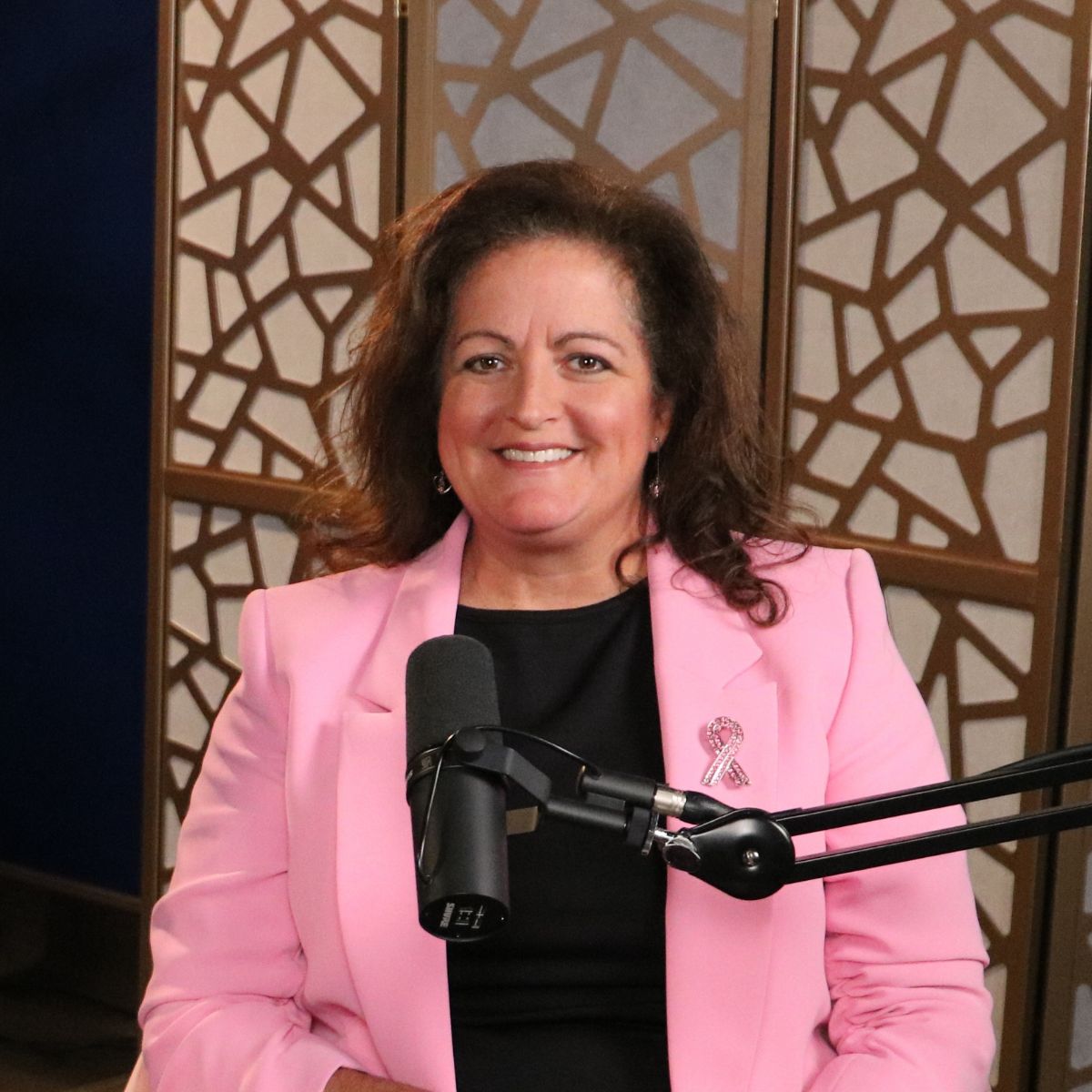
Dorothy: [00:00:00] We talk a lot about mammograms, and you might know someone who’s had breast cancer, but you may not know what it feels like to actually have to push for that first mammogram. To have to advocate for yourself and ultimately to become an example for others. Shelley Cooper’s story is about asking questions at your doctor’s office, and in spite of all the pushback she got, her cancer was still caught at stage zero. She shares her journey, talks about friends and helping her family, and why it’s so important that women understand they must advocate for themselves, especially when it comes to having mammograms. Shelley’s an honoree at this year’s Everything’s Coming Up Roses luncheon. And you can learn more about it at therose.org.
Let’s Talk About Your Breast, a different kind of podcast presented to you by The Rose, a breast center of [00:01:00] excellence, and a Texas treasure. You’re gonna hear frank discussions about tough topics, and you’re gonna learn why knowing about your breast could save your life.
Shelley. How do you feel about being one of our honorees along with your mother at our upcoming event Everything’s Coming Up Roses?
Shelley: Well, when I was first asked to do it, I was a little shocked and a little, uh, I guess overwhelmed and, and really honored. I know that’s, I’m double using the word, but I mean, it, it was an honor. I didn’t expect it, and I think it was just, it was fun and I was glad to be a part of this because The Rose is such an amazing organization that it was an honor to be asked.
Dorothy: Have you been recognized this way a lot before?
Shelley: It’s my first.
Dorothy: Oh. Oh. Well then that.
Shelley: I know.
Dorothy: That makes it extra special. Yes, of course. You and your mother [00:02:00] have such a unique story, and I mean that in every way that it could be unique. But I wanna start with your story and we’re gonna talk about your breast cancer experience. We’re gonna talk about treatment, how you found it. Why you found it. But first let’s talk about Shelley, the person.
Shelley: Okay.
Dorothy: Tell me high level, something about you.
Shelley: Well, I’m a mother of two and one’s a fourth grader and one’s a ninth grader. And then I’m happily married to my husband Roger, and my two kids are Brody and Bryce. I’ve, um, been in the plastics industry for my entire career and, you know, I always joke and mention this to you, in fact, just a minute ago, that my parents used to talk about it and bore my brother and I to death at the dinner table because that was their life and their conversation. But it was not interesting to us as children. But something must have rubbed off because I’ve ended up, my life and career has been involved in it. [00:03:00]
Dorothy: So your mother was very much involved. She owned a company.
Shelley: She did. Yes.
Dorothy: Yes. It had to do with manufacturing and.
Shelley: Correct. So we manufactured container liners, so just giant bags for shipping, chemicals and different things. And she asked me to come over and work for her, and I thought, oh gosh, you know, am I ready for this? This was shortly after college.
Dorothy: All right. So you’re bored to death with this?
Shelley: Yep. Yep.
Dorothy: Talk.
Shelley: Right.
Dorothy: And it’s very much a male dominated world.
Shelley: Correct. Correct, correct.
Dorothy: And you really didn’t have burning desire to just get into that world and, and show everybody you could do it. Just because. Just because.
Shelley: I think so. Yeah. I wasn’t, I wasn’t quite ready, I don’t think. And, but I think she knew I was ready, so that’s why she pushed to, you know, have me at least start working there. And so, you know, after some soul searching and I did want to work with, and, and for them, and so I thought, you know what, I’m gonna, I’m gonna give it a shot and I’ve never looked back.
Dorothy: So it’s how many years later? [00:04:00]
Shelley: So, gosh. Um. 25 ish. Yeah. 25 ish years later.
Dorothy: Wow. You’re still in that industry.
Shelley: I am. I am in one form, fashion or the other.
Dorothy: Oh my goodness. Primarily responsible now for.
Shelley: Sales and marketing. And most of my career has been in sales and marketing. I’ve done, um, I’ve had the opportunity to experience other roles, uh, kind of stretch roles within a company that I used to work for, which actually bought their company ITW. And so I’ve been in supply chain, I’ve been in customer service, I’ve, I’ve been on the manufacturing floor and really just always came back to sales and some degree of sales role in that.
Dorothy: So I’m curious, does somebody call you and say, we need this product, or are you searching them out or.
Shelley: It’s a little, A bit of both, and usually I’ve been involved in kind of a unique niche market or, um, offering. So I, it’s more work trying to find the right fit and finding opportunities that replace some other [00:05:00] product or, you know, for instance, replacing a paper and giving it, turning it into a plastic or, or something like that. So it’s, it’s a little more work than just, you know, some leads do come to you, but most of the time I’m, I’m.
Dorothy: You’re out there.
Shelley: Yeah.
Dorothy: Having to find it.
Shelley: Exactly.
Dorothy: Yeah. Well, that’s interesting. It was, it was so different than, uh, I, I was imagining, you know, what this type of work would be like.
Shelley: Sure.
Dorothy: So now there you are working, you were working at the time when you were diagnosed. True?
Shelley: I was.
Dorothy: And. Tell us about this diagnosis. You were right at 40?
Shelley: So I wish it was 40 and that’s part of the story. It was 41, so I went on my 40th appointment June and I turned 40 in September. And so I was technically 39, almost 40, and I said, Hey, you know, I’d like to get my mammogram this year because I’ve always had uh, it in the back of my mind that I needed to stay on top of that. One of my really good friends from high school passed away at 30, or in her thirties um, from it. And then we have a [00:06:00] family member who’s fairly young that, that fought it for a long time and unfortunately passed away as well. So I’ve always, it’s always been something that I, I wanted to stay on top of. So my almost 40th. I said, yeah, I’d like to get the mammogram. And she said, well, you know, really, we wait till you’re 40.
And at that time they were actually looking at pushing it out to 50. And so, you know, they said, well, you really don’t need it. And I said, well, I do. And so I, I kind of succumbeded to the suggestion and didn’t do it that year, the following year when I was turning 41. I said, okay, I, I need it done. And, and that’s when I pushed for it.
And so I did get it that year. Um, and it was also the time when, uh, 3D mammograms weren’t really as, as predominant as they were. And, and I said, well, I’ve read about 3D mammograms. My mom has breast dense breasts, and I don’t know if I do, but I’m gonna assume that I do. And I’ve heard that you need that. And they said, well, it costs more. And I said, okay, well, how much? And they said, well, insurance doesn’t cost, cover [00:07:00] $50. I’m like, oh, good grief. Okay. Yes. It’s, it’s, first of all, it was worth it. And to me it was worth it regardless, um, because of, you know, the history with my friends and Right. So went ahead and did that. And.
Dorothy: Both of your friends were under, were youngish?
Shelley: In their thirties. Yeah.
Dorothy: In their thirties, yes.
Shelley: So one, yeah. So it, it’s something that was really important to me. So in June, that year, I have my mammogram. 3D mammogram and they come back and say, well, there’s, we see some calcifications. I’m thinking, what in the world is a calcification? And, you know, it’s, it’s something I didn’t like to hear ’cause It was something,
Dorothy: Right.
Shelley: As opposed to you’re all clear and I’m thinking, great. First mammogram, this is interesting. So they, um, end up saying that, that I need to do a, uh, biopsy. So a month later they schedule. So, you know, I have a month of stress and thinking, okay, great. Do I have it? Do I, not assuming that I do.
Dorothy: Right.
Shelley: But I’m generally, I generally take kind of the thought process of [00:08:00] don’t worry till there’s something to worry about. And you know, it’s easy to say, but for the most part I try to keep with it. Yeah.
Dorothy: It’s not easy to do.
Shelley: It’s not. No. Especially with that kind of conversation.
Dorothy: Right.
Shelley: So, um, have the lumpectomy and they say, okay, well you’ve got stage zero DCIS, breast cancer. And I’m thinking, okay, another thing that I’ve gotta go research. But stage zero was comforting because I was fair, you know, fairly aware of the different stages.
Dorothy: Right?
Shelley: And then of course I became Google doctor instantly and went and researched everything. Um. So that, that it, it was, uh, something that kind of had me pause though and think, okay, this is scary, but maybe it’s not because zero is a good thing. Zero doesn’t really count as breast cancer. And so, you know, really the does it count kind of stuck with me through the whole thing where I was almost embarrassed to say that I had breast cancer because, you know, I just, I’d seen other people go through much worse. [00:09:00] And. You know, but then I kind of came to the resolve. It’s still the same word.
Dorothy: It’s still the, the same word.
Shelley: And yeah, it’s the same word, it’s the same fears, but it also made me more of an advocate to say, thank God I caught it early, and to kind of push that to my friends and say, you know what? Catch it early because it makes a difference.
Dorothy: Right.
Shelley: I had the biopsy and a month later I had the lumpectomy, and then roughly a month later I started my, uh, radiation. And it was at that point where I was, I had done research and again, tried to advocate and understand, so I had my list of questions in my phone that I would ask the doctors, and I know they thought probably that I was nuts, but I kept asking, and each, I would ask each doctor, the oncologist, the radiologist, kind of a variation of the similar questions to see what different answers I got so that I could kind of form my own opinion on how I tackle things.
Dorothy: Now this is, eight years ago, nine years ago?
Shelley: This is now 10 years ago.
Dorothy: 10 years ago.
Shelley: So 2015.
Dorothy: So I just want [00:10:00] our listeners to understand now, uh, doing the things you did is not unusual.
Shelley: Right.
Dorothy: You know, women are encouraged, ask those questions, record the doctor, whatever, so that you remember all this. No, a decade ago it just wasn’t happening. So that, that had to do with you doing your research that had to do with your. You’ve kind of got this natural curiosity anyway. Right?
Shelley: Right.
Dorothy: Yeah.
Shelley: And I’m an innately an organized individual.
Dorothy: Oh, okay.
Shelley: So that’s my mom. I get, you know, I don’t fall far from the tree on that one.
Dorothy: Yeah.
Shelley: But you know, I’m, I’m very organized. If you ask any of my friends, that’s probably the first thing that they’ll, they’ll comment. So I, you know, it is important to me. And also being organized, I also recognize that I don’t remember everything.
Dorothy: Uh,
Shelley: so I do, you know, for something as important as this, I, you know, and I actually listened to one of the podcasts recently who talked about, you know, documenting your health history. And I’m like, oh, good. I’m doing some of that. But it, it was important to me to understand what happened when, and, [00:11:00] and figure out what, what I need to know.
Dorothy: Right. But even advocating for your first mammogram even knowing you really needed to get that done. You know, when you were, when I was reading some of your bio, and I thought that was during the time when they were talking about age 50, they in fact moved it to 50 and many doctors were not, uh, referring their younger patients for a mammogram. It, it, it never made sense to us in the field.
Shelley: Okay.
Dorothy: Uh, it, it just never made sense. And I think it stayed around for maybe five years until they realized how many late stages they were finding. So that even emphasizes more the difference of, of you saying, no, it’s time for me to do this. I mean, that, that is so important.
Shelley: And I, you know, I definitely attribute that, you know, to my friend Stephanie. And how much that impacted all of us at that time. And, [00:12:00] you know, I probably wouldn’t be asking the questions if it didn’t happen to her. And, you know, I really, really pushed for it because I saw what could happen and, and at such a young, young age, and in fact I would, during that time, especially push my friends and say, you know, I know they’re saying 50, but don’t, don’t wait. Push for it.
Dorothy: Right.
Shelley: And get it done, and figure out a way to get it done. Um, because it, you know, it’s, it’s, for me, it was detriment. It could have been detrimental.
Dorothy: And for many young women, especially in their thirties, this becomes a diagnostic mammogram. So it’s not just automatically covered. You have to have, you know, a special referral. Yada, yada, yada. So there’s every barrier put in place for that young woman to keep her from finding this out. Because “young women don’t get breast cancer.” Uh, yes they do.
Shelley: Right?
Dorothy: Yes, they do. Yeah.
Shelley: Yeah. It’s, and you know, in my friend group there’s um, three, maybe [00:13:00] four of us and five, including myself, that have all had it, you know?
Dorothy: Really?
Shelley: Yeah. Sometime within. Sometime after their, you know, in early forties and, and somewhere in that range. So still fairly young.
Dorothy: Oh my gosh. Yeah.
Shelley: And some aggressive ones. Um, so yeah, so then, you know, just to finish my treatment plan. So I went on and did my radiation and at that time they had, I had read about a Canadian regimen and I thought, well, what in the world is that? And so I researched a little bit and it was a four week treatment that was more intense and more frequent. And so I asked my radiologist about that and he said, well, yeah, you could do that. And he said, really, there’s not much of a difference. Um, it’s a little bit more intense. You could have a little bit more irritation, but it’s it’s proven successful.
And I said, okay, let’s give it a shot. And so I did that and surprisingly had very little, um, side effects. I mean, I, I was tired, but not. Not debilitating. And, [00:14:00] um, I had some redness, but nothing that was outta control.
Dorothy: Oh, good.
Shelley: So I was That’s good. Yeah. I was really shocked, especially hearing that it was more intense.
Dorothy: Yeah. Yeah.
Shelley: That it was kind of a smoother ride than I expected. And then, um, then I rang the bell in October of that year. And that alone was a, a story. ’cause really going through it again, I took the positive route. I kind of updated friends and family through an email and I always tried to keep it lighthearted and, you know, add humor to my emails and kind of, but then I always finished it with. Get tested and be sure that you’re, and not just breast cancer. I said, you know, do all of your.
Dorothy: Right.
Shelley: Annual testing and, and take it seriously. But then, you know, so I kind of just pushed my feelings aside. I never really hit me what had happened again. ’cause it was stage zero and I thought it’s easy and I’m lucky. But my mom showed up at me ringing the bill and surprised me ’cause I again kept it under the radar and just, you know, it was just something I was doing. So I walked in and she was there. [00:15:00] And it immediately, I mean, I just lost it and that was really the first time that I think I cried during the whole process. Except I think when I told my husband, and, you know, it was it, I was so thankful she was there and didn’t realize how much it meant how much I needed it.
Dorothy: Aw.
Shelley: Yeah.
Dorothy: Aw, that’s, that was kind of story.
Shelley: Yeah.
Dorothy: So you just weren’t quite as tough as.
Shelley: No.
Dorothy: Oh.
Shelley: Not as tough as I think I am.
Dorothy: No, we definitely need our mothers, but to be there at such a special time.
Shelley: Yeah.
Dorothy: Especially hearing how determined you were to play it down.
Shelley: Yeah. Yep.
Dorothy: So you had a, so one of your sons was old enough at the time to know something was going on. How did you tell him?
Shelley: So, I don’t remember exactly how we walked through things, and I think we decided to kind of tell him that mommy has to do some things and get some [00:16:00] treatments, but we kind of decided to play it by ear to see how I reacted to things, because he almost didn’t, you know, he, he didn’t know what was going on.
Dorothy: Right.
Shelley: And nor would he, I mean, he was, he was young and, and really neither one of them. So we just told him that mommy was sick, but it’s getting taken care of.
Dorothy: Ah.
Shelley: And I remember, you know, he, the first time we told him, he just came and jumped in my lap and gave me a hug. And I was like, oh, yeah. And so, but then after, you know, what we’ve really taken the path is as they’ve gotten older, to explain things to them.
Dorothy: Ah.
Shelley: And to, you know, as, as things come up where other people get sick or, you know, things come up about breast cancer, we share it with them and and say, you know, your, you know, mommy had breast cancer and you know, it just shows how important it is to stay on top of your doctor’s visit. So we really try to do that with them as well. And say, it’s important to go to the doctor, it’s important to do this. And ’cause you know, they’ll ask me, why do we go to our annual doctors? Why do I need a flu shot? Why do I need this and right. So we give examples like that and, and walk through that [00:17:00] with them. And we had another two scares. One I’ve actually had, um, melanoma as well.
Dorothy: Yes.
Shelley: So I had 2023, I had melanoma removed on my back and I go religiously to the,
Dorothy: oh, wow.
Shelley: Yeah.
Dorothy: Yeah.
Shelley: So, and that kind of steps back to the paranoia of getting some sort of cancer, always being feared that that, that it’s going to come back and things like that. So I stay on top of my skin. Appointments because I’m also susceptible. I have a lot of freckles and things like that. And I remember the first time I went to a skin doctor, they were like, oh my gosh, you have a lot of freckles. And I thought, well, I thought that was normal. My grandma did. You know, my mom does. You know, I just thought it was normal. But they said, that’s skin dis, that’s skin disease. And I was like, okay. So yeah, talk about scaring you, but it was a good scare.
Dorothy: Yeah.
Shelley: And again, just one more reminder, stay on top of things. So I go every year, and that year they pulled out a melanoma, so now I go more regularly. So it’s just, those are the kind of stories that, and my kids [00:18:00] go every year. I take them every year. And those are the things that I say, this is why you do it, because if you catch it early, it’s a non-issue. If you don’t keep up with things, they can become bad.
Dorothy: That’s true. That is so true. Go back to diagnosis. How did you tell your husband?
Shelley: So I think he was at work when I got the news and, and so I called him and, and told him, um, and I said, you know, I don’t know what this means. It’s, you know, they’ve told me that it’s, you know, it’s 90% curability rate at that time. And um, you know, so here we are. Let’s go for the ride. And not a ride either one of us wanted to be on, but it was the one we were on. And, you know, he was very comforting and. Um, he doesn’t overreact either. He’s an engineer. He is very, you know, by the books. And so he, he did his part and did research too, and kind of walked me through his experiences and, you know, we just started the journey together and, and held our hands throughout [00:19:00] it, so.
Dorothy: Wow.
Shelley: Yeah.
Dorothy: What about work? Was it difficult to work at this time and stay focused? Work was supportive.
Shelley: They were extremely supportive. I was very, very fortunate that it was almost like they created a leave plan for me. And I think at the end of it, they were like, we probably need to figure out a way to do this in the future if it happens to somebody else.
But you know, they were very flexible. So if I needed time off or, you know, during the radiation treatments, I would just run over during lunch and get it done and come back. And if I wasn’t feeling well, they were, you know, willing to say, yep, just, just go home. But for the most part, I was able to continue working without many disruptions. But like I said, during, you know, the surgery and things, it was just like, okay, we’ll take those days off. And it wasn’t necessarily, you know, it was more of a leave than, you know, I ate up the vacation first, but they, they gave me flexibility on the leave, which was amazing and very supportive. And they were supportive through the [00:20:00] whole whole process. So I couldn’t have been more thankful.
Dorothy: And, and for recovery, those types of things are so important. Work support. Family support having that, that understanding around you makes a really big difference.
Shelley: Absolutely. ’cause you already have a high degree of stress. You don’t need those addition, you know, it’s, it’s nice to be stressed about work and then them tell you, you know what, it’s okay. So you can kind of take that, even though I, I still felt guilty and I would be, you know, try to, try to show up and try to make sure that I did, you know, I didn’t abuse the abuse the privilege that they gave me, but, you know, it took just enormous weight off my shoulders.
Dorothy: I keep listening to you and thinking. Uh, you were still, matter of fact.
Shelley: Still.
Dorothy: You know. I mean.
Shelley: It’s kind of my personality.
Dorothy: I I really haven’t encountered this type of matter of factness, uh, with the diagnosis. That’s very, um, it’s different.
Shelley: It is.
Dorothy: And and, you know.
Shelley: It’s my, it’s my personality. I’m just worried about that.
Dorothy: It has [00:21:00] to be, my goodness.
Shelley: I know. It’s, it is. I mean, and don’t get me wrong, I mean, it, it hit me hard, but it, it is just one of those things. I am, I’m very pragmatic and I do try not to worry until it’s something to worry about. Like I said before. But I am, I mean, it’s sometimes I’m too pragmatic and I’m, you know, I’m, I, I’m sure it kind of is a put off at times, but it’s just, I don’t know. It’s the way I approach this.
Dorothy: No, I think it’s good for, again, every breast cancer experience is different and the way that women react is different.
Shelley: Sure.
Dorothy: There is no right or wrong way. You know, I think that’s one of the things we, we, so try to stress around here, your, your cancer is your cancer, your body is your body, and I, I I can’t imagine that you don’t go to your annuals and always have a, a bit of concern.
Shelley: Oh, it is.
Dorothy: Yeah.
Shelley: It’s, it’s stressful and
Dorothy: yeah.
Shelley: You know, I, I think part of the reason I had to be pragmatic [00:22:00] too is I had two young kids, you know, and, and it’s, you know, they don’t know the difference and nor should they. And I tried not to have it impact them, but you’re right, when I go to the appointments every time, it’s, it’s a, it’s a stress factor.
And, you know, even just with my annual, well, woman visits. I mean, sometimes I, I, and I have pushed to get my pap smear even when they’ve pushed it out to every five years, and I’m like, well, I don’t believe those anymore. So I, I just kind of, you know, I’m like, oh, something feel weird, you know?
Sometimes I’ll just make up something to make sure that I get, you know? I do. I’m like, yeah, I think so. You know, but because I’d just rather be uncomfortable for a minute. To put some ease because I do worry. You know, you once you’re, once you have that cancer diagnosis, like I said a minute ago, you know, you’re always worried about will it come up somewhere else? Is it gonna come back? Is it, you know, gonna come up this time too late? You know, so it’s, it’s always in the back of your mind.
Dorothy: You’ve had, you’ve had, you’ve seen your [00:23:00] body do something it wasn’t supposed to.
Shelley: Exactly.
Dorothy: So yes. It, it’s always there.
Shelley: Yeah.
Dorothy: And, and there’s, there’s almost, um, this understanding that anytime you have any kind of cancer, it opens a door that you never wanted open.
Shelley: Right.
Dorothy: And so you do have to be aware, you have to be surveillance, you have to be ready to have those, those tests. And it’s good that you’re so, I don’t wanna say aggressive, but, so, um, oh, what’s the word? You’re going to insist on having it.
Shelley: Yeah.
Dorothy: Yeah. Well, a lot of us would not be quite that strong.
Shelley: Yeah. Well, thanks. And you know, I think it’s important to share that though because, you know, we trust our doctors. And we should, you know.
Dorothy: Yes.
Shelley: They, they’ve gone through schooling, but not, they don’t know everything and they don’t know.
Dorothy: They don’t know your body.
Shelley: Right.
Dorothy: And they can’t know every single thing that’s come around. [00:24:00] I mean, you don’t have a lot of time with them anyway. They’re not gonna go through the whole.
Shelley: Absolutely.
Dorothy: Yeah.
Shelley: So sometimes you have to do a little bit of your own research, ask for second opinions, kind of, you know, learn to be an advocate, whether you’re comfortable about it or not.
Dorothy: Right.
Shelley: Because it’s, you know, some people are, you know, kind of intimidated to say, well, are you sure? Or what does that mean? Or, you know, and, and to be honest, that first time when they said, you don’t need it now, I was like, well, okay. I guess not. And then the more I thought about it, I was like, I’m not gonna let that happen again next year, because I didn’t, I didn’t like the answer. And so it’s okay to, I guess, make the mistake, but just, you know, or not feel comfortable, but just, you know, force yourself to do it. As confident as I may seem, I wasn’t, I wasn’t, I’m not confident with doctors, you know, because they, they’re, they have a different expertise level and, and so now, but I do try to push for things that I’ve either researched or asked the questions and, and hope that they guide me in the right way.
Dorothy: But you were always like that or did? Did having breast [00:25:00] cancer change you that way?
Shelley: I think I’ve always been.
Dorothy: Oh, okay.
Shelley: That way to a degree. But as far as the doctors, no. That changed it.
Dorothy: Okay.
Shelley: To, to my, my, um, questioning and, um, trying to be more comfortable asking questions with doctors. Definitely. Doctors definitely came with knowing that I should have asked the year before, which, you know, really stickly, it probably didn’t make a difference, but at least I would’ve had a baseline and the diagnosis.
Dorothy: Yeah. But she still would’ve probably shown have that first time, I mean, to have your first mammogram.
Shelley: Yeah.
Dorothy: You know, that is.
Shelley: I know that that alone is scary itself. I mean, I just thought I was going to have my uncomfortable moment and walk out. And go onto the next year. But.
Dorothy: Yeah, I always tell people it’s just real awkward, you know, with, you haven’t had it, but it is definitely worth it.
Shelley: Yeah. And I’m a modest person, you know, I’m not one to just throw my boobs out there and be comfortable, you know, not many people are right. So, you know, you just have to force yourself to be comfortable with it. And I’ve had so many people touch them now over the years that I [00:26:00] am like, all right, just go, you know?
Dorothy: Well, it does change us that way.
Shelley: It does.
Dorothy: Yes. Yes. When you’ve, when you’ve had that experience.
Shelley: Right. And even when you haven’t, you just have to force yourself to be, you know, even like colonoscopies and things like that. I mean, I just push people. I’m like, it’s not that bad. Just get it done.
Dorothy: Right.
Shelley: You know, you’re, you. Drink something gross and then you’re asleep and then it’s over, you know? But, you know, and on that note, my husband was diagnosed with, uh, colon cancer last year.
Dorothy: Oh.
Shelley: Yeah. Yep. So he’s thankfully through, through everything, a full year of it and, and cancer free as well. But, you know, so it’s, it’s cancer’s not a fun word in our house.
Dorothy: Oh, no.
Shelley: But it’s a lot, you know, it’s also, um, a hopeful word though, because, you know, if you do, again, do the right things and catch it early. There’s a way out of it.
Dorothy: So it’s very clear that, that you understand this early detection that you understand that importance and, you know, move that to your role now as the honoree [00:27:00] because it is a role that you’re having and it is trying to help people understand what The Rose does. That, in my mind, is one of the most important things we do. We, you know, we can do all the awareness we want.
Shelley: Right.
Dorothy: But that awareness doesn’t mean squat if you don’t have access. And if you don’t understand how important it is so that you can, uh, ask for it, so many of our women simply don’t have that, that option. So I think, I think of all the things the luncheon does, it opens up to people who would never think about not having that.
Shelley: Yeah.
Dorothy: Yeah. Why it’s important that something like The Rose exist.
Shelley: Right. And you know that a year ago when my mom invited me, that’s, that’s kind of where I was. I didn’t really know what The Rose was, what they did. And it was an eye-opener for me. And then. [00:28:00] Fast forward to being asked to be an honoree. I do take a different look at that and say, you know what I mean? I, I do wanna show people what you guys do and how important it is and how amazing it is. Really.
Dorothy: Oh, thank you.
Shelley: Yeah.
Dorothy: But you know, when I think about the number of women that have walked through our doors in needing help, it’s, it’s so, it’s, it’s, of course, I’m so glad we can do this, but it’s also very, not discouraging, but concerning that that number increases every year and that there are still so many people without insurance or underinsured or just don’t have any means and still need these services. It’s, it’s alarming.
Shelley: It is.
Dorothy: Yeah.
Shelley: Yeah. I don’t have those numbers, but I can only imagine. I mean, it’s.
Dorothy: Oh, well, you know, heartbreaking. Last year it was over 8,000 women and it, and excuse me. I think it’s important that we often don’t tell the whole story of The [00:29:00] Rose. We say, oh, we sponsored, you know, 8,100 women. That’s part of it. The other part is we always have a plan for people who are underinsured or people who do not meet the financial criteria. You know, something like 98% of all of our sponsored women, that’s what we call the women that we help, are working, but you are not gonna be able to afford insurance on some of the salaries that they have or the income levels that they have.
And then if you run over that income level, you still don’t have insurance. So, you know, it’s so important that there’s different le levels that we can provide that help. And I think the fact that we can get women into treatment, just like you had same level of care for, for that uninsured woman means everything. Yeah. You know, they’re, they have a way to survive.
Shelley: That’s an incredible.
Dorothy: That’s we do.
Shelley: You guys are doing here.
Dorothy: Oh. But we can’t do it without help. I know, I know.
Shelley: Exactly.
Dorothy: And that’s what I [00:30:00] tell everyone. They’re the ones that let us do the work that we know how to do.
Shelley: Yep.
Dorothy: We can’t do it without help.
Shelley: Right.
Dorothy: Yeah.
Shelley: Agreed.
Dorothy: So thank you so much for, for you agreeing to be part of this event and for, you know, it’s not easy to go out there and tell your story. I mean, you’re telling your story to thousands of people here. And, and it’ll be the same at the luncheon. You’re allowing your story to be a, you know, something to light a path for people to really understand the importance.
Shelley: Thank you.
Dorothy: Of early detection. Yes.
Shelley: And thank you very much for giving me the opportunity. It’s been fun talking to you and honor.
Dorothy: Oh, thank you.
Shelley: Absolutely.
Dorothy: All right, we’re gonna have you back again very soon with your mother.
Shelley: Alright.
Dorothy: To talk about this joint role and this joint experience that you both have had. Thank you again, Shelley.
Shelley: Thank you. Looking forward to it.
Post-Credits: Thank you for joining us today on Let’s Talk About Your Breasts. This podcast is [00:31:00] produced by Speke Podcasting and brought to you by The Rose. Visit therose.org to learn more about our organization. Subscribe to our podcast, share episodes with friends, and join the conversation on social media using #LetsTalkAboutYourBreasts. We welcome your feedback and suggestions. Consider supporting The Rose. Your gift can make the difference to a person in need. And remember, self care is not selfish. It’s essential.