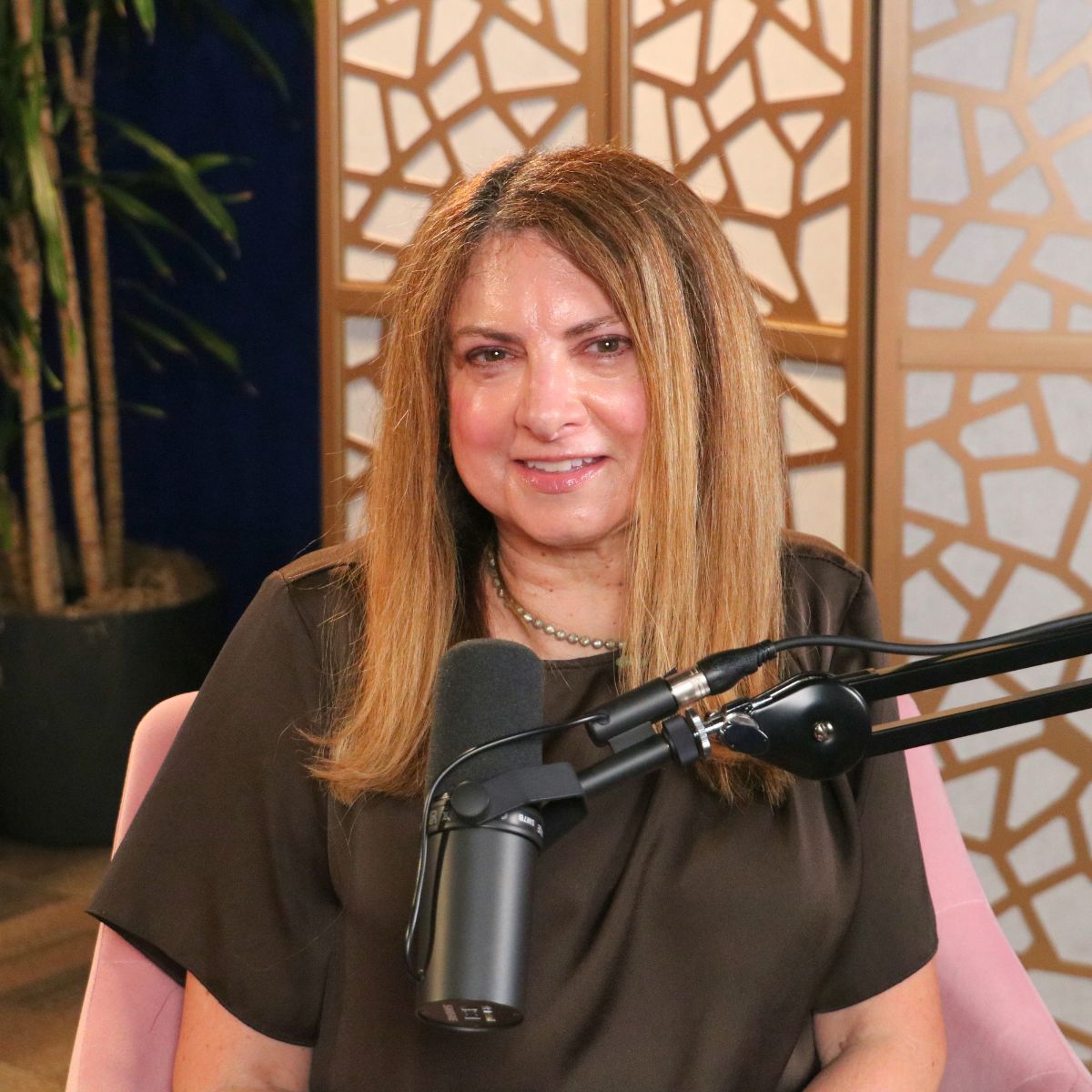
Dorothy: [00:00:00] Some women learn about breast cancer from a brochure, but some learn it by canceling their own plans for a big wedding and rescheduling it just so their mom with stage four breast cancer could be there. Today we welcome attorney and board member Elise Neal, whose advocacy for women at The Rose and at MD Anderson’s Advanced breast cancer program began with losing her mother to de novo metastatic breast cancer at the age of 58. Her mother had had yearly mammograms, had done all the things right, and still she was diagnosed with metastatic breast cancer. Elise shares how she had to make the hospital give her a mammogram at age 33 and why she’s so focused on metastatic research and clinical trials. She also shares that serving on our board lets her fight for uninsured women who really can’t always advocate for [00:01:00] themselves. If Elise’s story makes you think of a woman who’s determined to make a difference, please share this episode and consider making a donation so another woman will receive the care she needs at therose.org.
Let’s Talk About Your Breast, a different kind of podcast presented to you by The Rose. A breast center of excellence and a Texas treasure. You’re gonna hear frank discussions about tough topics, and you’re gonna learn why knowing about your breast could save your life.
Elise, thank you so much for being with us today.
Elise: Oh, thank you. I’m honored to be here.
Dorothy: Oh, well, you know, since you’ve been on the board, I tell you, you just, you make things happen. How many committees now have you already served on and, and you’ve only been with us what, two years?
Elise: Yeah. Not even two years. It’s been about a year and a half, I think. September, [00:02:00] 2024.
Dorothy: Yeah. Yeah. But you’ve served on development, but I think you’re on every single committee we have.
Elise: Governance, yes. And um. Fund development program committee. And I’m toying with joining the, um, but it might be too much. The.
Dorothy: The building one?
Elise: Yes.
Dorothy: Yeah. Oh, well, that’s one that we’re gonna need in these coming months. How did you get recruited to the, to this Rose board?
Elise: A good friend of mine, Maria Boyce is on the board.
Dorothy: Uhhuh.
Elise: And she knew I was very involved with the advanced breast cancer program at MD Anderson and that it was a cause that was really important to me. And so she invited me to the State of The Rose. I think it was a little before I joined the board, and it was just. I mean, I thought I knew what the mission of The Rose was, and then I realized [00:03:00] I knew just a teeny bit of the mission. And I just thought, wow, this is a great organization and the work that I was doing for breast cancer at MD Anderson, this is such a different still under the umbrella of, you know, being a breast cancer advocate. But just a different way to help people. And both so important. So I was just excited and honored when she asked me.
Dorothy: But didn’t we, didn’t we have you come over and talk to us about the high risk clinic and things like that?
Elise: Yes, I did.
Dorothy: I remember Maria had brought you.
Elise: I think I came because I was talking about how navigators were such an important And kind of newish aspect of how to help with not just breast cancer patients, but any patients. But talking about that and seeing if there was a way to help, um. Have the two causes, you know, use what we’ve learned in one to help with the other. [00:04:00] So, yeah, you’re right. I did come.
Dorothy: And, and I know that as we were trying to set up our genetic testing and all of those programs, you know, we always looked MD Anderson into what they have because of course they have those resources.
Elise: Yeah. And it’s such a great thing and it just shows how, you know the journey when somebody gets diagnosed with breast cancer, how some things have just changed dramatically, and that is one of the things that I think typically now they really want somebody to get that genetic testing once they get diagnosed. It helps their family. If, you know, God forbid they have one of the mutations and it could help with their treatment because it could. It’s becoming more and more personalized.
Dorothy: So of all the areas of breast cancer, why was metastatic so important to you?
Elise: Yeah, it really, like for most people, when it hits close to home, then it becomes your [00:05:00] passion. Cause um, my mom passed away at what I think is a fairly young age from metastatic breast cancer. She was 58. I was, um. 33 and had two babies at home.
Dorothy: Oh.
Elise: And then if you step back before then, she was diagnosed when I was engaged and we ended up having to cancel my wedding and get married on two weeks notice just to ensure that she could be there. So it’s been a passion for me. And um. Then.
Dorothy: Now how, wait, how old were you when she was diagnosed?
Elise: I was 26, almost 27.
Dorothy: Oh my goodness.
Elise: When she was diagnosed and she was 52 and she was one of the small percentage because when she got diagnosed with breast cancer, she was diagnosed de novo metastatic, [00:06:00] which means. She wasn’t early stage, she was diagnosed and it had already progressed to some organs.
So she was deemed metastatic or stage four. Um, and it was heartbreaking because she would get her mammogram every year. And so sometimes people try to ascribe fault or blame or make themselves feel better and think, oh, well she didn’t get, you know, her screening and that’s why, and sometimes it’s just an aggressive type of cancer. And so that was a tough journey.
Dorothy: How did she tell you?
Elise: Oh my gosh. It was a crazy story. I was an attorney and I was working on a big case as a baby attorney in Galveston, and my fiance at the time said, oh, I’m gonna come down and see you tonight. And I’m like. No, you, I have so much work to [00:07:00] do. I can’t see you. Please don’t come. We kinda had a little bit of a tiff, ’cause I’m like, why? Please don’t come. And he was very forceful, which was kind of funny. Like, why do you wanna come? And he came down and then he said, oh, you’re, you know, he clearly had worked behind the scenes. And then my mom called. I gonna cry. And she wanted him to be there when she called me with the news that she had breast cancer.
And so it all made sense why he was so pushy about coming down. ’cause she needed, she was up in New York and wanted me not to get that devastating news alone. And when she first called, it was before her surgery and we didn’t know that it was stage four. I just knew she had breast cancer.
Dorothy: Was it found on a mammogram or had she felt it?
Elise: She felt it.
Dorothy: Ah.
Elise: So,
Dorothy: and you didn’t know any of that was, okay.
Elise: No. She felt it and then made appointments. Went to the doctor. Got test, [00:08:00] you know, had another mammogram. Had a biopsy, and so all that had gone on without me knowing. And so she waited until she was diagnosed.
Dorothy: Wow. Do you have siblings?
Elise: I have a brother. Unfortunately, we were all spread out. My mom was in New York, I was here in Houston. My brother was in California, and so I, I kind of think like, oh my gosh, I can’t believe I did this. But I went and talked to the partners and said, I have to, it was this huge case. I’m like, I have to go be with my mom for her surgery.
And they were lovely. Let me go. And so I was there for that. And then, you know, when they do the mastectomy, they at that time, you know, would take out the lymph nodes and test those to see. And so I had left New York and come back to Houston before she got the results to find out that it was metastatic. So that was another tough phone call to hear.
Dorothy: Oh [00:09:00] yes.
Elise: And it, even though that was, um 1993, which in some ways was a long time ago. Some ways it wasn’t, but you know, the internet wasn’t then what it was now.
Dorothy: I was wondering how did you research? Or did you.
Elise: And that was the thing I didn’t know.
Dorothy: Right.
Elise: Like I knew this doesn’t sound good, but maybe it was a blessing in disguise that I didn’t know what a tough diagnosis that was.
Dorothy: Well, now she actually, well she had some years.
Elise: Yes. She, um, had this very aggressive, they didn’t have as many treatments.
Dorothy: Oh. That’s so true.
Elise: And so she had this very aggressive autologous bone marrow transplant. Um.
Dorothy: Oh, I remember those.
Elise: So harsh. But it did let her live for six years. And you know, I mean now there are more options and more treatments, but there’s still not enough. Like [00:10:00] more.
Dorothy: But now speak to that a little bit, Elise, because I know you’ve been on many scientific committees. You’ve, you’ve really gone deep into this. What is different now between the time of your mother and now if you are diagnosed with metastatic breast cancer?
Elise: I think, I think there’s more hope now. It’s something like. About 30% of metastatic patients live for five years.
Dorothy: Which was not the case before.
Elise: No, I mean, it still numbers are not good. And they need to be better, but they’re better than it was for sure. And now just with, like you mentioned before, the genetic testing. They’re able to, like, I don’t even know what type of breast cancer my mom had and now everybody knows you have triple negative or you have ER positive and they didn’t.
Dorothy: But you know, we didn’t even know how to [00:11:00] categorize them in 93. I mean, it, it was a very different time. Different and, and, and really just, she was just before so many things came into play. Oh my goodness.
Elise: Absolutely. Yeah. And so now they’re able to say, you have this type, it’s resistant to this treatment. Let’s, let’s do this treatment. And clinical trials are such a huge thing now and just really help give more options to patients.
Dorothy: So speak to that just a little bit because you know, this is an area people still have a lot of hesitancy.
Elise: Yes.
Dorothy: About entering into.
Elise: I’m glad you said that because I think there’s a lot of misinformation. Because I was recently telling a friend who had a friend and I mentioned a clinical trial and she’s like, oh, she doesn’t wanna be in the placebo group and not get any treatment. And I was like, yeah, they don’t really do that anymore. So the way it is, is you could just continue to get [00:12:00] standard of care and it depends what trial. Some are blind, some are not blind. Um, phase one versus a phase three trial. And so you’re still getting treatment, but they’re trying new things that could help not only you, but future women. And you really get such great care too when you’re in a clinical trial ’cause they are watching everything.
Dorothy: Everything.
Elise: Yes.
Dorothy: I know.
Elise: To make sure.
Dorothy: That is, that is such a good point, Elise. People don’t realize that you really have so much more surveillance, so much more, uh.
Elise: Exactly. Watching your symptoms, your side effects.
Dorothy: Yes.
Elise: To make sure nothing’s too bad and tweaking and like if they see you get really nauseous, then maybe before your next treatment they could give you anti-nausea medicine ahead of time. Like, that’s just a simple example, but, um, I have. From my time with the Advanced Breast Cancer Program [00:13:00] at MD Anderson, some really good friends who are metastatic and one who’s had really good luck with trials because another big difference with metastatic versus early stages. If you’re metastatic, you’re pretty much on treatment the rest of your life. And there’s a few lucky ones who, you know, show no evidence of disease and maybe could stop treatment, but most are in treatment. And so you wanna stay on your treatment as long as you can. ’cause once you start to show progression, then you, they have to find you another treatment or trial. And there’s just a limited universe of treatments.
Dorothy: So true. Yes.
Elise: So you wanna stay as long as you can. Um.
Dorothy: Now was your mother in treatment her whole time or was it?
Elise: Yes. So she had that really horrible transplant treatment.
Dorothy: Which it wipes out the immune system and then it does everything you have to be [00:14:00] worried about.
Elise: Yeah. And then. But the problem is like, then when it came back, it kind of came back with a vengeance.
Dorothy: Vengeance, yeah. Um, and again, that was then.
Elise: Yes.
Dorothy: And we really wanna stress that It’s so different now.
Elise: No, and it’s so true that you, you know, even if you have early stage and you get treatment and you’re in remission it’s still really important to keep going back for your either three months, six months.
Dorothy: Absolutely.
Elise: One year scans. So if something comes back, they catch it.
Dorothy: Right.
Elise: Right away.
Dorothy: Right.
Elise: Yeah. So it’s important to be diligent, you know, before you start, before you ever have breast cancer. And then after you do, you can’t just think, oh, everything’s fine, I’m done. You really need to keep monitoring.
Dorothy: So you’re thousands of miles from your mom while she’s going through all of her treatment. How did you support her?
Elise: Ugh, so hard. Just trying to talk every day. I mean, it was different. [00:15:00] Like you didn’t have texts.
Dorothy: Right.
Elise: Email really wasn’t.
Dorothy: Wasn’t there yet.
Elise: And so trying to visit as much as I could. And the one thing she always wanted to be was a grandma. And so once I had my kids, letting her spend time with them was just the best gift to her. And she just, you know, that was, there’s kind of this funny, sad story that when, it was at the end and my dad and my aunt called and said, you need to come up.
I flew up and I actually flew up with my grandmother because my mother’s mother was alive, and we flew up together and my aunt said to my mom, oh, your favorite girl is here. And instead of saying Elise, she said my daughter’s name, Samantha. And of course she wasn’t there. She was two years old.
Dorothy: Right.
Elise: But it just showed me like, [00:16:00] even though she didn’t have a ton of time with her, how impactful it was.
Dorothy: Have you made an effort to keep her memory with your kids alive?
Elise: And Oh, absolutely. Stories and talking all the time. And so I feel like they. They know her. But they didn’t really know her.
Dorothy: Right.
Elise: But just from me talking about her and pictures, they have all these, you know, memories and she’s such an important part of their life and it’s interesting that you say that. ’cause my daughter is now a doctor and I feel like maybe that impacted her because always talked about losing my mom. Yeah.
Dorothy: So think about. How, gosh, you know it. It was a long time ago in the way medicine moves. And yet not at all.
Elise: Yeah.
Dorothy: Wow. What do you worry [00:17:00] about for you or for your daughter?
Elise: Well, as soon as when my mom passed away, I was 33 and she was up at Sloan Kettering in New York, which is another great cancer Institute. And I remember asking her doctor, what should I do? Because back then they didn’t even suggest mammograms until you were 50.
Dorothy: Oh, yeah.
Elise: And she said, go to MD Anderson and make them give you a mammogram. And I think I remember thinking, that’s such an odd way to put it, but that’s exactly what happened. And I think. Maybe that’s what helped start, did me on my road to being an advocate. ’cause I really had to advocate for myself. I went to their cancer prevention center and asked for a mammogram. And they’re like, you’re 33. And I’m like, and I just kept having to say why, and why and why. And. So I’ve been getting mammograms since I was 33.
Dorothy: So you did it by yourself? [00:18:00] I mean, you didn’t have a doctor in between saying she needs this.
Elise: Nope. Interesting. I just went there and really pushed, and thankfully they did. And it’s so interesting because now the age is 40 when they start. And as you know, it’s really sad how many younger women are getting diagnosed. And so I think now somebody wouldn’t thankfully have those same issues.
Dorothy: Oh no.
Elise: That if they wanted to get early.
Dorothy: I don’t know. We still hear it.
Elise: Yeah. That’s.
Dorothy: We still hear that thing of you’re too young for a mammogram.
Elise: Oh, that’s so unfortunate.
Dorothy: But they’re not too young for breast cancer. I mean.
Elise: Right.
Dorothy: Drives me nuts.
Elise: No, yeah. It’s just so I think just the lack of knowledge. Or just, you know, thinking this is how we did it and not changing with the times, but it is horrible. ’cause I know with The Rose that we’ve had some really young patients.
Dorothy: Last year we had 40 women under the age of 40 who were diagnosed and [00:19:00] 36 of them were uninsured. Now imagine, you know, you think that’s just a, some of them were younger than you when you lost your mother.
Elise: And it’s so hard because the, you know. The more things get better, the harder they get. Like I remember how many years ago it was all they talked about was doing a self exam, how important that was. And now they’re really pulling away from that because there were so many false positives or unnecessary tests. And so it’s just really hard for a woman to know what to do.
Dorothy: That’s that even goes all over me that, you know, so many false positives or false. So what.
Elise: Exactly, I mean better safe than, than, sorry.
Dorothy: Yeah. Oh, you know it, one of the things I heard during the time when the U-S-P-S-T-F was debating what age to start was they’re just wearing their little heads. They’re just getting themselves all in a titty over [00:20:00] nothing. And so someone challenged that, that committee that year and said, where, where are you getting this information? Have you done surveys? Have you really gone into the facts about how women feel? Sure. It’s, it’s concerning, but I think when it comes to your body, you know.
Elise: And I think it, it kind of just shows that we know our bodies. And we’re our best advocates. And it makes me think of my mom, even though she had recently had a mammogram and everything was okay. She felt something and.
Dorothy: And went right after it.
Elise: Go get tested and it’s so important for women, if you don’t get the answer, you know, you would need to keep pushing until you can get.
Dorothy: Oh, that’s good advice. It is because.
Elise: No, and that’s why The Rose is such a great place that. It’s unfortunate that young women get diagnosed, but thank goodness they’re getting diagnosed if, you know, they unfortunately have breast [00:21:00] cancer and not making them fight to get it.
Dorothy: To get it. Right. Right. When do you miss your mom the most?
Elise: Oh gosh, so many times. Like just. Like being able to say, hi, mom. Like, and nobody, you know, dads are wonderful, but nobody loves you like your mom does. And so just, that was a always hard and hearing sometimes, you know, just like people do, people complaining about their mom and I’m thinking, oh, you don’t know how lucky you are. And then probably one of the biggest times was it was a full circle moment. Because I mentioned that my wedding got canceled and we got married on short notice and it was a small wedding. My daughter got married last March. And I so wished that my mom could have been there. And I had a scary moment. ‘Cause I went in the January before just for my annual mammogram. And I’m like, [00:22:00] oh my God, life can’t, you know, history can’t repeat itself. Like this can’t happen to me. I can’t do that to my daughter. And thankfully everything was fine, but I just, you know, even though it’s been, I’ve been married for more than 32 years, I still remember how hard that was.
Dorothy: Oh yeah. Those are the ones, the memories we don’t forget at all.
Elise: Yep.
Dorothy: So let’s put on your scientific hat.
Elise: Okay.
Dorothy: For a moment. I know you were just on a steering committee that just ended what, fall? Winter?
Elise: Yeah. For the um, advanced breast cancer program at MD Anderson was on the steering committee and it’s, um, there’s some new leadership there and so we’re kind of reinventing. It’s more of a.
Dorothy: So what was its mission? What were y’all, what were you doing?
Elise: The mission was, and I’m so glad you asked this, to give the metastatic breast cancer patients what they needed [00:23:00] because they really felt like, here’s a good example. There used to be way back, I guess it was pre 2016, they had a, um support group for breast cancer patients. And it was all different types of breast cancer patients. It was early stage, it was people, um, stage 1, 2, 3, and four. And the women who were metastatic stage four said, this doesn’t work for us because truthfully, we have more in common with a metastatic prostate cancer patient than an early stage breast cancer patient. And so this isn’t supporting us the way that we need. And so that kind of was the start of, and we need other things too. And so, really, you know, at the time it was like one of the first in the country to really say, how can we best support this group of women and men? ‘Cause [00:24:00] it could impact men as well with what their needs are because the needs of a metastatic breast cancer patient are very different than an early stage. And you don’t want an early stage patient getting scared, hearing what?
Dorothy: Right. Right.
Elise: You know, a metastatic woman is saying, and what the concern of an early stage, which is very valid too, isn’t have the same meaning to a metastatic patient.
Dorothy: Yeah.
Elise: So it was trying to get their needs met and one of the things we did was helped raise a lot of money with MD Anderson does this annual boot walk for all different types of cancer. And so, um. The metastatic, the ABC clinic, we put together this stomp out stage for breast cancer team and they just had their 10th um, boot walk and our team has raised over $2 million.
Dorothy: You’re kidding. Wow.
Elise: It is [00:25:00] amazing because. You know, these women are so committed and their friends and their family to support them, and we’re giving the money to research. And so it really has been good because instead of just saying, oh, here’s a hundred thousand dollars go research really having a say. And we think this like present to us some types of research that you were doing for metastatic patients and then having a committee listen and evaluate and saying, okay, we want our money to go towards this program. And then. Instead of just having your money go in a vacuum, having them come back and present and saying, this is what our findings are so far. And whether it’s gonna progress and maybe they need more money or, I mean, sometimes research is valuable even if it’s not successful.
Dorothy: Right.
Elise: It shows you what direction not to go in. Um, [00:26:00] so yeah, it’s been really interesting. I can’t say I understand everything because I mean, it’s that scientific researcher. I mean, it is very high level.
Dorothy: Yeah.
Elise: But it’s, it’s fascinating and I think it’s hopeful too. Because, and I think it’s good for the patient advocates to hear what’s happening, but I think there’s also value in these researchers seeing and hearing from the metastatic patients, seeing who you’re impacting, seeing how this really affects their lives. And so I think it’s been a good. Back and forth, and that’s been very helpful just because more money needs to be devoted to metastatic breast cancer research. Because you don’t die from early stage breast cancer, you die from metastatic breast cancer. And so I think there’s. And I, I mean there need to have more research at every level of breast cancer.
Dorothy: Right.
Elise: No [00:27:00] doubt. But it would be great to have more options.
Dorothy: So go back to the support for that metastatic patient. Have you sat in the groups that have gathered for.
Elise: Yeah.
Dorothy: Have you heard their stories or?
Elise: I have not. I mean, it is, you have to be a patient and then there’s a healthcare provider who leads the support group, so not allowed to listen, but so many of my friends from that group, there’s a few like me who were, um, caregivers, but most are metastatic patients and it.
Dorothy: So you’ve seen.
Elise: The most inspiring, amazing people because you get this horrible diagnosis. And if you wanna be sad and angry, that’s understandable. If you just wanna spend time with your family and friends, that’s understandable. But these women, and like I said, men can get it too, but [00:28:00] there aren’t men who are part of our group at the moment. Who are patients, they are fighting, not just for themselves. ’cause they know research takes a long time and what. Is happening now. Probably might be too late for them, but they’re doing it for the future.
Like women coming behind them. Like it is, it’s just so inspiring. It’s hard, like it’s emotional. I hate that we lose people in our group every year. Different ages, different, you know, journeys that they’ve had, but, um. Just this tenacious group that isn’t gonna take no for an answer and just wants things to be better.
Dorothy: Oh, it’s so encouraging.
Elise: Yes.
Dorothy: Yeah.
Elise: So encouraging.
Dorothy: I know I must have read seven different volunteer functions or positions that you’ve had, if not more. And I thought, what is it that keeps you [00:29:00] raising your hand as a volunteer? Because even your work on our board is a volunteer effort.
Elise: Yeah. I’m an attorney and stopped working a little ways back. ‘Cause I really never wanted to regret not spending more time with my kids. And again, that’s always my mom in the back of my. You know. Oh yeah. Hearing her in my ear that you just never know and didn’t wanna ever regret that we didn’t spend as much time as we could together.
And so I just felt like I needed to give back and volunteer. ’cause when I was working and having little kids, I didn’t get to, I didn’t have the time to do that. And I feel like I’m I just privileged that I’m able to help different groups that I’ve found important. So when my kids were at school doing, supporting their schools, my son played little League. So then I was president of Bellaire Little League.
Dorothy: I wondered how you got into that. Oh my goodness.
Elise: I have lots of stories about that. [00:30:00] Um, and then I had gone to Rice for undergrad and then my son went there and then really helping to build up a parents program. Um, my daughter was at Baylor for med school and then helping to start a family program there. And I’m on the partnership council and I’m just, it’s hard ’cause there are so many worthwhile groups and nonprofits and so you. You know, in a perfect world you’d help in so many ways, but I’ve learned that it’s better to just have a select few that you really care about and be able to keep raising your hand and saying, I could help with this, and I could help with that.
Dorothy: Yeah. Well, you’ve certainly been a lot of help to us.
Elise: Oh, you’re so sweet.
Dorothy: And not just on the board, you know, you’ve been helping us with contracts and other things that are, you know, you just have to have that kind of legal counsel every now and then, or someone that can point you in the right direction?
Elise: Yeah, I mean, I [00:31:00] think just nonprofits, it, it’s a hard time for.
Dorothy: Very hard time.
Elise: You know, just with, um, you know, maybe donations being down. With the economy or just people worried about healthcare and, you know, different things going on. And so again, it’s just even the harder things get, the more important it is to keep.
Dorothy: Right.
Elise: Saying, how can I help?
Dorothy: And you know, the, the, the thing that we’re seeing and a lot of nonprofits are seeing is that that level of, um, the intensity of the patient different, very different. Right now it, it is just so labor intensive takes so much time to really get some of our patients into the help they need. Oh my gosh, it’s, it’s different.
Elise: Yeah. I think that was, you know, before I alluded to, I thought I knew about the Rose’s mission and in my head I thought, oh, they give mammograms to uninsured. And it’s so much more than that. And I think people [00:32:00] don’t realize that for uninsured patients, you know, getting diagnosed for anybody that starts the new fight and it’s hard. But for uninsured patients, like what? The Rose does now with its navigation program, trying to help them get into the treatment.
Dorothy: Right.
Elise: And it has to be done fairly quickly. Because people, even though maybe you don’t need to immediately start treatment, that is a horrible feeling to think you were diagnosed with cancer and then just sitting, waiting
Dorothy: and you don’t have a plan. Right?
Elise: Yes.
Dorothy: Right.
Elise: And so just somebody there helping and advocating for you when the way the system is, you can’t really advocate for yourself.
Dorothy: Well and true. And you know, there’s so much that we don’t understand about health anyway, and so many of our patients, we really have to go through a long education process. They’re not used to going to the doctor and it’s a whole new vocabulary.
Elise: Even if you’re, [00:33:00] you know, educated and you feel like you really know a lot about your health, it’s a whole new.
Dorothy: It is.
Elise: Ballgame.
Dorothy: It’s like a foreign language.
Elise: Yes, absolutely.
Dorothy: Alright, one final message to our audience. What would it be from you?
Elise: Um, I think it’s just to be your best advocate and get screened and if you feel like something’s wrong, make somebody listen and get to the bottom of it. Um.
Dorothy: Yes.
Elise: Yeah. ’cause I think, you know, we know our bodies and we know when, you know, you don’t always know when something’s wrong, but if you feel like something’s wrong and people aren’t taking you seriously or giving you the testing that you think you need, keep advocating for yourself. ‘Cause. If you’re, you know, like your mom might advocate for you, but nobody’s gonna advocate for you like you do for yourself.
Dorothy: Or, or [00:34:00] can, or, that’s it. That is so, so important for women to hear, especially.
Elise: Yes, absolutely.
Dorothy: Young and old.
Elise: Yeah. And I think, um, it could, like you said, what we said before, it’s happening in younger and younger women. And so don’t put off, you know.
Dorothy: What you know you need to do.
Elise: Because, and especially as women and as moms, we like to take care of other people. And we put ourselves last. And it’s kind of like in the airplane that, you know, the parent you should put on your mask before helping others.
Dorothy: Yes.
Elise: You’re not gonna be able to help your family if you’re not taking care of yourself.
Dorothy: Great advice. Thank you so much for joining us today. This was a great story.
Elise: Thank you.
Post-Credits: Thank you for joining us today on Let’s Talk About Your Breasts. This podcast is produced by Speke Podcasting and brought to you by The Rose. Visit therose.org g to learn more about our organization. Subscribe [00:35:00] to our podcast, share episodes with friends, and join the conversation on social media using #LetsTalkAboutYourBreasts. We welcome your feedback and suggestions. Consider support. The Rose, your gift can make the difference to a person in need. And remember, self care is not selfish. It’s essential.