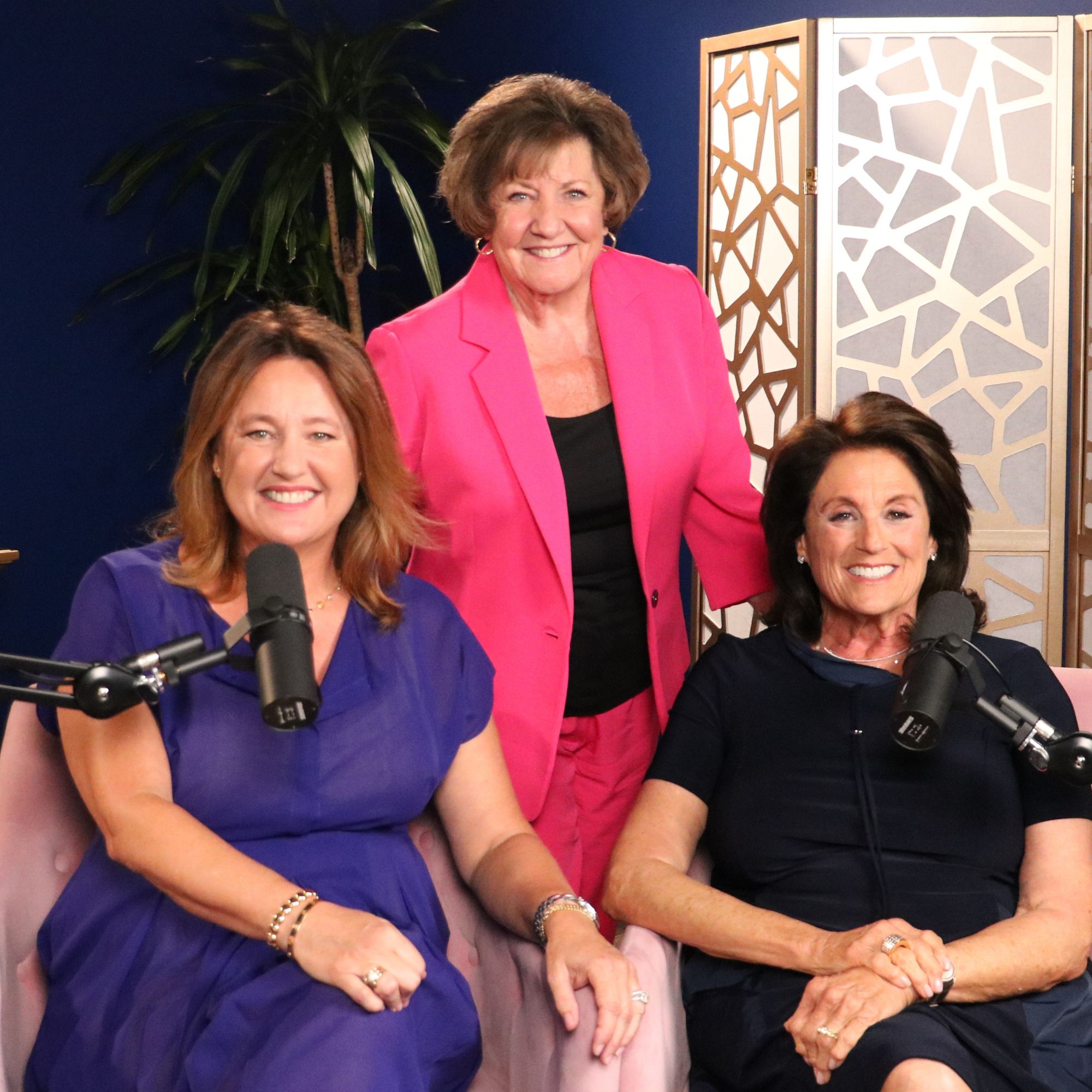
Dorothy: [00:00:00] What does it mean to have a best friend, and what does it mean when you have to be the one to watch that best friend go through breast cancer treatment? Rochelle Jacobson and Anne-Laure Stephens are here today to talk about how important a relationship can be during this time of uncomfortable diagnosis, confusion, not having good answers, and then having some pretty strong treatment. And Laure found her lip in her breast at age 46, and she, she knew that she wanted to try the cold cap. Now, this was years before cold cap was common and even, even recommended, but she was determined to have that done and Rochelle was right there beside her being with her during the treatments, helping to cool that cap down in any way they could and sometimes she even had to warm it up. You’re gonna hear the good [00:01:00] stories, some of the sad stories, but most of all, a story of friendship.
When you subscribe to our show, you help us grow. Someone you know may need to hear this story, so please share with your family and friends and consider supporting our mission at therose.org.
Let’s Talk About Your Breast, a different kind of podcast presented to you by The Rose, a breast center of excellence, and a Texas treasure. You’re gonna hear frank discussions about tough topics and you’re gonna learn why knowing about your breast could save your life.
Rochelle, it is so nice to have you and, and Laure, it’s so nice to have you on our show today. I know you two have been friends for a long time.
Rochelle: Yes.
Dorothy: How long?
Rochelle: Wow, my goodness. You know, I was first friends with Ann Laure’s husband, Steve. Through [00:02:00] business, and that had to be in the nineties.
Dorothy: Oh my goodness. I didn’t know it that long.
Rochelle: Very, very long.
Anne-Laure: Yeah.
Rochelle: And then I met her shortly after. So we’ve been good friends since, I don’t know, at least 20 some odd years.
Anne-Laure: Yes, yes. No, probably since the early 2000 I would say.
Rochelle: Yeah.
Anne-Laure: ’cause Sarah was born in 2002.
Rochelle: Yes.
Anne-Laure: And I believe we started having a friendship not after that.
Dorothy: But your friendship really went to a different level when you were diagnosed with breast cancer?
Anne-Laure: For sure.
Dorothy: For sure.
Anne-Laure: Yes. Um.
Dorothy: Tell us about how did we were, how were you diagnosed? How did you find it? That kind of stuff.
Anne-Laure: Well, actually, uh, I found it myself. I was, uh, taking a bath. And doing a self exam. And I felt something that felt different than, uh, maybe what I had felt before in the past. You know, you have those, uh, episodes where you [00:03:00] have, um, a, not a, a mass, but something that feels different. And this was more like a marble, ah, uh, type growth. And, um, it’s actually. I don’t go back to, you know, that day very often, so it’s a little bit emotional to even think about it.
Dorothy: Well, of course.
Anne-Laure: But I thought, wow, this feels very different. And I was scared. I really.
Dorothy: And how old were you?
Anne-Laure: It was in 2016. I was, uh, 46.
Dorothy: I remember when I got to meet you that I kept thinking, oh, she’s so young.
Anne-Laure: Right.
Dorothy: You know? Yeah.
Anne-Laure: Which is what my doctors also said. Is this is a young age to have that type of cancer.
Dorothy: Right.
Anne-Laure: Yeah. But I, um, I was very scared, but I said, you know what? I’m going to call my doctor and I’m going to do that very quickly. And I did.
Dorothy: And so you got right [00:04:00] in?
Anne-Laure: Well, I did, um, I got in with my, at the time gynecologist who referred me to two different surgeons and one of them happened to be in the building where she worked. So I thought, well, since I’m here, I’ll go ahead And meet with this, uh, doctor. And I was misdiagnosed.
Dorothy: Oh.
Rochelle: I remember the day you said to me. That it was inconclusive.
Anne-Laure: So that was actually later on.
Rochelle: Later on. But I remember you told me.
Anne-Laure: Yeah, it was a, it was quite a journey.
Rochelle: It was a journey to get to the true diagnosis.
Dorothy: Really?
Anne-Laure: Because I was misdiagnosed, but I didn’t know at first, of course. And the doctor said. It’s nothing. It will keep on growing. Eventually it will bother you. So you may need to have it removed. And I said, well, if I need to have it removed now, please let me know. We’re about to go on [00:05:00] spring break with our family, but we will make changes. And I will take care of this. And he said, no. If I were you, I would go on vacation and you have time to do this. And while we were on vacation on spring break, uh, skiing. Steve and I had a conversation and we said, well, maybe we should get a second opinion. And so he, um, contacted his, uh, person at Methodist. And I was able to see a surgeon the morning after we got back from our vacation. And he was amazing. Um, I believe that he knew, um, there was something wrong by just looking at my images. And he said, well, let’s do, uh, a biopsy right now in my office. And I was like, my goodness. My husband doesn’t even know.
Dorothy: Right.
Anne-Laure: You know? So I [00:06:00] texted Steve and I said, the doctor is suggesting that I have a biopsy right now, so I went ahead and did it. And he did it freehand. And that’s when, that’s when we got the results a few days later saying it’s inconclusive.
Dorothy: Oh.
Rochelle: And my comment was, how can it be inconclusive? Because it either is or not. And Anna was very lucky because the physician was quite excellent. And said, nope, we need to go back in and get a better biopsy.
Dorothy: Yeah.
Rochelle: Yeah.
Anne-Laure: So he sent me to somebody else.
Dorothy: Ah.
Anne-Laure: Which I thought was the ultimate of a good doctor who says, you know, I’m going to have somebody else do this procedure.
Dorothy: Right.
Anne-Laure: So we can make sure that we get the right, uh, sample. And so I had, uh, what is called, it’s a guided [00:07:00] biopsy with, what is it called? Like with imaging. At same time. And that’s when it came back.
Dorothy: Yeah. Yeah.
Anne-Laure: Being definitely, uh, cancer.
Dorothy: So all along the way you were getting reports from, from her about.
Rochelle: Absolutely.
Dorothy: Yeah.
Rochelle: Absolutely. I love her.
Dorothy: I know. I mean, yeah.
Rochelle: You know, she’s a wonderful human being. Yes.
Dorothy: I’m surprised you weren’t there with her the whole time.
Anne-Laure: Well, she, she was there af so when we were waiting to find out what I had, um, I don’t know that. We told many people the waiting period was very, very hard. And you know, Rochelle, who is one of my dearest friends, definitely was instrumental in all of the process of the treatments and my, my recovery. I really do believe that it takes a village to make it through. And the support I received from Rochelle was [00:08:00] extraordinary. I mean.
Dorothy: So how did you tell Steve?
Anne-Laure: Well, Steve, uh, actually Steve is the one who got the phone call from the surgeon.
Dorothy: Oh.
Anne-Laure: Not me.
Dorothy: Oh.
Anne-Laure: And so that was really hard.
Dorothy: Oh, yes. So he actually had to tell you?
Anne-Laure: Yes.
Dorothy: Oh my goodness.
Anne-Laure: And then we went into the surgeon’s office and he told us. What I had and that it was a really complex at the time anyway. Uh, I know there is progress every year.
Dorothy: Right.
Anne-Laure: But HER2+ and hormone dependent. So I, I was lucky to be able to receive, uh, Herceptin. Which was.
Dorothy: And it hadn’t been out that long. Yeah.
Anne-Laure: Yeah. Dr. Slayman out of UCLA, we watched a movie during my treatments and that really made an impact. But it’s, I mean, I, I started my treatments like the, that week, the week after I was diagnosed on April 1st.
Dorothy: Oh.
Anne-Laure: Which was,
Dorothy: What a day. [00:09:00]
Anne-Laure: No joke. No joke, no.
Rochelle: On April Fool’s Day, right?
Anne-Laure: Yeah. And I was in chemo. I mean, you do all kinds of testing before. And then I was in chemo pretty much right away, and it was weekly treatments, uh, for three months of three types of chemo. So Taxol, Herceptin, and Perjeta. Yeah. I believe it was called. And um, Rochelle was definitely very much there.
Dorothy: Oh, yes, yes. I remember when she called me and she said something is I, I don’t even remember how you started it, but you were asking about the diagnosis.
Rochelle: Right.
Dorothy: And I thought, Ooh, that’s a toughie. But you know, I, yeah. Didn’t probably say that or I may have to you.
Rochelle: I think you told me it was a tough one.
Dorothy: Yeah. So, um.
Rochelle: Yeah, because if theres a diagnosis that I don’t understand, I’m gonna call you. Just like when my daughter-in-law.
Dorothy: Oh yeah.
Rochelle: Was diagnosed.
Dorothy: Yeah. So it’s, [00:10:00] it’s, uh, and never, never, or any cases, you know, a patient’s the same. We all know that.
Rochelle: Right.
Dorothy: But I, I just remember thinking age, the, the type of diagnosis, the whole thing. And now in your home country which is:
Anne-Laure: France.
Dorothy: France, they already were doing the cold caps. Right? They had been doing ’em for a while.
Anne-Laure: So I learned about the cold caps and I know they were in England. So I’m assuming they probably were in the rest of Europe too. And the reason for that is, uh, my oncologist, um, worked in London and at the time she said that, uh, princess Diana had a, one of her best friends who went through, uh, breast cancer treatments and that she would wear the cold caps to support her friend saying, if I can do it, then you can do it too. But it was very hard to [00:11:00] get cold caps when I was diagnosed.
Dorothy: Right.
Anne-Laure: And we learned about them, uh, through a lady who lives in my neighborhood and who had just had treatments.
Dorothy: Ah!
Anne-Laure: And who, um. Explained that there was this device that you could use, you know, on your head, very cold in order to hopefully not lose your hair. Because there are instances where even with the cold caps, you can lose your hair.
Dorothy: Yeah.
Anne-Laure: And this, I don’t wanna say that this was a must to me, but I thought, well, if I can’t keep my hair and if I can’t look a little bit like I usually look because I had two children still in high school, one of them starting high school, maybe it would help a little bit, but of course, you know, if I had lost my hair, I would have have adjusted and accepted and moved on.
And I had bought, you know, wigs and.
Dorothy: [00:12:00] Oh yeah.
Anne-Laure: And scarves. So I was, I was ready. But it, it was, um, through this lady who we, I mean it, the referral, it was really hard to get, um, dry ice because it has to be.
Dorothy: I know. See, that’s what I remember. Now tell me dry ice.
Rochelle: Well, I remember that we talked about it and you said that you wanted to do it and it would be easier for the kids. And it’s, and Sarah.
Dorothy: Number one reason most women,
Rochelle: Right.
Dorothy: do it. And it, it is so important because it’s a traumatic time.
Rochelle: Yeah.
Dorothy: For everyone. But especially when you have you know, little girl.
Rochelle: Yeah.
Dorothy: It, it, there’s something that goes awry.
Rochelle: Right. And I think there’s, that’s a good point. I think there’s a feeling that if you don’t have hair, you’re ill. If you have hair, you seem pretty healthy.
Dorothy: Right.
Rochelle: So, um, I remember getting, we were talking about dry ice and in my business, um, where we had our original location down [00:13:00] the street was liquid carbonic and they always had dry ice, which was kind of a, you know, we used to get dry ice from there if there was something, but I remember you and I talking about it, and Steve was getting all the coolers and the dry ice and having them delivered, and then the cold caps had to be delivered. It was quite a production.
Anne-Laure: Yes. And you had to have a special thermometer.
Rochelle: Right. I remember that.
Anne-Laure: To measure the temperature and he went to Walgreens and they said, well, we don’t have that here. So he had to go to Home Depot and they were like, yeah, I-10. So here he is, you know, at 11:00 PM looking for the special thermometer because the next day I’m starting my treatments and you have to use those from day one.
Dorothy: Oh, okay.
Anne-Laure: Because, um, you start losing your hair usually after like between the first and the third Treatments. So in order to try to not lose your hair, you have to freeze your, your follicles.
Dorothy: So you’re actually [00:14:00] carrying this into the hospital? This dry ice?
Anne-Laure: Oh, are, yeah.
Rochelle: Yeah. It’s in a cooler. We would go in a cooler.
Anne-Laure: And steve would make jokes that, and we we’re bringing our own beer. Yeah.
Rochelle: And we would laugh about it. And um, I remember one type, so Steve was doing it once and then he couldn’t be there for one of the sessions, and so he was going to teach me how to do it that session. And it’s quite a production. It’s a big production because the ice is in there, the caps are in there. It has to be a certain temperature, so you have to…
Anne-Laure: Minus, I think it was between minus 30 and 40 degree Fahrenheit.
Rochelle: And it, it’s not comfortable.
Anne-Laure: Needless to say.
Rochelle: You have to, you know, and it’s. Every few minutes. I mean, you have to time the minutes and it’s quite a production. So he’s like, here, we’re gonna open this, and we open it and you have to test the, the [00:15:00] temperature with this and this. And then you have to get it out within a certain minutes and you have to put it on and.
Dorothy: And how long did you keep it on?
Anne-Laure: So you have to keep it on for the duration of, of your, so one hour, I think it was one hour before the chemo. So the Taxol. So one hour before during the whole treatment, and then two hours after. But you have to change them out every 30 minutes because they warm, they warm up, they warm up on your bed head.
Dorothy: Yeah.
Anne-Laure: But I, I, I do wanna emphasize that while that was a part of my treatments, it. I have a lot of friends, unfortunately, who were also diagnosed with breast cancer and who did not even you know, mess with Cold caps. They said, you know, there is so much to go through already. I don’t wanna add that. And it worked for me.
Dorothy: Doesn’t.
Anne-Laure: But again, it doesn’t [00:16:00] like if you choose to, uh, not do it and lose your hair, and I did lose a lot of hair anyway. By the end of my treatments.
Dorothy: Right.
Anne-Laure: I probably had lost close to half of my hair, but I still had some. And that made me feel better, but I, I could see very well that that is not something everybody would wanna do because it does add stress.
Dorothy: Right.
Anne-Laure: And it is uncomfortable now. It does add some funny moments that bring France closer too. And my husband for sure. But, uh. Yeah.
Dorothy: But I think that’s an important point.
Anne-Laure: It’s, I think it’s very important.
Dorothy: Uh, you know, everyone has to make their own decisions, do their own way. They have to, you know, you’re on this treatment and this road to recovery. And there has to be the focus that.
Anne-Laure: Exactly.
Dorothy: That on yourself and doing what you feel is important. On the other hand, do you know, even today a lot of people don’t know about the cold cap.
Anne-Laure: Exactly.
Dorothy: And it has changed so much. I [00:17:00] mean, it’s a lot easier than, that’s what always thought was so, uh, incredible about your experience. You know, it really was the early days.
Anne-Laure: Well, they have freezers now. In hospitals, in some hospitals, I believe. So they’re right there. You don’t have to because I mean, that’s kind of the last thing you want to think about, right. To all that logistics. So if they’re right there, there’s another treatment that I received that involved freezing, which actually I believe was quite helpful for neuropathy, is they froze my hands and my feet. And I did get a little bit of,
Dorothy: and that has pretty good.
Anne-Laure: Neuropathy. Uh, at the end for about two years, I had one foot where, uh, my toes were painful, very sensitive. But it was much better than some other patients that really, truly suffered from neuropathy sometimes, you know, their whole life. So that’s something else that I didn’t know about, and my sweet, cute little [00:18:00] nurse, uh, recommended them and said, you just got some in. And let’s try it. Uh.
Dorothy: Oh, that’s good.
Anne-Laure: And so I did that. Now that was, um, very uncomfortable for me, even more so than the cold caps. And it’s happening all at once too.
Rochelle: So the cold caps are coming on the hands and the feet are frozen, and then the head is, and you know, I have to tell you, you know, in times of stress, sometimes humor and laughing really helps and, and um, you know, it wasn’t that we intended to do that, but it, you know. It really, we, we would laugh about it, you know? There’s one time that it was too cold and it was time to do it, so I just sat on the cold cap to warm it up a little bit and then took it out and it was the perfect temperature, and we still [00:19:00] laugh about that.
Anne-Laure: I don’t recommend that.
Rochelle: But I was gonna do anything that I could or needed to do to fulfill what Anne-Laure needed.
Dorothy: Right.
Rochelle: You know, and, and we’ve laughed about that for years. It was, she had treatment in the summer and it was so hot outside. And do you remember that time we were, I was taking you home, and it was time to change it. So I parked in some industrial lot or the driveway. Do you remember that?
Anne-Laure: Yeah. Because it took more than 30 minutes or 40 minutes to get home, so you had to change them out.
Dorothy: So you’re in the middle,
Anne-Laure: the side of road,
Dorothy: middle of the parking lot.
Rochelle: Oh, in the middle of an industrial driveway. And I just pulled in there and I said, okay, we gotta do this now. And I pulled it all out and it was like. It was so hot. Do you remember that? It was so hot and I was like, okay, Anna, let’s do it. And we did it, and I set the [00:20:00] timer and, you know, she did amazing.
Anne-Laure: I mean, she, she was a, was my unbelievable support to me. I remember.
Rochelle: My pleasure. My pleasure.
Anne-Laure: One thing where, uh, my, um, my older sister, the one that, uh, I was so close to, who unfortunately passed away of breast cancer. It will be two years in November. She came to visit me when she found out, you know, that uh, I was sick and Rochelle had, uh, a branch that she organized for her and for me with all of my best friends in her home.
Rochelle: I forgot about that.
Dorothy: So Nice.
Anne-Laure: Yeah. And you cannot imagine what, how that, how much that meant to me. And, and those kind of. You know, acts of kindness and, and being there and being so supportive because it wasn’t just having this [00:21:00] branch for my sister and for me as I was about to, you know, start all my treatments. It was the continuity of the friendship. And the depth of it. That gave me so much strength.
Dorothy: Right.
Anne-Laure: And courage. I was, one common thing about all of my treatments is I was so scared.
Rochelle: Yeah.
Anne-Laure: I was terrified of what was about to happen. I knew it was important to do it, so I did it. I, I called the doctors, I went, I did everything they told me to do. But I was so scared and to have. Friends like Rochelle, by my side, gave me that strength and that courage that I was lacking. And I thought, you know, if people can be this supportive and show me this much love, then I can do it.
Dorothy: You can do it.
Anne-Laure: And, and that’s, yeah.
Rochelle: It was [00:22:00] very scary for you.
Anne-Laure: It was very scary and I felt for women who do this and who go through this experience on their own. And I thought about them all the time, and to this day I still do where, you know, you could have a single mom with a baby or a toddler who has to take her herself to get those treatments. That has to be the ultimate hardest, it’s hard thing to do.
Dorothy: Yeah. We certainly see that here.
Anne-Laure: And I was so lucky that I was not alone and, and honestly. I don’t know that I could have done it alone.
You know?
Dorothy: So, Rochelle, were you ever scared for Ana?
Rochelle: I was scared at her diagnosis because I knew it was a really bad one. And I also know, because you and I have spoken as friends for so many years about this, I also know that some of them are very, very hard to get through, and she’s very, [00:23:00] very lucky that the time, you know, if it’d been 20 years ago she probably wouldn’t be living.
Dorothy: Yeah.
Rochelle: No.
Dorothy: So it’s so true.
Rochelle: Um, so, you know, I’m always um, I was very concerned about her, but, um, I knew that if she did it, her chances were better. She had excellent, excellent medical care at Methodist, Dr. Chang, Jenny Chang. And, you know, um, I just felt she did everything she possibly could. Going back to the cold caps. You know, you can’t wash your hair for a certain number of days. You can’t brush it, you can’t, it’s a production.
Dorothy: Yes.
Rochelle: You know?
Dorothy: Yes.
Rochelle: And that took a lot of courage. So having this “poison” that we all, chemotherapy that we all know is such an important part, then, you know, she always [00:24:00] showed courage.
Dorothy: And she may not have felt it.
Rochelle: She didn’t feel it, but she always showed it.
Dorothy: No.
Rochelle: And she was in touch with herself. She’d say, you know, I just need to rest today. You know, I need to, and that was all so good. You know, I.
Anne-Laure: Yeah. I think cancer really, or any type of illness, serious illness, really teaches you, uh, what your limits are. And maybe before you say, well, I can do it, I can push through. And then you can’t anymore. So you have to be honest and say, well, I’m sorry I can’t do this because you know that if you do you’re not going to be, you know, ready for your next treatment because you’ll be so worn out that it’s not right. You won’t be able to show up. But also another point that I think is so important in, um, cancer diagnosis and treatments is to be able to catch it early. And I know it’s not always possible, but [00:25:00] if you have a doubt about something going on, then go ahead and reach out, you know, to your doctor and check it, because most likely it’s going to be nothing because that’s the case.
You know, I don’t know what the statistics are, but they used to say 80% of the times, you know, it’s the, the masses uh it’s benign and, um, but if it is malignant, I know that in my case, that’s what made the difference. It was caught so early on, I still had, you know, aggressive treatments and all of them, you know, chemo, surgery, radiation, Herceptin for a whole year, infusions, and then five years of, uh, hormonal treatment. So it, it was very extensive, but it is a very fast growing and aggressive type of breast cancer. And so the fact that I was able to find it.
Dorothy: Right.
Anne-Laure: And to go right away to the doctor, even though I really didn’t [00:26:00] want to, but I made myself, I think is also along with excellent France and outstanding, you know, a medical team, uh, it made a difference, I believe.
Dorothy: Where’d you get that courage? Where’d you get that knowing?
Anne-Laure: That’s a very good question, Dorothy.
Dorothy: Seriously, I mean, you’ve just given some of the best advice I’ve heard on this show because women, even when they’re diagnosed, will push through. Over and over again. I’ve, I’ve heard these stories. So where did you get that?
Anne-Laure: I have thought about a lot of different things over the years and through my treatments, but I don’t know that I have thought about that. Maybe because I don’t concentrate on myself too much. Um, I would say probably my family, my children, and my friends gave me the [00:27:00] courage. I’m sure I had a little bit of it in me, just the love of life and wanting to be around. To have friendships.
Dorothy: Right.
Anne-Laure: To have a relationship with my husband, with my family, to see my children grow up, uh.
Dorothy: Right.
Anne-Laure: To do the things that I was lucky to do. So I’m sure that, yeah. All of that had a.
Dorothy: Well, I’ve heard you talk to other women and encourage them and. It. It was always kind of a dichotomy to me because I knew she was so scared. You know, I knew from listening to Rochelle. I knew from when I met you, but you were always very upfront. And telling women they better go get it done. And you know that, you see the difference there as someone who is this afraid.
Rochelle: Yeah.
Dorothy: But still saying to their friends or to whoever. You know.
Rochelle: Well, you know, I mean, I’ve had three biopsies, okay? [00:28:00] So I was 35, I was, I was under 35, but at 35 I had had a lump and it changed. And I thought, this is not good. I need to do something. You know? And when you find that lump when you’re taking a shower or you’re doing your self exam, within seconds, you’re dead. Your kids are little. They’re, they don’t have a mom anymore. All you know, it doesn’t take long to get to that, right? And so when I found it. And it was, I went to the doctor and we had a biopsy and it was okay and then it grew and I said, I don’t want this in my body. ’cause it could alter, and I remember right before I went to surgery, I remember closing my eyes and thinking, I hope my life doesn’t completely change when I wake up. Because I knew that if it was positive, it [00:29:00] would. And um, and it wasn’t, it was benign. But every time, you know, you face that you have a choice to make. And I would say that even your past experience growing up and being so close to your family you are moving to a different country. You know, then being a single mom. You know, that gave you courage. That gave you strength.
Anne-Laure: Yes.
Rochelle: And you know, you’re very strong. You’re a very strong human being, and I think very, very much just the love of family. The love of your husband, your children, and the love of life. You. It’s amazing how that will just push you through. You make a choice.
Anne-Laure: Yes. Yeah. It was, yeah. It’s, it’s a choice to want to live. To live.
Rochelle: Yeah.
Anne-Laure: Now, um, [00:30:00] it’s not always the case for everyone.
Dorothy: That’s such a good way to put it though. I mean, this love of life, this want to live. It’s.
Rochelle: Yeah. It’s so to give that opportunity.
Dorothy: Right, right.
Anne-Laure: But also, and of course, you know, the family, the children. The husband are very important, but some people don’t have that.
Dorothy: Yeah.
Anne-Laure: And you know, you can pick your own family also, and if you don’t have, you know, this kind of, yeah. It takes a lot of courage and sometimes network.
Dorothy: Sometimes we’re still being wife and mother and all of that, and it’s not as easy.
Rochelle: Oh, it’s terribly difficult.
Dorothy: To have that support and ’cause you know, they’re as worried as you are. I mean, it’s, it’s, it’s real.
Anne-Laure: Of course. And sometimes even more. I always, you know, say and said, when it happened to me, how everybody pays attention to the patient. That’s just how it is, you know? That, you know, the person who is [00:31:00] sick is who people turn all their attention toward and, and their energy and their time, but the caregiver, lots of times is unnoticed. And I think the caregivers need as much as attention.
Dorothy: Right.
Anne-Laure: Because, you know, like for my husband, he had his work and he had to take time off just to go to my treatments with me and, and his worries, he couldn’t really expressed because you wouldn’t wanna worry me. Right?
Dorothy: Right.
Anne-Laure: So, I mean, you can certainly talk to friends about those, but it, it, it’s, um, I feel like again, they can be in the shadow a little bit. Uh, compared to the patient.
Rochelle: You know, another thing, Anna has a large group of wonderful friends that are quite lovely human beings, but, you know, we all brought food. We all, I remember taking Sarah to ballet. I remember I was sitting with Steve when you had your port put [00:32:00] in and stuff, and he shared some of his fears and his discomfort. But, um, you know, it’s a rally. And I think that women. Women friends know, even if you’re the mom and you’re even, you could be a working mom and your spouse, they know how to rally. If you have those right people in your life, and one reason it, it’s their pleasure, including mine, is that anna would also do it.
Dorothy: Right.
Rochelle: You know, and look, she’s a lot younger than I am, so she’ll probably have an opportunity because one day I will fall off the cliff and she’ll be able to, to rally for me. Maybe even, you know, be sure my roots don’t show or give me, feed me food or wipe me there or wipe my saliva. But, you know,
Dorothy: oh my gosh.
Rochelle: Women know how women know how to care for each other.
Dorothy: Yes.
Anne-Laure: And an an important [00:33:00] lesson I learned. Throughout all of this is to say yes when you need help. That’s the hard house to ask to say yes. You know, before maybe I thought, well, I can do it all myself. And I said, I can’t do all of this myself. And it’s okay to accept help.
Dorothy: Right.
Anne-Laure: And it’s okay to ask for help. And I really was very at peace with that.
Dorothy: Oh, that’s so important. Yeah.
Anne-Laure: You know, Sarah was about to start high school. At a new high school and she didn’t know anyone there. And the fact that, uh, I was able to rely on my friends and then she had her little, you know, network was very important also for their wellbeing.
Rochelle: Yes.
Anne-Laure: And so when my friends offered to have emile, uh, trying to do, uh, to drive the kids around. And I said, sure, okay, yes. Yeah, we can do that. And, and actually at first I said, well, I don’t know, you know how much of [00:34:00] it we need and uh, my friend said, well, but it really gives your friends a purpose. Like they feel like they’re helping. So I think we should add another day, uh, in the week for the meals. I was like, oh my goodness. Well, okay, if that’s to help them, then I guess I could do that, right. So they feel useful.
Dorothy: Right.
Anne-Laure: And in the end it was incredibly helpful. Oh, nice. I didn’t have to those two days and then there were always leftovers. I didn’t have to worry about making a meal for my family.
Dorothy: Right.
Anne-Laure: And again, those are things that I realize not everybody is lucky to have, you know? And that’s so true.
Rochelle: So I think another thing that if you’re talking about relationships of friends and the person who’s been diagnosed with breast cancer is to, and Anna brought it up, focus on the family too. Other than just the patient. And I remember, [00:35:00] you know, Steve and I were very close friends before, so it’s unusual or maybe it’s not that I would have a relationship with him prior to Anna, but I remember spending time. Texting him, calling him, saying, how’s it going? How are you doing? Um, we would be sitting and waiting during treatment or during a, a procedure I think maybe taking your port out also?
Anne-Laure: Well, I had, yeah, I had a, you had the, I had complications and so there, and I had a bad infection, so I had to have a emergency surgery and.
Rochelle: Right. And I remember he and I sitting together and just talking about, you know. The situation about how he was feeling during all of this, and you know, it was frightening. Of course. And, um, and so I think [00:36:00] sometimes friends need to remember that it’s not just the patient. And Anna brought that up earlier and, um. You know, and trying to, to help with focusing on not just meals, but what other things give some help to the family. You know, taking like Sarah to ballet and picking her up, or picking her up for school or anything.
Dorothy: Right.
Rochelle: That would also allow the patient to just check out and do self-care. And, um, so I think that’s important for people to think of.
Dorothy: Right. Well, it’s like you said, the caregiver often gets overlooked and and the rest of the family, everyone, breast cancer is a family episode. It’s, it’s not just one person. It impacts everybody.
Rochelle: And, you know, things like, I mean. Going to the grocery store. I remember I, I [00:37:00] said to Anna, what do you need? And she said she needed turmeric, she needed this, she needed that. And, you know, that was an easy thing for a friend to do.
Dorothy: Right, right.
Rochelle: To go there and, and do those things. And just being present to just give a relief. The other thing too that I always think is important is I have difficulty asking for help, but it’s easier for me to give.
Dorothy: Yes.
Rochelle: And so instead of saying to people, let me know what I can do. Just say, I’m going to the grocery store, can I pick something up? I’m bringing just do it. Say, this is what I’m gonna do. And then if they really say, no, no, no, please don’t then abide by that.
Dorothy: Yeah.
Rochelle: Yeah.
Dorothy: But that is a good point.
Rochelle: Take clues.
Dorothy: Yeah. So many times it’s, you know, they wanna help, they don’t know how, and they ask, just like you said, you know, what can I do to help? Well, you’re too involved with everything that’s going on, [00:38:00] and the patient can’t always think.
Anne-Laure: There’s so much well being able to concentrate on yourself. And the success of your treatments is.
Dorothy: How did you talk to yourself? What was your self dialogue like?
Anne-Laure: That’s a good question. It was, the main focus is, was overwhelming my fears. So my, my self-talk was, okay, I can do this because, um, like another good friend of mine. Says regularly, Anna, nothing lasts forever. So I was like, you know, I can do this because it’s not going to be forever.
Dorothy: Yeah.
Anne-Laure: And, and so I would condition myself knowing that the end result was going to hopefully be positive. And that I could do it because it wasn’t going to last for a long time.
Dorothy: So you always used positive words, [00:39:00] you didn’t chastise yourself or any of that?
Anne-Laure: Like what?
Dorothy: You know, like, oh, you silly person, or why are you worried?
Anne-Laure: No.
Dorothy: You, you encouraged yourself. You knew because the importance of that,
Anne-Laure: uh, I never felt that to be scared was silly. That’s just how I was. And so I had to deal with these emotions in order to overcome them. I believe you have to accept them and recognize them. Um, if I said, well, no, I’m not scared, but I’m scared to death, then I’m, I’m right.
Dorothy: Then your body picks up that something’s not right here.
Anne-Laure: It’s gonna be very hard.
Dorothy: Yeah.
Anne-Laure: But, um, yeah. And it got better of course as time went on, because I think a big part of fear is not knowing what to expect, right? But once you see what they’re going to, you can think about it ahead of time and said, okay, I know this is how it’s going to happen. This is the sequence, you know, of events, and it’s going to be [00:40:00] hard. But I can do it because it’s going to make me better in the end. And as terrifying, painful, whatever, you know, uh, comes with, uh, cancer treatment. The end result is I’m going to be around in order to live this life on this earth. So it’s, it’s worth it.
Dorothy: So how did y’all celebrate?
Rochelle: What did we do? I don’t know. I remember the.
Anne-Laure: There were many celebrations because I, I had, you know. End of, end of chemo and then end of surgery. I remember end of surgery and then end of.
Rochelle: Being there when you rang the bell.
Anne-Laure: Yeah.
Rochelle: And that was a big deal.
Anne-Laure: Yeah. And I rang the bell several times because there were all those different stages, chemo stages. So I would, uh, encourage everyone to celebrate each stage because each stage is as important as the next one. You know, and they kind of all go together.
Rochelle: Yes. And, uh, I don’t think there [00:41:00] was ever one big celebration because I think what it was is, okay, this is done. And now I just go on with life. And you had some residual discomforts?
Anne-Laure: Oh, yes.
Rochelle: So I don’t think there was ever a fine line where we were like, okay, let’s have a big party or something.
Anne-Laure: No, it’s true, but we. We’re easy to celebrate.
Rochelle: We celebrate all kinds of stuff.
Anne-Laure: Yeah.
Dorothy: Just waking up in the morning.
Rochelle: Yeah. I like being on, especially as those numbers get bigger.
Dorothy: Well, I called today a, a celebration. Just having you two here and hearing the story. I mean, y’all, y’all were such inspiration and I know, like you said, and, and, and Anne-Laure, not everybody has that. And we here at The Rose certainly see a lot of women who need that extra support don’t have it. And I do want to publicly thank both of you for being such good [00:42:00] supporters. I mean, you know,
Anne-Laure: you’re welcome. And I should have said to start with that Rochelle is the one who introduced me to you. And we went to lunch, I remember at Houston’s.
Dorothy: Yes.
Anne-Laure: Which that location no longer exists. And that was one of my safe places to go to during my treatments for some reason.
Rochelle: There were a few places you would go.
Anne-Laure: Yeah, a few. And that was one of
Dorothy: ’em. Well, but that’s important. You know, we do need to be careful where we are when you’re having that kind of, yes. Serious treatment.
Anne-Laure: Right, exactly. But that’s how I, uh, found out about The Rose. And. And that’s when I thought it was important to participate and be involved because anything to help other women who may not be, you know, as fortunate as me.
Dorothy: Oh, you two have helped so very much. Rochelle, you’ve been our, our, I hate to say top donor, but you have.
Rochelle: Yes.
Dorothy: For every luncheon we’ve ever had. And, um, that has helped The Rose so [00:43:00] much to raise awareness so.
Rochelle: But Dorothy, you are the one that deserves the thanks for being the person you are and starting this organization. So, and giving me the opportunity to be able to help. And you’ve been very helpful too, to two personal cases that I’ve called you for, so you know. Give yourself credit. Thank you for what you’ve done for our community and all the women. Yes.
Dorothy: Thank you.
Rochelle: Thank you.
Dorothy: Well y’all thank you again for being with us and who knows, we may have you back.
Rochelle: Okay, our pleasure.
Dorothy: Alright.
Anne-Laure: I can do it now.
Dorothy: You certainly can. Took her like two seconds to calm down.
Rochelle: Yeah, right.
Post-Credits: Thank you for joining us today on Let’s Talk About Your Breasts. This podcast is produced by Speke Podcasting and brought to you by The Rose. Visit therose.org to learn more about our [00:44:00] organization. Subscribe to our podcast, share episodes with friends, and join the conversation on social media using #LetsTalkAboutYourBreasts. We welcome your feedback and suggestions. Consider supporting The Rose. Your gift can make the difference to a person in need. And remember, self care is not selfish. It’s essential.