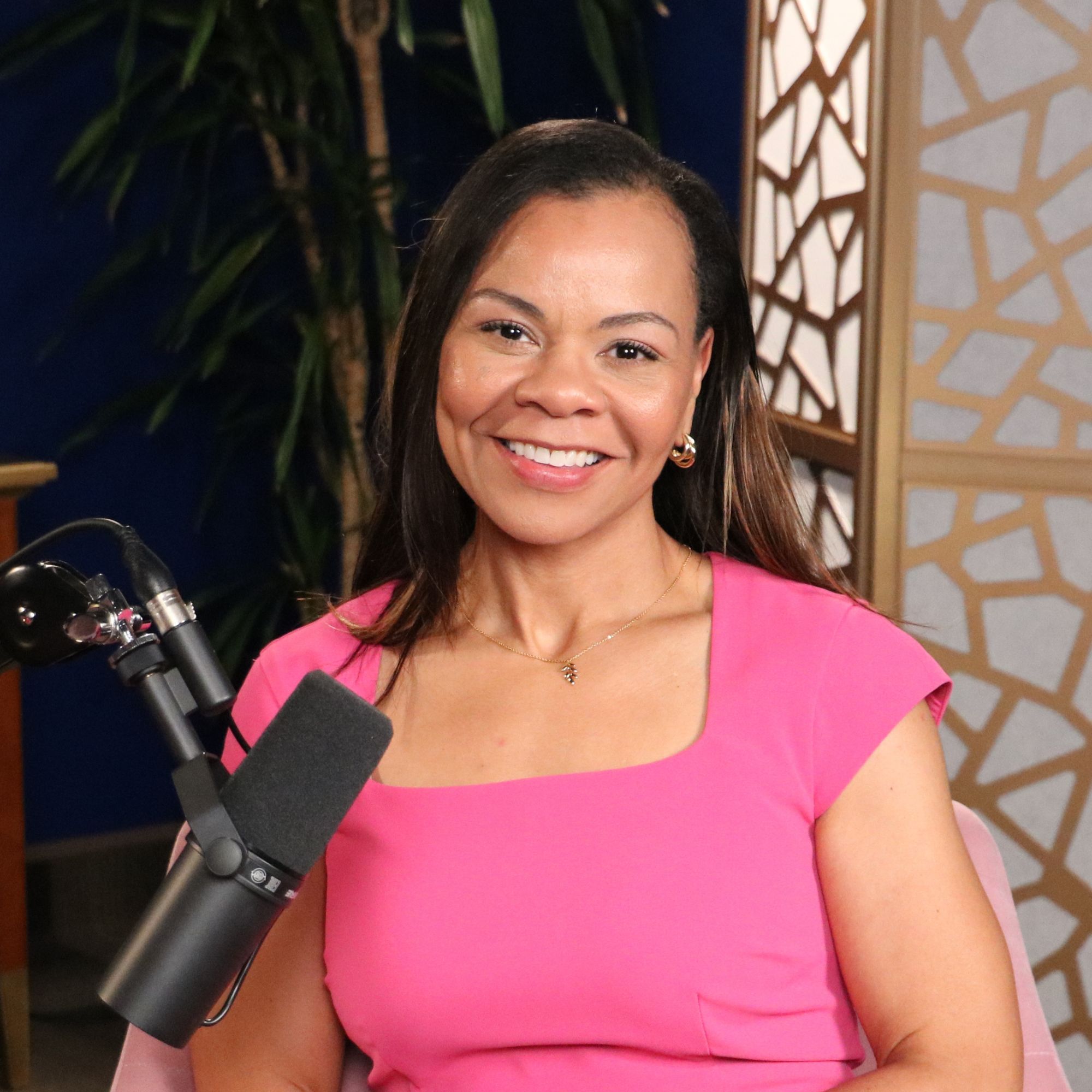
Dorothy: [00:00:00] The earliest moments make the biggest difference. That’s what Dr. Quianta Moore tells us as she returns to our podcast, and she’s talking about early brain development. She also touches on chronic stress and how isolation can leave lifelong marks. The gaps in mental health support and policy need real fixes right now, not quick solutions. So advocacy matters for women, children, and families everywhere. So as you listen to Dr. Moore talk about this, you’ll find that there is something you can do to help.
When you subscribe to our show, you help us grow. Someone you know may need to hear this story, so please share with your family and friends and consider supporting our mission at therose.org.
Let’s Talk About Your Breast, a different kind of podcast presented to you by The Rose, a breast center of excellence, and a Texas treasure. You’re gonna [00:01:00] hear frank discussions about tough topics and you’re gonna learn why knowing about your breast could save your life.
Dr. Moore, it’s so nice to have you back again. When, when you were on our show earlier, you were talking a lot about early development in the brain and how it, it impacts people later on. But especially women. So could we go back, I know that you’re doing a lot of things at the Hackett Center, but go back and, and just help us to bridge with those two ideas.
Dr. Moore: Yeah, I’d love to. So, um, things that healthcare providers often don’t learn is that much of our brain development is driven by, um, something that Harvard has coined, serve and return. And that’s the interaction. It’s actually what’s happening between us right now where, um, you’re asking me a question, I’m responding.
And you see how you’re looking at [00:02:00] me with intention. You’re paying attention, you’re engaged. There’s eye contact. Well, there are endorphins and hormones being released right now from this experience and this interaction. We’re gonna both leave this experience actually feeling better, but we’re not gonna. Be quite sure why.
Dorothy: Oh, okay.
Dr. Moore: And so what happens with young children is that their brains are craving that that interaction between their caregivers and the stimulus that they’re getting actually drives how those connections are being made to then form something we call the architecture of the brain. And the architecture just means that these connections are built in a way that fosters the things that we know the brain is used for. So like executive functions, soft, these soft skills that employers talk about, the ability to communicate, the ability to empathize or relate to others. All of these things are housed within the brain, but the ability for the brain to do that [00:03:00] depends on its wiring, right?
This architecture. And so you might be asking, okay, what are other examples? When a child cries or coos when a caregiver responds in a nurturing and loving and positive way, then that sends signals to the brain that that makes a connection that says, you’re safe, you’re cared for. As a child gets older, if you have children of your own, you remember they used to take a crayon and draw random lines on the sheet of paper and then they’d come to you. So proud with that.
And so if my response is to get down on their level, look at them with eye contact and say, oh. Wow, this is really great work. Then they ha then their sense of self-efficacy or, or self-confidence belief in themselves. Um, those connections start to grow. If instead I say, what is this? This is just lines on a piece of paper, why are like. Don’t bother me. I’m working. That says, oh wait, right, this doesn’t matter. [00:04:00] Like I was sure this was good, but now I’ve gotten input that says, actually this wasn’t good. So maybe, maybe I’m not so great. Maybe. And so these things that, that we see in adulthood, the attachment, right attachment styles, um, really form in those early formative years where attachment that is healthy is that eventually, um, parent and child. There’ll be a relationship where the child really, really needs that parent. And then as they develop their own confidence, right, they get more independent. They start trusting their own themselves, et cetera. But there’s a attachment there that says, I’m safe and I can trust you. But in some environments, either where parents to no fault of their own really are working multiple jobs.
Right. The, you know, the, the kid is just kind of, um, you know, passed around and they call it lashing kids. Where it’s just, and, and they’re never in a consistent environment, they never have that consistent feedback. Then those [00:05:00] signals say, I’m not safe, and I’m not sure I’m safe. Or if they have a parent who, um, you know, has a substance use problem, or like we talked about in the prior podcast with postpartum depression. Right. That so many women suffer from that period of time during that period of time, and there’s really not. Um, good access points, particularly if it’s severe, right, for women to get treatment. But that affects the child in that the, the mother is depressed and so doesn’t have the ability right to respond to her child in that loving way.
And so all of these things that happen during this period of time, shape, personality shape the ability to have healthy relationships. They also shape what we call the cortisol access. And, and that actually will shift, um, during, um, those first couple of years if a child is in environments where their parents yell or there’s high stress and, um, and so they’ll have just higher levels of cortisol, which then puts [00:06:00] them at risk for, um, disease later on.
Now, we talked about evidence and research. Let me just give you some, some studies and evidence on that.
Dorothy: All right.
Dr. Moore: So. Um, there was an ice storm in Canada back in the nineties and um, I think it was pretty analogous. I wrote a paper about it actually when I was at the bigger institute, analogous to what we experienced during COVID, where, um, now these were middle income families. Primarily, um, Caucasian. Um, and they had to be isolated. Right. No access, no connections to families. They’re in this snowstorm. There was a huge economic loss. Apparently Canada’s known for its maple syrup. And that’s really important to its economy. And the trees froze and so people got laid off.
And, um, and the women who were pregnant during that time, research followed. Um, the last I checked for 13 years. They could still be following those children. Um, I’m, I’m, I don’t know. But I can say that, um, when they, um, measured the cognitive development of [00:07:00] those children, um, you know, entering kindergarten, the children of who were born, who were in utero, so, so their ex um, exposure to cortisol and stress was in utero, right? It wasn’t even.
Dorothy: Sure. Yeah. Yeah.
Dr. Moore: Um, they’re, uh, they were a standard deviation lower.
Dorothy: Oh.
Dr. Moore: Than their, than their cohort. Yeah. And then they also had a higher risk at age 13 of um, diabetes and other illnesses.
Dorothy: Really?
Dr. Moore: They did. Yeah. And so there is strong evidence that we need to intervene early and we need to put in supportive structures in place that support women during this period of time, of pregnancy and postpartum. And that by supporting that family unit. And the reason why I’m saying women is because women often, um, you know, disproportionately share the, the caregiving responsibilities. Although, you know, we [00:08:00] are getting, you know, increasingly asked about, you know, programs for fathers and so we do know that there are more fathers who are, who are taking on that primary caregiver role, but the numbers are still comparatively small.
Dorothy: Right.
Dr. Moore: Um, and so we created a program called Brain Builders that helps to support women, um, during pregnancy and after birth, up until age three. That creates community for them. So it reduces the social isolation, it builds their self-confidence on their ability to parent. It acknowledges the role of, of what’s called toxic stress.
So that’s, you know, normal stress is good for us and, and it’s healthy for us. It becomes unhealthy and makes us. Sick when it, it’s chronic and sustained. When, when it’s unrelenting.
Dorothy: Right, right.
Dr. Moore: Um, that’s when we get sick. And so we help women to address and deal with that and then provide the support and, and teach them the skills to foster that serve and return. So for the brain, [00:09:00] women have now fast forward, there’s the window of opportunity that the brain is plastic, that we can, uh, reshape some of those personalities. We can, um, build some new skills for adolescents. And that’s why when you look at literature around interventions and that middles school age. The, the return on investment’s actually very high. It’s second to early childhood. So when you look at charts that economists have done around, like in interventions at different Um, during the life cycle, the, um, largest rate of return is in those early years, and that aligns with the biology, the brains relevant.
The second window of time is during adolescence. And then there’s another window of time after pregnancy, which is, and during that postpartum period of time, which is why we’re more susceptible to mood disorders during that time because our brain is plastic and it’s, it’s, um, reshaping itself.
Dorothy: Right.
Dr. Moore: And if you think from a evolutionary perspective, right, it makes [00:10:00] sense, we’re gonna need new skills.
Dorothy: Does that mean someone as old as I am, has no hope?
Dr. Moore: You know, I get, actually I get questions about that all the time.
Dorothy: Oh, do you?
Dr. Moore: I do. Yeah. So, so folks ask, okay, well what if I missed the early childhood period and adolescence period? And, and now here I am, um, as an adult or, or have adult children. It’s really. Parents who often ask this, right? I made so many mistakes, right? We all do. Um, and so and so, what can we do? No, obviously hope is not lost. It’s just takes more effort and time, honestly. Like we have to be realistic that, um. When we miss these critical windows of time, obviously there’s, there’s effective treatments and there’s interventions, but those come at a cost that are higher.
And it does take more time, right. It takes more commitment, you know, even behavioral cognitive therapy and the other evidence-based treatments. I mean, they work on adjusting some of these neural patterns that, that [00:11:00] relate to behavior and thinking and et cetera. But that takes time.
Dorothy: Right. Right.
Dr. Moore: And an investment of our society.
Dorothy: But does it help us to understand why we developed some of those things if thing, if we had life events that didn’t support us during that time? I mean, I think about when I. People are, you know, when I think about those teenage years and how we did not understand so much about what was going on.
Dr. Moore: I know.
Dorothy: So, but yeah, that would seem to me to be a part of that education that makes you feel better.
Dr. Moore: It does.
Dorothy: You know? ’cause it isn’t. All you.
Dr. Moore: That’s right. So I think it’s a, we take a balanced perspective. And so I think that’s part of our, um, as I mentioned in the prior PRI podcast agenda, around really increasing awareness and understanding of these things so that people can feel like, oh, you know, there’s a book. What happened to you? I don’t know if you’ve, um, read that. Yeah, it’s really [00:12:00] interesting. But it talks about the impact of trauma. How it shapes our brains, how it impacts behavior, and how often, um, we take on this burden of shame and guilt, particularly with, with mental health. You know, we don’t have that same burden. You know, if you get diagnosed with breast cancer, you’re not like, oh my God, what did I do? Right. But mm-hmm you do Sometimes you do. It’s interesting.
Dorothy: Oh, that’s true. And, and I want you to think about just,
Dr. Moore: yeah, say more about that.
Dorothy: Our society.
Dr. Moore: Yeah.
Dorothy: You know, you didn’t eat right or you didn’t have enough exercise, or, you know, you, you, you didn’t know your family history. How that ever becomes a woman’s problem. I don’t know, but I’ve seen, so I, it over again.
Dr. Moore: But that’s society, always finds a way to make us feel guilty. That’s interesting.
Dorothy: Or maybe that’s our God’s punishing me.
Dr. Moore: Oh.
Dorothy: You know, I, I didn’t do something right. I mean, I’ve heard him.
Dr. Moore: Yeah.
Dorothy: I have heard those from physicians who have been diagnosed.
Dr. Moore: Oh.
Dorothy: So [00:13:00] imagine if someone who halfway understands all this, the lay person. It’s really tough.
Dr. Moore: Dorothy, I’m so glad you offered that perspective because, um, you know, I, I’ve had breast cancer survivors, you know, in my family and, um. You know, I, I was unaware. I guess those weren’t conversations that, uh, well one, it was late stage and so I think we were mostly worried about her, you know.
Dorothy: Living.
Dr. Moore: Yeah. Um, living. Yeah. But, um. So I thank you for offering that perspective. You know, and it does add, I think an additional like gravity and weight to, I think our discussion in that, um, women, we do internalize things and take things on, about, um, that, that really are not our fault. And I think with, with mental health in particular, in general in society, it’s not as well seen or accepted as a, as a valid mental health condition.
Dorothy: Right.
Dr. Moore: [00:14:00] So to speak. And so we feel, um, weaker. We feel like, why can’t I just push through? Why can’t I, um, what’s wrong with me? And so, to your point. I mean, honestly, trauma does increase your risk of cancer as well, right? And so it’s thinking about an understanding that there are things that have happened to us that weren’t our fault. And it’s not to sort of adopt this victim mentality, right?
Dorothy: No.
Dr. Moore: But it’s more to. Provide context and understanding that I can’t change those things that happen to me, but I can move forward and do the things necessary to heal and to, and to deal with whatever it is. I’m the, the cards I’ve been dealt, so to speak.
Dorothy: Right.
Dr. Moore: Right. Whether it’s cancer, whether it’s depression, anxiety. You know, whatever it is, but that women feel empowered with information and knowledge to be able to approach whatever they’re facing with a balanced perspective. Because I, I think that. [00:15:00] If you are a smoker and you get cancer, it’s not unreasonable to acknowledge that my smoking probably increased my risk of cancer. Right. That’s a reasonable thing, right? That’s a reasonable.
Dorothy: Yes.
Dr. Moore: Without shame or guilt, but it’s a fact and it’s a reasonable thing, and then to say, well, I’m not gonna do that anymore, right? I’m not gonna choose to do that because I wanna make these different choices. And so I think sometimes I find that there’s a pendulum that swings where people are like, especially around the brain development, early parenting space, where there’s some folks who are so scared to tell parents that actually engaging with your child this way probably did lead to this behavior. Right?
Dorothy: Right.
Dr. Moore: Because they’re like, well, we don’t want them to feel ashamed or guilty or whatever, and we’re like, no, it’s not a condemnation. Right. That, that we respect women enough and we trust them enough with the truth.
Dorothy: Oh, that is so important.
Dr. Moore: We do. [00:16:00] And then we support them. We don’t leave them out on their own to navigate it. Right. No, we’re there. We’re gonna respect you and love you enough to be honest with you, and then we’re gonna plug you in to the resources that you need and give you the support you need to move forward. And as I’ve worked with particularly this, this belief. Um, is is particularly prevalent in the, the social sector, right. It’s particularly working around low income women. And when I start working with low income women, and we worked with Harvard to design actually a video series that kind of, you know, was through storytelling. Um, and, and we’ve had so many women actually just cry and say, no one told me this.
Right. This was how I was raised. You know, my mom didn’t talk to me. This, you know, this didn’t happen for me. And I’ve struggled my whole life. And so having that, those tears for themselves, recognizing that, that like, oh, this is [00:17:00] why many, this has shaped so many of things in my life. And then tears for their child. That, that, if. Like, and I have had patients say, I went to the doctor, I went to the WIC off like, like I’ve encountered professionals through this entire journey and no one loved me enough to say that’s really not how you should interact with your child. Right? There’s a better way to support them. Or let me explain to you why your behavior’s this way or why you’re doing this way. Women can handle it. We’re strong.
Dorothy: Yes, yes, absolutely.
Dr. Moore: But we can’t be judgmental. We can’t be condemning. Right? Like so.
Dorothy: But what an interesting phrase. All these professionals didn’t love me enough.
Dr. Moore: They didn’t love me enough. They didn’t care enough.
Dorothy: Yeah.
Dr. Moore: Right. To tell me the truth. They just. Wanted me through their system. Right. They just, um, and so, so that’s why the work we do is so important because we are being honest and truthful in a [00:18:00] respective, loving way. And then we’re supporting women to get what we need. And I think that helps to reduce, you know, this idea of stigma.
Dorothy: Mm.
Dr. Moore: Because stigma makes it seem like there’s something wrong with you. But when we empower people with knowledge and, and information and they feel empowered to get help because they feel like they deserve it. It becomes more that I’m valued.
Dorothy: Right.
Dr. Moore: I’m valued enough to get the care I need so I can be better for myself and for my family.
Dorothy: Is that really gonna happen in our lifetime? But we get really get there.
Dr. Moore: Well, we’re making, I think, as. You know, Dorothy, I’m hopeful. You know, remember you’re talking to the 20-year-old woman who thought she was gonna change the world by gonna law school. Right?
Dorothy: Right.
Dr. Moore: So, so she’s still in there?
Dorothy: Yes, she has.
Dr. Moore: Somewhere. Okay. Right. She’s still in there. Um, she’s older now. And, and certainly, um, wiser and, and has some battle wounds for, [00:19:00] for some of the things that she’s tried to fight for, but she’s definitely still there. So, um, I have seen small progressions like in local community. I think there’s a value in working locally, in place. I think that’s why the Hackett Center is so important, because we focus on our region and it helps us to build strong partnerships.
We have worked with over 20, I think six organizations, around organizational culture change around how to interact with clients around being able to support women and address these things so that the knowledge is disseminated. So we’re making small incremental change in that way. I think the, the most difficult challenge, which may be is what you were speaking to in your question, are these major systems, because the truth is. There’s not an economic incentive.
Dorothy: No.
Dr. Moore: For these systems to change behaviors. I mean.
Dorothy: Oh, that is so sad though.
Dr. Moore: And so, I mean, it’s the truth.
Dorothy: It’s the truth. [00:20:00] It is.
Dr. Moore: And so when you say, well, how do we get systems to change right then? Then it becomes a different conversation because systems are motivated by, by, resources and money and dollars. Right? And so then there has to be policy changes and incentives that incentivize providers to spend that extra five minutes, or that they get a, you know, an increased quality measure. Right. Um, for spend, you know, for talking about brain development and, and talking about these things. Talking, you know, screening for depression, screening, I mean. These sorts of things have to be incentivized, unfortunately.
Dorothy: Now stay there for just a minute though.
Dr. Moore: Yes, ma’am.
Dorothy: You know, every doctor you go to now you do that little survey. Do you feel like you’re gonna take your life, you know? If I have to write this one more time. I mean, you know, I’m gonna take some I know, but what happens?
Dr. Moore: I know.
Dorothy: Does anything happen that, that was one of the [00:21:00] things that we thought.
Dr. Moore: What’s gonna change?
Dorothy: Things was gonna change.
Dr. Moore: I know.
Dorothy: What happens with that information?
Dr. Moore: Well, the, the challenge is just like with anything, and that’s why it’s important to have the implementation side of policy to go along with it.
Dorothy: Right.
Dr. Moore: We’ll make a policy change, but then providers have to implement that policy change. It just ends up being one more thing to do. One more thing, right? Without the necessary supports to make that policy change effective. So in an ideal system, you know, we would stop separating physical health and mental health.
We would start thinking about person health and really design our system around people. Imagine that.
Dorothy: Right. Right.
Dr. Moore: And so that when you went to that doctor and you filled out that form. That would be, you know, part of your record that then would be shared amongst providers and it would be a integrated, um, clinic that had behavioral health services there [00:22:00] to where if you tested positive on that, there’d be a provider that it’s connected to you right after that visit to make sure that you didn’t leave the door, um, before getting the care or someone intervening. To your point now though, like we don’t often have that, right? That if, if a person, um, you know. It screens positive on depression screening. It’s like, okay, then what?
The state has made some efforts to help with that. We have CPAN where, um, you know, if I’m an internist and I’m trying to do these screenings and it screens positive, you know, it, it offers, um, psychiatric consult services that, uh a pediatrician or family doctor, internal medicine doctor can call and talk to a psychiatrist and say, Hey, I don’t actually know what to do. I wasn’t expecting her to actually be positive for this. What do I do? And then they help them right? To, to tell them what medications to, to prescribe and, and how to manage that patient.
Dorothy: And that’s available [00:23:00] everywhere?
Dr. Moore: It is. It is throughout the state of Texas. Yep.
Dorothy: Interesting.
Dr. Moore: The state of Texas funds.
Dorothy: It interest.
Dr. Moore: That’s right. So, um, so we have some resources. We have TCHAT, which is also state funded through the medical schools that any kid in any school, any public school, if they, um, if they’re counselor or you know, uh, sort of TCHAT representative in the school recognize the kid is having a need, they can contact the parents and get consent and permission to then access telepsychiatry services for free in the state of Texas. So that’s why I’m optimistic, like there are things happening. There’s a disconnect between what’s happening and implementation to your fair point. And there’s a disconnect about awareness. Right? How many, you know, parents listening to this podcast have kids in public school and their kids’ been struggling and they’ve been unaware of this resource.
Dorothy: Right.
Dr. Moore: Aware. And so it is about trying to [00:24:00] make that connection in the community between policy and practice.
Dorothy: Right.
Dr. Moore: Right. And, and trying to, to bring things so that we can impact real people’s lives. Yeah.
Dorothy: I want you to go back again. To talk about this importance of being connected in a community.
Dr. Moore: Mm. So important.
Dorothy: How can, if we’ve been in isolation and self-imposed or.
Dr. Moore: Yeah.
Dorothy: Whatever, how, how can we build that back?
Dr. Moore: Yeah. Dorothy, I’m so glad you asked this question. I mean, I think that, um, if we could solve that, so, so the idealistic, right. If we could figure this out, I think it could be transformative. And I place, I think the. Actually, an ideal place to figure that out is a place like Houston. If you think about how we rally together after Harvey, right? I mean, people from different racial, ethnic, I mean, you have people with confederate flags, you know? Right. Helping you know somebody.
Dorothy: Right. Yes.
Dr. Moore: In a community they wouldn’t normally [00:25:00] go into, right?
Dorothy: Right.
Dr. Moore: It’s like all race, all religion, all gender differences fell to the side and we became one Houstonian, right? And that fostered this sense, right, of Houston strong, of community. But then it faded, right? It, it, it didn’t last. And we can’t have a society where, um, you know, we come together when there’s a major disaster.
Dorothy: Yeah. Major, right?
Dr. Moore: And then we go back isolated. Um, after that. And so the question, I think that the million dollar question is how do we foster that? I do have some ideas. Um, one I think is if folks can find an interest. And find, um, other people who are interested in that. So I’ve noticed since COVID, a lot of groups are emerging that are saying like, you know, hiking group, some of these have joined, you know, women who hike, people who walk around Houston. People who like cats book reading group, you know, you could Google online. [00:26:00] There’s actually several platforms now in Houston to try to foster this connectedness.
Dorothy: Interesting.
Dr. Moore: So people are recognizing that we’ve lost the fabric of community. I mean, even going back to Right. Um, women and, and their role as caregiving. It used to be that a village raised children. Right. I remember when I was growing up, I mean, you know, regardless of how you feel about harsh discipline or whatever, you know, I was spanked and the neighbors also had equal right to spank me if they saw me out in the neighborhood doing something I wasn’t supposed to do.
And so I was raised in community, right? Like.
Dorothy: Right.
Dr. Moore: And my parents both worked. We were low min. You know, low income, well low, probably lower middle class, but right on that edge for sure. And they worked a lot, you know, and.
Dorothy: And you knew who you could go to if you had a problem.
Dr. Moore: That’s right. That’s right. Yeah. And, and you know, during the summers, you know, my grandmother would, would watch us and she’d. We’d [00:27:00] get kicked outta the house after breakfast in the morning and she’d tell us not to come back to the lights came on and there were no self, I mean the street, you know, I mean, but they felt safe because it was a community. And there was accountability. And I knew that like, you know, I couldn’t act up because of the neighbor saw me.
Dorothy: Right.
Dr. Moore: They, you know.
Dorothy: Yeah.
Dr. Moore: And so there was a sense of community. And so we’ve lost that fabric of community, which is why I think parents are feeling isolated, parents are feeling stressed and individuals are feeling isolated and stressed. So I think, you know, if folks kind of just a few action things, if you are listening to this and feeling isolated, alone, Google on, like find something you’re interested in. There is a group of strangers who are meeting around that topic trying to form community, get involved in faith. Faith-based community, if you’re a person of faith, try to find or you’re interested in spirituality. There’s a variety of different faith or spiritually based organizations.
Dorothy: Yes.
Dr. Moore: Like the [00:28:00] Young Center downtown or You know, other ways to just find a way to get connected. Lastly, volunteer. So my research in Third Ward found that actually serving others and doing good for others actually does release those endorphins and makes you feel connect. And so if you can find an organization that you wanna volunteer for with, or you know, something that you wanna do, that also will help to increase and reduce social isolation.
Dorothy: Oh, those are such good ideas.
Dr. Moore: Yeah.
Dorothy: What else do you want to leave us with today? Especially women.
Dr. Moore: Yeah. Um, I think I’d leave, I’d like to leave for women. Um, this: we hear you.
Dorothy: Hmm.
Dr. Moore: And we see you and you matter.
Dorothy: It could have made me cry.
Dr. Moore: Yeah.
Dorothy: Yeah. We all need to hear that, don’t we?
Dr. Moore: Yeah.
Dorothy: Yeah.
Dr. Moore: Yeah. Thank you [00:29:00] Dorothy.
Dorothy: Oh, thank you. This has been a fa fabulous talk and I’ve, I’ve, gained so much and I had no idea there were that many resources out there. So we are gonna need to do some extra things with our show notes to be sure that people know where to go.
Dr. Moore: Get connected.
Dorothy: Yeah.
Dr. Moore: Yeah. Thank you.
Dorothy: Thank you.
Dr. Moore: It’s been an honor.
Dorothy: Oh, for us too.
Post-Credits: Thank you for joining us today on Let’s Talk About Your Breasts. This podcast is produced by Speke Podcasting and brought to you by The Rose. Visit therose.org to learn more about our organization. Subscribe to our podcast, share episodes with friends, and join the conversation on social media using #LetsTalkAboutYourBreasts. We welcome your feedback and suggestions. Consider supporting The Rose. Your gift can make the difference to a person. And remember, self care is not selfish. It’s essential.