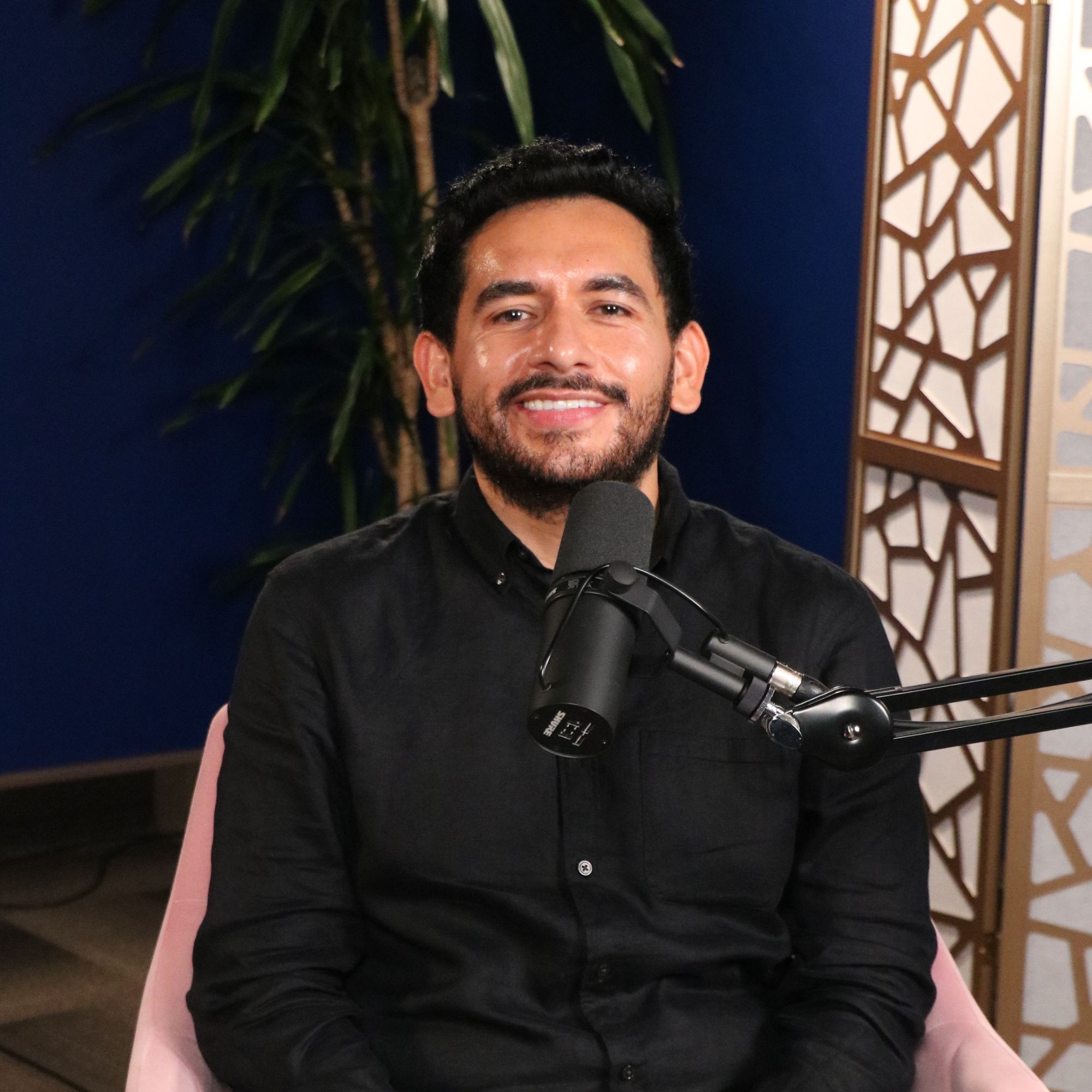
Dorothy: [00:00:00] Dr. Fernando Angarita brings hope and new solutions to the toughest breast cancer cases. Throughout his medical career, he has seen surgery change, treatment options grow and care become much more personal. From Houston to Colombia, every patient matters, insured or not. During this conversation, you’ll hear about advances in treatment, the power of asking the right questions, and why your care should fit you.
Subscribe to, Let’s Talk About Your Breast on your favorite podcast platform, or go to therose.org and support our mission.
Let’s Talk About Your Breast, a different kind of podcast presented to you by The Rose, a breast center of excellence, and a Texas treasure. You’re gonna hear frank discussions about tough topics, and you’re gonna learn why knowing about your breast could save your life.[00:01:00]
Dr. Angarita, thank you so much for being with us today. It’s such a a pleasure to have you here, because you take care of a lot of our patients.
Dr. Angarita: Thank you for having me. Yes. I mean, I think the, The Rose, uh, is a great source of, uh, patients with imaging abnormalities that get screening through your programs. And, um, we, we certainly get a lot of, of your patients, um, into our practice.
Dorothy: I didn’t realize that you had that many. And these are our uninsured patients primarily.
Dr. Angarita: Primarily and also the insured patients. I mean, I think the quality of The Rose speaks for itself. So, um, I think patients seek it out and, um, and also for the uninsured population, um, it’s also a, a, a great starting point for, for the workup of their, you know, their, their disease.
Dorothy: Yeah. Yeah. All right. Now I was looking at your cv. You came from Colombia to Canada to New York, to Texas. Now, how the heck did that happen?
Dr. Angarita: Life took me there. I mean, I did medical school in, in Colombia. I always [00:02:00] wanted to do my, my training, uh, somewhere where there was high volume, uh, where uh, surgeons did research. That’s something that maybe isn’t as common in Colombia. And during my internship, I was fortunate to do a couple months of training in, in Toronto. Fell in love with the program. Um, there were surgeon scientists and I thought that that was a, a, a great place to further my studies. So did, uh, um, graduate studies there primarily in, uh, oncolytic viral therapy, which is kind of a, a newer thing that’s maybe been adopted in, maybe in melanoma, so to speak. And maybe at some point it’ll come into the breast world, um, using viruses that that target, uh, breast, uh, or cancer cells, um, kind of like chemotherapy, but have, uh, potentially less, uh, toxic effects. So, uh, did that.
Dorothy: Yeah. What is that again? Tell me that again.
Dr. Angarita: So, it’s a genetically modified viruses that can target cancer cells specifically and avoid the non-cancer cells, similarly to what chemotherapy does, but potentially with less side [00:03:00] effects. And so.
Dorothy: Already being used?
Dr. Angarita: They, it’s been in clinical trials, uh, and it’s made its way into melanoma. Uh, ’cause this, the, the way of delivery for melanoma, which is a skin cancer, is much easier than if it’s deep inside the body.
Dorothy: Right.
Dr. Angarita: Um, and, uh, there are some studies that are being developed for patients with breast cancer among others. And so that was the, the, the, the area focus of my graduate studies. I then did, um, my general surgery training there at the University of Toronto, uh, which is the largest, uh, training program in Canada. It’s a great place to have, uh, experience with different types of, uh, diseases, uh, surgical diseases, uh, and certainly fell in love with the world of surgical oncology and then breast surgical oncology. Uh, and then for that reason I pursued a, a fellowship in breast surgical oncology, uh, at Roswell Park. Which is a very large, uh, cancer center. Uh, in the state of New York. And then eventually made my way here, uh, when I got a job in Houston.
Dorothy: Okay. So that was it. You [00:04:00] just got a job here?
Dr. Angarita: I looked around. I was open to just, uh, I wanted an academic position to be, uh, somewhere with high volume work in a, in a group with, uh, uh, a large volume of, uh, other cancer specialists so that you know, when you’re working in a multidisciplinary setting with other specialists, um, that, uh, gives better results for patients ultimately. Allows for discussion and management of very complex diseases. So I wanted to be part of that. And I looked around where opportunities were and Houston Methodist had an opportunity. Learned about it. I liked the hospital.
Dorothy: Yeah. Houston Methodist has been a great, great partner of The Rose for many years. Many, many years. So did you always wanna be a doctor?
Dr. Angarita: I wanted to be an optometrist first probably. ’cause that was my first experience with medicine. Uh, I wasn’t really a, a sick child, but it was, I would always go to the optometrist. Um, and so that was kind of my gateway into, into healthcare.
Dorothy: Oh, I can’t see you in a dark room all the time. No. [00:05:00]
Dr. Angarita: And um, yeah, and then, I mean, I think biology in high school and, uh, I thought maybe medicine just had more options and, and I decided for medicine.
Dorothy: But you didn’t have family members that were physicians or?
Dr. Angarita: No, no.
Dorothy: No?
Dr. Angarita: Nobody in healthcare in my family.
Dorothy: So in Colombia, what was, what did your your family do?
Dr. Angarita: My mom was stay at home and then my dad worked in, uh, um, hotel administration. So, um, nothing related to, to healthcare.
Dorothy: Nothing?
Dr. Angarita: No.
Dorothy: That is so interesting. When you talked about becoming a surgeon and then finding your way to breast cancer, what was it about breast cancer that appealed to you?
Dr. Angarita: I think it was first I had a great experience in medical school. The, the first person or the first surgeon that I ever met, kind of as a naive medical student um, was actually a breast surgeon. So it was a very positive experience and just kind of seeing the relationship that a surgeon can build with, uh, patients that are going through breast cancer. Um, I like the longevity of that.
Um, the great thing of [00:06:00] nowadays, a, a woman or, and even men being diagnosed with breast cancer, is that they, the majority will outlive this disease and move on from it, so to speak. And so those positive in, uh, outcomes mean that you can build a long-term relationship and see these patients through the difficulty of the surgical treatment and the active treatment, so to speak.
But then in, in, in the, in the long term, these patients are in, in potentially no, no treatment and they’re just in surveillance or they’re in some form of long-term treatment with, with minimal side effects. So I, I like being part of that and seeing that, um, you could take, uh, a role in, in their care in that.
I also like the fact that there’s a lot of data, a lot of research in breast cancer. So we are fortunate to, to, to be in a dis, in a, in a field of study where there are hundreds of thousands of studies happening. Constantly. And so it’s an evolving field, which means we are pushing, uh, that, that goalpost, we’re getting patients farther beyond and be getting them better results, potentially with less side effects, less aggressive treatment.[00:07:00]
And so it’s something that, uh, is nice to be part of, is there’s always something new, always something new to learn from. Also, the surgeries are something that I enjoy. Um, you know, I can, I can do a surgery for a patient. Remove the tumor, uh, give them a, um, uh, cosmetically pleasing result, uh, in, in a, in a way that hopefully can not affect their, um, body image. Um, and so, you know, being part of that is, is, is quite helpful.
Dorothy: So have you seen surgery change much since you’ve been in it?
Dr. Angarita: I’ve been in practice now for approximately four years. I was a medical student, so I, I got to see some of, of that in, in, in the earlier phases. I, I would say the thing that’s changed dramatically is probably the management of the, of the axilla.
So breast cancer if it’s going to go somewhere, majority of the times it’s the lymph nodes in the axilla and the armpit. Um, previously if you had a breast cancer, you would get. What’s called an axillary dissection where all the lymph nodes are stripped.
Dorothy: Right.
Dr. Angarita: Super high rate of lymphedema, chronic arm swelling, so anywhere from 30 to [00:08:00] 40%. And we now know that that surgery is not necessary for everyone, primarily because it’s not gonna improve survival, it’s not gonna improve recurrence, it’s gonna give that risk of lymphedema no matter what the results are. But our chemotherapy and our radiation and our detection is getting better and better.
So that surgery now has been is now being limited to patients with, uh, aggressive disease that, you know, presents itself in a later stage. But for the patients that have early stage breast cancer where it’s contained smaller, we don’t have to start with that. If we have to scale up to that for the rare patient, so be it. But for the majority of patients, we are doing less and less surgery and that’s where Sentinel lymph node biopsy, where you sample a few of them have has become mainstay.
Dorothy: Right.
Dr. Angarita: We’ve also been able now to use that for patients that present with advanced disease in the axilla that resolves on chemotherapy. We used to do axillary dissection for all those patients.
Dorothy: Oh yeah.
Dr. Angarita: Nowadays if they improve during chemotherapy, you [00:09:00] can just sample a few.
Dorothy: Yeah.
Dr. Angarita: Um, so that’s changed dramatically. And then also for patients with very small, uh, non-aggressive tumors, we can even omit that sentinel lymph node biopsy. Because it doesn’t, it won’t really affect their, their disease management.
Dorothy: And that was always one of the real, uh, disheartening side effects, you know? And, and remember, I’m a lot older than you, and I’ve been doing this for 40 years, but I can remember the Halsted.
Dr. Angarita: Yes.
Dorothy: Uh, surgery. So when you think about the progression and how much surgery has changed. It is just amazing.
Dr. Angarita: That’s quite true. And I mean, again, with, with screening being such an important cornerstone of, of management, it allows us to detect things much earlier, much earlier, and it makes for the treatments not having to be so, so aggressive or so morbid. Yeah.
Dorothy: Do most of your patients have reconstruction of some sort?
Dr. Angarita: Not the majority. Not every woman wants reconstruction. Um, it’s a very personal thing. That is something that I’ve [00:10:00] experienced with, with patients of all of all types.
Dorothy: But that’s important for us to hear. Uh, I mean, because it is a personal thing. And how do you, do you even approach it? Or, or how do they talk to you about it?
Dr. Angarita: I like to approach it because I, I think it’s important for patients to know what’s out there, uh, nowadays with Google, et cetera, friends. Well, they, my doctor didn’t recommend this. They didn’t talk about this. So I like to present the patient with, with everything, even if, um, it’s something that they have not thought of or they’ve flat out said, I don’t want.
Sometimes they, they just need to hear it so that they understand, um, you know, the availability of it. Um, so for reconstruction, I, I always bring it up. Most of the times, if it’s a small tumor, something well localized. Something that if you excise it through a lumpectomy and the cosmetic result won’t change that much. Most patients do not want reconstruction. Um, it’s additional surgery, more recovery. Uh, occasionally I will have a few patients that have a very small tumor and wanna do a bilateral with reconstruction. [00:11:00] Even though the data supports that, it’s not gonna improve survival for them. It’s important.
And so as long as they understand the pros and cons of that, I will support them in their decision. And then there’s the patients that present with larger tumors that with a lumpectomy, probably the result is, is not ideal. And those are the ones that if they’re interested, we can have them see a plastic surgeon and we can develop a, a safe surgical plan for them to have reconstruction, uh, immediately.
Uh, which means on the same day of the mastectomy, remove the, the breast and the tumor and reconstruct it. And on some occasions, we might also discuss the option of a delayed reconstruction, which is they’ll proceed just with the mastectomy, finish up all their cancer treatments, and then, um, half, half a year, a year from all the, the, the treatments ending, they can proceed with that reconstruction.
That generally isn’t something that we do for all patients, but sometimes um, if the patient, you know, has medical issues that need to be sorted out, uh, that need to be improved, or they’re not [00:12:00] ready just yet for reconstruction, they wanna take things at their own pace. It’s, it’s a safe thing also to do, to do it in a delayed fashion.
Dorothy: So since you do care for so many of The Rose’s patients, what do you see that’s a little different in our uninsured?
Dr. Angarita: The main thing is a lack of screening. Unfortunately, having no insurance means that, uh, there is a, a huge financial burden for, for screening, and so they have to seek it out by their own means. And imaging is very expensive and, and if fi something is found a biopsy. And so forth becomes even more of a, a financial burden. Most of these patients are, you know, working one or two jobs. They have, uh, large, uh, family responsibilities. And so there’s that sense of, I can’t get sick, I can’t take time off work.
And so they’re focused on the other people in their family and not themselves. And so that can lead to, tumors being presented at a much, uh, advanced stage. And so larger tumors, uh, tumors that have maybe now gone to the lymph nodes. So more aggressive treatment is necessary.
Dorothy: [00:13:00] Pathology is different. I mean.
Dr. Angarita: The whole pathology is a little bit different. Yes.
Dorothy: Yeah. Yeah. We hear that a lot and, and I know it has to do with with their screening history, but some of it doesn’t even make sense. I mean, it’s.
Dr. Angarita: Sometimes we see some, some interesting cases.
Dorothy: Yeah.
Dr. Angarita: Um, or they’ve had treatment, uh, elsewhere, um, quite some time ago. And so we.
Dorothy: And now it’s cleanup time. Yeah.
Dr. Angarita: Yeah.
Dorothy: So do patients actually talk to you about that personal side?
Dr. Angarita: Yes, we, we talk about their, their personal life. Um, um, or, um, it’s something that I’ll dive into, um, to understand, uh, you know, one, what their goals are, um, in terms of, of treatment, what their priorities are.
Um, these patients, for example, have multiple jobs or, um, they have children to take care of. So it’s, it’s coming to a, a common ground of you know, it’s time to take care of you. Um, your family is important. My priority is you as the patient. So we have to [00:14:00] get you the appropriate care in a timely fashion, uh, so that you can be around to continue doing what you love.
Dorothy: Do you see them feeling empowered because you talk to them in such a candid and personal way?
Dr. Angarita: Uh, I, I think so. I think, um, it, it, it helps build a relationship with patients and it helps, uh, make them feel comfortable. Breast cancer is a very scary thing. A lot of people come with preconceived i i ideas, which, uh, come from maybe a history of a grandmother who had breast cancer 30 years ago who had, you know, haled, mastectomy, and it’s nowhere, nowhere near what they’re needing. So there’s a lot of, uh, education that has to happen. And it’s very complicated. There’s a lot of visits, a lot of testing, a lot of people other than me. We, you know, we have to get them seeing other specialists, but, but that conversation is very important to start, you know, educating them and, and giving them that, that empowerment, that ultimately they’re making the choice, they’ve made the choice to come forth, do the imaging, get the biopsy, seek care, [00:15:00] and the rest of it is also in their power. So it’s just providing them that support and that space for them to feel comfortable.
Dorothy: We hear so many times from our patients, you know, it’s, it was hard to talk to the doctor. It was hard to, to ask these questions, and many times they don’t even know what questions to ask. I mean. You know who, who does really?
Dr. Angarita: Yeah.
Dorothy: Now you’re not the first doctor they see, are you, are you close to it?
Dr. Angarita: It depends. I’m probably not the first one when it comes to screening, uh, because unless they’re doing high risk screening, which, which I provide for patients, you know, with genetic mutations or that are right. Higher risk than the average population.
Most of the times they’re being seen by their gynecologist, their family doctor. Their internist. So usually that’s the point of contact after the biopsy and that’s where they get their, that, that call.
Dorothy: Right.
Dr. Angarita: But I do see patients once in a while that I am the one telling them that they have, uh, breast cancer. Um, what I like to do in my practices. Have more than one visit. You can’t really establish everything and get that [00:16:00] level of detail and understanding for the patient in a single visit in 30 minutes.
Dorothy: That’s true.
Dr. Angarita: Sometimes patients have to hear it a few times, hear it a few times from a different people from different angle. Maybe the way I explain it is, uh, has a different viewpoint than when a medical oncologist explains it. But I think it’s, it’s just an education process throughout the whole diagnosis and management treatment.
Dorothy: And you include family?
Dr. Angarita: We always include family. If the patient wants, um, family and friends, some patients wanna be alone. That’s fine.
Dorothy: That’s true. Yeah.
Dr. Angarita: Um, some patients wanna involve, uh, many family members. So it, it, again, it’s, it’s very personal to, to, to whatever the patient wants.
Dorothy: Right. Well, that, and that is encouraging. One of the things we really work toward here at The Rose is to make sure that that uninsured woman has the same experience as an insured woman. You know, we, we may be finding it at different stages, different times, but we don’t want her to feel any less than because she doesn’t have insurance, you know? So I [00:17:00] think, I think that’s important that you make it very personal.
Dr. Angarita: Exactly. And I think also, you know, regardless of age, race, sexuality, I think that’s, that’s what what I do is just making sure that every patient is, is treated exactly the same. Um, every patient’s a priority. Uh, I think my office staff always, uh, makes fun of me because I want everything done asap. And so my, my counter argument is, of course. Well, if it was you, you would want it done ASAP as well. So, you know, I. I want patients getting their treatment, you know, and, and getting the workup and us collecting the information that they need in a quick manner, in a efficient manner, um, so that the ball can start rolling and, you know, we can start answering questions and, and, and organizing the, the, the care that they need.
Dorothy: Right. Do you have a favorite type of patient?
Dr. Angarita: Oh, that’s a good question. Uh, I’ll probably have to say no politely. No, I mean, I think. I mean, it’s great to have a patient who’s, who’s engaged, who asks questions. I think a [00:18:00] patient who comes informed, uh, but open-minded, uh, to hearing me out. I mean, obviously I’m coming to them or they’re coming to me. And we’re having a conversation in, in an open-minded fashion. So I think, um, you know, when we work in a, in a collaborative manner, because that’s really what the doctor patient relationship is, is that we’re, we’re in this together. Um, I think that’s, that’s the best situation. Um. It, it really makes their experience much better. Um, coming with that, with that approach.
Dorothy: And I wanna go back to what you said the very beginning when I asked you that was, I like a patient who asks questions. You know, even, even our radiologists say it’s so much easier when the questions are being asked and you know, then I know where that patient is. I’m, I can kind of test and I can make, you know, make some decisions in about how we go and that kind of thing. That is important.
Dr. Angarita: Yeah, it’s important to ask questions. I try to be very comprehensive and organized so that even though I haven’t seen [00:19:00] every combination of every type of patient on the planet. I think I know for the most part what patients are worried about, what their priorities are. Um, obviously every patient’s very individual, so I, I think generally by the time I’m done talking to the patient, I’ve already answered the majority of their questions without them being answered, uh, asked.
Uh. And then once in a while, you know, there’s, there’s random little questions and things like that. But, but, but I do like when, when patients come with questions because, uh, the moment they leave, that’s when everything, you know, everything I’ve said, positive and supportive to help them. Um, all those doubts and fear goes away.
Dorothy: Right.
Dr. Angarita: Right. Uh, actually that fear comes uh, the moment they leave because, you know, I’m not there to answer questions and they start googling or, or wondering. So it’s very important that they leave well-informed. Um, and again, as I said. I like to have more of a longitudinal conversation with the patient because it’s very difficult to have someone understand all the complexity of, [00:20:00] of, of their disease and the care that’s coming their way.
Dorothy: Do you encourage them between me, uh, visits to write ’em down or.
Dr. Angarita: Yeah. Writing them down is really helpful. Um, messaging us, um, you know, just asking them at, at any time. I mean, I, I think that that’s.
Dorothy: Really?
Dr. Angarita: Yeah.
Dorothy: Hmm.
Dr. Angarita: 2025. I think we’re we’re, it’s really good with the hospital system getting, getting messages in.
Dorothy: Yeah.
Dr. Angarita: Um, but most of the time I think we, we have a, a great conversation in clinic.
Dorothy: I just wanna keep emphasizing that because so many women still, you know, have that fear of, well, the doctor knows best and, you know, I’m gonna do what the doctor says, whether they, you know. We believe that recovery depends on that relationship with the doctor and how much you trust him.
Dr. Angarita: Exactly. I mean, trust is, is very important. I mean, I think you have to feel comfortable with your doctor, uh, especially with your surgeon.
Dorothy: And how do you fire a doctor?
Dr. Angarita: I dunno.
Dorothy: Have you ever been fired?
Dr. Angarita: Not that I know of. Maybe they didn’t return to clinic. I think, you know, if there’s a, a [00:21:00] relationship or there’s a strain in the relationship, the patient might, might seek care elsewhere. Um.
Dorothy: And you would encourage that if they wanted a second opinion.
Dr. Angarita: A third opinion. I always tell patients, you, you need to feel comfortable with what I’m explaining, what the other doctors are explaining. Uh, you are fortunate to live in Houston where you have many centers of excellence. If you are in a small town, it’s difficult. But you are fortunate to be here and to seek care elsewhere. And, um, and I certainly encourage, you know, an a second opinion or a third opinion, whatever it may be, so that they feel comfortable with, with, with what they’re going through. At the end of the day, it’s about the patient getting the care that they need. But that they feel once they’re going into the operating room that, that they are confident in, in what’s happening to them.
Dorothy: Right. So one of your listed specialties is caring for the older woman. Tell me. First, why does that interest you? Why did you get interested in that part of it?
Dr. Angarita: Yeah, so [00:22:00] it, it came from research. So in, in residency, as I was becoming more and more interested in breast surgical oncology, um, I had done research, um, basic science research, so in the lab and so forth, but I wanted to transition into clinical research. And so I found that area of breast oncology, uh, of interest. It’s a, it’s a. Special population within the breast cancer, uh, patient, uh, group, uh, that, uh, over the years was becoming more and more of an interest in terms of research.
Um, uh, most of the clinical trials, most of the data, uh, and studies focus on the younger patient population, patients who are 50 and 60. But breast cancer, the, the risk actually goes up with age. So once you hit 70. Most patients think, well, I’m outta the woods. I, I won’t get cancer. And actually that, that, uh, risk curve keeps going up into your eighties, into your nineties, so.
It’s important to understand, uh, why that’s happening, uh, understand what are the differences in, in how it presents, how to manage it [00:23:00] in a, in an appropriate manner, because it’s a very particular subgroup of patients with breast cancer. And so my interest became in, in understanding that, doing research in, in seeing what their surgical outcomes are. Where can you push the, that goalpost and make them, um, or give them opportunities where, where they need ’em, uh, where can you scale back and not be so aggressive in treatment?
Dorothy: Help me understand a little bit, how is that different from the 50, 60-year-old?
Dr. Angarita: So. Patients who are older, you know, they’re in a separate timeframe in their life.
They’re retired, um. The majority of them, and, and so like, these are generalizations. Obviously there are women that in their seventies that are that are not retired. Um, they’re women who, um, are starting to have competing risks, meaning other diseases, uh, like diabetes, heart issues coming up.
And so their focus is on that. Um, some of them, um, uh, you know, are, are quite frail. Uh, they’re, um, living alone. Um, they’re, uh, they don’t have any children, so there’s a, [00:24:00] a very interesting and very particular combination of, of patient factors that are not so apparent or maybe so. Again, so present that you would see in a 40-year-old or, or, or, you know, a 60-year-old.
So those are things that you have to factor in when that patient comes in with, with a breast cancer mass. Um, you know, you get a, an older lady who’s in a nursing home, um, that the care attendant notice a lump and it’s been there for four months, right? Five months. Um, you have patients who, um, maybe have had cancer in their past 20, 30 years ago, and they come back again with another cancer, same breast or the other breast. So it’s, it’s a very particular patient group that, um, deserves attention, requires a very particular, uh, uh, uh, assessment to, to get them the appropriate care that they need.
Dorothy: That is so true. So many do not have a mate, do not have that person at home to help [00:25:00] with things. And, um, yeah, it would make it a very difficult and vulnerable time.
Dr. Angarita: Exactly.
Dorothy: For that patient.
Dr. Angarita: It’s a very vulnerable population, um, resilient population. Um, but there are aspects in their, in their, uh, personal history that, you know, we have to take into consideration.
Dorothy: Are women as concerned about images they’ve always been or is, do you think, do you think we have changed any in that way?
Dr. Angarita: I think image is always important for, for most patients, uh, when you’re talking about the breast. Uh, but there are a considerable number of women who don’t care. Um, I think as a surgeon, I will, I always tell my patient, I care that I want to give you the smallest scar. I wanna take out the least amount of tissue.
Dorothy: Right.
Dr. Angarita: Um, I wanna factor in. You know, the, the, the, the relationship or the ratio of the breast to the tumor size and see what, what would potentially be the, the [00:26:00] amount that needs, plus all the changes that are gonna happen after the surgery, after the radiation, et cetera. And could you feel comfortable like that?
But if you’re in doubt, maybe we explore. Uh, reconstruction. Maybe we explore, uh, oncoplastic surgery where the plastic surgeon rearranges some of the tissue to make a smaller breast that looks more cosmetically pleasing. But let’s explore it. Let’s talk about it and, and think about it, because I, I know you’re stressed about what’s happening right now, but I’m seeing you in the long term, I don’t know, or we don’t know yet. How are you gonna feel three years from now, five years from now? Um, so it’s, again, when I was saying that longitudinal conversation that, that that’s true. That happens over time. And I always tell patients we can always do more surgery. Right? If, if you do a mastectomy with reconstruction and, and, and you regretted that.
That, that’s a difficult thing. Um, but we can always do more surgery. We can always do reconstruction. There’s other things that we can add to the mix. Um, but, but essentially I think women for the [00:27:00] most part, um, want, uh, to look down, uh, when they’re seeing themselves in the morning and, and see. Nothing that reminds ’em of that cancer. Right?
Dorothy: Right.
Dr. Angarita: Um, and so that, that, those are all conversation points, uh, that we have, you know, when talking about surgery.
Dorothy: And that’s so true. I mean, I, I’ve had, uh, breast cancer survivors who’ve said, every time I look in the mirror, I know I’m a survivor. I remember I, you know, because some of the surgeries, especially in the past were pretty drastic and not always concerned with that cosmetic, uh, look. So it’s so encouraging.
Dr. Angarita: And the data shows that, that, you know, we have to, you know, the, the cosmetic aspect, body image is very important for women’s psycho. Social wellbeing. For their sexual wellbeing. So we, we, there’s a lot of qualitative data supporting that. And so that’s where that conversation about where the incision is, how much tissue are you gonna take out, what else could it look like, et cetera, that needs to be discussed, uh, as you’re consenting them for surgery. That’s as [00:28:00] important as if, what’s the risk of the infection? What’s the risk of pain?
Dorothy: Right. Yeah. Oh, that is so true. Yeah. And those are the questions. Most women would be a little uncomfortable asking or not even know that those are possibilities.
Dr. Angarita: Exactly.
Dorothy: Yeah. So if you had had a closing message for our listeners, what would it be? When it comes to breast cancer, deciding on a surgeon, deciding on what type of surgery.
Dr. Angarita: I think, um, just knowing that breast cancer, although it’s complicated and scary, there’s a lot of great advancements in care surgically and non-surgically that allow the vast majority of women to have or survive from this disease. Sometimes it requires very aggressive treatments. Sometimes they’re not as aggressive, but breast cancer is very personalized in 2025, and it will continue to be in in the future.
Dorothy: Right.
Dr. Angarita: So the care that you are being offered and the recommendations are based off of [00:29:00] the vast majority of these. Great studies that have been done in thousands of women. So that’s something that women nowadays are very fortunate that although you are being diagnosed with this, um, your care is very personalized and that’s what makes it complicated, but makes it the exact right thing that you need.
And I think in terms of finding surgeon. A, a, a surgeon or a plastic surgeon? I think it’s very important to, uh, go towards, uh, uh, centers of excellence centers where there’s a high volume of, of, of breast cancer care. so for example, where I work at Houston Methodist, we have, uh, you know, fellowship trained, uh, breast surgeons and breast radiologists.
Uh, as, as you guys have here at The Rose. So it’s always looking for high volume, uh, because that’s where. Um, you have excellent outcomes, and I think, uh, also very importantly, feeling comfortable with your surgeon, feeling comfortable to ask questions, um, because it, it, it’s a longitudinal relationship that, that you ultimately have with that person.
Dorothy: Well, that [00:30:00] is great, great advice and a great message. Thank you so much for taking care of so many of our patients, and particularly for, uh, you know, caring about our uninsured. I, I know it takes. A different kind of caring many times when you’re dealing with someone who doesn’t have all the, you know, things that a lot of people do and is having to make tough decisions, so thank you for that.
Dr. Angarita: You’re welcome.
Post-Credits: Thank you for joining us today on Let’s Talk About Your Breasts. This podcast is produced by Speke Podcasting and brought to you by The Rose. Visit therose.org to learn more about our organization. Subscribe to our podcast, share episodes with friends, and join the conversation on social media using #LetsTalkAboutYourBreasts. We welcome your feedback and suggestions. Consider supporting The Rose. Your gift can make the difference to a person in need. And remember, self care is not selfish. It’s [00:31:00] essential.