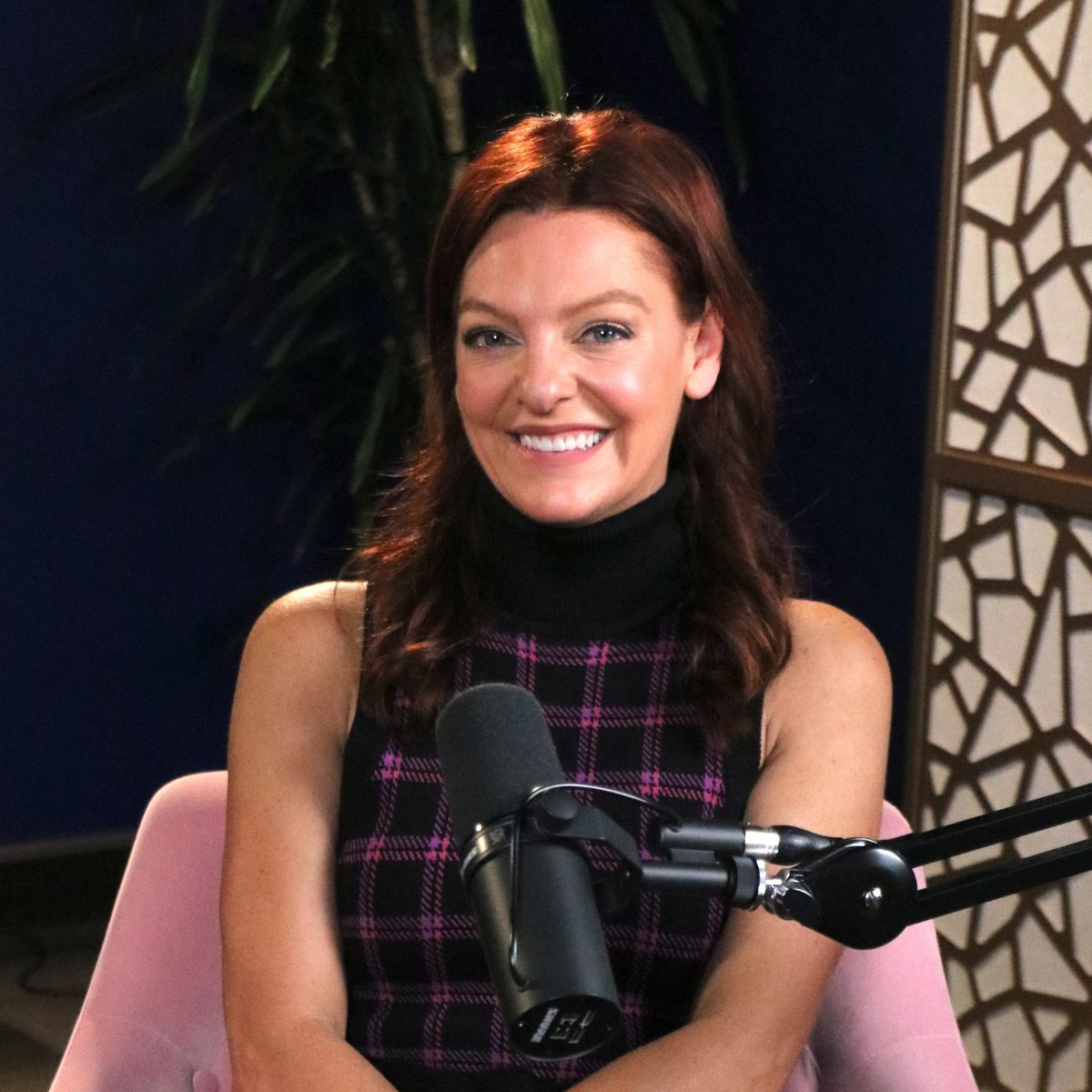
Dorothy: [00:00:00] When you listen to Julia Morales talk, it was her love of baseball, her love of any kind of sports in general, from the time she was a very young girl that helped to plot her way into a male dominated press box, and it led to her becoming the on field voice of the Houston Astros. She built her career the hard way. Taking every rough assignment proving she belonged and earning a reputation for honest human stories, even when the team was really struggling. Then came a different kind of battle: breast cancer diagnosis for her mother and her mother-in-law during the pandemic. All the while Julia was navigating her own pregnancy as well as life on the road. Now, between motherhood, a children’s book and her own baseball, y’all clothing line. Julia uses the same grit and visibility to push early detection. She’s a champion for women in [00:01:00] sports and a champion for women in life, and she brings fans inside the game in a way that only Julia can.
Let’s Talk About Your Breast. A different kind of podcast presented to you by The Rose, a breast center of excellence and a Texas treasure. You’re gonna hear frank discussions about tough topics, and you’re gonna learn why knowing about your breast could save your life.
Julia, thank you so much for being with us today. And oh my gosh, what a history you have. I, I, I was reading all the stuff. 13 season as, as being the.
Julia: Yeah.
Dorothy: The sports broadcaster. What do you call it again?
Julia: Sideline reporter. Field reporter, I mean, yeah. Broadcaster.
Dorothy: For the Astro.
Julia: Whatever you want.
Dorothy: How the heck did you.
Julia: Miss Astro.
Dorothy: Get this job, Miss Astro?
Julia: I heard that one. How did I get the job? [00:02:00]
Dorothy: Yeah.
Julia: God. Well, I mean, it’s such a loaded question to start off with, you know? ’cause I, when you asked me. I’m like, well, it started when I was a kid. Right? And it started with my love for sports and it started with me wanting to be in more of like an entertainment role and not really sure what that meant at 10 years old, but wanted.
Dorothy: Now you were already into sports at 10.
Julia: Yeah, I mean, I played all sports. My dad coached a lot of sports. My brother played sports, small town, uh, Crandall, Texas, uh, you know. Friday Night Lights was everything to our community.
Dorothy: Oh, yes.
Julia: You know, it’s just like I, you, you knew kind of nothing else. So loved it, but the way it all came together was, was really cool. And then, you know, to get to the Astros is a whole different journey because once I graduated from college, I, I took the route, I went that sports reporter way and, and threw myself out into the world like, I’m gonna do this. And I was a female, and people were looking at me like, okay. Like I, I mean, I hope you land something, but there’s a [00:03:00] good chance you don’t. And then what, what.
Dorothy: They actually told you that?
Julia: Yeah. I mean, a, a lot of people did. And, and that was just because there wasn’t a ton of females doing it at the time. But, but I did it anyway and then kept doing it and, you know, I landed a few jobs after that. My first one was in Sherman, Texas, and then I landed a couple of other jobs before I found myself getting the Astros job. But.
Dorothy: Yeah, you don’t just get the as Astros job.
Julia: I mean, I mean No, you’re.
Dorothy: How did you get it?
Julia: You’re right. I mean, that’s why I feel like it’s such a loaded question. ’cause even when you’re, when, when you get a job in sports, I mean, that’s a whole story in itself. I mean, what, what happens then and, and where do you go with that? And all the different avenues you could take. I was a sports reporter first, so I was someone who, you know, had to learn how to be well-rounded. I had to know about all sports. My first job, I think, you know, I, I covered everything from football to tomahawk, throwing something I knew nothing about, but on a Thursday night that there was nothing else going on in Sherman, Texas.
They’re like, go cover this tournament happening at the local bar, and you’re like, okay, let me just look up. [00:04:00] Some rules real quick. What do I ask these people? But stuff like that, you know, I, I quickly had to, to learn on my feed and, and figure out how to ask questions and, and make stories and make it interesting and, and how, how can we tell this in, in a unique way to where people would wanna tune in?
And so I learned all that at. Young age of my career. And, and then I kept getting promoted, if you will. I got jobs in bigger markets, so each jump was, were, were more challenges and the sports got bigger and the teams got bigger and so the, the competition got better. And, and so for me, I just continued to improve. Learn more about these sports. When I got to Austin though, that was a big jump. I went to school at UT Austin, so going to Austin and being a sports reporter was the coolest job ever. Uh, covering the Texas Longhorns was a dream to me, but there was the Round Rock Express, which was the AAA affiliate at the time for the Texas Rangers.
I know. I know, I know it’s the Rangers, but, um, but they were a minor [00:05:00] league team. And in the baseball world, if you’re a fan of sports, you understand that minor league baseball is just a world of its own. There’s so much that happens before these guys make it to the show before they make it to the Astros before, you know, so talking about my journey is very similar to these guys who make it to the big leagues.
So much work goes into it. So many stops along the way, and for me, I spent a lot of time at that ballpark. I fell in love with minor league baseball and, and, and what happens? What happens when a guy gets optioned? What happens when a guy gets designated for assignment? All these little things, like no one really, no one really talks about it from the major league level because they just move on.
These guys get replaced and it’s the next guy up and the next guy in the lineup, but there’s a whole story that’s happening underneath and what happens to the guy. So I learned a lot about the game, really fell in love with it. Kind of pursued it. I, I, you know, I offered myself up to tell more stories and do more things at the minor league level, and that’s honestly how I landed the Astros job.
They were looking for someone with a [00:06:00] baseball background, someone who knew her stuff. The Astros had a, were jumping on with the rockets. Um, they were, they were doing this huge network at the time. CS in Houston was brand new and taking off, and they were gonna cover sports in Houston in an entirely different way. So they wanted someone to travel, be the primary reporter, be with a team all day, every day. So you really didn’t know, need to know your stuff. And I was there, I was down the road in Austin doing exactly that. And, uh.
Dorothy: Are they looking for a female?
Julia: I don’t, I don’t know, was that, I don’t know if they were looking for a female, but they were looking, someone who was, was a baseball person. And I, it was, I mean, it was kind of really great timing too, just where I was. My contract was ending in Austin. I was looking to make that next jump, and so it was a huge jump for me. It was a huge jump to go to the pros. Cover a pro team every day. Um, you know. And.
Dorothy: Tell me about the interview process. How did what, what happened during that?
Julia: Besides me being just nervous outta my [00:07:00] mind, you know, it’s like at that point I’d had several jobs too. So I had gone through interview processes. Um. But there wasn’t. They have a, they have a resume tape. So in the TV world, that’s kind of how you audition. That’s how you get seen. That’s how you apply for jobs. You give them a tape. And back in the day, back in my day, they, we used to have these things, things called.
Dorothy: 13 years ago, right?
Julia: We used to have these things called DVDs. I don’t know if anyone remembers the dv, you know, and before that it was the, the beta tapes. People would make their beta tapes. But yeah, I used to just burn these DVDs and a million of them. Send them out to, to people. And, and that’s how I got jobs. And in each market that I worked in, same with the Astros, they had, uh, they had access to my reel, which is basically your highlight footage. You know, it’s your highlight reel. And so when I walked in, they already knew who I was. They’d already seen me. They already knew what I was gonna look like, what I was gonna sound like, kind of my personality that was coming through on camera. So it was really just an interview of, of how I would handle this job. [00:08:00] The time constraints. I mean, the, the job was so different too because. I, one, I’d never traveled with a team.
I had always worked for a news station. And then, you know, your home base is your TV station. So you go out on Friday night and you cover football, and then you come back and then you go home and the next night you go back to work and then you go on, you know, college football on Saturday, and then you come back and you go, you go home. With baseball, with the major league baseball team, you are where the team is and, and every three days they travel. And so it’s just a completely different world that you’re entering in. So there was a lot of questions about that, how I’d be able to handle it. What would, you know, live broadcasting was different too.
I got grilled, um, but I didn’t have to do a crazy audition, you know, and sometimes that’s the case. Sometimes they put you up on, on a, in a studio and they make you read a prompter or they make you read highlights. Um, that’s some, that’s all stuff I had to do over the course of my career. But not this time. I think they really, they, they knew I could handle it from that point. From that standpoint, um, it was really just about would I be a good [00:09:00] fit and would I be a good fit with the broadcasters who were already there. Legendary Bill Brown was play by play. Alan Ashby was calling, he was the analyst, um, at the time. So it was those two and then they were bringing on. This guy named Jeff Blum that year, and he was gonna be new. He had just retired from baseball and he was gonna do half the games. He lived in California, so they were gonna have him travel. And I talk about this in past tense, ’cause it’s funny ’cause now Jeff Blum’s, one of my, he’s my family, he’s like my big brother.
But thinking back, it was like they were bringing him on, they were hoping to bring neon. They were hoping that we’d have chemistry. And by gosh did we. I mean, we, we had exactly that. Um, and I’m so lucky and fortunate that all the timing of that worked out and the people worked out because that’s, I think, why I’m still here.
Dorothy: Mm.
Julia: Yeah.
Dorothy: Just, just the interactions.
Julia: Yeah. I mean, I, I think it, it grew, I mean, the chemistry grew. Bill Brown is one of my favorite people on the planet. He retired in 2016 after 30 years as play by play for the Houston Astros. But he [00:10:00] was so crucial to my success in Houston because he introduced me to Astros fans.
And in 2013, that was my first year. It was a hard time for Astros fans.
Dorothy: Yeah.
Julia: The team wasn’t very good. There wasn’t a lot of distribution, so you couldn’t really see, A lot of people couldn’t see our games. If you didn’t have Comcast, you couldn’t see our games, you know what I mean? This was like, this was quite, quite a time in the cable world and in all of that, so that we were, we were also navigating, but the people that were tuning in were huge fans. They were the fans, right? They were the ones that you need to win over, and Brownie knew that and he introduced me to them. He would ask me questions. He would, he would basically try to pull me in and bring my personality out. And find ways for people to relate to me or, because we had that kind of time too.
I mean, again, the team wasn’t very good, so it was like if we could talk about anything else, you know, that, that would be fine too. The team’s down 10 to one. What do you got? What are you eating down there, Julia? You know, I mean, it became like this, [00:11:00] what? What’s going on? And it gave me a voice and I had a choice that first year, and it was to be the buttoned up news reporter and give you the hard hitting sideline injury report, or it was just to talk and to give you what I got and to be myself and I to this day think, think, heavens that I decided to just be myself because I can’t pull off the fakeness anymore. I mean, it’s a, it’s a different beast. Baseball. Every day, all day, every day. I can’t fake that. I can’t fake who I am on tv, right? So now it’s like, if you see me in real life, you’re, you’re meeting the same girl, you’re meeting the girl that’s on TV every night. Um, that would be exhausting for me to have to be that, you know, that buttoned up 162 games.
And I think that’s another reason why we had success as a team is ’cause we were all ourselves. Todd Kitz came on in 2017. He’s now the play by play for the Astros, he does a great job and his dad’s obviously a Hall of Fame, like it’s in his blood. He was meant for this job and meant to be in this role. And [00:12:00] then I call him Blummer, Jeff Blum, who is, like I said, my family. Um, we are best friends and we are who we are. We’re the same three people on the plane as we are on the broadcast. You know, it’s just, we kinda like, we button it up a little bit more. There are things that we, there’s words we say that are, you know, off camera that we can’t say on camera. Things like that.
Dorothy: Yeah.
Julia: But other than that, we’re having a great time. It’s a great, it’s a great gig. And that’s the point, right? People tune in to have fun. Let’s have some fun.
Dorothy: So the difference in when they were losing and when they were winning.
Julia: Night and day.
Dorothy: Describe that. Yes.
Julia: Yeah, I mean, I think thinking back to my first year at a job that I didn’t know a lot about and I was learning live broadcasting at the same time, there was a a lot of challenges in that. I was talking about the travel and the, I mean, the hours were crazy. That’s the other thing. All of a sudden I became this salary employee to where before I was clocking in and out and I knew, you know, it’s like once the news goes off at 10 :30, you’re, you’re off the air and you can go home. [00:13:00] Not the case with baseball, because if the game’s five and a half hours long, you’re still there.
Dorothy: Oh no.
Julia: Like, it’s not like you can clock out and go home. And this was before the, the pitch clock and everything. Games used to be long, but you know, we’d be on the road and, and the travel back and I, it all of it was just kind of adding up. I remember hitting a wall in May. I wasn’t sleeping a lot. We were West coast, east coast, flying all over. Um, I was having trouble picking out an outfit every day, because again, I went from like having weekends. They weren’t typical weekends. I was off Tuesday, Wednesday, but I had two days to regroup, figure it out, you know? And for me it was like go to the dentist. Things that I needed to do in life, I could figure out when to do, but not, not when you’re on a 12 day trip to three different cities.
And you know, now it’s cold. And now I need a jacket. All of that seems so, you know, it’s like little things, but they all added up for me. And in May I was hitting the wall. It was really hard. And on top of that, the team was bad. So that, that first year I had hard times and it was hard to complain because I had gotten my dream [00:14:00] job. I had gotten everything I’d ever worked for and then was struggling with it. And like I didn’t want to, I didn’t want that to happen and I didn’t really wanna talk about it. So I swallowed it a lot. But the team struggling actually, it helped me become a better reporter. I was forced to come up with different angles and how do I, you know, how do I get to these players who aren’t, aren’t really all that excited to talk to me or see me before and after every game, right?
Like, again, it’s just me and it’s just them. So I, we are stuck in this no matter what. Um, versus being a sports reporter and coming in and out and covering him once a week. I mean, I was there. I was on the bus with them. I was in the hotel with them. I mean, like you couldn’t get away from me, but same for me. Like I couldn’t get away from them. So that pushed me, it pushed me to just figure out how to tell stories and really, I mean, like I would get. What, well, I guess what other people would call writer’s block. I mean, it was just stories block, like, I’m like, I don’t know what else to do. [00:15:00] But I pushed through, pushed through, um, and the team got better in 2014, a little bit better, but there were better, you know, some more storylines.
So I, all of a sudden I was like, all right, Jose Altuve is actually a good player, so let’s, let’s focus on this guy a little bit more. Yeah, let’s tell a little bit more about him. And then there were some guys who were in the minor leagues that we would tell stories about. All that good feelings. Right?
2015 was just night and day. There was a new coaching staff, AJ Hinch came in. Um, Carlos Correa got called up. George Springer had been called up the year before, but like this was the year he was starting to turn around. Lance McCullers was called up, and these are all names that Astros fans know and love. Right? These are, these are core guys that would eventually help them to win all these championships, but it started in 15 and it was this excitement and fun, and I was like, this is easy. So many stories, I don’t know what to do with it. Like I could just talk about Carlos Correa and it didn’t matter what I was saying, people were just like, yay, Carlos.
Um, so night and day. Night and day. To your question on how to cover [00:16:00] or what was like covering a bad team versus a good team? I haven’t even gotten to the good years yet. I mean, that was just. The beginning of the good years and it just got easier. And what happened also is our broadcast change because we went from, there’s a game going on, we’re going to call it, and then like, what else is happening and what else is going on in the ballpark to strictly, we had smart fans who were tuning in every night, and we wanted to be smart too.
So we picked it up on our, on the way we, um, you know, analytics, like we added more analytics into the broadcast and some people. At the time we’re like, uh, but at this, like we were like, jump on or get off the, you know, get off the train or get on. I mean, like, this is where it’s all going. This is the, the way that the Astros organization wanna go. And so we integrated all of that and people learned and they started to love that too. And now that’s a huge part of.
Dorothy: Oh yeah.
Julia: Baseball. Right.
Dorothy: Absolutely.
Julia: I mean, that’s, that’s so much of what, what is going on. So our broadcasts now are, are smarter and better and, and at the same time [00:17:00] we’re, we’re still having some fun. But yeah, just a blast.
Dorothy: But, and at the same time, you’re still showing that. That human side.
Julia: Yes.
Dorothy: Players.
Julia: Absolutely.
Dorothy: Of the players.
Julia: So important.
Dorothy: Yes.
Julia: I mean that’s the beauty of baseball too. I mean, we do, we, even with the pitch clock, there’s time, there’s time to tell stories and the guys will force that too. They will do things in a game to, you know, shine a light on themselves and it be the hero and have that moment and it’s. So many opportunities for us to jump on that and to enhance that and to tell you a little bit more about them while we’re talking about this guy. Meanwhile, you know, over the weekend he did this and Josh hater all of a sudden moves to Houston and becomes like this big key in the community and, and starts working with several different organizations. You know, it’s like these stories are so fun to tell and they’re so important to tell because there’s so much more to them than what they’re doing on the field.
Dorothy: Right. Do you have a go-to question that you want to ask everybody? Or are you…?
Julia: Yeah, I mean, so one of the things I do love doing spring training. These guys are [00:18:00] completely different than they are come opening day. There’s still that off season feel, they, their guard isn’t up yet. Um, they’re still in that workout, get ready mode, and they’re still on their diets and they’re still, you know, it’s like, it’s so fun as they’re six weeks out from opening day and they’re just in a completely different mindset.
Well, I get to sit down with these guys early on and this is where I really want to get to know the newbies. So especially when we sign guys and I, I mean, it starts with family for me and like their background. And, and what’s important to them and, and how they even. Fell in love with this game, or who helped them get, so, I mean, that’s like the foundation.
Dorothy: Right?
Julia: That I start with a lot of these guys, um, who do you know on this team how, like, who are your guys? Who are your people? Because I want to understand who they are and then their personality. I’m like, well, what are you, like, what are you, you know what, you know, because I, I, again, I’m not someone that comes in and out.
I have to talk to these guys every day and, and get stuff out of them every day. And I don’t wanna be a bother. And I think that’s one of my skills that I have is [00:19:00] having that feel and understanding when to push, when not to push, when to give people their space. So I do a lot of that, uh, questioning early in spring training.
’cause they are still, they’re they’re having still open fun.
Dorothy: Yeah.
Julia: Yeah. They’re still very open and, and they haven’t struck out yet. And they haven’t, they haven’t given up a run yet. So they’re in very good moods. And, and then the guys who are coming back, like I said, I mean, it’s about. What have you done to make yourself better? And, and it just gives me such a good, good base for the season. But on a daily, on a daily basis, walking into that clubhouse, I’m always checking in. I’m always doing the temperature checks and, and where are we at and what are we working towards and what are we working on? Um, constantly trying to, and a lot of it I don’t use on the air, but it does set up for stories in the future and, and gives, gives me ideas and follow ups.
Dorothy: So, you know, I hear a lot of people say, well. They’re not playing well because they’re not having fun. Is there anything behind that idea?
Julia: No. No. I mean, there, there’s a whole [00:20:00] life happening other than the two and a half hours that people see, right. And And I like, they are having fun and it, it is a game. Um, but there is a ton of stress in those two and a half hours on these guys, especially depending on where they are in their career. And that’s the other thing I guess people, um, may not always understand everything about, I know the hardcore fans are tuned into contract negotiations, who’s gonna be a free agent. Um, all of that. And maybe there’s. There’s something in the contract that says if you hit this number, I mean, some, some people are tuned into that, but for the most part we aren’t. Right? We’re tuning in ’cause we wanna have fun, we wanna watch a game, we wanna watch guys hit home runs and, and pitch no hitters and, and do all the things.
But yeah, it depends on where these guys are. And then they have families and they have their own lives and drama life, right? And sometimes they’ve been traded and sometimes they’re. Apartment floods. And sometimes, you know, it’s like I, they’re normal people. Just like every, like when I go to work every day, it’s like going to an [00:21:00] office and everyone’s got their cubicle and everyone’s got their own thing going on. Um, which is why I do the temperature check checks. I just don’t know whose kid has been sick for two weeks and they’re taking ’em to the doctor and they were up all night at urgent care. I mean, it’s so real. And then they gotta lock it in for two and a half hours. And like they don’t always have to smile. That’s like telling women like, you should just smile more.
Dorothy: Oh yeah.
Julia: Like, no, these guys are intense. Like, yeah. Some of them need to be intense in order to perform the way they need to perform. So. I don’t know. I mean, they do have fun. I will say that too. Like there are a bunch of boys that when they get together and on a team like the Astros who all like one another, they do have a ton of fun. Um, outside of like the actual pitch being thrown and inside the lines, like there’s so much that’s happening. They’re there all day. That’s the other, that’s the other thing people don’t know. They get there at 12 o’clock. If they’re having fun in the meal room and they’re having fun in the workout room, and they’re like, who’s got the playlist in the clubhouse? I mean, there’s things that they do on purpose to make sure that they’re enjoying it, but it is a job. [00:22:00] Yeah, yeah.
Dorothy: Yeah.
Julia: Yeah. It’s a good question.
Dorothy: Do you find yourself in awe from when you do your temperature check and find out something’s really going on? And then you have to watch them be a professional?
Julia: Yes. Every day. Every day. Every single day. Every day I am impressed with somebody and. Uh, the, the storylines that don’t always get reported on too, for me, like that’s, that’s what I love so much about my job is because I am following these storylines all year. I am following the fact that, you know, so-and-so had a terrible month of April, and they also know that they’re, you know, arbitration eligible and. Like their family is in a situation, you know, you put it all together and then you watch them work and work and work and then they have a breakthrough and then they have a good month and then they, then they put together two good months and you know, like that’s all the stuff that I know again, like some of it can be reported, some of it shouldn’t be. But um. That’s what I love about all of this. I am constantly rooting for these guys. And I’m rooting for guys on other teams because I know them and their past [00:23:00] and, and it’s like kind of the beauty of doing this job for so long. Nobody was doing this job this long, 10 years ago. This, my particular job was one that people would jump in and out of.
Um, because it is hard. I mean, thinking back to the travel and all of that, it’s hard to have a fa, it’s really hard for anyone. You have to be. A certain kind of person to, to want to be in this crazy lifestyle that we’ve picked. But, um, people would stay in the job for two years, move to national. You know, they, that was the goal. That was kind of the trajectory for women. But again, like the industry’s changed so much. There wasn’t that many women doing it 10 years ago versus now. Um, but I am someone who kinda landed the job at the right time. I didn’t wanna go anywhere once the team got good, you know, I’m like, I’m not leaving now.
This, it just got fun. I went through all that, like, I’m gonna be here and, and I’m gonna take, you know, just kind of enjoy it along with everyone else, like a fan. Um, but, and then I grew up in the role, so now I’m gonna an adult, I’m a mom, I have a family, and [00:24:00] I love Houston more than life. Like I’d love it. This is home. I can’t even imagine like changing a job or going to another team. I mean, that’s just crazy to me. But like that would’ve been something that maybe someone in this role had done before, and so no one, no one was ever that tied to a team emotionally, right? Because you would, you would be there for a year. The team would completely change. Like I’ve watched guys grow up completely, I met Carlos Correa when he was 18 years old and had just been drafted, so I, I’ve known that kid who’s not a kid now. He’s 30.
Dorothy: Yeah.
Julia: But I’ve known him forever. I was there the day he met his wife, who, you know, Daniella was throwing out the first pitch. I was, I witnessed all the, all that happened. I was there when he proposed I’ve, and have watched his kids grow, you know, stuff like that.
Dorothy: Oh my gosh, Julia.
Julia: So, I mean, right like that is. That’s a unique.
Dorothy: That fabric of life.
Julia: Yes. Right.
Dorothy: That you get to touch.
Julia: And now I’m, and I’m frie, you know, and I stay, I am in Houston and some [00:25:00] of the guys stay in Houston because they love Houston too, right? People who really fall in love with this place, um, have made homes here. Well, those are my people because we’ve been in the trenches together. So the Reddicks, the Presleys, these are lifelong friends that I’ve made, right? And so like, there is a professionalism when they’re on the team and, and all of that. But like, it’s really cool that once they come out of it and they retire that, I get to continue to call them friends and keep up with them and continue to root for ’em. But yeah, I mean, like I will be a Jose Altuve fan until the day I die. I mean.
Dorothy: Those connections. Right, right.
Julia: But it’s, yeah, it’s part of the uniqueness of, um, me doing this for so long and seeing so many people come through the organization. And now I love the former guys I didn’t even get to cover, but I’ve been around so long to where they’ve, they’ve come back and they’ve had reunions and really gotten to know some of the, the legends. Right? And. Tell their stories and. Like, that’s been really cool too. Some of these Hall of Famers and, I mean, Nolan Ryan’s like my favorite player ever. So yeah. That [00:26:00] part’s really cool too. Yeah. Yeah.
Dorothy: So there’s some questions, you know, I really should be asking you.
Julia: Like.
Dorothy: Like, uh, here you are, this, this trailblazer. Did you, and I know you, you’re gonna say, no, I didn’t do that, but did you set out to do that? Did you set out to be an example for women?
Julia: No.
Dorothy: No.
Julia: I wish I could sit here and be like, yes, that’s, I woke up one day and thought I’m gonna do this for women, but like, no. I was a kid who wanted to do what I wanted to do, right? I had my own dream and I loved sports and I loved reporting, and I put it together and landed a dream job making no money when I first started, but it was a dream job and never considered it work because of, I was covering football for crying out loud, like I was taking a camera and shooting football highlights and, and standing in front of a light like this and, you know, and, and talking about, you know, the, the crazy ending to that game. It was such a dream. Um, and, and then that I, I was always just [00:27:00] motivated by that.
I was motivated by how much I loved the job and kept pushing. I, I mean, I’d be lying to, to say that I didn’t notice along the way that that was happening. As I, even when I was young in my career, I knew people that were right behind me or were watching me and saw me get this job and then saw me get another job and, and knew that I was inspiring pretty early on. Just Because you’re so visual, people can actually see you. They’re putting eyes on you and they see that you’re a female. And, and something kind of clicks, or there’s something about that. And I, but, but as the Astros reporter, as the ratings went up, as the team got better, as more eyes came on me, I noticed the young women in the stands who were looking for me and bringing signs that said like, I’m here to see Julia.
And I mean, it, it was, it was wild. It was wild. And I understood it because I was one. So I very quickly was able to process that [00:28:00] in like, well of, okay, of course that happens because they can see you, right? And all of us, they hear you every night. So if they’re, if dad’s got it on and you know, and mom’s helping with somebody with homework in the kitchen and, and my voice comes on.
So maybe a little girl perks up when she hears my voice and looks on the TV and sees I’m talking about baseball. And then all of a sudden she’s like, what is she talking about? And then it becomes a conversation with her and her dad. Like I, yeah, I can see it happening. ’cause it’s all things that’s happened to me.
I remember hearing Pam Oliver’s voice on a Cowboys game and thinking like, whoa, like, who is that and what’s she talking about? And how do I, I’m wanna do that, you know? So I’ve lived it. So yeah, like it, I’d be crazy to think that none of that was happening, but I, the, the WOWness for me came when little girls were bringing the signs and looking for me and calling my name, and then it was like.
This is almost too much. Like I, it’s one thing to, to be recognized like, ’cause I’ve always been on tv, so I’ve always been recognized. I can’t go to HEB without being recognized. [00:29:00] Like there’s that. But it was the little girls for me. It was the little girls wearing the Astros gear and loving the game. I was like, this is the coolest thing ever. ‘Cause now we have baseball fans and baseball fans for life. Like if they’re fans at five, like, oh yeah, they’re in.
Dorothy: Oh yeah.
Julia: Like, you’re in girl. You’re in and you’re part of this crazy sports loving life that a lot of us live and, and enjoy doing. So I don’t know, that was really, really cool. But no, it wasn’t, it wasn’t like my goal. Um, it is very much now. Part of who I am and what I do moving forward.
Dorothy: Right.
Julia: Yeah.
Dorothy: And you’re doing a lot of talks and a lot of presentations.
Julia: Yeah. I, and I want to give back in that way.
Dorothy: It’s big responsibility.
Julia: Totally.
Dorothy: Yeah.
Julia: So I do feel the heavy heaviness of it, and I did, and it got even more so having a little girl like that was like, oh boy, now I have my own that’s watching me and seeing me on TV and the way that I act and the way that I act towards people and. All of that. She, um, [00:30:00] she’s grown up in it, so yeah. It’s, it’s heavy. Um, but it’s important and I try to just continue to have fun with that.
Dorothy: Right.
Julia: And, um, and give back in any way that I can. In a way.
Dorothy: You have to just be yourself.
Julia: Yes.
Dorothy: So let’s go to another topic altogether.
Julia: Okay.
Dorothy: But you’ve been, uh, very open about your mother being diagnosed with breast cancer.
Julia: Yeah.
Dorothy: So. Now, correct me if I’m wrong, this happened the same year you were pregnant?
Julia: Yes.
Dorothy: Or you found it? Yeah.
Julia: All like.
Dorothy: All at the same time?
Julia: All at the same time. Yeah.
Dorothy: And it was 2020?
Julia: 2020. Of all the years.
Dorothy: Of all the years.
Julia: Yeah.
Dorothy: So how, how did you find out about your mom?
Julia: Oh yeah.
Dorothy: Did she announce it? Did you have a suspicion?
Julia: Oh man, no, this, this whole thing is heartbreaking. So here we go. See if I can take a breath, because I mean, that year was heartbreaking, right?
Dorothy: Oh yeah.
Julia: For so many different ways, and I know so many people can relate with just that. Um, I. Found out I was pregnant with Valerie. Um, like I wanna say [00:31:00] beginning of February, so Astro spring training starts.
Dorothy: Okay.
Julia: Middle of February. And one of the things that happened in all this time is my bosses had actually offered me to call baseball games, like play by play. And they were like, if you wanna do it at spring training, we’ll put you on the schedule and do a couple. And I’m like, wow. So what I was doing that like January. Was, I was going to U of H practices and watching them scrimmage, and I was practicing like I was doing all this crazy stuff. This is January of 2020, right? Like we all think back to our lives. Like, what were you doing before the world started? Well, this is me. And I had an inkling that I was pregnant, but I’m like, all right, we’re, we’re doing this and spring training’s gonna be great and. I pack it and I’m on the schedule to do some games like March 13th, I’m supposed to call a game March 14th, I’m supposed to call a game again. You’re thinking back to.
Dorothy: Yes.
Julia: What was going on all these days. So I get to spring training. I am sick as a dog. I’m so nauseous, and the morning sickness is strong.
Dorothy: Yeah.
Julia: And so at this time of my life, every year, like I’m usually with my parents a lot, um, [00:32:00] during the holidays, they’re, they’re in the Dallas area. They’re still where in our hometown. Home, but I see them a lot. But once the calendar turns, I get really busy. It’s like fan fa, it all starts to ramp up. And like I said, I was working on this and then I go to spring chain, so I don’t really see them as often. So I’m just trying to think of like where I was in life and, and how, like how often I’d seen my mom, not much at this point.
She was elated about the pregnancy. I’d actually lost a couple. I’d had a couple miscarriages. So like the pregnancy was so amazing, right? And like, okay, here we go again. We’re gonna do like, it’s gonna be great. We’re gonna do this. And then the world shut down and the world shut down right before I had to call the game, which I honestly, at the time, I was like, whew. Because I don’t know how I was gonna get through that game without like needing a trash can. Oh, my morning sickness was intense.
Dorothy: Oh goodness.
Julia: And I went home and all I wanted to do was go to my mom’s and I wanted to sit on her couch and I wanted to eat salting crackers and feel better. Right?
Dorothy: Right.
Julia: Because I was so pregnant. And so I was there and I noticed like she was busy and she was taking a lot of [00:33:00] calls and, but she was okay. Um, but I did notice like something was up, but also the world was literally falling apart in front of our eyes. So like the distractions, right? Morning sickness. And I just was slumped over on her couch for a week, decided to, you know, me and my husband finally went home, get our lives together and figure out what this looks like. ’cause then now I’ve got appointments and everything else. My mom comes back to see me. A month and a half later. Again, like not abnormal because of the times.
We weren’t supposed to see each other. She comes back to see me and she has on a hat, like I, again, alarms, I’m going off and I’m looking at her like some, something’s up. My mom doesn’t wear baseball caps like what’s going on? And she tells, she tells us what’s going on. She tells me and my husband, she’s been diagnosed, she’s like, I’ve been going to treatments and she’s my mom.
Dorothy: My gosh.
Julia: Is such a matter of fact woman and like has worked. You know, she’s worked her whole life and she’s just, she’s a boss. Um, but she was so businesslike a matter of fact, like I’ve, I’ve got this under control. I’ve been doing this, I’ve been [00:34:00] doing it. And it was, I mean, it was pretty serious too. And like the, the way she just presented it was so like, I got this. Y’all are fine. I got, and I don’t know, like that kind of broke me. ’cause I was just like, you don’t have to have this. And then I immediately went into this awful guilt trip because I was on her couch a month and a half before that in the fetal position over morning sickness. Meanwhile, I had no idea she was getting treatments and going through absolute hell by herself, mind you. ‘Cause no one could go with her at the time, heartbreaking. Like I was so sick about that. I’m still not over it. I’m still not over like from a selfish perspective of I just wanted my mom to mommy and she probably loved mommying me at the time, but I was like, right. I had no idea, and I wish she would’ve told me them, but I also understand like that’s who my mom is and she was gonna literally try to figure it all out before coming to us. So at that point, I’m so glad she did tell us um, we were obviously there for [00:35:00] her. She had a double mastectomy three days before my child was born.
Dorothy: Oh my gosh.
Julia: So then that was a whole, that was my poor mom.
Dorothy: Wow.
Julia: My poor mom. I was trying to hold off as long as I could just to give her more days. But she wanted to be in the car and she wanted to meet that baby. And you know, like our first, our first memories of a lot of things are all kind of surrounding mom’s treatment and her surgeries and, and recovery. And, and that’s okay. That’s all part of the story because my mom’s here, she’s, she’s a survivor. She’s feeling great right now, but gosh, what a year. What A year.
Dorothy: Oh yeah.
Julia: So, and then you see pictures and it takes you right back to the emotion and. Mom just wanted to, she wanted to be a full grandma. I was the first grand baby. And again, like it’s just so heartbreaking that that’s how it all went down. And she wasn’t gonna be able to be in the hospital room again, COVID, but gosh, she would’ve been the first one there with open arms if she hadn’t been. But she was taking care of herself and you know, that’s what needed to happen. And she’s all good, but Wow. What [00:36:00] a year.
Dorothy: So.
Julia: That kept going. I mean, as you know, like it wasn’t just a year for her, but.
Dorothy: No. No.
Julia: It just, that’s how it started.
Dorothy: Did she find it on a mammogram or had she.
Julia: She did. She knew something. She kind of knew something was up. She had felt a lump. And my mom’s in the medical world field and um, like she, she went and I, I don’t, I don’t think she wanted to go. I think she kind of knew what was up and we’d just gotten through Christmas and I think she kind of held off. She’s like, I’m gonna get through Christmas. And then she found out on mammogram. Yep. That’s exactly how. But just, I actually started getting mammograms. I turned 40 this year. I started three years ago.
Dorothy: Yeah.
Julia: Because of it. Yeah.
Dorothy: Because of it.
Julia: Here we go.
Dorothy: So, have y’all ever talked about that time?
Julia: A little bit. A little bit. It’s so dark. I’ve, you know, the, I think about too, like her recovery from the surgeries and then having another surgery, um, was really, it was dark and it was hard. And the medication and, you know, you think it is just like, none of it, none of it was [00:37:00] fun as so many know. And so it, a lot of it, I don’t even know if she remembers and it was just dark. But at the same time, we had this beautiful new baby. We were also celebrating what a wild, wild range of emotions that we were all going through as a family. But yeah, she, she did tell me, you know, like she, she wasn’t great about being open with her feelings about a lot of the things that she was going through. She did finally, um, tell me that she broke down before having the surgery. That was like the first time that she had really broken down, knowing that like. I am doing this alone, and I may not make it out of this. You know, it’s just so, such a big, serious thing. And, um, she was tough to not have had a breakdown until that point, but yeah. Really hard.
Dorothy: Yeah. It was wasn’t just your mother, but your mother-in-law too, had gone too?
Julia: Oh, mother-in-law. Yes. Yes. A couple years ago, my mother-in-law was diagnosed, which threw us all for a loop. ‘Cause we’re just getting [00:38:00] over the hump of my mom.
Dorothy: Yeah.
Julia: And feeling like, okay, we are back, the family is back. My mother-in-law there in California and she found it on a mammogram and luckily hers was. It’s, I say just, um, it was stage two and she immediately got into her treatments and fighting. And she’s in a good place right now too. Um, but yeah, that, that one was so shocking. ’cause we’re just like, again, like, how, why, why is this happening to us all of a sudden? And, but that’s, that’s the thing. It is that common. It is that common to where it hits you from all the different directions.
Dorothy: Yeah.
Julia: And it was hitting us. All at the same time. And, and since then I’ve had several really, really close people in my life be diagnosed and then be okay. Early diagnosis, you know, so, which has helped.
Dorothy: Which I want you to say that again.
Julia: Yeah.
Dorothy: So our listeners hear that, that.
Julia: I know.
Dorothy: That that early detection is so important.
Julia: Yes. We, that has happened here several times and just, it’s so emotional for them. But you’re also like. Thank God.
Dorothy: Yes.
Julia: You know, you went and [00:39:00] thank goodness that we’ve caught this and ’cause there’s just so many success stories now too. Um, so to focus on with that. But yeah, it’s never easy.
Dorothy: You ever go to your daughter and what this could mean for her?
Julia: I think about it all the time. Yeah, I think about it. I think about me too. I live, um a very stressful, busy life too, you know? And so it’s, you know, we’ve done the testing and we’ve tried to figure out some of the things like, is it hereditary? And I think hers was, it was one where like the estrogen kind of feeds it and, you know, and thinking about my life and the choices I’m making and I’m just like, geez, I need to, I need to watch it. But then it quickly directs to her and what’s next for her. And now if, if we’ve got it on just chances and just life and the way we live. Um, I think about it all the time.
Dorothy: Yeah.
Julia: So much to think about.
Dorothy: Well, just being a mother.
Julia: I know is a lot.
Dorothy: It just added on.
Julia: Yes, yes. But absolutely, for sure.
Dorothy: [00:40:00] Now, I’m, I’m gonna go back to when you were pregnant.
Julia: Yes.
Dorothy: Did, did the team cheer you on?
Julia: Yes.
Dorothy: I mean, were they there for you?
Julia: Yes. You know, there’s a, there were some some positives. I say that, and it’s hard to even say the word positive when you talk about 2020, but there were some pros and you know, the cons obviously were not getting to be around all the people that I loved to being pregnant. Um, and I where our plans are to only have one, two, um, now that I’m up there in, in age. I know I’m not that old, but, but just kind of our plan, right? I started late and this is kind of our plan. So I think we’re, we’re good with one and we are at one. But you know, I think about just like, I only had that experience once and that was my experience was, was not being allowed to see anyone. But um, you know, it was fun, was. The team helped me announce, and they all did little videos. So, you know, the Correas, the Bregman’s, um, they all did these little videos and they were like, congrats. And, you know.
Dorothy: Oh, how neat!
Julia: A new Astros come, [00:41:00] you know, like they said all kinds of stuff. In, in our, one of my producers put it together for the network and that’s how we announced. So we were having a baby, which was so sweet. And so then like orbit had a sign, you know, oh, like it’s a girl or whatever he said, so, so cute and sweet. And, but I like, that’s, that’s the Astros to me. And, and we are just one family and the organizations like that anyway. And they’re so family friendly. So that was a really cool thing.
But, um, as the year went on, it was fun because. And like Dusty found out, Dusty Baker was the manager at the time and found out I was pregnant, but we were just doing Zoom interviews. So at one point he was like, I need to see your belly girl. You know, like things Dusty says like Dusty’s this like O, OG manager, right? Like he could say anything he wants and he is precious about it. But if anyone else said it, you’d be offended. But that was dusty. He was like, lemme see your belly girl. Because he was so excited for me. And Strohny would make me like we’d do zooms. He was like, back up. I wanna see as the baby girl. And they were just so sweet about it. And then I really [00:42:00] started to connect with the guys who did have kids and they, they would bring their babies on the zooms and you know, it was just so, it became a thing and, and the best way ever. It was just like something we talked about and caught up about. And. I miss the, the, the other crazy part in all this as we just like break down my whole pregnancy.
Uh, you opened this can of worms. This is your fault. No, I, I think back to my due date was September 28th, which was the final day of what was supposed to be the regular season. And I remember having so much stress over that because it was like one, when am I gonna tell, when am I gonna tell anyone I’m pregnant? You know? I’m like, when am I gonna have to stop traveling? Like these were real things that I was worried about up until March, but we got to the end of the year, and so I did miss the last couple games. Remember it was a shortened season that year. They only played 60 games, but they played from middle of July to end of September. So I missed the last couple games. I had to go [00:43:00] on leave, uh, when she was born and I watched the playoffs that year from home, which was such a weird feeling.
Dorothy: Oh no.
Julia: I’m like, we were home anyway. ’cause it’s not like with COVID, but still it was just like, I’m not working and these guys are playing and what’s, I don’t know, but we got so much love from every, everyone in the, in the guys who.
Dorothy: What a gift, Julia.
Julia: I know.
Dorothy: I mean, for everyone to be so excited.
Julia: Yes.
Dorothy: In a year when, no one.
Julia: Right.
Dorothy: Knew what was gonna happen.
Julia: I know she is a little gift. I’m, we is, we said this before a thing I like, it’s gonna be so I don’t know what it’s gonna be like actually to have the, when she gets old enough to explain 2020. And I did my best to take notes that year and keep up with things that were happening on certain dates. But what a wild time to be born.
Dorothy: Oh yes.
Julia: And brought into the world and, and then to be celebrated. Yeah. But that was. It really special with the Astros. And then what was fun was showing up the next year and then having a baby, right? And now all of our babies know each other and, and she’s just, she’s one of them. [00:44:00] She runs the bases with ’em after the games. I mean, what a life this kid lives that she has no idea.
Dorothy: Yes.
Julia: So.
Dorothy: I’m almost afraid ask this, but I know you have a clothing line and.
Julia: Yeah. My little side hustles.
Dorothy: So what’s next?
Julia: Oh gosh. I, I have, feel I have to get a hold on myself right now. I, it’s just, there’s, I am, there’s so much I wanna do and there’s so much I love doing, um, that I have a hard time telling myself, no, and don’t take on another project. So I found, I’ve found myself here, which is probably in a state of chaos at some, you know, on, on any given day, which I thrive on. I do thrive on chaos and just being busy. Yeah, I do. I, I would like to find a better balance. I would like to find, um, a ways to not be so stressed about certain things that, um, that stress me out now.
And a lot of it is being a mother. Like those are things you’re going [00:45:00] to just deal with for the rest of your life. But it’s like, how, how can I just, how can I find a balance? Is, is the point? What do I need to hand off here. What do I need to do less of here? Um, find things that make me happy and fulfilled.
Um, but, but it does work. I still love work. I I don’t want to dial it back yet. I know I’m going to eventually have to, especially with the travel. It’s just too hard. And my daughter’s five now, which I, I think is important saying, ’cause I think moms everywhere will know kinda where she is and know that it’s only gonna get harder. And she’s only gonna get smarter and, and want me around. She’s gonna get busier and there are gonna be things that I don’t wanna miss. So I think about that, but, but next, I mean, gosh, I wrote a book this year that was book that wasn’t quite, that was a project. It was a, it’s a children’s book. It’s called Her Day at the Park. And it’s something I wanted to do and I, it was actually my New Year’s resolution in 2020. I know. This is crazy. Um, I said it out loud to my [00:46:00] friends. I’m like, I’m gonna write a children’s book this year. And then got pregnant and the whole world collapsed. But, um, five years later, the book has been published and it’s, it’s a really fun children’s book because it’s, it’s a book that it that basically it’s like images and things that have inspired me over the few years. So I spend so many days at the ballpark, but what I’ve noticed in the last 10 years are there more and more women at the ballpark doing different jobs. And so the book is about a little girl who goes to the ballpark and she’s pointing out people and people on that are on the field and in the press box, and she’s seen them and they’re women.
Dorothy: Interesting.
Julia: And so at the end of the day, it’s like.
Dorothy: Yeah.
Julia: Women can work in all of these roles and you’ll see ’em anywhere and everywhere.
Dorothy: No wonder you’re such an inspiration. You see this. This is part of your life.
Julia: It, I see it. Yeah. I mean I was one of few and, and I’ve watched it grow. You know, one of my best friends does play by play for Oakland now. Oh, they’re not Oakland, but they’re the A’s now they’re in Sacramento. I know that’s confusing, but, um. Like [00:47:00] she’s doing an excellent job in breaking her, her, you know, crushing her own ceilings and glass ceilings and all that. She’s doing a great job. And then there’s still photographers who are my good friends, who are a big part of promoting the team and putting stuff on social media and just so much behind the scenes there.
Marketing world. Some of my favorite people work in marketing. There’s, um, people in the control room. I just, everywhere you look now, it’s crazy and it’s very strong, talented women who happen to enjoy sports and the crazy schedule that it gives us. And so that, that was my book, but I did that on top of starting shop baseball, y’all, which is my little apparel that you mentioned.
Um, I started that in 2022 thinking. I just wanna put baseball y’all on a t-shirt because it’s something I say a lot. And it happened to be the year that the Astros won the World Series, so it kind of took off that September October run and it is now turned into something a little bit bigger. Not [00:48:00] huge by any means. Like I said, I’m I. And I’m already trying to kill myself with all the different things that I’m doing. But it has grown. It’s pickleball, it’s football, it’s all the different sports and.
Dorothy: Wow.
Julia: And it’s geared towards moms. It’s really geared towards baseball moms who are at the field all day with their kids and they need like a neutral hat and they need a different shirt. You know, it’s like stuff you can wear to the major league games, but stuff you could wear to your little kids little league game was the idea behind it. So I have a big hand in that. Yeah. I don’t know what’s next. I really just wanna do more to help others, right? Like I, we, the, the world of interning and apprenticeships has changed a lot since I did it. But the only reason I have a job in TV is because of some great internships and some great people that help me. So I’m very passionate about that. So I’ve held a workshop the last couple years, but I like to do more of that. I like to teach more in that phase. I sound so old and wise all of a sudden.
Dorothy: Well, you are.
Julia: No.
Dorothy: Yes. Not old.
Julia: The old part.
Dorothy: But Wise, yes, very wise. The old part, because I was just thinking you are [00:49:00] setting a whole different, I don’t wanna use the word example, but these things that you see and you bring to.
Julia: Yeah.
Dorothy: Us regular folks are ways of seeing women differently. Or ways of thinking differently.
Yeah. You know, it’s.
Julia: Definitely.
Dorothy: It is really, it will be fun if you could come back after 50 years after you die.
Julia: Right.
Dorothy: And say, oh. Wow. I was a part of that change.
Julia: Right, right. Very. Yeah.
Dorothy: And you will be.
Julia: It’s a great way to think of it. Yeah.
Dorothy: Yeah.
Julia: I hope so. I hope so. I have a, I, I still have a huge passion for, like I said, my job and what I do, and I just need to keep pushing that along. ’cause my, my old bones will get tired after a while. The jet lag will start setting in. But just.
Dorothy: You know why? Because you really enjoy what you’re doing.
Julia: I do. I do.
Dorothy: Yeah. That makes all the difference.
Julia: Great people.
Dorothy: I think if, if ever anyone listens to this interview, they’re gonna say that’s what it’s like to [00:50:00] enjoy work. That’s what it’s like to be ready to go every day.
Julia: I know I’m lucky. I know. I’m lucky. I know. That’s so hard to find. And, and then to make a living, you know, it’s like, no, it’s hard. I know it’s hard.
Dorothy: But if you have a job like that, I mean, it, it just emphasizes the importance of that. Don’t stay where.
Julia: Yeah.
Dorothy: You’re not happy. Don’t stay that it’s.
Julia: Right.
Dorothy: That it’s really, really burdensome.
Julia: Right.
Dorothy: You, it’s important. It’s important to your health. You will stay, stay young. You will stay healthy for a very long time.
Julia: I hope so.
Dorothy: Because you enjoy what you’re doing.
Julia: Yes. And lasers on my face. And what else? Like good ski, good creams under my eyes.
Dorothy: Julia. Alright. Thank you so much for being with us again today. I know our listeners have really enjoyed this.
Julia: Thank you.
Dorothy: And for being so open and for giving all of us that bit of hope and that bit of [00:51:00] enthusiasm that we can do just about anything.
Julia: No, that means a lot. Thank you. Thank you. It’s fun to sit in this chair for once, so I loved answering questions today. Thank you so much.
Post-Credits: Thank you for joining us today on Let’s Talk About Your Breasts. This podcast is produced by Speke Podcasting and brought to you by The Rose. Visit therose.org to learn more about our organization. Subscribe to our podcast, share episodes with friends, and join the conversation on social media using #LetsTalkAboutYourBreasts. We welcome your feedback and suggestions. Consider supporting The Rose. Your gift can make the difference to a person in need. And remember, self care is not selfish. It’s essential.