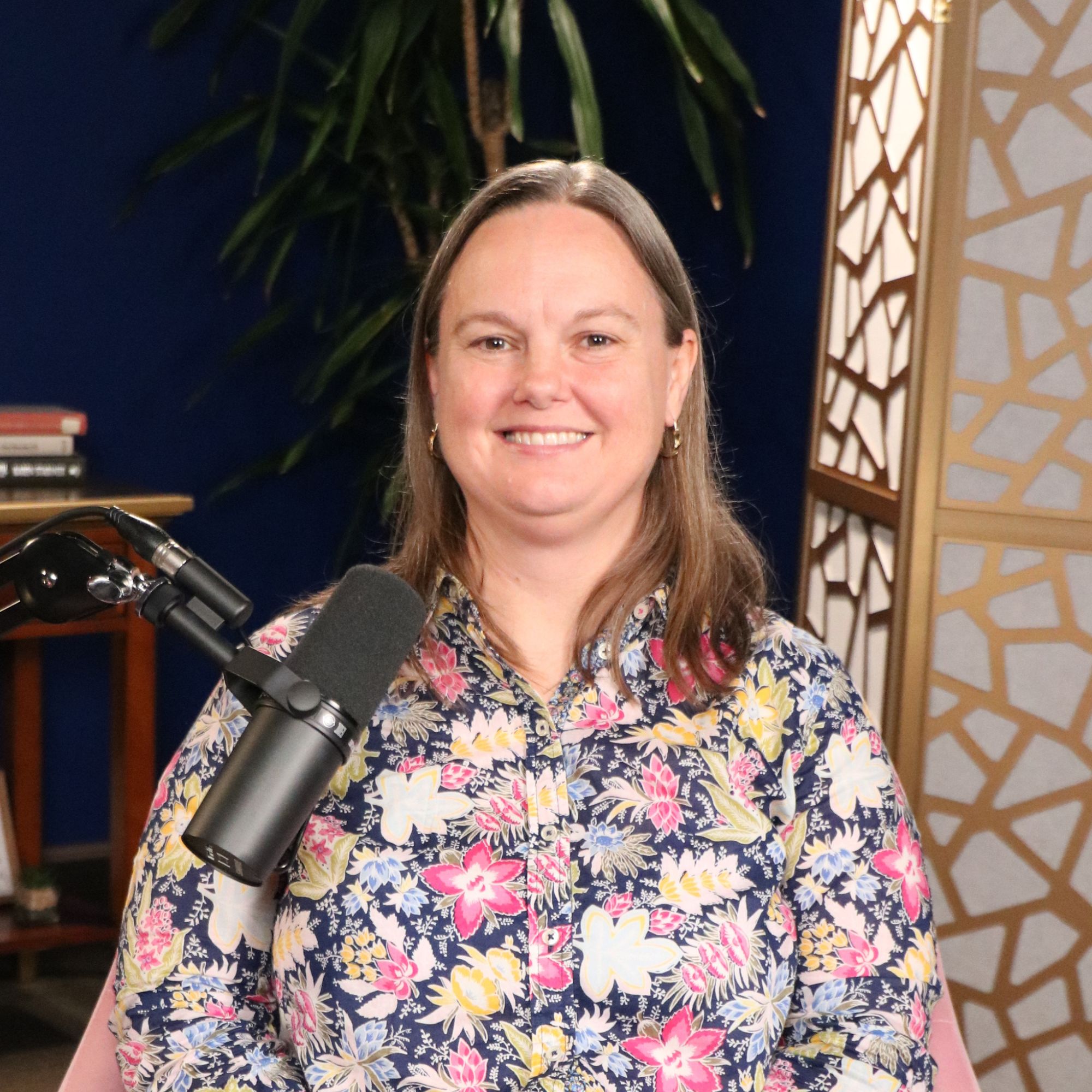
Dorothy: [00:00:00] Most people join a nonprofit board because they have a personal connection, especially a, an organization like The Rose. They either have someone who had breast cancer in their family, or they’ve experienced it themselves, or they’ve been in the medical world, but not Tina Saenz. She came to us as a board fellow while she was going through her MBA program at Rice, and from that time as a fellow, she says she gave a whole new perspective on women’s health. Tina is from a rural area and she saw firsthand the challenges a woman faces getting care when you live miles and miles away from any kind of healthcare facility. Today, she serves as a board member, but the thing that she’s most proudest of is that she’s become one of our patients. You’ll hear how volunteering expanded her understanding of healthcare, how it makes a difference when you’re helping people to find healthcare and that don’t have access [00:01:00] to it, and why any company who supports a nonprofit is making a real difference in this world.
When you subscribe to our show, you help us grow. Someone you know may need to hear this story, so please share with your family and friends and consider supporting our mission at therose.org.
Let’s Talk About Your Breast, a different kind of podcast presented to you by The Rose, a breast center of excellence, and a Texas treasure. You’re gonna hear frank discussions about tough topics and you’re gonna learn why knowing about your breast could save your life.
Tina, thank you so much for being with us today. You know, you are a story for The Rose, particularly because of how you came to it. So let’s talk a little bit about how you first were introduced to The Rose.
Tina: I was attending Rice University to get [00:02:00] my MBA and one of the reasons I actually chose to go to Rice, one of the factors was they have a program called Board Fellows. Where students that are getting their MBA can sign up can apply, um, for something they call Board fellows. And that’s where they partner the student, the applicant with a local nonprofit to be a participant on the board. Non-voting, don’t get a whole lot of say, but you get to see behind the scenes of what that looks like.
And I was very interested in that. I’d been volunteering most of my life and but had never been on that side of it on the board side. So it was really intriguing. And so you don’t pick which nonprofits you pick the areas that you’re interested in.
Dorothy: Okay.
Tina: And then there is a, some sort of matching that goes on behind the scenes where they take your interest and they take the board and they match you up. And one of the items I selected was women’s health that I was interested in. And then whenever they told me that, oh, well you’ve been partnered with The Rose, is that gonna be acceptable? And I looked up The [00:03:00] Rose. Oh yes, this is, this is very acceptable. Uh, so the, the board fellows is, uh, from, with Rice is how I was introduced to The Rose initially. Um, then I served a, a year, about a year term with that. And then after that term was up, you would ask me, well, would you really like to become a full term board member? And I said, no, I don’t know. There was reasons. Uh, but then during Covid, uh, I had a lot of, there’s a lot of time to think about, about life and what you, what was important and what I valued, uh, and I was seeing a therapist at the time and I told her, I was like, you know, I really, when I look back on some meaningful moments in my life, being on The Rose board, it’s one of those times that I really like I felt like I was part of something really important, something that gave back to the community. And I think I’d like to reach back out to Dorothy to see if she’d still be interested in having me on the board. [00:04:00] And so I was suffering from a little confidence issue. And so she was helping me draft an email and kind of what I would say and how would word that. And she said, well, do you mind me asking which nonprofit is it?
You don’t have to tell me if you don’t want to. And I said, oh, well, you know, it’s the Roche, she said. The Rose, the guests, they were really involved in, um, women’s health and making sure uninsured women can get mammograms. She goes, oh no, I know. I was one of the uninsured women that went to The Rose. She said, I, uh, they, they treated me when I was uninsured. She said, you have to send this email now, like it’s like meant to be.
Dorothy: And of course she was diagnosed.
Tina: She was diagnosed, yeah.
Dorothy: Yeah. And uh, she spoke at our State of The Rose event and brought out the same bag.
Tina: Yes.
Dorothy: That we had given her and the quilt.
Tina: Yes.
Dorothy: That our lovely Lakeview quilt people always give us [00:05:00] and said that it stays in her sight all the time.
Tina: Yes, all the time.
Dorothy: So that she’s reminded of.
Tina: Right. So during that appointment, whenever she told me that uh, during that session. During that session, she went over and said, well, hold on just a second. And she brought the quilt over. So it truly, oh my gosh. When she says it stays within her sight, she means it’s.
Dorothy: Yeah.
Tina: It stays within her sight.
Dorothy: Wow. That was such a great story.
Tina: It was just.
Dorothy: Oh my gosh.
Tina: It’s one of those things that you just never, you never know when you’re talking to somebody what their, what their background is and what they’ve gone through.
Dorothy: And she’s a therapist now. She’s a therapist. She’s helping how many.
Tina: Yeah.
Dorothy: Hundreds of people, right? I thought, wow, that is a full, full circle.
Tina: Full circle.
Dorothy: Yeah. It was just such, such a good, good story. Of course. I didn’t know all that.
Tina: You didn’t know all of that.
Dorothy: Uhuh. I didn’t know until much later.
Tina: Much later, yeah.
Dorothy: Uh, but I do remember when you called me and you know, Tina, I don’t know that I’ve ever approached another Rice fellow about staying on I, as you said that I thought, that’s not my normal [00:06:00] style.
Tina: Yeah.
Dorothy: You know, because usually it is just for that experience. It is not to continue. So there must have been something, I think it was in your closing, do you remember when you were talking to the board about this is what I’ve learned?
Tina: I don’t actually.
Dorothy: You don’t.
Tina: Remember that conversation.
Dorothy: You don’t, but it was very last meeting. You were, were with us and I think it was then when you emphasized, and you’d said it before, I’m pretty sure, but about. You understood what we were doing in rural Texas.
Tina: Yeah.
Dorothy: And you understood what that was all about? Well, you know, not many of my board members do.
Tina: Yep.
Dorothy: Understand what it’s like. And now how did you, how did you understand all that?
Tina: So most of the time, whenever we’re talking to somebody in, in, a lot of times when you’re interviewing people in this speed, in this seat, uh, they have a really personal connection to breast cancer. And I don’t have a personal connection to breast cancer. I know of people, but I haven’t. I haven’t been in the trenches with that. But one other thing I do [00:07:00] understand is rural healthcare. And so I grew up in Cuero, Texas, which first of all in Texas standards is probably not all that rural. It’s a population of six to 7,000. And we do, we are fortunate enough to have, still have our own community hospital. So those have a lot of advantages. So I’m speaking from a rural position, but still a position that there’s a hospital within right, 20 miles.
Dorothy: Which is not the case in so many counties.
Tina: Which is not the case in so many cases. Um, and my mom was diagnosed with Alzheimer’s whenever she was 54, 55, I was 24. It hit us young, like we just, we were unprepared, didn’t know what to expect. And so later she’s, um, my dad’s taking care of her at the house, and this is many years into her diagnosis. She fell and broke her hip. At home. And so I think that this story will show the advantages and disadvantages of rural health.
Because we know, you [00:08:00] know, people, we know a doctor, and that doctor happens to live close by and my dad said, Hey, I’d like you to come, just look at her right quick and see if we need to get her to a hospital or if she’ll be okay. And so he was able to come out and said, no, she’s, we need to get her, her to the hospital.
So we was able to get her to the hospital, checked in, it was a broken hip, but then she couldn’t get surgery for two more days. So at least 36 to 48 hours. Um, now she had great care while she was there, you know, we have Friends that are nurses and stuff like that. So personal, but, but you don’t have specialists.
At that hospital all the time. And, and we were fortunate that there was a specialist coming, uh, later that the next day that was happen, happening to do another surgery and so he could evaluate her and then get her on the books for the next day.
Dorothy: Wait, but he had to come there.
Tina: He had to come there. So he was coming from Seguine, I believe, is where, where he comes from.
Dorothy: Wow. [00:09:00] So we would never, even.
Tina: Never.
Dorothy: Dream of something like that.
Tina: So my mother-in-law a few years later broke her shoulder and we get her up to Texas medicine and, you know, within 24 hours she’s got a Shoulder.
Dorothy: Right.
Tina: And so there’s just a it’s just an access to care, even in an area that’s already got a hospital, is slower than you would have in like Houston.
Dorothy: Right, right. So you’d seen it personally.
Tina: Right.
Dorothy: And you probably, when you lived there, you kind of were aware.
Tina: Right.
Dorothy: That you would have to go to a bigger town or something?
Tina: Yes. Yeah. Yeah. So, and, and my dad has, um, some cardio issues and we, we come to the med center, you know. To for his cardio because there’s some specialty things there that, that he needs care for that the Houston Med Center is just better able to, um, equip to handle than.
Dorothy: How far is that from.
Tina: Uh, two and a half hours.
Dorothy: Three hours?
Tina: Three hours. Yeah.
Dorothy: Yeah. [00:10:00] See that? That’s a story we hear.
Tina: Yeah.
Dorothy: From the ladies that are in our areas.
Tina: Yep.
Dorothy: Of, of service. So. It. And if you have something wrong, you’re gonna go do it. But if it’s for prevention, you won’t.
Tina: It’s hard.
Dorothy: You won’t.
Tina: Right.
Dorothy: I think it’s something like 70 something percent of all the women that we have on the mobile report, they probably wouldn’t have got it. They wouldn’t have had their annual mammogram.
Tina: Right. Yeah. Right. Well, and it’s, if it’s something urgent, you’ll go get it. But it’s, it’s a hassle If there’s a, if it’s anything beyond a primary care, it’s difficult.
Dorothy: Right? So Tina, you’re an engineer.
Tina: Yes.
Dorothy: So that, that’s even one more step. You’re not, you know, you’re not in the community volunteer group.
Tina: Right.
Dorothy: You’re not in medicine. You’re not what, what made you become an engineer. How did you know you wanted to do that?
Tina: Uh, I.
Dorothy: Chemical engineer, right?
Tina: Probably a story that’s similar to a lot of engineers. I, [00:11:00] I was good at math, was good at science, and I liked, I mean, I wasn’t just good at it. I liked those things. Uh, I liked organization, I liked planning. Uh, and, and then I had an in, ’cause my dad’s a mechanical engineer and so I knew, I knew the engineering existed. Uh, and so that’s decided, well, I don’t know that one to Meca. I can’t be just like, dad, I gotta do something a little different. That Right.
Dorothy: It’s pretty hard field. Was it hard to, to enter it as a woman or.
Tina: Uh, well, I went to the University of Texas in Austin. And so at that point, even at that point when I gr whenever I went to school, it’s 40% women in the chemical engineering, um, in that study. So they’re pretty good on, yeah, on the ratio between men in, in chemical engineering, now, you know, mechanical and electrical, those are a little different, but chemical engineer now, then when I get out in industry, it’s a different story. There are some, some locations and some companies that have a lot of women and [00:12:00] then some. Uh, you know, I’m the only one.
Dorothy: Oh.
Tina: Still.
Dorothy: Still.
Tina: Yeah.
Dorothy: Is the current one like that?
Tina: Yes.
Dorothy: Close. Yeah.
Tina: Yeah. In my, in the company I work for now is, we have a pretty small presence in, in the manufacturing, so there’s a lot of people in r and d that are women, so there’s a lot of very educated women that work for uh, the company I work for, just.
Dorothy: Just not in that.
Tina: Just not in this particular field.
Dorothy: Well, I think your company is pretty darn special because they are one of the few companies. You’re the one of the few board members that has a company that’s matching financially your hours. And your gift and.
Tina: The gift one for one.
Dorothy: It is, you don’t see that very often or. I think people may not know their company has it. So when you went there, you, you knew right away they had something like that?
Tina: Right. So I work for Novus International. And they, uh, they do [00:13:00] truly understand that you’re more than just an employee for that company, which I think is a little unusual.
Dorothy: Yeah.
Tina: Uh, and so they’re invested in a lot of different things. They, we get, I mean, just as an example of we get different points for if we have our routine physicals and if we are exercising regularly. And so they, they understand we’re a full person. And then one of the things too that they, that they do to help with community engagement is that they wanna engage with the people that their employees are engaging with.
And so one of the ways that they do that is to match volunteer hours and donations to qualified nonprofits. Uh, so you have to fill out a form. There’s a little bit of extra work there, but it’s not difficult. And so fill out a form, submit that every year, and then they match dollar for dollar, what I give and the volunteer hours. And I think I’ve looked before on the, on the list of donors that we have on The Rose site. The Novus [00:14:00] is one of the top donors because of the matching.
Dorothy: Yeah, yeah, yeah, it is.
Tina: Yeah.
Dorothy: And again, that’s not every company that does that, but it certainly makes a difference. Makes you feel good.
Tina: It does.
Dorothy: Yeah.
Tina: It does. Well, and it makes you feel like your contributions matter more than, more than just what you’re doing in the office.
Dorothy: Right.
Tina: It makes you understand that they do value what you’re doing outside of the.
Dorothy: And now what does Novus make or handle or?
Tina: Yeah, they do research and provide solutions for, um, protein producers. So the, the product that I make, uh, well, I don’t personally make it, but the, the facility that I work at makes methionine, which is an amino acid, and then that primarily goes into poultry feed.
Dorothy: Ah. And so they’re very environmentally aware too.
Tina: Very environmentally aware. A lot of sustainability, uh, focus.
Dorothy: Yeah. Yeah. So what a contrast here. You come into the board [00:15:00] of a medical facility. What, what do you remember learning about the most or are being surprised when you, when you did become a board member?
Tina: I really like operations, manufacturing, that. I, I enjoy working in that kind of facility, and so one of the things that I realized coming to The Rose is you are also focused on operations and you’re also focused on making sure that all of that is streamlined because that’s the way that you can, you can use insured women to help fund Uninsured women. You can’t be slow about it. You can’t take your time. You have to get women in and, and, and through that process, and that’s operations. And whenever I saw that and, and talked to you, I was like, oh. I, I know what you do here.
Dorothy: I never, I never, yeah. I never put those two together. I know it. I know what you do it here,
Tina: I’ve done this.
Dorothy: Know you’ve done that, right?
Tina: Yes.
Dorothy: Right. And it is so important that we have those insured women because [00:16:00] three insured women allow us to screen. And that’s the important factor in here, one uninsured woman. But unfortunately our uninsured women primarily are coming to us because they’ve had a lump already.
Tina: Right.
Dorothy: And so they need to go into the diagnostic world and, and so when we’re raising money, you know, it’s a fine line there to explain, yes, we could handle the screening, but we couldn’t handle the biopsies or the, you know, follow up ultrasounds or particularly we could not handle getting them into treatment. ‘Cause all of that is where we need to do the fundraising. And it’s, it’s, it’s a lot of women that we take care of. All together. You’ve heard me say this before, you know, it just seems like after 40 years almost we’d have a better way to handle the uninsured. It, it just, it just baffles me that we’re still fighting that.
Tina: Yeah.
Dorothy: And now worse than ever. So, but I’m glad because. Board members [00:17:00] and I, a lot of folks don’t understand exactly what a board does, you know, but board members are, they’re the ones that help us stay on target, on mission and help us see beyond what we cannot see. I think that is a really big deal, and I know you’ve been involved in some of these initiatives we’ve had this last four years. Good gosh. Did.
Tina: There’s a lot changes.
Dorothy: How did y’all let us do so many that I, I look back at that and go, somebody should have said, wow, y’all. That’s a little, that’s a little much.
Tina: And we say, keep going.
Dorothy: I know, I know that. And, and some of them have come together very nicely and they’ve been a real gift to the community. And a way for us to grow without having to uh, you know, put ourselves in places that. Will not let us be sustainable.
Tina: Right.
Dorothy: That’s the biggie. So now you were born in this little bitty town from in Duet County. [00:18:00] Which I had to look that up. So it’s not Rio area. Real grandeur, but it’s not mid Texas?
Tina: No, it’s, we call ourselves central Texas, south Central Texas.
Dorothy: Oh, okay. Did you come here because of school or work? Oh.
Tina: Work. Yeah. I started, uh, chemical engineering. I started off at Dow Chemical in Freeport, Texas.
Dorothy: And you live in Rose Sharon now?
Tina: Yes.
Dorothy: Big change.
Tina: It’s, it’s a big change. So my husband still works in Freeport. And, uh, we, I work south of Alvin, so we don’t really work that close to each other. And I was flying a lot for work for a while, and so Rasher is a good 30 minutes to my work, his work in hobby.
Dorothy: Oh, well you had your priorities straight. Yes. We’re flying a lot. You are not just a board member, you’re also a patient at The Rose. Now, were you a patient before?
Tina: No.
Dorothy: Because you didn’t know about it.
Tina: I was. Well, uh, no, I And.
Dorothy: You were too young.
Tina: I was too young. Yes.
Dorothy: Yeah. [00:19:00]
Tina: I, I grew up in, I remember a woman one time when I was younger saying how much mammograms hurt. And that stuck in my head my whole life.
Dorothy: Oh yeah.
Tina: And so I was really anxious and I turned 40. And I said, look, you are, you are on The Rose. You’re a donor to The Rose. You have got to get that mammogram. So I scheduled my appointment and went in and it’s, it’s lovely. I mean, it’s, the people are so nice. It’s a, and uh, and it’s just a good environment to, to walk in and as a patient, and especially something that you’ve done for the first time, that something that you’re kind of uncomfortable about. It didn’t hurt.
Dorothy: Now we’re not gonna, I’m so glad you said the environment was lovely, but we’re not gonna say that a mammogram is lovely.
Tina: A mammogram is not lovely.
Dorothy: Alright. How would you describe it?
Tina: I would.
Dorothy: In your first time mammogram, how would you have described it?
Tina: Um, it [00:20:00] was, it’s awkward. Because you’ve got parts of your body exposed that you would not normally.
Dorothy: Right. Right.
Tina: But because of the, the technicians, they are so professional and so warm, and they give you very clear instructions on what they’re gonna do and what to expect and how long this is gonna take. And then it’s, it’s over pretty quickly. It’s not anything that’s drawn out. It’s not overly uncomfortable. Um, and so it, it’s, it’s an appointment that you have to make, but it ends up being kind of a, if everything is normal routine it ends up being kind of a non-event. Do you know what I mean? You know what?
Dorothy: We’re gonna use this for our commercial for two young women, because you’re absolutely right. What most women here is it hurts and nobody wants to go somewhere. It’s gonna hurt.
Tina: Right. And then I ended up having a dense breast tissue, which I [00:21:00] understand is pretty common.
Dorothy: Yes. At a young woman. Yes.
Tina: So I had to come back and get an ultrasound. Which also not def, that’s definitely not uncomfortable.
Dorothy: Yeah, yeah. Right. You’re just.
Tina: Laying there.
Dorothy: Reclined and, yes, reclined.
Tina: Yes, yes, yes.
Dorothy: So are you getting a mammogram and ultrasound every time, or, uh.
Tina: Yes.
Dorothy: Uh, yeah. Yeah, that’s, that’s really standard of care. Uh, these dense breasts just yeah, can really hide some things. And, and that’s where it gets scary.
Tina: And then I’ve done, just because I wanted to see both locations, I’ve also, I have had mammograms and ultrasounds at FeatherWood and at the Galleria location.
Dorothy: Oh. I don’t think I…
Tina: As a board don’t member, I felt like I needed to.
Dorothy: Yeah.
Tina: See what both of ’em were like behind the scenes.
Dorothy: And same service. Same.
Tina: Same service. Yeah.
Dorothy: Well, that’s good to hear.
Tina: Yes.
Dorothy: Yes. What. You know, when I’ve had mine, one of the things that gets to me, of course I have my favorites.
Tina: Yeah.
Dorothy: You know, but they just talk all the time through it. I’m going, you [00:22:00] know, you got me here. I mean, it, it’s kind, it’s, I I understand. It gets my mind off stuff.
Tina: Yeah.
Dorothy: But it’s still a little bit offsetting, and this is a tricky one, and I don’t want you to think I’m gonna do it just because you say it.
Tina: Okay.
Dorothy: But what would you like to see The Rose get into?
Tina: Hmm. I think you do know the answer to this. I would love to see that county map include DeWhitt County.
Dorothy: Tina, that is just a little bit away from where we are. East Texas.
Tina: Oh, I’m, I know. I know.
Dorothy: But, uh, but it’s, it’s a dream.
Tina: It’s a dream. Well, and I, I just really, I just love the mission of The Rose so much, and, uh, and I, I think that the way you’ve, I you’ve really focused on breast cancer. And how can we remove all obstacles for a woman getting [00:23:00] that screening and then you’ve tackled them just one by one. Okay. We’ve tackled this. Well now let’s do, um, how are we going to, to get to the woman who lives in rural Texas? Well, we’ll come to them.
Dorothy: Right.
Tina: Um, what about the women who don’t have a primary care provider? And so they’ve, when they show up, they have a problem, but we can’t do anything, you know? We’ll, we’ll do something out. We’ll do the, we, we, what do we call that?
Dorothy: It’s Mammogram to Medical Home.
Tina: Medical Mammogram to Medical Home.
Dorothy: Where we have a nurse practitioner who serves as the referring doctor. She works under a, uh, a medical director who is not with The Rose, and that’s very important. You have to have that separation.
Tina: Separation.
Dorothy: But, uh, she, she will determine whether that person needs a diagnostic mammogram or a regular mammogram and ask her some other questions. Right? You know, like, are you taking your blood pressure medicine? Are you, you know, she goes through a health summary and, and then if everything’s normal, then we get her [00:24:00] into a community clinic. Or FQHC or a physician, and if everything’s not normal, then we take her through our normal program. So you’re right that that was a big barrier.
Tina: And, and The Rose continues looking for barriers to break.
Dorothy: But Tina, one of the biggest ones is reaching that younger woman.
Tina: Yes.
Dorothy: I, I am very serious because you’re invincible.
Tina: Yeah.
Dorothy: You know, I mean, yeah. That’s for old women. Breast cancer’s for old women, you know, and.
Tina: And making the time for it.
Dorothy: Oh, yeah. I sometimes wonder how we’re supposed to, as working women be able to go to all the different things that we really need to go to every year.
Tina: Right. It’s even just the mammogram, so we’re just focusing on that. You have to have a doctor’s appointment. Initially to get the prescription right, and then you have to go to the mammogram.
Dorothy: Right.
Tina: And then if there’s any kind of follow up, then you have to go to the you back. And that’s just the mammogram. That’s not any other kind of routine health screening.
Dorothy: Right.
Tina: That we need to get.
Dorothy: And we’ll often put it [00:25:00] off, put it off. And particularly if it’s your first time, so you know. But as you’ve heard, every month we are diagnosing women in their twenties. And their thirties. Now screening’s not gonna help that.
Tina: Right.
Dorothy: But women have got to understand that it’s, there’s no certain age.
Tina: Right.
Dorothy: That you don’t get it or you do.
Tina: Right.
Dorothy: And if you ever find something that’s different.
Tina: Yep.
Dorothy: You, you need to have it checked out. And, you know, we’ve, we’ve been talking to a lot of different women from different cultures and I’m so surprised the more and more that I find out women don’t even do self exams.
Tina: Yeah.
Dorothy: You know, it’s like, it’s taboo or something.
Tina: Taboo.
Dorothy: And I’m thinking there was a time, I guess all women felt that way, but that’s a very, very first step.
Tina: Yeah.
Dorothy: That we’ve really gotta encourage. I think the other thing that is so sad about young women, as you know, when you come back for your [00:26:00] ultrasound, it may or may not be covered by insurance.
Tina: Right.
Dorothy: And if you have to come up with that money outta your pocket, well you’re not gonna wanna do that.
Tina: Right.
Dorothy: You know?
Tina: Right.
Dorothy: So. There’s so many things that we don’t have control over that I wish we could change.
Tina: Yeah.
Dorothy: You know, mammogram is a mammogram. It shouldn’t matter if it’s a follow up.
Tina: Yep.
Dorothy: But I agree and we should be able to start whenever we feel like it also agree.
Tina: Yeah.
Dorothy: Those are the the really big things. So what would you want women to know from a health perspective as a young woman, and also about The Rose?
Tina: As a young woman taking care of yourself and, and not, and not only getting mammograms, although including mammograms. But, you know, regular blood work and all the, all the different screenings that we’re supposed to do regularly because you know, like you said, you’re, you feel invincible. And [00:27:00] feel like you have time, but all that stuff can creep up on you if you’re not staying on top of it.
Dorothy: Absolutely.
Tina: And then what I’d like ’em to know about The Rose is if you’re an insured patient, come to The Rose.
Dorothy: Yeah.
Tina: Wonderful service. And then you can also tell yourself, not only am I taking care of myself, I’m helping take care of another woman. Uh.
Dorothy: Absolutely.
Tina: And, and so you kind of have that extra incentive to go do it. Because now it’s not just you, it’s also helping somebody else.
Dorothy: Oh, I like that. Not just you. You’re also helping somebody else. That is so true. You know, we wouldn’t be around this long if we hadn’t had so many insured women willing to come to us, trusting us.
Tina: Yeah.
Dorothy: You know, and we couldn’t have taken care of the uninsured like we have without that. It’s a really important point. Tina, it’s been a joy to have you on the board.
Tina: Pleasure.
Dorothy: It’s been a joy to have you here in our podcast. You’ve [00:28:00] given us some great one-liners that we can use for taglines, and thank you for your service.
Thank you for doing what you’re doing. This is so different than your other life that I so appreciate it.
Tina: It’s such an honor to be associated with The Rose.
Dorothy: Thank you.
Post-Credits: Thank you for joining us today on Let’s Talk About Your Breasts. This podcast is produced by Speke Podcasting and brought to you by The Rose. Visit therose.org to learn more about our organization. Subscribe to our podcast, share episodes with friends, and join the conversation on social media using #LetsTalkAboutYourBreasts. We welcome your feedback and suggestions. Consider supporting The Rose. Your gift can make the difference to a person in need. And remember, self care is not selfish. It’s essential.