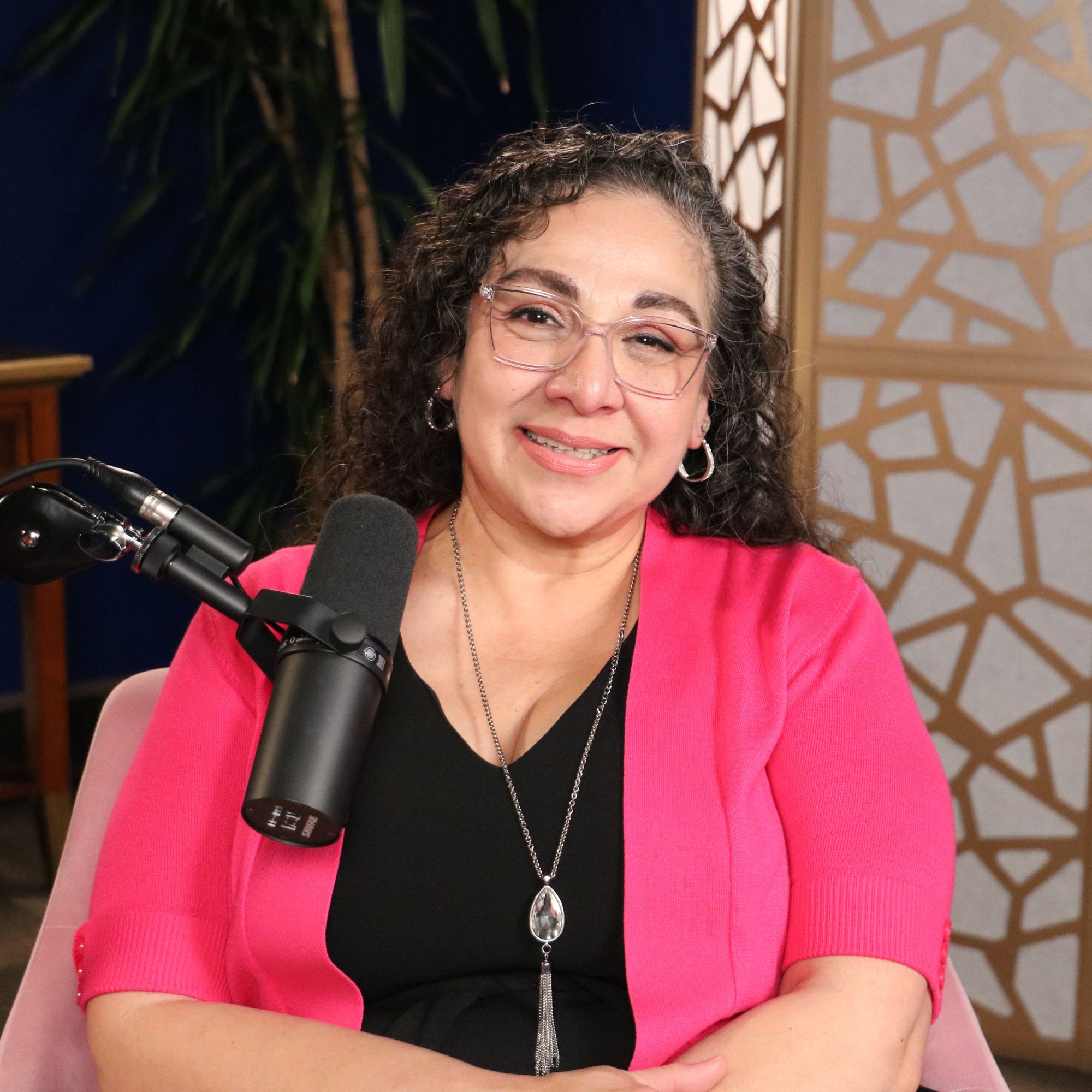
Dorothy: [00:00:00] So you’re about to make your mammogram appointment and you’re thinking all you have to do is just put your name and your date of birth and give a little insurance information, and then comes all these questions and you’re thinking, why the heck do I have to answer all of this? Well, today we’re gonna hear from Araceli Salazar, who is our center manager at The Rose Galleria and she’s gonna talk about the importance of what a patient tells you is to having your mammogram and how when you’re totally open and let us know everything. It could save your life.
When you subscribe to our show, you help us grow. Someone you know may need to hear this story. So please share with your family and friends and consider supporting our mission at therose.org.
Let’s Talk About Your Breast, a different kind of podcast presented to you by The Rose. A breast center of excellence and a Texas [00:01:00] treasure. You’re gonna hear frank discussions about tough topics and you’re gonna learn why knowing about your breast could save your life.
Araceli thank you so much for being with us on the show today. Uh, you’re one of our oldies. You’ve been here for 16 years. My gosh.
Araceli: I have.
Dorothy: I bet you’ve seen a lot of changes during that time.
Araceli: I’ve seen a lot of changes and learn a lot of things and and, uh, grown in the process.
Dorothy: Oh, yeah. Tell me what your job is.
Araceli: I am the center manager for the Galleria office.
Dorothy: And where is the Galleria?
Araceli: It is in Bellaire.
Dorothy: So we always try to clarify that. It’s just that it’s across town. We don’t want people to get confused about what center they’re going to. So, tell me a little bit about yourself. How’d you get into this work? I
Araceli: started off in, in the, uh, in the file room, believe it or not, when I was about 20 years old. [00:02:00] And the doctor that I worked for needed, Sometimes help with interpretation. So I would go in and help translate, and then I had to cover for other people. So I started learning little by little, and before I knew it, they were asking if I wanted to be the manager. And I just stayed in the medical field ever since.
Dorothy: Oh.
Araceli: So I just stumbled on it.
Dorothy: But this particular job’s a little different than the doctor’s office.
Araceli: Very different.
Dorothy: In your day to day role, you have how many employees reporting to you?
Araceli: Uh, about 14, 15.
Dorothy: And of course that’s different positions. What does it involve?
Araceli: Schedulers, uh, medical records, schedulers, sponsorship coordinators, and front desk staff.
Dorothy: Talk to us about when a patient’s trying to make an appointment.
Araceli: It depends on what media she uses. If she’s calling in or she’s, uh, using the online system. Um, it’s really important to make sure that the answer all of the [00:03:00] questions that are asked regardless as honestly as possible, because that’s gonna help us determine the type of exam that they need. And we want to schedule the exam, the correct exam first. Instead of finding out later that, well, there was some information that we didn’t get that may change the, the type of appointment that she had.
Dorothy: So, just in general, what are the, what are the two different types that you’re looking for?
Araceli: Uh, well, of course the yearly screening. Which is no symptoms whatsoever. You’re just coming back to make sure everything’s a okay every year. And then the diagnostic exams, which were, you have symptoms. Either you found something, your doctor found a lump, uh, you’ve got constant pain. That’s a biggie. Some people are like, oh, well I get pain every so often. That doesn’t, that does not mean that you’re, you need a diagnostic mammogram. But if it’s constant pain, then there’s [00:04:00] something, something wrong. That needs to be looked at more in depth.
Dorothy: And of course, there’s that first timer.
Araceli: Yes.
Dorothy: Yes. That is a whole different kind of exam and a whole. New experience for that woman.
Araceli: Exactly.
Dorothy: And how do you prepare them? If you’re talking to someone on the phone?
Araceli: Uh, we’ve got a list of questions for our schedulers to ask to make sure that we, we obtain as much information as we can. Um, and that way they are the ones who determine whether this needs to be a yearly exam or an a diagnostics exam. Um, and then, then we offer our first available, um, or an appointment that is more convenient for the patient.
Dorothy: For the patient. And we’re we, that center is just inside the loop. Very easy to get to, extremely easy. So it is, um, but still, many times you’re giving directions or I and making sure that they [00:05:00] understand, you know, it’s not gonna take long, but things can happen and, and that kind of thing.
You know, somebody, one of the questions we used to get, ’cause remember I ran the front desk too at times, uh, was, can I eat before my mammogram? You know, do I have to stay without food? And, and it of course, that, you could certainly eat before your mammogram. Yes. And, but there, there are a couple things we tell them about deodorant two piece.
Araceli: Correct.
Dorothy: How do you, how do you go through that with them?
Araceli: Well, we do, we, if they’re on the phone, we do tell them, um, you know, make sure to wear a two piece outfit because the gowns are only to the waist. And so, um. It’s for their convenience.
Dorothy: Yeah.
Araceli: Um, and then the no, uh, deodorant. And if they have priors, we, it’s preferable that they bring ’em with them, or we do do our part to try and get them, if we know we need them for the diagnostic, they’re [00:06:00] coming from somewhere else and somewhere else they found something, we automatically go ahead and send a, uh, form to the previous facility. So that’s information that we need to obtain so that we can have it, we can do our part to make sure that what the doctor needs to make an accurate diagnose is present for the patient’s exam.
Dorothy: And, and, now. Go through it again. Why are previous films important?
Araceli: Because if they found something somewhere else, the doctor needs this information to compare. Um, even if it, if it’s from a previous year, your body changes so much that, you know, the doctor needs a, a starting point. They need to know what’s normal for you and what’s not normal for you. They don’t know your body like you do or you know. Have a picture of it to be able to determine, oh wait, this, this is different from last year.
Dorothy: It’s all about comparison.
Araceli: It’s all about comparison.
Dorothy: And you really don’t have a complete test [00:07:00] until you’re compared to the old films.
Araceli: Correct.
Dorothy: Right, right. So that often is a real challenge for patients because so many centers don’t really want them to pick ’em up.
Araceli: Exactly.
Dorothy: And they’re sometimes drag feet getting ’em to us, but that is that patient’s right.
Araceli: Yes.
Dorothy: It’s to have that, that film and, and it is a requirement of law.
Araceli: Yes.
Dorothy: So just making sure patients know they can ask for their films from anyone.
Araceli: Right.
Dorothy: So tell us what first tub patients find most surprising.
Araceli: How pleasant it is that it really doesn’t hurt that much. And how nice everyone is.
Dorothy: Oh.
Araceli: Everyone’s so nice and sweet and comforting. I was so scared. And, um, they leave very, very surprised that, you know, you hear, I guess they hear horror stories about, oh, it hurts, or, and it. I mean, I’m not gonna say it doesn’t [00:08:00] completely hurt because.
Dorothy: It’s awkward.
Araceli: Yeah. It’s a very awkward exam. But it’s not as scary as you would think it is. I think the scariest part to, to most patients is, you know, am I gonna leave and they’re gonna tell me that I have breast cancer?
Dorothy: Ah, but that, that is not what any of the screenings are for.
Araceli: No.
Dorothy: Right. Oftentimes when we do see something, it, it means an additional test of course. Or if your breasts are real dense, you know, we may ask you to come back and have an ultrasound or a diagnostic mammogram, but still we don’t start worrying no until we get much further down the line.
Araceli: Exactly.
Dorothy: That is not that uncommon really. So tell me about male patients you’ve seen male patients at, at your center.
Araceli: We have, we don’t have a great deal of them, but we do have them. Um.
Dorothy: How do you treat ’em? I mean.
Araceli: Well, unfortunately we can’t put ’em in the same room as our right [00:09:00] female patients who are undressed and it’s, you know, we want all our patients to be comfortable so that, that would be a little bit awkward to sit in the same room.
Dorothy: Sure, sure.
Araceli: You know, vulnerable. Um, so they do wait in our lobby until they are, um, asked to come in or they’re the, uh, they’re ready to perform the exam.
Dorothy: And they just go into the room itself?
Araceli: Yes.
Dorothy: They go change there.
Araceli: Yes.
Dorothy: Yeah, yeah. But we do see enough men that, uh, we sure don’t want anyone to hesitate calling.
Araceli: Definitely.
Dorothy: Because we, we do make special arrangements. They don’t, I I know our, our male, uh, survivor on our board says, you know that whenever he goes and he’s tall and, you know, really manly. And he, he says when he stands up and they call his name, you know, everybody’s going, what is that guy going back there for? But hey, he’s had it twice and he knows, you know, a man goes through the same thing. It’s a mammogram.
Araceli: Exactly.
Dorothy: [00:10:00] Yeah. Yeah. Tell us some more about, uh, helping your patients understand what they need to bring in or need to have ready, especially our uninsured patients.
Araceli: Oh, for the uninsured patients, we try to get them qualified for financial assistance at least two weeks ahead of time.
Dorothy: Okay.
Araceli: So the coordinators will make several attempts to contact them, um, ask them series of questions, um, obtain proof of income depending on the program that they’re being placed in, because every program has different requirements. Um, and so we do that, so that when they arrive for their appointment, everything’s already done, nothing is missing, and they’re ready to have their exam done.
Dorothy: And we’re not asking them all those questions right there at the front desk.
Araceli: No, they’ve already, we are doing that over the phone in a private setting. And then we’ve got, we do have patients that come in [00:11:00] sometimes on out of the blue or on a wrong day. And we do bring ’em into an office. Um, if we’d rather do that.
Dorothy: Oh yeah.
Araceli: Get them qualified while they’re in the office. Then have to keep trying to call them on the phone and reach them and they may not be available. So if you, they come in, we make the time to stop what they’re doing and, and get this patient qualified so that they are ready for the day of their appointment. And if for some reason they’re just coming in for a screening and we have availability, they get seen.
Dorothy: Ah. ’cause screeners, we don’t have to have the doctor in the room.
Araceli: No.
Dorothy: And for the diagnostic we do.
Araceli: Exactly.
Dorothy: So that is the big, big difference once you get into the clinic.
Araceli: Yes.
Dorothy: The change is all about being sure you have physician availability, not, you know, just that’s not just the exam.
Araceli: Exactly.
Dorothy: Do you have a favorite patient story?
Araceli: I have one that stands out to this day, and it was, um, when I first started, [00:12:00] um, a little after I started working for The Rose, I had a patient, I was helping the staff. We had a, we had a lot of, we had some shortages and so I was on the phones helping them schedule appointments. And so I got a patient on the phone and she just yelled at me for because she was, she’d been waiting so long and she was not, she wasn’t happy about it. And so, you know, I, I, I, we, we got to talking and, and, and she calmed down and, and then I started asking her for all the information that we needed.
Well, of course she was not prepared. She had nothing ready. She put me on hold. I waited. I heard her running to her vehicle to get the information needed coming back. And then I guess as she was coming back, she stopped and she thought about what she was doing and how long she was taking and when she got on the phone, she said, I am so sorry. She said, y’all probably had [00:13:00] someone like me before I got on the phone. Who didn’t have everything and delayed you from getting to the next patient. And here I am yelling at you.
Dorothy: Oh, that’s a great story.
Araceli: And then when she did come into the appointment, she was so pleased that, you know, that we took care of her. Uh, she brought a card and I got, actually for the next two years, I got postcards in the mail from her telling me, thank you.
Dorothy: Really? Oh. That was very thoughtful.
Araceli: Yes.
Dorothy: Yeah. You know, sometimes we know patients are just worried.
Araceli: Yes.
Dorothy: And they’re afraid and and they have too many other things going on. Yeah. That they kind of forget. They get, and, and we know how that feels because we’ve been there. We’ve all been there.
Araceli: Exactly. We’ve all been scared.
Dorothy: Yeah. Do you, do you think it is, um, do you think women really stay on top of their exams in general?
Araceli: I don’t, I [00:14:00] don’t, um, I think that, um, as women we’re caregivers and we’re so used to caring for everyone else that we forget about ourselves, and, and I think that goes for everyone. Including myself. I mean, my doctor scolded me the other day because I skipped a year, and so she was like…
Dorothy: You skipped your mammogram for a year!?
Araceli: I did, I did.
Dorothy: Oh my gosh. Don’t tell me that.
Araceli: I did. I got busy and.
Dorothy: The, the machines down the hall!
Araceli: I know, but I got busy and my insurance required and order, and so that meant, oh my God, I’ve gotta go see my doctor. Well, every time I called my doctor, they didn’t have an appointment available for when I needed, so I’ll just call back and it just. That’s just, it just happened.
Dorothy: Before you know, it months have gone by.
Araceli: Exactly.
Dorothy: Right.
Araceli: Exactly.
Dorothy: So, you know, you touched upon a good point there though. When do [00:15:00] we need that doctor’s authorization in order to do a mammogram?
Araceli: It depends on your insurance if you’ve got an HMO or a, um, a Medicare replacement insurance. Which is not your, just your Medicare, that’s your, your, um, your WellMed, you know, and then yes, those all require you to have an order.
Dorothy: Okay.
Araceli: From your doctor just to have your screening. Just to have your yearly exam, you have to have that order.
Dorothy: And that’s the same as a doctor’s authorization.
Araceli: Uh.
Dorothy: Sometimes don’t need those.
Araceli: Sometimes it is, sometimes it isn’t. It just depends on, on, on the type of insurance that you have. But you have to have that order so that we can do the yearly exam.
Dorothy: Yeah.
Araceli: And we need it all the time. If you’ve got symptoms.
Dorothy: Absolutely.
Araceli: But we really don’t need it for screening unless you have that type of insurance. It is that insurance requirement.
Dorothy: And of course we in the medical field think some of that is [00:16:00] just unnecessary.
Araceli: Yes.
Dorothy: I started to use stronger words, but there’s no reason if your doctor’s already sent you, and we have to go back and authorize that they actually sent you, or whatever it is. It’s just one more step for the doctors to take. It’s not.
Araceli: One more barrier for a patient,
Dorothy: One more barrier, right.
Araceli: So they could forget, and then before they knew it, the year’s gone and they didn’t get their mammogram done.
Dorothy: That’s right.
Araceli: Perfect example right here.
Dorothy: Well, I certainly hope I never hear that story again. Gee. All right. Let’s, let’s think of some other things that you see in your daily, uh, job. Do you have any examples of ways that that patient could be, uh, more prepared or makes the, the exam easier, or?
Araceli: Just making sure that they tell us their full history. That’s so important. Um, a lot of times we, they come in, they, we ask the questions and. We may not get the full answers. And when then they get [00:17:00] to the, the exam area, and maybe because they’re in a more private setting, when they’re in an exam area, they do the full disclosure and so things change.
Dorothy: That a disclosure? Like what?
Araceli: Like, oh, well yes, I had cancer. Or, um, yeah, I do have a lump. Um, I did find something or my boyfriend found it. Um. You know, those are important things that we need to know because it helps the doctor when they’re do, and, and it helps us determine which exam is correct. You know, what do we really need to see you for?
Dorothy: Right. And, and they, it can also go the other way where the patient’s been scheduled for a diagnostic. But she’s telling us she doesn’t feel anything.
Araceli: Correct.
Dorothy: And then what happens?
Araceli: Well, then we have to get clarification, and then there’s a delay. And the last thing we wanna do is delay you on the day that you come in or have the exam change and, and tell you, [00:18:00] well, we don’t have an appointment available for this because we’ve delayed so long. Uh, we’re going to have to reschedule you for a different date. We don’t want to have to do that, which is why we ask all the questions that we do, and sometimes they may seem a little bit too private, but that’s information that’s needed that the doctor needs that we need so that we can make sure we, you get seen on the day that you come in.
Dorothy: So, but, and you, you also have had the times where the lady says, I don’t feel anything. And then you have to ask that question of, well, your doctor said you needed diagnos– you know, a diagnostic test. Oh yeah, he found something, but yeah.
Araceli: Exactly.
Dorothy: Yeah. But that’s, that’s a whole thing. There’s things that we might not feel that, uh, our physicians would, and certainly things that could be on the mammogram.
Araceli: Oh, definitely. That’s why it’s important to have that mammogram done every year because it’s gonna capture it before you ever feel it. [00:19:00]
Dorothy: Is it very hard to have a screening mammogram at your center?
Araceli: Oh, no. We, we typically have availability on a daily basis. Um, we’ve, we’ve had a couple of patients that come in on the wrong day. We go ahead and just work them in because it’s a, it’s a screening mammogram that does not take that long.
Dorothy: And the diagnostic though, we might have a, a bit of weight.
Araceli: Yes. For the screening. You don’t have to see the doctor. You just come in, you have your exam, you’re typically in and out within. 20, 30 minutes most.
Dorothy: So I’m a patient and I get a letter that says, oh, you need additional testing. What happens then?
Araceli: You either call in and we explain what the additional testing is, or we will call you if you haven’t called us. Uh, to let you know that it’s important that you come back in because it’s a, it was a recommendation by the [00:20:00] radiologist to have additional testing because something changed and they need to. See it in more in depth.
Dorothy: Right. And many times it won’t be their doctor calling them just because they’re expecting us to call ’em.
Araceli: Right.
Dorothy: Correct. So don’t wait on that for sure.
Araceli: No, always. I mean, it’s good to to be the person for you to call in, not to wait for us to call him, but we will, we will do that. We will call.
Dorothy: What do you think makes The Rose a little different when it comes to our patients?
Araceli: What makes us different is our mission, our staff, how we are able to relate to our patients because, um, all our staff come from different walks of life, you know, different nationalities, and that helps them relate to them. I, myself, you know, was I was born in Mexico and so I’m able to relate to a lot of our patients that, uh, were [00:21:00] born elsewhere who came here, who became citizens and and it just, it helps to be able to be relatable or able to communicate all types of, uh, other languages. We’ve got patients that speak, I mean, not patients, but our, uh, staff that speak Vietnamese, that speak, uh, Spanish. And if we don’t have pat, uh, staff that doesn’t speak the language, we also have ways of getting that translation so that we can make sure we’re getting the correct information. The patient is getting the education in language that they understand that will benefit them so that when they come in, everything is done correctly and they understand what’s going on.
Dorothy: But it even goes a little bit deeper than that because you’ve been there.
Araceli: I have.
Dorothy: You know what it’s like not to go and have tests or healthcare or because you were, didn’t know what would happen.
Araceli: I, I understand the struggles of going [00:22:00] through that.
Dorothy: And I think that’s one of the things. At The Rose, we, we recognize every person has dignity. We’re gonna value them and they’re gonna be safe with us. We don’t really care about all that. We just want them to have their mammogram.
Araceli: Yes.
Dorothy: Yeah. And I think that’s throughout the whole staff, because like you said, we have women coming from all different walks of life, many different languages spoken. We understand different cultures. And why there may need to be a little more privacy than others. I mean, we see so many and so many that would not have healthcare if we weren’t there.
Araceli: Exactly.
Dorothy: And so as we wind up here, Araceli, what is the one message you wish every woman would hear?
Araceli: I would say maybe to, to prioritize yourself.
Dorothy: Hmm. And how [00:23:00] do you do that?
Araceli: By making sure you’re healthy enough to be there for your loved ones.
Dorothy: Ah, good message. Thank you so much for being with us today.
Araceli: Thank you. I was honored.
Post-Credits: Thank you for joining us today on Let’s Talk About Your Breasts. This podcast is produced by Speke Podcasting and brought to you by The Rose. Visit therose.org to learn more about our organization. Subscribe to our podcast. Share episodes with friends and join the conversation on social media using #LetsTalkAboutYourBreasts. We welcome your feedback and suggestions. Consider supporting The Rose. Your gift can make the difference to a person in need. And remember, self-care is not selfish. It’s essential.