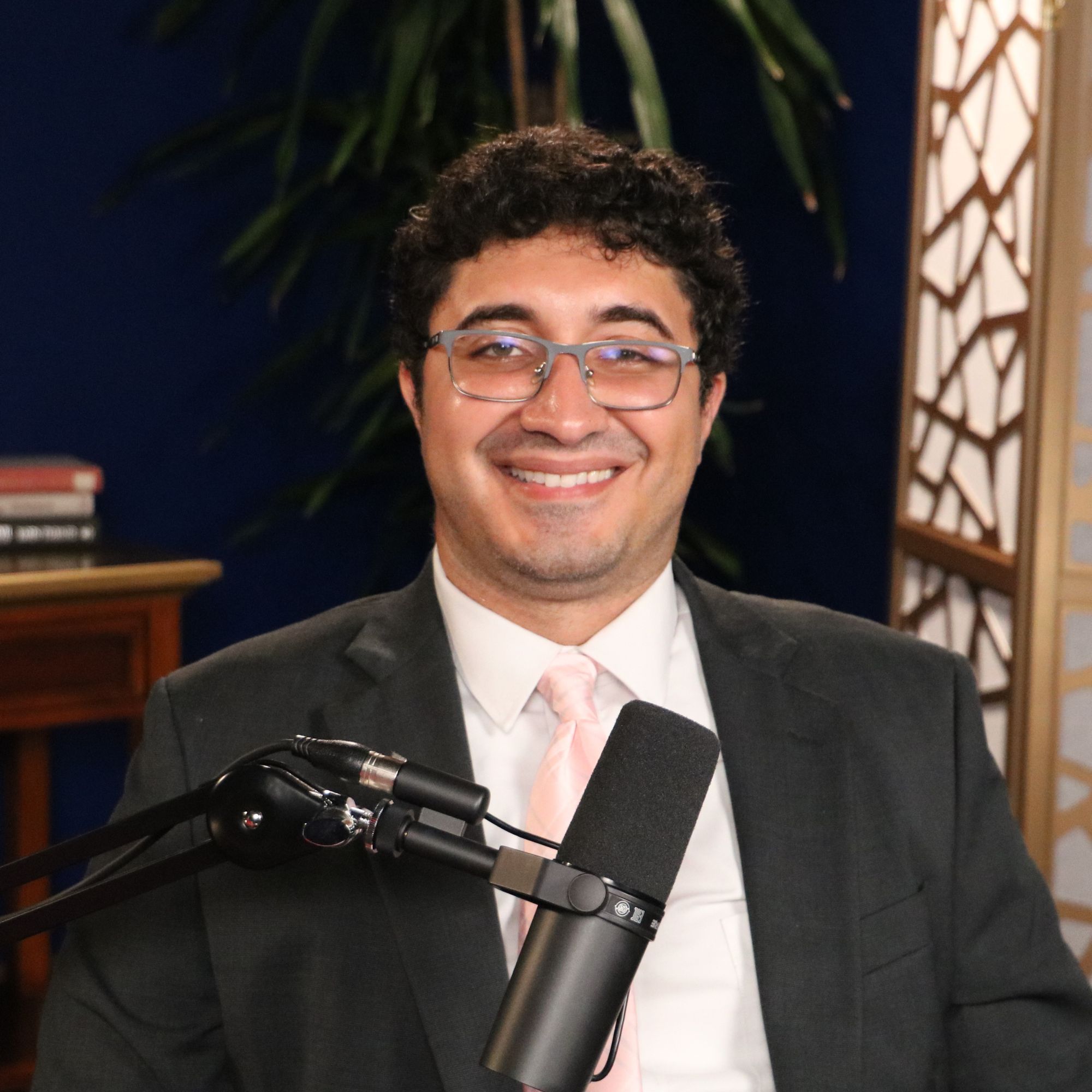
Dorothy: [00:00:00] Did you know that zip code where you live can still predict breast cancer survival? That’s what Dr. Elkhanany tells us, and he talks about what keeps women from having life-saving mammograms. He says it’s social, financial, and cultural barriers that stops women from making that so important appointment. And he talks about how grassroots solutions are closing that gap.
When you subscribe to our show, you help us grow. Someone you know may need to hear this story, so please share with your family and friends and consider supporting our mission at therose.org.
Let’s Talk About Your Breast, a different kind of podcast presented to you by The Rose. A breast center of excellence and a Texas treasure. You’re gonna hear frank discussions about tough topics and you’re gonna learn why knowing about your breast could save your life.[00:01:00]
Doctor, thank you so much for being with us today. I’m looking over your CV and thinking, uh, do we talk about your clinical experience, your research experience, but you are a breast oncologist.
Dr. Elkhanany: That’s correct.
Dorothy: And working out of.
Dr. Elkhanany: Baylor College of Medicine.
Dorothy: And is all of your research through that, or are you on different panels as well?
Dr. Elkhanany: Well, Baylor would be my academic affiliation, but then there are a lot of societies and organizations that we work within that are both regional as well as national.
Dorothy: How did you decide on breast cancer?
Dr. Elkhanany: Ah, you know, I, I think it’s, it’s interesting. That was something that I really had, um, an interest on way back in med school. You know, the first time you hear the word cancer, you know, in med school, people tell you, yeah, it’s this disease that has these particular sets [00:02:00] of, uh, um, so like properties, this is how you manage it, but they never really delve into the, the depth of it. You, and then you start reading about cancer and you start seeing how complex, multidimensional and, and, and, and, uh, and sort of like a more of a disease, but rather an entire spectrum of, of problems that happen at the same time. Uh, breast cancer specifically is something that touches every family somewhere, shape or form. There’s actually a, a, a statistic that going on, that one in two individuals would either know someone with breast cancer or have a friend or have a connection who has somebody with breast cancer. So this is just tells you how, uh, unanimous this disease is.
And, uh, I think one of the issues that I was faced with when I was growing up and I, [00:03:00] my, my medical school within Egypt. So I grew up there and my, uh, family was there and as I started to know more of how we care for, for diseases including cancer, you immediately start seeing how bad some of these diseases can impact an individual life and how some of these are incredibly challenging to treat.
And then you start feeling that uh, I would say desire to do something to help out. So I think it was multifactorial, but one of the major reasons I would say that pushed me into that disease is seeing how, um, aggressive some of breast cancer cases have been being limited with some of the resources that I was able to provide to patients and trying to understand it on a deeper level. And the more you dig, the more you take one layer off, peel, one layer off, the [00:04:00] more you see there are more to breast cancer than what you see the, uh, on the outside. So that’s complexity and challenge, I think is what drove me to be in that field.
Dorothy: So interesting. And you, in one of those layers that you’re talking about peeling off, you really got interested in, in what happens to even at the community level, like how do we get women in to have their screening? I mean, you know, you were doing that kind of work from almost the beginning, it seems like.
Dr. Elkhanany: Correct. So going back to how unanimous this disease is. And as you know, it is the second most common cause of cancer related death in the United States is the most common cause of cancer related death in women, uh, worldwide.
Dorothy: Yes.
Dr. Elkhanany: You know, after lung cancer. Unfortunately the culture and the ideas of preventive care, um, [00:05:00] has been lagging behind the science and the impact of it. So, you know, um. There is, um, an NCCN, so the guidelines, right? So you get multiple guidelines that exist out there, U-S-P-S-T-F, and NCCN, that recommend women to get at least one, uh, mammogram every other year after the age of 40 on. And some other guidelines say even yearly after the age of 40. But how many women who are in that age who are eligible to get mammograms, actually get mammograms? So roughly it actually ends up being about two out of three. With some statistics, even say in one outta two. And so they have the population that are eligible for Imogen do not get Imogen, and you know that you, you see that more commonly in low and middle income, uh, zip codes. Um, but why that the case, it’s very complex, multilayered. Could it be fear of being diagnosed? Could it be lack of [00:06:00] understanding of what the mammograms and the screening modalities actually do? Um. Or maybe it is just, you know, somebody had bad breast cancer history in their family and they just don’t want to know.
You know, I think it’s, it is indeed multifactorial and every individual might have, uh, different, uh, reasons why they were not able to, you know to get their mammograms. Um, and this is where, you know, was always thinking of healthcare, more of a rights, right? We always talk about that, but we don’t really pay special attention. What does that mean? Well, it means that everybody should get the, should be able to get the care they need. We should overcome all these barriers because healthcare is not a service. You know, you don’t, you don’t choose if you need water or not, you gotta get water. Same as for health, uh, you know, for healthcare.
So from this point, uh, we see how that. Uh, to really [00:07:00] achieve equity in healthcare, we have to understand what is, what are the limitations for implementation of these different modalities and actively try to address them, not just sitting behind, putting some money in or trying to even, or, or building paradigms and solutions, but without reaching to the individuals that will benefit from these solutions first.
Dorothy: So give us some examples of how that can happen.
Dr. Elkhanany: So, well, you know, again, you know, to put it in concrete examples, so for example, you know, first off addressing health literacy, right? Um, we do live in an era in which both high quality evidence in low quality information are present all around us. Um.
Dorothy: Oh, that’s good.
Dr. Elkhanany: That is.
Dorothy: That is so true.
Dr. Elkhanany: And unfortunately, uh, we don’t necessarily are [00:08:00] born with tools to tell what are the good evidence and what are the bad evidence. Right? We are humans, we’re inclined to believe things are presented to us in a more coherent way, regardless of the authenticity,
Dorothy: Right.
Dr. Elkhanany: Of these data. So. Because of this, a lot of mis uh, uh, you know, communication and, and, and, uh, uh, wrong information are floated around about what breast cancer, uh, screening is, what is breast cancer prevention, you know, that even preventable or not. Um. It reminds me of very recently, you know, the, uh, uh, surgeon, uh, general, the report about alcohol and how alcohol is actually carcinogen and it’s now printed right on all the alcohol products. And there was this interesting Gallup poll that demonstrated that 43% of Americans do not think of alcohol as the carcinogen.
Dorothy: Really?
Dr. Elkhanany: It was, it was mind blowing. You know, you think of, you know, [00:09:00] cigarette smoking, you think of obesity, but the third most common cause right after these two, um, so. That means that we need to reach people and educate them.
Dorothy: Okay?
Dr. Elkhanany: We, we know that the systems sort of did not provide education up to the standards, so we have to take that task in our hands, and this is where reaching out to individual communities is incredibly helpful. So obviously some simple examples would be mobile mammograms, right? So mammogram vans within a center of like a health fair where you, you know, throw like some educational activities, you know, some music, some food people come in and um, and, you know, those have been wildly successful, right? So out of all the patients, out of 40% of the patients, or 43, something along these lines of patients who get their mammogram through a mobile mammogram unit have not had mammogram [00:10:00] in five years or more.
Dorothy: And so that’s what ours is even higher than we see.
Dr. Elkhanany: Again, I, I would assume this percentage will also depend on, you know, the zip code, the neighborhoods, that we reach out, um. So, so how do we achieve this, I would call penetration into communities that are, um, having barriers to care? Well, I think you first have to earn their trust. Show the communities that you are really there to care for them because you believe that healthcare is a right and not just a privilege that people, you know, get to enjoy. And, um, and I think that, um.
Dorothy: There is gonna be a lot of people that are gonna argue with you about that one, but I’m not one of them. So keep going.
Dr. Elkhanany: There. There are levels to care. I don’t Disagree on that. You know, um, but the basic level should be a universal level, [00:11:00] you know, so at its very core, just like, you know, I mean, you can make an argument, is food quality the same across the United States?
And probably not. You know, food quality is different. You see areas with low income, they will actually have proportionally high year rates of, you know, poor quality food in the sense of, you know, oils and all of that. But there is food. You see what I’m saying? There is access to food as opposed to lack of access to care at all. How do you earn trust of the communities? This is where, you know what it’s called as grassroot movements come into play. So the idea is reaching out to the individuals where they are and discussing with people that they deem local influe, you know, influencers in their community.
Churches, mosques, synagogues. People of public conferences. So a city mayor for example, for small cities and, [00:12:00] uh, having conversations with them to present, it’s like a mini curricular, if you will. Like you give them, these are what the science shows, this is how we can implement this here. This is, uh, our methodology and this is how it worked before. And, um, in my experience, you rarely get a, a no. You know, everybody wants the health of their, of the people that they care for, right? And, um. So this would be some of the basic infrastructure that you can start working on. But in that process, then you start developing allies.
So you have community health workers that can achieve substantial support, especially those who have been in the medical field. Um, you have your lay navigators, which are the, I would say a very important component of delivery of the care. And essentially these are patients that have already gotten their diagnosis or maybe their loved ones have [00:13:00] been diagnosed with breast cancer, have been through the ropes, if you will, and they know how it was for them.
And by extension they can explain how it is for other individuals who might, uh, be at risk or just got diagnosed. And, um, and you start reaching out once, twice yearly. Um, you show the community how you care about them and that essentially. It is the way to go. Uh, and this is wildly successful, you know, um, there has been many examples in Louisiana, in Alabama, um, here in Texas, um, when, um, a lot of these mobile mammogram units have attracted patients, um, into getting their first mammogram with a substantial rate of unfortunately, uh, first mammogram to diagnosis. Uh.
Dorothy: That’s been amazing to us. I mean, there was a [00:14:00] time that did not happen.
Dr. Elkhanany: Yeah.
Dorothy: And now we’re seeing it so much.
Dr. Elkhanany: That is true. But this is, this is really the, the core of it. You know, even if, if you look at a financial point of view, which the state truly need to understand that, you know, a cost of a mammogram, it’s about $116. A cost of care from a metastatic risk cancer patient is about a hundred thousand dollars. So prevention.
Dorothy: Oh my gosh. Yeah.
Dr. Elkhanany: These are the estimates from reports dated in 2022, so.
Dorothy: Oh yeah.
Dr. Elkhanany: Probably got a higher now. But that tells you, and this is no surprise, you know, that prevention is significantly better than, than than treatment of a disease if there is a preventable, uh, way for it. Um. Some of the other things that I try to put into my patient’s perspective when I see them is my patients can be lay navigators even if they didn’t [00:15:00] want to. I, I would tell them, um, if they were not aware of it, I will tell them, you know, you’ve underwent your cancer diagnosis, you’ve underwent your cancer treatment.
Talk to the people around you about your experience. The only ones who talk about their experiences are the ones who, unfortunately, most of the time had horrible experiences. This interns delays some patients from seeking healthcare.
Dorothy: Hmm.
Dr. Elkhanany: Because they would go and they would come in and they would discuss. My friend had this horrible experience with radiation therapy or they had this significant side effects out of their, uh, surgical intervention. And it is true that we as humans, we really always remember them. You know, more emotionally intense episodes usually are, are associated with stressful events rather than, you know, if things went [00:16:00] pretty much uneventful. They’re not going to be part of our memoir, right?
Dorothy: No.
Dr. Elkhanany: Um, so by having this tiny army of patients who talk about their experience to others who normalize this diagnosis and encourage others who might be either at high risk or just recently diagnosed to seek medical care, we start slowly having that herd education, if you will, kinda like a herd immunity about seeking medical care and seeking attention when the time comes.
Dorothy: Yeah. That was one of the things that our radiologist talked about. Women are asking more questions now than they used to, and and he sees that as a very positive, uh, sign because there was a time you just went to the doctor and whatever you were told, you were told, you either did it or didn’t. And you know, I’m thinking about how you described taking the mobile coach out. The places that we take our coach, that [00:17:00] make a celebration of it. You know, when you said you have people, you have music, you have food, and there’s many of our, uh, partners in the community that just make it a pink day, make it a celebration day, and how much more successful those are than just your routine. You know, we’re just going in there and doing mammograms. I, that doesn’t make sense. But it does in a, in a way it’s, it’s kind of like what you said, making things more normal. This is not scary. This is, this is a part of your health.
Dr. Elkhanany: Yeah. Um, yeah. I completely, again, it is a very normal human reaction to have some fear. And concerns, you know, if I don’t know about it, it does not exist. Right?
Dorothy: Right.
Dr. Elkhanany: Um, it is a fairly empirical way of looking at things. Uh, although that’s true, it is, right. Although it is obviously [00:18:00] not the way biology works. Um, and I always tell my patients, you know, you don’t feel any of your organs doesn’t mean that they’re not working. And, um, that being said, it, I think setting up events and like this into a setup in which there are, um, more familiar settings.
Dorothy: Yes.
Dr. Elkhanany: Settings that we can relate to, um, takes the stigma and the concern out and help us establish, um, again, the notion that we are here. To help you live healthier rather than to give you a diagnosis. And that philosophy here that we’re here to live healthier, enjoy our lives, is really what, what we aim to strive with these activities.
Dorothy: Yeah. I keep thinking about, there was a time when the only place you could [00:19:00] get your blood pressure taken was a doctor’s office. I mean, now we go into any pharmacy, there’s a little machine you can go over there and get your, I mean, think about how different that is. It has a whole different environment, like you said, a whole different message. You know, this is what you do to be healthier. Yeah. So, yeah. Great.
Dr. Elkhanany: Yeah. Uh, I love how technology is advancing drastically. But in the back of my head, I’m also concerned that this advancement is only, in certain cases, can drive health disparity even further.
Dorothy: So, so speak to that a bit.
Dr. Elkhanany: Yeah. Well, um, you know, if you go, if you return the dial down to the 1970s right? Breast cancer mortality was was kind of, pretty much similar across the entire United States. There was no real, you know, differences in [00:20:00] outcome. But when the introduction of the mammogram itself in the mid eighties and then the Novelex, Tamoxifen, shortly after, um, you immediately started seeing the gap widens and, um. And unfortunately continued to widen, uh, and it’s remained wide despite a lot of the interventions, the complexity of the medical care that we see now is geared towards patients who are able to afford it. And the core of the healthcare system that we all live in healthcare is, again, considered as a a privilege and a service. And if you really break this down, it really means that services given to those who can’t afford it. And you know, so what that means is as new technologies are coming, uh, new technologies will want to be [00:21:00] profitable, and new technologies will only go for those who might benefit from it.
Whether we are talking about new drug breakthroughs. Um, or new improvements in imaging technology and detection, um, or new techniques in surgery, um, and radiation therapy. And every one of the stuff that I just mentioned, there are data on how. There are gaps in outcome between, um, different, uh, groups and different social demographics. And it’s part of this has to do with the fact that, um, there are inherent limitations in the healthcare delivery when it comes to patients with low and uh, um, um, and even sometimes middle, middle class income. Um, and then part of it has to do with. Uh, the institutional access and [00:22:00] concentration of experience.
So, again, to put it into some more concrete examples, you know, if you look at and some of the more modern, uh, drug therapies. You know, we have all of these immunotherapies and antibody drug conjugates. Um, if you look at the real world data, you’ll find that there is, uh, within the real world, significant higher uptake of these Asians in white population as opposed to an African American population. So this is real world data. Uh, you know, you can explain that through multiple levels, and so you can say, well, these medicines are only offered in academic centers, which are typically, um, already have their own built in disparity access due to remote from a lot of the, you know, smaller cities or smaller, uh, towns. Um, they have their own coverage requirements and most of the time they’re not really [00:23:00] collaborating with, uh, lower middle income, you know settings. Um, but, but then in the community setting, right? And if you go out from the academic setting into the community, you will find that again, there is insurance, um, limitations. There is, uh, limitations of, uh, what I would call, you know, sort of like implicit bias. Sometimes, you know about, oh, somebody might have a higher or a worse performance status because of more medical comorbidities. They will not receive these drugs, for example. So, uh.
Dorothy: All right. Now explain that in like.
Dr. Elkhanany: So, so, you know, in the community setting, you would have patients who might not receive a certain drug because they’re perceived to be sicker, right? More sicker individuals. So actually, if you look at, um, for example, some data on, you know, same, uh. Roughly same [00:24:00] propensity match, which mean that patients are white and African American, who might be propensity matched mean that they’re, you kinda equated a lot of the, um, health parameters of these two groups. Despite equating some of these health parameters, you will see that some of the African American patients get less what’s called relative dose intensity, their chemo. Treatments are actually higher. Chances of being dose reduced, for example.
Dorothy: Now, tell me that again. Dose reduced.
Dr. Elkhanany: Well, dose reduction is, is, is common in cancer. So because we think of, you know, we, when we make a decision on treatment we have to take into account what’s called the performance status of a patient, ecog. Okay. And we assess that every time that the patients come in. And part of the implicit bias, it’s, you know, that we’ve, uh, that we’ve seen is when you have, [00:25:00] uh, two patients who might have on paper, same levels of, I mean, they would have medical comorbidities, but same at the same degree.
Dorothy: Yeah.
Dr. Elkhanany: Sometimes the, the African American, African American patient would, she would be more likely that her treatment would be decreased dose wise because she thought to be quote unquote sicker compared to, uh, a white, a white patient. Yeah.
Dorothy: You know, that’s, uh.
Dr. Elkhanany: Yeah.
Dorothy: That’s difficult to comprehend in one way.
Dr. Elkhanany: It is imp. Well, it is. It is, but it is. That’s, that is why it’s called implicit bias. So what is it exactly implicit? Well, it’s a lot of the things that we would consider in an implicit fashion that would make us change our treatment. So, you know the, let me give you another very fairly [00:26:00] clear example. Why is African-American population less represented in clinical trials?
Um, percentage wise accountant for their obviously lower number in general compared to the US population. And, and, and the answer for that is that they are typically not offered in clinical trials. There are data that we know very well that if they are offered to clinical trials at the same rate as white population, they will get similar rate of acceptance to clinical trials.
Dorothy: Really? So they’re just not offered it.
Dr. Elkhanany: They’re just not offered. Um.
Dorothy: Because we don’t think they’re going to whoever we is.
Dr. Elkhanany: Correct. So that’s, that’s exactly it. This is like one of the core issues in that regard is there is that implicit bias. And sometimes there’s local institutional bias, but this is a whole other thing. But when the implicit bias, we feel like, uh, well. You know, [00:27:00] she’s a single mom of two. I don’t know if she’s gonna be able to come in and get her treatment or, uh, I don’t know. It’s a 40 minute drive. You know, I don’t think that she’ll be able to afford the Uber back and forth. Um, or maybe, you know, she would need, um, the time from her job, but her job is not offering her any FMLA or any, any time off. So, so then what happens? Then I would, then the prescriber would not offer the clinical trial to the patient.
Dorothy: Right.
Dr. Elkhanany: You see, you see that?
Dorothy: That’s, that’s a good example. Yes.
Dr. Elkhanany: And um, comorbidities, right. You know, even for the same level of, um, they’re both 45 years old.
Dorothy: But one is real heavy or.
Dr. Elkhanany: Correct.
Dorothy: One is past smoker still smoking and what, that becomes another risk factor.
Dr. Elkhanany: Absolutely.
Dorothy: So you’re not going to offer it to that person.
Dr. Elkhanany: Absolutely.
Dorothy: Hmm. All right. We wanna talk more about clinical trials, but I want you to go back to the community level now. [00:28:00] You know, we all know financial barriers are big. You think that’s the first barrier to serving the lower income populations, or is it, I’m gonna say this very carefully. Is it our excuse for them not having the same access to care?
Dr. Elkhanany: Yeah, so that’s a great question and, and I think if you, well, I think it’s actually a bit of both. Okay. Um, I think if you zone out, um, so social, social determinants of health, which would include, um, you know, financial, you know, and financial toxicity, financial situation. This is one dimension of the big problem. Um, there is the implicit bias. We discussed that, and that’s part of what’s called provider factors. [00:29:00] And then you have an institutional factors, which about the institution in which the entire healthcare is being delivered. You know, um, again, the financial component is true and we cannot, we cannot um, undermine that. Um, however, I, I think it only solves, or it only explains part of the disparity. And the reason why is many of the clinical trials that try to explain outcome disparity would account for social determinants of health. So they would look at similar zip codes or they will do propensity matching or they would try to uh, try to equate some of these variables across the board, but then you would still find disparity that is being present. And it’s not just, obviously, when I say here, differences in outcome. It’s not just about the, the race and the financial. So there’s, there’s like goes to, um, [00:30:00] matters of. Uh, age, right? So ageism is a big thing and it goes into, um, honestly really just access to high quality care.
You know, and an interesting, um, analogy that I, uh, saw in a commentary on the, uh, breast cancer statistics. That was just, uh, they, they updated every other year. Um, that a person who was a person who is diagnosed with breast cancer in the state of Louisiana is three times more likely to die of breast cancer compared to a person diagnosed in the states of Massachusetts.
Dorothy: Really?
Dr. Elkhanany: Absolutely.
Dorothy: Wow.
Dr. Elkhanany: Absolutely. And again, this directly speaks to. Um, this is part of, part of it financial, but as I said, part of it is the institutional access to high quality care and, um, um, and guideline, guideline based care. So. If you look from [00:31:00] a personal, so the tier list usually goes in the, you know, personal risk factor or personal variables for, uh, for outcome, which includes, you know, educational level, which includes financial level, family, um, like I mentioned, people who need to be an daycare, lodging, transportation. And, and these are all on a personal level. If you look at the provider level, this includes, you know, cultural competence includes implicit bias in, in, um, includes, um, uh, you know, working within a, a, a high, you know, delivering, delivering, um, efficient or a, um, high impact, uh, level of care. And then if you look at institutional factors that include, um, working with local healthcare and satellite sites to, uh, be able to reach patients who might be, um, remote or, um, allowing certain patients with limited, um, you know, coverage issues, for example. [00:32:00] At certain locations. Um, and just having, um, transportation and loing issues as well. And. Just doing, for example, just fixing one of these variables. Just one like, you know, familiar with the, um, with the, um, uh, what am I thinking of? The, uh, American Cancer Society’s whole lot, right? So what do they do, right? They said if you need radiation therapy, you can’t have radiation therapy in the community, but she also cannot drive every day, 2, 3, 4 hours.
Well. Stay there, get your radiation and, and go. It has been tremendously successful, right? Yes. And the model has been COVID past into the entirety of the nation. Well, why is that? It’s that symbol variable, it is part of the big problem, which has to do with understanding what are the limitations are and actively fix them.
Dorothy: That is a great example.
Dr. Elkhanany: Yeah. And, and, and, and there is a lot of these, you know, um, Dana-Farber [00:33:00] Cancer Institute implemented this kind of, uh, of reimbursement system for patients who have inability to join clinical trials due to distance in which, based on how far you are, will give you vouchers, uh, for your transportation back and forth to the cancer center. Tremendous success increased the accrual by almost 30% over the course of few months. And again, it is really understanding that down to earth problems and creating simple street solutions for them.
Dorothy: And doctor, you have certainly opened our eyes to a lot of different things here. And I hope that we can have you back and talk more about, especially about clinical trials. Thank you so much for being with us today.
Dr. Elkhanany: Absolutely. Thank you so much for having me.
Post-Credits: Thank you for joining us today on Let’s Talk About Your Breasts. This podcast is produced by Speke Podcasting and brought to you by The Rose. Visit therose.org to learn more about our organization. Subscribe to our podcast, [00:34:00] share episodes with friends, and join the conversation on social media using #LetsTalkAboutYourBreasts. We welcome your feedback and suggestions. Consider supporting The Rose. Your gift can make the difference to a person in need. And remember, self care is not selfish. It’s essential.