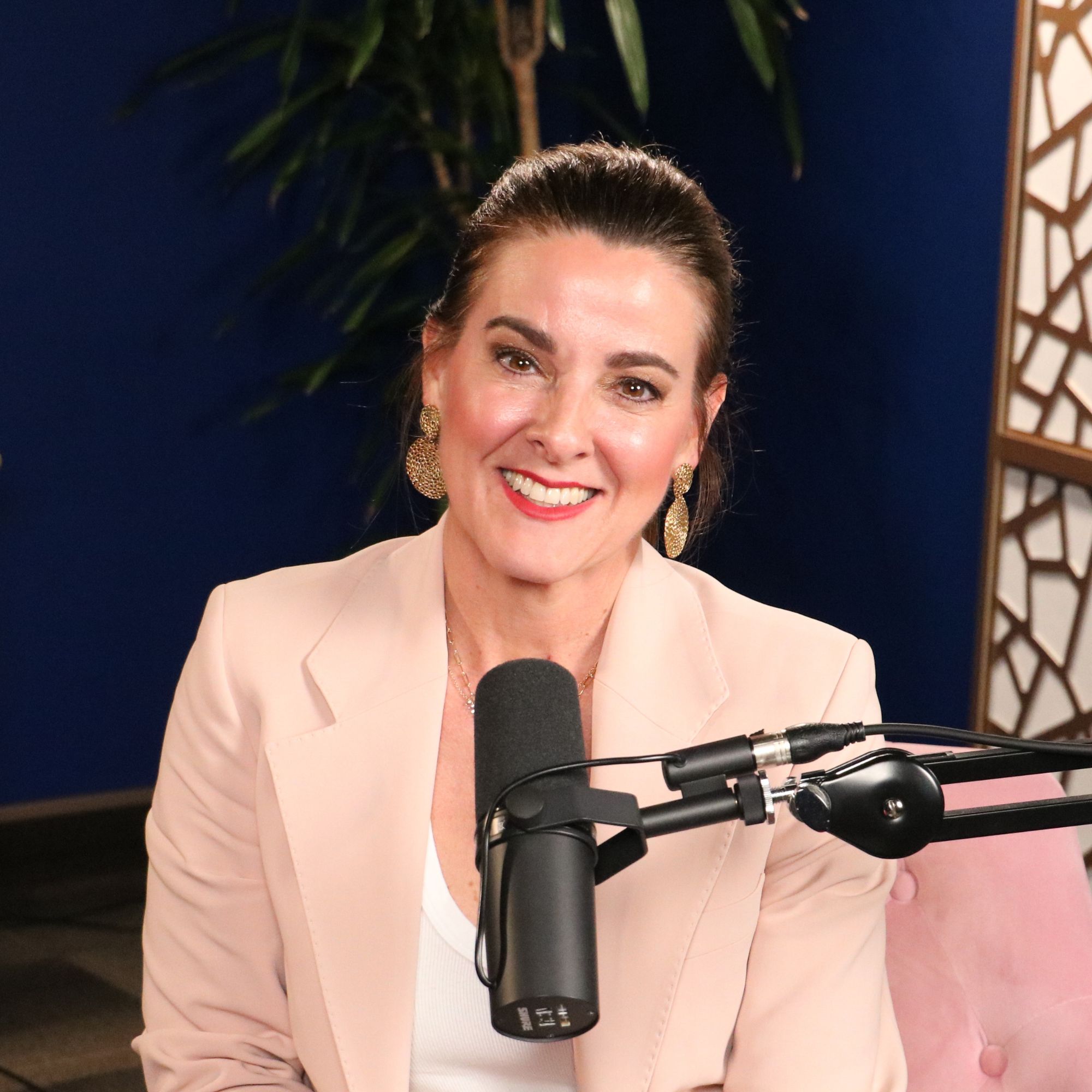
Dorothy: [00:00:00] Anyone who has ever heard of Elaine Turner immediately thinks of her designer handbags, but her story is so much more than retail business and really having an incredible, incredible career. She’s been through ups and downs. She’s stood by her daughter who has special needs, and she’s helped her parents through illness. We’re talking today and we’re talking very honestly. About building a brand and what the work really looks like when you’re doing that. Being there for family and trying to keep career dreams alive, and finding new meanings after having to let it all go.
When you subscribe to our show, you help us grow. Someone you know may need to hear this story, so please share with your family and friends and consider. Supporting our mission at therose.org.
Let’s Talk About Your Breast, a different kind of [00:01:00] podcast presented to you by The Rose, a breast center of excellence, and a Texas treasure. You’re gonna hear frank discussions about tough topics, and you’re gonna learn why knowing about your breast could save your life.
So Elaine, thank you so much for being with us. I’m just delighted. I’m honored. I’m, I’m excited. I mean, because I know you don’t like this word, but you are a legend.
Elaine: I read that and I thought, Hmm. Pressure. But thank you so much for saying that, I don’t always feel that way, but.
Dorothy: Yeah, I know. I mean, I say your name and they go, oh, oh, let’s go, let’s go and talk about persons and
Elaine: Yeah, the handbag lady.
Dorothy: And yeah, fashions. And, but there’s a, there’s a real, another other side to you also and to your life, you know, you just seem so put together and everything’s perfect.
Elaine: I mean, yeah. You know, I think that that’s such a [00:02:00] common sort of misperception of so many people, right? We have this assumption of the life that they lead based on sort of what we see externally. But, um, I mean, I’m glad you kind of brought that up. Like the reality is, you know, I’ve faced a lot of adversity in my adult life. Um, and it’s, you know, on the one hand been a challenge and I’ve created, you know, a lot of stress and and grief. But on the other hand, it’s really made me who I am today.
And it’s evolved me into the person that I think ultimately I was always supposed to be. So, yeah, I agree with you that there’s always that perception, kind of like, especially in fashion.
Dorothy: Oh yes.
Elaine: You know, like glamor and it’s all so great and creative, but the reality is it’s all a lot of grunt work and you take a lot of risk in the fashion industry. So, but yeah.
Dorothy: So tell us a little bit about how you got into it and Yeah. What you did.
Elaine: Yeah. I come from a family of entrepreneurs, so I was, I think, you know, I kind of a believer that you get it through [00:03:00] osmosis, you know, I mean, I was watching my dad start companies and my mother owned a publishing company with my brother. And so I always knew, I think deep down that I wanted to start my own business. And I, I was creative, you know, growing up my mom was always the one that was encouraging me on like, you express yourself through fashion and, you know, that’s a form of self communication. And she was always encouraging me and empowering me and so, in my, gosh, I guess I was 30. I had lived in New York. I met my husband in New York and worked for several different brands. And then we came back to Houston and I just finally got up the courage. I was like, you know, I’m just gonna start making these handbags. And I started making ’em in Brooklyn and just had ’em shipped to my home. These samples of bags and, um.
Dorothy: Wait, how do you make, I mean, how you, you actually had material and put together?
Elaine: Well, and I was in the business all my twenties.
Dorothy: Okay.
Elaine: So I had a little bit of an understanding of sourcing and production because I was on that side of the business. So I was in product development and design in New York. So [00:04:00] I knew kind of where I could get leathers and, um, I actually knew of this manufacturer already. He had done several samples for a client that I had worked for. So it wasn’t just total green and that perspective, but, um.
Dorothy: But you’re, what you were visioning.
Elaine: Yeah.
Dorothy: What you imagined was the.
Elaine: Brand Yeah. And the product. Um, and I, I had a lot of my inspiration of the product I created really came from my childhood and I, my mom was sort of my muse growing up and she was, um, very ladylike. Classic timeless elegance, you know? And she was very much inspired by the tropics, you know, so every vacation we took was somewhere tropical, so it was from a little girl I was always seeing, you know, in her home she would do grass cloth walls and palm trees and all of that, and tortoise. And so I knew, I was like, I’m gonna develop bags that kind of reflect that sensibility of kind of tropical getaways. So I started making these grass cloth ratan bags and sort of adorning [00:05:00] them with like bamboo accent, hardware and tortoise. And that’s really how the brand started to form. And then my first order was tootsies here in houston.
Dorothy: Well, if that, if you’re gonna have a first order, I mean.
Elaine: Yeah, I know. And he, Mickey, um. Rosemary and, you know, God rest his soul was like, Hey, I’ll take him in. Um, you know, let’s do like a consignment package and just see. And at that time I’m like, yeah, anything to get it in front of your customers. And so he brought in several of my, um, bags that I had made a small lot, you know, I don’t even know how many I had of each bag. And they started to sell and his buyers would call me and be like, Hey, can you get me more? Can you? And it just starts to, you know, build on itself. And then, you know, the story goes, I ended up you know, transferring my production overseas and making much bigger volume and ended up, you know, with Neiman Marcus and Sax Fifth Avenue and really becoming known as more of a resort collection for them. So really that kind of, like I said, that tropical, uh, kind of vacation fantasy type [00:06:00] of, type of look, so.
Dorothy: Oh, what a great story.
Elaine: Yeah.
Dorothy: Yeah.
Elaine: So fun. So.
Dorothy: But it was a lot of work.
Elaine: Yeah, it, it was a lot of work. Um, you know, I grew very organically, um, stayed small, you know, I was just like, okay, how do I keep, you know, how do I sort of keep this in, you know, in under control, right? Because I had two kids and my husband actually ended up coming and partnering with me as we started to grow, and, um, ended up doing, you know, wholesale. So I would go to all the trade shows, selling the handbags, and then really evolved into more of a brand where I decided that I wanted to have a little more control over the brand and over my product. So I started having my own storefronts. So my first storefront was in Rice Village. It was right under my offices there.
And then at that point I started getting into other categories. So apparel, shoes um, jewelry and then ultimately, you know, ended up with [00:07:00] 12 stores in Texas. Um, I had a store in New York at one time, and then everything was vertical. I produced all my own product, um, you know, employed all of my own people.
It was a, it was a huge, uh, operation for me. And I, you know, and I, we’ll probably get into this more, but I have a special needs daughter, which was, um an immense challenge and I was always trying to juggle kind of this idea of become, you know, this entrepreneur and running this big thing while also being present for her and her needs.
Um, so walking around with that kind of internal conflict in a way, you know, kind of that dissonance of like, Hey, can I show up for both of these things in the way that I want to, and also have a son. Neurotypical son. And then, you know, my marriage was so important to me and I was so close to my parents and my mother was constantly battling, uh, her illness of breast cancer.
So, you know, it was, it was a juggling act and like you opened up saying it wasn’t all glamorous and all fun. [00:08:00] You know, there was a lot of times where I really wasn’t sure I could do it right and show up in the way that I wanted to. And so.
Dorothy: So you made some really tough decisions about how you were going to show up and, and, how did, how did that come about?
Elaine: I, so we hit kind of this inflection point, gosh, probably like six years ago now. Um, where I, my daughter had, you know, she was hitting those tween years and she was very aware of her differences and really started to struggle, you know, with mental health issues and loneliness.
And we were really, really in crisis care for her. And my daughter has autism and was born with actually a genetic deletion difference. Um, and she’s high functioning, but she, you know, she suffers with frustration and some behaviors around, um, you know, her communication style and connecting with other people and learning.
Um, so we were in kind of a [00:09:00] crisis moment with her kind of coming into that age of kind of, I think I. Really like all of us do, where we really start to understand how we fit into the world, you know? And, um, at the same time that was happening, both of my parents, my mother had a recurrence of breast cancer, uh, on her spinal cord. So she was dealing with intense treatment and my father was diagnosed with Alzheimer’s.
Dorothy: Oh my gosh.
Elaine: And I am super, super close to my parents. And um, uh, that was when, you know, like just thinking about it, I kind of get emotional, but that’s when I realized like, okay, I can’t. I can’t do this. I can’t show up in all the ways that I need to.
And also the business, the fashion business at that time was also going through immense shifts. So, you know, digital is no joke, right? All the online retailers, you know, were delivering, um, products. In such ways that it was so hard to compete with, you know, ease and convenience. You know, people [00:10:00] started not so much, um, showing up at, you know, brick and mortar stores as much, you know, they were, they were really kind of going online and I had put all of my resources behind these stores, you know, where I was, you know, and I had an, I had a nice online business, but nothing compared to what some of my competitors were doing. And so I just had to really take a hard look in the mirror. And decide. And my husband, you know, who is my best friend and has always been my number one supporter and fan with me too, saying, look, you know, is this really something that we wanna continue doing in this way?
You know, we’re, are we able to really give all of ourselves, um, to get this business where we think it needs to be. While also, you know, being there for my daughter who I knew, I knew in my soul that she needed more, um, at that time. And thank God she’s, you know, she’s doing much better now. But, um. [00:11:00] And then with my parents, you know, coming into that sort of phase of their life where they were needing more care.
And we just made the decision to slowly start, you know, closing the stores. And at first we thought we would just sort of keep it all online, but then as things evolved, I really wanted to take a step back and I wanted to, um, be present for my mom and my dad and my daughter. And, you know, we eventually got my daughter. Um, we transitioned her to a, a residential therapeutic school that has been a godsend for her. Um, and she’s still there and loving it. Um, and then my parents both, you know, eventually, you know, my mom ended up back in chemo. Um. Uh, in and out of treatment. And, uh, she just passed away last November and then my father went on like a six and a half year journey with Alzheimer’s and just passed away a year ago.
So it’s just been, they both passed away very similar times. They were married 62 years. It doesn’t surprise me. [00:12:00] They like planned it, you know? Um, so yeah, it’s been a journey, but I don’t regret the decisions I’ve made. And I think, you know, just something to kind of be transparent with you about is I think our society can sometimes get very caught up into this idea of everything sort of this straight ladder to success or you know, we kind of, especially in the west, sort of have this achievement culture that it all has to look a certain way and especially, you know, with social media and you know how quickly we receive information and it’s all sort, of you know, curated and, but the reality is, you know, we’re human beings. Reacting to life’s unpredictability and uncertainty of what we’re dealing with. And I, I just think it’s important to sort of tell women like. You don’t have to pretend that you know it’s all perfect all the time. You don’t have to pretend that there’s one way to do something, and if you don’t do it that way, you’re a failure because it’s not [00:13:00] true.
Dorothy: Right.
Elaine: You know, I don’t really believe in that. I believe that the most authentic, sort of whole versions of ourself is the version that’s, that’s real and has, has pivoted and done the things that we’ve needed to do to survive and made those hard choices that we’ve all been. And whatever it is in our life forced to make that makes us who we are, you know? And it makes our story, story so layered and complex and interesting and I just wish more people would talk about those layers.
Dorothy: Right, right.
Elaine: Yeah. So. Right. Anyway. Well, and I think I’m like in therapy right now.
Dorothy: I think what you’re, what you’re saying about this concept of success, and especially as women, and of course I’m quite a bit older than you, but, but we didn’t, we were never encouraged to be authentic and open and, you know, that was almost a, a trait of, of being weak.
Elaine: Yeah. Of [00:14:00] vulnerability.
Dorothy: And, and you had to be like the guys and.
Elaine: Yeah.
Dorothy: You know, really, you know, all of my stuff was in the eighties and nineties and you really did have to model the guys. And I think some of that success concept really did us more harm than good in many ways, I don’t think we were particularly good role models. And the other thing, and this is just me talking, it’s, you know, not from anything I, I know. I think we did a huge disservice to the guys. Because we didn’t let them fall off that white horse.
Elaine: Right.
Dorothy: They had to be everything.
Elaine: Yeah.
Dorothy: Because we were everything.
Elaine: Right.
Dorothy: You know, I mean, it, it really, when you look at some of the things that were just the cultural things, right?
Elaine: Oh, absolutely. Which I have a lot of grace and empathy that we’re all wherever we are, kind of in our generation and in the cultural sort of norms of our times, like we are products of that.
Dorothy: Right?
Elaine: And we have to give ourselves grace that we we’re all [00:15:00] doing the very best we can with sort of the conditions that we’re, that we’re under. And you’re absolutely right. I mean, I think something I feel is beautiful that’s sort of, I think transforming is people are talking more about the reality, you know? That it’s okay. Whatever your journey looks like, it’s not something that you have to feel, that you have to have shame around or reject that like, oh, if you changed your business and career for a while and went off and you know, did something different that what people’s expectations were. It doesn’t mean that that’s a failure, you know, that just means that you’re a human being reacting to what your life circumstances are at the time and doing what you feel is right and best for you and your family.
And I think that we are talking more and more about that. And accepting it. But just hearing you and kind of where you were and talking about the eighties and sort of how we had to mimic [00:16:00] men like. I totally agree with you. Like we had to wear, sort of wear these masks. And sort of like lack all vulnerability of like, yeah, we can power our way through this.
Dorothy: Right.
Elaine: But the reality is, you know, I’m sure there were many days that you would, you know, the real, you would be like, wait, is this really healthy? Is this really true? Is, is this really right? You know, and that’s okay too. And I just think women have to know that, ultimately we’re all enough regardless of anything we have yet to achieve, be or do. You know, we are, we’re born. Yeah. We are enough.
Dorothy: And I, and I think for me, that was one of the reasons why being in this type of organization became so important. I had seen so many women truly, uh, put themselves second, last, whatever, and it always came out in their health and.
Elaine: Yeah. It manifests.
Dorothy: Yeah, it was, it was just like, gosh, we can’t keep doing this.
Elaine: I agree. It [00:17:00] manifests. It’s so interesting you bring that up. But I do believe in that, that if you’re sort of bottling up something that you know, might not be in true alignment with kind of who you are or your organic path, that I think years and years and years of that I do think manifests in health issues. It can, you know, absolutely stress and trying to pretend that you can be something sometimes that you really can’t. So that’s, that’s a really big. Topic. Is how it impacts our health.
Dorothy: You said this was six years ago, right before COVID?
Elaine: Yeah. Right before COVID.
Dorothy: So the timing
Elaine: Yeah. Actually worked. I know. Isn’t that interesting?
Dorothy: It is. Did you have a inner knowing this was coming or
Elaine: People have asked me that. Such an interesting question.
Dorothy: But I mean, you moved online.
Elaine: I know I did right before COVID.
Dorothy: I mean, you made the shift.
Elaine: Isn’t that interesting? I, I don’t, I don’t know. I knew that like things, the conditions of [00:18:00] the, like the landscape of consumer retail and, and product was changing. And it was changing much faster than I think people even realized who were just consumers. I mean, it was Like the whole.
Dorothy: You as someone who can see it from up here. Changing it.
Elaine: It was changing so fast. I mean, we saw, I mean I’m talking within 18 months, two years, like we would saw our store traffic numbers ’cause we had like counters and we have all this data around people visiting the stores just change significantly. Sort of the advent of, I mean, I’ll just say Amazon even.
Dorothy: Yeah.
Elaine: You know, of the ease and convenience of that from, I mean, in half cut in half the women who are like, oh, I don’t need to go fight for parking spots and go into that store anymore. I can just go click a button. I will say over the past six, seven years, I think of more of a balance has has gone back now. I think women have, as I’m talking about women, ’cause I do women’s retail, but I think women have kind of now been like, okay, wait. We kind of went one extreme where we were like, [00:19:00] oh my gosh, this whole digital thing. But now we’re seeing women say, you know, I do wanna talk to a human being, you know?
Dorothy: Right.
Elaine: And I do want to touch that.
Dorothy: I wanna touch it. Yes. Yes.
Elaine: That is the biggie. But I think for a while it got, it was really extreme, you know, and then you saw those really successful online retailers do well with that. But I do think now you see brands that are really are, it’s back to look, I have to have the storefronts. And they might not have as much inventory in those storefronts, but they have to have both.
Dorothy: Both.
Elaine: Yeah.
Dorothy: Now, you went back though.
Elaine: So now I have. So for a while I was like, no stores. Yeah. And dealing with, you know. All being, I really transitioned into becoming a full-time caregiver for my parents and also my daughter before I it took us a while to find kind of where we wanted her to be. Um, but I just two years ago opened edit, and I call it Edit by Elaine Turner. Um, an edit sort of meaning, this idea of kind of curating for [00:20:00] women. Um. Sort of the essentials in life. Uh, you know, making sure that I could give her kind of simplifying. I think all of us are so inundated. Life is so crowded in every way, and I.
Dorothy: Wow, that’s a good term.
Elaine: Yeah. It’s such a crowded, you know, from an auditory perspective, visual perspective, Just for objects. And I was sort of thinking, you know, edit felt right to me. Keep it simple, keep it easy. Um, and so I named it edit and it’s just one storefront. Um, and the Tanglewood area of Houston. And I’ve loved it. You know, it kind of gave me a chance to get back to my gift and get back to, uh, serving women in the way that I love. And, um, the store has been, you know, a really beautiful combination of creative. Product, beautiful product for women, but also giving back to the community and hosting charity events.
Dorothy: Right. And doing stuff like You done that for The Rose. Thank you so very much.
Elaine: And I would love to do it again.
Dorothy: Oh, we, we’d love to have you do it again.
Elaine: Yes. I would [00:21:00] love that. And so it’s been a, it’s, it’s been a beautiful experience.
Dorothy: So I’m gonna ask this question and it’s kind of for me. When you, when you decided to close the stores, did you go through any grief?
Elaine: Deep. I went through a deep, um unraveling of kind of my identity and a, a sort of a, a, a deep self-awareness of really, and, you know, I humbly say this of how much I had attached my ego to, you know, I’m a designer and I’m a business owner. And, um, I had to really take a hard look at that, um, aspect of myself and recognize that, yes, those all were things that you could write down on a piece of paper about me, but they ultimately aren’t what truly define me. And that really what led me into, during COVID, I did these [00:22:00] online workshops for women called Know Your Worth. And it was through some of that self work that I had done. Um. Because, you know, in life I, I people kind of sometimes associate grief with like external, like, I lost, you know, my parents and I, my daughter actually ended up, you know, leaving and going to this, this beautiful school that she’s at. But I really had a deep grief about losing a sense of myself.
Or so I thought I had by closing those stores, you know, and, um. What I really came to light for me, and, and I still do this work today, I work hard on remembering that you know, as much as I value and accept all of those parts of myself, that I was a business owner and a designer. And that really, I know that outside of all of that, my worth isn’t tied into [00:23:00] anything that would be put on a resume, if you will, that my worth is inherent to me since the day I was born, really. It’s, it’s like a birthright that we all are born, you know, with this idea of that we deserve joy and freedom and dignity and wholeness and, you know, I can go into more spiritual aspects of that, that I think that, you know, God brings us here for a reason. And I think that, um, all of our souls are not here to be attached to something that is all about the ego or all about achievement. And I think as Americans, you know, we’re very much tied into all of that. But I think that I had to go through sort of a deep dive of, kind of an unbecoming, if you will of realizing that yes, those are all beautiful things, but, that’s not the full story of who I am. And I can still serve others and be a [00:24:00] designer and be a business owner and, and be a wife, and be a mother, a special needs mother, but that ultimately my soul and my soul’s purpose isn’t attached to one thing.
And I think our society gets super like, oh, you know, you’re the, The Rose. Like you, this is what you do. Like, yes, it is what you do, but there’s so much more that’s happening behind all of that and your journey and your story and who you are and what you’ve dealt with. And um, I think that it’s a, it’s a very hard work to do because we get so aligned with the roles and responsibilities that we play, but I think when we can tap in to the idea that are worth is something that’s so transcendent of anything that we could be or do you know, any sort of.
Dorothy: How do we do that?
Elaine: It’s hard. It’s really hard work and I do think that, you know, it ties in very heavily with a spiritual component. [00:25:00] Um, of knowing that you were brought here inherently whole, so meaning that your origin story starts from a place of abundance, not from a place of lack. And I think so many women start from a place of scarcity and lack. Like, I’m not, I’m not enough, I’m not doing enough. And, and, and it, it’s from little girl all the way.
Dorothy: Right.
Elaine: And if there’s a way that we could rewrite that story, rewrite that narrative to know that there’s really nothing. It doesn’t, and by the way, this doesn’t mean you give up like, oh, well I’m whole who care. You know? That’s not what I’m saying. I mean, first of all, once you know, you we’re here to continue to learn and grow and evolve, but I think when you do your best work in life. So when you show up your best, it’s from a place of abundance, not from a place of fear and scarcity.
It’s from a place of wholeness. And so [00:26:00] always reminding myself that, that I come, I’m already whole and there’s so much more I can do from that place than from a place of fear and scarcity. And I think that so many of us daily are sort of behaviorally acting out from a place of fear and scarcity.
Like, there’s just not enough. I, I can’t do enough. I mean, I still do it. You know, I wake up today. Um, texting my husband who’s with my daughter, taking her to a doctor’s appointment today, saying, oh, you know, I don’t think I have enough inventory in yet, you know, at edit. And it was into scarcity comment. And he’s like, he’s like, Elaine, it’s September 9th. Like, we’re okay. Like, you’re getting, you know, like just all of that, like being aware of like, it’s always not enough. And I have to kind of, and I got in the car. I was like.
Dorothy: Wow. And that’s just even catching what you’re saying or being aware of what you’re saying and.
Elaine: And stopping it. Yeah, and stopping like the pause.
Dorothy: Yeah.
Elaine: Like I got in the car, I was like, okay, I’m eliminating that. And kind of had a mindful moment about [00:27:00] talking with you and giving my best today and not doing that game of like, it’s not an, you know, we’re, you know, because I think we fall into that trap. So, you know, I think when you ask, how do you do it, I would say it starts from a mindset shift, from a perspective, a change in perspective of it. You start from a place of wholeness and you don’t start from a place of lack and then see how the world shifts around you once you do that.
Dorothy: Is that what you taught in your, your workshops?
Elaine: Uhhuh. Yes.
Dorothy: Do you still do them?
Elaine: I don’t do the workshops, but I do like a lot of speaking like, you know, I’ll go out.
Dorothy: And that’s how I heard all this. Thinking, oh my gosh, she’s got a lot. I wish I could carry her around.
Elaine: In your pocketbook.
Dorothy: But listen, there’s a lot of, that’s bad. There’s so much I wish I could convey to my employees.
Elaine: Yeah.
Dorothy: You know who, when I look at them, single mothers, many. Working [00:28:00] and all the things they’re having to deal with and, and I mean, they’re dealing in a very emotional environment. People come in very scared. You know, women are scared.
Elaine: Oh gosh.
Dorothy: And uh, and then when we have to tell a woman that she has breast cancer, you know, then my navigators go into to work and I just don’t know how, I don’t know how my employees do it.
Elaine: I know.
Dorothy: And I think, oh yeah, I just wish I could be. And Elaine saying, you’re whole now don’t, don’t worry about it.
Elaine: Right.
Dorothy: Be, you know that.
Elaine: Well, it’s.
Dorothy: So important for women to tell each other this.
Elaine: Yeah. And breast cancer. I think just even that journey, I mean, you would, you know, the complexity of being diagnosed with the illness and then also what comes with that of feeling kind of a lack of. I think there’s some identity shifts there when you deal with a, you know, chronic illness. I mean, there’s all that stuff that we’re talking about that’s happening in real time with women who are dealing with breast [00:29:00] cancer.
Dorothy: Right. And the caregiver that you had to be for how many years?
Elaine: Yeah.
Dorothy: That’s a whole different role.
Elaine: Yeah. My mom was diagnosed originally my freshman year at University of Texas in 1989. She was diagnosed with stage three breast cancer and they were not, it was real scary. They, my dad had it. We came home and it was my first semester at UT and he said, we don’t know. You know, it’s because at that time, oh yeah, there was no tamoxifen, the chemo, they ended up putting her on experimental chemo. And I remember the doctor telling my dad she might not even live through that, through this chemo.
Dorothy: Oh my gosh.
Elaine: It was so toxic. I mean, things have changed so much.
Dorothy: Oh yeah.
Elaine: But she got, I think when I look back and see the perspective, my mom had HER2+ breast cancer, which at the time was very kind of aggressive. But that right. I think it was like two years after her diagnosis, Tamoxifen had come on the [00:30:00] market and I believe it, it kind of saved my mom because it was like the perfect drug for her diagnosis.
Dorothy: Right.
Elaine: I mean, not that I’m not a doctor. I don’t know all the ins and outs, but I just remember that timing. Um, and then she stayed cancer free for 23 years, and then she fought it, you know, for another, however many, you know, several, like two decades. But it went to her spine and then it. You know, her lungs and all that.
Dorothy: So of course you’re real aware and you do all your screening.
Elaine: Oh, yeah, yeah, yeah, yeah, yeah. Very.
Dorothy: Um, I always have to ask.
Elaine: Yeah.
Dorothy: You never know.
Elaine: I’ve done it all. I did the genetics test. I did good. I do all the screening and, uh, my sister and I are both very aware. So yeah, it’s been a front row seat of, of a lifetime. Really journey with breast cancer and, and my mom is my hero. I mean, nobody. I mean, she was so optimistic throughout her entire journey and [00:31:00] so brave and, um, had incredible care here in Houston. And, you know, there was also a lot of really, I don’t know what the right word is, but a lot of kind of beauty and watching my mom navigate breast cancer the way she did, um, kind of awe, you know, she really, really took it head on and never lost her faith and, and fighting it. I mean, she is literally probably the strongest person that I’ve ever met in my life watching her.
Dorothy: Yeah.
Elaine: Uh, so. You know, it’s, it’s like everything, it has all sides to it. Right? You know?
Dorothy: Right. And you were there. And so many times that’s a gift in itself.
Elaine: Yeah. MD Anderson is my second home.
Dorothy: Oh yeah, I bet. Alright, we’re gonna close.
Elaine: Okay.
Dorothy: With what, what words of wisdom would you like to share? One, one message to me, to me personally, that will go to [00:32:00] everyone.
Elaine: I mean, I guess it would, you know, kind of fall back on like the work that I feel, you know, universally. But the work that I’ve done personally of, of knowing that you’re enough, I think that that’s a huge message for me. And I don’t know if it’s just ’cause it’s something that’s resonated so much with me and sort of my own journey of kind of fighting that idea that I had to do more to be okay.
Dorothy: Right.
Elaine: Um, but for, for you and for women to know that, you know, regardless of anything, anything you’ve achieved or that you feel like you’ve yet to do that, that you are whole and that you are here. Uh, for a reason, and you’re sourced from a place of, of true wholeness. I think that’s,
Dorothy: I love that. Yeah.
Elaine: Yeah. Thank you for having me.
Dorothy: Thank you for being with us.
Post-Credits: Thank you for joining us today on Let’s Talk About Your Breasts. This podcast is produced by Speke [00:33:00] Podcasting and brought to you by The Rose. Visit therose.org to learn more about our organization. Subscribe to our podcast, share episodes with friends, and join the conversation on social media using #LetsTalkAboutYourBreasts. We welcome your feedback and suggestions. Consider supporting The Rose. Your gift can make the difference to a person in need. And remember, self care is not selfish. It’s essential.