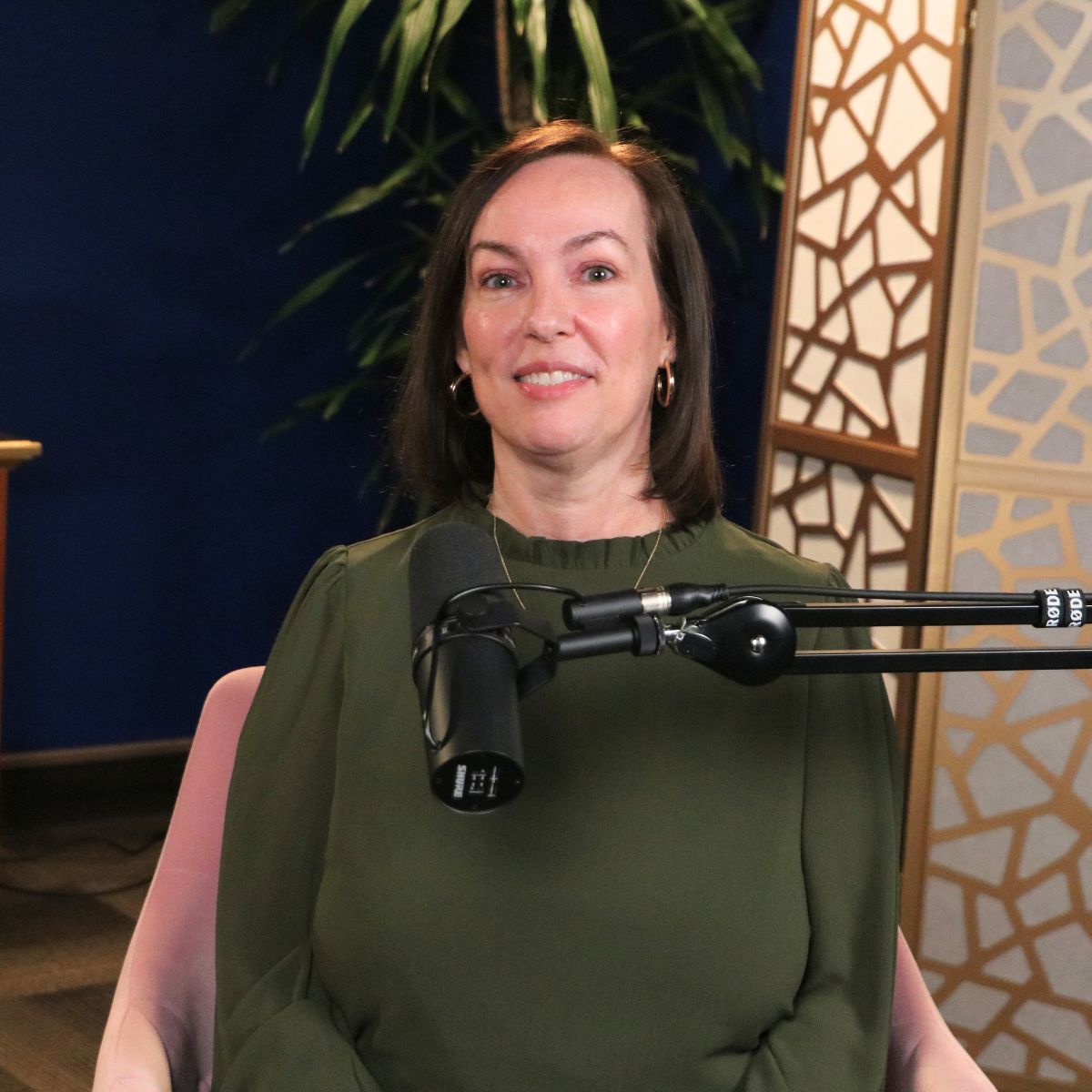
Dorothy: [00:00:00] Some people hear the words board service and think of nothing but meetings. Some hear it and think this is where I can change lives. In this episode, I sit down with Shannon Wiesedeppe, president of the Roses Board of Directors, who first heard about us through the Junior League of Houston. She brought both her leadership and her own deep family history of breast cancer to our mission.
Shannon talks about what it’s really like to steer The Rose through hurricanes, COVID anonymous million dollar gifts and a CEO transition after 40 years. All the while insisting that uninsured women receive the same care, the same navigation, and the same compassion as anyone else. If Shannon’s story makes you think of a woman you love, share this episode with your family and friends and consider making a donation so that another woman gets the care [00:01:00] she needs, just go to therose.org.
Let’s Talk About Your Breast, a different kind of podcast presented to you by The Rose, a breast center of excellence, and a Texas treasure. You’re gonna hear frank discussions about tough topics, and you’re gonna learn why knowing about your breast could save your life.
Shannon, thank you so much for being with us today. It’s just a delight to finally get you here.
Shannon: Happy to be here.
Dorothy: You know, you were recruited to our board and right now you’re our board chair. Um, but you came on like in 2018, so how did, how did you ever. Who recruited you? How did you get here? That kind of stuff.
Shannon: Well, I was asked to, um, go to lunch with Pam Lovett and Peggy Roe, and they asked me, you know, what did I know about The Rose? [00:02:00] And I told them that, you know, I knew about it from the Junior League. We had, uh, done a community assistance grant and so I had reviewed, you know, those materials and seen, um, the presentation and, and you’ve, you had done some speaking, um, at the league.
And so I was familiar with it and they talked about, you know, the opportunity to sit on the board. And I’ve known both of them through the league for a long time. And so between my knowledge, you know, surface as it was of The Rose, um, my knowledge of them and the organizations that they’ve been a part of, um, it just sounded like a really attractive opportunity. Um, and I always look for opportunities to be engaged in a, in the community. So, um, that seemed like a really good fit.
Dorothy: So just for our listeners, the Junior League of Houston.
Shannon: Yes.
Dorothy: You’ve been a member of it for how long? Well, we don’t have to go there, but a, a long, long time.
Shannon: Very long time.
Dorothy: Yes. Long time.
Shannon: 20 plus years. Yes.
Dorothy: Yeah. And you’ve held lots of different [00:03:00] positions within the league?
Shannon: Yes.
Dorothy: Primarily volunteer type.
Shannon: Yeah, outside the league, um, in community placements. Um, that’s a requirement. Every year you have a new placement. Um, and then also some administrative roles inside the league, um, either as a chairman or, um, working on things that were more internal operations of the league. And then ultimately as, uh, I served as the president, um, we served one year terms of everything. And so I served a term as the president.
Dorothy: It seems like the first time that I had a chance to talk with you that you were, you had some family history or very much knowledge about breast cancer?
Shannon: Uh, I do. My, both of my grandmothers had breast cancer. My mother had breast cancer, and I’ve several friends who had been diagnosed and in the recent past, lost one of those friends that I knew that I’ve known since high school. I certainly have a connection.
Dorothy: A strong family history.
Shannon: Oh, yes.
Dorothy: Yes, yes. So I’m sure you’re on top of everything.
Shannon: I mean, [00:04:00] I could not be more on top of that if there’s something out there. I’m doing it.
Dorothy: Oh, okay. I, I just remember very distinctly you saying it’s just something that’s been a part of my life for a long, long time and I thought, ooh, you know, that’s, that’s kind of heavy lift to.
Shannon: Yeah. I mean, everyone has something right? And, you know, you just plan as best you can for it. And hopefully if that were to visit itself on me, that I’ve found out early and can, you know, have the best opportunity.
Dorothy: Which is yes. The, the best. So let’s talk about your role as a member of the board. You’ve seen the rows go through hurricanes, go from portable mammal machines to our big old coaches.
Shannon: Yeah.
Dorothy: You’ve seen, uh, COVID, that was a really tough time. And, and you’ve seen, uh, you know, anonymous donors walk in with lots of money [00:05:00] to give. So what, what memory do you hold? What comes to mind when you think about the time you’ve been with us?
Shannon: I mean, certainly in the, in that number of years, a lot of things have happened. Um, and they’ve happened for all, you know, all nonprofits.
Dorothy: Oh, yes.
Shannon: Right. And so people in the space, but you know, over time, all of those things have not happened to a, to an organization. That’s a lot of big ticket items to happen, and really some nonprofits didn’t make it through COVID. Or through some other circumstances. I think the biggest thing is the way that we have been able to be creative and be, um, intentional with the decisions that we’ve made as a board and the staff has been incredibly resilient.
They, the grit that they have is, I mean, unmatched. They have to make it work. And so they do whatever it takes and they, um, really come up [00:06:00] with some inventive ways of, of getting things done, um, reaching out to people and just, you know, they know that people need our services and so they’re gonna do whatever it takes to patch it up and, and make that happen to the degree that, you know, we are able. So that’s really impressed me that being able to watch that from a board perspective and try to support that um, the best that we can.
Dorothy: And this board has been so supportive. I mean, it, it has flown with us through all these different things and, and, you know, when you’re in the nonprofit state, uh, place, it is so important that you have a board that understands, or at least is well versed enough to appreciate that nonprofits do have to function a little bit differently. Uh, it’s just not, we’re not making widgets. I mean, we we’re not selling things. So it that’s
Shannon: Right.
Dorothy: It makes it,
Shannon: It’s not a linear
Dorothy: No.
Shannon: situation.
Dorothy: No, it’s not. It’s not. Uh, you were kind of fast tracked into this last role. [00:07:00]
Shannon: I was.
Dorothy: I mean, I was going, I was thinking about the different positions you had, and I know you were chair of the, uh, fund development committee, and I kept thinking, what, now? What else was she doing and how did she get to chair? But it.
Shannon: Great question.
Dorothy: But honestly, I just wanna tell you how much we appreciate you stepping up because we had a member that that was, you know, going to be chair and just couldn’t make that commitment that year. Right. And so having you step up and say, okay, I can do this.
Shannon: Well.
Dorothy: It was.
Shannon: You can thank Pam Lovett again for that. Um, it’s, I tend to find myself throughout my career, um, doing trials by fire. And so, um, I, that’s not, um, necessarily scary to me. I, I, I walk into many situations where I don’t have any background or, um.
Dorothy: Why would you do that?
Shannon: I don’t.
Dorothy: I [00:08:00] know I’ve heard you talk about these different.
Shannon: I don’t know.
Dorothy: Positions.
Shannon: You’ve, I dunno that I, I don’t seek it, I don’t think. It just, it finds me.
Dorothy: Oh.
Shannon: And not that I wasn’t paying attention on this board or that I haven’t been on other boards and I’ve, I, I’ve led other boards, um, but each one is very different. And my personality is one where I like to study. And so certainly all things being equal, I would love the opportunity to watch where I was going, you know, to have that lead time. Um, but that doesn’t always present itself. And so, you know, I didn’t really have any goals for that role. I wasn’t planning to be in that role necessarily. And so you just jump in and make it happen. And the, this board is very supportive and very engaged and so it’s made it very easy.
So I hope that I’ve been able to continue to allow people to have a voice on the board and feel like we are a cohesive group and that I’ve been a, a good partner from a CEO perspective. Oh, [00:09:00] you know, I feel like we are hopefully better than we were before. You know, at least going through our strategic plan, we had the ever-changing healthcare landscape, the departure of our CEO and a search for the replacement.
Dorothy: Boy, I’ll never forget that day I told you it was time and you go, no, you can wait until my term is up. I said, I did. I think I can. So, but that is a big, big responsibility and I, and I, I know one of the things that always shocks people is the number one job of a board of a nonprofit, or I guess. Any business is the placement of that CEO.
Shannon: Right?
Dorothy: It is the evaluation and placement and making sure that leadership is right for the company. So this wasn’t an easy job having someone who’s been with an organization so long and having to replace that. It’s just a, but you [00:10:00] know, it is a good time.
Shannon: Yeah, it’s a unique opportunity.
Dorothy: Yeah.
Shannon: I mean, it’s, it’s daunting, but it’s, you don’t necessarily get to have that experience as a member of a, of a board. Um, particularly from a replacement of a long-term co-founding person. That’s a, that comes with all kinds of, you know, that’s, that’s the way it’s been for 40 years and having the change just of that, um, having that presence being different, um. That’s been something that I think all of us on the board are learning things about. Even people who’ve been through a CEO search, again, all of the, they’re all different and the person that you’re trying to find is different for every board that you’re on and in the time that you’re in. I think it’s, it’s fortuitous for us that we are doing that at a time that we just have put the strategic plan together so we have a little more of an idea of where we wanna go and how we wanna get there. And who might be that, that [00:11:00] person to to take us there. So I guess.
Dorothy: Was there any particular area of the strategic plan that really excited you?
Shannon: I think, um, probably expanding partnerships and seeing how we can, um, provide our services along with something that either another company or organization can’t provide or, um. Maybe they’re not doing it the way that we do it, and they want to go in a different direction and, and you, you know, have us help them out. I think that’s a great way for us to, uh, be collaborative with people in the healthcare industry and other, you know, organizations.
Dorothy: You know, it’s really unusual.
Shannon: Yeah.
Dorothy: I mean, a lot of people talk about collaborations, but they don’t always work, and especially when there’s money involved. You know, I can support you all day long with a letter of support, but when it comes to Here’s how we’re going to use this funding.
Shannon: Right?
Dorothy: Then it becomes a very different animal. So it has been [00:12:00] kind of exciting to see, to see these things come together and you know how long they take.
Shannon: Oh yes.
Dorothy: I don’t, uh, you know, that will be one thing I’ll be glad not to have an idea and not see it happen for three years. I mean, it is. Nonprofits just take longer.
Shannon: You have to be patient and just stay the course. You know, it’s easy to to just stop and say, oh, that’s gonna take too long. Let’s just not even bother. But I mean, eventually it will happen. So you have to start somewhere.
Dorothy: And you know, the other part I think is so interesting, and I guess this is at any business, but an idea you may have had seven years ago. Now it wasn’t time then now it is.
Shannon: Right.
Dorothy: And you, and you go, but didn’t we try that or didn’t we think about that? Or, but you know, that’s the other part of this leadership role, decision making. You can’t, you can’t say. Oh, it didn’t work.
Shannon: Right. ‘
Dorothy: cause you never know when it will.
Shannon: Yeah. You can’t [00:13:00] discount it. You have to bring it back up. ’cause one time it might be a good fit. It’s all about time, place people.
Dorothy: Yes.
Shannon: Sometimes it’s the right mix and you just have to keep trying.
Dorothy: One of the things that has been fun about working with you is that you have this incredible sense of humor. Have you always been that way? Were you a, were you a cut up in school? Were you?
Shannon: No.
Dorothy: No?
Shannon: Um, I mean, my husband will laugh listening to this, because I always tell him that, you know, I used to be funny. I was like, in high school it was funny. And he was like, okay. Um, no, I mean, I, my family is very sarcastic. Um, and so I think that’s just been the way I always have been.
Um, I don’t try to, you know, find the joke or make the joke, but I, you know, can make light of things when necessary. Um, but yeah, my family. My siblings and I, we, we cut up a lot. And also my, my children are very sarcastic. Um, I think they’re [00:14:00] hilarious. Um, so yeah, I mean, I think that’s just part of my personality. I don’t think people say, oh my gosh, she is the funniest person that I’ve ever met. But, um.
Dorothy: I wouldn’t go that far, but.
Shannon: Exactly.
Dorothy: But it’s, it’s like you’re so serious sometimes, and then you come out with some of these things and I’m going, what did she just say? So I, I get it. You know, the, the families that tease each other the families that can do that. To me, it’s just healthier.
Shannon: Right.
Dorothy: You know, and I’ve been around different groups that, that are so serious or so, you know, it has to be this way.
Shannon: Yeah.
Dorothy: And it just, it’s just doesn’t make work very fun.
Shannon: I mean, you have to read the room.
Dorothy: Yes. Oh yes.
Shannon: And you know, pretty quickly if what you’re delivering is not landing.
Dorothy: Right. Shannon, you talked earlier about you kind of find yourself going into things that you don’t really know anything about. You’re, you’ve had a very interesting career history. I mean, you were, [00:15:00] now I wanna get this term right, the assistant Attorney General?
Shannon: An Assistant Attorney General.
Dorothy: Yeah.
Shannon: There’s several of us. Yeah.
Dorothy: But that’s a pretty, pretty impressive role. I mean, I don’t, I don’t care if it’s An, when I first read that one for the whole state, I mean, but you were, you were in a, in a position of a lot of authority and decision making?
Shannon: I mean, it was, I was in the child support enforcement division, so, um, very high volume, a hundred case dockets, several days a week, um, that you had to prepare, be ready to go each, you know, yes, the underlying subject matter is the same across all of the cases. But everyone’s story is somewhat different, whether it’s.
Dorothy: Was that a job you envisioned yourself having when you were going through law school and?
Shannon: Not necessarily, but I’ve always been drawn to, you know, children, families, things like that. Um, probably [00:16:00] not in this arena because it’s not as fun or happy as others. Uh, but you know, the highs of that is you, if you get a order in place, you know that you’ve got some, you know, child support, medical support, you’ve got some, some things, uh, to support that family put in place. But the downside is then you see an enforcement action because it didn’t get fulfilled.
Um, and you know, you, you learn a lot of things in that job, not just from a legal perspective, but you know, customer service because you’re managing a lot of different personalities, a lot of different people. You’re having to do it in a high stress. Situation for them. And fast paced because all of those cases, and we weren’t the, our office wasn’t the only one there, so we had a hundred case docket and four other offices had a hundred case dockets.
So there’s not a lot of time to spend with someone and there’s not a lot of time in front of the judge if you have to end up having a hearing. So you had to be very efficient and you have to be mindful that, you know, [00:17:00] while this is your job and you’re moving to the next case, this is their life. Um, and so you have to be cognizant of that and, and give that the deference, you know, that it, that it deserves.
Dorothy: And then from there you went to doing what?
Shannon: From there, I stayed home with my kids. Um, and did a little bit of contract work for the company that I currently work for. Um, and doing, you know, real estate items, you know, leases and things that I had never done before. But I had a friend who was working there and they, you know, we’re looking for people to be contractors and I thought, I’ll give that a shot. Try that out. So did that for about, um, I dunno, 15 years or so. Um, and all that while I was volunteering at the junior league. So that was kind of my other,
Dorothy: your other job?
Shannon: Job.
Dorothy: Yes.
Shannon: Um, and then after that took a full-time position with my current, um employer doing that same thing that I was doing. And then I [00:18:00] shifted into the training, um, division, which is where I currently am now, I, I, again, go into different business units not knowing how they do their job or what platform they’re using. I have to kind of learn that and then put together the materials to train, um, employees to do their day-to-day jobs. So every couple of weeks or so, I’m learning something else from a different business unit. So, um. You know, it keeps you guessing.
Dorothy: Yeah. But that’s, that’s novel. That’s a lot of different things happening. Not the same old
Shannon: Right.
Dorothy: Job every day.
Shannon: Right.
Dorothy: I think that that would be, that would fit your personality for sure. Yes.
Shannon: Well, it is now my personality, I guess. ’cause it is ingrained in me to be shifting all, all the time. All the time. So change management, when people talk about, you know, change is painful and things like that. It absolutely is. But it does not, um, shake me or, or scare me because i, I live in that all the time.
Dorothy: Right, right. So go back to what you were saying about when you were Assistant Attorney General and [00:19:00] how that touched so many lives. Have you seen similarities in some of the stories that you’ve heard here at The Rose? How lives can be touched, but people can find themselves in situations they never, never dreamed that they would ever be in.
Shannon: Sure. And that just, you know. Uh, there are things that just make everything harder. So, you know, if you’re, if you’re lacking the, the funds or the support to do the basic things for your children, or for example, health insurance, you don’t have health insurance and you need to have that put in place, have someone providing that for you or have some other, um, mechanism to, to have healthcare, you don’t have time to take care of a lot of other things. You know, these are the basics you’re trying to. Have a place to live and to pay your bills and get food. And so having to deal with all those other things like just your health or taking care of your job and, you know, you have to [00:20:00] take time off to go to court to take care of this.
Dorothy: Yes.
Shannon: I think there’s a parallel to what we’re doing here, because sometimes it is a monetary thing, it’s, or it’s an insurance thing and you have to take time off work, so you’re like, you know, maybe I just won’t do that. It’s stressful. And there’s not a lot of necessarily other support. Like we at the ags obviously, you know, we tried to then connect people with job finding and things like sort of some support.
Dorothy: Right.
Shannon: Things where we could, but you know, you can’t be everything to everyone. Just like for The Rose. Sure. I’m, we would love probably to bring everything we could find to bear to get someone where they need to be. That’s not our mission, and that’s, that’s not what we do best necessarily. And so there are other people that, that can do that better.
But certainly there are, there are parallels. There’s um, you know, just even just the access to be able to, at the ags office, people, you know, came to us or were referred to us to handle their case because they [00:21:00] didn’t have an alternative, similar to The Rose. We take care of, you know a se, a segment of our, of our, you know, client is someone who might not otherwise have been able to access
Dorothy: So true.
Shannon: to us. So Sure.
Dorothy: Did, did anything surprise you in the breast cancer world and throughout your almost 10 years here?
Shannon: I think, you know, when I first came, I didn’t have a real understanding of the, sort of the backend, the insurance and reimbursement and how, um, the like uh, government funding, like that piece. And I think that was really interesting to, to understand just the impact of having or not having that from a provider perspective and just what a difference it makes, you know, reimbursement levels from different, uh, insurance providers and how that makes an impact and all that goes into that. ’cause, you know, a little bit if you pay attention at all, if you have insurance [00:22:00] to whether you’re, when you get your explanation of benefits, did that go.
But most people don’t look at, don’t look at that or don’t understand that. Um, so you might have a little bit of understanding if you actually looked at those things of your own, but you still don’t how that affects others. And the big picture, I don’t think that eye understood that, and I think most people don’t. So I think that was really eye-opening to me and just learning either through our luncheon speakers or our program reports, all the technology and the change in treatment and all of those things that I just, I don’t know. I just didn’t have the occasion or the.
Dorothy: Right.
Shannon: Opportunity to, to know those things. And so I think learning things all the time here, stuff is changing so quickly with what is available, the modalities and medications and all of that, that, uh, I feel like sort of like having a insider look at [00:23:00] some things. And I think that’s been really interesting, um, for me personally, just to know what’s coming up and just to share that, that information with other people.
Dorothy: And, you know, we still spend a lot of time just trying to fight the myths That are out there and, and doing education at a very basic level.
Shannon: Right.
Dorothy: Because it’s like you said, if you’re not in this world, you are not gonna think much about it. You’re not even gonna know.
Shannon: No.
Dorothy: And certainly when you suddenly wake up one day and have a lump in your Breasts, then. All things change and, and, uh, there’s just so, so much misunderstandings around women’s health to begin with breast world. It’s very much so.
Shannon: And that’s across the board. It doesn’t matter. You have insurance. You don’t have insurance. You,
Dorothy: it’s true.
Shannon: You know, you hear all the time, people are, oh, I’m too young, or that doesn’t happen. Or that’s the kind of thing that it, it reaches everybody. It doesn’t matter.
Dorothy: Right.
Shannon: The myths, the education, [00:24:00] whatever it is. We gotta get that out to everybody.
Dorothy: We do. If I, if I remember right, you were the one that in our strategic plan, we have six areas of focus, but the one that I remember you talking the most about was awareness. And not just of the rows as being a provider, but also that understanding that there is a resource here and it is, there is so much more to understand and learn about breast cancer, period.
Shannon: Right.
Dorothy: And the importance of prevention.
Shannon: Right.
Dorothy: The importance of early detection. Those things just really, it seems to me after 40 years we would know some of that, you know, it. But it’s, but we don’t.
Shannon: No.
Dorothy: I, I and, and I keep, I think you reminded me of this, you have 40 year olds who are coming up all the time that have never even thought of this. And I remember saying, yeah, sure, I know. But you’d think some of this would’ve just, you know, they would’ve gotten it already.
Shannon: No, and you have to [00:25:00] find different ways to reach people. And so it, you know, marketing is not just about donations and that type of thing. It’s about just sharing this resource or the education, like here’s a place to go. And maybe if, if a friend hears it from you, then they might look at that. Or if someone sees you speaking somewhere, they’d look out where otherwise they might not. So, you know, it’s about relationships. It’s about just being, it’s, you know, available to people and just share it. You don’t know who that’s gonna affect. You don’t know who that then they’re gonna tell. So, um, I’m always about telling people about what we do, where they can get the resource, they don’t have to do anything in return.
Dorothy: Right. Right.
Shannon: Except maybe go get a mammogram. Um, but just share the information because then somebody at least can say, oh my gosh, yes. I, I did hear about that. You know, I had my friend who, uh, had passed away from breast cancer, her husband texted me one day and said, you know, we’re looking, uh, I have a friend who’s looking for [00:26:00] someone to, you know, donate to, and I was doing some research and I saw your name associated with The Rose, and I said, that’s, that’s the end of my search. So you never know what that impact is gonna be. He knows me, she knew me, and just because of that relationship, they, they trust me. And so that’s all that he needed to know, and now he will pass that information on to other people.
Dorothy: Being on a board has unique responsibilities. And that’s another thing that, that I’ve often heard from board members. Like, I didn’t know I had to do this or I didn’t know that was expected. And, and it’s just common sense. Some, but some of it we have to be sure it’s, there’s a good understanding of that.
Shannon: Right.
Dorothy: You know, among the members. And, and I think that’s the other thing that as chair you have really insisted on. People know what we do. And why it’s important. But in your mind, why is The Rose important to this [00:27:00] community?
Shannon: I mean, we hear stories all the time at the board meetings. Um, and they’re available. You know, we, The Rose shares them of people that, but for us, they might be in a very different circumstance. And so, you know, some might say, well, you know, they, they could have gone somewhere else, maybe, or, I mean, maybe. But the stories seem to bear out that they heard about us or were told about us. They came to see us, and then, you know, whatever unfolded from there. So not everyone does what we do, and so I don’t think that they could have.
Dorothy: No, and that’s, that’s it. It’s about access. It’s about can you have to have that first mammogram. You have to have.
Shannon: Yes.
Dorothy: That first diagnosis of do you have something wrong or is there nothing there. I mean, it just. That’s, it’s not a easy area to, um, figure out.
Shannon: [00:28:00] Right.
Dorothy: If you’re a lay person and even if you’re not, but.
Shannon: That’s right.
Dorothy: When you don’t have access. And you know, one of the things that I think, and I’ve heard this from other board members, our mobile program, our mobile mammography programs, is actually bringing that service to the women where they are.
Shannon: Right.
Dorothy: And, you know, we are busy. We’re not gonna take that half day off like you were saying. Or you can’t in the beginning or you can’t, and so isn’t Isn’t that sad though, at one level and yet at what we’ve been able to do with that has been very rewarding for me.
Shannon: Oh yes.
Dorothy: And so at least there’s one change in there we made.
Shannon: Hey, among many.
Dorothy: Yeah.
Shannon: It’s just you wanna make it easy for people to get what they need. I mean, there are so many barriers to getting to things that you need, that if we can remove some of those, then someone could actually come and, and avail themselves of our services.
Dorothy: Right. So what is the [00:29:00] most important thing that you think, uh, that we need to be telling women right now? And I mean, right now, you know, we, we often say, oh, we need to talk more about early detection. But, you know, there’s a lot of stress going on. And I find that there needs to be perhaps a new role that we play in that in the world of women. So if you had one message to send to all the women that we might see in any year, what would it be?
Shannon: Uh, I think I might just say that, you know, we’re here to help you through whatever comes of, of, coming to see us. Right? So it, the world is stressful. Um, you may not feel like you have time to take care of yourself, but this is, you know, something that you can do and [00:30:00] it might be scary or You know, you, this is one more thing you don’t wanna have to deal with. But there is a, there is an organization here that can make that easier for you. Um, whether it is through scheduling your mammogram or navigating you through any negative result. Um, from that, so you know, we can make something that is a stressful situation, hopefully less stressful. So we are a partner in taking something that is very, you know, daunting for someone or not top of mind and making it as easy as we can for you. I think we work really hard to help people through the whole process.
Dorothy: Right.
Shannon: You know, either just the, the ease of scheduling and, and the experience of that so that you will want to return And do [00:31:00] that again. Um, or if something further, um, testing needs to be done, that we, we try to minimize you having to figure out where am I gonna go? How am I gonna do that? What does that mean? I think we do a very good job of streamlining that for somebody to try to make it as, uh, low stress is possible given what the scenario.
Dorothy: Right.
Shannon: Is.
Dorothy: Right. And that’s whether you have insurance or not.
Shannon: That’s right. Same care, same everything. Yeah.
Dorothy: Yeah. Well, that’s a good message. Usually I hear people say, oh, go take care of yourself, or, you know, but, but that’s kind of a different way of thinking about it.
Shannon: Yeah. I mean, everyone has a different way of dealing with stress and I I probably am not the person to tell you how to do that effectively.
Dorothy: Just that ease, that convenience, that. We’re, we’re gonna be here for you.
Shannon: Kind of exhaling, you know, they can, we can help you get through that because some people don’t have that support system and they need somebody. And if you maybe go other places, [00:32:00] you go have your appointment and then.
Dorothy: That’s it.
Shannon: See, you know, see you next year. So, um, I think we, we have a different style.
Dorothy: We do. We do. Well, again, thank you so much for being the chair through one of the most complicated times in the Rose’s history. Okay. Yeah. I, I, I admit this has not been the easiest last year, but you’ve, you’ve handled it all with grace.
Shannon: That’s very nice. It’s always, always learning everyone. There’s always an opportunity.
Dorothy: Oh, yes. And you’ve learned a lot this past year, so thank you for serving on our board, for leading us and, and for all the things that you’ve helped us understand about marketing, fundraising. The things that we have to have to keep going, so.
Shannon: Well, thank you. You’ve been a great partner.
Post-Credits: Thank you for joining us today on Let’s Talk About Your Breasts. This podcast is produced by Speke Podcasting and brought to you by The Rose. Visit therose.org to learn more about our organization. Subscribe to our podcast. Share episodes with friends and join the [00:33:00] conversation on social media using #LetsTalkAboutYourBreasts. We welcome your feedback and suggestions. Consider supporting The Rose. Your gift can make the difference to a person in need. And remember, self-care is not selfish. It’s essential.