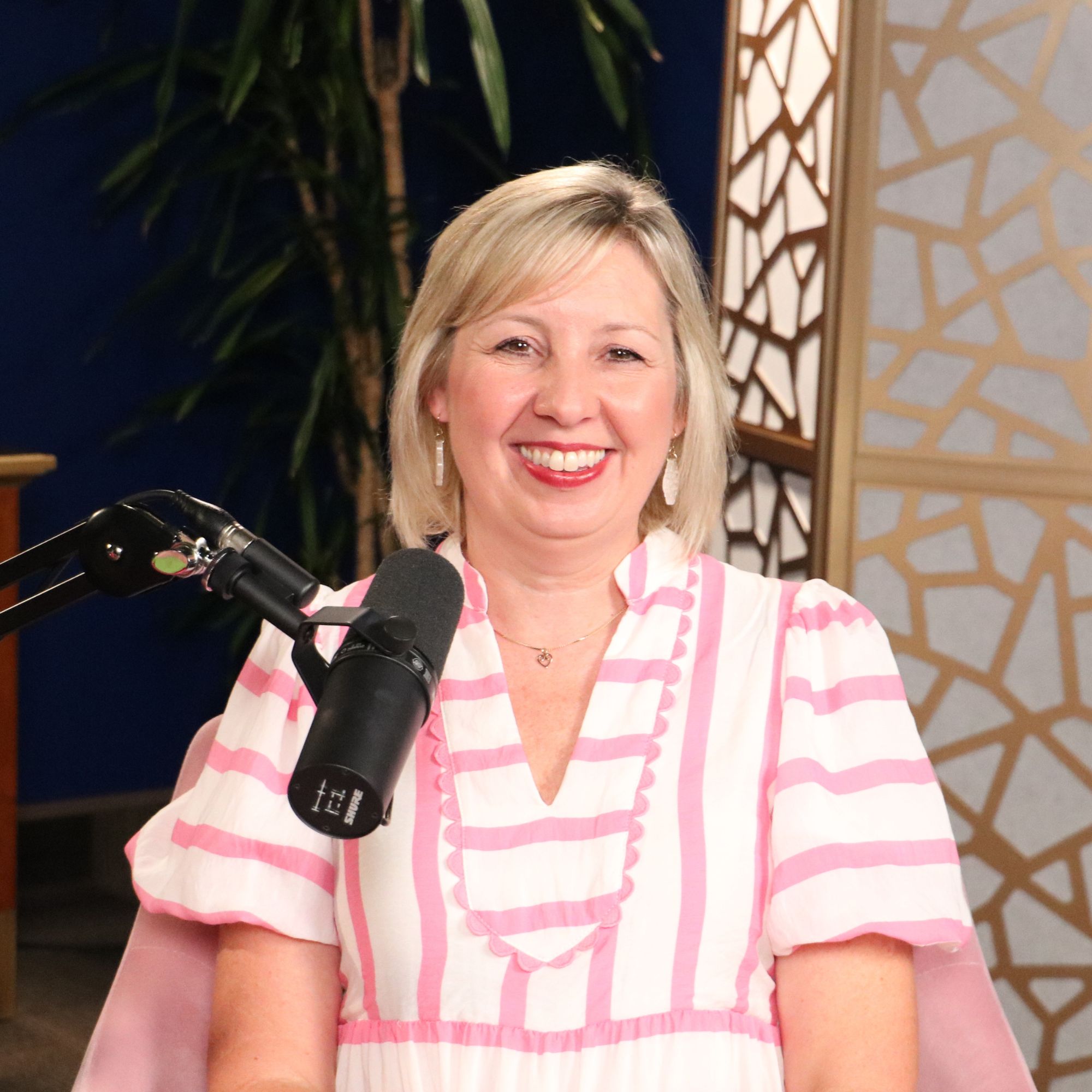
Dorothy: [00:00:00] Fighting cancer has been a part of Shannon Lecoq’s life since she got out of college. She was with the American Cancer Society for over 17 years. She’s been at The Rose for over 11, and she knows the importance of community and how having that community as your backbone can make all the difference in the world.
Shannon is our chief development Officer and part of her job is helping to raise lots and lots of money with a great team, which she will tell you about, but she also shares how local fundraisers and hardworking volunteers and generous donors join together to make screening and diagnostics possible for women who would otherwise have to go without.
Every cent, every gift, every hand raised in support helps working women access care. Especially when life deals a tough blow, like a job loss or a divorce, or [00:01:00] any of the other things that could happen in life. Shannon talks about that at The Rose, we are an organization where neighbors help neighbors and all of that keeps hope alive.
When you subscribe to our show, you help us grow. Someone you know may need to hear this story, so please share with your family and friends and consider supporting our mission at therose.org.
Let’s Talk About Your Breast, a different kind of podcast presented to you by The Rose, a breast center of excellence, and a Texas treasure. You’re gonna hear Frank discussions about tough topics, and you’re gonna learn why knowing about your breast could save your life.
Shannon, thank you so much for being with us today. I, I’m excited to talk with you and. Of course, I know you from your work here at The Rose, but we wanna cover a lot of other things today.
Shannon: Well, thank you for having me. I’m excited to be here. Finally [00:02:00] got me in.
Dorothy: I know this has been a chore getting you here.
Shannon: Yes.
Dorothy: Yes. No, it’s just been the timing.
Shannon: Yes.
Dorothy: So, Shannon, I know you are not a native Texan, right?
Shannon: No, no. My parents are born and raised Texans, but I am not. But I have now lived over half my life here in Texas. I, um, was born in Charleston, South Carolina. I’ve lived in seven states and I lived a year in Norway, but I mostly grew up in the Carolinas. But I came to Texas after I went to college in Oklahoma, and I’ve been here ever since.
Dorothy: Ah, so you halfway can claim this? Yes.
Shannon: Yes, yes. My children are born and raised Texans.
Dorothy: Yeah. And and did you spend some time on the, on the Galveston island or is that something I dreamed of?
Shannon: No. Well, my first job with the American Cancer Society, I did cover Galveston. Now my mother was born on the island. She’s a BOI.
Dorothy: Oh.
Shannon: And her family survived the 1900 storm. So we have long roots.
Dorothy: Yeah.
Shannon: In Galveston.
Dorothy: Yeah. ’cause I know you always talk about it so fondly and I.
Shannon: Yes.
Dorothy: I kept going. Does she actually live there or, yeah. So.
Shannon: No, just work the area.
Dorothy: [00:03:00] So you spoke a little bit about when you went to work for American Cancer Society.
Shannon: Yes.
Dorothy: You’ve been in fighting cancer for a long time now.
Shannon: Almost 30 years.
Dorothy: Yeah. This has been like your entire life work or
Shannon: Yes.
Dorothy: Main.
Shannon: Yes.
Dorothy: Main work. So tell us what you did at the American Cancer Society.
Shannon: Well, I had multiple roles. I, um, started off as what they called a field rep in Texas City. And it was funny that I would end up there of all places, um, since I’ve lived so many places. But that’s where my parents grew up and I still had family in the area when I started there. And, um, then eventually I managed south texas. And then the last job that I had, I was managing or helping to manage all the community-based fundraising events that the American Cancer Society had at that time for the division that I worked for. But it’s always been about community, taking care of community just like it is here at The Rose. And the main thing that I felt like I did was I empowered staff and volunteers like I do here at The Rose too.
Dorothy: And you do that, Shannon, so well. So when you’re talking about the [00:04:00] American Cancer Society, are you talking about events or are you talking about.
Shannon: Well, when I started and when I managed South Texas, I was considered a generalist and my staff were considered generalists. So we did a little bit of everything. Um, we did fundraising, we did um, prevention, we did education, we did patient services. We, um, supported, um, and staffed boards that were local boards at the time. But again, mostly the main thing always comes down to you need the money to make everything happen.
Dorothy: Right.
Shannon: So the number one objective was to get the money raised, but we did a little bit of everything.
Dorothy: And were you there during the times they were doing like Relay for Life?
Shannon: Yes. Yes.
Dorothy: Yeah.
Shannon: When I started was right when Relay for Life was coming to Texas and was beginning and so I started a lot of relays in the outside of the greater Houston area. And then when I managed South Texas too, I mean we, that was, we were just going gangbusters with it.
Dorothy: Yeah. So I remember so many times we benefited, The Rose benefited from that, uh, some of the fundraisers that American Cancer Society put together [00:05:00] especially, and that one was always so much fun.
Shannon: Yes, yes. I loved it.
Dorothy: Yeah. It was a, a real, a real special one. So I’m gonna put you on the spot. Where, what, what was your favorite city to work in?
Shannon: Oh. Well, they’re all unique. I think all cities. I don’t.
Dorothy: Oh, no, I, I don’t wanna hear the PR stuff.
Shannon: I’m gonna, I’m gonna tell you which one was my favorite and I’ll tell you why. But I was gonna say that, you know, they’re all unique and they all have different personalities. Each community or county and, you know, some things will work some places and some things won’t work. But I think still one of my favorite was Baytown. Um, when I started. First, very first job with the Mary Care Society, I had Baytown in my territory. And um, I remember going there for some of my first visits and the incoming board president was like, we wanna do that relay thing, whatever that relay thing is we wanna do.
And I was like, I don’t know what she’s talking about, but okay, we’ll do it. And it just took off. They were one of the top raising Relay for life events in the nation for [00:06:00] years. And, um, it was just so much fun. It taught me a lot about empowering volunteers and what Empower volunteers could do, they ran it like a business and it just reinvigorated everything that we were doing in that community and opened so many doors to integrate our mission into the fundraising activities. We were able to get smoking ordinance passed. I mean, it was just magical. And then it really gave me the example to take to other communities.
Dorothy: You know, that is so interesting. I don’t think we’ve ever had that conversation. Because that’s where I went to the first Relay for Life.
Shannon: Oh, wow. I did not know that.
Dorothy: When I, yeah. And it was, it was so different.
Shannon: Yeah.
Dorothy: It was so much energy and it was just different than the ones that they had here, so.
Shannon: Yes.
Dorothy: How fascinating. Yeah.
Shannon: And the relays always work better. I know like the more metropolitan areas like Houston struggled with them. They always worked better in smaller communities that already had a sense of their own community and they owned it. And that always made a [00:07:00] huge difference.
Dorothy: So as you.
Shannon: At least in my experience.
Dorothy: Oh yeah. As you compare these, uh, communities because you know, here’s The Rose in a big metropolitan.
Shannon: Yeah.
Dorothy: But you and I and the rest of the staff often talk about it’s kinda like we have our own community. How, how do you describe that?
Shannon: It’s not a city, it’s not a no, but I think again, it’s, I think it’s that, um, premise that it’s the community taking care of community and that’s what The Rose was founded on. I mean, y’all started because you saw a need in your local community and you wanted to do something about that, and you’ve expanded it over the last 40 years now to 45 counties. And we see that a lot with our third party, our independent fundraisers. I was saying that last night at a check presentation, these young high school students that started their own nonprofit, I said, you’re demonstrating community taking care of community. They want to do something to make sure that women have access to breast healthcare in their community, and they [00:08:00] can do that through The Rose.
Dorothy: And when I think about you going from like a national platform to a more local one. Is there a difference between the two?
Shannon: I don’t think so. You know, I was thinking about that, knowing you might ask me that. And again, like some of my roles at the American Cancer Society, you know, differed depending on what roles I was in. And like I said, my last role was more over a division level. We had six states that I was helping to manage these. But again, it always came back down to at least how the American Cancer Society was at that time. ’cause we’re talking over 11 years ago.
Dorothy: Yeah. You’ve been around here a long time.
Shannon: Yes. And um, so lots has changed, but again, it was based on that community taking care of community, and also just the ability to empower your staff and your volunteers to focus on the mission and achieve more than they think they can. And so I think that’s been my philosophy from day one when I started working back in 1997, [00:09:00] um, till now. So I see a lot of similarities. It’s again, and obviously the American side, we were focused on all cancers. And here at The Rose first, specifically focused on breast cancer, but still the fundamental principles apply.
Dorothy: So why cancer?
Shannon: Well, you know, at first it didn’t start off with cancer. When I was in college, I, um, did a lot of work with individuals with, um, intellectual, intellectual and developmental disabilities. And I really loved that. I also worked with a professor to do a study on local, um, nonprofit executive directors in the city that I was in, and I enjoyed that. So at first it started, I wanted to work in the nonprofit world ’cause I wanted to be a part of something, um, that I was giving back or I could help others. So when I graduated from school and my parents have returned to Texas and I came to Houston and started looking for a job, it was just in the nonprofit world. It wasn’t a specific area. And of course, I teased my parents after paying for four years of private [00:10:00] university. They’re like, pick a job. Any job, just good job.
And that’s where I landed, um, at the American Care Society. Like I already said, it was just funny how I’d been all these places and I end up back where my parents were originally from, but then I stayed in that world for two reasons. One. I’ve had many people in my life that are precious to me, diagnosed with cancer. Some of those people, including my grandparents, my great aunt that my daughter’s named after, my mother, my sister, a lot of close friends. So that means a lot to me. And then starting that work at the American Cancer Society, I just fell in love with their mission, their staff, and their volunteers, and that led me to stay for 17 years. And then I always say I feel blessed that I could continue that fight against cancer. Now just specifically on breast cancer coming to The Rose, um, over 11 years ago. I just have to be passionate about the mission and basically the product that I’m selling. ’cause we are selling a product.
Dorothy: When you think about The Rose, what is [00:11:00] the primary thing you’re selling?
Shannon: Selling, saving lives.
Dorothy: ’cause that is
Shannon: Yeah. What we do.
Dorothy: Yeah.
Shannon: Yeah. We save lives and we save families.
Dorothy: How do you convey that when you’re talking to large groups? Because.
Shannon: Yeah.
Dorothy: You and I both know this is the truth.
Shannon: Yeah.
Dorothy: I mean, this is what we do. But it almost sounds a little cliche.
Shannon: Yeah, it does. And we’ve had these conversations when our team meetings, you know, that we really, I think at The Rose focus on each patient one at a time and what can we do for that one patient and it mattered to them and we know these patients. You know, and like when I talk about those third party fundraisers that we have, a lot of ’em are people that we have helped or they know somebody that we have helped. And that’s why they wanna raise funds for The Rose because they know how much that is needed. And again, you know, we have the patients come into the podcast. We have patients that participate in, you know, media interviews for us or share their stories [00:12:00] on video or for our annual reports. And so we see how The Rose made that impact not only on them, but on their entire family.
Dorothy: Why? Why are those stories important?
Shannon: I think it’s important. One thing that was eyeopening for me when I came to The Roses, learning about the uninsured. Who is uninsured, um, and how insurance does work. So I think it’s important to tell those stories, to show that, um, the uninsured that we’re helping, a lot of them are working two to three jobs. They’re trying to make it. And sometimes people just fall on hard times and unfortunately that’s when cancer can strike. You know, like when they get laid off from a job. Um, they’ve gotten a divorce. I think that was a big eye-opener for me here. You know, meeting some women that had been, stay-at-home moms for 20 plus years, husband decides to get a divorce from them, takes the insurance, and now they have a problem. If it wasn’t for The Rose, where would they go. [00:13:00] So I think it’s important to share those stories, to show people what the uninsured really look like in our community and who doesn’t have insurance and why they don’t have insurance, and if they have access to healthcare, how that can save their life. And they can turn around and you know, we have. Per lots of stories that you’ve had here on the podcast, they’re back now teaching, you know, they went back to college. Or they’ve written a book, you know, and they’ve, um, made a life for them and their children and you know, they’re just living their life. And that’s why it’s important to share those stories.
Dorothy: And many have given back.
Shannon: Yes.
Dorothy: And created events or whatever to.
Shannon: Right. Their own nonprofits to support us.
Dorothy: Yeah. So it’s, uh, it’s been a full circle in, in many ways. What’s the the, what’s the most fun you have at The Rose?
Shannon: At the Rose? I think with my team.
Dorothy: Mm.
Shannon: I love my team. I’m very blessed [00:14:00] with the team that I have. Um, they’re very talented. They’re focused on the mission. They’re focused on the goals that we need to accomplish. Um, I’m very blessed that many of them have been with me, six plus years, some double digits. The only ones with less than six years are new positions that we created a couple years ago.
Um, I feel like they all recognize the strengths that each person brings to the table and respect that, and I really enjoy seeing since I’ve worked with them for such a long time, them all growing as individuals, but also the team as a whole, and us being able to accomplish more than we thought we could.
Dorothy: So what do they, what is all their goal is to still accomplish?
Shannon: Oh, well, it’s always gotta raise money.
Dorothy: Yes. Yes.
Shannon: Because they gotta raise about $6 million each year, at least to make sure that we can take care of the uninsured that need our help, but also that we provide the services that The Rose needs to take care of all of our patients and make sure that the staff [00:15:00] have what they need to support those efforts. What did you ask me?
Dorothy: I, I was thinking, and I Yeah. Don’t want you to lose that thought.
Shannon: Yeah.
Dorothy: Because, you know, that sounds like a lot of money. To have to raise every year.
Shannon: Yes.
Dorothy: Start from zero every year.
Shannon: Yeah.
Dorothy: And can you touch upon why it takes so much.
Shannon: Yes.
Dorothy: To take care of the, the women that we do?
Shannon: It takes so much because typically the uninsured are not coming to us for their annual screening, which is a less costly procedure. They’re coming to us because they have a problem, they have a lump, they have discharge, they have pain, they have something going on that doesn feel right. So those usually involve diagnostic mammograms. Ultrasounds could involve a biopsy or ultimately a diagnosis, so that’s why it costs so much money. To be able to navigate them through that whole continuum of care and get them access to treatment.
Dorothy: Because each of the procedures you talked about [00:16:00] require that specialized training from the technologist, the physician.
Shannon: Right.
Dorothy: Present and doing that part.
Shannon: And the patient navigation team.
Dorothy: And patient navigation, yes.
Shannon: And then the other funds that we have to raise is, unfortunately, this is not a cheap operation or an expensive operation to run our equipment is expensive. Mammography machines are expensive. The ultrasound machines are expensive. The mobile mammography coaches are expensive. It costs a lot to keep the coaches on the road and um, and we have to have the highest level equipment that any other mammography facility would have. And again, as a breast imaging center of excellence, we want to be able to offer that to all our patients. And we don’t offer any services to our insured patients that we would not offer to our uninsured.
Dorothy: Right.
Shannon: Patients. So we have to have the highest technology and quality.
Dorothy: And I always thought it was, um, not unique. What’s the word I’m looking for? But it was, uh, like we are a [00:17:00] non-profit and yet our uninsured the population, uninsured women and men.
Shannon: Yes.
Dorothy: Are receiving the same kind of care.
Shannon: Yes.
Dorothy: And the highest level of care with the machines that you would find anywhere? I mean, that’s just such a, it, it’s not standard.
Shannon: No.
Dorothy: It’s not standard. Many times when you’re uninsured, the care you get has a different quality, has a different level. So that.
Shannon: Or you feel like you’re treated differently. Or you’re gonna have to wait in a long line.
Dorothy: Oh yeah.
Shannon: Or a long time to get in to get an appointment.
Dorothy: Right. And here no one really knows who’s sponsored or not.
Shannon: No, no. I tell that all the time to any of the funders that I have, or anybody that I give tours on. I’m like, we pride ourselves that you don’t know in the waiting room who has insurance and who doesn’t. And our staff don’t know us. They’re treating them.
Dorothy: Or the doctors.
Shannon: Right.
Dorothy: So yeah. And we, we call, I always remind this when people of this, when I’m on the podcast, when we say [00:18:00] sponsored, it’s just a better way in our mind of recognizing the women that do need our help.
Shannon: Right.
Dorothy: As opposed to saying, this is charity care, or this is indigent care, or this is ’cause they’re not indigent.
Shannon: No.
Dorothy: And, uh, this is mission care. It’s not, you know, it’s just what we do. It is really what our community has led us do.
Shannon: Right.
Dorothy: You know, when we talk about community, I always think about, uh the time. And I know you know the story when we thought we were gonna change the Shrimp Boil.
Shannon: Yeah.
Dorothy: And we thought, why don’t we have a barbecue or in our community, uh uh, what do we call it? Committee?
Shannon: Yeah.
Dorothy: I said, no, you’re not. I’m like, well, you know, this is our place. Why can’t we do it like we want to? And it was, no, you’re not, we’re not gonna be on this committee if you try to change it. And I was going, okay.
Shannon: We have empowered volunteers that believe in the mission.
Dorothy: I know.
Shannon: And they knew what their job was to do.
Dorothy: That’s pretty empowering. I mean, good heavens. [00:19:00] I would never have thought to say, no you’re not.
Shannon: Yeah.
Dorothy: But they did. And that was, that was always a real special, special, uh, part of our history. So one of my other questions was, what is the most difficult part of your job? And don’t say Raising money again.
Shannon: Yeah. No, I’m not gonna say I think, um. Again, I’m very blessed with the team that I have, so, um, we have a pipeline, we know how to work the pipeline. I think the, the challenging part is just knowing what the need is out there and if we can meet the need that is coming from our community, having enough resources, enough bandwidth to raise enough money to make sure that we don’t have to tell anybody, “no.”
Dorothy: Right.
Shannon: I think that’s the hard part and the seeing the increase in the uninsured that are coming to us the last couple years being higher than it’s been in a decade.
Dorothy: Oh yeah.
Shannon: It’s very concerning and concerning if there’s more coming.
Dorothy: Yes.
Shannon: And will there be enough funds? And then knowing that [00:20:00] we can only control so much. There’s things outside of our control, outside of the roads that are impacting how The Rose can deliver its mission every day.
Dorothy: So from the medical side, what have you learned since you’ve been here? I mean. How many years now? 11, 12?
Shannon: Over 11, yeah, over 11. I think, you know, I tell people, um, I mean it’s very simple, but I learned the difference between a screening mammogram and a diagnostic mammogram and the importance.
Dorothy: Which most people don’t know.
Shannon: Yes, yes, yes. But.
Dorothy: So tell us what it is.
Shannon: Yeah. So, well, personally, I’d had, I’ve had mammograms since my twenties and because when I was under 40, they were diagnostic mammograms, but nobody explained.
Dorothy: Right.
Shannon: To me. And even again at the American Cancer Society, like I said, we were generalists, so I knew to talk about mammograms, but I didn’t know there were differences. So you can correct me if I’m wrong. My, my understanding is, so the screening mammogram is what you’d have on an annual basis if you’re 40 and over and you don’t have any issues or areas of concerns. It takes the normal [00:21:00] views, um, of the breast. And of course, we only offer 3D, so. Um, you can see better. But the diagnostic mammogram is, if you’re. Under age, and it takes additional views to look to see if something’s going on and if an ultrasound is also needed is kind of my impression. I’m not sure if I answered that.
Dorothy: No, and that’s that’s exactly right.
Shannon: Yes.
Dorothy: But I think the, the component in there is when you’re having diagnostic or radiologist is looking at it.
Shannon: Yes.
Dorothy: In real time.
Shannon: Right. And you always see the radiologist too.
Dorothy: Yeah. And this is something that is very, uh, of course it’s difficult for general public to understand they, you know, they, they’re coming back and they think I’m just getting another mammogram. But actually the radiologist is looking at it then and saying, okay, I may need this position. And it is amazing, especially with denser breast, how a shift of position can absolutely rule out something or.
Shannon: Right.
Dorothy: Or, you know, verify [00:22:00] there’s something there. So yeah. It’s, it’s uh, it’s really kind of complex.
Shannon: Yeah.
Dorothy: When you get down to it.
Shannon: Yeah.
Dorothy: They can’t just say all mammograms are the same.
Shannon: Right.
Dorothy: It, it doesn’t work that way.
Shannon: Well, and that’s what I’m always, um, amazed by when I do give tours here at The Rose and people leave and they’re like, I just thought you’re doing screening mammograms. They have no idea what goes on under this roof.
Dorothy: Right.
Shannon: Every day and every different piece that we have to do to move a woman through that continuum of care. He says a lot more than just that annual screening mammogram.
Dorothy: And, and speak a little bit to the patient navigation part of it.
Shannon: So of course we’re navigating uninsured patients from the moment they reach out to us.
Dorothy: Absolutely.
Shannon: And um, but our patient navigation to treatment team that I think you’re referring specifically to is once we have diagnosed a patient and that is available to all our patients, insured or uninsured, it’s typically the uninsured that are using those services ’cause they need access to treatment. And that’s why it’s so important with our sponsorship program that you mentioned [00:23:00] earlier that we already qualified those uninsured patients from the get go for the sponsorship program because then that enables our navigation team to get them access to care within 30 days, which will put up against any insured woman’s access to care.
And so they already know that day when they’re sitting down with the physician. And with the patient to tell ’em that they have breast cancer, they already know what program they’re going to be enrolling that unsure patient in what the recommendations is for the closest center for them to have their treatment and to get an appointment with an oncologist.
And then they stay with them throughout the course of their treatment up to five years. And course if they have metastatic breast cancer, they could be with them longer. But they provide other resources and support also, because again, like I said, was eye-opening, coming to The Rose and learning more about the uninsured population. Again, the patients that we’re working with aren’t used to asking for help and by the time that they’re diagnosed and we get them in for treatment. [00:24:00] They’re already so grateful. They don’t wanna ask for anything else. So it’s important. I think one of our navigators one time said that they’re the nagging mother-in-law. You know, so they’re calling those patients, they’re checking on ’em, making sure they’re being compliant with their treatment. If they’re not, what are those barriers? Do they need help with transportation? Do they need childcare? Are they not getting the prescription filled because they’re trying to pay their electric bill? So then having those other resources to help connect them too, so that they can just focus on their treatment and getting healthy for themselves and for their family.
Dorothy: So, and, and everything you said is absolutely right on.
Shannon: Right.
Dorothy: It is so important to have that. I think. Seriously, you could have a patient navigator for every disease.
Shannon: Oh, yeah. You and I have said that a lot, and of course, you know my passion about education too, with learning differences, and that’s, when you’re sitting there with any type of diagnosis and you’re not familiar with it, it’s overwhelming no matter your access to healthcare, your access to resources, or your education level.
Dorothy: Right.
Shannon: If it’s something [00:25:00] new, it’s, it’s hard to grasp it.
Dorothy: So talk about your other passion there.
Shannon: Well, um, I said my other passion is education, but specifically for children with learning, um, differences. Um, so I just really feel strongly about that because I have a child who has learning differences and making sure that she has the access to what she needs to be successful.
And when I talk to parents that have a child that’s been diagnosed, you know, my best advice for them is to educate themselves as best as possible. And, um, to learn to be an advocate for your child. But I think it’s important for that child to understand when it’s appropriate, depending on their age, um, what is going on, and what their learning difference is, and their strengths and their weaknesses, so they can become their own advocate. So at some point they gotta go out and do it themselves.
Dorothy: That’s right. And you know, I guess if we had a reoccurring theme around here. It is learning how to be [00:26:00] your own advocate.
Shannon: Yes.
Dorothy: And I’m always amazed at the number of patients who’ve sat in that chair and said, I had to do this.
Shannon: Yes.
Dorothy: I want other people to know they need to do this. And, and it doesn’t, it’s not limited to medical care.
Shannon: No, no.
Dorothy: No. Not at all.
Shannon: But it is important with medical care too.
Dorothy: Oh yeah.
Shannon: Because you need to be prepared to ask the questions you need to ask or be able to feel like you can go back and re-ask once you’ve had a time to digest that at home.
Dorothy: And that’s a good point.
Shannon: Yeah.
Dorothy: ’cause we go, oh, why should I ask that?
Shannon: Yeah, yeah, yeah. And not just.
Dorothy: Wait, we never remember all of them. No.
Shannon: Yeah, no matter or, or wait for the doctor to call you. Well, if they’re not calling you, you need to call them.
Dorothy: Yes, yes.
Shannon: So.
Dorothy: There’s, there’s so much to it.
Shannon: Right.
Dorothy: Shannon, you’ve lived many, many different places, but tell us that, I know you have one favorite that you got to experience very early on when you went overseas.
Shannon: Hmm.
Dorothy: Tell us about that.
Shannon: Yeah. Living overseas had a large impact on my life. I was a foreign exchange student when I was [00:27:00] 16 years old to Norway. And um, I think what it taught me at that time is, you know, I could do this. I could do it on my own. I survived. You know, this is before I tell my children, I’m like, this is. Or email before cell phones, you know?
Dorothy: Right.
Shannon: You had to write letters, you know, you had to make phone calls. And those were very expensive at the time.
Dorothy: Yes, yes.
Shannon: Um, of course I didn’t know any Norwegian when I went to, but I think it’s good. And we were very blessed just to be overseas recently and for my children, you know, and same when I was 16. I’m like, I think it’s good to see how other cultures live, how your home country, um, is viewed by others in the world. Also, what role your home country plays in the world stage. And then also seeing how other countries deal with healthcare and education and jobs. I just think it gives you a broader view of the world. And more experiences to, to pull from. But, um, I was very blessed with the families that I lived [00:28:00] with in Norway while I was there, and I considered them my, my family and part of me, and part of my heart will always be in Norway.
Dorothy: Mm. Yeah. You speak so highly of it.
Shannon: Yeah.
Dorothy: And, and you have such, such great memories there.
Shannon: If I could, I would go live there a month every year during the summer, preferably. Yeah.
Dorothy: Yes, I bet. I bet. Yeah. So if you had some message to tell, and I really do want you to focus for just a little bit on that importance of those community events. Uh. Because we talk about it. So, um, like everybody understands what a community event is and I realize they don’t.
Shannon: Right.
Dorothy: And they don’t know that impact on The Rose and what it means. So can you speak to that just a little bit?
Shannon: And are you referring to our events or the third party?
Dorothy: No, I’m talking third party.
Shannon: Third party events. So the third party events is the events that others put on, on our behalf. ’cause like The Rose, we have three, what we call signature events. Some of my team members have been here on the podcast talking about [00:29:00] those, and those are ones that we recruit the volunteers, we staff the volunteers. So the third party or independent fundraisers are ones that other people in the community do on our behalf. Like they’ll say the proceeds are gonna go to The Rose, and most people think of us during October. During Breast Cancer Awareness month. I tell people we could have 180 events going on during October. October really kicks off for us right now.
Dorothy: Yes.
Shannon: And it can go through December, but we do have some events that take place other times of the year, um, too. But like I said, the majority are in October, but they can, I think this last year they raised over $600,000. Sometimes they can raise more than our three events.
Dorothy: Right, right.
Shannon: That, that we do. So they play a crucial role in not only raising funds that The Rose needs to deliver the care that we need. But again, those people are being advocates for The Rose. They’re sharing our message, they’re sharing our mission. Again, a lot of them have benefited from The Rose and this is a way for them to [00:30:00] give back, or they know somebody that has benefited from The Rose. It’s just amazing the stories that we hear. But what has always amazed me too is sometimes we get funds from organizations that aren’t even in Texas.
Dorothy: Right.
Shannon: You know, they’re in Colorado or they’re in Florida and they call us, you know, after October and say, Hey, during October, you know, we raised money for quote, breast cancer awareness month. And now we need to decide where to donate the money from. And we looked you up and we like what you’re doing and you have great reviews and charity rankings and so we wanna send you the funds and I’ll be okay. Well, you. Know the funds are being used in Texas and they’re like, yeah, that’s fine. It’s like, okay.
Dorothy: Okay.
Shannon: So, um, and it’s people do, you know, I tell people, like when I do the new staff orientation, I’m like, anything you can dream of, they’re doing, you know, baked cells, gene days, um, burpees for boobies, you know, jumping out of airplanes, runs, walks, volleyball games. Card games, everything.
Dorothy: Martinis.
Shannon: Yeah. Margarita parties.
Dorothy: [00:31:00] Right.
Shannon: Um, auction off bras. I mean, it’s just amazing what creativity people have. And have a good time while they’re doing it.
Dorothy: And we so appreciate it.
Shannon: Yes.
Dorothy: It’s such a big part of, of our fundraising that.
Shannon: Right.
Dorothy: That makes it, we’re able to do so many more things just because of that.
Shannon: Right.
Dorothy: Because our community cares. And I think that goes back to what you were saying in the beginning.
Shannon: Yeah. Again, it’s all community, taking care of community.
Dorothy: So any last words that you’d like to send out to our listeners?
Shannon: Well, again, I think it’s very important to know your body like we talk about. And take care of yourself on the podcast and making sure that you’re having your mammogram. You know, I tell people if you have insurance and um, you’re in our 45 counties, you know, and you don’t have time to volunteer, you can’t write a big check. The way you can be a philanthropist is come have your mammogram.
Dorothy: Right.
Shannon: With The Rose. Um, if you are thinking about doing a fundraiser for breast cancer, think about us. And, um, because again, you know, your money’s gonna stay here in the [00:32:00] community and help people.
Dorothy: That’s right. Well, thank you so much for being with us today. We really appreciate it.
Shannon: Well, thank you for having me.
Post-Credits: Thank you for joining us today on Let’s Talk About Your Breasts. This podcast is produced by Speke Podcasting and brought to you by The Rose. Visit therose.org g to learn more about our organization. Subscribe to our podcast, share episodes with friends, and join the conversation on social media using #LetsTalkAboutYourBreasts. We welcome your feedback and suggestions. Consider supporting the. Your gift can make the difference to a person in need. And remember, self care is not selfish. It’s essential.