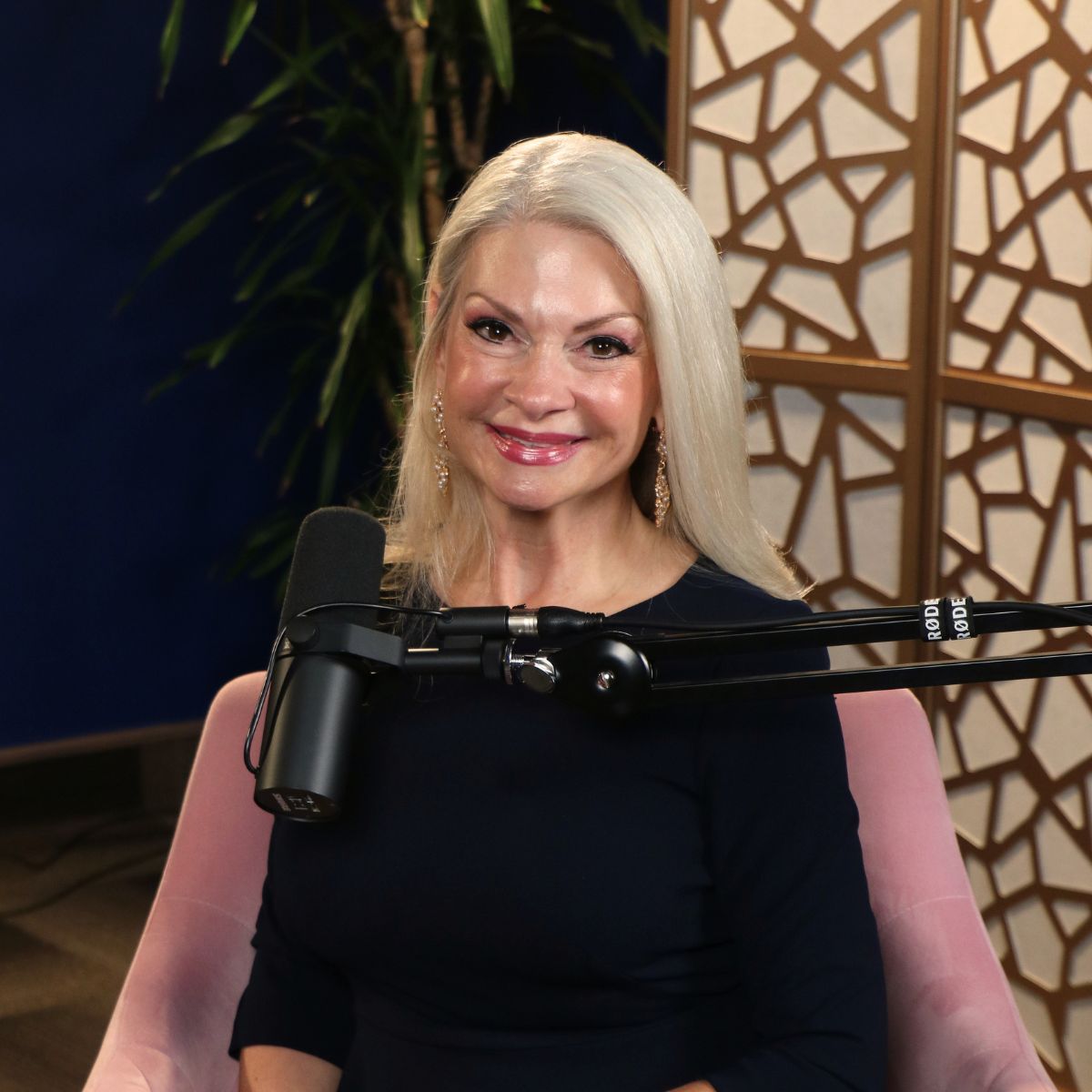
Dorothy: [00:00:00] Today I sat down with Susan Mele, who has spent 45 years with the Art Park Players, and almost as long helping The Rose care for women who thought cancer meant the end of their story. Susan shares how clipping newspaper articles about a surgeon named Dr. Dixie Melillo turned into decades of fundraising, friendship, and then when Susan’s own mother was diagnosed with breast cancer, it was Dr. Melillo who helped her get through the mastectomy and helped her to learn how to feel whole again. If Susan’s story reminds you of someone quietly serving in the background, share this episode with your family and friends. Remember, your donation means another woman will receive the care she needs. Just go to therose.org for more information.
Welcome to Let’s Talk About Your Breasts, a podcast brought to you by The Rose Breast Imaging Center of Excellence and a Texas treasure. I’m Dorothy Gibbons, your host and co-founder of The [00:01:00] Rose. During this season, you’ll also be hearing from co-host Roxann Hayford and others as we bring you stories from survivors, physicians, caregivers, researchers, employees, and supporters. These are real people sharing difficult times, celebrations, and personal stories of hope, despair, and faith.
Susan, thank you so much for being with us today.
Susan: I am honored.
Dorothy: Oh.
Susan: You cannot even imagine how excited I was- … when this was brought to me, and to even be considered to be a part of this-
Dorothy: Oh, my goodness.
Susan: Is a true blessing.
Dorothy: Well, you’ve been a part of The Rose forever- it seems like. And I don’t know if I wanna start with you or with how you knew The Rose, but let’s start with you. 45 years of being an actress.
Susan: Well, actually, it’s longer than that. I’ve been with the Art Park Players for 45 years.
Dorothy: Oh, that’s right.
Susan: I had a passion for performing when I was very [00:02:00] young, but I also had a passion to serve- and a passion to love God. I was adopted when I was 16 days old, and my parents really instilled that value system in me. But because the genetic factor existed, they did not know what to do with someone that wanted to perform 24 hours a day.
I was putting on shows in my garage. I would get the sheets up and have curtains, and then we would go to the nursing homes, and they would let me sing, and I was very, very young. And, uh, bless their hearts, I don’t think they deserved someone like me. I think they deserved someone much better, because I was a handful.
Dorothy: Oh, my goodness.
Susan: But they supported me and, uh, nurtured that. But the Serving and the loving God far outweighs that passion for performing for me.
Dorothy: Oh. That is so good to hear. So how did you find out about The Rose?
Susan: Well, I was working for Texas Commerce Bank- for Tom Watson, [00:03:00] and he was trying to find a board of directors. And he said, “Susan, there is a lady, Dixie Melillo. I want you to cut out every newspaper article you can.” And he would give me papers, and then I would go look, and I started cutting out all these articles, and I started reading about what it was that Dixie Melillo did. And of course, her name was in there, and I had not met you yet. But, uh, very soon after, he did ask Dixie to be on the board of directors, and that’s how I got to know her, and that’s how I got to meet you.
Dorothy: Oh, that is long, long time ago.
Susan: Long time ago.
Dorothy: Yes.
Susan: Yes, in 1986, ’87 is when- he started that- uh, with the board of directors for Texas Commerce.
Dorothy: My goodness. Well, did it make sense to you t- what we were doing or trying to do at that time?
Susan: Absolutely.
Dorothy: Yeah.
Susan: I loved the passion that you and Dixie had for serving. That far outweighed what your mission was because I love the fact that women who were in need, and let’s [00:04:00] face it, a lot of people are- and they don’t know where to go or where to turn whenever they’re faced with something like that. And I loved the compassion. When I met both of you, you both gave me a hug, and I know that’s what you do with people that come into The Rose. I mean, they’re coming in in their darkest moment. When you heard the word cancer back in the ’80s, it was a death sentence.
Dorothy: Yeah.
Susan: That’s what you always equated it to. But that-
Dorothy: Yeah …
Susan: wasn’t your mission. It was, “Hey, how are we gonna take care of this? What can we do to make you feel better, and what do we have that will allow you to heal?” Because a lot of women didn’t know. You just heard cancer, and then- you got chemo, and more than likely, you weren’t gonna make it.
Dorothy: Right.
Susan: But you had vision far greater, and it’s so neat to see where you’ve come from back in those days-
Dorothy: Yeah …
Susan: to where you are now because now it’s like, “Okay, you’ve got cancer. Here’s what we’re doing.” It’s not- you don’t even think about the possibility of losing a patient. It’s-
Dorothy: No …
Susan: “Here’s what we’re gonna [00:05:00] do, and this is how you’re gonna live.”
Dorothy: And you know from the very beginning, uh, one of the, the first volunteer we had was a Stage 4. And I remember so vividly Dixie saying to her, “You’re never gonna Stage anything.” You know, “We’re gonna beat this.”
Susan: That’s right.
Dorothy: And she did. I mean, even then, there was a, just such a different attitude all the way around. It’s, um- I can remember we couldn’t say the word breast-
Susan: Right …
Dorothy: on TV or on the radio. I mean, it was … what were you supposed to say? It’s a woman’s chest here. I mean, you know, I could say mammogram-
Susan: Right …
Dorothy: but couldn’t say breast.
Susan: Right.
Dorothy: So yeah, it has really, really changed. So now has breast cancer touched you in any way?
Susan: In several ways. Obviously, I don’t think there’s a human being on Earth that hasn’t been-
Dorothy: Yeah …
Susan: affected by cancer. But in 1993, my mother was diagnosed with cancer, and I got her to Dixie immediately because we had a relationship, and brought [00:06:00] her to The Rose. My mother was a very, um, she was a very quiet, so- s- uh, quiet, soft-spoken lady.
Dorothy: Yeah.
Susan: But like a deer in the headlights, she would just freeze. And, um, and I said, “Mother, we’re gonna get you to The Rose. They’re gonna take care of it.” And Dixie was so sweet with my mother. It was lovely to watch. And I remember in the hospital, um, Dixie came in and spoke with her before the surgery. She did with the appointments, and she had a, my mother elected to have a mastectomy on one side and a lumpectomy on the other. And the whole way, Dixie told her what to expect, “Here’s what’s going to happen.” My mother, uh, did not want to have reconstructive surgery. She wanted to be under the knife as little as possible. And so what I loved most about Dixie and The Rose, and what you do, is you don’t just say, “Okay, we’ve taken care of it. Have a wonderful day.” That’s not what, that’s not what’s going on here. It’s, you take care of it, and then, [00:07:00] “Here’s what we need to do to make you feel whole again.” So Mother was afraid she might lose her hair, so they gave us a list of people to try professional wigs on. Of course, Mother never had to, uh, go through that. But they had someone there very special that knew what that person was going through.
Dorothy: Yeah.
Susan: Then they also sent us to have, um, the, the things that, uh, you know, prosthetic breasts.
Dorothy: Yeah.
Susan: Special bras.
Dorothy: Right.
Susan: And special bras. And those people were absolutely amazing. It’s like the mission for you and Dixie trickles down. It doesn’t just stop with the two of you. You have your Rose team. Yeah. You have your Rose family. You have all the outreach programs that you make sure it doesn’t just stop with the cure or the surgery. It’s not over then. It’s what help you’re going to need, what mental help you’re going to need- later. Because, uh, you continue to have things that you need to deal with, but The Rose was always there to help my sweet [00:08:00] mother get through that.
Dorothy: Yeah.
Susan: And she survived it.
Dorothy: I know. For so very long.
Susan: She sure did.
Dorothy: My goodness. Yeah. So it, was that why you started supporting The Rose?
Susan: Well, I always loved The Rose actually before my mother got cancer. When Tommy had brought Dixie to the bank, um, I was very active in, uh, Pasadena- with him, and I met a lot of wonderful people. And Sherri Trainer- was a part of the Soroptimist Club. Now we’re going-
Dorothy: Yes …
Susan: way back.
Dorothy: Oh, way back.
Susan: Way back. I’m not young. And, um, she did a fundraiser. And that’s how I really got involved with The Rose. I knew who you were- and I loved what The Rose stood for, but that’s when I really got immersed. So every year she would allow me to MC the style show. She would- let me get entertainers, and we would be at the Hobby Hilton because she-
Dorothy: Yes …
Susan: used to work there and had that connection. [00:09:00]
Dorothy: Yes.
Susan: And those were such wonderful days.
Dorothy: Oh.
Susan: I had the best time. We had the best time.
Dorothy: We did. We did.
Susan: We had the loveliest people in the community- that supported the event. They would come, and we would do fittings at all the stores that would allow us to model for them. And, uh, then we would put together, uh, themes. We would have themes, and, uh, we did this show for years. I can’t even image- imagine when we stopped. I can’t even remember that long ago.
Dorothy: I know.
Susan: But I know that you started having different fundraisers and things like that, and maybe Sherri’s position changed, but it was always so much fun.
Dorothy: It was.
Susan: And so that’s when I really got invested with The Rose, because you saw firsthand how great you and Dixie were, not just as founders of this wonderful organization, but what you immersed into the community and to make sure that your mission statement got out there. You can’t just say, “Here’s what we do, and come join us.” You’ve gotta get out there, and that’s what-
Dorothy: Yeah …
Susan: I think that’s what you and Dixie do best, is you get [00:10:00] out there, and you make sure that people understand what The Rose is and what it does for women, especially those in need.
Dorothy: Oh, thank you, Susan.
Susan: It’s true.
Dorothy: I di- I- I’ve always said it was the community that kept us going. That got us going, kept us going. It’s always been community. But those programs, do you remember one that was especially fun?
Susan: They were all fun. I, I, I mean, I can’t re- No.
Dorothy: Didn’t you used to kinda pattern them after some of the musicals and-
Susan: Oh, yes.
Dorothy: Yeah, yeah.
Susan: We had themes every year, and, uh, people, there were certain people that always wanted to be in the show no matter what. And you did not leave them out. And we didn’t. We didn’t. And I remember every year, um, you know, just- There wasn’t one in particular that stood out to me. They were all special. You know, I always liked the fact that Sherry wanted to do it bigger and better- and more out there.
Dorothy: Yes.
Susan: More outlandish.
Dorothy: Yes.
Susan: You know, better than the, the year before, and [00:11:00] we always had goals that we wanted to achieve. And we always wanted to make more money than the last year.
Dorothy: Right, right.
Susan: But I think it was just, what I remember most is just the lovely people that supported the event, that came to the event.
Dorothy: Yeah.
Susan: And the Soroptimist Club was just-
Dorothy: Oh …
Susan: filled with a group of servers. They were- They were.
Dorothy: Yes, they were …
Susan: beautiful souls.
Dorothy: They really, really were. Well, the one I remember the most was when we did the, oh, the ’60s theme. And Tom came as a, a hippie. Oh, yes.
Susan: That, those- I have pictures from that.
Dorothy: Oh, yes. Oh, I tell you, those were fun, and they were very successful. And I do think it was because the Soroptimist… You know, the club had gotten a little smaller. Um, didn’t quite have the resources that we needed for them to keep putting on that kind of event. It took a lot of work. We, we, I know we started on it, like, eight months before it ever happened.
Susan: Oh, yes.
Dorothy: Oh, yeah.
Susan: Oh, yeah. It’s, it’s time-consuming, but a lot of times [00:12:00] that’s a great way to build a community. You know, and so I think that the people that were involved in the style show, the stores that were involved- the people that would come and perform, it’s like, “What am I performing for? Why am I doing this? Oh-” The Rose. Oh, well, let me find out more about it. And I would be willing to bet that a majority of those people that were doing the show back then are still involved, and still supporting, and still speaking about why people should join The Rose community.
Dorothy: Oh.
Susan: I truly believe that.
Dorothy: I, I think there are, yes. I think you’re right. Well, now tell us about the Art Park Theatre.
Susan: Art Park Players started in 1979. It is the only theater that is under the auspices of city government. The person that used to run the Parks and Recreation Department then was Jean Riggs, and she was sitting in the office one day, and they said, “Let’s put on a show.” Well, people think it’s a lot easier than, than just saying those words. And, um, so [00:13:00] she and two other people, the dance director that used to teach dance there, and a gentleman that was involved on the parks side, they all, um, got together and they started a script reading. And they said, “Well, let’s see if we can put a show together.”
And so that is what they did. They put a show together. It was Once Upon a Mattress, and they named their theater company “The Not-Yet-Named Theater Company.” Well, something wonderful happened when they did that, that all of a sudden they got the right people in line. They had a, a lady that directed that show, and then she left. She was from New York. But then they brought in a lady named Sue Findlay Myers. And Sue came in, and she had a real passion for children, and she started a youth program, and then she started a dinner theater, and it grew and grew and grew. And, uh, I had the privilege to join in 1980 just as a volunteer, because I was that girl that performed in all the shows.
And I thought [00:14:00] for sure I was going to be a professional actress. That is what I wanted to do in life. I was meant to do that no matter what, until God put me in a different path, and He made me realize how valuable those children were that Sue allowed me to work with. I would volunteer vocal coaching. It was very small back then, and they would do shows. They would travel, and they would perform, and they would do shows in the city. And, um, I volunteered there for seven years with her, and then I started working part-time. Now, mind you, I had careers that I was doing- … uh, outside of that, and I was performing a lot professionally.
But, um, back to the Art Park Players, they started there. Under her leadership, it grew, and it grew, and it grew to where we are now one of the most successful community theaters in the state of Texas. We’re the largest children’s theater. We have 250 students every semester. We-
Dorothy: Oh my gosh …
Susan: um, and they [00:15:00] are amazing. And working with those students and knowing that God had a greater purpose for my life. I started working there part-time. Part-time, $6.50 an hour. I’ll never forget. And, um, and I realized that that’s where I was meant to be, and I am surrounded by an amazing community there. The people that work there, the people that serve.
We also have the largest volunteer base in the city of Deer Park. But that is how the theater started in 1979, and then in 1980, ’81 when Sue got there, she named the theater Art Park Players. So for Deer Park, I mean- obviously it’s a spinoff, and that’s where it started, there. And I am so privileged to have been a part as a part-timer, as a volunteer, and I’m so honored that God allowed me to see that my life was much greater than being a performer. It was watching those [00:16:00] kids find out who they are, and developing self-confidence and self-awareness, and that their story is far greater than they had ever thought it would be.
Dorothy: Oh.
Susan: Seeing them grow- is, is what does it for me, and I believe that’s why Art Park Players is so, so successful, is because of the youth program and the buy-in that the community has. And we’re known statewide, and that’s because of the wonderful volunteers, the students, the employees that I have. They’re amazing. They have the same mission of- helping others, just like your mission is. You and Dixie. The same mission, just put in a different way-
Dorothy: Yes …
Susan: of letting people know that they have a purpose, they have value. They’re finding their own voice on stage. And, uh, just as the volunteer actors and actresses that come, and we want to make them feel welcome. We want to make them feel welcome to the Art Park Player family, that they have a place to [00:17:00] belong. A lot of times people don’t have a place to belong. And, and if you can just give them some place to plant their seed in, and to give them a place to grow. I mean, we’ve got people that just love to build, so they’ll build with the technical director. They don’t like theater, but they have a, they love to build. And then we have people that want to be behind the scenes, and people that want to just do fundraising. I mean, just like you, we are a fundraising business. We want to send children… you know, we have a group that performs on Carnival cruises. We’re about to go out and perform this summer-
Dorothy: Really?
Susan: On the main stage. We’ve been doing that, yes, for 30 years now.
Dorothy: Oh my goodness.
Susan: And then we also have a group of actors, a troupe, that, uh, is involved with Theater Network of Texas where they compete every summer, and we have to raise funds for those people. And then we also raise funds to give sch- uh, scholarships to deserving seniors, and internships for, um, students that want to work, and they want to learn more about theater [00:18:00] and their craft. So that- That fundraising is for them also, but it’s also for students that don’t have a way to pay. I have a donor that is a dear, dear friend of mine, and he gives me money on the side very quietly and says, “You know what to do with this.”
And that goes for kids that cannot afford costumes, that-
Dorothy: Wow …
Susan: their parents cannot afford to get them there, and, uh, for their parents to be able to see the show, and for them to be able to stay in the program.
Dorothy: Oh my gosh. So- Isn’t that… Gives me chills.
Susan: Well, you have more than just, it’s more than just putting on a show.
Dorothy: Yes. Yes.
Susan: And I love the mission that Sue Finley Myers had, and I am so honored that she chose me to take that mission when she retired.
Dorothy: Yeah.
Susan: Far greater-
Dorothy: Mm, you’ve been there …
Susan: than I could’ve ever imagined my life to be.
Dorothy: Ah.
Susan: Far greater.
Dorothy: That is. Now, tell me, do the students have to [00:19:00] be, uh, Deer Park residents?
Susan: No, ma’am.
Dorothy: No?
Susan: No, ma’am.
Dorothy: You take them from-
Susan: Everywhere. We’ll take you from wherever you wanna come from. And our students, we have some that travel from Humble- Cypress, Clear Lake, The Woodlands, Friendswood, Pasadena. We’ve got students from… They drive that far to come to our program, and I believe it’s because they’re surrounded by love. We do it differently. Um, you don’t come to the theater, like I said, just to learn techniques about theater. You’re gonna learn that, but I want people to know that they’re loved, they’re valued, they’re seen. And so I believe the community that we have working with, the children and the adults that want to come and be on stage, that our mission is far greater than just theater techniques and putting on a show.
I think it’s a community filled with love, and, um, that’s why I love to be there, and that’s-
Dorothy: Oh, wow …
Susan: why I lead with love. It, it’s, it’s love more than anything.
Dorothy: Is it still a dinner theater?
Susan: It is still a [00:20:00] dinner theater.
Dorothy: My goodness.
Susan: We’re the long- one of… We are one of the longest running dinner theaters. We’re the only dinner theater in the Houston area, and, uh, running full, like, year-round dinner theater. There are some theaters that will put on a fundraising show that has dinner included, but we are the only dinner theater in the Houston area.
Dorothy: Oh, my goodness.
Susan: Still running, yes.
Dorothy: What an accomplishment.
Susan: Well, it’s, um- Oh … it’s a twofold thing. We have the dinner there to get the husbands. And, uh, if they’ve got a good meal, they’re great.
Dorothy: Yeah.
Susan: Uh, the women will come for the theater- and the… But if we do a dinner that’s geared toward men, it, it works. We have a little secret there.
Dorothy: How interesting. Now tell us about this fundraiser that you hold for The Rose every year.
Susan: All right. I- Wanted to do something very special with the volunteers. My volunteers that serve at the theater are volunteers, are very invested. And r- Part Players is invested in the [00:21:00] community also. We, we serve a lot of organizations, because in addition to the performing and giving you love, we want to give you places to, or students and people, to get plugged in with. And one thing about our volunteers, they’re very creative, and two, they like serving, and that’s part of when you’re mentoring students, that you teach them how to serve also.
And so we were sitting around one day and we said, “We want to do a fundraiser for The Rose.” And we want it to be this, something special, something small. We knew that it wasn’t going to be a big thing, and we also knew that every year when we hand you that check, it’s like, okay, we’re not giving you $500,000. You know, this year was a little- over $5,000.
Dorothy: I know. Susan, I, we told you.
Susan: I know.
Dorothy: Most of our grants are in that $5,000 range. I- Uh, I mean, it’s rare that we get those $500,000 ones. I- So-
Susan: And I, I understand that. Wow. I understand that.
Dorothy: Yeah.
Susan: But we were sitting [00:22:00] around, and this was in, uh, 2001, and we said, “Well, let’s do something that we can craft or get people that enjoy that, uh, making things.” So I was involved, again, with Jackie Welch. You know, I’m gonna bring you back- to some names that are big-
Dorothy: Oh, I know. Yes …
Susan: mentors of people in Pasadena. And I would, with, uh, Jackie, I would help with the Circle of Trees. That city buildings- They had.
Dorothy: Yes …
Susan: would have, like in the city hall, the old city hall, they would have Christmas trees. And they called it the Circle of Trees. And we would go judge, and you would have different organizations within the community that would decorate a tree. So actually, I got the idea from that because I said- Oh … “No one does wreaths.”
Dorothy: Right.
Susan: And wreaths, you know, serve as a circle, and a circle is never ending. You know, there’s a lot of- Oh … uh, wonderful meaning in a circle.
Dorothy: Yes.
Susan: And so I said, “Why don’t we do the Circle of Life, Circle of Wreaths?” [00:23:00] And I wanted to name it after my mother- in her honor, because she was such a A beautiful angel. God literally placed an angel to be my mother.
Dorothy: Oh.
Susan: When she adopted me, I grew to realize the value of why he put her in my life, and so I wanted to honor her, too. And that way, the name would go on forever. Well, w- we’re still going.
Dorothy: You’re still going. I know.
Susan: So after 2001, we’re still going, and the group that has taken this under is a remarkable group, and probab- probably the nucleus of the volunteer base. Um, these people, it, it’s, they, all right, what are we doing for The Rose? When are we gonna start doing the wreaths? We’re gonna do, you know, um, a silent auction.
Dorothy: All right.
Susan: We’re gonna put a basket that just, uh, goes, that those funds just go to, uh, support The Rose.
Dorothy: Oh.
Susan: So that group is amazing, and I’m not saying names because I’m gonna leave somebody out.
Dorothy: Oh, I kn- I know.
Susan: Because there’s so many people. But you know who you are. [00:24:00] And you know how much I love you for that. And they, their service and their commitment is unwavering, and I am so grateful for that group- Now, this- … because it wouldn’t happen without them.
Dorothy: This usually happens around the holidays?
Susan: Yes, ma’am.
Dorothy: Uh, Christmas?
Susan: Right. In fall, we do a fall wreath auction- just a small one- so that the people that a- attend the shows, they can bid. So it’s kind of for those people-
Dorothy: Oh …
Susan: that attend the shows.
Dorothy: Right.
Susan: And then the Christmas wreath auction is for p- the parents that are involved with… that bring their kids there, and the parents are very invested. It’s, it’s a community. It’s not just- drop off your kids and have a blessed day. You know, they get involved with volunteering also. So they support this mission also, and they’ll bid on the wreaths. And anybody can donate a wreath. We put it out to the community, so a lot of our parents, a lot of our actors and actresses make wreaths.
I have people off the street that will see an article about it, and this lady brought in 10 wreaths this year.
Dorothy: Oh, my goodness.
Susan: She said, “Susan, we just heard that you do this, and I’ve got all these [00:25:00] wreaths that I wanna get rid of.” And I’m like, “Well, we’re the place for you.” And they’re all themed wreaths. They don’t just have to be Christmas or fall wreaths. Now, the fall typically are fall.
Dorothy: Right.
Susan: But the Christmas can be any wreath. And then we’ve also, because we’ve been there so many years, and believe me, my husband says, “If you bring another wreath home, that’s it.” ‘Cause they… I have one for every door.
Dorothy: Oh, my.
Susan: And, uh, people started making- beautiful wooden signs. People started making stands. People started making centerpieces. And we accept that also because for p- the people that support it every year, and no matter what, they’re gonna buy something. They’re going to support something. Let’s face it, they could not continue to do wreaths.
Dorothy: No.
Susan: They needed other ways to-
Dorothy: Right …
Susan: to decorate in their home or to give a gift. And I have this one gentleman that makes these beautiful boards, and one of them sits-
Dorothy: Oh …
Susan: in your lobby. In our lobby, yes. And what I love more than anything is all of my friends who come to The Rose, because I send everybody I can to The Rose. Those that, uh, can afford to pay to get [00:26:00] their mammogram- and then those that can’t and need assistance. Because the ones that can afford to pay, that’s how you’re supporting your mission.
Dorothy: Right.
Susan: And people need to understand, it’s just not about people that need assistance that can come here.
Dorothy: Yes.
Susan: But no matter who’s coming- that board stands there, and they’ll send me a picture, and they’ll say, “Susan, look what’s in the lobby.”
Dorothy: Oh.
Susan: “And it has my mother’s name on it.” Oh. “And it means the world to me-
Dorothy: Oh …
Susan: that that stands here.” So that’s really a signature of the benefit of what, what we do in a very small way-
Dorothy: It’s nice.
Susan: But that we’re always going to do that. As long as I’m alive, we will always do this fundraiser. I don’t care if you get $100 from us- … and that’s just because I come and give it to you, and this is honor, in honor of the Louise McBee Circle of Life Circle of Wreaths. But it is by the Art Park Clear volunteers that that mission stands for us.
Dorothy: Oh, my goodness. What a story. Really? 29 years now? Longer?
Susan: Well, [00:27:00] it, it- 27 … you’re making me do math, and that’s not what I do well.
Dorothy: I know.
Susan: But since.
Dorothy: But since 2001. Right My goodness.
Susan: But we’ve been supporting, you know, the theater’s- been supporting it long before then- Long before then … because we were involved with the shows.
Dorothy: And those were all through the ’90s.
Susan: Yes.
Dorothy: I think, I was trying to remember how many years we had that, and I think it was something like 10 or 11.
Susan: Yes.
Dorothy: Yeah.
Susan: It was over a decade. I know because I was trying to go through playbills that we had- for it, and, uh, I knew it was a little over 10 years is what I came up with, so I think our math is pretty good on that.
Dorothy: Yeah, yeah. So do you have a favorite play?
Susan: Well-
Dorothy: That Art Park puts on … ?
Susan: I have several.
Dorothy: Okay.
Susan: And people know That, um, there are shows that I love doing at the theater. One of them, uh, we were the f- first community theater to get the rights to, uh, Mamma Mia!
Dorothy: Oh.
Susan: And everybody knows that, uh, when I went to see it years ago, that I was [00:28:00] going to do this show no matter what, no matter what. And I was going to star as Donna Sheridan, no matter what- no matter what. Well, this went on for years. Community theaters couldn’t get the rights, and my technical director is not a fan of this show, but because he knew I wanted to do it so badly, so we finally got… We were the first community theater to given the ri- uh, to be given the-
Dorothy: Oh.
Susan: Rights to Mamma Mia! And Meryl Streep, I would like to note, was older than I was when I played Donna Sheridan- … and I thought that that was okay. Barely did I miss that, uh, age. Barely did I miss it, but that was a very special time. Um, there are several shows that I love. Um, I love Les Mis, I love, uh, you know, so many shows that have meaning-
Dorothy: Mm.
Susan: And resilience. I really love shows, and I love comedy. There’s nothing I don’t love. I love dramas, but if I did dramas, it’s, it’s what I do best. But if I did dramas, I would not have an audience, because people want to escape. But when they come to a theater, [00:29:00] they- want to be inspired. They want to escape their everyday life, and so that’s, we don’t do a lot of those. I’ll slide one in there every now and then, but I have so many favorites, um, favorite shows.
Dorothy: Yeah.
Susan: Uh, there’s a show, Always Patsy Cline, that I’ve done for years, and I’ve done all over Texas, and it’s just a wonderful story. And, um, there are just shows that I could go on and on and on about all the shows. I, I love almost all shows. And, uh, I know that every audience, you’re going to have different people that like different things. So we like to bring different stories to the stage. So hopefully, in a season, something’s going to connect with- With … with a patron that they enjoy.
Dorothy: Right.
Susan: But lots of favorites.
Dorothy: Oh, my goodness. What an interesting life you’ve had.
Susan: I don’t- Really … I don’t think so, but I think I’ve got a blessed life, that’s for sure.
Dorothy: Oh.
Susan: And I do know that I believe that Nothing happens by accident. I think God has ordained all of us in some way, [00:30:00] that, um, He’s got a plan, and His plan is far greater than the plan that I ever thought for my life. And He made sure and put the right people on that path, on that journey. And I think you and Dixie could probably speak the same way-
Dorothy: Oh, absolutely …
Susan: that there are people put in your path- to make sure that your journey is going to be the purpose of why God placed you on this earth. And so I’ve been very blessed to have had the right people in my path to make sure it is that I do, even though it’s substantially small. It is, but it is exactly where god wanted me to be.
Dorothy: Susan, what an inspiration you are, truly, and thank you for sharing all of that. I, I usually ask someone, “What, what advice would you give?” But I think you’ve given us advice all through this interview.
Susan: I would like to add something. That would be…
Dorothy: Okay.
Susan: Because I saw that question- and I thought about it, really thought and prayed on it, and the advice, [00:31:00] or what I would want to leave someone with, is that everyone is valuable. Everyone is worthy of doing great things. I know that in life we’ve all had challenges. I know yours and Dixie’s- and you may know some of mine, but that doesn’t define us, and that’s not where our story ends. I believe that God has given us all gifts, and even though we may be beaten down, even though people make us feel like we’re not worthy, those gifts of worthiness, of value, need to be seen by each of us. And that God gives us a light. He gives everyone a light. And no matter how small that flicker is, no matter how small that flame is, your light might be the brightest light in someone’s darkest times, and what that light does is it provides hope, and that’s what I-[00:32:00]
Dorothy: Oh, Susan!
Susan: I thought about. It provides hope, and we all need it.
Dorothy: We sure do. We sure do. Thank you.
Susan: Thank you. Truly honored to be here today.
Dorothy: Oh, this was such a gift, believe me.
Susan: The gift is mine. Thank you.
Post-Credits: Thank you for joining us today on Let’s Talk About Your Breasts. This podcast is produced by Speke Podcasting and brought to you by The Rose. Visit therose.org to learn more about our organization. Subscribe to our podcast, share episodes with friends, and join the conversation on social media using #Let’sTalkAboutYourBreasts. We welcome your feedback and suggestions. Consider supporting The Rose. Your gift can make the difference to a person in need. And remember, self-care is not selfish, it’s essential.