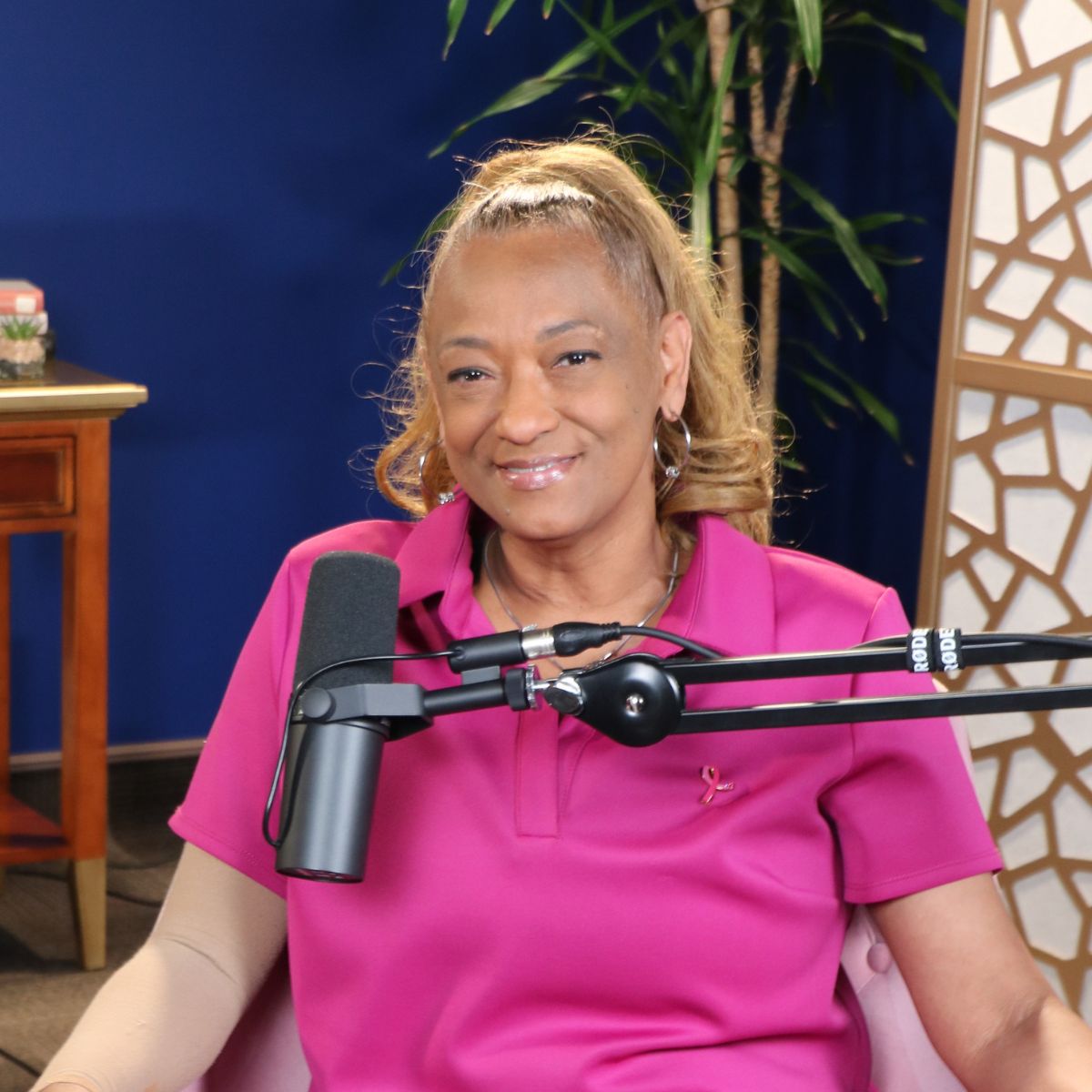
Dorothy: [00:00:00] This episode of Let’s Talk About Your Breast, guest host, Shannon McNair, talks to a survivor and advocate Felicia Kent. Felicia found a lump by chance she didn’t have insurance, and somehow or another she found her way to The Rose. Her local neighborhood clinic knew were to send her. Felicia shares how those three words you have cancer shook her a world how faith and a determined daughter carried her through surgery, chemo, and radiation. If Felicia’s story makes you think of someone who’s found a lump and feels alone, please share this episode with them and consider making a donation so another woman gets the care that she needs at therose.org.
Welcome to Let’s Talk About Your Breast, a podcast brought to you by The Rose Breast Imaging Center of Excellence and a Texas Treasure. I’m Dorothy Gibbons, your host and co-founder of The Rose. [00:01:00] During this season, you’ll also be hearing from co-host Roxann Hayford and others as we bring you stories from survivors physicians, caregivers, researchers, employees, and supporters. These are real people sharing difficult times, celebrations and personal stories of hope, despair, and faith.
Shannon: Felicia, welcome to.
Felicia: Thank you.
Shannon: Our podcast here at The Rose. So grateful to have you here with us. Um, so talk a little bit about, I know you are a survivor and you found your lump, so talk a little bit about that. Were you doing self exams regularly or is it just by chance?
Felicia: I do them regularly. And this was by chance actually.
Shannon: Okay.
Felicia: Just sitting there and, uh, watching, uh, I think one of the sports shows and did the, I was like, wait a minute. That doesn’t belong there.
Shannon: Ah, yep.
Felicia: Um, and immediately was concerned.
Shannon: Sure.
Felicia: But [00:02:00] I did another self exam and thought, okay, this might need to be looked at.
Shannon: Okay.
Felicia: Now, at the time I didn’t have insurance.
Shannon: Right.
Felicia: And so I, I believe it might have even been about four months.
Shannon: Wow. Okay.
Felicia: Before I had seen anyone, uh, I was trying to figure out where to go and I knew that I should come to The Rose. I knew about The Rose from working at the boutique with the Burges.
Shannon: Oh, yes.
Felicia: And, uh, we actually had referred one of our my coworkers.
Shannon: Okay.
Felicia: And I saw what.
Shannon: So you’d heard about The Rose, but didn’t quite come in right away.
Felicia: I didn’t know. I, I knew I needed a referral.
Shannon: Yes.
Felicia: And I kept saying, Lord, how do I get a referral? Where do I go? Do I go back to the boutique and see if maybe they can help me? And I decided to go to, uh, a clinic that was actually walking distance to where I live, drove there and. I [00:03:00] went in and I kind of looked at the surroundings. I was like, oh, this is pretty nice. And got inside. And once I explained to her what was going on, she immediately came back and said, before we do anything else, I’m gonna refer you to The Rose.
Shannon: Perfect.
Felicia: And, uh, answered prayers.
Shannon: Right.
Felicia: So I contacted you all and, and, and set up an appointment not knowing what to expect. Um, and. I owe you all, you saved my life.
Shannon: That’s amazing. That’s, we love to hear that. That’s why we’re here. Obviously, that’s the mission, is to help all women get the care that they need.
Felicia: Yes.
Shannon: Anytime that they need it. So you came to, The Rose got, unfortunately the news, um, that no one wanted to get.
Felicia: I went to, I got the biopsy done, um, came back and met with Laura. And, uh. And I got the news and I’ll, I’ll tell anyone. I think you probably heard it many [00:04:00] times. It’s immediately like a death sentence, right? Immediately you go into thoughts of your children.
Shannon: Right.
Felicia: Future, everything in order, what do I do? And one of the nurses came in and she was really nice. She said, you know, my sister was diagnosed with this last year and she’s doing okay. And, um. And from there, I just from, we took it head on.
Shannon: Good for you. Good. So talk about talking to your family and that support you had from them as well.
Felicia: That was, that was hard. Um, I have one biological daughter and two sons with autism I adopted and they in, um, high school. And, um, even at first, I didn’t tell my children.
Shannon: Okay.
Felicia: Um, I shared it with my sister. She broke down and I told her immediately, I don’t need the tears. It’s okay.
Shannon: Right.
Felicia: Um, I, [00:05:00] I face other challenges and we’re gonna face this. And immediately, um, in prayer, I just knew that, okay, I need to be a testimony for other people, so I’ll get through this. And then.
Shannon: So you felt that way from the beginning?
Felicia: Immediately.
Shannon: Wow.
Felicia: And, and that helped me. Get through, um, the treatment, um, the first day of treatment, um, it, it was really crazy because I immediately thought, okay, well where do I go for treatment? I had three different options. I checked two different places, of course, MD Anderson, and of course Methodist. Um, but I settled on Texas Oncology. And, and they took good care of me. They even helped me with sharing with my family.
Shannon: Oh, that’s great.
Felicia: So I eventually let my daughter know and she, you know, [00:06:00] she’s 28 years old and she said, we’re gonna, we’re gonna fight this thing and you’re gonna be fine. And she came home to take care of me and she’s been there ever since. So.
Shannon: That’s amazing to have that support, as you know.
Felicia: Yeah.
Shannon: And not everybody has that. And so you had your church family as well and your.
Felicia: Yes.
Shannon: And your family here with you to get through that. Um, is there anything you wish you knew back then? That, uh, someone would, I know they can’t. No one can explain it until you go through it.
Felicia: No, but it’s so many things. Um, that, that’s a great question because that’s one thing that I share with others right now. Everything that I didn’t know and wasn’t told, I try to share with others. And, um, there was, uh, different parts of the treatment, um, in reference to, you know, I’m a researcher. So everything that was okay, this is a side effect. Then I decided we’re gonna take, like with the medications. We are, we’re not gonna take them as [00:07:00] needed. We’re gonna take them as prescribed.
Shannon: Listen to your doctors. What…?
Felicia: So I didn’t have a lot of the side effects.
Shannon: Oh, okay.
Felicia: I, I didn’t have a lot of nausea. I, I just. If it said take it every four hours, I took it every four hours, not as needed.
Shannon: Right.
Felicia: So that helped. And then also the effects of like the radiation or even now with the fluid.
Shannon: Yeah.
Felicia: That was a major thing. I had no idea.
Shannon: Right.
Felicia: That would be a tackle. So I think that was the main thing. The main thing is just some of the things that trying to make sure I’ve seen other people have to go through and it’s, it’s, it is, it’s a cruel disease if, if, if you’re not cautious or, or aware. And so, um, that’s where I, I just dug in. I tried to do whatever I could to offset everything.
Shannon: Right.
Felicia: But I think that was the main thing. The main thing is some of the, the mouth sores, the [00:08:00] nose bleeds, the, those side effects.
Shannon: That, yeah.
Felicia: That aren’t really, um, talked about.
Shannon: As much as others are. And of course, everybody has different reactions to everything too.
Felicia: Yes, yes.
Shannon: But they, you just, you don’t know.
Felicia: Just the common ones.
Shannon: You don’t know until, you, know.
Felicia: And I, and I, even when I would go into treatment for chemo, I, I tried to share it with other people. Oh, you know, this is what I did. I got The Rose off from my nose.
Shannon: Right.
Felicia: That helped, you know, um, um, the taking the medication, like I said, instead of, ’cause we wait too late, then you have those side effects.
Shannon: Right, right.
Felicia: So those, those were the main things that I tried to share with others that I just had no idea.
Shannon: Well, from the beginning you wanted to, uh, embrace what this was gonna be and what was gonna be, uh, afterwards and sharing and the awareness. So how are you doing that now? I know you have a nonprofit. You.
Felicia: Yes.
Shannon: You started.
Felicia: Yes.
Shannon: In addition to working with your church to help survivors, I’m here too.
Felicia: Yes.
Shannon: And talk about that. What inspired that and what are you doing with that group?
Felicia: At the [00:09:00] time I was diagnosed, I was, uh, at a point of, I was in school. Trying to finish my psychology degree. Um, and by God’s grace in between surgery, chemo, there was a little break of radiation before starting radiation and, um, I was able to graduate and going through the community health worker, I, it just came to me. That, hey, that you know, this is how you can share not only locally in my church family and people around or that I meet, but I can start this organization and get this information out. So I try to share through the blogs I’m doing peer-to-peer support, having conversations. Yes.
Shannon: Yes. Awareness, yes.
Felicia: Where we can share.
Shannon: Right.
Felicia: What’s going on, how are you, where are you in your treatment? And um, also helping with [00:10:00] Christmas and those people that are in treatment, um, Valentine’s Day, just to let ’em know and put a smile on their face to help them get through.
Shannon: That’s amazing.
Felicia: Yeah. Um, that, that’s. That was, I mean, immediately I knew that I had to do something and that came to me and I just built the website and got started.
Shannon: And just got started.
Felicia: Just got started.
Shannon: Easy as that. And so talk, have you, what have people talked to you about, um, in this support system? I assume you’re getting some things out of it as well, even post-treatment?
Felicia: Yes. Yes.
Shannon: And, um, in, in your follow-up care afterwards, um, what are the things that you’re learning, the lessons you’re learning now as you talk more.
Felicia: Mainly the awareness mammograms. And the number one thing is I don’t have insurance.
Shannon: Right.
Felicia: And I don’t know what to do. And a lot, a lot of questions of what I’ve been diagnosed. What did you do?
Shannon: Right.
Felicia: Uh, were there some natural [00:11:00] things you did? Which, which there were, right, there were some things that I, uh, adopted and did also, and uh, by God’s grace, my, my doctor, you, they were amazed every time I would come in. They’re like, you know, you have a good attitude. You’re always bubbly. This is a rough, this is one of the harshest treatments. How, what are you doing? Whatever it is, keep doing it.
Shannon: Keep doing it.
Felicia: So those are some of the things that I try to share with them. A lot of questions about insurance, uh, shared a lot about The Rose. Um, and, uh, and how to get through. Those are the things that, those are the main questions that they have a lot of people have because everyone has their own opinion.
Shannon: Yeah.
Felicia: Or their own insights or their own experiences.
Shannon: Right.
Felicia: And they don’t share the positive side. And I think that’s major, your mindset and your attitude. It is everything to get through.
Shannon: I know you think that that’s definitely, we, we see [00:12:00] that all the time with patients too, that having that attitude helps, uh, mentally. You know, when they say laughter’s the best medicine for a reason. Um, but also that mental and, and support in which you had.
Felicia: Yes.
Shannon: You know, great support system too, and that makes a huge difference for folks.
Felicia: Yes.
Shannon: To have that support of.
Felicia: That, that is one of the things that, uh, that come up, um, or has come up recently with some of the, the patients that I’ve spoke to, because they say, you know, your family don’t understand and I understand it. It you don’t until you’re in it.
Shannon: Right.
Felicia: And, and this is the battle and, and you fight every day.
Shannon: Yeah.
Felicia: Um. Even post.
Shannon: Right.
Felicia: Um, so that, that’s been a major thing. Um, talking to others how to stay positive without that support.
Shannon: Right.
Felicia: Um, I had my children, my family, and, but I had family members who didn’t understand it. I had family members that stayed [00:13:00] away.
Shannon: Oh, yeah.
Felicia: Because they didn’t understand. Um, and uh, so I try to share that with others.
Shannon: Right.
Felicia: That hey, it’s okay. Even when they pull away, you know, you, we have to have an understanding as to why they’re fearful.
Shannon: Right. And what would you say to people who are fearful? Um. Pull away maybe because they, they don’t, they’re afraid to say the wrong thing or they don’t even know how to offer support. What would you have appreciated for some of those people? Or would you say to them now, how can they be there for someone if they’re just not sure what to do or what to say?
Felicia: Um, I spoke with, I spoke with my older sister about this, uh, and I explained to her that it’s okay if you don’t have anything to say. Sometimes it’s good to just be there.
Shannon: Oh, that’s great.
Felicia: Sometimes it’s good. Um. To listen, just to say, I love you.
Shannon: Right.
Felicia: And I am here if you need anything.
Shannon: Right.
Felicia: I’m here. [00:14:00] And that doesn’t obligate you to anything. I, I think that’s good to know.
Shannon: Yeah. Because I do think a lot of people, I mean, I’ve been, I’ve had friends that have gone through this too. And, and even in this world that I’m in, it still was a shock. I still didn’t know, you know, you still don’t know exactly what, I still know what it’s like to go through it.
Felicia: Right.
Shannon: Even though I talk to a lot of people and I’m, I’m in this world, I, I, I won’t know, you know what I don’t know. And no one can know all that. So, uh, would you encourage those people then to, to just jump in? And be there?
Felicia: I think. So just jump in, be there. It’s always good, you know, meals, it, it’s some of the smallest things. Um, you know, provide some things for meals. Maybe take it upon yourself to, to learn a little bit.
Shannon: Yeah.
Felicia: As far, and then that’ll help you to be there for them.
Shannon: Right.
Felicia: And, and, um, and, and us as patients. Sometimes have to open up true and, and let, and let people, we have to let them know.
Shannon: Yeah.
Felicia: What [00:15:00] we need.
Shannon: Right.
Felicia: I would tell it was times I would tell there’s nothing you can do.
Shannon: Right.
Felicia: I, I had no problem saying that.
Shannon: Right.
Felicia: Um, my partner, I had to tell him, Hey, there’s gonna be a time that you are not gonna be able to be here. I know you try to be here for every, but there’s gonna, he’s like, no, no, but I know.
Shannon: Right.
Felicia: There is gonna come a time. And it did. It came a time.
Shannon: Yeah.
Felicia: You still have a life.
Shannon: Right.
Felicia: You still have to work, you still have to live, you still have to do things, your own obligations, right? So being open to that and, and understanding even that, um, it is our fight and our battle, and there’s times that. We have to be with ourselves.
Shannon: Right.
Felicia: And, and I’m religious, so with the Lord or who, whoever that higher power is, it’s gonna come a time that, that’s that self observation and self-awareness. So I think that’s important.
Shannon: That’s, no, that’s, [00:16:00] we hear about faith all the time too. And how important that is for folks to get through it, and I think for folks to support in ways too. That is, if it’s just a prayer. And just let someone know that you’re praying for them. Um, even if you, again, you can’t be there or you’re not in an inner circle with someone.
Felicia: Right.
Shannon: But you can still be there in, in other ways too. Um, so with the, your foundation and what you’re doing, is there anything, uh, else you’re with that group and that awareness that you’re trying to share with, uh, with family members and caregivers?
Felicia: That, that’s where I’m trying to come up. Well, like I said, and implement different programs with, like I said, I thought about it for Christmas, we always do Christmas in the community and help with anyone that’s in need. But with the foundation I focused on grandparents or parents, those people were going through and they didn’t have time to go out. And the joy that it brought just, Hey, I’m gonna, and I. [00:17:00] Myself, I’m gonna deliver ’em. You don’t have to come and get ’em. I’ll bring ’em to you and to, to see the joy on their faces that. They’re able to provide for them without having to go out and or wander and worry.
Shannon: Right.
Felicia: Um.
Shannon: So I love that you mentioned Valentine’s Day too. ‘Cause I think we think of a, we think of breast cancers only in October and that’s just obviously, that’s what we think about it. And that’s not when people are diagnosed all the time and it’s a year round disease. And I think the same thing for letting people know you care and you’re there for them. It’s not just Christmas.
Felicia: That’s right.
Shannon: It’s not just Thanksgiving that we’re thankful. You know, it can be all throughout the year that’s we can offer support.
Felicia: Yeah. Valentine’s Day we have Mother’s Day.
Shannon: Right.
Felicia: Father’s Day.
Shannon: Yeah. Absolutely.
Felicia: There’s so many different areas that we, and that’s what I want to consistently show others that you’re not alone and someone cares, and just to ease whatever we could do to ease the, the, the heavyweight of, [00:18:00] especially in treatment.
Shannon: Right.
Felicia: Um. So that, that’s where I am. And then of course for October we did, uh, it’s a given.
Shannon: Yeah.
Felicia: Different walks. We did the Sisters to Sisters, uh, 5K walk. Um, we do the Change For Change now we started to implement that.
Shannon: What, now what is Change for Change?
Felicia: Where, uh, with the church, where we have everyone, every time we meet, you bring all the spare chains you have anywhere that you can have changed, bring in, and.
Shannon: We all have that.
Felicia: Every Yes.
Shannon: My car door handle, so Oh my That’s where mine, yeah, that’s where mine gets dumped.
Felicia: Yes. So bring that change and leave it with us. And then at towards the end we will put that all together. And the goal is to present you all.
Shannon: Oh, well! That wonderful!
Felicia: With a donation to help us.
Shannon: That’s amazing.
Felicia: Just to help.
Shannon: Amazing.
Felicia: We appreciate it. And then educate these women, uh, and men on mammograms and breast cancer and, um. [00:19:00] That, that’s another major thing we do.
Shannon: And I know one of the things you focus on with awareness is with, in the African American community specifically.
Felicia: Yes. I was just thinking.
Shannon: So what, so what do you feel like why that is so important within that community to, to support and have the awareness there?
Felicia: Well, what I learned is that they, the knowledge, just the education of, um, of breast cancer and, um. The Rose that there is, you do have an opportunity and mammograms how important it is. Um, I learned about how this hits at a young age. So many young.
Shannon: Younger, and younger. Yes.
Felicia: Well, yes. And so, um, in the African American community, it’s, I don’t have insurance, so I can’t afford it, so it’s not there.
Shannon: Right.
Felicia: It doesn’t happen. But the numbers, when you look at the statistics.
Shannon: Right.
Felicia: And the [00:20:00] treatment, when you hear so many of, of African Americans, they hear chemo, radiation and, and what it does to your body or, or what they think it does.
Shannon: Right.
Felicia: And so they choose and opt out not to even do that. So I want others to see. Y, you can do it.
Shannon: Right.
Felicia: You can make it through.
Shannon: Right.
Felicia: Um, I did.
Shannon: Right.
Felicia: Was it easy? No.
Shannon: Right. But more than survive.
Felicia: I think. But yes.
Shannon: You’re thriving.
Felicia: Yes. That’s another thing. Yes. Not only just surviving, uh, when I tell people, Hey, I was in the middle of finishing my degree, right? But I actually walked and got my degree, came back and right into radiation. You know, um, I had chemo, I had lumpectomy, graduated, came back, let’s do the radiation, finish it, go back into chemo, you know?
Shannon: Right.
Felicia: [00:21:00] Um, and, and then afterwards, I. It came the fluid, then I had to switch. Okay, now I have to figure out how to manage these things.
Shannon: And when you’re talking about the fluids, explain that for people what that was going through for you.
Felicia: I realized that I had some tingling and some numbness.
Shannon: Okay.
Felicia: And so my doctor referred me to physical therapist and that’s where the, um, that treatment started because of the buildup in your lymphatic system.
Shannon: Right.
Felicia: Something they don’t tell you.
Shannon: Right.
Felicia: They don’t talk about much.
Shannon: Right.
Felicia: But, um, and so I just learned how to do that. I have the lymphatic machine. Um, and, and I, my physical therapist, she laughed. She said, you know, you just may as well be a poster child for this, because she saw the difference that it may, but I told her, I said, you know, hey, I’ll leave that machine right here. So every day I look at it, it means get on the machine. You have to.
Shannon: Right.
Felicia: The garments, the things [00:22:00] that will help reduce any fluid buildup.
Shannon: Right.
Felicia: Um, I was blessed that I didn’t have, um, any cancer that went into my lymph nodes.
Shannon: Okay.
Felicia: But they did take some right to test it.
Shannon: Right.
Felicia: So that’s where.
Shannon: Right. Have that lymphedemas becomes a, an issue becomes.
Felicia: Yeah.
Shannon: Post everything.
Felicia: Yes.
Shannon: And neuropathy and.
Felicia: Yeah. Yes. And recently when I went to see my surgeon, she, um, I asked her, I said, Sue, what can you tell me about the fluid? And she said, well, you’re gonna have to deal with that probably the rest of your life. You have to learn to manage it.
Shannon: Right.
Felicia: That was not, I wasn’t happy about that, but Okay. It just put me in mind that I had to realize that and my body would never actually be the same.
Shannon: That’s an important thing for everybody. You should know.
Felicia: Yes.
Shannon: The new normal.
Felicia: Yes. But I have the things to manage it. Uh, the neuropathy [00:23:00] kicked in. And that was another thing I asked my oncologist about. I said, well, you didn’t tell me that I was gonna have to deal with that too. And he’s like, well, yeah. So there’s medication, there are things that we, I choose not to take the medicine if I don’t have to.
Shannon: Right.
Felicia: Um, and so I move, I move around a lot. I make sure that every day, um, I get some movement in.
Shannon: And were you active before the diagnosis?
Felicia: Not as much. Not as much. Uh, I always have been active up and going, but not, I can’t say that, Hey, I got out and walked every day.
Shannon: Right.
Felicia: And I started that probably two months into, into it. I started every day. Let’s get out, let’s walk. Um. And it’s helped a lot. I mean, it helps a lot and, uh, especially with the neuropathy. And then another thing that, um, [00:24:00] recently, uh, I have a service dog, an emotional support dog. And so that’s something that I think a lot of people are like, what? I didn’t even know.
Shannon: Yeah.
Felicia: That it was, you were able to even get that. Every day I have to walk him.
Shannon: Right. So get you out.
Felicia: Yes. So that gets me out.
Shannon: Right.
Felicia: And that’s something I was sharing with others as well because of the anxiety of recurrence.
Shannon: Oh really? Oh.
Felicia: Is where that came in.
Shannon: And I think it’s important to talk about that mental, we’ve talked about a lot of physical implications, but the mental implications of going through treatment. So weighing on you is recurrence.
Felicia: Yes. Immediately. That’s the, I I realized that was something that I was really concerned with and the anxiety of it. And, um, so of course I spoke with a therapist and I spoke with my doctor and he said he, he, um thought maybe the emotional support dog would help. And it, and it has, [00:25:00] but I’m a researcher.
Shannon: Right.
Felicia: So I try to research it well.
Shannon: But, and um, so you haven’t been out of treatment long?
Felicia: No.
Shannon: When did all this, when did all this wrap up for you? When we talk about being anxious about recurrence, be you’re recent ll be.
Felicia: Probably a year. Yeah.
Shannon: You’re a very recent survivor for, to talk about this too. So I think that’s kind of important to talk about. All this is still new.
Felicia: Very.
Shannon: Fresh for you, and yet you’ve done a lot, not just for yourself, but for others and all of that too. Which is amazing. And we’re. We’re so grateful you are here today to talk to us.
Felicia: Thank you.
Shannon: Share your story. I think people, as you know, in sharing your story privately and with smaller groups, how much it matters for people to hear your story. ’cause every story’s different. Um, but there’s gonna be someone who can relate to anything that you’ve been through, um, and what you’re still going through.
Felicia: Yes.
Shannon: And I think it’s important to talk about that mental health, that we, we take care of that too, where it’s, there’s no, no shame in that.
Felicia: Yeah.
Shannon: Everyone, you know, can, has that feeling. Um, and I can’t imagine living with that like you are now, but you’re [00:26:00] managing it, which is.
Felicia: Yes. I, I’m, I’m.
Shannon: And learned how to manage it.
Felicia: Exactly, and it’s, and it’s an ongoing learning experience. I tend to support groups that I can, and I did speak with. Like I said, a therapist.
Shannon: Yeah.
Felicia: And it was more of the anxiety and, and I had to come to grips, like I said, with the fact that one, my body will, this is the new norm.
Shannon: Never the same.
Felicia: It’ll never be the same. I had, uh, on the table, the reconstruction surgery and I’ve opted out of that. Uh, right now. It’s enough.
Shannon: Yes.
Felicia: My body’s been through a lot and it’s.
Shannon: Only been a year or two.
Felicia: Exactly. Um, and so I have some time.
Shannon: Yeah.
Felicia: For that. Um, and so what I learned also is so many people don’t talk about it.
Shannon: Right, right.
Felicia: Right. I had, within the time that, that I was going through treatment, I had a niece who, uh, I had no idea [00:27:00] had been going through the same thing. Young 27.
Shannon: Wow.
Felicia: Um, did not do the things that was necessary. Did some, but not as much.
Shannon: So going through breast cancer?
Felicia: Yes. Going through breast cancer. Wow. And we lost her. At 27 while I was in treatment, prior to that, I, I had a, a, a church member who was older. Um, and she had gone through it. Never said a word until she passed. That’s when we learned. So I felt like I was able, I was blessed to be able to see different age. Different ways.
Shannon: Right.
Felicia: People chose to go through, not say anything. Someone who didn’t do anything and someone who did a little something.
Shannon: Right.
Felicia: So that helped me push to do all and more. And again, just share with everyone [00:28:00] the, especially the mental part now as far as recurrence.
Shannon: Right.
Felicia: Because I’ve seen, and I, I know the stories.
Shannon: Right.
Felicia: But there’s so much progress right now.
Shannon: Every day.
Felicia: It’s amazing.
Shannon: Every day.
Felicia: Yes. It’s amazing. So I’ve kind of settled down.
Shannon: Well. Yeah. Good. You’re entitled to take a breath and, and, and think about this. We’re again, we’re so grateful you are here with us today to share this story. Someone will be touched and moved by this, um, know that. Thank you and, and as they will be in your real life too, as you walk through this journey. We’re just so grateful you were here. Thank you, Felicia.
Felicia: Thank you. Thank you.
Post-Credits: Thank you for joining us today on Let’s Talk About Your Breasts. This podcast is produced by Speke Podcasting and brought to you by The Rose. Visit therose.org to learn more about our organization. Subscribe to our podcast, share episodes with friends, and join the conversation on social media using #Letstalkaboutyourbreasts. We welcome your [00:29:00] feedback and suggestions. Consider supporting The Rose. Your gift can make the difference to a person in need. And remember, self care is not selfish. It’s essential.