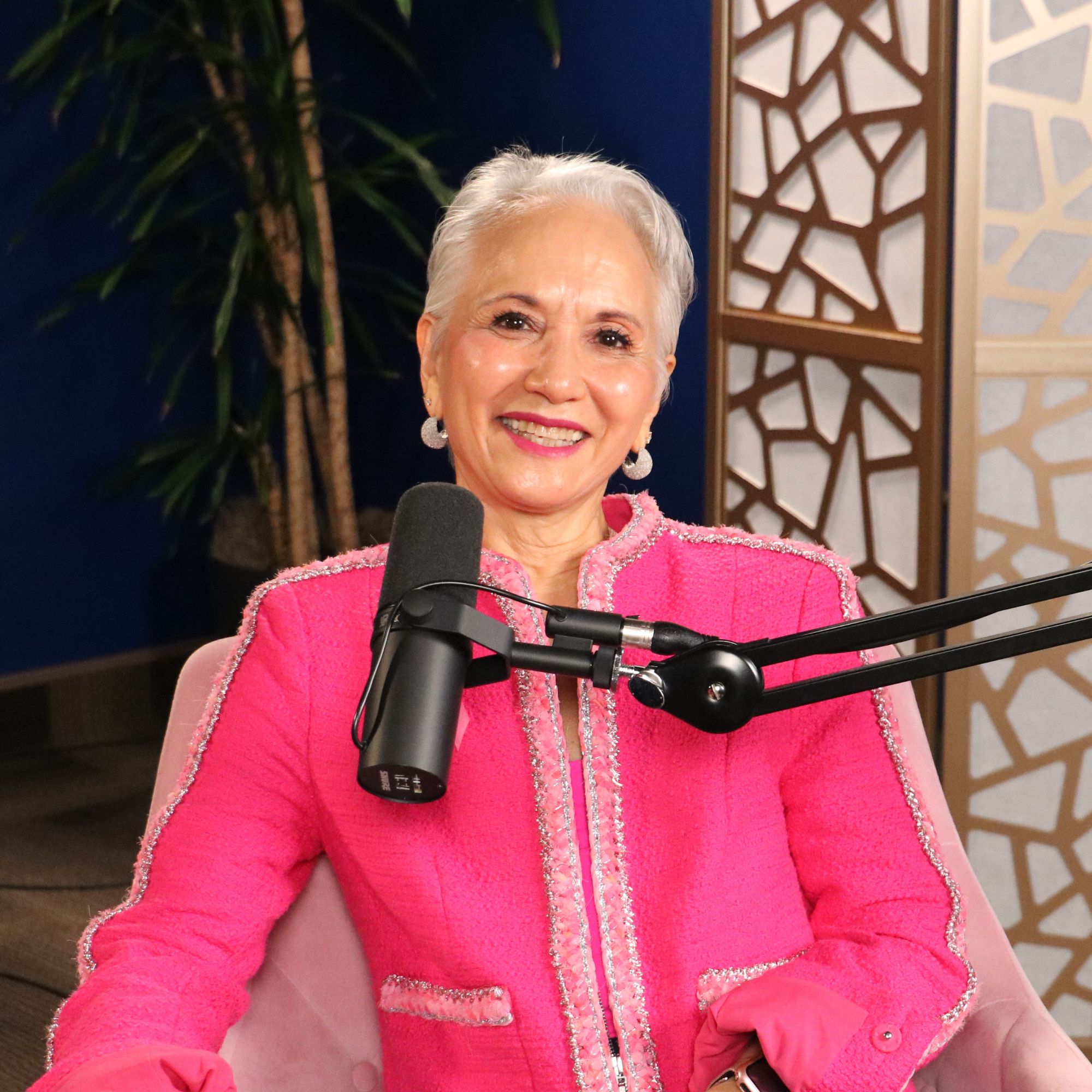
Dorothy: [00:00:00] Did you know that dance can carry women through diagnosis, treatment, and life after cancer? Well, that’s what Cookie Joe says. She shares how her ballet became her prayer and her purpose. She also shows how it became a way to support other women facing breast cancer who are going through The Rose. Her story proves that creativity and faith over fear can move a whole community toward early detection and hope.
We’d love it if you’d share this episode with your family and friends. And if you can consider making a donation to The Rose, you’ll help us serve more women.
Let’s Talk About Your Breast, a different kind of podcast presented to you by The Rose, a Breast center of excellence, and a Texas treasure. You’re gonna hear frank discussions about tough topics and you’re gonna learn why Knowing about your breast could save your life.[00:01:00]
Cookie dancing has been a part of your life forever.
Cookie Joe: Forever. I started when I was 22 months old.
Dorothy: How did you start dancing at 22 months old?
Cookie Joe: My mom came from Mississippi and she was so afraid we were gonna be hicks. That she decided taking ballet would be a great way to avoid that. So, uh, she was born in Crystal Springs, Mississippi. She has passed away this past year. And, but I told her the last words outta my mouth to her was, thank you for the dance lessons.
Dorothy: Oh, how sweet.
Cookie Joe: But no, I, it’s been a part of my life. It, it is. I know it’s important not to be identified by what you do. But it is so much a part of who I am and you know, as far as it’s the way I earn my living. It’s the way I express myself. It’s the way I praise God. It’s the way I inspire and, you know, other people. And it’s, it’s how I got through breast cancer, so, It has been a very important part of my life.
Dorothy: And your school.
Cookie Joe: Yes.
Dorothy: Your dancing school is right now, in October, Promoting a, an event, [00:02:00] a fundraiser for us.
Cookie Joe: Yes.
Dorothy: And it’s very, it was such unique.
Cookie Joe: Yeah. Um, I really wanted to do something. I was very blessed, uh, to be at the age I am. It cost me very little to go through cancer. So when you’re going through all of the other parts of the journey, having to worry about the financial part. It shouldn’t even be happening. And so I wanted to do something and I’ve been cancer free for three years and I wanted to do something this October that was visual and big on social media. So we created a giant banner, the black, uh, with the black and white ribbon, and I’m letting my kids pay for stickers, making it turn pink and we’re opening it up to the community to make sure they know that they can reach out to us, um, you know, on social media. And through a live, um, email address and stuff like that to go back to us to donate money. And we are just creating a beautiful banner full of pink butterflies and pink uh, ribbons.
Dorothy: Thank you so much for that. And I love that you’re using butterflies.
Cookie Joe: You know, that was an act I didn’t even realize how that must how we, we all feel you’re going through that feeling of being in a cocoon [00:03:00] and going through the chrysalis while you’re in treatment and when they tell you’re cancer free, you know, to almost feel like you’re, you know, resurging. That’s how I felt. I didn’t realize that that was a real thing, you know? So apparently that’s a very common feeling that most of us feel because the butterfly just started happening and it became our, our emblem for it, and didn’t realize it was actually a lot of people’s emblem for it.
Dorothy: For exactly the same reason that you spoke of. I mean, it’s. It is a very transformational.
Cookie Joe: It is.
Dorothy: Time in a person’s life. I wanna stay on the school for just a minute. Now you are the owner.
Cookie Joe: Yes. Co. I’ve been the founder and you know, chief bottled water, toilet cleaner, floor, mopper, everything. Yes.
Dorothy: And it’s 50 years old.
Cookie Joe: 50 years old this year,
Dorothy: 50 years old this year. Congratulations.
Cookie Joe: Thank you.
Dorothy: My goodness. And what kind of school?
Cookie Joe: We’re a performing art school.
Dorothy: Okay.
Cookie Joe: We teach classical ballet. We teach theatrical jazz, hip hop, tap, everything that you would use if you were going into theater. Either. Either a professional career in dance, classical ballet, and the ballet companies. I [00:04:00] have a lot of kids that have gone on to study the Houston Ballet. I’ve got a lot of kids that have gone on to the Theater of the Stars or ended up in New York. My background was musical theater. I wanted to be on Broadway. So my thing, I did not make it to Broadway, but I did get to tour with Broadway musicals and that was a great experience for me. But I studied in New York for a long time, but I realized that I wanted to teach. And so I got to come back to Houston and, uh, open my school.
Dorothy: And it is open to what ages?
Cookie Joe: I start. Well, officially we started two, but I have been known to take some younger ones. ’cause sometimes the little sister can’t wait to get in. So if they’ll come in and not disrupt the class, they can start. So we’ve had some 18 month old start.
Dorothy: Oh my gosh.
Cookie Joe: They’re precious. It’s, it’s my, it’s my favorite. And they dance. I mean, we are not crawling around. We are standing up, arms out, first position. You know, esque, you know the whole thing and they’re running all the terminology in French and how to say it, they don’t know it’s French, but you know, they’re, it’s perfect.
Dorothy: Really?
Cookie Joe: Yes.
Dorothy: Oh my goodness.
Cookie Joe: Children these days, they just wanna feel [00:05:00] big, and so you give them big things to do. They, they will act big.
Dorothy: Wow. Now that is a statement. I, I’ve never heard anyone describe it that way, but it is true.
Cookie Joe: Well, you know that thing about you, you aim for the sun, you’ll probably, you know, maybe hit the clouds. You aim for the moon, you may hit some stars, but just aim high and that’s what we do.
Dorothy: Right. You have a special place in your heart for children who might not have this opportunity.
Cookie Joe: Absolutely.
Dorothy: So tell us about that.
Cookie Joe: I teach a lot of children who are, um, have disabilities, either, either intellectual or physical. I also spent a lot of years teaching the homeless. And I have teach taught a lot of children who, um, just maybe, you know, at community centers who would never, ever have an opportunity to take, you know, professional classes.
Dorothy: Right.
Cookie Joe: But, uh, it seems to me that dance is such an important part of, it can feed your soul. I mean, it can help you with expression. It can help you relieve stress. It can, it definitely helps with cognitive thought and memorization and structure and all the things that we need to do. If [00:06:00] you think about how much of the brain is used in dance, we have to count music. We have to memorize steps and sequences. We’ve gotta not kick the person next to us. We gotta know which way to face, and we gotta smile while we’re doing it and make it look easy.
Dorothy: Oh, that is so true.
Cookie Joe: So you use an awful lot of, of your brain. In fact, I teach adults also, and I keep telling ’em, we’re not gonna make it to Broadway, but we might stay outta the nursing home. So that’s my, that’s my sales pitch, to get people to come to adult dance.
Dorothy: Oh, that is wonderful. I had never, ever thought about dance encompassing so much of.
Cookie Joe: Oh, it is, it is an incredible, I’m, I’m ba, I’m betting on my mother passed away with dementia and I’m betting on not getting dementia, because I still have to tap dance and still count music while I’m moving and memorizing steps. I mean, you do so many things at one time whenever you’re dancing.
Dorothy: Oh, yes. And does it move you into a different plane? Spiritually or.
Cookie Joe: Absolutely. Um, the way I worship is through dance. I’ve, my ballet company’s called Valley Grace and we’re the resident valley company to [00:07:00] Sugarland Baptist Church and we’re part of the worship team and it’s the music. In other words, a lot of times people get, get the word and get the message through hearing music. Well, if you see visual interpretation of that same music, you not only are experiencing it through your ears and your heart, but also through your eyes, so you’re using another sense. And when you get more sensory, um, uh, interpretation, you get it, the message goes in even more. And what I love is that I, I use praise music in my school. So these little girls from two years old, all the way up. And boys are hearing the word, you know, subliminally through music over and over and again, and I believe it’s a really important part of feeding their soul.
Dorothy: Do you think it’s a part of meditation?
Cookie Joe: I do. I think that, I remember whenever I went back to class after my, uh, treatment, I had to take a year out off completely. And when I went back it was like, I, it was like rainbows and, and, and angel wings. I mean, I could just feel myself being lifted. [00:08:00] Um, back to feeling, no longer like a patient. That was the main thing. You feel like a patient for so long. That was the first time I went. I’m not a patient anymore, and that was a real bad, I felt set free.
Dorothy: Wow. So now you’ve, you’ve told us something about it, but tell us about your breast cancer experience.
Cookie Joe: You know, it’s interesting. I, I believe very much that I was blessed, that God blessed me with this experience. Um, I’ve said before is that if he said, we’re gonna do a do-over, I’ll take it away. It never happened. I’ll say, no thanks. I learned so much. I grew so much, I got so much stronger. Um, what it did for me. Nothing can mess with me now because I beat breast cancer. People come in and go, oh my goodness, my car broke down, da da da da. And I, in my mind, I go, but it’s not cancer.
Dorothy: Mm.
Cookie Joe: And you know, I was diagnosed during COVID, so I was alone. And I, I.
Dorothy: I wondered if you had to do that journey. I couldn’t tell by the dates, but I thought.
Cookie Joe: Oh, it was.
Dorothy: Yeah.
Cookie Joe: You, you hear the words, you have cancer and there’s nobody there. And, you know, and it was very, and you had to find, [00:09:00] you know, call somebody quick because you just, you don’t know. And you sit in the car just stunned. And, um, I, I had very, very good habits. I had my mammogram every year, and they had always come back clean. And I’m an athlete, so I felt a, I thought a pulled muscle in my chest that felt like the size of an almond. And I go, that’s an interesting way to pull a muscle.
And uh, finally after six or eight months, I finally go, maybe I should have this looked at. And that’s when they told me that I needed a diagnostic, um, mammogram. And then after that. I mean, it was like that within three days. I was very blessed. One of the moms at my school worked at MD Anderson and she got me through the COVID testing and in front of a surgeon, um, within like 72 hours, which is unheard of.
Dorothy: Yes.
Cookie Joe: During that time. Plus with MD Anderson.
Dorothy: Yes.
Cookie Joe: And um, I was fortunate that I was in, uh, I had stage two triple negative, uh, cancer with a nine centimeter tumor. And they said it was very aggressive and very fast [00:10:00] growing and that needed to be dealt with. And I went through all the chemo and, you know, going bald and, um, the, all of the things that you go through and, uh, the radiation.
But one of the things that happened was all those little girls at my school and their mothers watched me go through it. And so, and I also was very public about it, so on Facebook I was there. So all my former student, female students started getting mammograms. Five of them came back with tumors. So five of my little girls that had grown up to be moms.
Dorothy: Oh my gosh.
Cookie Joe: Went out and got mammograms because of Ms. Cookie. I had a blood drive for MD Anderson that over 120 people showed up. And some of my former students who had never given blood before, donated blood to MD Anderson so that we could have.
Dorothy: Oh.
Cookie Joe: One of my things that I did too is I said, when I turn 70, I’m going to do a hundred cartwheels to raise money for MD Anderson. And I did 120 cartwheels and we raised $5,000 for MD Anderson.
Dorothy: Wow.
Cookie Joe: For, for, uh, the oncology Blood cancer.
Dorothy: Yeah.
Cookie Joe: Of blood, uh, um, [00:11:00] work. So that it was just a real, everything about it was along the way is I took it as a challenge and my mantra was faith over fear. Get up, dress up, put on your makeup and show up. That was it. Constantly, always, you know, my little beanie always had to match my outfit. I always wore dressed up to go to my treatments. I just wanted to make sure, and I always sat by somebody who looked for Lauren and I always sat there and first thing I said to them was, we have the same hairdresser.
And I mean, and they would laugh and as soon as they laugh, they would start talking. And I would do that day after day. And so I would always make sure that I would wanna find somebody that might, you know, that I could cheer up. But I, I had a very blessed experience. The first thing that happened was, um, the, uh, mammograms, they told me there was no way I could get all 10 years of them.
And because, you know, in time to go to my first appointment and I went by the office with my letter from my doctor, and as I left, they called me at my cell phone and they said, we don’t know what happened, but all 10 of your screens are here. [00:12:00] And so that, that was one. And then, you know, just along the way it just was everything kept happening that was, I just ended up having blessings all along the way. Uh, one of the things too is that my relationships, everybody around me that supported me, my husband and my mom, and uh, my staff, we have a whole different relationship now. I have a, a group of women during that time, we were, during COVID, we had moms volunteer, uh, at the school because we had, no, the school was basically closed. Well, they found out that I, uh, needed help going to chemo. They signed up on a, you know, the sign up genius. And I said, just drop me off. They sat with me, 4, 5, 6 hours would not leave me.
Dorothy: Oh.
Cookie Joe: Until my husband could pick me up. And it was just, you know, just all of the things that happened that to make it, um, just the, the community and the, the love and all the support that you get. I was very, very blessed.
Dorothy: [00:13:00] Oh, it sounds like you were doing a lot of blessing of your own for, for others.
Cookie Joe: I just felt it was purposeful as soon as they. The first thing I said was, God gave this to me for a reason. How can I use this? And it was the important thing was to. What I love is these little two year olds would come up and their mom would say, she says prayers for you every night. And so then to see that Ms. Cookie, they prayed for Ms. Cookie’s health, and then Ms. Cookie’s back with a smile. A 2-year-old now goes, when I pray to God, he answers my prayers. And so in still in a child that age, that prayer works. I think that’s worth it right there.
Dorothy: Oh, absolutely.
Cookie Joe: And you know, and to have that feeling and that kind, and every one of my kids is wearing a pink ribbon this month. I mean, just so precious. ’cause they’re so engaged and so invested in. And to get these moms understand that, you know, when I started this journey, they kept telling me one in eight women, now they’re saying one in six women, by the time these little girls grow up, it could be one in four women.
Dorothy: It could be.
Cookie Joe: And so you look at a class of eight kids, two of those kids are gonna have breast cancer. And those mothers need to [00:14:00] realize that that number one, we can start now helping try to find a cure. Helping other women that are going through it and also making sure that we take care of, you know ourselves and make sure that our children are taken care of. And so it’s a very long legacy of what can we do to use this one diagnosis to keep perpetuating it so that I’m able to reach out to all these children to make sure that as they become women, that they’re aware of it.
Dorothy: And you and you, I know you know this, but 15, 20 years ago. We couldn’t even talk about it out loud.
Cookie Joe: That’s right.
Dorothy: Yes. What? What an amazing jump. A leap in understanding and awareness. And.
Cookie Joe: I am so proud of whoever was behind the fact, I mean, the movement to support women going through this and the pink, you know what I call the pink project? It’s unbelievable. It’s a marketing miracle that it is, it has taken over.
Dorothy: It actually did something very, very important.
Cookie Joe: And, you know, when you go through Sugar Land, the uh, uh, monument signs that say [00:15:00] First Colony, they’re lit in pink.
Dorothy: Oh.
Cookie Joe: I mean, and I’m, I feel this warmth of just, uh, you know, just such a, a, a powerful, you know, just love that the, you know, this, the community, you know, is so supportive of us that we, uh you know, we get that kind of support.
Dorothy: So Cookie, go back a minute. I, did you actually go to the studio while you were in treatment?
Cookie Joe: Yes. Now I wasn’t supposed to.
Dorothy: I’m wonder because.
Cookie Joe: I wasn’t supposed to, I was thinking, Hmm. Well actually I’m very good friends with, uh, Jennifer Summers, who is head of the Eastern Ballet Academies. Um, and she had just gone through the journey and so I was very fortunate to connect with her. So that I was following her and she said, you can’t teach. She, you can’t, it’s not fair to go be sick, leave as a teacher. You just wanna be, consistency is important. So I took a year off, which was a really hard, because that meant 27 classes had to be either canceled or moved in some way. So that was, I, ’cause I teach full-time and um, but I couldn’t stand it. And um, so I [00:16:00] would, you know, so I would go and, um, even though I wasn’t supposed to be teaching, I would make sure they saw me and stuff like that. But one thing that was really interesting is that I, they needed a sub one day and I still had my uh, uh, natural drains.
Dorothy: Drains. Oh my gosh.
Cookie Joe: And I, so I had to do it with my drains. Um, but you know, I wore a big shirt, but I was just, you know, ’cause it’s my school.
Dorothy: Yeah.
Cookie Joe: But the other thing too is I did a clinical trial. And the, it was very difficult. They say that women of color very seldom do clinical trials. And they needed Asian women. And I said, well, I got, you got half one. You know, uh, I go, so it’s all your half, uh, Chinese left-handed women. I’m gonna be your, your, uh, representative. And it was a very difficult, uh, to clinical trial and it didn’t work, which was part of the disappointing because, you know, you hear the words, well, it didn’t shrink as much as we had hoped.
And it was a very, um, debilitating in a time, and I, I felt like I was disfigured, you know, it affected my [00:17:00] skin. Of course, you lose all your hair. It wasn’t just the baldness of the better me. My, I, I wasn’t, I wasn’t cute as very sure. So that was a really difficult time because I’m a very public person and I do a lot of photos in a lot of public speaking. So having to go through a very humbling, less than cute time, but I kept hearing my father’s voice saying, but you’re still here.
Dorothy: Mm.
Cookie Joe: And so every time I get the ego part and the, um, the vanity part kinda rears its ugly head. ’cause I used to have a lot of hair. I still don’t have a lot of hair. Um, and, um, then I had to hear my dad say, but you’re still here.
Dorothy: Yes.
Cookie Joe: And so every time I get that pouty.
Dorothy: Pity party, personal pity card or whatever.
Cookie Joe: Well, and also, you know, I, I chose not to get a reconstructive surgery. Because as a dancer, you know, it was actually more, uh, that would’ve been more challenging than just let it go. And, you know, once in a while that’s, you know, that you remember that and your clothes don’t fit the same and you know, that kinda stuff.
Sure. And I, I won’t wear, um, support [00:18:00] any help because I call ’em puppies because it, it, it just changes my body, you know, my body awareness and stuff. And so, uh, I get dis I, I judge myself. ’cause dancers, you know, we have a mirror. All we do is stand in front of a mirror and criticize ourselves. Anyway, that’s what dancers do and are very, we’re very critical of ourselves. And so to have to look at your body constantly and see what’s different about it. Um, and then I just hear, but I’m still here.
Dorothy: Yeah.
Cookie Joe: And that’s what, you know, I keep celebrating. I’m still here.
Dorothy: That’s great. Great message. Yes. I, I know you’ve alluded to it several times, but I was most impressed when I saw that you call your school a ministry.
Cookie Joe: We do. We, we have a nonprofit. Um, we are a for-profit business, which supports our nonprofit. And the reason we do that is I want these kids to know that we’re blessed to be healthy, strong, and basically affluent. I mean, it’s Sugar Land that we need to use our talent to benefit others, and to support others.[00:19:00]
And so our mission statement is number one, to glorify God in everything we do. That’s number one. Number two, how can you be a blessing to others? And number three, how do you honor your fathers and mothers? And then we always add grandparents too, ’cause I’m a grandparents. But, uh, so, uh, it’s important that these kids think outside themselves.
And if you start very early, how can you serve? Let’s create hearts to serve. So I have an incredibly strong technical school, but that’s not our mission. You know, I get lots and lots of letters from my kids that have gone to professional careers thanking me. That’s not our mission. But are you a person of integrity, character, compassion, grace, you know, love? Do you support your friends? Are you a servant? That’s what we teach, and we do that every day, and we just happened to use dance as the conduit to teach it.
Dorothy: But you’re also known for that discipline factor.
Cookie Joe: Yes, I’ve heard that. Um, ballet is a very disciplined art.
Dorothy: Well, yeah.
Cookie Joe: And what I tell my kids, I’m [00:20:00] not gonna demand that you be excellent, but I’m gonna try really hard to encourage you to want to be excellent. And that’s what the goal is, to try to teach them to want to be excellent. And that’s what the deal is. We teach that goal, not demanding that they’re excellent. I love somebody said the day that true leadership is enthusiasm, not control. And I went, Ooh, that’s a good one. I’m gonna steal that.
Dorothy: That’s a good one. Yeah.
Cookie Joe: So yeah, so I am very enthusiastic and I’m very big on praising. I mean, they know when they do it right, they always know. How do you know that Ms. Cookie’s really, really proud? And they’ll go, she cries ’cause Ms. Cookie’s eyes get real watery. Whenever I get really proud, I immediately get emotional, but I’m also let them know with a look I can walk in the room and the room quiets down.
Dorothy: Mm.
Cookie Joe: And I don’t even mean to be that way. ’cause I walk in a room and all of a sudden they get quiet and I’m like, I had these two wrinkles here. I think I know where they came from.
Dorothy: Well, you are a legend. I mean.
Cookie Joe: Oh.
Dorothy: You are.
Cookie Joe: Well that’s really sweet.
Dorothy: No. My goodness.
Cookie Joe: I’m blessed. And you know, and I think part of it [00:21:00] too is. I never think I’m done. I keep wanting to be better. And I, I’m very fortunate that I have a very young staff. Well, they’re 40. They’re, to me, they’re young.
Dorothy: They’re young.
Cookie Joe: They’re young.
Dorothy: They’re young. Yes.
Cookie Joe: But when I got them, they were in their teens. So I just, all my staff has been with me, I’ve raised them. And so these are these young women teenagers that used to roll their eyes and sigh at me. Well, now they run the place and, but they have been ingrained with the same mission.
Uh, my business partner, who used to be my student, said to me, I wanna continue your vision. And that is the, her father built us a school in Sugar Land. Uh, it supported us. I mean, just when, when my father passed away, he says, I have two daughters now. And so he is.
Dorothy: Oh, Cookie.
Cookie Joe: He’s invested in making sure that his daughter and I are successful and that, and so during COVID, when he was the landlord, Tran and I taught for free. So we were one of the few dance schools that were able to keep going during the time whenever, you know, ’cause that’s a lot of time to not be able to have any income.
Dorothy: That’s true.
Cookie Joe: So we were very [00:22:00] fortunate.
Dorothy: Talk a little bit more about what you said earlier, this helped you get through your breast cancer.
Cookie Joe: I think having a goal.
Dorothy: Yeah.
Cookie Joe: I think having a goal. I. Did I had my hips replaced 12 years ago, both of them. And I literally had to learn to walk again. So I’d already experienced rebuilding. I already knew that what it would take. And one thing about me is they told me before, ’cause they knew me, you can’t lift your arm above your shoulder or behind your shoulder for I six weeks, whatever, however long.
They said when I came out of, uh, but you can lift it and go this way, but you can’t go any further. They said, as I came out of recovery, I was already moving my arm. I, so apparently I was ready.
Dorothy: You were ready.
Cookie Joe: Yes. I started, started rehabbing and PT as soon as I could. And I also, when I went back to dance, you know, just that fluidness and that being able to, you know, and the music and being able to express myself, it makes you stop [00:23:00] thinking about the rest of it, you know, all the, all the treatment and stuff like that. And that was a big part of it. Um, I think also seeing those little kids, the hugs. And this was interesting ’cause you know, that was the six foot rule, right? So, I mean, there were dots everywhere. People were standing six feet apart. I walked into that school with the parents and the kids. Nobody, nobody stood back. Everybody wanted to hug me.
Dorothy: Oh.
Cookie Joe: So, I mean, it was just the amount of support. And they were so glad and so grateful to see me and you know, and I’m sure they were scared. Everybody was scared. And you know, to have that realization that she’s gonna be okay, was a, it was a huge relief and that, so the amount of emotional support, that’s what I think is the reason why I love what I do so much, is really the relationships and the interaction with the children. ‘Cause it’s so pure. I mean, that’s, that’s just, you know, they’re just happy to see you.
Dorothy: So, to talk to us about your other support system, your husband, how was he during that time?
Cookie Joe: You know, it was, um. [00:24:00] This other thing I think is really hard. I think it’s much harder for the spouse or the support or the caregiver to watch us go through it than it is to go through it ourselves. And then you start feeling bad for the person that’s taking care of you ’cause you know they’re feeling bad. But, um, we’ve, we’re always close, but this was probably a turning point for us. I am really independent and I’m very strong. I can lift my own heavy stuff. I can, you know, move. Um, I’m really strong and I’m really, uh, just disciplined and in independent. Well, I wasn’t, I needed a lot of help. And I think giving him the opportunity to really physically take care of me was a huge shift in our relationship. I mean, he really, I needed him. I mean, you know, you know, hold me when I throw up, and I mean, just all the stuff that happens when you’re going through it to be so vulnerable and so fragile. And he needed to, you know, he was there.
Dorothy: Yeah.
Cookie Joe: And I think it really, I think it’s been an [00:25:00] amazing, um, a bonding for us as a, as in a relationship. And I think that was part of it. I think that, um, it makes it where nothing, nothing gets in the way anymore. You know, there’s no pettiness or no, you know, silly drama in our relationship because we beat cancer. And when we have outside disappointments, we remind ourselves. We got through cancer.
Dorothy: Hmm.
Cookie Joe: So that’s, I think that’s when we, I think it’s really been an anchor for us.
Dorothy: Oh yes. Oh yes. That’s such, such an important message for everyone to hear. Yeah.
Cookie Joe: I just think that’s the most important thing that, ’cause I’ve been very fortunate too. I, because I’ve been so public. Many of my friends or acquaintances will say, my sister got diagnosed, can I give her your number? My cousin got diagnosed, my mother got, So I’ve done a lot of holding hands through the journey and encouraging and recommendations and stuff and anything I can do to help people, you know, and women go through it and the most important thing is going, this is not over.[00:26:00]
Dorothy: Mm.
Cookie Joe: You know, the, if you’re gonna get cancer, get breast cancer and do it in Houston, I mean You know, that is because we, the chances of survival are so great. Now, I think the thing that I have to keep reminding myself is I don’t like it when I hear someone say they’ve gone through it three or four times, because I always think this is a one and done thing. And you hope it’s, and also you never, ever stop having side effects. You know, there’s always something. And that’s what I have to really remind myself. You know, I’m still here. I’m healthy. I have nothing to complain about. I mean, I’m still dancing. I work out every day. I’m dancing every day. And nothing about going through breast cancer is limiting my life today.
Dorothy: Wow.
Cookie Joe: And that’s huge.
Dorothy: That is huge.
Cookie Joe: You know? I, I just have no medical, um, repercussions. I wish my hair would grow. Uh, I did the chemo and the radiation. The, I didn’t, no, you didn’t do that. ’cause they said they had to stay a couple hours before and after. And my time. I would rather have time [00:27:00] than hair right at that time. Plus they said with my kind of cancer, it wasn’t a good chance it was gonna work anyway. Yeah. So, but I, my big thing is I lost the neuropathy in your toes. You know, I’m a dancer, so that’s always there. And then my toenails keep falling off.
Dorothy: Oh…
Cookie Joe: so from the radiation they said. And so, um, you know, it’s important to have toenails when you dance, but, uh, you know, I just worked through it and I just, you know, it is what it is.
And one of the things too is, you know, I’m gonna be 72 this next month, and, um. Not that many 72 yos are still dancing like I dance. And so I need to get over myself and really be going right as, as my doctor says, yeah, those other 70 year olds are really mad at they can’t about how you’re not being able to, you know, work on your feet and stuff. So I, I, I realize how blessed I am and I’m grateful. And that’s the thing is I’m great. Every day I wake up grateful that I woke up another day.
Dorothy: Right, right. So as you’re doing your counseling with newly diagnosed people. [00:28:00] Do you often hear women who feel like they brought this on themselves?
Cookie Joe: I don’t think.
Dorothy: Are they guilty about doing self?
Cookie Joe: No. Guilty about not doing self exams and guilty about letting their mammogram slack off.
Dorothy: Ah.
Cookie Joe: I mean, that’s what, because moms get busy, you know? They put themselves at the end of the priority line, or they, or it’s denial like me, you know, just denial there. It’s not, it’s not really something.
Dorothy: Yeah.
Cookie Joe: And I was not sick. I mean, in other words. That’s.
Dorothy: That is the irony of breast cancer.
Cookie Joe: Sick.
Dorothy: You, you, you look healthy, you feel healthy.
Cookie Joe: Sneaks up on you.
Dorothy: Something shows up. Yeah.
Cookie Joe: And that’s the thing. ’cause I literally said, what if I do nothing because all the stuff to do was gonna make me sick, right? Treatment makes you sick and so, well, you know, I feel so great right now. Maybe let’s do nothing. And they’re like, that’s not an option. And um, and I’m so fortunate that I, you had a strong team. I had a very positive team. Um, one of the things that was very [00:29:00] important to me is, and I think this is something that people need to be whenever the doctor says, is there anything you’d like to ask? Yes. Will you pray with me?
Dorothy: Ooh.
Cookie Joe: All of my doctors, every one of my doc, every time somebody’s gonna cut me open and they say, any other questions, will you pray with me? And one of my doctors stopped everything and had all of the team come around and pray with me. Um, so
Dorothy: Oh, that’s so heartwarming.
Cookie Joe: It, it was. And I think, I think that’s the thing. I had one of those little, uh, heart, uh, crosses that you hold in your hand that for, and um, I had it in my hand before they cut me open. And when I woke up, it was still there. And I took it with me every chemo. And it was so funny, I left it one time when I came back, it was in an envelope with my name on it.
’cause I knew it was mine. And I think that was a really, really inate point that I made it very public. You guys are doing the work, God’s doing the healing. And so you guys get on board with God doing the healing. We’re gonna be fine. And I think that was a lot of it. I think I set the tone. God set the tone and gave me the courage.
Dorothy: No, you set the [00:30:00] tone.
Cookie Joe: Of what I expected.
Dorothy: Yes.
Cookie Joe: And, and I think attitude is everything. I knew I was gonna get well. I had no, I had no fear. I was faith over fear. I knew I was gonna get well. I didn’t know what that was gonna look like. You know, I did not know what the journey was gonna be like. This is what I tell people now. I gotta be honest. I did not suffer. I was highly inconvenienced and I was very uncomfortable, but I cannot say that I suffered. A lot of people suffer.
Dorothy: True.
Cookie Joe: I wasn’t one of them. And I’m very, and I don’t know, and of course a lot people go, cookie, you suffered. Well, at the time, maybe it seemed like suffering. But looking back now, I, I, all I can say is that I can’t stand here or sit here today and or dance like I dance today. And think of what I went through was what some people go through, you know?
Dorothy: Right.
Cookie Joe: And I feel like that I was just really, really blessed.
Dorothy: Oh my goodness. You have so many messages here. We really appreciate what you’re doing for The Rose.
Cookie Joe: Thanks.
Dorothy: And, you know, the, the funding is amazing, but I think that [00:31:00] awareness that you’re helping the community to know there’s a place they could go no matter what.
Cookie Joe: Exactly.
Dorothy: I, I think that is, we can’t put a price tag on that. It’s so valuable.
Cookie Joe: I think, to tell women, take care of yourselves. Remember how many women find their own lump.
Dorothy: That’s true.
Cookie Joe: I mean, it is so important that you realize, be aware and, and, and don’t be afraid to, you know, just examine yourself.
Dorothy: Right.
Cookie Joe: And don’t be afraid then don’t put it off. Don’t say, because, uh, MD Anderson said they saw a saw a, a hotspot in 2019.
Dorothy: Hmm.
Cookie Joe: And that, so I got diagnosed in 21. So that’s quite a lot of, if it was a fast growing tumor.
Dorothy: Hmm.
Cookie Joe: Who knows. But God’s plan is God’s plan.
Dorothy: Right.
Cookie Joe: And I know that what happened, happened the way it’s supposed to, and the medical care I got, ’cause you know, even I had a mastectomy in December, then 12 months later had the second mastectomy. And for, because. As my surgeon says, there’s beauty in symmetry when [00:32:00] you’re a ballet dancer. It can’t be you. You have to have, you have to have balance. But, uh, the protocol from each surgery was different. So medical technology and, and, and, and improvement and everything changes.
Dorothy: So fast.
Cookie Joe: Daily.
Dorothy: Yes.
Cookie Joe: And so what would’ve happened in 2019? I may not have had the same result as I had in 2021.
Dorothy: Oh, that is a great way to look.
Cookie Joe: So I feel like that God’s plan is God’s plan.
Dorothy: Well, I know anyone that’s just been diagnosed would love to talk to you.
Cookie Joe: Well, feel free to give them my number.
Dorothy: All right.
Cookie Joe: ’cause I am. That is my mission. That is what God asked me to do. I’m gonna survive. You’re gonna survive, and you’re gonna survive positively. Now share it. And I think that’s what the point, point is.
Dorothy: Well, we’ll do that.
Cookie Joe: Absolutely.
Dorothy: Thank you so much for being with this.
Cookie Joe: My pleasure. And I’m honored to be here.
Dorothy: Oh, thank you for that. Yes.
Post-Credits: Thank you for joining us today on Let’s Talk About Your Breasts. This podcast is produced by Speke Podcasting and brought to you by The Rose. Visit therose.org to learn more about our organization. Subscribe to our podcast, share episodes [00:33:00] with friends, and join the conversation on social media using #LetsTalkAboutYourBreasts. We welcome your feedback and suggestions. Consider supporting The Rose. Your gift can make the difference to a person in need. And remember, self care is not selfish. It’s essential.