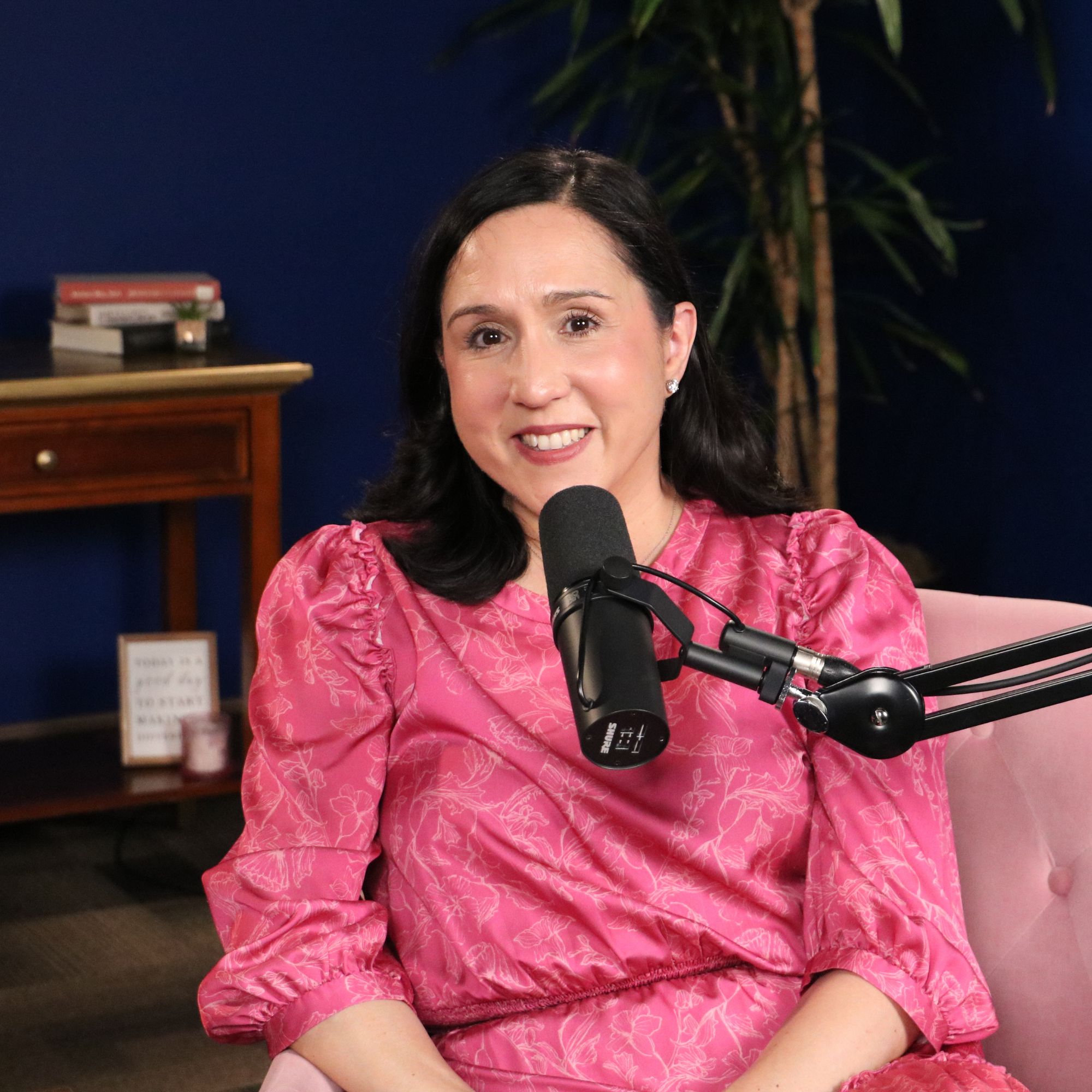
Dorothy: [00:00:00] An attorney, daughter of an immigrant, and a mother and a wife, Cristina Rodriguez brings courtroom clarity to her breast cancer journey. A routine mammogram, changed everything for her, but she talks about how she explained it to her daughters, how she had conversations at work, and how standing beside a close friend with a much more serious diagnosis brought the lessons full circle. Her story reminds us that early detection and honest talk at home can change outcomes for entire families. Share this episode with your family and friends, and if you can please make a donation to The Rose. You’ll help us take care of more women.
Let’s Talk About Your Breast, a different kind of podcast presented to you by The Rose, a breast center of excellence, and a Texas treasure. You’re gonna hear frank discussions about tough topics, and you’re [00:01:00] gonna learn why knowing about your breast could save your life.
Cristina, thank you so much for being with us today, and I’m just fascinated with your story, but let’s start with your background. Where you’re from, who your family is, that kind of thing.
Cristina: You bet. And, and first of all, thank you for having me.
Dorothy: Of course.
Cristina: It’s very, very nice to be here with you and see the amazing things that you all are doing. So thank you.
Dorothy: Thank you.
Cristina: I am a proud immigrant daughter. Both of my parents came from Cuba. Ended up in Miami, where they met and um, eventually I grew up in Miami and stayed there for undergrad. And, uh, I met my husband in law school who is a south Texas boy. And fast forward here, I’ve been in Houston almost 30 years. Never in my life would’ve thought that I would’ve been a Texas girl and raised Texas children, but I’m here and I love it.
Dorothy: Yeah, it does have its own history and its own. [00:02:00] I’m not sure if it’s magic or what, but there it’s a charm.
Cristina: And pride and state pride and uh, uh, and wonderful people.
Dorothy: Now you are an attorney, and where did you get your degree?
Cristina: I got my degree at Harvard.
Dorothy: Ah. What in the world attracted you to that? Because that wasn’t your, uh, original intent, was it?
Cristina: It, you know, my dad had a dream for me that I would join the Foreign service and that I would go to Georgetown and get a, uh, uh, both a law degree and a degree in foreign service and travel the world. Unfortunately, the Georgetown School of Foreign Service didn’t see it that way and waitlisted me, and so I ended up going to Harvard Law School, which was not only a phenomenal place to study, but I met my husband, and so I have, no complaints whatsoever about how my education turned out.
Dorothy: So your father really kind of guided you into that direction?
Cristina: He did. He thought, um, I think as an immigrant was very proud of our country. Loved the concept of [00:03:00] diplomacy and our role in the world. And so he envisioned me working at an embassy somewhere. And unfortunately that did not pan out, but Right. I think he was still proud of where my career took me.
Dorothy: Oh sure. But you’re, and I don’t wanna say this, incorrectly, but you’re not just an attorney, you’re a trial lawyer.
Cristina: I’m a trial lawyer, which means I get up in front of judges and juries and tell my client’s story and try to persuade the jury to understand the facts the way that my client understands.
Dorothy: But you know, that’s got to be the most fascinating. It it’s type of work, especially for us lay people. I mean.
Cristina: It’s fascinating and it’s, it’s hard but fun. And at the end of the day, it is about just talking to people. That’s really all it is. And you talk really, you talk one way to a judge and you talk one way to a jury. But at the end of the day, I think the common skill is can you communicate [00:04:00] effectively and authentically and I think warmly and not pretentiously, uh, because jurors will see right through you if you are pretentious and not authentic and condescending.
Dorothy: Wow. I would never have thought that, that is so interesting, huh. Now let’s go to your, your breast cancer diagnosis. Did you, and I’ve never thought about this before, but did you use those same skills as you were communicating with your physicians?
Cristina: I would say that I turned myself over to them. And really felt that less, less than my talking or communicating, I really needed to listen, because these were incredible experts and I felt I needed to be in their hands. I usually like to know the why of things, like why do you do this? How many podcasts have you done?
Dorothy: Right, right.
Cristina: [00:05:00] In that case. I just wanted them to help me and I really felt very comfortable being in their hands. I think it’s a blessing that we live here. Where we have an incredible medical center.
Dorothy: Right.
Cristina: And we have organizations like The Rose and people are committed to the health of women.
Dorothy: Yes. Now how old were you?
Cristina: I was 45 when I was diagnosed. Relatively young for the diagnosis.
Dorothy: Oh, yes, yes. Absolutely.
Cristina: Yeah.
Dorothy: How did you find it?
Cristina: Routine mammogram and so very grateful. I had my referral from my gynecologist. Went to get my mammogram, thought nothing of it, was asked to come back from biopsy, and then it just sort of went from there and, the, to me, the biggest challenge in terms of communication was communicating with my children.
Dorothy: Oh.
Cristina: That was hard. They were little. I have two girls and they were, uh, 10 and 15 [00:06:00] thereabouts, and that was hard. Yeah. That was the real struggle for me.
Dorothy: How did you do that?
Cristina: The hardest part was that we waited. Uh, I did not want to go to my girls without a plan.
Dorothy: Ah.
Cristina: Out of fear that if I said Mom has cancer, their immediate response would be what’s going to happen. And if I said, I don’t know, I felt that would be very difficult. So we waited about 10 days until I’d been in and there was a treatment plan and it was terrible inside. It was eating me up and then finally was just blunt because one of my doctors had said, very good advice, be blunt and direct because what they imagine if you are vague will be a hundred times worse than the reality don’t.
Dorothy: Oh, good advice.
Cristina: Don’t lie. Don’t be vague. Be blunt and direct.
Dorothy: Don’t be overly positive.
Cristina: Don’t be overly positive.
Dorothy: Yeah.
Cristina: You [00:07:00] know, the idea is they, their brain will fill in blanks in a terrible way. Don’t let their brain fill in the blanks. Just be forthcoming. And so we just sat down and told them, mom has this cancer. Here’s the plan. Mom will have surgery. We’re still gonna go on spring break. I was very concerned that if I said to them, we’re not going on spring break, again, they would receive that as, there’s something terribly wrong, we can’t even go on spring break.
Dorothy: So keeping that normalcy was, was important.
Cristina: Yes. And um, then allowed them to participate as they could. So my older daughter went to the hospital for my surgery. My little one was really too young. I wasn’t crazy about my older one going, but it made her feel better. And so I agreed for her to. Just go sit in the waiting room. Um, so yeah.
Dorothy: Uh, so, so which one took it harder?
Cristina: The little one. The little one cried. [00:08:00] And my older one had to sort of translate and say, she’s afraid you’re going to die. Which was not the case. That was not really a concern. But she was, she was 10, and I think in her mind. And that was terrible.
Dorothy: And she had a friend who, or a mother that she knew of?
Cristina: No, I think she just was, it would just hit her hard, just little. And she’s the baby.
Dorothy: And they know so much. Yeah.
Cristina: And they know I did. Now that you say that, Dorothy, it reminds me I did. Right before I told my girls, I let the moms of their best friends know.
Dorothy: Ah.
Cristina: Because I thought that my girls, especially the older teenager would immediately go to the friends. And so I wanted the moms to be aware, and of course they were friends of mine as well, but I wanted them to be prepared if their daughters came and said, oh my gosh, Anna’s mom is sick.
Dorothy: Now, why did you think of that?
Cristina: I just, I just knew my girls were close with their friends and [00:09:00] tight knit, and it just seemed to me that’s where they might go if they were scared. I mean, it’s logical, but I’ve, it’s just, but I just was, and I had enough time between the news and talking to the girls. I had enough time to have a plan.
Dorothy: And go through the scenarios and think about it.
Cristina: Exactly.
Dorothy: Sort of working.
Cristina: Yeah, exactly. Yeah.
Dorothy: Oh my.
Cristina: Yeah.
Dorothy: So your treatment. Was, uh, chemo, radiation?
Cristina: Um, no chemo surgery lumpectomy. Uh, followed by radiation in the mean, in the interim, they had done the onco typing, and then I’d gotten a wonderful call from my medical oncologist saying, we got the results back, and the, the risks of chemo would outweigh the benefit for you, so we’re just gonna do radiation. So that was a, a wonderful day.
Dorothy: Yes.
Cristina: I was a blessing.
Dorothy: Oh, absolutely.
Cristina: For sure. Yes. Yeah.
Dorothy: And were you scared?
Cristina: I would say I was a more scared after, [00:10:00] and to this day, a little bit. I always have a lot of fear of recurrence. Not fear of recurrence of breast cancer because I feel that they take such good care of me to this day. That anything is gonna get caught. I just, I have a mammogram. I have an ultrasound every year. I feel very comfortable, but for a long time, and even recently, any ache or pain in my mind is cancer.
Dorothy: Right.
Cristina: Well, and that’s, yeah. Uh, and.
Dorothy: It’s a natural.
Cristina: I just think it’s inevitable. Right?
Dorothy: Yeah.
Cristina: Yeah. So I, I think I felt more fear after than during, ’cause I really just took such great comfort in my team. They were wonderful.
Dorothy: Now you mentioned having a all female team.
Cristina: Yes.
Dorothy: Why was that important for you?
Cristina: I just thought it was great. It just made me feel proud as a professional to see these very highly educated, high powered women. Um, I, I just thought it was great. Um. And, and look, I would be [00:11:00] grateful for any wonderful professional to take care of me.
Dorothy: Right.
Cristina: But I just thought it was special.
Dorothy: But that’s kind of unique.
Cristina: It’s kind of neat. You know, in the same way I, I don’t know the numbers in, in oncology, but in among trial lawyers, women are minority. And I imagine it might be the same in, it is better now. Okay, good.
Dorothy: But when we started The Rose, it was like only 3% of all the physicians were female and less than that were surgeons. And so by co-founder Dr. Dixie Mallow, she was like one of the pioneers going into that. It was a very different world.
Cristina: So it’s nice to see it. I think it just was a nice feeling to see these really accomplished women who were also, kind and had wonderful bedside manner and were moms as well and understood that piece of, you know, how to talk to your children. Oh, yeah. That would be helpful. Yeah, absolutely.
Dorothy: Yeah. So that’s, now, are you 10 years out?
Cristina: Seven years out, yes. Seven years.
Dorothy: Congratulations. That’s good.
Cristina: It’s a, a good feeling good. Yeah, it’s great. Yeah.
Dorothy: [00:12:00] Yeah. After you hit that five year mark, it’s like.
Cristina: Exactly.
Dorothy: Yeah.
Cristina: It’s a good feeling. So Very good. Yeah.
Dorothy: So now let’s fast forward. Because your good friend also was diagnosed.
Cristina: Yeah.
Dorothy: I’d been friends, what, 20, 30 years?
Cristina: Since almost 30, about 29 years. Yeah. Who I call, uh, really more of a sister. Sort of the, the big sister I never had, I have a baby sister.
Dorothy: Yeah.
Cristina: And so, yes, exactly.
Dorothy: And we’re talking about, um, Maria Boyce who introduced us to you and such a champion. She has been for The Rose and for the women we serve. Oh my gosh, she’s on our board. She’s an incredible, um, supporter, but she’s also adamant about the importance of educating women, creating more awareness. So now you’re on the other end of it. How, how did that feel?
Cristina: So, a couple [00:13:00] of things, a couple of reactions. One was fear, uh, and concern because of someone so important in my life and the way her diagnosis came about was almost a, a whiplash. It came about quick and in a matter of a few days, I remember it went from oh, I may not even have to have this biopsy. And like four days later it was, I have to start chemo.
Dorothy: Oh!
Cristina: That is, it was this, um, quick.
Dorothy: Yeah.
Cristina: You know, I was just on the sideline, but even for me, it was just fast and chaotic and stressful. And so for Maria, you know, was a hundred fold of that. So it was hard and concerning and in a little way triggering for me as well. On the other hand, I felt grateful that I could help. She had helped me so much. I wasn’t able to help her with things I hadn’t experienced. Like for example, she immediately [00:14:00] found a good friend, someone I know as well, who immediately helped her with wigs.
Dorothy: Ah. Yeah.
Cristina: I hadn’t had that experience, so I couldn’t help. So she relied on many people with more direct experience, but I was still the sounding board how to navigate the office. How to navigate telling your colleagues, your clients, so I could help with that. And I could also be a bit of a clearing house on things that she wanted and didn’t want. Like, you know, people have such personal preferences. Do you want meals brought to you? Do you want someone to drive you to treatment?
Dorothy: Right.
Cristina: Everyone has different biases. So I was able to help. So it was a, a combination of relief that I could help and, uh, support her. And then of course, fear and frustration at the same time. Absolutely. Yeah.
Dorothy: Which was easier being a patient or the caregiver of a good friend?
Cristina: Probably more stressful to see it, because also her cancer was much more [00:15:00] serious. And so that gave me fear. Um. I really felt once we had a treatment plan for me, I felt very calm and comfortable. Um, but it’s hard to see. It’s really hard to see someone go through it.
Dorothy: Right.
Cristina: Um, and especially someone who’s saying, oh, I have to go get a wig. I have to do this, you know, that’s hard.
Dorothy: So you’ve covered a couple of things here. I wanna go back to. As a professional in a very, I wanna say, structured environment. That’s a good enough word here. How did you tell your colleagues?
Cristina: So my bias was to be very, very open. That’s just my personality. I don’t hide a lot from the people that I know and love. So I had drafted, um, days before it was ready to go live. I had drafted an email to friends, colleagues, family. And [00:16:00] clients to whom I was close. Not all my clients. But the clients with whom I had a strong personal relationship, like considered friends, and I said, this has happened.
This is what’s coming up. I don’t need anything but prayers. I think most of you pray, and for those of you who don’t pray, send good vibes. And I said, PSA. For my female friends, please go get your mammogram. For my male friends, please make sure your wife, sister, daughter goes to get their mammogram because I’m gonna be okay because I had my mammogram and I just sent that email out. Once I had told my children, once I told my girls, then I sent the email, and then not surprisingly, just an onslaught of kind loving messages from people.
Dorothy: Did you think about that a long time putting it together?
Cristina: I did. I did. I thought I put that email together in my mind ever [00:17:00] since the biopsy. For some reason in my gut, once they told me I needed a biopsy, I, I had a strange gut that it was cancer.
Dorothy: Oh, interesting.
Cristina: I don’t know why. There’s no basis for that. And so I had already started those emails in my mind.
Dorothy: Yeah.
Cristina: And it was fine. And then it’s, it was ready to go and it was fine. But everyone is different, right? Not everyone is as open, and there were certain clients who candidly, I felt might not be as understanding, and for those I did not.
Dorothy: Hm.
Cristina: You know, say anything and it was fine. But there were other clients of mine who were friends and.
Dorothy: Right.
Cristina: They were extremely supportive. Yeah.
Dorothy: That is really, I’m so impressed that you thought about the men. You know. Yeah. Tell your wives maybe call.
Cristina: Yeah. Oh, absolutely. ’cause I thought, you know, women, I know you know this, that we don’t tend to be good. Right? About Oh, I’m busy.
Dorothy: Yeah. I’m, I’m hearing this from a professional.
Cristina: Yeah.
Dorothy: But it is so true.
Cristina: [00:18:00] So true. Right?
Dorothy: Every single.
Cristina: I’m busy.
Dorothy: Guest we’ve ever had has said it. You know, I just didn’t have the time. I didn’t take the time. Right business and.
Cristina: I’ll go in a few months. I’ll go at the end of the year. I’ll go after that project. After.
Dorothy: After that wedding. After that, yes.
Cristina: After that wedding. After my daughter graduates, whatever it is.
Dorothy: Yes.
Cristina: And so I really did feel strongly that, there could be some peer pressure by people to make sure people went and got screened.
Dorothy: Right.
Cristina: Yeah.
Dorothy: Right. And it’s, it kind of elevates it all to a different level too, you know? This is part of life.
Cristina: Yes.
Dorothy: It does happen.
Cristina: Yes.
Dorothy: And, uh, thank goodness we don’t live in those days where we it felt like we couldn’t share it or we had to be ashamed of it, or people were all of those things that were so prevalent.
Cristina: Yeah.
Dorothy: This is 30 years ago.
Cristina: I’ll tell you a a funny anecdote I, that may resonate with you. When I was in radiation, I had, you know, the Sharpie marks everywhere. [00:19:00] And I, the beginning of my treatment, I would try to cover them up and, and I don’t wear really much clothing that bears a lot anyway. But I tried to wear, you know, higher neck. And then after a couple of weeks said, you know what, this is not my fault. I didn’t do anything wrong.
Dorothy: Right.
Cristina: Who cares if people see my sharpie marks, right? Like who cares? It’s part of life. Like you said, this is not, this is normal. I’m in treatment. If people have a problem with sharpie marks, that’s on them. But it did take me a little while to not feel a little embarrassed by the Sharpie mark.
Dorothy: Right. I remember a story of someone saying, uh, because she saw another woman with that she, it gave her that opening and, and they became actually friends.
Cristina: Yeah.
Dorothy: And because, you know, she was so alone.
Cristina: Yeah.
Dorothy: And I thought, really?
Cristina: I mean, yeah, but you do feel, you feel [00:20:00] like, oh, it’s weird. I don’t want people to stare and say, why does she have marker?
Dorothy: Right. Right. Oh, yes. Oh, yes. And, and if I remember the story right, uh, it was almost a, a mistake. She wasn’t even thinking, you know, and then, then someone mentioned it to her.
Cristina: Yeah.
Dorothy: We never know what it is. That might help another person.
Cristina: Exactly.
Dorothy: Even when we’re feeling a little vulnerable or, uh.
Cristina: Exactly.
Dorothy: Yeah. Yeah. Now did you have family history in?
Cristina: No.
Dorothy: No?
Cristina: No. Not at all. Just a risk factors. It true. No. No. None that I know of. Nothing in my mother or grandmother, nothing. And so it really was just the routine, you know, having gone to my Well Woman, which I due to routine.
Dorothy: And this wasn’t your first mammogram?
Cristina: No. I had had some before. And uh, I’d had the baseline maybe at 35.
Dorothy: Yeah.
Cristina: And then I think I’d had a few, ’cause I was 45.
Dorothy: Yeah.
Cristina: And my doctor just gave the orders, you know, just kind of sent in the orders.
Dorothy: Yeah.
Cristina: And I went, so it just [00:21:00] underscores the need to screen.
Dorothy: Right.
Cristina: Right.
Dorothy: And for it to be just a part of the, like you said, the well woman or
Cristina: Exactly.
Dorothy: Whatever that we do.
Cristina: That’s, that’s all it was, was just routine screening. No concerns whatsoever.
Dorothy: Hmm. All right. Now go back to your time with, uh, when Maria was diagnosed, what did she want you to do?
Cristina: I think she wanted me to run interference on, um, sometimes the well-meaning acts, uh, of people were things she didn’t want. And so just kind of trying to finesse if somebody said, for example, does Maria want um, X delivered to her house? No. You know, she doesn’t really need that. Why don’t you send her a card? Or, you know, one of the things that we did was something that, um, had actually been done for a friend, uh, of all of ours who very sadly had breast cancer and, um, [00:22:00] had gotten past it. And then it returned and she passed, um, around the time that Maria was in treatment. And one thing we had done for this friend was something that someone called Flower Power. And what it was, was we signed up instead of delivering a meal, you arranged for a flower delivery. So once a week, really you get a bouquet of flowers. So when Maria was in treatment, we had a signup genius and friends would sign up to deliver flowers. So she would come home from treatment and have a lovely bouquet and then a fresh one the week after and the week after.
Dorothy: How thought.
Cristina: It was wonderful. And for her, that made her happy. And it was a way to also help channel channels, people desire to help, which I think is a very strong desire. And I think that when you’re in a difficult spot, I think you have a little bit of obligation [00:23:00] to allow people to help.
Dorothy: That’s a good point. Yes.
Cristina: I, I think, I know it’s sometimes easy to be proud. And say, I don’t need help. I’m fine. But I do feel there’s a human element to people wanting to help that you should try to honor if you can.
Dorothy: Right.
Cristina: And so by doing this flower delivery thing, it uh, helped when people would reach out to me, I could say, yes, I do have something for you. Here’s a link to sign up to send Maria Flowers. Oh, thank you.
Dorothy: I love that.
Cristina: I feel better. I feel so much better.
Dorothy: Yeah.
Cristina: Uh, Maria loves to cook and so she wanted to cook. She didn’t have a desire or need for meals.
Dorothy: Right.
Cristina: And so this was a lovely way to channel people’s desire to help with something that would brighten her day.
Dorothy: Well, and actually cut flowers have a healing quality.
Cristina: Yes.
Dorothy: I mean, it really.
Cristina: Yes, yes.
Dorothy: I’m always amazed. Uh, A friend of mine said one time. It’s because they’re so frivolous that you just.
Cristina: Well, you [00:24:00] wouldn’t get it.
Dorothy: Enjoy ’em. Yes.
Cristina: You know, you wouldn’t buy it for yourself.
Dorothy: No, no.
Cristina: So, so yeah. So I think that being a clearing house for her, a lot of people would reach out and say, how can I help? So I was proud to be able to be a clearing house for her. Um, so that was great.
Dorothy: Did, did you ever talk with Bill?
Cristina: Sometimes, yeah, sometimes we would text with him and say, do you need anything? Bill is wonderful. Her girls are incredible. I mean, they’re some amazing family.
Dorothy: Oh, they are.
Cristina: They’re, they’re amazing.
Dorothy: And we had him on the show too.
Cristina: Yeah. And, and you’ve met the girls. They’re amazing.
Dorothy: Oh my gosh. He was so clear on everything that she was going through, knew where he was.
Cristina: Yeah.
Dorothy: You know, and talked a lot about he appreciated the support of people around him, so
Cristina: Yeah.
Dorothy: Yeah.
Cristina: Yeah. No, they’re.
Dorothy: Sometimes we forget those guys, you know?
Cristina: Right. And they need support and just, Hey, how are you doing? Are you okay? Can I help you? Yes. So, um, [00:25:00] so yeah. And thank God that Maria’s doing so well.
Dorothy: Oh my gosh, yes.
Cristina: It’s just now a, a force in of advocacy.
Dorothy: Yes. yes. So, so how have you used your cancer experience?
Cristina: You know, I would say at a very micro level. I try to be available to anybody, whether I know them or not. I raise my hand for anyone who needs help. Um, so recently a, a witness that we were working with in a matter, we found out that his wife had just been diagnosed.
Dorothy: Oh.
Cristina: And so I immediately reached out and I said, if you need to talk to me, if your wife needs to talk to me, I’m here. Um, and so I ended up just visiting with him when I saw him next and just kind of gave him some thoughts. I said, look, everyone is different, but here’s where I would be prepared to show Grace to your wife or here are, you know, so I try to do that if anybody, you know.
Dorothy: Because they really don’t have an idea of.
Cristina: Right, right. And sometimes I think people are embarrassed to ask for [00:26:00] help. Or people think it’s very private. You know, often people will connect me with someone and they’ll say, oh, like, is that okay that I told them? Are you, I said, absolutely. I hide nothing. And um, I’ve. A few years ago, someone reached out, one of my law partners connected me with another law partner who was having a hard time, and I was able to just kind of talk with her. Hear her vent about Um, challenges she was facing within her family. And just listen. So that’s what I’ve tried to do, is really just be available to people and tell them it’s gonna be just fine and you’re fine. It’s gonna be great. And you may have some scars and you may have this or that, but you’re gonna be amazing. It’s gonna be fine.
Dorothy: Yeah. No, we need to hear that.
Cristina: Yeah.
Dorothy: When we’re.
Cristina: I agree. I agree.
Dorothy: Yeah. We need, and like you said, have that. And someone who’s not judgemental, who’s not gonna fluff it up too much.
Cristina: Right. [00:27:00] I have said that to people. I’ve had that conversation with people about, okay, do you want the real nitty gritty, gross things that might happen to you when you’re in radiation? If you want, I will tell you, you know, I will tell you about, you know, not being able to use deodorant or you know, I will tell you about the things that are less pleasant if you wanna hear them. And if you don’t, that’s okay.
Dorothy: Right. The type of cloth you need to get your skin.
Cristina: Exactly. Yeah. And do you have to shower with your back to the water and you know.
Dorothy: Wow. You do get down to the nitty gritty.
Cristina: Oh yeah. If I feel, if someone wants to know that, I will tell ’em. And you will be marked up with a Sharpie and you cannot really get too wet and you are gonna be limited in what you can put under your arms. And if you wanna hear that, I will tell you. So if it helps somebody, you know.
Dorothy: Yeah.
Cristina: I’m happy to do that. So.
Dorothy: Right. Well, you’ve already told us that we need to take care of ourselves, [00:28:00] so you know what? What else? How else would you encourage women?
Cristina: I would say just make this part of your routine. Right. Don’t put off the appointment, just do it. It really, at the end of the day, doesn’t take that long.
Dorothy: Right. No.
Cristina: A mammogram, a well woman, your internist right. Doesn’t take that long. To do it.
Dorothy: And the big, big scope of life.
Cristina: Yeah. It just doesn’t, and I think this, my theory and my girls are now fairly grown. I think, at least for me, I put so much emphasis on I can’t be gone. Um, I can’t be gone any longer than I already am. So for example, for many years I didn’t go to a gym to work out because I thought there is no way that I can be gone from my home early in the morning because children and my kids.
Dorothy: Yeah. Yeah.
Cristina: Well, you know, [00:29:00] you can, you and, and what we did in our family is we, we split it up. I would go Monday, Wednesday, Friday.
My husband would go Tuesday, Thursday. But we worked it out. But for many years I thought, oh, I can’t be gone in the morning. That’s impossible.
Dorothy: Yeah. Isn’t that funny though?
Cristina: It’s not impossible, right? You can do it, but you get overwhelmed. I think. By the idea that I have to be home all the time. And I think, no, I can’t take two hours to go to a doctor’s appointment because then I might, I might have to work later, or I might miss pickup at school or whatever it is.
But like you said, it’s a tiny fraction of the year. Right . it’s a tiny fraction. And then I would just say lean into your network, because I do think that I’m a big believer in science and medicine. I’m also a believer in your mindset and your spirituality as a [00:30:00] positive.
Dorothy: Right
Cristina: determinant in outcomes. I know that doesn’t solve all problems.
Dorothy: No.
Cristina: But I do think it helps.
Dorothy: Sure. Holds you up.
Cristina: I think so. Yeah. I think so.
Dorothy: When you need it most.
Cristina: I think so, yeah.
Dorothy: Well, thank you so much for being with us. Great advice. Great ideas.
Cristina: You’re so welcome.
Dorothy: We haven’t heard before, so.
Cristina: Oh, good. I’m, I’m glad to contribute.
Dorothy: Appreciate.
Cristina: No, thank you, Dorothy.
Dorothy: Thank you.
Cristina: And, and kudos to you for all that you are doing in your leadership. It’s impressive of you.
Post-Credits: Thank you for joining us today on Let’s Talk About Your Breasts. This podcast is produced by Speke Podcasting and brought to you by The Rose. Visit The Rose dot org to learn more about our organization. Subscribe to our podcast, share episodes with friends, and join the conversation on social media using #LetsTalkAboutYourBreasts. We welcome your feedback and suggestions. Consider supporting The Rose. Your gift can make the difference to a person in need. And remember, self-care is. Not selfish. It’s [00:31:00] essential.