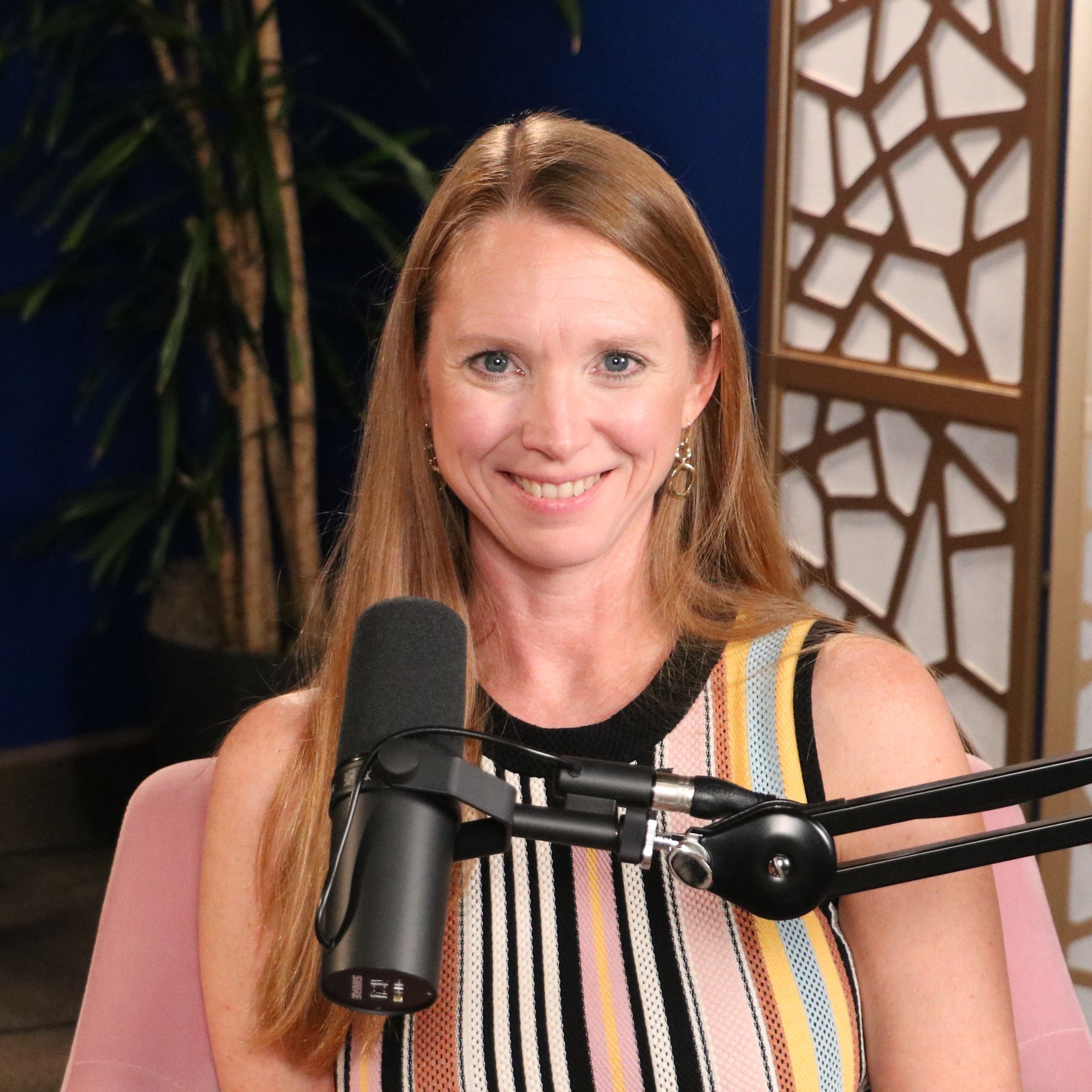
Dorothy: [00:00:00] Dr. Angela Coscio treats patients with precision empathy and one simple truth. People are not data. Her story reveals the power of blending science and soul, where every chart and every test represents a life, not a number. At The Rose, she reminds us that care means listening, believing and walking beside someone through every step of their cancer journey.
Please share this episode with family and friends and subscribe to our podcast on your favorite podcast platform. We so appreciate you supporting The Rose’s mission. And most of all, we want you to take care of yourself.
Let’s Talk About Your Breast, a different kind of podcast presented to you by The Rose, a breast center of excellence, and a Texas treasure. You’re gonna hear frank discussions about tough topics, and you’re gonna learn why knowing about your breast could save your [00:01:00] life.
Dr. Coscio. Thank you so much for being with us today and uh, I know you drove a long ways and I wanna acknowledge that because we really appreciate our guests that make this effort to be with us in person. Thank you.
Dr. Coscio: Thank you for having me.
Dorothy: So tell me, did you always wanna be a doctor?
Dr. Coscio: I think it’s probably always been in my top three from the time I was little really. But yes, from the time I was actually thinking logically about a career, it was always my choice.
Dorothy: What path did you take?
Dr. Coscio: I pretty much took the, if you’re gonna be a doctor, you take these classes for pre-med and then you go to medical school and you just go straight through. Um, for me it was, wow, that’s a lot of years before I can do what I want. So how do I get from point A to point B?
Dorothy: And you had a whole plan for that?
Dr. Coscio: I did. And I did take a little, not, I don’t wanna say detour, but I spent a couple years [00:02:00] really focusing on lab work, mice, rats, that kind of like cancer research, which was really interesting and fun and got like my nerdy science side out. And then when I started taking care of patients, I’m like, no, this is where I belong.
Dorothy: Ah, so you are an oncologist?
Dr. Coscio: Yes.
Dorothy: And you have specialized in breast cancer or are you general oncologist?
Dr. Coscio: Breast cancer, I would say is my specialty. I do see all types of cancer patients. Um, I’m in a practice with three doctors, so you have to see everything and be well-rounded. So.
Dorothy: Talk to our listeners about what an oncologist is, does how they, the role they play with all of this. Everybody thinks they know what that is, but explain it to us from your point of view.
Dr. Coscio: So we take care of patients with cancer. We sometimes start with the suspicion of cancer, working up, making a diagnosis all the way through management, treatment, [00:03:00] survivorship, and I follow most of my patients for, I tell them until I retire.
Dorothy: Oh, goodness. And you’ve been doing this a while. I was very surprised to read that.
Dr. Coscio: I’ve been at this for a long time.
Dorothy: Yeah. Yeah. How do you tell someone they have cancer?
Dr. Coscio: It’s never the same. There are some people who come to me because they’re pretty sure they have it and they already know, and it’s a matter of confirming their suspicion and then explaining to them what type, what stage, and what the plan is. And there are some people who are completely blindsided by it, and so you have to approach every person differently.
Dorothy: Well, that makes sense. And do you have a inner knowing of what kind of response you’re gonna have?
Dr. Coscio: You can kind of read the room.
Dorothy: Yeah.
Dr. Coscio: Um, and, and you, you can tell the patients who need a cheerleader and the patients who need a drill sergeant, and you just kind of figure, figure out what they, what they need from you in that [00:04:00] moment.
Dorothy: I can’t imagine you as a drill sergeant.
Dr. Coscio: No, I have good nurses.
Dorothy: Oh.
Dr. Coscio: They help.
Dorothy: Well, that, that’s true. And we’ve interviewed a couple of your patients, and of course they, they think you’re walking on water most of the time. They are so complimentary, and I’m not just telling you that. I mean, they really sincerely mean it.
Dr. Coscio: Thank you.
Dorothy: And so you must have a special connection with your patients.
Dr. Coscio: I love my job because it’s about people. And getting to know people. And if you’re taking care of someone while they’re managing cancer, you have to know them.
Dorothy: And you have to know.
Dr. Coscio: Their values, their beliefs, what, what’s important to them, what’s, what helps them make decisions about their health. So you really get to know people well.
Dorothy: How do you draw that out of them?
Dr. Coscio: Everybody, some people just give it to you. Ah, and some people it, it takes a while. There are some people who I learn more and more, and it’s two, three years into taking care of them [00:05:00] before you really know them. Interesting.
Dorothy: Is it important for you to know their work schedule, their expectations during that time if they’re working children?
Dr. Coscio: Oh, that’s definitely important. Um, it, it kind of depends. There are the patients who, the, the schedule’s a big issue because of things like chemotherapy, radiation, surgery, and there are people who, it’s more, we’re talking about menopause symptoms, putting ’em on pills that puts ’em into menopause and how that affects their, their mood, their life, their interactions with their family. And so those are two very different conversations.
Dorothy: Very different. Yes. And especially with the breast cancer patients.
Dr. Coscio: Right.
Dorothy: Yes. And, and I did, I read, write that you are a Spanish speaker ?
Dr. Coscio: So I understand enough Spanish that I can tell when the interpreter’s not doing a good job and I can understand, understand my patient, but I don’t trust myself well enough to do it without [00:06:00] an interpreter because I wanna make sure my patient knows what they what they’re hearing from me. I kind of joke that part of it is I don’t trust myself to conjugate verbs in real time to actually say it right. But give me a margarita at a dinner table and I think I can conjugate a verb and speak Spanish and it’s great.
Dorothy: It’s great, but it there is, we take care of a lot of Spanish speaking patients and over the years I’ve learned there is a different, different way of talking altogether. It’s not just the language, it’s knowing the culture, knowing.
Dr. Coscio: Right.
Dorothy: What question was just asked and what it really meant.
Dr. Coscio: Yeah.
Dorothy: So that is important.
Dr. Coscio: And I think that’s where I can hear the interpreter not getting that. Because I’ve stopped interpreters or I’ve changed interpreters.
Dorothy: Ah.
Dr. Coscio: Okay, good.
Dorothy: And if you stop them, you’re just clarifying for the patient.
Dr. Coscio: Right. I’ll say that’s not exactly what I meant and I’ll [00:07:00] say it again.
Dorothy: Okay. Yeah.
Dr. Coscio: But we use like virtual interpreters a lot of times, so you can just say this isn’t quite working and you can dial a different one if you’re not quite getting what you need.
Dorothy: Cool. I don’t want to leap over this too fast. What made you choose oncology?
Dr. Coscio: So a lot of things there was the science part of it, I think it’s fascinating science. Um, but also my grandmother went through cancer while I was in medical school residency. My mother went through cancer while I was in medical school residency. So I saw it from the family member side. And then when I was doing my medical school, I was just completely. Overwhelmed by how amazing tumor boards were seeing a surgeon, a radiation oncologist, medical oncologist, just seeing everybody work together, putting all of somebody’s information up on a screen, and really talking through how to manage each individual [00:08:00] patient. And I love that kind of, that team approach and that kind of communication. So it just, it just led me there never strayed.
Dorothy: So, so talk a little more on tumor boards. A lot of our listeners would not realize maybe their cases are even being looked at by anyone else.
Dr. Coscio: Most people have been talked about around a table. So we, um, prior to COVID, it was always around a table. Now, sometimes it’s virtual, but you would see somebody’s mammogram and somebody’s MRI on a screen the size of the wall in here. And everybody looking at it, going through it, asking questions. The surgeon talking about the approach, the plastic surgeon, talking about how they were going to manage it once the surgeon did their part, whether chemo was first, whether we did radiation or not, how that would affect somebody’s reconstruction. So all of that happens with everybody talking at the same time before we then sit down with a patient and present to them, [00:09:00] okay, here, here are your actual viable options.
Dorothy: And here’s a possible plan. We could go this way.
Dr. Coscio: Right.
Dorothy: Is a pathologist at the table?
Dr. Coscio: Pathologists are there.
Dorothy: Yeah. And so you have a, a good feel for what type of tumor, the characteristics of it.
Dr. Coscio: The type, the stage, the location within the breast, the, you know. We talk about genetics, if we’re worried about future cancers. We go through potential clinical trials. If they exist, we go through every possibility.
Dorothy: It’s very comprehensive. Yes. And I, and I think what you just said is important because a lot of patients don’t realize they’ve had a thorough review. It’s not one person’s opinion.
Dr. Coscio: Right. They get 20 opinions at once.
Dorothy: Yes.
Dr. Coscio: Yes.
Dorothy: And you know, there was a time when that didn’t exist. And many times, especially what I’ve been doing this for a while, you know, I could remember, um, the surgeon and the reconstructive surgeon didn’t really talk, and [00:10:00] so there would be times when you couldn’t reconstruct as well. And, and so this is such a different world now.
Dr. Coscio: Absolutely.
Dorothy: That they’re working together to get the best outcome for the patient. What else happens during that time when you’re preparing for the.
Dr. Coscio: So I mean, we’re even talking in tumor boards. Like we’ll have our social worker there talking about any barriers. So this patient lives an hour and a half away. How are we gonna manage rides and radiation that’s daily. Um, this person has this type of job where they might need to lift things, have physical activity, how’s it gonna impact? So we, we really talk about every aspect of a treatment plan.
Dorothy: It’s so interesting. I had forgotten about social workers role in that. Yeah. The, uh, now you work at St. Luke’s.
Dr. Coscio: Yes.
Dorothy: And tell us a little bit about the center and, and some of the, what does it mean to be in a comprehensive, uh, health environment where [00:11:00] we use that word comprehensive all the time. What does that really mean?
Dr. Coscio: I love working at St. Luke’s and I will say of every place I’ve ever worked, it feels like a family, like a team. Um, we have resources for not just the patients but their families and for the staff to make sure that from the time a person calls or is referred until the time that they are in survivorship, that we’re meeting all of their needs. Whether, like I said, it’s the social worker, the nurse navigator, trying to help get them whatever our patient assistance. We can ride programs, but also having access to the larger Baylor, Baylor College of Medicine Cancer Center, the Dan l Duncan and clinical trials and working together with, um, with those partners and colleagues, having the radiation oncologists, the surgeon, having everybody within our walls makes that tumor board easier to happen. [00:12:00] Um, it also makes it when tumor boards once a week and we need kind of an ad hoc meeting of the minds, we’re all right there.
Dorothy: Hmm. And from the patient’s point of view.
Dr. Coscio: From the patient’s point of view, they walk in the door and they have every single person that makes contact with them, knows them, knows their case, knows their plan.
Dorothy: They’re not a number there.
Dr. Coscio: No.
Dorothy: Yeah, I, I’ve had so many friends that have gone to St. Luke’s and have said the same thing. I mean, it is like they know everyone. And I, I have this image of that patient walking in, being very afraid and this whole team, excuse my, uh, description here, but of Earth angels walking beside him and behind them, just kind of carrying them along. I know for one of my good friends, that is exactly how she describes it. And it, it’s so refreshing to, to hear medicine [00:13:00] talked in that manner, you know, to hear that kind of, uh, feeling that a patient might have.
Dr. Coscio: And I love feeling, hearing that she feels that way. ’cause that’s definitely what, how we want everybody to feel.
Dorothy: I mean, you said you’d been at other centers. How did, and, and you love working at St. Luke’s the most, how’d you get there?
Dr. Coscio: So when I finished my training, I trained at MD Anderson. They had just opened MD Anderson up in the Woodlands. So I was there for a while. Um, had some changes with lots of things in my career. I had been medical director, started enjoying some of the business side, became interested in getting an MBA, had three children along the way and so lots of changes in life. That kind of led me to a point where St. Luke’s offered me an opportunity to head up their Baylor St. Luke’s Al Duncan in the Woodlands.[00:14:00]
But because of a non-compete, I had two years that I couldn’t do that. And in these conversations they offered me a chance to do my MBA and commute, not every day of the week downtown. So it gave me time with my kids at a time when I really has really helped. I also think having been in an experience as a woman who’s younger than men, sometimes that I am having to counsel. It’s helpful having some tools to do that and to have an MBA and feel a little bit more confident in, in doing that.
Dorothy: Now, really? There’s still that.
Dr. Coscio: Oh yes.
Dorothy: I, that just amazes me, you know, I’ve had other physicians say some of the same things. And I’m going, you’re a physician. I mean, my gosh. And this is still a part of life.
Dr. Coscio: It is.
Dorothy: [00:15:00] Someday.
Dr. Coscio: It’s fine.
Dorothy: Yeah. We are strong.
Dr. Coscio: We are.
Dorothy: Tell me about your children.
Dr. Coscio: I have three. I have my 11-year-old Julie, my 16-year-old Connor, and my oldest just left me for college, and her name is Izzy and she’s just living her best life in college.
Dorothy: Oh, how wonderful. But you made a decision as a mother to do something different.
Dr. Coscio: Yes.
Dorothy: That’s hard to do sometimes.
Dr. Coscio: Well, and I work-life balance was very important to me. And so in kind of creating this cancer center, my partners are two moms.
Dorothy: Ah.
Dr. Coscio: We are of. Relatively similar age and situation and have the, the culture of your kidneys. You go, I’ve got your back. We cover each other. So it’s just a very healthy work atmosphere. Which is good for us and the patients. Yes.
Dorothy: Do the patients know about your home lives.
Dr. Coscio: Oh, they meet all of us and they know all of our home [00:16:00] lives.
Dorothy: So it’s really not so off putting. No, they, they have a sense that you recognize what they’re up against too.
Dr. Coscio: Absolutely.
Dorothy: Yeah. And is, do you have favorite types of patients?
Dr. Coscio: You know.
Dorothy: I know they’re all favorite, but you.
Dr. Coscio: Wanna say yes in some ways and then you’re surprised? So I definitely, I love taking care of my breast cancer patients because it really encompasses all of a woman’s life. It’s her hormones and estrogen, who she is as a woman, whether it’s hair, breast body image, you know, our hormones have to do with how we interact with our family and live our lives. Um, and so I do enjoy that part of my job and that’s kind of why I kind of migrated toward breast cancer. But then I’ll have my, you know, totally surprise. 80-year-old prostate cancer gentleman that I just like, oh my gosh, I love him. So you, you make, just like in [00:17:00] anything, you meet people and there are some that you just really connect with and it’s never the same type.
Dorothy: Is that your real job? What? Connecting with people and.
Dr. Coscio: Yes, absolutely.
Dorothy: Because you’re walking them through a time.
Dr. Coscio: You have to, you have to kind of know the science, but you can look up anything you need to look up, you have to know people and you have to communicate with people.
Dorothy: Right. That is so important, especially right now when we’re feeling a little disconnected.
Dr. Coscio: Absolutely.
Dorothy: And here someone’s in the most vulnerable part of life. It’s so nice to have a connector. What do you love the most about what you do?
Dr. Coscio: The people. Absolutely. That’s it. My patients, my staff. I, I love the people.
Dorothy: So talk to us about some of the medical side of cancer that you think it’s important for our listeners to know.
Dr. Coscio: So I think in kind of focusing on the, the breast cancer side of [00:18:00] thing.
Dorothy: Okay.
Dr. Coscio: I think that the way treatments are evolving, there’s more and more and more that sometimes gets offered to patients, and it’s really a matter of deciding which treatment is right for which patient. We actually, I think, give less chemotherapy than we used to give when I first started, but we give a lot more endocrine or hormone blocking therapies and other treatments that are non chemotherapy that can impact someone’s life just as much. And just the fact that it’s a pill and you don’t lose your hair does not mean it doesn’t impact your life just as much.
Dorothy: Right. Okay. Do you have some people that are a little skeptical of that?
Dr. Coscio: There’s people skeptical of everything.
Dorothy: Oh, okay. Okay.
Dr. Coscio: Um, but I mean, when you talk about the, the hormone therapy, I mean, if you look at our, our culture, if you, I, I tell women if you sit your book club down and ask them how many are on hormones of some sort, um, and [00:19:00] what we think hormones do for us, and then all of a sudden you rip that away from them and do the opposite. There are people very worried and skeptical about how that’s gonna affect their lives.
Dorothy: Right, right. And, and I think we’ve all started to think that, uh, or not Started to think, I think, I think because chemo has been used for so long It’s like, oh my gosh, I’m not getting all the treatment. I, how do you, how do you convince a patient that they are in fact getting more treatment in a lot of ways?
Dr. Coscio: So we have some, there’s different brands that do these tests, but that can predict the likelihood of recurrence with or without chemotherapy. And so I can show my patients a graph. And I can tell them, if you take chemotherapy, here’s your recurrence risk based on the biology of your cancer. And if you don’t take it, here’s your recurrence risk. And if the difference is less than 1%, why would I put you through chemotherapy? And so I think having that visual, having science [00:20:00] behind it is, is what helps people understand. And on the flip side too, if I’m gonna tell someone they need chemotherapy, a lot of people wanna know, okay, what am I getting out of this?
Dorothy: Ah. And that’s very different than five years ago. Even.
Dr. Coscio: Some of it we were doing five years ago. But yes, there’s, there’s much better information.
Dorothy: Now is this, this, is this what people hear as personalized medicine or.
Dr. Coscio: Yes. This is definitely a part of.
Dorothy: Us. Yes. Yes. And I, I think everybody thinks, well, of course my medicine, uh, my treatment’s personalized. I, you know, but that’s not true. This is a very different approach.
Dr. Coscio: This is different there. There’s, I. So for those out there who engineers, I’m sorry. But there’s that kind of engineering, black and white mentality. And when I have a woman with breast cancer whose husband’s an engineer, I can usually peg him in the first five minutes. And I used to be able to walk out, print the [00:21:00] National Comprehensive Cancer Center, um, guidelines and say, okay, here’s the standard of care. So follow, follow this flowchart and you’ll know what we’re doing. And it would like, they’d just look at the flowchart and be like, okay, yeah. Well, not so much of a flowchart anymore. It would be 10 pages long and all the personalized medicine. So it’s not quite as, as simple as it used to be.
Dorothy: How important do you think that caregiver is? In the recovery process.
Dr. Coscio: Very important in all parts of it. I don’t wanna say understanding because it’s probably very hard to understand what someone is going through, but being willing to, to listen and support and try their best to understand what they’re going through is huge. But also knowing when they need to put their schedule aside and be there at that appointment and when they need to keep their mouth shut and when they need to speak up.
Dorothy: And how do you orchestrate that.
Dr. Coscio: I don’t know that you can orchestrate that other than saying I, you know, trying to redirect a little bit. [00:22:00] But when you see people who know how to do it well, you, you recognize that. So when at the end of the visit, the husband’s like, so you said this at home and you didn’t mention that. So kind of the filling in the blanks.
Dorothy: And do you talk to them directly when the patient is there?
Dr. Coscio: Yes. But kind of making sure you’re making eye contact in both ways.
Dorothy: Okay. That is one of the things that some of our guests have said, you know, my caregiver was right there. And it’s either they were, the doctor was talking to that person or ignored them and, and they didn’t understand the significance of their presence even. So I, I do think that’s very important.
Dr. Coscio: Absolutely. I mean, that relationship is part of the entire process.
Dorothy: And the caregiver isn’t always a spouse?
Dr. Coscio: No.
Dorothy: It could be a.
Dr. Coscio: Child, friend.
Dorothy: Child, friend, yes. What do you find most difficult in your job?
Dr. Coscio: I would say the, those [00:23:00] cases where you’re renting out of options, that’s one of the hardest, or when somebody makes a choice that you know is risky. Everybody can make their own choices. I do believe that this is an individual’s journey and it’s my, my job to give them the information to make their own choices. But there are some times where you’re like, I know that choice is risky, and I’m worried. That’s hard.
Dorothy: But you do believe that they have that ability to make that choice. You’re not gonna.
Dr. Coscio: Absolutely. We are grown up.
Dorothy: You’re still gonna be with them. Yeah.
Dr. Coscio: It’s our body, our life, our journey.
Dorothy: And that’s unusual in some physician thinking. I, I’ve.
Dr. Coscio: Well, I think we trained that data is data. And you follow the data, but people are not data. They can use data to make decisions, but we are not data.
Dorothy: How. How much do you encourage someone to believe in their intuition or [00:24:00] what they’re feeling? A lot?
Dr. Coscio: They’ve had their bodies their entire life. I’ve known them for a small fraction of that. If somebody tells me they think something’s wrong, I believe them.
Dorothy: You’re gonna pay attention to it. One of the things we see in a lot of females, women, you know, say, I just knew. I just knew something was not right. And I tell you, we’ve seen it so many times here. One of our cases, she said. I know there’s something going on right on this side. Well, she had a very unusual type of cancer that was not evident on mammograms or ultrasound. But when they did the biopsy, sure enough something was going on. So we really encourage women to go with that.
Dr. Coscio: Absolutely. I mean, I’ve seen the, well, I don’t think something’s right. My dog just kind of, you know, pawed me there. You listen to that.
Dorothy: Yeah, absolutely. What else would you have for some sound advice for someone who is facing cancer?[00:25:00]
Dr. Coscio: I would say to be prepared with your questions, that you should go into any appointment with your doctor ready to ask things like. What is the type of cancer I have and what is the stage? Because if your doctor can’t answer that, the next question is how are you gonna find out? Ah. Um, because all of our treatment plans have to do with what type of cancer and what stage of cancer. So a lot of times that’s kind of how I start a visit. And then if we don’t know the stage yet, well, here’s how I’m gonna find out this test and this test. Um, but then also asking questions, not just about what are the side effects, what’s the schedule, but how is this gonna impact my life? Because then that brings out the bigger questions, the job, the family, who you are and, and how it would impact those things.
Dorothy: When you’re talking with the patient, do you ever have a time when they’re so skeptical of what you’re saying, that you know it’s better for them to [00:26:00] go to someone else? Do you encourage that second opinion?
I
Dr. Coscio: encourage second opinion. If somebody asks. Please. They have to feel comfortable where they are.
Dorothy: Right.
Dr. Coscio: That’s, that’s the most important. If you’re not comfortable where you are, you need to figure out why. Either you’re not comfortable with a relationship you have with your physician, or maybe you just don’t understand what the treatment plan is, and you need to understand it better to feel comfortable. But whatever that reason is, if it’s a second opinion and that helps, then it needs to happen.
Dorothy: And you’re not afraid of any questions.
Dr. Coscio: Ask me anything.
Dorothy: Yeah. Well, and yeah, and I know that’s, there’s still a hesitancy to question the doctor about things. And that’s one of the things sometimes they don’t even know what to ask. So do you sometimes say, here’s some things you need to know and.
Dr. Coscio: Absolutely.
Dorothy: Yeah. Yeah.
Dr. Coscio: Absolutely.
Dorothy: I can tell you’re you’re that way because we, we go in there and the brain shuts down.
Dr. Coscio: It does.
Dorothy: [00:27:00] Yeah. I, I we always say, take someone with you. No matter what. No matter that you’re gonna get all the notes or they’re gonna write your plan for you. You need someone hearing it too.
Dr. Coscio: Yes.
Dorothy: ’cause that it’s just such a life altering diagnosis. It’s and moment in time.
Dr. Coscio: For sure and in, in different ways for everybody.
Dorothy: At The Rose, we are seeing a lot of young women come to us and we’re surprised at how many are being diagnosed. Are you seeing that in a broader picture of, of what’s going on?
Dr. Coscio: I do see a lot of young women diagnosed, um, you know, definitely below the age of 30 on a regular basis. And you’re surprised sometimes because you expect, or at least I used to expect that most of ’em would have a family history, something genetic, and it’s not always the case.
Dorothy: So your advice for a young woman who, [00:28:00] and they almost always find it.
Dr. Coscio: They find it themselves or their husbands find it. And they often get seen, sometimes maybe treated for an infection or told that it’s a cyst and they stop taking caffeine for a while and then it keeps getting bigger. So it’s really know your body and listen.
Dorothy: And insist.
Dr. Coscio: Yes.
Dorothy: Because so many of the, uh, the women that we have diagnosed we’re told, you’re too young for a mammogram.
Dr. Coscio: Not true.
Dorothy: So that is so important.
Dr. Coscio: And especially during pregnancy, breastfeeding, and soon after.
Dorothy: Yes.
Dr. Coscio: Like don’t assume it’s a clogged duct or mastitis, insist that you get evaluated.
Dorothy: We are so pleased that you came today to be with us, and like I said, St. Luke’s has had such a impact on so many of our patients, so many of my personal friends, and I’m just. It’s just an honor to have you here.
Dr. Coscio: [00:29:00] Thank you so much for having me.
Post-Credits: Thank you for joining us today on Let’s Talk About Your Breasts. This podcast is produced by Speke Podcasting and brought to you by The Rose. Visit therose.org to learn more about our organization. Subscribe to our podcast. Share episodes with friends and join the conversation on social media using #LetsTalkAboutYourBreasts. We welcome your feedback and suggestions. Consider supporting The Rose. Your gift can make the difference to a person in need. And remember, self-care is not selfish. It’s essential.