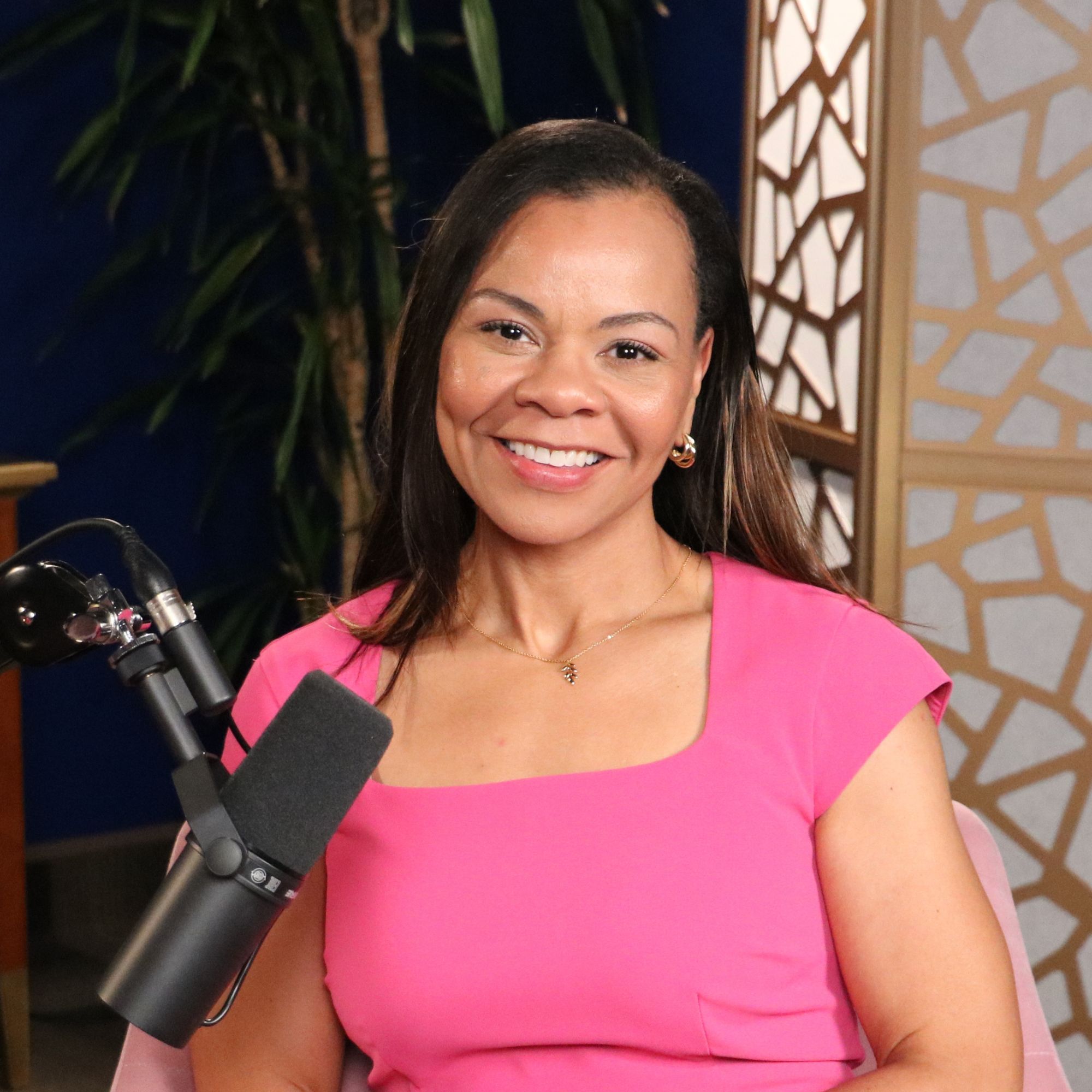
Dorothy: [00:00:00] Dr. Quianta Moore was on a journey that began in Pennsylvania, but that journey took root in Texas and unfolded across medicine, law, and policy. Today she leads the Hackett Center for Mental Health, where her work focuses on access to care, early brain development, and the health challenges that women face through the transitions of life like menopause or postpartum.
In this episode, Dr. Moore shares the experiences that shaped her career. Why she took the risk that she did to confront gaps in women’s health and how common sense solutions can ease the burdens women carry. This is valuable information and someday she says maybe research will catch up.
When you subscribe to our show, you help us grow. Someone you know may need to hear this story, so please share with your family and friends and consider supporting our mission at [00:01:00] therose.org.
Let’s Talk About Your Breast, a different kind of podcast presented to you by The Rose. A breast center of excellence and a Texas treasure. You’re gonna hear frank discussions about tough topics, and you’re gonna learn why knowing about your breast could save your life.
Dr. Moore, thank you so much for being with us today. I, I’m just really delighted that you’ve been able to make the time and to come on into our show because the subject that we’re gonna be talking about today is one that’s a look hard for a lot of women to even know where to begin. So tell us a little bit about your background.
Dr. Moore: Okay. So I grew up in Harrisburg, Pennsylvania, in the inner city. And then around, um, middle school time, my parents made a decision to move to East Texas. So I spent the rest of my life in [00:02:00] east Texas.
Dorothy: Now where in East Texas?
Dr. Moore: Um, Longview.
Dorothy: Oh, yes. Of course.
Dr. Moore: And you can imagine an inner city kid from the northeast being dropped into East Texas during those shock, those critical adolescent age.
Dorothy: Yes.
Dr. Moore: Was uh, was quite the shock. And so I made the decision to, to leave Texas for college and went to college in upstate New York at Cornell. And during that time, um, you know, in the high school to college transition, I really had a heart for service. I was smart, I was good at science. And so generally kids who are like science and wanna serve or directed into medicine. So, um, my career counselor suggested that as a profession for me. I had a shadowing opportunity when I was in, uh, high school to do that with an OBGYN and I really fell in love with women’s health and with healthcare and decided, you know, going into college that I was gonna be pre-med. Um, and so from there [00:03:00] I had an incredible experience though that really was, uh, Dorothy, I don’t know if you can look back at your life and, and see these moments in time that really sort of changed everything for you?
Dorothy: You don’t see it right then. No.
Dr. Moore: You don’t see it at the moment, no. And, uh, because I had come to Cornell already with a bunch of, I’d taken some college classes over the summer And, and had some credits. I ended up having, uh, a full semester basically that. I didn’t really have anything to do. And so what I decided to do, rather than save my parents money and graduating early, I decided to do this New York City, um, sort of study abroad, they called it. But obviously I wasn’t leaving the country. I was just going a few hours away to New York City. And so I lived in the Cornell Med School housing during that time and had an incredible experience where I was deeply immersed into different cultures. We spent six weeks in the Hasidic Jewish community. We spent another, you [00:04:00] know, um, period of time in Harlem, another party and a part of time in Brooklyn. And so it was my first, I think, real experience understanding the structural, societal, environmental, educational, family dynamics that all influence health. Up until then, I just was sort of a science nerd. Right. I was, I was good at it.
Dorothy: Yeah.
Dr. Moore: And, uh, but did not at all have an understanding of the context in which people live. And I think that shifted the trajectory actually of my career. Although to your point, I didn’t know it at that age.
Dorothy: Yeah. Yeah. So you didn’t always want to be a doctor. This was something that came in high school.
Dr. Moore: High school. Really, yeah.
Dorothy: Yeah.
Dr. Moore: Honestly, I really want to be, uh, work for the FBI and be a idea some type of a forensic scientist. Um, I always love a uh, solving puzzles and [00:05:00] mysteries and was really into, um, you know, like CSI and, and, and those sorts of things. But you can imagine in East Texas there weren’t a lot of opportunities to shadow, so.
Dorothy: No. No.
Dr. Moore: And so my career council was like, well, that sounds interesting, but why don’t you choose medicine?
Dorothy: So fast forward now, what is your position today?
Dr. Moore: Yeah, so now I’m the executive director of the Hackett Center for Mental Health. The Hackett Center for Mental Health is part is a regional arm of a larger organization called Men, uh, Meadows Mental Health Policy Institute. And that organization focuses on increasing access to mental health care throughout our state.
And now, um, at a national level, we work, um, at the policy level, but the Hackett Center was born out of, out of a vision of Marine Hackett. Um, she’s a local philanthropist and she’s dedicated her life [00:06:00] to mental health and, and, and had a vision that there was an opportunity to take all the talent and expertise that the broader organization had, and really focused into a region that she cares deeply about, which is Houston and the Gulf Coast region. And the timing around Hurricane Harvey and the impact that had on families really moved her to action, and so she, uh, gave an endowment to Meadows to start the Hackett Center here in, in Houston.
Dorothy: You know, I didn’t realize that’s how it got started.
Dr. Moore: That’s the story. Yeah.
Dorothy: Harvey really did a.
Dr. Moore: It did.
Dorothy: You know, we, we saw so many more breast cancers after that. It was, we diagnosed maybe 400 a year.
Dr. Moore: Yeah.
Dorothy: Right in that, that year following 18 months or so. It jumped to like 525.
Dr. Moore: Yep.
Dorothy: 550 and, y, you know, in medicine, you know how if we don’t have enough studies, we can’t say it [00:07:00] was because of the stress. You, you do know what I’m talking about, right?
Dr. Moore: I do.
Dorothy: And I kept saying, you know, unfortunately this is, this is a result, folks pay attention here. You know, and it was like.
Dr. Moore: I know. It’s sort of the impact. You know, it’s interesting. I’m glad you mentioned that. Um, we as organizational evidence. Base and to your point, right. Medicine and, and the profession that I, I came out of really cares a lot about evidence, but I had an opportunity to do this fellowship at Harvard. Um, uh, really focused actually on, on the science around brain development. But it was a larger evaluation fellowship where, where Harvard and, and the experts there were, were talking about this idea of how we’re using research, the quality of research, and the fact that often what we see in a lab is not really translating into, into practice for a variety of different reasons. And so there obviously is a very important role for evidence and research, but we can’t forget good old fashioned common sense [00:08:00] either. Right? Right. And I mean.
Dorothy: Oh yes.
Dr. Moore: I mean, I think common sense will go a long way.
Dorothy: Yes. yes. I’ve had to start just using our, our statistics. I don’t, you know, I said this is what we see.
Dr. Moore: That’s right. Yeah.
Dorothy: I can’t, I can’t bring you to a study or a national, you know?
Dr. Moore: That’s right, that’s right.
Dorothy: Yeah.
Dr. Moore: Yeah, yeah. But when you see something, you see an uptick of something, then, you know, um, it’s sort of like COVID, right? I mean, I think for a long time, research is gonna be, um, conducted long-term studies on the impact of, of COVID. But the question for those of us who are looking to make a change is do we wait 10 years or 20 years before that research is concluded or do we kind of use some common sense and recognize that, that there is evidence that supports the theory of change, the me of action, the things that we know, right?
So to your point about stress, stress does increase cortisol levels in our bodies. If you’re already at risk, right? I mean cancer, um, you know, there’s a relationship between [00:09:00] immunology and cortisol and then these other genetic and environmental factors. So again, we could use the evidence we know, right, to then sort of draw a reasonable conclusion. Right?
Dorothy: So what is your specialty? Where did you land after medical school?
Dr. Moore: Yeah. So I, um, got pregnant with my twins. I did, and during the time that I was applying for residency. So, you know, one part of the story is that I ended up getting a law degree along the way. So I, um, when I was in medical school, again, remember, I’m this person who likes to solve problems, right?
Dorothy: Right.
Dr. Moore: And, uh, in medical school during my journey, I realized that there were a lot of problems in healthcare that actually, um, related to treatment, but were much bigger than that. And, and related to policy and related to, um, who had access, who didn’t, what got paid for, um, what doesn’t get covered and paid for. How those decisions are [00:10:00] made. And I really, um, I really just, I wanted to sort of solve that problem at 22. Right? And. Um, and so I went to the, the head of the, the medical school. At the time it was Dr. Traer. And, um, and talked to the vice president and told them I really, I wanted to, to go to law school. And coincidentally, um, they were thinking about creating an MDJD program. And now they had a test case to, to pilot that on.
Dorothy: So you were an original, I mean, you were one of the first.
Dr. Moore: I was the very first one.
Dorothy: Oh my goodness. Yeah.
Dr. Moore: Yes. All the, all the, yeah. And so, um, and so it’s, you know, it’s interesting being a forerunner and I found that in my career I’ve often, didn’t bend that person, um, who’s willing to take risks, who sees things a little bit differently, who Uh, looks at the world a little bit outside the box, if you may.
Dorothy: Right.
Dr. Moore: And, uh, and so and so I did that and I, um, the, the program was [00:11:00] designed to where you’d go two years, um, in medical school, and then you’d go two years law school, and then you’d come back, and then you’d do a year concurrently. Um, that was sort of insane to me. And so what I decided to do instead was just to work really hard and I actually took extra courses for law school and summer programs and the winter session and all of that. And so I actually finished law school before coming back to med school. ’cause I just, having been through med school, I couldn’t conceive of a way where I was in clinic all day and then at night doing night classes.
Um, and so I finished and, and had a law degree when I, when I came back to medicine. And so I had my first son when I was in law school and the law school was incredibly supportive of me. They, um, I went to U of H law, which is a, which is a fabulous institution. They really, um, they didn’t actually have other students at that time who were pregnant and, and needed to nurse and they [00:12:00] built actually a nursing, um, center for me.
Dorothy: Oh my goodness.
Dr. Moore: And I had my own key where I could put my milk in it for my son.
Dorothy: Oh my.
Dr. Moore: And it was a very, um, supportive environment which allowed me to care for myself, care for my baby, and to accomplish my goals. And I, and I hope today we get some time to talk about our society and, and, and the need for that level of support, but. When I came back to medical school, I did not get that level of support, surprisingly, and, um, found myself.
Dorothy: No, it’s not surprising.
Dr. Moore: Found myself, you know, at the hospital at 4:00 AM and not getting home till eight or nine and trying to find places at the time. Although I do understand now there are, um, nursing center, you know, places. But back then this was 15 plus years ago, there was none of that. And so I would find myself trying to pump in the Ben Taub bathrooms when I was on rotation [00:13:00] or when I was on surgery, you know, trying to, you know, in between cases, trying to find some stall or somewhere where I could pump.
And, um, you know, and, and, and the experience of motherhood was different, you know, um, in that, and so, uh, long story short, I, you know, decided I wanted to go into ophthalmology. It gave me the solution oriented nature that I really needed. Um, as, as a surgical, but also allowed me to build relationships with my patients. Um, during the time that I was set to, uh, start interviewing for my residency, I found I was pregnant with twins and I was put on bed rest.
Dorothy: Oh my goodness.
Dr. Moore: So, And so I had to hold that. But the Department of Ophthalmology, I had very good relations with them. I was a, I was a stellar top student. And, um, one of my, uh, now who I consider a dear friend, um, but then, you know, as an attending and, and mentor, um, actually applied for a grant and created a, a fellowship for [00:14:00] me. To work in cornea and to, to continue to learn and, and do research. I learned a ton, you know, about research methods and I ran clinical trials and, and did all of that. And so it was a, it was a beautiful opportunity for me to, um, not feel left behind, you know?
Dorothy: Right.
Dr. Moore: Given that I had to, to delay, my, my residency during that time. And then I found myself, you know, um. I did that for a couple of years and, um, I found myself sort of in high demand. Um, turns out there’s not that many MD jds, I’m, I’m now part of the American College of Legal Medicine, which is, uh, um, people like me. Um, and there’s only about 5,000 of us actually in the country, so its a very small number.
Dorothy: Yeah.
Dr. Moore: Um, but then I obviously didn’t know, but, uh, but folks are asking me to help solve problems, which I love to do. And so I worked with the mayor’s office, I worked with the large foundation. I did some work and [00:15:00] eventually that sort of policy work outgrew my, my clinical work, and I decided to leave medicine and to do policy work full time. And so that’s how I.
Dorothy: That is amazing story. Oh my gosh. You know, I kept trying to find out more things about you know. I understand. We, we would’ve been looking for hours and trying to say, is she a doctor? Is she she a lawyer? I know. You know.
Dr. Moore: And she does neither actually.
Dorothy: No.
Dr. Moore: Yeah, so now I run the Hackett Center and it’s been, I’ve been here three years. I came here from the Baker Institute where I built their children’s health program. Um, their policy program there. Um. And, um, it’s been a great joy to be at the Hackett Center. I, um, it’s been different in that it’s really a, a blend or mixture of, well, our tagline is from policy to practice. [00:16:00] And so it’s really nice because I get to leverage my, my expertise, the knowledge that I’ve gained over the years, um, to really try to develop solutions across a continuum.
So yes, we work with our parent organization Meadows, on, on policy and, and think about systems change, but there’s also real change that needs to happen in neighborhoods and communities and in and where we live. And so we offer.
Dorothy: So give me some examples.
Dr. Moore: Yeah. So an example we have, um. The expertise that I brought and that I learned throughout my career was early brain development. And I fell into that, um, actually because a local funder was thinking about, um, making some investments in that strategy. And, and I have gotten a reputation as being someone who solves problems. And, and can think differently, right? And so was asked to help the foundation to, to figure this out. And during that journey [00:17:00] I realized that early brain development is really the foundation of everything that, um, are risk for disease. Both mental and physical health are economic success. The neighborhoods will likely end up in the relationships and, and marriages that are partners. All of that is shaped by the first couple years of life. And so, um, I decided that if I really wanted to make a change, that’s where I had to start. So I bring that lens to the Hackett Center in really thinking about a both and approach that obviously when people are suffering with mental illness they need services, they need access to care, they need supports both in the community and within healthcare systems. And we absolutely try to work on that. And I recognize that there’s folks that we could get to earlier before they are in crisis, before they need or diagnosed with, um, depression or anxiety, [00:18:00] and that that’s upstream and that’s prevention.
And so, um, many of our policies focus on the healthcare systems because we want them to reimburse mental health services at the same way they reimburse. Um. You know, physical health services. And then we’ve even recognized that for women, it’s actually even, there’s even more disparities in that women, we spend more on healthcare than men. And even though the Affordable Healthcare Act tried to address that by, um, making insurers charge women the same premiums as men, because it didn’t used to be that way.
Dorothy: No, it wasn’t.
Dr. Moore: Our premiums used to be higher. But even still, we pay about 20% higher healthcare costs. And that’s not accounting for maternity and childbirth.
Dorothy: Really?
Dr. Moore: It is, and it’s because many of the things that like [00:19:00] treatments are not covered or covered at the same rate for an anal analog, you know, challenge with men. I mean, let’s talk menopause for example.
Dorothy: Oh yes. Let’s talk menopause. Absolutely.
Dr. Moore: Um, a hundred percent of women will go through menopause. Yet when you look at the research, when you look at the amount of funding, when you look at physician training and healthcare provider training around this critical midlife period of time. Very little investment. When you look at coverage for treatments for women during this time. Uncovered.
Dorothy: Uncovered, absolutely.
Dr. Moore: But when you think about urology. And some of the age related problems that men have as they grow those treatments are covered. Are covered, yes. And so we end up sharing the bur, I mean, you know, disproportionately having the [00:20:00] burden of the healthcare costs in additionally. Women are not men. And so, um, are, we have different hormonal and different life stages, and which put us at risk for pretend, you know, for example, for, for mood disorders. You know, think about postpartum depression. Think about, These times in women’s lives, even during menopause, there’s increased risk of depression and anxiety. Why is that? Well. You know, the, the etiology as, as doctors like say, or the cause of these diseases is multifactorial, right? Some genetic, some experiential, environmental, you know, neurochemical, et cetera. But hormones play a really critical factor in that.
Dorothy: Oh, huge, huge factor. Yes.
Dr. Moore: And yet really during physician training, at least in Monaco school, there is no training of that. And if you asked, I mean, to your point about research and evidence. If you just walk up to a mid forties [00:21:00] perimenopausal woman and ask, how easy was it for you to find treatment for it to have a doctor? I’d guess it wasn’t easy.
Dorothy: It wasn’t, no. I remember at a time someone was going through it and I was talking to them. I had been 10 years out of it. Everything her doctor had told her was the same things I heard 10 years ago. And I was thinking nothing has changed. Not one thing. And we’ve changed everywhere else.
Dr. Moore: That’s right.
Dorothy: And, and you know, when you talk about, oh, well, is there any hormonal thing that you can do? Absolutely not. But the men. You know.
Dr. Moore: That’s right.
Dorothy: When they lose their libido’s a solution.
Dr. Moore: There’s a solution.
Dorothy: But it’s covered not for women.
Dr. Moore: Yes. By insurance. That’s right.
Dorothy: Absolutely covered.
Dr. Moore: Whereas hormonal therapy, testosterone. All these things, insurance doesn’t cover because there’s not enough evidence.
Dorothy: And so who, who suffers the most with that? [00:22:00] Because you can, if you have enough money, you can go and do it.
Dr. Moore: That’s right.
Dorothy: Is our ladies who don’t.
Dr. Moore: That’s exactly right.
Dorothy: Once again.
Dr. Moore: That’s right. That’s right. But even for those of us who have resources, I mean, just, you know, if I may share my own personal experience and journey, I would say probably about a year and a half ago I started noticing changes in my body and my energy and my brain fog and, and just, you know, um, it probably won’t surprise you.
I’m, I’m used to sort of uh, performing at very high levels. And, and just noticing that, that my own, uh, mental capacity and mood and everything was shifting and I went to my doctor and, and described these things and, and it was a female doctor. It’s so, oh, and so that’s the thing. It’s really about training and education. Right? Um, was like. She checked, checked my thyroid levels, made sure I was on hypothyroid. And, and all of that. And, and just said, you’re, you know, you’re [00:23:00] busy, you’re executive, you have children. Like, just rest more, take walks, take, you know.
Dorothy: Get more exercise, get more.
Dr. Moore: Yeah. Yeah.
Dorothy: You know what, what was it? It was don’t. When you’re into that time, don’t eat spicy foods.
Dr. Moore: Yeah.
Dorothy: Don’t, uh, do the more exercise, you know, we could give you maybe for a short time antidepressant. But, you know, you have all this other stuff going on. And then the bottom line was when they said, oh, and give up alcohol. I thought if I give up alcohol, I’m gonna kill someone. I mean, it’s gonna be real simple here. But, and, and I know we’re, we’re making light and it was a horrible 10 years.
Dr. Moore: It’s a hard time. It’s a hard time.
Dorothy: Horrible.
Dr. Moore: And so. It took me, you know, doing this and like more and more women. And then we have some, even corporations who we’re partnering with now around their, their workforce. I mean, I think the Mayo Clinic did a study and said there’s 60% loss of productivity during the perimenopause and menopause [00:24:00] period of time. And so employers are now grappling with this because many of their executives, right, they’re high performing women are now going through this and they’re. They’re not sure what what the solutions, um, are. So, um, anyway, I found my way to, to now having a physician who specializes in women’s health and who, during the first visit when I described these symptoms, you know, checked my testosterone, checked my estrogen. Did things that my primary care doctor did not did not probably know to do.
Dorothy: That’s true. Yeah.
Dr. Moore: And, um, and, and, you know, got me some therapies that I now pay for out of pocket. Right? And so, but to your point.
Dorothy: It’s day at night, isn’t it?
Dr. Moore: Uhhuh? It’s day at night.
Dorothy: I, I know.
Dr. Moore: I was telling some of my girlfriends, I was like, I’m back. She is back.
Dorothy: You know, honestly, it is, it is. Uh, I, I really have a lot of [00:25:00] sympathy for women that don’t even know there’s something out there.
Dr. Moore: That’s right. You know, it.
Dorothy: It’s, uh.
Dr. Moore: And to your point about the economic disparities, right? So this was my journey. I’m high resourced, right? I have a lot of connections. I could make phone calls.
Dorothy: Right.
Dr. Moore: Um, and eventually find my way to a provider who could get me what I, what I needed. But many women are not only under resourced. But they also don’t have the time and capacity to spend so much time and energy figuring it out.
Dorothy: Oh, yeah.
Dr. Moore: Right. And, and looking for the needle in the hay sack, so to speak. So, um, and so the Hackett Center, what we’ve started doing is just trying to increase broad awareness. So that’s the webinars that we’re hosting once a month with women.
Dorothy: Which are Excellent.
Dr. Moore: Thank you.
Dorothy: Excellent.
Dr. Moore: Thank you. We’ve gotten a lot of positive feedback about it. Just because again, and even some of our corporate partners have actually found us through that webinar because who’s talking about this?
Dorothy: No one.
Dr. Moore: Right? And and who is providing resources and who, and so what we’re hoping [00:26:00] to do is we build momentum and awareness in the community is to develop a platform that will have these resources, that we can be a place, and that if we do a good job in, in elevating our, our community partners and, um, making sure people are aware that this resource is out there, that when a woman starts not feeling like herself, there’s a place to go to at least get some direction. Right. We obviously are not gonna provide clinical care, right. Or, um, or treatment advice, but we certainly can say. If here are the things you’re experiencing, here are a list of providers in our community, right, who will offer this.
Dorothy: Right.
Dr. Moore: And then when you’re a provider and you’re recognizing, saying, I’m starting to have more female patients complaining of these symptoms, we’d also like to offer some continuing med medical education for providers so they can come and say, oh wow, I didn’t realize this. And often providers, because there is some mixed evidence, and a study came out about hormone replacement therapy. I don’t know. Ages ago.
Dorothy: [00:27:00] Ages ago.
Dr. Moore: Right. That showed an increased risk of car.
Dorothy: Yes.
Dr. Moore: But that study has been debunked by now.
Dorothy: Many times.
Dr. Moore: Many times. Yes. And, and sometimes providers, they’re, they’re afraid, right? They, they remember the study, they’re not sure what to do. They remember the headlines could offer, they remember the headlines.
Dorothy: Yes.
Dr. Moore: Right? And so, um. You know, we, we wanna provide right? That training and those resources to providers. And so that’s our hope is to lay level the playing field so that um, women can get the care when they need it, and they can have providers to go to. And, and for us you might be saying, well. Why is a mental health organization like focused on, on menopause? It’s because we understand that mental health is, is health and it’s no different than any other, um, part of our body. And is deeply influenced and impacted by these other.
Dorothy: Other things Absolutely.
Dr. Moore: In our body. And so we don’t take a um, [00:28:00] organ approach to health. We really take a holistic yes, absolutely human approach to health. And we want to support, improve mental health and wellbeing for everyone. And that means we really have to acknowledge these very physical and psych and physiological impacts that can, that can impact a, a woman’s wellbeing.
Dorothy: So talk to us a little bit about some other, uh, types of mental health issues that particularly impact women in a different way.
Dr. Moore: Mood disorders particularly, I mean, women are at, um, and the statistics vary uh, I’ve seen varying statistics, but one that I saw was that one in four women will suffer from postpartum depression, right? So things like that that we. You know, because of these, um, physiological differences in our bodies, it does put us more at risk during these critical periods of time for mood disorders, depression, anxiety. Another piece of this [00:29:00] that I, that I’m not sure if folks are talking about as much is the fact that even still in 2025. We share unequal responsibilities in the household. So even though we are actively participating in the workforce, we often are their primary caregiver for our children.
Dorothy: Yes.
Dr. Moore: In the event that we’re married or have children. And so, um, or the surgeon general issued a, a report and I think it was called like Parents Under Stress or something like that, but it, the statistics were staggering, talking about how I think it was like 45%, if I’m remembering correctly, of parents feel like overwhelmed and that there’s days where they feel like they cannot function. Um, the isolation, I think it’s about 60% of parents feel completely isolated in their role as parents. When we look at the literature on isolation. So prior to coming to to the Hackett [00:30:00] Center, I did quite a bit of research actually around, um, the opposite of isolation, which is social connectedness, and collective efficacy. And found that even at the neighborhood level, that if you have communities that they feel like neighbor will help, neighbor people will intervene on on their behalf.
It’s actually a protective factor. And so the research I did in a community called Third Ward here in Houston. Show that that community has very high levels of this protective factor, and that was statistically inversely correlated with anxiety. So put in other words, the more they felt strongly connected to their neighbor, the less likely they were to have anxiety. And so the rates of anxiety that neighborhood are lower than the national average. Despite having in.
Dorothy: The third ward.
Dr. Moore: Yes. Despite having high levels of poverty, having food insecurity, having these other. Right. Economic and structural challenges. Absolutely. And so more and more the research around [00:31:00] connectedness and, um, the importance of that for overall health and wellbeing is coming out in a variety of different literature. Um, you’re more likely to die. When you feel isolated, you’re more likely to have cancer. You’re more likely to have, I mean, it’s just, we know it’s just bad for us as humans.
Dorothy: Right. To not get, and we learned a lot of that with COVID, didn’t we?
Dr. Moore: We did. We did.
Dorothy: I, I’m just amazed at.
Dr. Moore: We did.
Dorothy: How many people still don’t wanna go outside.
Dr. Moore: Yeah, we did.
Dorothy: I mean, we, what, what is that we did, is it the same exact thing?
Dr. Moore: We did. You know, I think it’s, um, no, I can’t speak to why folks are not wanting to be connected in adults. I can speak to youth.
Dorothy: Right.
Dr. Moore: That, that I think, um, so the brain is, is interesting. It’s, uh, it’s, it’s formation, it’s architecture, it’s structure, it’s formed in those first three years of life. So the majority of brain development, um, happens. So that means like your personality, your attachments, all the [00:32:00] things that you know are cognition, our intelligence, all these things that are really important. Um, functions of the brain, um, that architecture is, is pretty well formed by the, by the time you’re eight years old. But there’s another window of opportunity of, of what we call brain plasticity where it’s, it’s you get to remodel. So if you think about it like a house. Right. If your house has a good foundation, then you can build right on that house and not have, have challenges. But if there’s a crack in that foundation, eventually you’re gonna have cracks on the wall. Cracks in the ceiling. Right?
Dorothy: Right.
Dr. Moore: Things aren’t, the doors don’t close as well. Right?
Dorothy: Right.
Dr. Moore: Right. And so, sort of as a loose analogy to the brain that if we invest and, um, help support proper brain development in their early years, then we’re less likely to get those, um, fissures or cracks in other areas. Mental health. Physical health, et cetera, with, um, adolescents, [00:33:00] there’s a chance though, to remodel and, um, what happened for many kids, including my children, was that that critical brain period of time happened during COVID Oh, and it changed their personalities in some ways, right? In, in the way that that isolation.
Even my own children, my twins, not my oldest as much, he was, um, in sixth grade, but, but my twins, you know, they now have social anxiety. Like it is, like I have to push them to engage with people in person as opposed to virtual. They’re, there’s more, much more comfortable in the virtual world, because think about it, during critical periods of time, their schools switched to all virtual learning. They did that for almost two years.
Dorothy: True. Yes.
Dr. Moore: Right?
Dorothy: Yes.
Dr. Moore: And then, and then, you know, and so it’s just, and, and during that time they created, you know, um, social environments to [00:34:00] interact with their friends. And, and all of that. And so I went to a, um, my kids go to a really good school and that provides a lot of parent education and support. And so, um, so I went to one of their, their classes for parents, and it was by a psychologist who basically has created a whole new practice for now these, youth who are graduating high school but can’t connect with the real world. And, and it’s a new diagnosis. I mean, I can’t even remember what it’s called, but, but it’s a new diagnosis and she’s created an entire, like, you know, some intervention, some behavioral therapy around this whole generation of kids who, who, whose world has mainly existed within the virtual realm and now are having a really hard time functioning in, in real life in reality.
Dorothy: Right, right.
Dr. Moore: Um, and so, and we think about, um, small children who were born [00:35:00] during COVID and then had to go to daycare centers where the, um, the, uh, caregivers were wearing masks. There’s now a new disorder, where for those children who can’t recognize facial expressions, because that was an important part of the brain development.
Dorothy: Oh my goodness.
Dr. Moore: And now they didn’t get that exposure and those neurons shaped in a way that, that now doesn’t recognize those, they’re not autistic. They just, no, recognize, they didn’t get the input. And the way that the brain, um, knows which way to develop or, or how to shape is actually based on input. So if the input’s not there, then the brain doesn’t build those structures right, to recognize it. So COVID has had a, a tremendous impact on isolation.
Now again, you know, I don’t know why adults are not wanting, you know, more of that. But, but maybe there’s, maybe they’re depressed, right? Maybe it’s undiagnosed. I mean, I certainly have heard [00:36:00] experts, um, in the field, you know, say that, that actually the prevalence data for depression, anxiety, it’s under reported.
Dorothy: Dr. Moore, this has been so fascinating. Thank you so much for opening our eyes to things I know a lot of people aren’t even aware of. So I’d like to have you come back and tell us more about early development as it relates to women later on. And, and some of those other mental health initiatives that you’ve been talking about expand on them a little more.
Dr. Moore: I’d be honored to thank you.
Dorothy: Oh, we’re so happy that you came today.
Dr. Moore: Thank you very much.
Post-Credits: Thank you for joining us today on Let’s Talk About Your Breasts. This podcast is produced by Speke Podcasting and brought to you by The Rose. Visit therose.org to learn more about our organization. Subscribe to our podcast, share episodes with friends, and join the conversation on social media using #LetsTalkAboutYourBreasts. We welcome your feedback and suggestions. Consider supporting The Rose. [00:37:00] Your gift can make the difference to a person in need. And remember, self care is not selfish. It’s essential.