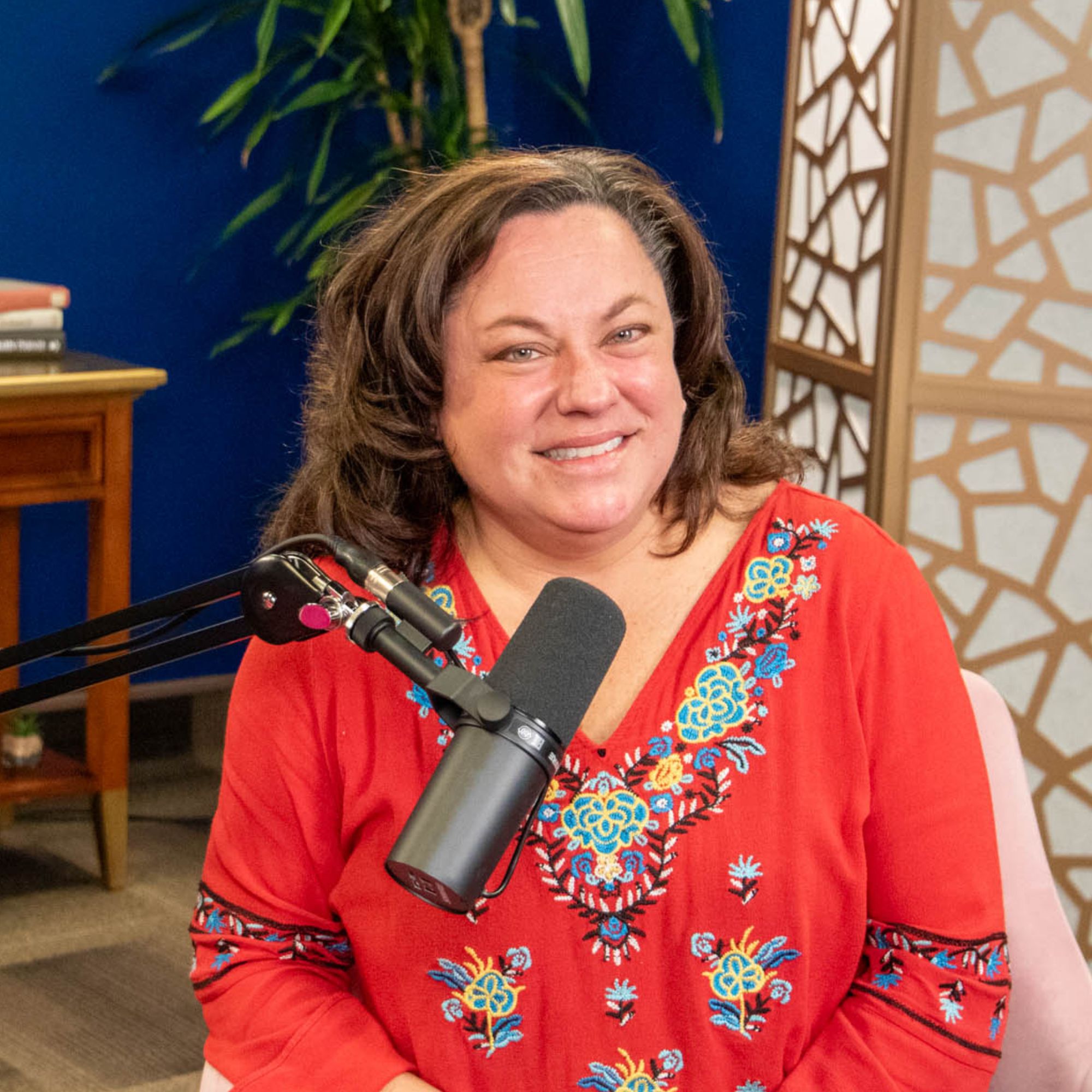
Dorothy: [00:00:00] When cancer shows up again and again in a family, some women take charge. They take charge before that illness strikes them. Alice Anne Dodge lost her sister at age 24, watched her mother battle breast cancer and faced constant anxiety about her own risk. Instead of waiting, Anne chose preventive bilateral mastectomy in her twenties, and that brought her much peace and freedom, even though she had to face friends and doctors who questioned her decision, she knew it was the right one. She shares how personal loss can shape medical choices and why community support matters. She believes that each woman deserves the chance to live without fear.
When you subscribe to our show, you help us grow. Someone you know may need to hear this story, so please share with your family and friends and consider supporting our mission at [00:01:00] therose.org.
Let’s Talk About Your Breast, a different kind of podcast presented to you by The Rose, a breast center of excellence, and a Texas treasure. You’re gonna hear frank discussions about tough topics, and you’re gonna learn why knowing about your breast could save your life.
Alice Anne, it is just a delight to have you here in our studio, and thank you so much for coming in and, and being so willing to share with us today.
Alice Anne: Thank you, Dorothy. It’s, I, I really am so happy to be here. As much as I’m so anxious about it, I’m happy to talk to you and I’m so
Dorothy: You don’t, have to be to be anxious.
Alice Anne: Grateful to be a board member.
Dorothy: Oh, yes. We’ve, we have loved having you as a board member. I, you know, I don’t know if I wAnnea go down you being a board member first or you being a veterinarian and, and I don’t think I’ve ever known a female veterinarian.
Alice Anne: Are you kidding me?
Dorothy: I’m serious. I now, I’ve had cats and dogs and all kind of animals, but. Invariably they’re [00:02:00] men. So, oh.
Alice Anne: That is, so.
Dorothy: What led you that way?
Alice Anne: The time I was in vet school, Uhhuh, and that was 20 years ago.
Dorothy: Okay.
Alice Anne: Vet school was 70% female.
Dorothy: Really?
Alice Anne: ’cause. Yes, because one in my women are more disciplined than men when it comes to studying and making the grades and they would do it. And then two, it’s a great field for women because you can often work part-time and raise your kids work two to three days a week. It has been, most veterinarians I know are actually women like and the only, and most of the men I know, are large animal veterinarians, not small. Ah. So it’s a very interesting field right now.
Dorothy: So what, you do have a specialty, right?
Alice Anne: No, no. I’m a, I always called a general practitioner.
Dorothy: Okay.
Alice Anne: I did four years of vet school.
Dorothy: Okay.
Alice Anne: Just like medical school. And then I went into practice and I do small animal. I’m licensed to do large, but when you live in Central Houston, you don’t get a lot of horses and cows. Sort of [00:03:00] thing. So yeah, I do mostly small animal. And have and exotics. Uh, some exotics.
Dorothy: Oh. Have you, uh, always had an animal of your own?
Alice Anne: I have, I kind, it was one of those I knew I wanted to be a vet when I was growing up.
Dorothy: How did you know that? I hear people say that. I go, how does, how does anyone ever know?
Alice Anne: I think I, and I didn’t. I think I just knew this was.
Dorothy: You were born in the city.
Alice Anne: I was born here in Houston.
Dorothy: You’re, you’re not born country in Houston.
Alice Anne: Oh, no. But I was the child that back in the day of pet stores in malls, like my parents would not let me walk past the pet store because I would see every animal in a cage and every would be like, I need to, I need to get them all out of here. I need to take them all home, which is not what being a veterinarian is actually about.
Um, and then it was very interesting because after high, and my daddy died my senior year of high school and I, [00:04:00] uh, sort of switched into, I didn’t know. I knew one person who was a veterinarian. I went to school with his daughter at St. John’s. Um, but nobody else was a veterinarian. And my parents were lawyers and everybody was doctors and everybody was this. And I thought, I need to be able to take care of myself because if my husband died or my daddy died, um, so I studied finance in college. And I have a finance degree from the University of Texas. And then I went back and realized I hated working at a desk job and doing the whole, I was like, this is not what I was meant to do. So I went back and started over and started taking like, I was 23, 24 in freshman chemistry, freshman biology.
Dorothy: Oh my gosh.
Alice Anne: It was hilarious. And uh, but it was the best ever, like organic chemistry. Easiest a’s I ever made. Oh my gosh. Like just when you know what you wAnnea do. And I love what I do. I’m very [00:05:00] fortunate. I’m very fortunate.
Dorothy: Now, are you a full-time, part-time?
Alice Anne: I’m full-time. Full-time. Yeah, which is right now, fortunately four days a week. We’ve come a long way from the seven day a week on call all the time veterinarian. That is old days.
Dorothy: Yeah.
Alice Anne: That’s one other, like I said, another reason people do wanna join the profession. You can still have that work life balance. You should.
Dorothy: So. Let’s go to early days. And I think very, maybe not early on, but you knew. About breast cancer long before a lot of people were ever introduced to it. So can you share that experience with us?
Alice Anne: Oh, I can. Um, um, ’cause see, my mother had it first when I was a, I think I was a junior in high school ’cause it was the year before my daddy died. Mother had breast cancer. And I could tell you Dorothy. [00:06:00] The names of 10 classmates whose mothers were also going through it at the time. And they were calling it society risk. Are they all, you know, the pill in the seventies caused all of this and everyone had surgery and everyone had chemo and everyone was fine.
I mean like that was sort of, it was really scary.
Dorothy: 10!?
Alice Anne: It was so, oh, oh, easily. And this was St. John’s not a big school. It was just. It was terrifying. It was scary. And yet you knew everybody else’s mom was fine, so your mom was gonna be fine. And I think that’s what was about Elizabeth. ’cause she was diagnosed. It was my senior year at Texas. And this is my sister.
Dorothy: Sister.
Alice Anne: Yeah, Elizabeth. Um, she was in her third year of law school at Texas and I was in my fourth year of college. And I remember standing in the kitchen at the Theta house. And getting the phone call from her and they [00:07:00] were saying she, and it was terrifying and it was scary and it was paralyzing, but it was also, you’re gonna have surgery, you’re gonna have chemo, and you’re gonna be fine because that’s how it works, you know?
That was how everyone we knew worked and. So it was really when she had her surgery and she had chemo and she went into remission and it was when she came out of remission and at the time I was 24, 25. Um, that’s when it really hit home. They’re like, this is not the way, this is not something that’s just
Dorothy: And how old was she?
Alice Anne: She, well, she was 24 when she was diagnosed.
Dorothy: Okay.
Alice Anne: Um, let’s see. And she died in 2005. Actually it was last Wednesday was her 20 year.
Dorothy: Oh.
Alice Anne: Was 20. So I’ve been thinking about her a lot lately.
Dorothy: Oh, Allison.
Alice Anne: I told you I was gonna cry. [00:08:00] Sorry.
Dorothy: No, it’s okay. It’s okay. Listen.
Alice Anne: Oh, I mean, we got eight years. You know.
Dorothy: But she was so young.
Alice Anne: She was so young. And that’s one of the, you said this one time at a board meeting, probably two years ago, and you were reiterating what the oncologist and the doctors that you work with, and one of the things you said was that this doctor was saying, my patients are younger and younger. 20 years ago, been my sister’s oncologist, Dr. Theriald. He said that at the time, he said, my patients keep getting younger and younger, so we are not making progress.
Dorothy: No.
Alice Anne: We are not making the progress we need to make because patients that are 24 after 20 years of this should not still be this.
Dorothy: No. No. So remember when we started The Rose in 87? I had a young lady in our support group, and I mean, young 22, who was too young to have a mammogram that had already been [00:09:00] diagnosed. Same with your sister.
Alice Anne: Oh.
Dorothy: I mean, it, it, you would think. The studies would really reflect it more than it does. Right?
Alice Anne: Yeah.
Dorothy: Uhuh.
Alice Anne: Well, and I was told repeatedly, and again, this was 20 years ago. So I’m not. We, when you know more, you do more, you know, when you know better, you do better. Um, I was told I was not a candidate for mammograms because my breasts were too dense. ’cause I was. Busty kind of girl. My sister was very lean. She founded herself in the shower and went to, the doctor called me and said, who’s your obgyn? I gotta go to the doctor. And they found it, and he immediately sent her to MD Anderson. Like he knew what to do, but it’s kind of just MD Anderson back then when she was first diagnosed, told me I needed, or they recommended or put out there, bilateral mastectomy. ’cause you’re just a matter of when, not.
Dorothy: If [00:10:00] mother, sister.
Alice Anne: Mother. My grandmother later down the road and aunt later, you know, and they also said, don’t get tested because insurance, at the time it was so new and novel to do BRCA testing and all the testing we did.
Dorothy: Oh, I remember this.
Alice Anne: And my, the doctors were saying, don’t do it ’cause then you’ll be preexisting and they won’t cover it. And X, Y, Z. I think the only reason they covered insurance covered my surgery ’cause they’d probably already spent a bazillion dollars on my sister.
Dorothy: Mm.
Alice Anne: I mean, and she had every, you know, everything you could have. And.
Dorothy: Now wait a minute, she had resources, she had support?
Alice Anne: Yes.
Dorothy: Or. You’re saying also she had every possible treatment.
Alice Anne: Yeah, she had every possible treatment. She had surgeries, she had chemo, she had a stem cell transplant. She was in clinical trial. My brother was the donor. Um, she was in clinical trials and even with all of that, and [00:11:00] so here is a, I’m gonna say it, and a, a rich white woman who has every resource available to her. And so what happens when you don’t have every resource available to you?
Dorothy: Hmm.
Alice Anne: The disease doesn’t care.
Dorothy: No.
Alice Anne: So everybody needs those resources available to them.
Dorothy: Absolutely. If nothing else for the, the quality of life, even though I always question that term when we’re dealing with treatment or we’re dealing with the after effects of chemotherapy. And especially 20 years ago, it, it was a different time. It was so, it different. Yeah.
Alice Anne: But I will say the best thing in my life was having a bilateral mastectomy. I was studying to get into vet school and I was living in an, an additional state of anxiety. You see where I go? This is like my default now.
Dorothy: Your mother has totally recovered at that point.
Alice Anne: Oh, she’s fine.
Dorothy: Okay.
Alice Anne: Yeah, she’s doing well.
Dorothy: She’s never, so she just. Just got out [00:12:00] of almost if I’m putting these times together. Right ?she hadn’t been out of treatment very long. And then your sister.
Alice Anne: Not when Elizabeth was diagnosed. Correct.
Dorothy: Wow.
Alice Anne: Correct. Um, and then Elizabeth. Exactly. We were, and I mean, it just sort of consumed all of our lives for while. That’s what it does. Um. And she was such a trooper. She was so amazing.
Dorothy: Tell me about her.
Alice Anne: Oh gosh. She’s, she’s just awesome. Um, I.
Dorothy: And personality wise, was she like you or?
Alice Anne: Oh, she and she, I are night and day.
Dorothy: Oh, okay.
Alice Anne: Okay. Oh yes. No, she was the good child. Like perfectly behaved, straight a’s dean’s list. Anything like that that you can think of? Oh yeah, and we went to camp together for 10 years. People did not know we were sisters.
Dorothy: Oh my that, that she’s like.
Alice Anne: A long, tiny little thing. Actually, it was mystic. So I’ve been thinking about her a lot more than usual lately. Um, Andrea, but she was, she was [00:13:00] great and she was a fun big sister. And like even during her treatment and her chemo, she, she met David and she got married and was on set, you know, to live happily ever after. And so you can do that. And David was instrumental in helping me. He reinforced the idea that I could have a bilateral mastectomy and still meet the man in my dreams, you know, still get married and live happily ever after. Which was nice to hear from a man. I know that’s not woman empowering, but it was.
Dorothy: Oh no.
Alice Anne: And.
Dorothy: Especially a time 20 years ago.
Alice Anne: Yeah. It was like you, he’s still gonna find you sexy. Sorry.
Dorothy: That’s okay. That’s, that is wonderful though. We need that reinforcement. Doesn’t matter where it comes from.
Alice Anne: No.
Dorothy: But that was a big decision for you. Now did Elizabeth. Encourage you to do that?
Alice Anne: Oh, she was so fine with it. She actually didn’t push me one way or the other. Nobody, the only people who pushed me were who were the people who tried to push me against it. And that was [00:14:00] actually very telling about some of the people in my life. And.
Dorothy: Wait, wait.
Alice Anne: Yeah, I know. Yeah.
Dorothy: I don’t think I’ve ever heard that.
Alice Anne: They were like, but you’re 24 and you’re not sick, so why would you do this? Because you’re cutting off two perfectly good breasts so that you can live forever, and why would you do that? I’m like.
Dorothy: Oh, they’re asking this of a uh, mid twenties. I mean, come on. Like, you would know those kind of.
Alice Anne: I was just like, I mean, you can bottle feed babies so that, and you know, so that wasn’t a thing. Um, and yeah, sex, but hey, there are other areas. Um, I don’t know. It’s just like, I don’t know. It just was, it told me a lot about some of the people in my life discouraged me from doing it because I woke up from that surgery and I had spoken to the anesthesiologist.
It’s a 12 hour surgery, and I spoken to the [00:15:00] anesthesiologist before it and I said, what am I gonna feel like when I wake up? She said, you’re gonna feel like an 18 wheeler ran over. You backed up and ran over you again. I was like, okay. Just so I know what I’m getting into. That’s, yeah, and I mean, to tell you, when I woke up from that surgery, I was, it was the most blessed peace I have ever felt in my entire life. Because my anxiety, my fear, my, I don’t wAnnea do this to my mother. She cannot have two daughters sick with this. It was the most wonderful, peaceful feeling i’ve ever had.
Dorothy: Oh, Anne.
Alice Anne: It’s just crazy
Dorothy: that that is remarkable. I mean, really, really. The anxiety you must have been feeling was just out of sight.
Alice Anne: I, I do not think I could have gotten into vet school if I was spending half my life worrying about getting breast cancer. [00:16:00]
Dorothy: Oh.
Alice Anne: I just, I needed to be able, and it was like, here’s the biggest concern I have, because I’m watching my sister go through this at my age. So I’m not safe, and now all of a sudden I don’t have to worry about it. Like, I don’t, I haven’t had a mammogram since I was 22. Like yeah. I just, I don’t think about it anymore. And it’s been so wonderful. It was a life changer. I mean, it was, it changed my life. Absolutely.
Dorothy: Now, this may be a little too much, but at that time you went ahead and had the reconstruction. And they were using, uh, the long version?
Alice Anne: The, the trim.
Dorothy: Trim.
Alice Anne: I had the free trim. Flat trim.
Dorothy: Okay. And so that still a very extensive surgery. Doesn’t always go a hundred percent all of the time, but apparently just having that emotional weight lifted was
Alice Anne: phenomenal.
Dorothy: Incredible.
Alice Anne: It, it was life [00:17:00] changing. I mean, it really was. And I had, I used, I was at MD and and they were so confused about how they were admitting a patient who didn’t have cancer, but they, the general surgeons, because they knew my sister were doing it. And then I brought in an outside surgeon, Bonnie Baldwin. Rockstar, um, not doing it anymore. Um.
Dorothy: Darn.
Alice Anne: Yeah, I know, right? She was the plastics. Um, but she had done her residency there, and so they all knew her and they were like, how’d you snag Bonnie Baldwin for this one? Like, we’re all so jealous. She was fabulous. It, it was, it was perfect. So I was lucky. The surgery went well, everything healed appropriately. Um, I can understand, because Elizabeth had multiple, multiple surgeries. She was very, like I said, she was very lean, very thin, didn’t have a lot of. What I’m gonna call tissue to work with. Um, and so she had to have a couple of revisions. I guess. [00:18:00] Um.
Dorothy: But she’s also going through treatment.
Alice Anne: Right. And she’s also going through treatment. You don’t heal well when you’re sick.
Dorothy: Right.
Alice Anne: And she was sick. Um. So I got lucky. But it’s not that easy for everybody because there are revisions because you’re sick.
Dorothy: But again, you making that decision, it being done at a time when your body is healthy. You know, there’s lots of good arguments for this.
Alice Anne: Oh, it was.
Dorothy: Absolutely.
Alice Anne: The greatest. Oh, I said the greatest thing I’ve ever done for myself. And I tell them this, I’m in my vet school interview. ’cause you, you, your grades get you qualified to get in. So then you have a personal interview. And I’m with these like 22 year olds and, you know, 20, they, they don’t know anything. I, they haven’t worked, they haven’t left college.
They dunno what’s going on. And they’re like, what’s the greatest thing you’ve ever done? And I’m like, well, I really excelled in my, you know, management class or, oh, I did really well in my biology this, and I’m like, I had a bilateral mastectomy and reconstructive surgery.
Dorothy: How did your interviewers?
Alice Anne: And they, it [00:19:00] was two men. Oh, no less. It was two men.
Dorothy: And did they double check her?
Alice Anne: And they both were like, okay, moving on. Well, of course it was like, well, that is the greatest thing I’ve ever done myself.
Dorothy: So goodness. So. Shifting gears here.
Alice Anne: I never, I’m sure you’re ready to.
Dorothy: No, no. I, I love this story. I mean, I haven’t, I haven’t had anyone embrace this kind of surgery in it with, such enthusiasm.
Alice Anne: I would recommend it to any and I was I when Angelina Jolie had it. I was like, Uhuh me first. I had it first. Like, you are getting all this attention, girl. I did this years ago.
Dorothy: And it was very unusual years ago to, to do that. It was very unusual.
Alice Anne: Yes. And it was still, I’m so glad. And the first time MD Anderson recommended it was sort of when Elizabeth was in the first stages, like her [00:20:00] original diagnosis, surgery, chemo. And they sort of mentioned it to me because I went in to get checked and they said, you may wAnnea consider doing a, And, and we were like, that is the scariest thing I’ve ever heard of. Like, oh my god.
Dorothy: Right.
Alice Anne: And then she went into remission and everybody life went along and once she came out of remission and got sick again. I was like, oh, that makes perfect sense. Like it did sound so scary and off-putting. And like I would never wanna do that until. I don’t know, it just all of a sudden you get a, I guess, a little more perspective. Maybe.
Dorothy: Now did she have a secondary cancer or was it the same one that.
Alice Anne: No, hers was always just metastatic. She only had breast cancer, but it went, it went to her bones. Um, and then it went to her lungs and then it went to her liver. And when it went to her liver is when we kinda.
Dorothy: Were you with her?
Alice Anne: I was in my [00:21:00] fourth year of vet school. And I would get reports because I was studying medicine. She would have her checkups and I would get, hear what was going on and I could kind of know more than my mother and my brother. And we didn’t really talk about that sort of thing. Um, so I, I think I was going through a lot of what they call anticipatory grief. ’cause as soon as I went to her liver, I mean, I knew, you know, you just, you know. I graduated May, 2005. She was July 30th, so I got to be home for two months. I had planned on taking a job, not in Houston, but once I got, I knew it was like, okay, I need to be home. I need to be with my family. And I’m so glad I did. We were there at the actual time we’re of sitting around. [00:22:00] She’d taken to her bed on Thursday and then it was Saturday night. Just we were there, David’s parents were there. She wanted to be alone with David. Um. And, but yeah.
Dorothy: So do you still talk to her?
Alice Anne: Kind of.
Dorothy: Did you complain to her about this?
Alice Anne: Exactly. I was about to say she gets a few, she gets a few comments now and then, um, but no, but there, and there’s so many hysterical memories that I just. You know, I think about all the time and they make me laugh out loud and to explain them and to explain why they were so funny. There’s so much backstory that they’re not like, it’s hard to do.
Dorothy: Yeah.
Alice Anne: But you just like, oh my God, my sister just I’ll miss her forever.
Dorothy: Of course.
Alice Anne: Yeah.
Dorothy: Yeah.
Alice Anne: You’ll love her forever.
Dorothy: I’ll love her forever. Just the form changes.
Alice Anne: Yeah.
Dorothy: Always there. [00:23:00] Thank you for that. I mean, truly, truly, Alice Anne, it’s not easy to talk about such personal things, but let’s, let’s go to your time on the board.
Alice Anne: Okay.
Dorothy: What attracted you to The Roses Board?
Alice Anne: Honestly, I hadn’t heard of The Rose until Peggy Rowe sat me down and said, I think this is something you would. Care about, and Peggy is so fabulous. One of the things I really liked about The Rose, because there are several breast cancer focused organizations out there.
And not to say anything bad about any of them, what I liked about The Rose was that it was, and I’ve, I’ve never found the right word, locally focal, like. I could see that what I did was making a difference locally. You know, you’d make a donation to a [00:24:00] national organization. You don’t know where that money goes with The Rose you can see the women that you’re affecting. You can see the coaches that are driving out to serve these women. You can, my friend Chris Noble, who has just, I mean, she’s like the coolest thing ever because she’s in there interacting with the people and I just loved the idea of seeing, and I, I’m sure I have not done anything worthwhile as a board member, but knowing wrong stop that. But just seeing how locally you can make such a difference. I find to be more so important. I found that so gratifying. So I really am so proud to sit on this board and thank y’all so much for inviting me.
Dorothy: Oh. It’s been our honor.
Alice Anne: You thank you.
Dorothy: I mean, you’ve been such a supporter and always again, without you know, anything.
Alice Anne: It’s
ok, It’s, they’ll edit it. You can say it.
Dorothy: But you bring a different personal touch. You bring a different personal experience, and it’s not your family. Experience. It is the [00:25:00] work you do. You know, when you say, I have surgery on Tuesdays and I might not get out. I mean, not gonna all, we’re all going, okay, she has surgery on Tuesday. We’re not, we’re not gonna change her for this. But, but it’s a, i I always think it’s easier for us sometimes to love our pets, even more than our family or just show it. Maybe it’s the
Alice Anne: Well, they don’t talk back quite as much.
Dorothy: Yeah. And we, we don’t have to worry they might be criticizing us. Right.
Alice Anne: I mean, I can put you in a crate if you’re gonna act like that.
Dorothy: So I think, I think that personal side of you that always, it’s almost. Like, you’re kind of laughing at us when we get all all concerned about finances and all that stuff. You’re going, okay, uh, you know, I’m gonna go take care of my patient here.
Alice Anne: Move on. Yeah. And I’m a little bit like that with my boss too, if that makes you any better.
Dorothy: Oh, okay. So, yeah. Well, that’s good. At least I didn’t dream this up.
Alice Anne: No, you did not. I, I, I am, I am definitely a i’m just a pragmatic [00:26:00] person and I’m like, I got important things to do. So like, let’s move it along. Let’s get done what we need to get done. It’s important, but it also doesn’t need to take two hours. Like it can be done resolved and let’s fix the next problem.
Dorothy: Move on, move on.
Alice Anne: I’m a problem fixer. Um.
Dorothy: Do you, do you ever find yourself wanting to counsel young women about, about breast cancer, about what to do about this? It could be you. Do you, do you find yourself in that role at all?
Alice Anne: Not out of the blue. Like, I would not, like say the young doctors that I work with out of vet school or in a certain capacity, I would never be like, oh, hey, by the way. Are you checking yourself out? I don’t, I don’t find myself bringing it up unless it’s brought up to me. I will say that. Um, and I don’t know why. I mean, it’s not that I’m against bringing it up. But I guess I’ve never really,
Dorothy: but it’s still not something everybody talks about.
Alice Anne: Yeah. No.
Dorothy: It’s still. One of those, oh my gosh. [00:27:00] Breast cancer. Oh my gosh.
Alice Anne: Like you need to think. And it does help in a twisted kind of way that I can say my sister was 24. You know, and they’re like, oh wow. And it’s like.
Dorothy: Let’s think again. Yeah.
Alice Anne: It does happen when you’re that young. And that’s what Dr. Therial said. He goes, my patients are getting younger and younger every year.
Dorothy: He was always one of our favorites.
Alice Anne: Was it? Oh, ethereal.
Dorothy: Yes.
Alice Anne: Oh my gosh.
Dorothy: Yes. You have to remember back 20 years ago, MD Anderson was a place that would take many of our patients. Is this is pre-state program? Pre? All of those kind of things. You know, it was a very different time, but we had a couple of boards we set on together, but he was always very down to earth. And would explain things, which is what I loved about him. ’cause he didn’t ever try to talk up here. It was always, let’s talk about what’s really, yeah.
Alice Anne: Lay it out for you. This is how [00:28:00] it’s really happening and ’cause that’s all you can fix is what’s really happening.
Dorothy: Is that how you handle loss?
Alice Anne: Oh, I don’t know. Um, it’s kind of funny. A friend of mine was actually asking me this very question the other day. And I think one of the things that’s like if you’re a human doctor, and by that be like an md Like treat humans, unless you’re a cardiologist or an oncologist, you have a reasonable expectation that you will outlive your patients. You will, your gp, your dermatologist, your, you’re gonna outlive your patients as a veterinarian you are not. Whether they die at four, at seven or 14, you do their puppy shots, you do their spay neuter, you do a foreign body surgery, you do a broken leg, you do a whole bunch of, you know, ear infections and then you’re there to put them down at 14 years. I love that [00:29:00] about my career, that I can be there for the whole part of this dog’s life. But it is a different, you may, you have to learn to manage it differently than I think a lot of people do.
Dorothy: Wow. That, that’s fascinating. No, I never would’ve even thought that way.
Alice Anne: No. I mean, I had my, one of my favorite patients on Friday.
Dorothy: Hmm.
Alice Anne: You know, I mean, it’s, it’s part of the gig and you, and you cry and you’re sad and it breaks your heart and you try to, and you keep that compassionate heart because that’s what, that’s what they deserve. These animals are so, they’re so wonderful and their humans are so wonderful that I get to treat them.
Dorothy: Oh yeah.
Alice Anne: I get to know them.
Dorothy: Right.
Alice Anne: Over years, I always wanted that. That’s why I wanted to be a gp. I didn’t wanna specialize and just do knee surgery and then never see them again. It’s like, I wanna be there for you. [00:30:00]
Dorothy: Whoa.
Alice Anne: From the start to the end.
Dorothy: Interesting. Yeah. I like that about it. Yeah. I wonder how does some, how does. Someone become or an animal become your favorite patient?
Alice Anne: Well, first of all, they don’t try to bite me because that’s happening way more and more. Oh my goodness. Oh, all the rescue movement and then COVID, and they’re all our Prozac. It’s, it’s, it’s not what it was 20 years ago. But no, most of my patients are great. They’re great, their clients are great, and often we’ve gone through something together. Like a foreign body surgery or, You know, just, I’ve had to refer you because you have lymphoma or be, I, I had to call one of my favorite clients yesterday because his cat, Molly had mammary cancer, breast cancer. And I get to call him and tell him that she now has lung metastasis.
Dorothy: Oh.
Alice Anne: And I broke this man’s heart. I mean, he’s just so sad. And I’m sitting there crying because there’s nothing I can do. So it’s [00:31:00] tough. It it’s tough.
Dorothy: But they, but we have to admit, we, we allow our animals to go on, and that doesn’t always happen in our human world. No. We keep wanting and holding on and trying things that really don’t add a lot.
Alice Anne: Right. At some point. You gotta call it a day.
Dorothy: Right.
Alice Anne: And I’m one of those kind of doctors.
Dorothy: I, I can tell, I will tell you. I, I’ll tell you, if you’re, I’m not gonna allow you to let your pet suffer.
Alice Anne: I’m not. Just because you are ready want.
Dorothy: Right.
Alice Anne: It’s not, that’s not okay.
Dorothy: Well that, that is a great place and way to, to end. Oh, I think this has been one of the most interesting interviews we’ve ever had.
Alice Anne: A lot too.
Dorothy: No, you did terrific. Thank you again so much for sharing. These are, these are great.
Alice Anne: Thank you.
Dorothy: Life lessons. Oh my gosh.
Alice Anne: Well, you run a great organization here and it’s a wonderful cause and I do believe in it and I’m, I’m grateful to be able to give anything I can [00:32:00] as little as it may be.
Dorothy: Listen, I think today you’ve brought a new. New message to many of our listeners, and thank you for that.
Alice Anne: Oh, you’re very welcome. I’m grateful to be here. Thank you.
Post-Credits: Thank you for joining us today on Let’s Talk About Your Breasts. This podcast is produced by Speke Podcasting and brought to you by The Rose. Visit therose.org to learn more about our organization. Subscribe to our podcast, share episodes with friends, and join the conversation on social media using #LetsTalkAboutYourBreasts. We welcome your feedback and suggestions. Consider supporting The Rose. Your gift can make the difference to a person in need. And remember, self care is not selfish. It’s essential.