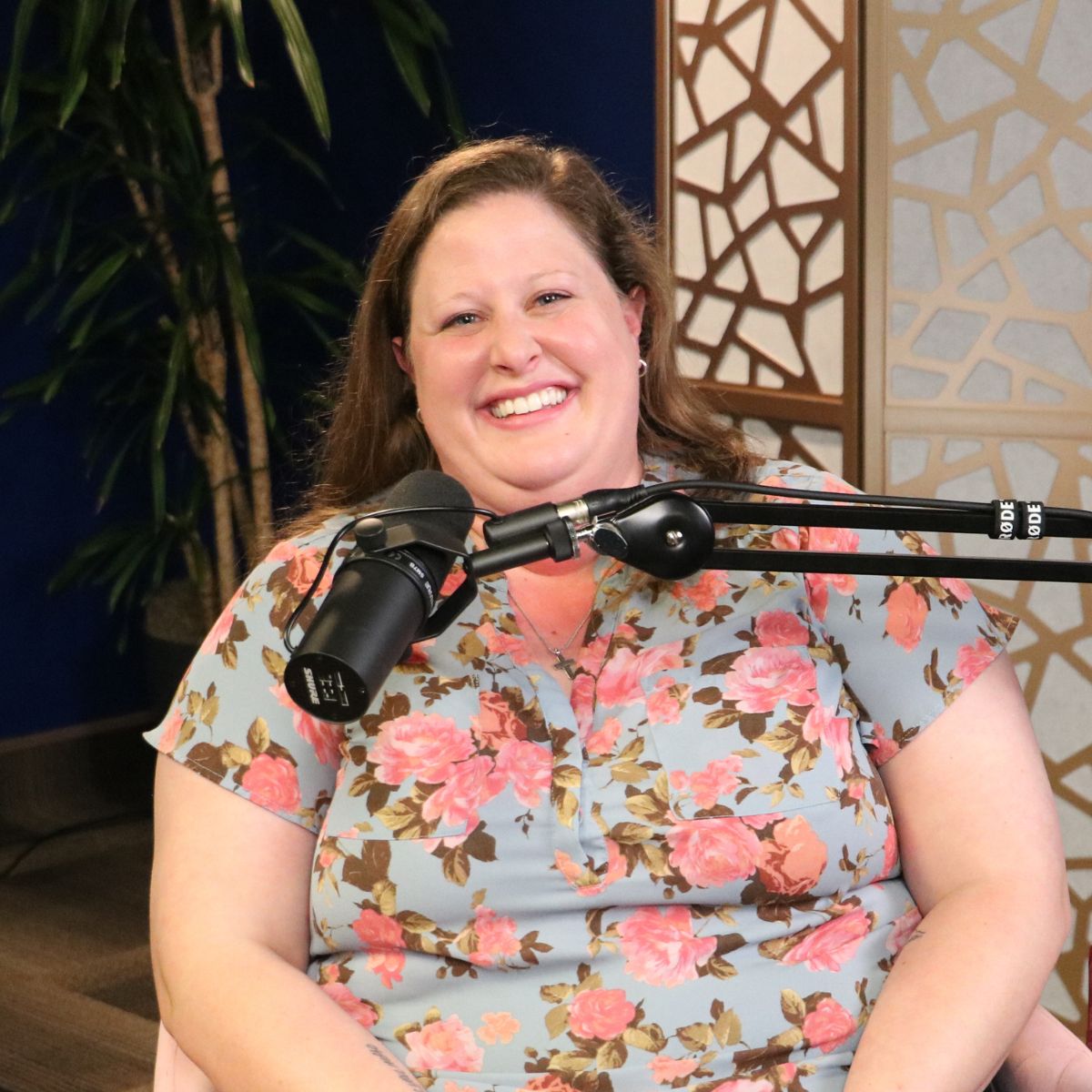
Dorothy: [00:00:00] It’s big, it’s pink and it’s coming to your city. Yes, it’s true. Hope rides in on a Pink Coach. As the Rose’s Community Engagement Navigator for all of Brazos Valley, Emily Reis links local clinics, nonprofits, and churches to mobile mammography days. She’s the one that is behind that pink coach coming into town.
She’s the one that makes sure people even know there’s a pink coach coming into town, and she’s the one that talks about having 3D screening mammograms, and how important it is to early detection and survival. Month after month, she goes to local partners. She helps register women for that mobile mammography day. She answers questions and she makes all of this mammograms, early detection feel a lot less scary. She’s the next door neighbor for many of these women, [00:01:00] but most of all, she is a friend. Her goal is simple. Well, she says it’s simple, but it’s a big goal. She wants to make the name of The Rose a familiar, trusted name so that no woman ever misses a life-saving mammogram are the follow-up care that comes after it. Listen to what a day with Emily sounds like as that hope rides in on a Pink Coach.
Let’s Talk About Your Breast, a different kind of podcast presented to you by The Rose, a breast center of excellence, and a Texas treasure. You’re gonna hear frank discussions about tough topics, and you’re gonna learn why knowing about your breast could save your life.
Emily, thank you so much for being with us today. I, I really appreciate you making the drive.
Emily: Yes.
Dorothy: And, and coming here and talking about what you [00:02:00] do for The Rose. You have been with The Rose in your position now for three-ish?
Emily: Almost three years.
Dorothy: Yeah. And, and tell us about what a community Engagement Navigator does.
Emily: Community Engagement Navigator at its core is a connector. This position I am able to connect with nonprofits, local, non, other local nonprofits, local clinics, local agencies, schools, churches, any organization that is a part of of the community I try to connect with. And whether we get a, a mobile partnership out of it or not, my role is to connect with as many people as I can so that they know about this lifesaving resource. I want anybody who’s having a conversation with a [00:03:00] friend. You know, I don’t, I don’t have insurance. I felt a lump, but we live way out in the country. What am I supposed to do? I want those conversations to be more commonplace and more comfortable, where people, you know, automatically think of The Rose.
I want people to know that this is a resource. That is here to help. And it’s life saving. It’s life saving. We don’t want, um, anybody to, to feel that, um, barriers that they may perceive whether it’s financial, insurance, transportation, um, we don’t want any of that to be a reason for a woman not to, to, to go get checked.
Another big part of my, my role as a community engagement navigator is to educate on the importance of early detection. You know, breast cancer is, it’s so common, it’s one of the most common cancers in women. And so being [00:04:00] able to educate women on the, the importance of early detection and not waiting can help hopefully if, if something is wrong, that it’s, it’s caught early. Um, and it can be treated effectively.
Dorothy: So you’ve opened a lot of doors there that I think is so very important. But I want you to, to, mm, explain to us this, this area that you’re serving. What, what is your territory?
Emily: My territory. It’s, it’s, uh, got a wonderful name, Brazos Valley. So I am, um, I’m hubbed in the Bryan College Station area, and I cover the Brazo Valley region.
Dorothy: All right. Let’s talk about what counties. ’cause you know a lot of people just don’t know Texas.
Emily: Yes. Yeah. So Brazos Valley is technically seven counties. It’s Grimes, Brazos, Madison, Leon, Falls, Milam, [00:05:00] Robertson and Burleson Counties. Um, and I say I cover the Greater Brazos Valley. Um, so I also cover Falls Walker County, just the greater Brazos Valley region.
Dorothy: Right. ’cause they’re, many times people live in one county, but they’ll come over to the. Mobile site that’s being held in another county.
Emily: Right.
Dorothy: So it’s still, we’re still serving all those outliers.
Emily: That’s right. And you know, Bryan College Station is one of the more urban areas. Um, this whole region is just northwest of Houston, but Bryan College station of those counties is the most populated. Um, does have a lot of resources, but those counties further out, grimes County, um, Robertson County Falls, those counties are very rural. And most of them do not have any imaging centers at all. So they either have to go into Brazos County, you know, Bryan College [00:06:00] Station. Or, or come into Houston. So when we’re able to bring, uh, one of our mobile units out there, um, you know, that’s five, 10 minutes from where they live or work, um, that’s a huge breakdown of barriers for a lot of people.
Dorothy: Absolutely.
Emily: And, you know, knowing too that we’ve got resources for women who don’t have medical insurance. That this, they don’t have to pay hundreds of dollars out of pocket just to get uh, a mammogram screening, you know, this is something that’s accessible and affordable for, for everybody.
Dorothy: You know, I don’t think you know this Emily, but I was raised in Hearn.
Emily: Oh, really?
Dorothy: And anytime I see that we have a Hearn day, you know, I go, oh, how neat.
Emily: Yes.
Dorothy: And of course I know, you know, this, our, our retirement home is just outside of Caldwell.
Emily: Yes.
Dorothy: So I really do personally appreciate anytime we have to go to a doctor’s appointment, that’s a 45 [00:07:00] minutes to an hour drive. I mean, you have to plan it.
Emily: Right.
Dorothy: And you, you don’t just do it, you know? ’cause Oh, I feel a little bad. There’s no urgent cares. There’s no, I I, I have really had some eye-opening experiences because of that difference in healthcare accessibility and, and facilities. And, you know, it’s, it’s so, uh, I don’t think many of us who have those resources right at hand can appreciate what it means to have to travel to have, to make that appointment when it works, or the big city folks.
Emily: Right.
Dorothy: And, you know, all of those kind of things. So yes, I, I absolutely agree. It is. It really does cut down a lot of barriers. But now for you, you were raised there or I know you went to A&M, right?
Emily: I did, yes. So I, I did, I, uh, got my [00:08:00] bachelor’s, um, in health at A&M. I grew up in Northwest Houston, so in the SFA ISD school district. But I did get my bachelor’s degree from A&M and that is where my passion for public health really took root. I was able to, through that program, go to a lot of health fairs and get involved in the community. And so being able, um, you know, throughout my career we, my husband and I moved around a little bit, um, when he was in the oil and gas industry.
But being able to, to come back to Bryan College Station and to really plug in and be a part of the community that helped start my public health journey. And just my passion for it has been incredible. Um, you know, the, the connections that I’ve made with a, you know, not only A&M but through, um, the health [00:09:00] district there, um, through other nonprofits and clinics and churches, has been so very rewarding for me. Um, but you know. My goal when I started this position is I heard so many people say, what is The Rose? You know, can you tell me about it? And I thought, I’m going to make it so that everybody knows about The Rose and that.
Dorothy: A household name.
Emily: Make it a household name, make it a comfortable conversation to have. And um.
Dorothy: And it is not talking about your breast, it’s not, is not, I don’t care. Even in our urban areas, we still have problems talking about needing service. Having a mammogram.
Emily: That’s right. And I just had a quick thought. My, I just remember growing up, my grandmother, she would always, um, she would go every year to get her mammogram, but she always called it “mammi-ogram.”
Dorothy: Yeah.
Emily: And so I, I loved that. ’cause [00:10:00] she made it, she, she’s, she made it fun. Um, it’s not a super fun, um, experience, but it’s something that, um, you know, should just be on everybody’s checklist, every woman’s checklist to do every year. Um, if you get busy. You know, these, The Rose makes it so simple to get this, this done, especially on mobile. They’re 10 minute appointments.
Dorothy: Yeah.
Emily: You don’t have to, you know, take off a half day or a full day just to go to your appointment. It’s quick. Um, you know, our techs are wonderful. Um, it’s not meant to be super painful. Um, you know, they, they talk you through it. They explain the, the whole process from start to finish of, especially if it’s, if it’s someone’s first time, you know.
Dorothy: How does a person make an appointment? You can’t just call the mobile and make an appointment. How, how does that process work?
Emily: That’s right. So for mobile, that’s where our partnerships come into [00:11:00] play. You know, if we partner with a church or with a local clinic, um, they. We have a facilitator that we partner with that works at our partner site. And they’re the ones who schedule all of their patients. They help walk them through, um, the registration paperwork, getting their order in, getting their financial assistance, paperwork, their proof of income, and all of that. And that, that really plays a critical piece, I feel, because we’re using. This partnership is using the relationships that are already established right in these areas to bring in these women for their mammograms. You, you know, for, for somebody to sign up for, uh, a mammogram through a stranger may not be very comfortable. But if you’re gonna sign up through your own doctor [00:12:00] who you trust and have been going to for years, that helps women feel more comfortable.
Dorothy: Well, basically, we wouldn’t have mobile days if it were. For these facilitators.
Emily: That’s right.
Dorothy: And the clinics.
Emily: Yes, that’s right. We, we rely very heavily on our facilitators. Um, we have some wonderful facilitators and I really appreciate the work that they do ’cause it’s not easy. You know, so many folks think that they can host a mobile day and we’ll bring the bus by and women just come and get on. That’s it. But there’s, you know, there’s a lot of logistical stuff behind the scenes. Um, you know, we, especially with new mobile partners, we, we have to train them to let them know all of the paperwork that’s involved for women who are uninsured. Um.
Dorothy: Because it’s a process.
Emily: It’s a process.
Dorothy: No matter what.
Emily: Yeah, that’s right. Because you know, with our grants that we have that help cover the costs for women who [00:13:00] are uninsured, there’s criteria and eligibility requirements that we have to, to show for that patient. And so we have to train our facilitators on that. And, um. I know especially with clinics, their plates are full. So asking.
Dorothy: And they don’t get anything for this.
Emily: They don’t,
Dorothy: I mean, that’s what’s always amazed me is how they’ll do this extra work simply ’cause they care about their community.
Emily: That’s right.
Dorothy: You know, and, uh, and we could not function without it.
Emily: That’s right. And so being able to have a, a conversation with them, um, you know. Uh, at first off, when they see the, the work that’s involved and the logistics that go into facilitating a mobile day, it can be a little daunting for some, for some people. But, um, you know, that’s another piece of my role is to go in and educate and encourage and empower them, [00:14:00] saying, this is what we’re doing for our community. This is, we’re, you know, it’s lifesaving,
Dorothy: but Emily, if you didn’t live in that neighborhood. If you weren’t a part of that community you couldn’t even get in the door.
Emily: No.
Dorothy: No. That’s why it’s really critical that our community engagement navigators are a member of the community.
Emily: That’s right.
Dorothy: Yeah.
Emily: We’re a part of the community. Um, you know, I, I often hear, oh, The Rose is a Houston organization. Did you drive all the way up here? And I said, no, I live here.
Dorothy: Yeah.
Emily: And so they’re like, oh, wow. You know, you, you know, The Rose is a part of this community. I’ve, I’ve seen the mobile bus go by the big pink bus and You know, we want people to know that yes, The Rose is a Houston organization, but it’s a part of the Brazos Valley community too.
Dorothy: Right, right. Well we covered now 45 counties.
Emily: That’s right.
Dorothy: In Southeast Texas. And I think any area we have, [00:15:00] just like Brazos Valley, it, there’s an opportunity for us to set up permanent locations. If we have that demand and that need. And that’s what’s always driven every time we’ve ever grown has been due to that. How’d you find out about The Rose?
Emily: So, I had friends in high school. Um, one of my friends, Caitlin, her, uh, one of her best friend’s mom worked for The Rose years, years and years ago. Um, but then, you know, just growing up in Houston, it was a familiar name to me. But I didn’t understand the scope of the impact The Rose has until I joined, um, as a community engagement navigator, I, I had no idea the impact that the Roses services have on, at the time we were covering 42 counties. When I started, now we’re grown to, or 43, now we’ve grown [00:16:00] to 45 counties and being able to see and speak to so many women that The Rose has helped, has been overwhelming. Um, and it’s, it’s a blessing for me to be a part of.
Dorothy: Thank you for that. I’m, I’m always amazed at how truly our patients are our best advertisement. You know, people will say, what’s your marketing budget? I go, well, it’s a little shy here, but we also have this army of people on the ground who know us and talk about us. And that’s always been how we’ve been able to get our awareness out. You know, the fact of, of what we do. And I think it’s important, especially for folks in, uh. The rural area is [00:17:00] to realize that our navigation program also serves anyone.
Emily: That’s right.
Dorothy: You know, and sometimes it’s a little harder to find that treatment option for women who don’t have insurance, if it’s in a rural area. But we find them and we, and we have ways of getting them into treatment, so we’re not gonna, we’re not gonna just do your mammogram and do your biopsy and say, oh, well you have cancer. Too bad. We’re gonna make sure you have someone to walk with you through the whole time. So.
Emily: That’s right.
Dorothy: I, I just don’t think there’s any other service we have that is as important, as important as that. ‘Cause really, I mean, cancer is hard enough.
Emily: It is. And I really feel like that’s what sets The Rose apart is, we’re setting people up for the best outcome.
Dorothy: Yes.
Emily: We’re not providing just the mammogram services, we’re providing the diagnostic services, we’re providing the, [00:18:00] the, the patient navigation to treatment. Um, you know, our patient navigators can, can go with our patients to their, their surgeon appointment.
Dorothy: Right, right.
Emily: You know, and it’s. That’s what I feel sets The Rose apart. Um, you know, we’re, we’re wanting to make sure that anybody who qualifies, um, for one of our sponsorships is that we’re gonna carry them through every step of the way, even if they have insurance.
Dorothy: Hmm.
Emily: All, all patients are treated as royalty, you know? Right. Nobody, just, whether you have insurance or not, you’re gonna be walked through the entire process and not be alone during it. And I think that’s, that’s very important. I, I spoke with a woman a few months ago. She, I was doing a breast health, um, presentation [00:19:00] and Bryan, and she let me know she was going through scare. She, she went in for her screening. Something came up so she needed to go back in for her diagnostic and she was scared and she didn’t have somebody to go with her and she had a friend. She’s, um, living in an assisted living facility. And she had a friend there who never said a word about it, but showed up to her diagnostic appointment to sit with her during it.
Dorothy: Oh.
Emily: And I thought, what an incredible story.
Dorothy: Yes.
Emily: To share that we don’t have to do this alone. And you know, thankfully she had that sweet friend, but um, for anybody who doesn’t have friends or family that can come with you to these scary, that can be very scary appointments. Our patient navigators [00:20:00] are here.
Dorothy: Right.
Emily: To, to hold your hand and to, you know, break down some of the, the medical language. That can be a little confusing. It’s.
Dorothy: But on a different level, that’s a lot of what you do also. Are you ever at the mobile day Events?
Emily: Yeah, I do. I, I love going to them because a lot of the, the stuff I do to help, um, facilitate the mobile day and to make sure everything goes smooth. It’s, it’s a lot of the behind the scenes. But I love being able to go to the, the mobile events and seeing the patients and talking to them and seeing, um, you know, and, and just hearing their stories about I would’ve never had a mammogram if, if y’all weren’t here. And so. I love hearing that, that that’s something that motivates me and, and helps me to continue, um, doing what I do every day, is just hearing the impact that that has. I, you know, yes, I wanna make these [00:21:00] connections, but, um, you know, just, just hearing the, the fruits of our labor, you know? Um, just, just blossom.
Dorothy: Now. I don’t remember you ever talking about having a relative or a loved one or a friend that’s been through this, right?
Emily: No, and you know, I’ve, I’ve known, um, some distant friends, mothers and aunts and grandmothers who’ve, who’ve gone through breast cancer. I did have a, a scare when I was pregnant with my daughter and had to go through the diagnostics. Um, the ultrasound had to get three biopsies done all while pregnant.
Dorothy: And just that is scary.
Emily: Terrified. And I just remember we were living outta state at the time. Just how helpful the team was in walking me and my husband through that, that process. And so being able to understand, um, a little bit, bit [00:22:00] of the scariness.
Dorothy: Yeah.
Emily: Um, that, that’s involved in having to go back and You know, my, um, biopsy, it was, it was very scary. I think I remember I passed out during it. I don’t know if it was due to, uh. The blood or, or what, or me being pregnant and, you know.
Dorothy: Let’s say you were a little tense. So yes.
Emily: It was, it was a very scary situation. So, um, you know, no, I, I thankfully do not have breast cancer. But being able to somewhat understand the fear that goes into the results, you know, and what, what could this be? Um.
Dorothy: Which is also why a lot of women will not even start with that annual mammogram. They don’t
Emily: That’s right. The fear.
Dorothy: The fear. Yeah. And, and it’s very real.
Emily: It is very, very real and. [00:23:00] Um, you know, I, I appreciate that experience that I had and that I can help comfort those who are called back saying, um, you know, I, I received a letter. My, the screening mammogram, there was something abnormal. I need to get something, uh, diagnostic done or an ultrasound. I’m terrified. But I can help be that smile and that, that comfort in knowing that they’re gonna be taken care of no matter what.
Dorothy: Right.
Emily: And that they’re not alone.
Dorothy: And no matter what, at least you have an answer.
Emily: That’s right.
Dorothy: You know, because not knowing can be so, uh, debilitating when you just keep worrying. So yeah, you would be a, a good a cheerleader for them.
Emily: That’s right. And I, I love quoting Dr. Dixie. And that when she said, you know, “don’t be afraid of [00:24:00] finding breast cancer. It’s so common. Be afraid of finding it too late.”
Dorothy: Right.
Emily: And, you know, hopefully with the, the education and the advocacy and, um, just the. The empowerment for women to know that the there are resources available and that they can get this checked out every year. With not a lot of barriers, hopefully.
Dorothy: Right.
Emily: And, um, you know, that way if, if it is something they can get it taken care of quickly.
Dorothy: And you know, it’s very interesting that our return rate in our rural areas matches or is higher than in the urban areas. You know, and that, I think that says a lot because mammogram is not just a one and done. You have to do it annually.
Emily: That’s right.
Dorothy: It it is something we, we need to remind women.
Emily: Yeah, that’s right. And I think in [00:25:00] the rural communities, you know, it’s, it’s not as simple as, oh, I can’t really go that day. Okay, I’ll just reschedule it for another day. But with mobile, you know, it’s. The scheduling is not as easy. You know, we’re gonna be out here for this one day and we’re not gonna come back for maybe a couple of months.
Dorothy: Right, right.
Emily: Um, or you know, there may be some communities where we just go out once a year.
Dorothy: There are. Yeah.
Emily: And so you don’t wanna miss that. And so, um, a lot of women, um. You know, I, I just received an email this morning of a woman out in Milam County. She reached out and said, I got my mammogram through The Rose in Milam County last year. When are y’all gonna be out here again? And so, um, you know, again, with the word of mouth right, and the rose’s reputation, um, I, I think that’s what helps people.
Dorothy: So about how many mobile days do you orchestrate every year?
Emily: On average, about 20.
Dorothy: That’s, so that’s [00:26:00] almost two a month. That you’re, yeah. And it takes, I just wanna emphasize a little bit that it’s really about a two month process.
Emily: Yeah.
Dorothy: From the time you have a date to the time. The mobile shows up or is it longer than that?
Emily: We like to give three months.
Dorothy: Ah, okay.
Emily: Um, you know, once we have the date scheduled, that’s at three months, that’s when you know things start moving.
Dorothy: Okay.
Emily: Um, the, the sites start promoting the events, they start reaching out to, um, their, whether it’s their patients or just their, their congregation, the people that they serve. Um.
Dorothy: You may go in and do a breast health thing. Just to encourage ’em. Yes.
Emily: That’s right. We could have registration events where, um, anybody who is um, unsure of the, the process. You know, we can have a registration event where people come in and they can ask their questions.
Dorothy: Right.
Emily: Just to get a better understanding of, of [00:27:00] how everything works. And, um.
Dorothy: Those, it’s important for us to have those past films. If they’ve had a mammogram, that’s so important.
Emily: That’s right. That way they can compare.
Dorothy: Right. So there’s a lot of different steps that no one ever sees.
Emily: That’s right.
Dorothy: And when, when we set that up though, and correct me if I’m wrong, don’t we have a, they can go through the clinic or they can go through an online, uh, registration process? They have, they have different ways they can register.
Emily: Yes. So usually for more of our rural communities, we, um, we have them go through their, their. Um, our partner site who’s hosting the mobile event, but for a lot of our, our more urban or, you know, business partners, schools, any corporations, we do have online registration. That’s, that’s possible.
Dorothy: And, you know, we haven’t touched on that, but it’s important that folks know we go to businesses. We go to schools and it’s a 15 minute [00:28:00] process for that woman to be away from her desk or away from the school, the classroom, or wherever. So it’s really an extra benefit that employers can offer.
Emily: That’s right.
Dorothy: To their employees. Yeah.
Emily: I know teachers love it. ’cause if our bus rolls up to their school.
Dorothy: Yeah.
Emily: Teachers do not get a whole lot of time.
Dorothy: No.
Emily: To step away. And so being able to just step away for 10 or 15 minutes is, is wonderful.
Dorothy: Yeah. So. You were also a bit of a, a radio celebrity there. Tell us about I think that’s important. I mean, it, it just goes to show that your community thinks this is important enough to what have you, all the first Monday of every month.
Emily: The first Monday of every month, I go on 98.3 KORA, which is, uh, Brazos Valley’s number one country station. [00:29:00] And it’s, it’s wonderful. Um, you know, I get to, it’s, it’s usually real quick, less than five minutes. Um, but I, I get to talk about events that are coming up, talk about um, CPRIT, which is the Cancer Prevention Research Institute of Texas. Which, um, you know, we have, uh, one of our grants through.
Dorothy: Right.
Emily: And, you know, during October, a few months ago, we were able to, um, do all kinds of breast cancer awareness stuff. And one thing I heard at a breast cancer awareness event was, the, they said, you know, I’m tired of, of it being called breast cancer awareness. I wanna change it to breast cancer action. It’s not just once a month or in, excuse me, the, the month of October. Where we think about our breast health. I want the month of October to launch action for the whole rest of the year.
Dorothy: Ooh. I love [00:30:00] that.
Emily: And I just loved that.
Dorothy: Yeah.
Emily: And so, you know. As soon as, um, I had my next radio interview, um, in November, I’ve been mentioning that it’s like, you know, October’s over it’s, it was breast Cancer Awareness month, but now we’re in the action piece, let’s, you know, move forward and getting our mammogram scheduled. Tell a friend, um, you know, don’t let it be just a one time thing.
Dorothy: Yeah.
Emily: That you think about.
Dorothy: Wow, that’s a great idea.
Emily: Yeah.
Dorothy: Well, and the radio station is another partner. I mean, that, that’s what’s so important is kind of like where you started. It’s connecting the partners who they don’t even know they could help us, but they can.
Emily: That’s right.
Dorothy: And most importantly, they’re helping the community.
Emily: And even just one person listening, if they hear, oh, there’s, there’s a resource available that I could qualify for.
Dorothy: Right.
Emily: That could, that could make all the difference for that one person’s life.
Dorothy: [00:31:00] Absolutely. Well, Emily, you’re doing a great job there. We’re so proud that you’re part of The Rose family and uh, we just, we want anyone who’s in that area to feel comfortable contacting you, and we’ll put your information in the show notes. And certainly we want to take this opportunity to thank all of our partners.
Emily: That’s right.
Dorothy: For the hours and hours they give us. Just. Just to be sure that the people they serve also have this resource.
Emily: That’s right. And take your care.
Dorothy: Very important. Yes.
Emily: That’s right.
Dorothy: Thank you for being with us today.
Emily: Thank you, Dorothy.
Post-Credits: Thank you for joining us today on Let’s Talk About Your Breasts. This podcast is produced by Speke Podcasting and brought to you by The Rose. Visit therose.org to learn more about our organization. Subscribe to our podcast, share episodes with friends, and join the conversation on social media using #LetsTalkAboutYourBreasts. We welcome your feedback and suggestions. Consider supporting The Rose. Your [00:32:00] gift can make the difference to a person in need. And remember, self care is not selfish. It’s essential.