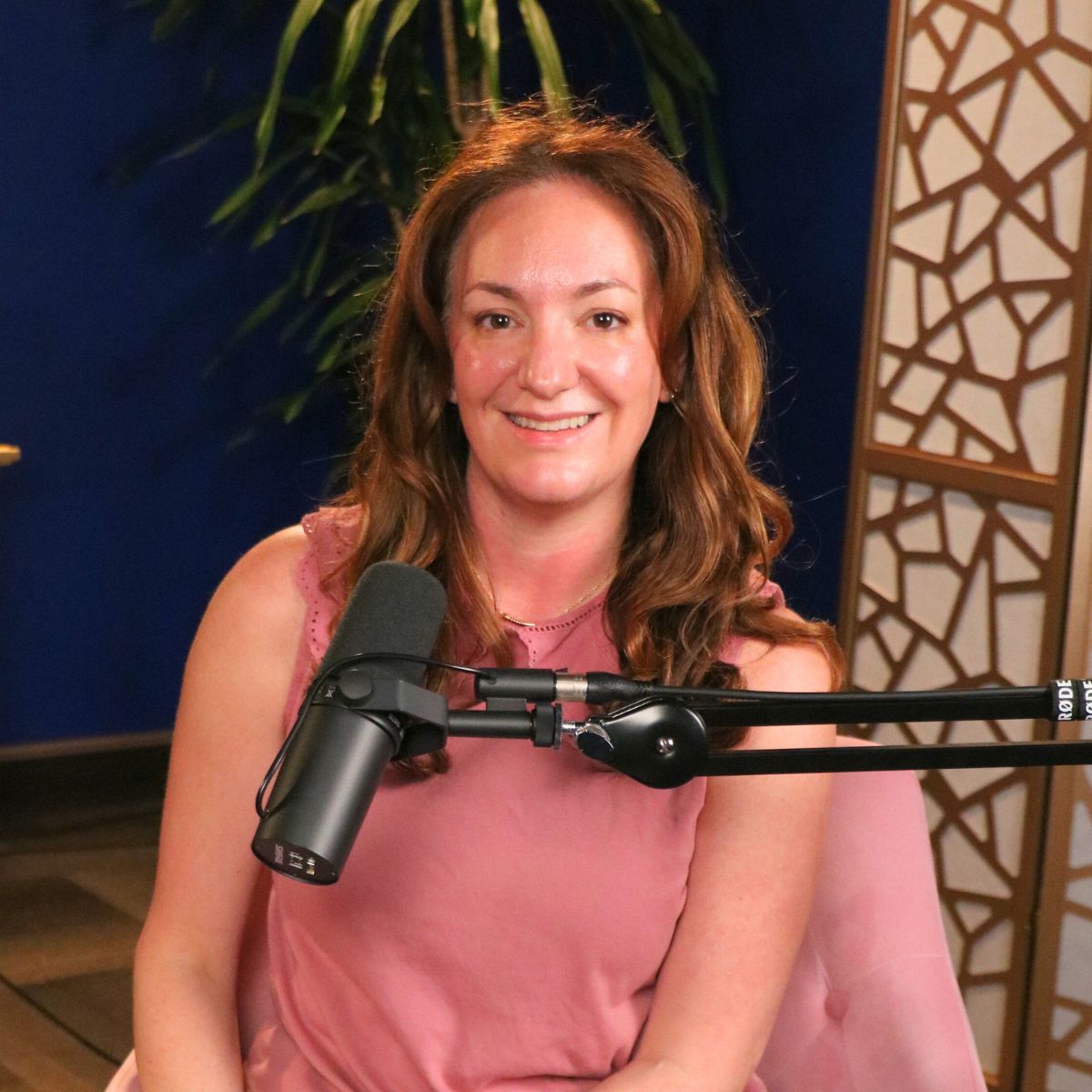
Dorothy: [00:00:00] What in the world makes someone step up for a nonprofit, especially when the task is as big as the most important fundraising event of that nonprofit’s year? The Everything’s Coming Up Roses Luncheon is the biggest fundraiser for The Rose, and this year Mitra Woody is serving as the chair. She talks about why she said yes. She shares her story and explains why access to healthcare is so difficult for so many. She really understands that’s why she is chairing this event from the heart. She has her goals, but she wants to have some fun too as we spread awareness and make sure that those who need it most have access to care. Learn more about the Rose’s annual luncheon and consider supporting our mission at therose.org.
Let’s Talk About Your Breast, a different kind of podcast presented to you by The Rose Breast Center of [00:01:00] Excellence and a Texas treasure. You’re gonna hear frank discussions about tough topics and you’re gonna learn why knowing about your breast could save your life.
Mitra, thank you so much for being with us today. I mean, as chair of our Everything’s Coming Up Roses Luncheon. What a job you’ve taken on. I mean, really what in the world convinced you that to do that?
Mitra: Wow. First of all, thank you Dorothy for having me. It’s really a pleasure to be here and, um, so excited to be chairing the luncheon for The Rose. So, um, two of my good friends from my Junior League days, Shannon, we it up and Pam Lovett.
Dorothy: Oh yes.
Mitra: Are kind of my, um, instrumental people in, in introducing me to The Rose and, um, asking me to be a part of the luncheon this year. And so when Shannon and um, Pam ask we say yes. So I was very excited, [00:02:00] uh, to be a part of it.
Dorothy: Well, we are excited now. You’ve been to a couple of the luncheons.
Mitra: I have, yes. Have, yes. Yes. Um, the last two years I’ve been to the luncheons and each one I really left. Um feeling like an impact and also kind of hopeful. I think sometimes when you’re at a luncheon and it can sometimes be a heavier topic or something that, you know, could be emotional, being able to leave with a little bit of joy or what are you gonna do next is so important. And I, something I felt, uh. Both years at the luncheons with The Rose.
Dorothy: Oh, that’s good to hear.
Mitra: Yeah.
Dorothy: My goodness. And this is our signature luncheon. It is our most significant fundraiser of the year, and we rely a lot on it. So you have a lot of responsibility here.
Mitra: No pressure.
Dorothy: No pressure. No pressure. So Mitra, tell us a little bit about you. Like where you’re from and background, family.
Mitra: Okay. Um, so I am originally from Tulsa, Oklahoma. It’s where I grew [00:03:00] up and eldest daughter. Um, both my parents have since passed and I have a younger sister who’s in New York City with her family, so we’re able to see them every so often, makes her fun trips. Um, I went to, uh, Trinity University for my undergrad. Majored in biology and history and then went on to UT for law school and um, practiced for several years before having children. I worked with the state board of pharmacies, so we did administrative, um, licensing enforcement, so kind of healthcare administrative law area. And I have two children, Cameron and Vivian. Cameron’s 15. Vivian’s 12. And then my husband Josh, is a orthopedic surgeon at Methodist. And we have been in Houston now almost 15 years, so.
Dorothy: Oh my.
Mitra: It is, yeah. Longest place. I’ve lived almost, I think one more year. I’ll, it’ll take over for my Oklahoma time.
Dorothy: So you have from many different [00:04:00] levels, um, understanding of healthcare.
Mitra: Sure.
Dorothy: Understanding of some of the nuances, the difficulties, uh, regulations that, my goodness we’re, we work under.
Mitra: Yes.
Dorothy: In our healthcare system, but you, you also understand about access to care.
Mitra: Absolutely.
Dorothy: And how difficult that can be, especially in Texas.
Mitra: Yes.
Dorothy: Yeah. So it, do you think that is a situation that will ever get fixed?
Mitra: Oh, man, that’s, that’s a hard question.
Dorothy: I, and really, I, and I know I, I didn’t even ask you that before, but, but, you know, it’s, it’s a, it’s a serious issue. That’s why The Rose is here. So.
Mitra: It is, I would, I’m an optimist at heart, so I would love to say yes, I think so. But what that’s going to take is for everyone to understand how important access to basic preventative [00:05:00] healthcare is to our country. And I think you have to have people understand on different levels what speaks to them. Some people can be economics, bottom line, you know, that can help people understand.
For other people it’s understanding the stories behind people and, um, the barriers to care that maybe not a lot of people see because they’re fortunate enough to have, um, insurance through their employers or whatnot, and just trying to help people where they are, have a better understanding of what access to basic preventative healthcare means to everybody.
And that by giving people access to care and breaking down those barriers, it actually is going to make our communities more prosperous, our communities more productive, and, and really, um, most importantly help our fellow, you know, Houstonians and citizens, [00:06:00] um, live good full lives.
Dorothy: Yes, yes.
Mitra: And so there’s lots of different ways access and barriers to access really affects people on the micro and the macro.
Dorothy: Hmm. And I think with your overview and the way that you’ve, you’ve, uh, known healthcare, you know, that is very hard for someone to understand that health had insurance all their life or had access all their life. We all know that having insurance is not a guarantee for good health.
Mitra: That’s right.
Dorothy: But it sure goes a long ways, especially like you said, with preventive side of it. Yeah.
Mitra: Yeah, you’re right. It doesn’t guarantee good health or that something might not happen. But there is a real, I don’t know if comfort’s the right word, but perhaps that feeling of like, okay, I know I will be able to go see a doctor about this.
Dorothy: Right.
Mitra: Okay. I know I will be able to have this surgery covered at least a little bit.
Dorothy: Right.
Mitra: And not having to [00:07:00] have. Catastrophic healthcare bills. Be something that might prevent you from seeking care and that makes a difference.
Dorothy: It does.
Mitra: And so when you get a big diagnosis, you don’t want the first thing you have to think about to be: how am I ever going to be able to pay for this?
Dorothy: Yes.
Mitra: Or even be able to seek this care.
Dorothy: Right. Such, such an important point. And not many people understand that is the first thing that someone who’s uninsured or underinsured thinks about. Right?
Mitra: Yeah.
Dorothy: It’s, it’s not even, whatever they were just diagnosed with. It is, how am I gonna pay for this?
Mitra: Yeah.
Dorothy: Yeah. That is a, a whole different mindset. You’re absolutely right. We have got to find ways to advocate for it. With, with real understanding that it does impact us, all of us in some way or another. [00:08:00]
Mitra: Absolutely.
Dorothy: That, that is so important. So have you ever had someone you know, or someone you were close to that’s gone through breast cancer?
Mitra: So I have, um, my grandmother on my father’s side, um, late in her life, developed breast cancer and she was fortunate that I was able to be treated and she was able to live several more years before her passing. Um, and then actually I’ve had my first boss out of law school, she was in her late thirties and she had to have a double mastectomy.
And, um, being a baby lawyer under her, being mentored by her, but also while she was going through this whole process was, um, really impactful. And I’ve since also had a few friends who have developed, um, breast cancer in their late thirties and early forties. And that is a unique time, I think, for people.
I think you often think of it as more of a later middle aged in life, um, cancer that develops. And so watching these young moms with young [00:09:00] kids, you know, go through it, I think really impacts you and makes you want to make sure, okay, I need to get my mammograms, I need to do these things because you can’t be complacent. And thinking, oh, that’s, that’s a later problem.
Dorothy: And you know, Mitra, that you’ve brought up another access to care issue. Because if you’re under 40, you really have to have someone, a doctor who understands that yes, you might need a mammogram.
Mitra: That’s right.
Dorothy: And that you’re not too young to have breast cancer. And I can’t tell you how many patients we’ve had who have said, I knew that lump was something.
Mitra: Yes.
Dorothy: But my doctor said I was too young to have a mammogram. Well. That’s not how it works anymore. And my goodness for you to have had that when you were a young lawyer.
Mitra: Yes.
Dorothy: When you were just ’cause she was young.
Mitra: Yes. Young She was. And I mean she’s doing great and it, it worked out well for her and.
Dorothy: Yeah.
Mitra: But the whole process and it was very inspiring ’cause she was also a marathoner [00:10:00] and so she went through the whole process and then when she had, um after her mastectomy, but before all the reconstructive surgery, she ran a marathon and.
Dorothy: Wow.
Mitra: Um, it was, it was very inspiring.
Dorothy: Oh, yes.
Mitra: And so, yeah, she’s definitely someone who’s a mentor, uh, for me in a lot of different ways.
Dorothy: And, you know, that’s another myth that you just eliminated because it’s not always the obese person or the person not taking care of themselves.
Mitra: Yes.
Dorothy: You know, breast cancer just happens.
Mitra: Absolutely.
Dorothy: It is not due to anything anyone did or didn’t do. And, and that’s a, a real message for women.
Mitra: Yeah.
Dorothy: Particularly if they found a change in their breast or if they’re at that age where they can have it done. Um, I know that in your community work and you’ve been a community volunteer for, my gosh, probably ever since you, you decided not to work, right?
Mitra: Yes. [00:11:00]
Dorothy: Or before?
Mitra: Yes. Well, so I stayed home with my kids to help raise them and, but in doing so, I joked that I still needed to do my higher level thinking skills work. And. So I really found a passion for that in community work and serving on various boards and, you know, just advocating and help fundraise.
Dorothy: So share with us some of the groups that you’ve been a part of.
Mitra: Sure. Um, so I mentioned earlier the Junior League of Houston. Actually started in San Antonio and transferred.
Dorothy: Wow.
Mitra: My membership, the Junior League of Houston, has been a big part of my community, uh, work and what the league does, I think we just celebrate our 100th anniversary. And, um. Being able to support so many wonderful organizations in the community. Both with our volunteers as well as, um, through direct, um, contribution. And so that has been a big, a big part. I’ve also, um, served on the Board of Writers in the schools, which provides professional writers and poets for.
Dorothy: So why did you choose that one? I mean, that’s a favorite of mine.
Mitra: So Is it? Oh, wonderful. [00:12:00] So I think it has to do with the lawyer in me and we had to write and read all the non fun things. And so as someone who loved to read and write as a kid, being able to be a part of writers in the schools on the board and also chaired their gala one year. It brings back that childlike wonder around writing. And um, you know, just, I was never a poet. I was never that good at that. But, um, being able to support that work and then I think it’s really interesting. Because you talk about how you want to help people understand the why’s around why this work is being done. And um, they had some great studies that were done that showed that test scores for these kids actually went up, you know, when they’re a part of the programs. And so being able to think outside the box, not just learn for a test I think is, uh, really important. It’s, and I saw the impact in my own children. They did the writing summer camps [00:13:00] and, um, it was a lot of fun.
Dorothy: Well, good, good for you. That is a very worthwhile.
Mitra: Yes.
Dorothy: So what are some of the others?
Mitra: Well, let’s see. Um, the immunization partnership.
Dorothy: You know, I saw that.
Mitra: Yeah.
Dorothy: I kept thinking, I. That’s a bold one.
Mitra: Yes.
Dorothy: Because they had to do some different things to, I don’t wanna say wake up the whole community, but they did.
Mitra: Yes, yes. Well, and I think the immunization partnership’s really interesting. Um, chaired their luncheon, gosh, almost 10 years ago, maybe longer. And at that time, it wasn’t the same climate as it is now around immunizations and it was much more of a given and keeping up the important work. And how can you do even more?
And the most, my most recent work with them, you know, the climate has really changed. And so they’re having to pivot and say, okay, what, we can’t just have the same message. We can’t just keep on keeping on in the same [00:14:00] direction. How can we make sure we’re reaching the important audiences and um.
Dorothy: Right.
Mitra: Getting the message out there and continuing to do the work. And, um, so that’s been really inspiring to watch the staff of, uh, the organization.
Dorothy: Huge.
Mitra: And what they’re doing.
Dorothy: Challenge. Oh my gosh.
Mitra: Absolutely. And they’re meeting it, and so, Yeah.
Dorothy: Yeah.
Mitra: It’s really great.
Dorothy: Yeah. So chairing luncheons or chairing galas.
Mitra: Yes.
Dorothy: Or things like that.
Mitra: Yes.
Dorothy: It is not new to you.
Mitra: Not new to me, but something that I enjoy the challenge of because for each organization or each event, you’re really trying to meet the audience and the, um, goal. And the scope for that particular organization and what, um, what they need. And, and my big thing is the why. You know, why, why are we here? Why are we doing what we’re doing? And making sure that you can articulate that for every organization is, is really important. You know, [00:15:00] Houston has so many wonderful philanthropic organizations.
Dorothy: Yes, yes.
Mitra: The nonprofit community here in Houston is vibrant and robust. And are doing real work in so many different places.
Dorothy: Yeah. Yeah.
Mitra: And so, um, helping our community understand why a particular organization like The Rose, for instance, is important and worthwhile to give your time and money to is, um, something that I enjoy doing.
Dorothy: Well, we certainly appreciate it.
Mitra: Thank you.
Dorothy: And in your, in your thinking, what is the most important service that The Rose does provide?
Mitra: So, um. I’m not gonna answer fully. I have two.
Dorothy: Okay.
Mitra: So we’ll, we’ll do two. So the first one, um, are the mobile mammography clinics.
Dorothy: Ah.
Mitra: Because I think of that as truly a physical representation of breaking down barriers to access. You know, so often getting to an appointment can be hard for so many different reasons. And so literally The Rose is [00:16:00] bringing the care and the appointment to the people. And I think that that is such a great example of providing accessible care and meeting women where they are. Literally. Um, so that’s one. And then my other would be the care The Rose provides through education and insight when a woman does receive a diagnosis, um Of cancer. That it’s not just, here are your MRI results, here are your, you know Mammogram results. Good luck to you. That you are there to help with those really big questions of what now? What’s next? I think so often access also has to do with. Access to how to work a system, how to make the appointment, who to call, right, what to do next.
Dorothy: Right?
Mitra: And The Rose provides that as well for its patients. And I think that that is something that is really important, um, because I can only imagine [00:17:00] all the things that go into one’s head all at once when you get a diagnosis like breast cancer. And so knowing that. The Rose is there for you even after that, that I think it’s important.
Dorothy: Oh, well thank you for, for saying that at. You know, what we’ve learned is whether you’re insured or uninsured. A diagnosis is a diagnosis.
Mitra: That’s right.
Dorothy: I truly believe it doesn’t matter what kind of disease or diagnosis or event you’re having to look at, everybody needs a navigator.
Mitra: Absolutely.
Dorothy: How would we know what to do if you’re not in that world? I, it’s, it, it is just beyond me, and you probably don’t know this, but patient navigation has been in front of many different times and many different bills, put many different ways to be reimbursed and it’s still not.
Mitra: Wow.
Dorothy: Can you imagine?
Mitra: Yeah.
Dorothy: I mean, it’s like such a vital, it’s more, it’s not a social worker. [00:18:00] It is not a nurse. It is someone who’s truly helping you navigate from one place to the next, from one appointment to the next.
Mitra: That’s right.
Dorothy: I I, I always remember one of the stories that our navigators told us was our patients, you would have surgery. This is back in the days. When that procedure was surgery first, then chemo. Well, so many of our patients, again, health literacy was not their biggest strength, and so many of them would say, well, I’ve had my surgery.
Mitra: Hmm.
Dorothy: Well, why do I have to have chemo? And, and we’d try to explain, you know, there’s no understanding that there could still be, you know, systemic cells moving around the body. And then there was this other real issue we had about, if you don’t start that chemo in 30 days. You might as well not start it. I mean, it’s really important to be.
Mitra: Wow.
Dorothy: On time with [00:19:00] that. And compliance is a hard thing for folks to, to even understand and the timing. Hard to understand. So yes, we. Navigation is a, is a very important thing.
Mitra: Yeah. Life is busy.
Dorothy: It is.
Mitra: Even in the best of times.
Dorothy: Oh, absolutely.
Mitra: And then you throw in, you know, something like a breast cancer diagnosis or other health issue and it just, yeah, it makes it really hard.
Dorothy: Oh, heaven forbid you have a problem over the holidays and, and, and your doctor’s saying, you need to go and get this. Well.
Mitra: Yes, it’s hard.
Dorothy: Yes, it is very hard.
Mitra: Hard. It’s very hard.
Dorothy: When health is not your top, top priority, or you don’t have the resources, then really easy to put it off.
Mitra: Oh, for sure. I mean, I think there is, um, procrastination is often because you’re nervous or you’re fearful. Or you just don’t know what to do next. It’s not because you don’t care. Or because you don’t think it’s important. You [00:20:00] just truly don’t know what to do.
Dorothy: And that is true.
Mitra: Yes.
Dorothy: So you get paralyzed with.
Mitra: Exactly.
Dorothy: Yes.
Mitra: Yeah.
Dorothy: You know, and you don’t want to ask the wrong question or you don’t even know who to ask.
Mitra: That’s right.
Dorothy: Right.
Mitra: That’s right. And so then I. As you said, the timing is so crucial. And, um 30 days could go fast.
Dorothy: Oh, yes. It sure could. Now, that was an original. Now things have changed. Treatment protocols.
Mitra: I’m glad to hear that.
Dorothy: Have changed. But, but it, it was just another part of that education process that we discovered we really were gonna have to provide to our patients. Mainly because they didn’t have, and we’re talking our uninsured patients, they didn’t have that primary care physician.
Mitra: Yes.
Dorothy: And stay on top of their, their, you know, uh, treatment plan or the different protocols. So that, that’s kind of a stand in. It’s not a replacement, but it’s. One of our navigators describes it [00:21:00] as being the nagging mother-in-law that you don’t want to have on the phone again, because they’re trying to get you to your next appointment.
Mitra: Oh my goodness. That’s funny. It’s just whatever works, right.
Dorothy: Whatever works. That’s right. And I thought if that’s what it takes, then that’s.
Mitra: Right.
Dorothy: So, talk about some of your goals, your personal goals. I mean, I, I know you have a committee.
Mitra: Sure.
Dorothy: Huge committee. Host committee.
Mitra: Yes.
Dorothy: But your personal goals for this luncheon?
Mitra: Gosh. Um, yes. I’m very lucky that we, we have a wonderful host committee this year of so many wonderful people who have, um, pleasure, support to The Rose and will be at the luncheon. Um, my personal goals. I have a couple.
Dorothy: Okay.
Mitra: Um, one, I am really looking forward to highlighting and lifting up, um, the work The Rose does, the staff that is behind all the work at The Rose as well as our supporters. I think it’s really important that at the lunch we, um, we acknowledge everyone that does [00:22:00] all the work. And that we, um really kind of highlight and showcase, you know, the day to day, right. The why, being at the luncheon. Um, something else that is a big goal of mine is honoring our honorees.
Dorothy: Oh, yes.
Mitra: Yes. Nancy and Shelly.
Dorothy: Oh my gosh. Are they incredible?
Mitra: It is incredible. Yes. So I’m.
Dorothy: We are so lucky to have them all.
Mitra: When they said yes to being a part of the luncheon and being honored, I was, I was so pleased. They’re a really special mother daughter duo. And, um, I also would like to raise a lot of money.
Dorothy: We would like you to do that.
Mitra: Let’s say it right?
Dorothy: Yes.
Mitra: Let’s say it, we are here at the legend to raise really important, much needed funds so that the work that The Rose does can continue and grow, right? You would at least keep the status quo, but you always want to be growing and helping more people. And so that is a [00:23:00] big part of why we will be there.
Dorothy: Oh, and that, that is so important right now.
Mitra: Yes.
Dorothy: We have so many more women asking for help. And, you know, grants just go so far without something like a special event. Then that gives you that unrestricted funds to be able to help anyone that is asking, not just because they fit a certain age group.
Mitra: Yes.
Dorothy: Or a geographic location or whatever. And many of our grants for obvious reasons are like that. But, uh, this is such a gift to have, to have funds that you know, you can apply however they’re needed.
Mitra: Absolutely. Because you all, as staff, are able to see where it’s most needed and fill in those holes and make sure that you’re able to lift up the areas that needed.
Dorothy: You know, many of our grants do not, uh, are, cannot be applied to women under 40.
Mitra: Interesting.
Dorothy: [00:24:00] Because they’re following the national recommendations and it’s just like how we started. It’s not just the 40 year olds.
Mitra: That’s right.
Dorothy: Or the 50 year olds. So that’s the area of work that we have the most difficulty raising funds for, uh, through the normal processes.
Mitra: Sure.
Dorothy: So we really, really rely on this. I think something you, you touched upon was that holding up the work that is done. I still hear, you know, what’s The Rose of, I don’t, I don’t know about The Rose.
Mitra: Yes.
Dorothy: And it, and we need that word of mouth.
Mitra: Absolutely.
Dorothy: It would be so sad to know that someone never had treatment because they didn’t know about us. Uh, you know that?
Mitra: That is so true.
Dorothy: Yeah. So especially when, when we are able to just convey to one more group.
Mitra: Yes.
Dorothy: One more person. You never know where that’s gonna go.
Mitra: Yes. I think something that I really like about special events like luncheons or [00:25:00] galas is that, you know, someone who supports The Rose and knows The Rose is invested in The Rose and they buy a table and they say, I would like to be here and I’m gonna invite my friends. And the great thing about that is that there might be, 2, 3, 4 friends that have never heard of The Rose, or maybe just in passing, but don’t know much about the work.
Dorothy: Right.
Mitra: And they sit there and they’re able to learn about what we do at The Rose, and then be able to say, Hey, this is an organization that I also want to support.
Dorothy: Right.
Mitra: With either time or money or a combination. And just getting that the word out right, and so that it’s on their top of mind. Next time they hear of someone who might be needing, um, screening or, um, advice. And so I think that’s important.
Dorothy: And because we always have some kind of education.
Mitra: Yes.
Dorothy: I, I think that’s what’s been unique also about this launch.
Mitra: Absolutely.
Dorothy: Um, we’ve had people who have gone onto their doctors because they realized they were actually dealing with something.
Mitra: Wow.
Dorothy: And, and just [00:26:00] had ignored it. Had thought it wasn’t any big thing, thought they were too young.
Mitra: Yes.
Dorothy: You know? So we never know who’s in that audience that might need to hear us.
Mitra: That’s right. Absolutely.
Dorothy: So if you had one message to send out to women in general.
Mitra: Okay.
Dorothy: What would it be?
Mitra: Ooh. Um. I have to think on that one for one second.
Dorothy: When it comes to their health.
Mitra: When it comes to their health, trust your gut. Trust yourself.
Dorothy: Good.
Mitra: Do not let someone else tell you how you’re feeling with your health. I think it’s really important that if you feel like something is off or feel like something needs to be looked at more, push for that. Advocate for yourself and, um, don’t just say, okay. I think that, I think we have become better as women specifically, but in general to not just accept what’s told to us and um, [00:27:00] you know, but if you really are feeling that there’s something off or something wrong, ask, ask for another test or have a second opinion and, you know, don’t just brush it off.
Dorothy: Right.
Mitra: Right. Advocate for yourself.
Dorothy: Great advice. Great advice. So thank you so much for being with us today. We, we are just delighted that you’re our chair and we’re looking forward to our March event.
Mitra: Yes.
Dorothy: And, uh.
Mitra: March 25th.
Dorothy: Mar, Yes. Yes. Say that again. So,
Mitra: March 25th.
Dorothy: Yes. At River Oaks Country Club.
Mitra: Country Club.
Dorothy: And we are looking for sponsors all the time. Underwriters. All the time.
Mitra: All the time. Yes. Yeah. There’s a place for you there. Yeah. We love to have everyone.
Dorothy: That is great.
Mitra: Yeah.
Dorothy: Thanks again.
Mitra: Thank you. This has been lovely.
Post-Credits: Thank you for joining us today on Let’s Talk About Your Breasts. This podcast is produced by Speke Podcasting and brought to you by The Rose. Visit therose.org to learn more about our organization. Subscribe to our podcast, share episodes with friends, and join [00:28:00] the conversation on social media using #LetsTalkAboutYourBreasts. We welcome your feedback and suggestions. Consider supporting The Rose. Your gift can make the difference to a person in need. And remember, self-care is not selfish. It’s essential.