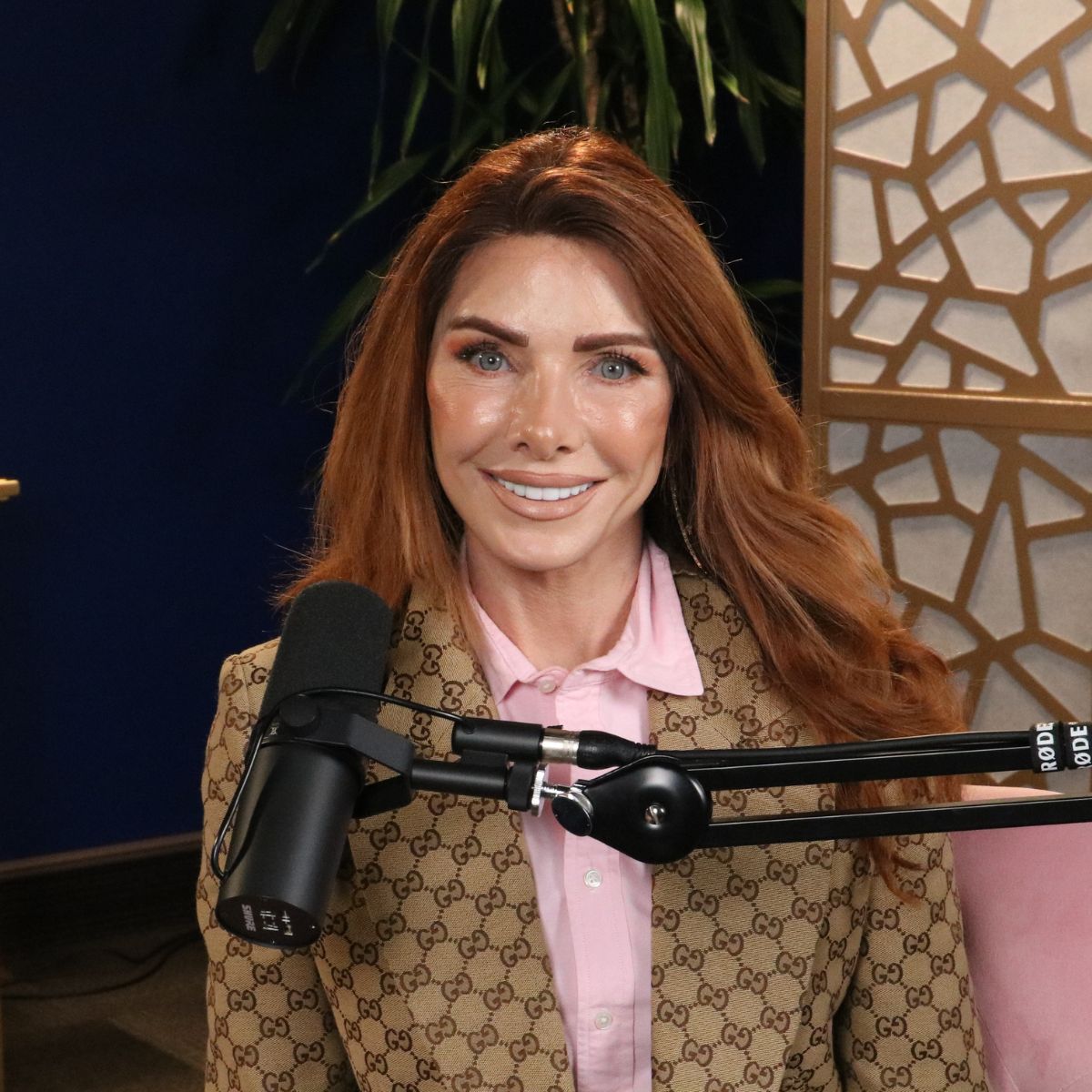
Intro: [00:00:00] A lump changed Marla Hurley’s life, but early detection helped her face breast cancer before it could take more. In this episode, Marla shares why she posted her breast cancer journey online, how that honesty led other women to schedule mammograms, and what she learned about putting her health first. If this conversation inspires you to join us in the fight against breast cancer, please consider making a donation at therose.org.
Shannon: Marla, thank you for being here with us today.
Marla: I’m honored. Um- Thank you for having me …
Shannon: on Let’s Talk About Your Breasts, and we’ll talk about lots of things. Let’s introduce yourself to our listeners now.
Marla: My name is Marla Hurley. I’m a native Houstonian. I have a luxury goods business in Round Top, Texas, so I’m on the road a lot, back and forth. I have three grown kids. I work a lot- … and was diagnosed with breast cancer last November.
Shannon: Just, yeah, so recently.
Marla: Recently, yes.
Shannon: Very recently from when we’re, we’re taping this. And [00:01:00] you came to us, we f- heard about you because you were with our Booze and Boobs event-
Marla: Yes …
Shannon: which is one of, it was our fifth year of doing that event, which is a community event. So it’s not The Rose orchestrating that event. It’s Star, uh, Hand, as we, as you know.
Marla: Yes.
Shannon: And so she brought you into it. So how’d you meet Star and get involved with that event?
Marla: I’ve just known Star through social circles in Houston, and, um, after… I was very… I posted a lot of my diagnosis and my journey online, and Star saw that, and she reached out and said, “We would love for you to MC, um, since this is now near and dear to your heart.” And I was so honored-
Shannon: Yeah …
Marla: um, to be included and to MC, and she’s asked me again for next year, so that’s great, too. So, um, that’s how I know Star, and I’m just unbelievably impressed with her, with this event, with her dedication to it, [00:02:00] with the fact that 100% of the proceeds-
Shannon: Right …
Marla: go to The Rose. It’s just done so well. So for those reasons, I absolutely said, “Yes- Yeah … sign me up.”
Shannon: So that was the first time you saw the event, too.
Marla: Yes.
Shannon: A lot of fun. That is-
Marla: So much fun …
Shannon: and most of them are her friends, people she knows directly. It’s-
Marla: Yes …
Shannon: when she announces tickets are out, I know it sells out within hours.
Marla: Yeah.
Shannon: Literally, the tables are all gone for that event.
Marla: Yes.
Shannon: So it’s a lot of fun, and we loved having you there as the MC this year.
Marla: Thank you.
Shannon: And so gr- and that’s where, of course, I met you, and we were talking about possibly doing this. Let’s talk about November-
Marla: Sure …
Shannon: most recently. How did you find the diagnosis? What was that process for you?
Marla: Well, what happened with me, um, I am very good about doing my mammograms yearly.
Shannon: Right.
Marla: I do have a high-risk status, so when I schedule my mammograms, they’re diagnostic mammograms.
Shannon: Okay. So you have dense breasts? Is that-
Marla: Yes.
Shannon: Okay.
Marla: I have dense breasts, and I have little breasts, but they are [00:03:00] dense. And so in October- I just woke up one morning, and I was in Round Top, and I just kinda felt on my chest, and way high up on my chest. And I felt a lump. It felt like a nodule. It was hard. And instantly, I knew this was not supposed to be there, because I’m very good with my mammograms. And instantly, I just thought, “I know I’m not gonna die from this, because I’m very good at my mammograms, but this is going to be a challenge for me with my crazy schedule.”
Shannon: Right.
Marla: But health first. So found that, reached out to my doctor, went straight in to get a mammogram, and basically through all of that, by the time I scheduled one and then had the mammogram, I could tell [00:04:00] by the way the technician was reading the results, or they, they need the read, radiologist to do the-
Shannon: Right.
Marla: That of course.
Shannon: Right.
Marla: But I could tell that it was not good news.
Shannon: Gotcha.
Marla: And so they then wanted to do a biopsy. So I went back to do a biopsy, and sure enough- It was the day before Thanksgiving. The nurse called me first thing in the morning and said it is breast cancer, ductal invasive carcinoma. So a common breast cancer, if you will.
Shannon: Right. Yeah.
Marla: Um, I think a lot of people have that diagnosis. So yeah, then I just started doing my research and wanted to immediately get things rolling.
Shannon: Good. Good for you. So you probably went on the internet more than they wanted you to do for…
Marla: I know I did, and it scared me.
Shannon: Everyone does. Everyone does. Everyone does.
Marla: Scared me really bad. And, um, but knowledge is power.
Shannon: Sure.
Marla: And I wanted to [00:05:00] educate myself, just so I could understand the terms they were-
Shannon: Yeah …
Marla: saying.
Shannon: Right.
Marla: And also, I had a very good friend come with me to my appointments. Yeah. Important. She recorded all of the appointments and what the doctor was saying, because especially in those early appointments, I was just kind of still in shock.
Shannon: Well, yeah. You hear that, you hear the word cancer, and-
Marla: Right …
Shannon: everything freezes.
Marla: Yeah. And you kinda just see people’s mouths moving, and you kind of are just doing this thing.
Shannon: Yeah.
Marla: So it was very helpful to have somebody record those visits, so then- Yes … I could refer back to it.
Shannon: Yeah, that’s great. L- I, we always encourage people, y- you want someone anytime you’re getting news, whether it’s cancer or other thing, you want someone else there that’s hearing clearly.
Marla: Right.
Shannon: And document. So it’s great that you even recorded it, ’cause you can go back and listen.
Marla: Exactly.
Shannon: You’re not looking at notes, you’re listening. And I think, too, you don’t know what questions to even ask.
Marla: Right.
Shannon: You know, even with going on the internet, what do you a- I don’t know what I don’t know.
Marla: Exactly. Right.
Shannon: So you don’t, you have to trust the doctors.
Marla: Truly.
Shannon: But [00:06:00] you also don’t know what questions to ask them until, uh, things start happening.
Marla: Right.
Shannon: So what was the procedures like for you? What was the, the plan that they-
Marla: The plan was to… I went with Methodist.
Shannon: Okay.
Marla: Um, I, my general practitioner is with Methodist.
Shannon: Okay.
Marla: And also, all of my mammograms up to this point were at Methodist.
Shannon: Okay.
Marla: So I wanted to stay with Methodist. I was getting really good care.
Shannon: Yeah.
Marla: So when they, when the doctor called me and gave me the diagnosis, from that point forward, it was almost concierge care, if you will, because they were calling me, “You need to schedule with this doctor. You need to do this and this and this.” They provided all of the steps, and of course, I did all of that. So I saw the doctor that would, uh, do the mastectomy, and basically- I had to decide because it was on the left breast.
Shannon: Right.
Marla: So I went in to learn my [00:07:00] options, and that’s when I saw the, um, the doctor that would do the mastectomy, but then also the doctor that would do the reconstruction. He’s the one, he said I’m not a good candidate for a lumpectomy because of the positioning. It was way high up on my chest.
Shannon: Right.
Marla: And so I had to ask the question, “Do we really have breast tissue this high?” I was shocked to know that.
Shannon: Oh, yeah.
Marla: It’s not just within the boob area.
Shannon: Right.
Marla: It’s way high up, and then even areas below.
Shannon: Yeah.
Marla: So-
Shannon: I don’t think people realize that until that you, until you get a mammogram, and you realize when they’re stretching-
Marla: Right …
Shannon: all of that, it’s ’cause that tissue goes further than you think.
Marla: Exactly.
Shannon: And you’re really pull, it’s not just to pull skin in, to pull skin.
Marla: Right.
Shannon: You’re looking… And of course, now they’re looking at the lymph nodes too at the same time.
Marla: Exactly.
Shannon: So-
Marla: Exactly …
Shannon: but the breast tissue is, uh, is vast. It’s, again, it’s not just what you, what you think it is.
Marla: Yeah, and I had- Yeah … no idea.
Shannon: Right.
Marla: Um, so basically, I [00:08:00] decided, um, I have a business. I do fashion shows, all that stuff. I decided that I wanted to do both breasts so I could have them look just alike, and, um, I’ve not looked back at that decision at all. Also, because all of these mammograms, I’m very good with doing all my mammograms, I knew this would also put me in a high-risk position. And so going and doing mammograms for one boob was not gonna be in my future. I was like, “We are going to get rid of all of this tissue that could even remotely come back with breast cancer.”
Shannon: Right.
Marla: “And we’re, I’m just gonna rid my body of it.” And move on. So that’s what I did. And
Shannon: so it was stage one. Was it stage one when you-
Marla: It was.
Shannon: That’s great, so early detection.
Marla: Yes.
Shannon: All the right things that you, you hope to have with-
Marla: Yes …
Shannon: with breast cancer. So did you have to go through chemo or anything else?
Marla: I did not have- This early … because I chose the mastectomy, had I gone with [00:09:00] the lumpectomy, they would’ve required radiation and chemo.
Shannon: Yeah.
Marla: And that was another reason that I chose to do the mastectomy. Um, now, later on, after they actually performed the mastectomy- They did find it in another area in the same breast.
Shannon: Mm.
Marla: So that was surprising because I had had an MRI and everything.
Shannon: Right.
Marla: So I was shocked that they found it somewhere else. And because they found it somewhere else, they put me on a drug-
Shannon: Right …
Marla: um, that I’ll need to be on for five to 10 years.
Shannon: Which, yeah, that’s very common.
Marla: And that’s fine. Yeah,
Shannon: that’s-
Marla: Um, it basically reduces my chances of reoccurrence to 5%.
Shannon: Right.
Marla: I also, you know, didn’t realize, you just don’t think about these things and that, you know, the doctors hope that they got everything.
Shannon: Right.
Marla: There are m- microscopic tissue-
Shannon: Cells,
Marla: yeah … cells-
Shannon: Yeah …
Marla: that they just [00:10:00] hope for the best.
Shannon: Right.
Marla: That’s why I’m on the drug. So it is scary to think that I had the double mastectomy, but there could still be cells there that could become something.
Shannon: Right.
Marla: So I’m diligent about taking my, um, medicine. But yeah, I was shocked that they found it somewhere else.
Shannon: Yeah. Well, and that’s even with people who go through chemo and radiation or that they, there’s that drug they take, again, just to ensure.
Marla: Yes.
Shannon: That’s why a lot of people, you celebrate that five-year mark really more than you celebrate the end of chemo or the end of these stages-
Marla: Right
Shannon: you go through because once you hit that mark, that’s when these drugs should have done what they need to do to make sure-
Marla: Right …
Shannon: cover e- the bases that it’s not coming back in the breast.
Marla: Right.
Shannon: So that’s what you’re looking for there. And of course, we say mastectomy and you- As opposed to chemo and radiation. Mastectomy not easy either. That, that process is not, I mean, it’s a surgery.
Marla: Right.
Shannon: And it takes some time to recover from all of that as well. So not an easy journey-
Marla: It was- …
Shannon: there …
Marla: not, [00:11:00] but I stayed really positive throughout.
Shannon: Good.
Marla: Um, obviously, if you have your health, you have everything.
Shannon: Right.
Marla: For me, this is not important up here. I knew that I could do the reconstruction and be happy with what I have. Um, three weeks ago, I completed the, um, reconstruction.
Shannon: Okay.
Marla: So, um, so fortunately, I’ve made it to that point, and I’m very happy with the results. Um, I thought I would do the tat- I don’t have nipples, so I thought I would do the tattoos.
Shannon: Okay.
Marla: And I still may.
Shannon: Yeah.
Marla: But at this point, I’m happy having Barbie boobies.
Shannon: Yeah. And that’s, and again, your health. That’s, that’s-
Marla: Yes. And my health …
Shannon: your health.
Marla: And yeah, I, we put the expanders in and, you know, it was certainly a journey doing the reconstruction. The mastectomy, not difficult. The reconstruction, a [00:12:00] bit more challenging because they add air, then they add water, um, to stretch the skin.
Shannon: Yeah.
Marla: So that’s more complicated. Lots of doctor’s appointments, but well worth every single one.
Shannon: Yeah, yeah. To, to be here and past that part of the, of the story.
Marla: Yes, yes.
Shannon: And so what was your care system like? How mu- your support system?
Marla: Um, have an incredible support system. Family, friends. Um, I was absolutely shocked. I went ahead and, to explain my absence in Round Top, because I’m always there, I announced on social media, on my Instagram, that I had breast cancer, and the love that came my way, I was absolutely shocked.
Shannon: Yeah.
Marla: Just blown away by it.
Shannon: Yeah.
Marla: And then when I had the double mastectomy, I’ve kinda just been very vulnerable and sharing all of the experience, even the expanders and how ugly that is- when they take the [00:13:00] air out. I wanted to, I felt like I have known so many friends with breast cancer. How do I not know about all of these things?
Shannon: Right.
Marla: And I thought, I know so many women. I’m an advocate for women. I’m a sponsor for Miss Texas. I should know all of this. So I thought, we’re just gonna educate ourselves.
Shannon: Yeah.
Marla: And shockingly- So many people reached out and got their mammograms because I posted all of this Great reminder.
Shannon: Nothing’s a better reminder than having someone in your circle-
Marla: That is correct …
Shannon: go through it, go through it.
Marla: And-
Shannon: ‘Cause it’s one in eight women, so y- there’s probably people you didn’t even know had breast cancer-
Marla: Yes
Shannon: that you heard about after you talk about it, too.
Marla: Absolutely.
Shannon: Yeah.
Marla: Well, one person, um, my best friend, Laura Goodson. Her best friend decided to get her very first mammogram, and she was diagnosed with the exact same thing.
Shannon: Wow.
Marla: It’s, it just [00:14:00] still gives me chills.
Shannon: Yeah.
Marla: Because she’s never had one, and I don’t know, without my diagnosis and how much-
Shannon: Yeah
Marla: I was speaking of it, I don’t know that she would’ve gotten a mammogram.
Shannon: Right.
Marla: And the- Because she said-
Shannon: So important. The reminder of so, is to do it.
Marla: Right.
Shannon: Yeah.
Marla: I also had another gal reach out. She works for an oncologist downtown, and she said, “Thank you so much for the reminder. I work for an oncologist, but even I forget to schedule-
Shannon: Oh, good
Marla: my mammograms.”
Shannon: Yeah.
Marla: So, um-
Shannon: Though there’s many people in this building that are guilty of.
Marla: Oh.
Shannon: Or, you know, I have an appointment, then a meeting comes up, well, because it is easy for me to schedule.
Marla: Right.
Shannon: I can come in and, and they can kinda-
Marla: Sure …
Shannon: we joke, you could squeeze me in, pun intended-
Marla: Right. …
Shannon: if I need to be. So we’re bad about that. Sometimes a meeting comes up and it’s hard to get everyone’s on the same-
Marla: Right …
Shannon: schedule, and it’s like, “Well, I can, I can do that next week or the week after.” So even in the building, so even an oncologist office, we’re-
Marla: I believe it …
Shannon: we are all guilty, uh, particularly as women, of not putting it first.
Marla: [00:15:00] Right.
Shannon: Not making it the priority when-
Marla: Right …
Shannon: kids, jobs, everything else is coming up that you’ve gotta take care of, you know?
Marla: And I think the thing I would say to that, to anybody watching today- Women, we put everybody else first, and we put ourselves last.
Shannon: Right.
Marla: And it is so important to get your checkup and put yourself first, because what you don’t want to happen is put yourself last and then you’re diagnosed with a stage four.
Shannon: Right.
Marla: And then you’re not there for your family-
Shannon: Right …
Marla: and your friends. Get that mammogram and always make it a top priority.
Shannon: Yeah, and it’s, and people talk about, “Oh, I don’t feel like…” Well, no one feels like doing it, but you know what you really don’t feel like doing?
Marla: Right.
Shannon: A chemo round. You know, that’s-
Marla: Exactly
Shannon: you know, that it’s, you know, it’s, it’s 20 minutes.
Marla: Right.
Shannon: Get it done. And I think it sets an example for those around us-
Marla: Yes …
Shannon: when we do put ourselves first, and we do make health a priority-
Marla: Yes …
Shannon: um, for ourselves, then we can do it for other people as well.
Marla: Right.
Shannon: So how old were your kids, or are they?
Marla: Um, 29.
Shannon: Okay.
Marla: 27 [00:16:00] and 24.
Shannon: So all old enough to understand-
Marla: Yes …
Shannon: what’s happening and what’s, what-
Marla: Oh, yes …
Shannon: what was that like, having to tell them?
Marla: Um, painful.
Shannon: Okay.
Marla: And especially, I would say, my mom and dad.
Shannon: Mm.
Marla: My dad is a really big softie, and so I found out the day before Thanksgiving.
Shannon: Right.
Marla: We had to wait until after Thanksgiving, the day after Thanksgiving, to tell him. But my parents have been my hugest support. And of course, Laura Goodson and countless friends. My kids, unbelievable. Coming, visiting, bringing me whatever I need. So yeah, they’re old enough to understand-
Shannon: Yeah …
Marla: the severity of this. And I had, and still have, an incredible circle of friends and supporters.
Shannon: Yeah. What is different about you now? This is just November. We keep-
Marla: Right …
Shannon: talking about you, so what is your life like now that is different? Pre and post-
Marla: Well-
Shannon: Marla … it’s- What is the [00:17:00] difference?
Marla: It’s interesting. Pre this, I worked constantly. I was everywhere. I was at this place, that place. Obviously, with this, it’s really stopped me in my tracks, and sometimes I think maybe God have, maybe God put this because now I find that it’s a, a blessing. I truly do feel like this has been a blessing in my life in a way. Um, and I feel like maybe God gave me this to slow me down a little bit because I had no choice but to slow down.
Shannon: Right.
Marla: So post-mammogram and breast, uh, cancer diagnosis, definitely a different person.
Shannon: Right.
Marla: Um, I’m prioritizing things that are much different. I love my work. I will continue to work, but I also want to spend more time with my parents, my kids, my family.
Shannon: Right.
Marla: My [00:18:00] priorities have definitely shifted. Yeah. And I also want to be an advocate for breast cancer and be out there doing things like this to educate. Um- Definitely there are changes, I think, about my mortality-
Shannon: Mm
Marla: which I really didn’t before. Um, for me to have a health issue, I don’t have any health issues. I’m a very healthy person, so it shocked me.
Shannon: Yeah.
Marla: Um, even though I do have a history of it in my family, because I’m so healthy, it absolutely shocked me.
Shannon: Right.
Marla: So I wanna slow down, be more intentional in what I’m doing, who I’m spending time with, and I want to enjoy life a little bit more and not work so much.
Shannon: That’s great.
Marla: Yeah.
Shannon: That’s great. I, and I think that’s very common, that with survi- any sur- of, any, when anyone goes through a big health crisis, that-
Marla: Right …
Shannon: you really start to… It’s great you can look as a blessing, ’cause o- obviously, hearing the word six months [00:19:00] ago-
Marla: Right …
Shannon: don’t feel that way, but coming through it now, and what you can do, and what you are doing to communicate, to make sure you’ve already, we already know just two that you know of, and you-
Marla: Right
Shannon: don’t know the ones you don’t know of-
Marla: Sure …
Shannon: that wouldn’t got their mammogram, or got on that schedule, and was like, “Okay-“
Marla: Yes …
Shannon: “this is important. I’ve gotta get this done.”
Marla: And I will say, too, it is important, I mean, I was very comfortable sharing my journey. I had to explain my absence.
Shannon: Right.
Marla: Um, many people don’t have that situation, but I highly encourage anybody watching this today to share with others your diagnosis. The biggest shock that I had was the amount of love sent my way, and it really got me through it. The messages, people sending me beautiful scriptures, um, beautiful Bible verses. It just touched me so much, and truly, all of the love sent my way because I shared got [00:20:00] me through this diagnosis and sitting here today.
Shannon: Right. That’s amazing. That’s amazing. Well, we are so grateful you’re here today, and part of our organization now, and-
Marla: Oh, I love it …
Shannon: this great event.
Marla: Y’all are incredible.
Shannon: And so, uh, we’re grateful, because we do know how important that first screening mammogram is, and what it can change to the diagnosis, how different it can be from stage one to stage two and three.
Marla: Sure.
Shannon: Um, with everything out there to… And talking about it is, there was a time when we didn’t even talk about it, right?
Marla: Right.
Shannon: We, we wouldn’t have said, “Let’s talk about your breast,” and talk, and we wouldn’t say, “Hey, I got my mammogram,” and we’re getting better about that.
Marla: Right.
Shannon: And I think now we’re getting better about all the other things that come with it, too. Like, a lot of people don’t realize, oh, you don’t have a nipple? Like, you know, you don’t-
Marla: Exactly …
Shannon: that that’s just part of the process, um, for women who have gone through this. Or ev- if you choose even not to get reconstructive, like, what is that?
Marla: Right.
Shannon: And it’s all different, but it’s also all the same. There’s someone out there who identifies with it and learned-
Marla: Yes …
Shannon: something, and puts themself first now, and that’s what we want them to do.
Marla: Yes. On one of my videos, on the appointment, [00:21:00] my doctor called it the great deflate, and- They, the expanders were already put in, and then during the surgery they, um, added some air.
Shannon: Yeah.
Marla: So when I went back post-op, they added more air, and then the following appointment they take the air out I had never seen this procedure.
Shannon: Right.
Marla: And so basically, it was like inflating a basketball and deflating a basketball. So basically, they take a spen- a pin, and then it’s kinda hooked up to a pump, and they stick it directly into the breast, and then deflate the breast. And it looked, my breast looked exactly like-
Shannon: Right …
Marla: a flat basketball. And I posted that. And with a warning, you know. Swipe at your own risk-
Shannon: Right …
Marla: type thing.
Shannon: Right.
Marla: But I just thought, “People need to see every aspect of this.”
Shannon: Right.
Marla: [00:22:00] And as unattractive as that was, I think people were grateful for it to know, okay, well, this is what this looks like, but then it’s all improved, too.
Shannon: Right.
Marla: You know, that’s just temporary.
Shannon: Right, just part of the process.
Marla: Exactly.
Shannon: Part of the process.
Marla: And thank God for technology. I too feel so grateful, because the generations before me have paved the way with this technology. It’s-
Shannon: Absolutely …
Marla: and so I’m incredibly grateful to have all of this, the advances in medicine with breast cancer. It, immeasurable.
Shannon: Yeah.
Marla: And for people that have, you know, had breast cancer 20 years ago, I am the beneficiary of their diagnosis and everything they went through, and the advances that have helped.
Shannon: Right.
Marla: So I truly have been very grateful. I do feel blessed with this [00:23:00] diagnosis. Um, and yeah, it’s been something else.
Shannon: Yeah.
Marla: Yeah.
Shannon: Well, um, I don’t wanna say we’re glad you went through it, but we’re glad you came to us.
Marla: Yes.
Shannon: That we’re with you, but we’re, that we now know you, and you’re now part of our Rose family, and we’re so grateful for that, and everything you’re doing to make sure women take care of themselves-
Marla: Thank you.
Shannon: Put themselves first, and then count their blessings, you know.
Marla: Yes.
Shannon: All of them.
Marla: Yes.
Shannon: That, that’s wonderful. Anything else you wanna say to anyone?
Marla: Um, I think what I really just wanna say is just get your mammogram.
Shannon: Okay.
Marla: And don’t be scared of getting your mammogram. Just go get it, and just trust that you are going to be just fine.
Shannon: Right. And- Most people are when they get a mammo-
Marla: Yes …
Shannon: some people say, “Oh, but it’s sc-” Most people are okay when they get their mammogram. You know.
Marla: Truly. That’s, yeah. And I would be very scared not getting that, not knowing what is growing in my body-
Shannon: Right …
Marla: potentially. Get your mammogram. Just take a deep [00:24:00] breath, trust the process, and know that early detection is key, and you will be just fine-
Shannon: Yes
Marla: if you go get the mammogram and you’re consistent with them.
Shannon: That’s wonderful. Thank you for being here.
Marla: Thank you so much.
Shannon: Appreciate it.
Post-Credit: Thank you for joining us today on Let’s Talk About Your Breasts. This podcast is produced by Speke Podcasting and brought to you by The Rose. Visit therose.org to learn more about our organization. Subscribe to our podcast, share episodes with friends, and join the conversation on social media using #LetsTalkAboutYourBreasts. We welcome your feedback and suggestions. Consider supporting The Rose. Your gift can make the difference to a person in need. And remember, self-care is not selfish, it’s essential.