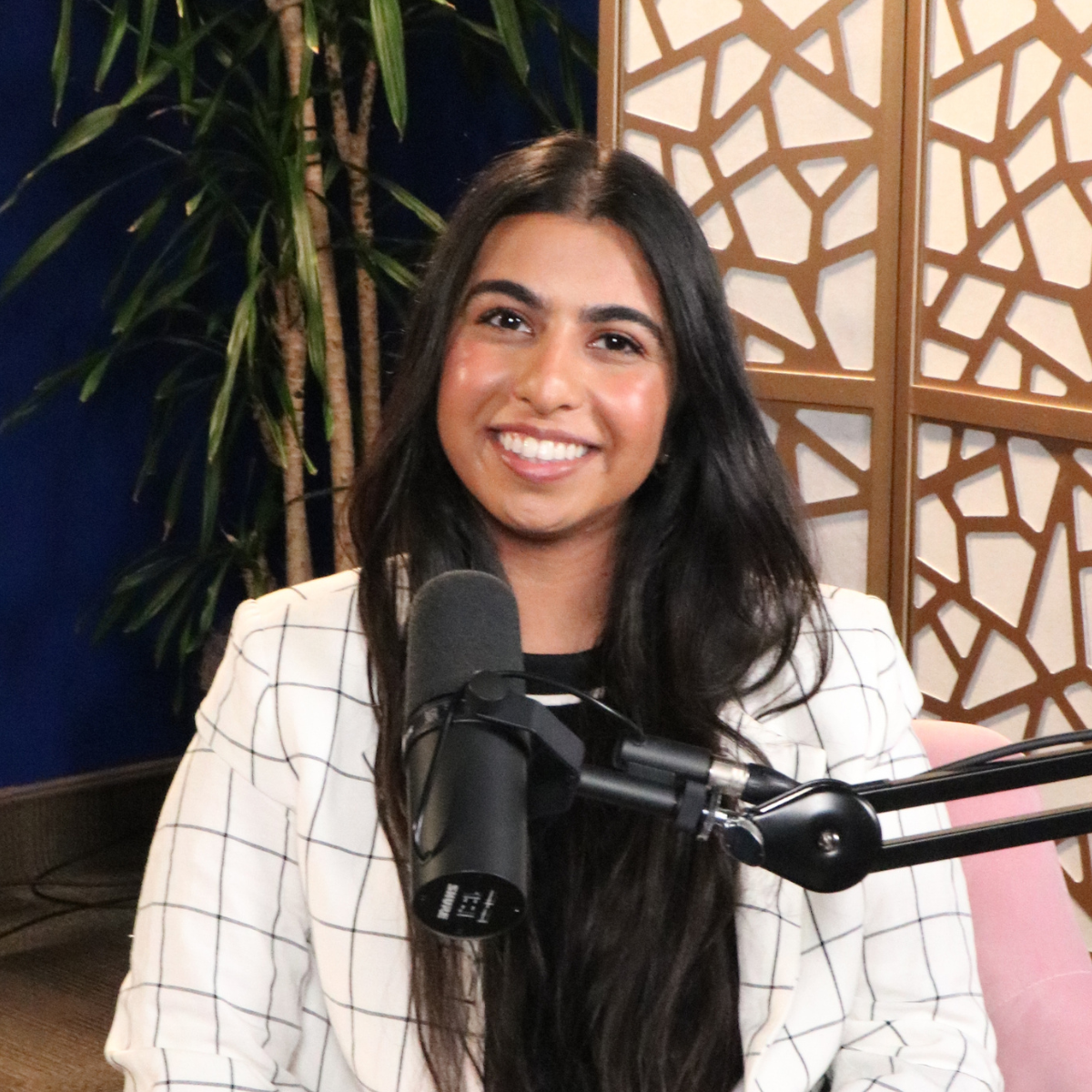
Intro: [00:00:00] Medicine changes when future doctors learn from real women, not just textbooks. Rice Board Fellow and Baylor Med student Shivanki Juneja came to The Rose to see how nonprofits really deliver women’s healthcare. On postpartum floors and in safety net clinics, she’s met young moms who don’t even know what to ask, only that they need help. Now she’s headed into OBGYN, determined to fight for prevention, access, and judgment-free rooms where every woman feels safe telling the truth. Share this episode with a student in your life and with family and friends, and consider making a donation at therose.org so more women get care, not confusion.
Dorothy: Welcome to Let’s Talk About Your Breasts, a podcast brought to you by The Rose Breast Imaging Center of Excellence and a Texas treasure. I’m Dorothy Gibbons, your host and co-founder as The Rose. During this season, you’ll also be hearing from co-host Roxann Hayford [00:01:00] and others as we bring you stories from survivors, physicians, caregivers, researchers, employees, and supporters. These are real people sharing difficult times, celebrations, and personal stories of hope, despair, and faith. We welcome your suggestions, and we would also love to hear about your story. Thank you for joining us, and thank you for supporting The Rose and our mission. Together, we are saving lives.
Shivanki, thank you so much for being with us today. It’s just, I’m so glad this worked out.
Shivanki: Yes, no, thank you so much for having me. I have been so honored to be a part of The Rose in all forms, but as also today. It’s really nice of you to have me.
Dorothy: Ooh, good. So tell us how you came to The Rose to begin with.
Shivanki: Absolutely. So I am part of a dual-degree program with Baylor College of Medicine and Rice University, where I’m getting my MD, and then as well as my MBA from Rice. [00:02:00] And during my MBA, they told me about this program called the Rice Board Fellows- which essentially matches interested MBA students to a nonprofit, where you’re kind of able to be a member of the board and see what it’s like to work in a nonprofit-
Dorothy: Right…
Shivanki: but do it in an educational sense, so you’re a non-voting member.
Dorothy: Right.
Shivanki: And you kind of are just there to soak up as much information as possible. And I, as someone coming in from more of a healthcare background, less of a business background, and knowing that what I would be using my MBA for would most likely be working in the community space or kind of- adding on to already a career in healthcare, was really interested in learning how nonprofits work within the community. And so that’s why I applied, and I let them know that my career path was women’s health, and that was- … my main focus. And I said, “I’d be happy to go to any nonprofit, but if you could find one that had this niche that I was interested in, that would be amazing,” and then they were kind enough to match me [00:03:00] here, and-
Dorothy: Wow.
Shivanki: I got to have this experience.
Dorothy: So it was women’s health or breasts?
Shivanki: It was women’s health.
Dorothy: Health.
Shivanki: ‘Cause going into the MBA, and now my interest is to be an OBGYN after medical school- obstetrics and gynecology, and I knew that that would be the space. Women’s health is what I would be doing- for the rest of my life, so I knew if I could get experience in that. And then I, I told you as well, when I first onboarded, is that I had experience with The Rose from the other side, as a medical student, seeing- The Rose vans at our different health fairs- and things like that.
Dorothy: Right.
Shivanki: So I had some experience beforehand, so when, when I was matched, I felt really, really grateful-
Dorothy: Yeah.
Shivanki: That this, the, wanna found me.
Dorothy: So that community work you did- that was just on your own or part of Baylor or-
Shivanki: Yeah, so some parts were part of Baylor. Like, when I first started- medical school, I volunteered with formerly incarcerated women through a, um, a, like, a home- called Angela House, and we did some educational work with them. And then I also worked with underserved middle schoolers through another [00:04:00] project. But one of the community projects I did on my own, actually concurrently while I was, um, on the board at The Rose, was called Moms to Moms, and it was through something called the Albert Schweitzer Fellowship- which is another, you know-
Dorothy: Yeah.
Shivanki: Staple in our nonprofit world-
Dorothy: Right …
Shivanki: here in Houston. And I was lucky enough to apply for that fellowship and get that fellowship as well, and I had two amazing co-fellows. And we were tasked with expanding a postpartum health literacy program at Ben Taub and Lyndon B. Johnson Hospital, which is part of our Harris Health- hospital system, which is the safety net hospital here in Houston. And so that was kind of… While I’d done other community work as volunteers and even as leaders, that was kind of the first time where I was tasked with, this is the project, this is the organization, expand it, ensure it has good impact, ensure you’re serving the population that you say you’re serving. And then also being in charge of the volunteers and all of the stuff- and having to deal with things like funding and all of that. So, um, [00:05:00] I think that was my most impactful and my biggest community project. But yeah, I’ve also been involved in smaller ones as well.
Dorothy: So did you always wanna be a doctor?
Shivanki: That’s a good question. I think, I think yes and no. Um, I always gravitated towards things that were in the field of medicine. I- science was always my favorite subject in school. And I’ve been doing community service work and volunteering in clinics and things like that since I was in high school, and so I was always drawn to both that- interesting scientific aspect of medicine, and also the service aspect where you are helping people, and that is the main focus of what you do.
But, um, it is a long journey- and it, it requires a lot of sacrifice. So I think it would be naive to say I, I never questioned once whether it was actually what I wanted to do. And so I did go back and forth.
Dorothy: Mm.
Shivanki: I had a lot of other interests. I loved writing and art and things like that, and knowing that if I did choose this path, it just meant less time for those things. Um, so I went back [00:06:00] and forth, but ultimately, just all the experiences I had, it just kept bringing me back, and ultimately, it’s what I wanted out of a career, something that was intellectually stimulating and exciting, but also, at its heart, just, like, took care of people and was- was helpful to society in general.
Dorothy: So this wasn’t something coming from the family or-
Shivanki: Oh, no, no.
Dorothy: No.
Shivanki: No. My, my mom is a doctor, and I, I did- get to see kind of her experience, but she was always, always open and honest about the sacrifice it took and how difficult that journey-
Dorothy: Mm …
Shivanki: it was. She, so she, in no means, ever pushed me in this direction. She said, “Please explore every other opportunity there is.” And so I, yeah, I’m very grateful that my family was supportive of all my back and forth. So I’d say, “I want to do this,” and they were like, “Okay.” And then I was like, “Maybe something else.” And then ultimately, um, yeah, I landed upon my own. I, I just felt like it had everything I wanted.
Dorothy: Has Houston always been home?
Shivanki: Houston has always been home. I left for four years in college. I went to the University of Pennsylvania in Philadelphia. So I had that exposure, and then I came back for medical and [00:07:00] MBA school.
Dorothy: So that our listeners understand-
Shivanki: Yeah …
Dorothy: you’re sitting on the board-
Shivanki: Yes.
Dorothy: Meetings, during the board meetings.
Shivanki: Correct.
Dorothy: You’re, you’re just like another board member. You don’t have the voting, uh, privilege- because… But what, what did you, uh, now, and, and believe me, we love having the Rice fellows here. But I’m always watching youngs, thinking, “What did you really learn?”
Shivanki: Yeah.
Dorothy: I mean, it, you know, it’s a agenda. It’s a It’s a lot of finance. It’s-
Shivanki: Absolutely.
Dorothy: Yeah.
Shivanki: Yeah. I think, yeah, of course, coming in, it’s definitely overwhelming, and you get a lot of things thrown at you. But I think one of the greatest parts of it is we learn a lot of these concepts in class. Like I, I- took accounting, I took finance. We learned what these- Mm … different cash flow statements and things are-
Dorothy: Mm …
Shivanki: supposed to look like and what they mean, but you always learn it in such an abstract way. And so kind of coming to The Rose and getting to listen through these board meetings and even being on [00:08:00] different committees and kind of talking through it, I was like, “Oh, this is what they were talking about in class.”
Dorothy: Oh.
Shivanki: “And this is how you’re able to apply it in a real-world setting, and this is why this little thing we learned was important and why we can carry it forward,” and then specifically for me, an application that made sense and something that I would wanna do in the future. It wasn’t just I was thrown into this lab, and I was learning.
It was like, okay, maybe one day when I would maybe wanna be in the nonprofit space, or if someone asked me what my opinion on a community project was or things like that, I now have this lived experience where I’m taking these abstract things that I learned in my gen ed classes and applying them to something I’m really passionate about and I think is wonderful to the community. And so I think that was the main learning, was just connecting those two.
Dorothy: So Shivanki- do you think you’re really gonna be in community public health type work when you finish?
Shivanki: I mean, it’s, it’s a long journey, and I, the next four years for me are gonna be dedicated to residency, where I get the clinical skills-
Dorothy: Mm.
Shivanki: Um, to [00:09:00] be a good healthcare provider. That’s definitely gonna be my short-term focus over the next couple years because I think that’s gonna be really important to my foundation going forward. But I think as a person, I, I, I come back to this career, and I come back to women’s health because I’m so passionate about the population and about health equity and health access, and-
Dorothy: Why?
Shivanki: Why? That’s such a good question. Um, I think I just always gravitated to learning people’s stories and learning from people’s lived experiences. When I was in high school, I was a volunteer in, like, one of the Harris Health clinics, and I got to talk to a lot of patients that had a lot of different lived experiences and different things on their mind and different reasons they were coming to the clinic and things that they needed to learn.
And going forward, I kind of kept that same energy when I was reaching out to different community projects. I just wanted to learn people’s stories, and [00:10:00] in doing that- I’ve been so honored that they have been so vulnerable to share things with me and share their difficulties, that I almost feel like if I’m going into this field, and I’m, I’m, I’m saying that what I wanna do is help people, it would be wrong for me to just have this black box on this, like, overarching issue that’s happening.
Like, I can go in and see my patients and leave and pretend like everything’s fine, and, “Oh, I saw all the patients I need to see today.” But then to know in the back of my mind that there is this overarching thing where there are people that don’t have access to healthcare, there are people that are not getting the healthcare that they deserve just f- just feels wrong.
So- I think my lived experience kind of brought me here. And so while life is long and I’m never gonna be able to guarantee anything, I think it’s a passion of mine that’s gonna continue, and something that I hope to, once I get the clinical skills, revisit in different ways, whether that is the nonprofit space, whether that is just advocacy that I do on my own as a healthcare provider, [00:11:00] or whether it’s working within my own hospital system, and just d- in small ways trying to make it better in the place I am. I’m not sure what it’s gonna look like, but I know it’s, it’s something that’s gonna be-
Dorothy: So was there any one story that really stood out to you?
Shivanki: One of the most impactful things, and I, I touched on this as well when people asked me why, why OBGYN, was when I was a Moms2Moms volunteer. So this was before I was leading the organization. I was just a volunteer. I… The, the way it’s set up is we go to the postpartum floor, and we ask the patients, like, “Is there anything that you need help with? What resources can we provide?” We also have educational pamphlets, so if they wanna know a little bit more about breastfeeding or things like that, we, we give them any information that they need.
And so this specific patient, at first I came in, she was 19 years old. This was her first, um, kid, and she didn’t really have other support outside of, um, just her and her, her kid. [00:12:00] And so she, she asked me one question just about contraception, ’cause the nurse had come in earlier and asked her, “Oh, what contraception are you thinking when you leave?”
And she honestly had never been on contraception before, didn’t know the different options. And so she said, “Do you have a pamphlet on that?” And so that started the conversation, and then it immediately turned k- into an almost hour-long conversation of like, “Okay, this is my first kid. What does that look like? What are pediatricians visits? What is, w- what-
Dorothy: Wow …
Shivanki: how is breastfeeding work?” And it, it became this conversation that wasn’t just, “I’m a volunteer giving you information.” It’s like, “I’m a person that’s hearing your story and trying to internalize what you’re going through and to the best providing support and care.”
And I think that’s what’s special about being in women’s health, is oftentimes it’s not someone coming in and just being like, “I have these symptoms. Please help.” It’s like a woman coming to you with a vulnerable story saying, “This is the position I’m in.” And so I think those kinds of stories, and that one in particular, showed me the importance of But listening to women and [00:13:00] also m- making sure that there is space for them to get the resources they need when they’re in those situations. And so I was able to give her some resources because those are available, because moves have been made in this city-
Dorothy: Mm …
Shivanki: to promote health equity. But if we were in a different place or a different time, I don’t know if I would be able to give her those same options. And so that’s why I think access as well is a big issue.
Dorothy: But what I’m hearing- is that she really didn’t even know what she needed.
Shivanki: It’s, it’s true. Yeah.
Dorothy: And, and that’s what we see so- many times.
Shivanki: Absolutely.
Dorothy: You know, and it, it’s not just, um You know, it’s not, it’s that health literacy, and I think that’s a big word for- something that we get caught up in. But it’s really not knowing. Having never had-
Shivanki: Yes …
Dorothy: an experience with anything like that. I know with our breast cancer patients, just going to different doctors- [00:14:00] gets confusing. Why can’t this one doctor do everything? I’m going to the doctor. May never have been to a doctor before. You know, I mean-
Shivanki: Absolutely.
Dorothy: It, it’s, it’s just, uh, it’s hard for a lot of people to understand that we have this huge range of knowing and understanding education And I love that lived experience. If you’ve never been to a doctor, then you have a whole different image of what’s gonna happen, what’s gonna go on.
Shivanki: Absolutely. Yeah. The, the healthcare system does not make it easy.
Dorothy: Mm-mm.
Shivanki: Even when you do get referrals, you’re like, “Where, who am I supposed to call? Is someone supposed to be calling me? What’s going…”
Dorothy: Yeah. Yeah.
Shivanki: No, it’s in- Yeah … incredibly difficult, and that’s why hearing different people’s stories is important, ’cause you don’t know what they’ve-
Dorothy: Mm.
Shivanki: Done, and if you’ve asked, unless you ask them, “What is your experience with healthcare?”
Dorothy: Yeah.
Shivanki: “How did you kind of navigate this?” Um, you wouldn’t know, because everyone is-
Dorothy: Did you see a lot of women without a lot of support? [00:15:00]
Shivanki: I think the, the population I was working in is this is the safety net hospital of Houston. So oftentimes people are coming here that are uninsured or under different circumstances where this is the only healthcare they can access. So I think to a certain extent, yes. I think support also means different things. Of course, there’s financial support, but then you have familial support-
where you have a partner or someone else that’s, uh, wi- willing to share that burden. Um, or the opposite, where they have these big families and all of the support that way, but then they’re worried about, okay, well, how do we access SNAP benefits, and how, how does this work, and where can I even- get my kid to see a pediatrician?
And so I think the, uh, it- it’s never easy, this, this process of, of motherhood, and if we’re being existential, being a woman. But I think, uh, seeing these, these people in those circumstances, yeah, I think it, it’s not uncommon for-
Dorothy: Mm …
Shivanki: for people to be unsupported and turn to healthcare as maybe some sort of [00:16:00] way to get more support.
Dorothy: Right. Did you know about The Rose before Rice?
Shivanki: Um, just briefly in that when I w- In,
Dorothy: when you were volunteering …
Shivanki: yes, when I volunteered, I would see-
Dorothy: Yeah …
Shivanki: the Rose, and I just knew that it was a place- that we could refer people. But I didn’t understand kind of, like, intimately how it worked. And I also kind of, the main thing I got to see through this experience was the mission moments and see the actual tangible aspect of The Rose. I always knew it was a pillar in our community and that it did good, but then to actually hear from the women whose lives it saved, that was definitely a different, um, different aspect of things-
Dorothy: Yeah.
Shivanki: That I got to learn more about.
Dorothy: Yeah. So what could I have done, The Rose have done during your, your fellowship that would’ve Made it even richer or, or more impactful?
Shivanki: Um, I, that, that’s such a hard question to answer because it was already so impactful. Everyone was so kind and open to welcoming me. I didn’t… I came in and I, I self-admitted that I’m coming [00:17:00] from a healthcare background, not a business background. And so I’m, I’m here to learn because there was so much I didn’t know, and I feel so honored that you guys took me under your wings, were so vulnerable with everything, and I got to be on, like, different committees and hear about-
um, different things that were going on, and then was so honored to be invited to things like the luncheon- where I was able to kind of talk face-to-face with a lot of the people- that were part of the organization. And so I, I think that’s a tall order because this was a really wonderful experience.
Dorothy: Oh.
Shivanki: And I don’t know if, if there was much more you could have done to make it, make it impactful.
Dorothy: That’s so good to hear-
Shivanki: Yeah …
Dorothy: because it never seems like we have enough time-
Shivanki: Yeah …
Dorothy: to do what, what we think we’d love- I know … to be doing. But, um- My goodness. I think probably, and, and I’m not trying to put words in your mouth- but did you see within this organization that strength of the women that, uh, isn’t it
Shivanki: amazing? Yeah, absolutely.
Dorothy: You know, it’s certainly not my voice that’s out there in the [00:18:00] community, it’s all of theirs. And the way that they care and really, really go the extra- mile for the patients. Oh, my gosh.
Shivanki: Absolutely.
Dorothy: I wanna go back to family.
Shivanki: Okay.
Dorothy: Was mother the mentor in your life, or was there somethi- someone else?
Shivanki: So, I mean, your, your mom is always- Always … your mentor. Um, and her being in medicine as well, and her life story-
Dorothy: What did your dad do?
Shivanki: Um, he works in, he’s, was originally a mechanical engineer-
Dorothy: Mm.
Shivanki: But now has pivoted more to kind of like the finance, um, business-
Dorothy: Oh, okay …
Shivanki: side of things. Um, and works in kind of like oil and gas in the energy space.
Dorothy: Mm.
Shivanki: But, um, and of course, also a mentor as well. I, both of my parents are wonderful, I wouldn’t be here without them. Um, but another mentor I have that, that means a lot to me, her name is Dr. Louise McCullough. She’s in the Department of Neurology at UT Health, um, Houston, here, um, here in Houston. And I worked with her the summer between my junior and senior year [00:19:00] of college. She had a research program, boot camp, essentially, for undergrads that were interested in maybe doing, um, science or healthcare, or just kind of wanted more exposure to research.
And so I did her program, and then she was kind enough to offer me a full-time position for my gap year between my, um, uh, when I finished undergrad and before I started med school. I took one gap year, and I worked for her as a clinical research assistant. And personally, she’s a very important person with so many responsibilities, but she took the time to always meet with me, just a college kid-
Dorothy: Mm.
Shivanki: And be like, “What is, what, what things do you want out of life? What are your goals? How can I help you get there?” She wrote me an amazing letter of recommendation when I needed it for medical school. And so on a personal level, I really felt supported by her, and she always poured in as much resources as she could into me.
But then also seeing her career path was inspirational as well. She is an MD PhD, which oftentimes you get those degrees [00:20:00] simultaneously. You apply to one program, and you’re able to kind of go straight through and graduate with both. But she actually did them separately, where she got one degree first, and then went back and got another degree.
Dorothy: Ooh.
Shivanki: And it’s basically kind of- The, the, the ethos and the things that she would always say is, “Look, life is long. There’s no abstract deadlines. You might think they’re milestones you have to reach by a certain point.” “But as long as you live your life by doing what interests you, what you find inspirational, everything will come into place.”
And so definitely one of the supporters for when I got my MBA as well, because you think, you’re like, “Okay, I’m in medicine. This is already so many years. I’m gonna take another year. I already took one before school.” It was definitely in the back of my mind where I kept being like, “Should I, should I just go straight through and find the end, and then maybe I’ll find my way back to this?” But I think she was definitely a supporter where I don’t think you’ll ever regret learning something new or experiencing- something new, but you might regret not doing it. And so kind of-
Dorothy: Wow. [00:21:00] Yeah. Great.
Shivanki: That’s- Yeah. Yeah. So she’s always been a champion of it’s okay to take the non-traditional path, especially if you feel like it’s gonna enrich you.
Dorothy: She still a friend?
Shivanki: Yes. I still check in with her, um, as much as possible, um, which she’s so kind to do, given it’s, it’s been, I guess, almost five years since I’ve worked with her.
Dorothy: Yeah.
Shivanki: But she still checks in and emails and, yeah, no, I, I, I credit her with a lot of how I’m here today. She definitely gave me a lot of support.
Dorothy: Yeah, but you have a lot of stick-to-it-iveness too.
Shivanki: I guess so. Yeah. It’s, it’s a combined effort, for sure.
Dorothy: What’s the hardest thing for you?
Shivanki: I think one thing that in this stage of my life I’m trying to kind of parse through is I’ve been so lucky that I’ve had such diverse experiences up till now.
Getting this MBA, getting to do these community projects. I’ve also done a little bit of research, and I’ve done advocacy, and I’ve kind of just tried to extract as much knowledge out of everything as possible, but now I’m [00:22:00] kind of being tasked with what, what am I gonna do with it? What is… As I’m graduating-
and I’m moving on to the next step, it’s okay, you’ve learned all these things, but what are you actually passionate about? What do you actually wanna do with all of these things, and how are you gonna do it? Not just tangentially and generally describing things that you care about. What are you passionate about? Well, all, I mean, all of the things that we mentioned-
Dorothy: Okay …
Shivanki: I think being a part of women’s health, health equity, trying to be a person that’s curious and learns always and, and be excited by life and be excited by what I’m doing, but also trying to pour back into the community and in, in my small way. This is gonna be a little broad, but make the world a better place, if you will. Um, and so I think those are things I’m passionate about, but I think now trying to figure out how I can take all of these things that I’ve learned and done and turn them into something that-
Dorothy: That’s a pretty big question.
Shivanki: It’s a big question.
Dorothy: But.
Shivanki: Y- you asked it.
Dorothy: [00:23:00] I know, but that’s-
Shivanki: What’s, what’s difficult? It’s, it, this is what keeps me up at night, if you, if you wanna know.
Dorothy: Really?
Shivanki: Sometimes I wonder kind of what the next step is and what’s next, and I think it- it’s just a part about growing. As I enter my late 20s, it’s, it’s the time where-
Dorothy: I was gonna ask you how old you were, but-
Shivanki: Yes, no, it’s okay. No, I, I, I- You can ask. You can ask.
Dorothy: Yeah.
Shivanki: I’m like-
Dorothy: No, I think that’s- How did this young woman get to be so wise? I mean, those are just-
Shivanki: No, I know …
Dorothy: those are profound questions you’re asking.
Shivanki: Yeah. I, I, I appreciate it, but I think, yeah, that is just the, the, the time in our lives. The, the young- your late 20s and then one day entering my 30s, it’s, it’s the time where you kind of consolidate all, all the lived experiences of your 20s and you go, “Okay, now I’ve done it. What do I do with it?” So that’s-
Dorothy: Hmm …
Shivanki: that’s, I think, the, the hardest part going next is just being okay with the uncertainty, but also looking forward to it in different ways.
Dorothy: Oh, I think that’s pretty, pretty good place to be- … in a lot of ways.
Shivanki: I guess so. I guess, yeah.
Dorothy: If you could change one thing in healthcare, like it is right now- [00:24:00]
Shivanki: Uh.
Dorothy: You know how it is.
Shivanki: Yes.
Dorothy: If you could, you could make that change, what would it be?
Shivanki: Oh, that’s such a difficult question. And a- as you said, like it is right now, I think one of the, the interesting things about healthcare and kind of learning more from the business side of things as well, is that it’s this weird juxtaposition of this is such a big part of, like, our economy and how many resource we pour into it.
But then at the same time, we see that some of our health outcomes also don’t measure up to what they should be in proportion to how much we’re spending it. So it is this very, very niche and different thing than anything else, um, when it comes to that. But I think one thing… I don’t know if necessarily it would be a full change, but one thing I’m passionate about, and this is an apt audience, but I would’ve said this any- anywhere else, I think preventative healthcare is one of the most important parts about healthcare. I think a lot of times it’s not talked about or invested in- because it’s, it’s not the flashy thing- to do. And I think [00:25:00] if we as a society really poured into things like screening, thing- things like e- lifestyle intervention early on in patients’ lives, I think overall that would improve the health of our society, but also the burden that is placed on our healthcare system. And, and maybe if we, we turned our focus to primary care, to preventative health a little bit more and bolster it, I think long-term that would, that would be do us good.
Dorothy: Do your colleagues think that way?
Shivanki: I think yes and no. I think no one can discount the importance of primary care, but I think it depends on who, who you talk to and at what level of their career. I mean, by no means am I saying that the specialist care is not important. What they do requires years of training and years of education. And, and if you hear about-
Dorothy: No, but you’re talking about a cultural change …
Shivanki: in a cultural change. Exactly.
Dorothy: Right.
Shivanki: Exactly. And so I think within healthcare, it’s definitely [00:26:00] something that is talked about and, and championed, but I think the way healthcare is set up right now, it’s not set u- set up to incentivize that. So I think sometimes you have to kind of have that trade-off where-
Dorothy: We’re still set up for the symptoms. We’re not set up for the-
Shivanki: Exactly …
Dorothy: let’s see what we can do to keep from getting there. From even getting to that place. And, and we’re also pouring so much money into end of life that we don’t put at the beginning. And- like you said, so much of that is routine.
Shivanki: Yes.
Dorothy: And, but it’s not for everyone.
Shivanki: Absolutely. Absolutely. So I, if I could change one thing, it would just be that more people agreed with that cultural shift and- see it, what impact it would have.
Dorothy: So how are you gonna encourage your, your, uh, patients? Because you’re going into being an OBGYN- Are you interested in the baby side or in the-
Shivanki: Right now I’m, I’m, ’cause the next four years it’s gonna [00:27:00] be both.
Dorothy: Both. Okay.
Shivanki: Um, so I’m, I’m interested in all of it. I’ve spent a lot of time doing, um, electives in maternal-fetal medicine, which is high-risk pregnancy, so I’ve enjoyed that, but I also have worked a little bit in the infertility space with-
Dorothy: Mm …
Shivanki: like REI and IVF and things like that. And I’ve also found that interesting. And there’s things I haven’t even seen yet-
Dorothy: Mm …
Shivanki: and I’m using the next four years to discover.
Dorothy: Right.
Shivanki: So I’m not sure yet, but both are, both are interesting.
Dorothy: How are you gonna encourage women- to put themselves first?
Shivanki: Ugh, a difficult question. I think-
Dorothy: As a physician.
Shivanki: Yes. Um- My, my belief has, has always been if you arm your patients with the knowledge and the resources within your power, and you serve as that place where this is, this is a judgment-free zone, you can be honest with me, and then I will receive what you say and give back to you in the way I can within my [00:28:00] means. If you provide that space, that dialogue, and you give them the information they need, and you give them the resources that they need to reach out to or that they could have access to, that in itself can bolster someone and make them feel that they are, as you, as you put it, someone that needs to be put first.
And so I think just in those interactions, and just in the way that you communicate with your patients and, and provide a space for them to be honest with you, sometimes that… They don’t have that in other places. And so just knowing that you can tell me anything, I’m gonna tell you what you need to know, and then I want you to walk out of here with the belief that you have knowledge, and you can advocate for yourself, and you can say these things because they’re true, and having that interaction and kind of creating that space, I’m hoping will.
Dorothy: Oh, no.
Shivanki: Hopefully help.
Dorothy: I think you’ll get there. But do you know how powerful that is?
Shivanki: Yeah.
Dorothy: That is a cultural ch- [00:29:00] shift too. We never have encouraged patients-
Shivanki: Yeah …
Dorothy: to have a safe space to talk about- anything. You’re safe here. Y- you’re giving them permission to be them.
Shivanki: Absolutely.
Dorothy: Yeah. With no judgment.
Shivanki: Exactly. And I really see that in my, in my colleagues and things, and so I think this next shift and this next group of physicians are gonna be that change because I think we, we’ve spent a lot of time meditating that- on that in medical school on how to be that space for patients and how to kind of build back this trust that I think a lot of times patients are, are, are not giving us as much anymore-
Dorothy: Yeah.
Shivanki: And how to repair what, what was broken. And so I, I have a lot of faith in my, my future colleagues as well.
Dorothy: Well, I guarantee if they’re anything like you- … and if they’re as passionate and- You’re too kind … and clear, you’re so clear on what needs to happen. Yeah.
Shivanki: Yes. I appreciate you saying that.
Dorothy: That-
Shivanki: It’s very kind.
Dorothy: Then we have a lot to look forward to. Thank you so much for being with us [00:30:00] today
Shivanki: Thank you for having me.
Dorothy: I hope you stay in touch.
Shivanki: I, absolutely.
Dorothy: Oh, I, I wanna know how it ends-
Shivanki: Yes …
Dorothy: four years from now.
Shivanki: I know.
Dorothy: Yeah.
Shivanki: It, it’ll be… It’s a long journey, but if you’re willing to, to handle the suspense for that long, absolutely. Yeah.
Dorothy: Yeah.
Shivanki: Yeah.
Dorothy: Well, thank you again for being with us.
Shivanki: No, thank you, and a big thank you as well for including me in The Rose this past year. It’s an invaluable experience that I’m so grateful. And then, an even bigger thank you for everything you do for the Houston community, and The Rose has always been a pillar. And like I said, as a medical student, I would see it in all our fairs and know that it would be a place that patients could go and, and receive care. And so I appreciate everything that you’ve done-
Dorothy: Oh, that means a lot …
Shivanki: for the City of Houston.
Dorothy: Thank you. Thank you so much.
Shivanki: Of course.
Post-Credits: Thank you for joining us today on Let’s Talk About Your Breasts. This podcast is produced by Speke Podcasting and brought to you by The Rose. Visit therose.org to learn more about our organization. Subscribe to our podcast, share episodes with friends, and [00:31:00] join the conversation on social media using #Let’sTalkAboutYourBreasts. We welcome your feedback and suggestions. Consider supporting The Rose. Your gift can make the difference to a person in need. And remember, self-care is not selfish, it’s essential.