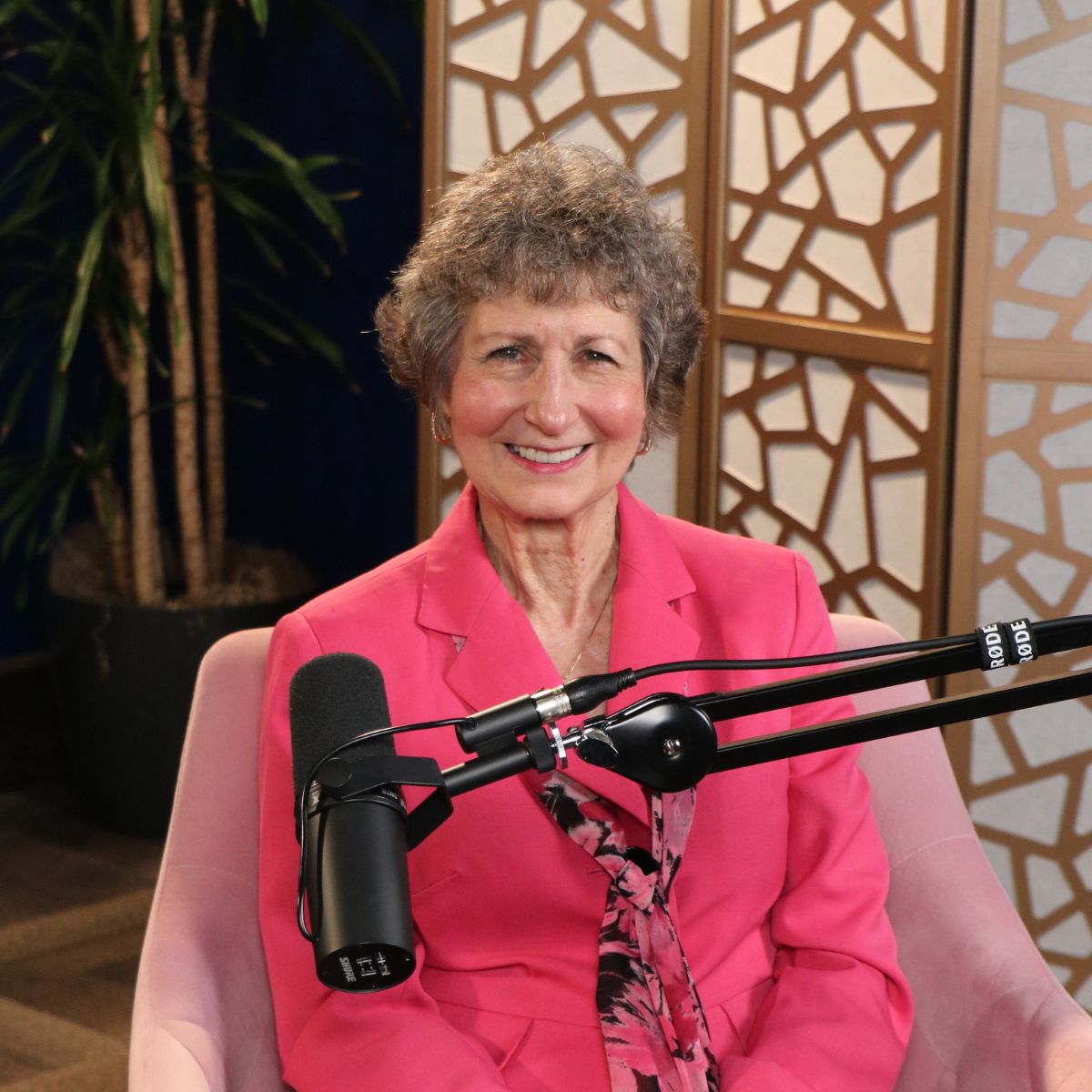
Dorothy: [00:00:00] Today you’ll hear from attorney and CPA Marilyn Sims, president of the Bill and Helen Crowder Foundation. These are the people and the foundation whose generosity helped build this very podcast studio where we record patients, survivors, friends, physicians every month. As president of the foundation, Marilyn says it’s now her privilege to give away Bill’s money, and it has certainly helped fuel The Rose’s mission.
Her own story took a sharp turn when she discovered a lump and was diagnosed with stage 3 HER2-positive breast cancer. She also talks about the 18 months of treatment and how she worked all the way through her chemo. She talks about losing her hair and her nails, and how she had to learn to say no, and the shift from being a very private person to openly talking about her own journey, because it just might help another woman catch her [00:01:00] cancer in time. If Marilyn’s story makes you think of a woman who’s tried to do everything right, then share this episode and consider making a donation so another woman gets the care she needs at The Rose.
Welcome to Let’s Talk About Your Breast, a podcast brought to you by The Rose Breast Imaging Center of Excellence and a Texas treasure. I’m Dorothy Gibbons, your host and co-founder of The Rose. During this season, you’ll also be hearing from co-host Roxann Hayford and others as we bring you stories from survivors, physicians, caregivers, researchers, employees, and supporters. These are real people sharing difficult times, celebrations, and personal stories of hope, despair, and faith.
Marilyn, thank you so much for being with us today. I’ve only tried to get you on this show for how long now?
Marilyn: A long time.
Dorothy: A long time. But you did have a [00:02:00] reason-
Marilyn: I was …
Dorothy: that you didn’t wanna just jump in here and be a, a guest for us. So first of all, I wanna tell you how grateful we are for this studio. And that was a gift from the Bill and Helen Crowder Foundation, which you are the president of.
Marilyn: I am. Yes.
Dorothy: And how long have you been?
Marilyn: Um, the Bill and Helen Crowder Foundation has been ex- in existence since 1998, so 28 years now.
Dorothy: Oh my goodness.
Marilyn: Long time
Dorothy: So you knew, knew them?
Marilyn: Um, I didn’t know Bill.
Dorothy: Okay.
Marilyn: The foundation is a private foundation- that was set up by Bill under his will. Well, actually, he set it up prior to his passing, but just in case it didn’t get its 501- C exemption when he passed away, he left in his will where he wanted his assets to go. Let me back up a little bit. Bill was never able to have children [00:03:00] and-
Dorothy: Oh
Marilyn: with his first wife, and so he had always had a passion and a, and given to children’s organizations. He was actually from Dallas, um, and then he moved to the La Porte area. And so- when he moved to La Porte and he started his businesses here, he would always give to children’s, children’s, uh, charities. And throughout of all of his, his life. And so when he passed away, um, his attorney said, “Let’s decide where you want your assets to go. But I would like to set up where it can go in perpetuity.” Oh. And so rather than leaving in your will, “At my death, all my assets go outright to these charities,” which we knew who they, he, he wanted them to go to, “We’re going to set up a foundation, a private foundation, where we hold all the assets that you have, and we give away a little every [00:04:00] year.”
Dorothy: Ah.
Marilyn: And we were able to get it set up prior to his, his passing, and so his will funded that private foundation.
Dorothy: Oh my goodness.
Marilyn: And so he had already married Helen Crowder- his second wife, and Helen became our, uh, president of the foundation. Uh, and every year, all the money the foundation earns gets to be given away And so 28 years ago, we started with about three and a half million, and we have over the last 28 years given six million, and we still have millions to go, thanks to a really good stock market.
Dorothy: Oh, my goodness. That is amazing.
Marilyn: And so Helen’s greatest, um, joy was being able to continue to fund the children’s foundati- uh, charities- that, that Bill enjoyed giving to. And, um, and she would always say, “I [00:05:00] just love giving away Bill’s money.” Well- And The Rose was one of those, one of those organizations that we have, have funded for years.
Dorothy: Yes.
Marilyn: And when you came to us and said, “What can we do? We have this studio we’d like to build out,” and we thought it was a great idea. Even though it’s not a children’s foundation, children are impacted by breast cancer-
Dorothy: Absolutely …
Marilyn: all the time.
Dorothy: Yes.
Marilyn: Um, and so we felt like it was a really good, uh, charity, be able to do something that would carry Bill and, Bill’s and Helen’s memories into the future.
Dorothy: Oh. Well, we so appreciate-
Marilyn: Yes …
Dorothy: everything that the Crowder Foundation has helped us with.
Marilyn: Good.
Dorothy: But this studio has been one of the best educational-
Marilyn: It has …
Dorothy: vehicles we have ever, ever had.
Marilyn: We had.
Dorothy: And when I think about the young mothers who have come on and told their stories- and how another young woman might hear it, [00:06:00] not, not knowing that she too could have breast cancer, I mean, it’s, it’s just been amazing.
Marilyn: It’s getting the education out there.
Dorothy: Yes. It has been.
Marilyn: Getting the education, and this vehicle has worked.
Dorothy: Awareness is, you know, it’s not like it used to be. It’s a… You have to do what’s happening now- for it to work anymore. That’s for sure.
Marilyn: You do. You do.
Dorothy: S- so that was when you first learned about The Rose, through that?
Marilyn: Actually, no.
Dorothy: Oh.
Marilyn: I learned about The Rose when I moved to the Houston area in the late ’70s, and I needed to find a place to have my first mammogram. And it was at The Rose.
Dorothy: It, really?
Marilyn: It was.
Dorothy: Oh, my goodness.
Marilyn: It was. Um, I had just started to work, so I had insurance. But I had heard that, you know, you could come here as well.
Dorothy: Right.
Marilyn: And you were not very far from my office, and so, um, I, I had my first mammogram at The Rose.
Dorothy: So tell us about what it is you do. Like I said, I did not realize you were so [00:07:00] accomplished, so I kept reading and reading and- Um- … it’s not just an attorney.
Marilyn: Um, when I moved to the big city from a small town- I didn’t really know what I wanted to do, so, um, I went to work for… I, I moved to Pasadena. And so a lot of, a lot of jobs there were in industry, and so I worked for a company that sold a product to the refineries. And while I was there, I started l- thinking, oh, I, I enjoy doing things with numbers. And so, um, the company sent me to night school, and I went to, uh, the local college, and then the local university.
Dorothy: San Jac, yeah.
Marilyn: I went to San Jac College in Pasadena and got my associate’s in business. Then I went on to University of Houston-Clear Lake and got my accounting degree, um, at the University of Houston-Clear Lake. And after I got my accounting degree, I knew I wanted to keep going to school, but I didn’t really know what I wanted to do. And so I, my husband said, “Well, why don’t you sit for the LSAT? [00:08:00] You can go to law school.” And, um- … so I did, and I did well on it, so then I continued my education. I, I worked for 10 years for this, for my original company, and so I retired after 10 years. Um, but I did all my nights, all my school at night. But when I got into law school, I decided, ugh, I need to do this full time.
And so I got into University of Houston, um, Law Center and went to law school for three years. Before going to law school, since I had my accounting degree, I decided to sit for the CPA exam, and I did, and I passed all four parts of it, so I was a CPA going to law school. Um, and so I kept- When I was in law school trying to find something I could do with my CPA as well as my law degree. And so the first semester, I clerked with the bankruptcy court, and I thought, “Oh, there’s lots of numbers in bankruptcy. I’m gonna be a bankruptcy lawyer.” Um, and then [00:09:00] I decided probably bankrupt clients weren’t the best ones to have. So the next semester, I clerked with, um, the probate courts. And there are lots of numbers and lots of planning and lots of things that you can do with your accounting degree when you do estate planning for clients.
Dorothy: Ah.
Marilyn: And so I knew I wanted to do that. My next semester, I clerked for my law firm, and, um, when you’re a clerk at a law firm, and at that time we only had about seven attorneys at my firm, um, it- you generally do litigation, and I knew I didn’t really wanna do litigation. I wanted to do transactional work. I wanted to do, do deals. I wanted to plan for clients. And, um, so, um, I did clerk as a, as a, in their litigation department, but they didn’t r- have a job for me after I finished law school. So after I finished law school, I went back to work for Ernst & Young, which they had given me a scholarship for my accounting degree.
And so I worked for Ernst & [00:10:00] Young, and, um, I, uh, got my CPA certificate signed off because you’re supposed to work under another CPA, uh, to get- Ah … your certificate signed off. And so, um, I stayed for about a year and a half, and I did high-wealth individuals, and trust returns, and estate returns, and f- foundation returns- and all the kinds of, of, uh, tax returns for the entities that I create now- … and for my clients. And so it was a good, good background on-
Dorothy: oh, yes …
Marilyn: on how to do that and what to do. But, um, I went to work for my law firm, um, in 1993, and so I have been there ever since.
Dorothy: Oh, my goodness. So Marilyn, when you discovered that you had breast cancer-
Marilyn: okay.
Dorothy: Were you surprised?
Marilyn: Uh, shocked. You know, I always thought I did everything right. You eat right. You [00:11:00] exercise. I knew I didn’t get enough sleep. I knew I burned candles at both ends, as you do in our careers and our busy lives. But, um, but was very surprised, um, ’cause like why, why me? Um, breast cancer did not run in my family at all. Um, so it’s not something that I anticipated ever having, um, and-
Dorothy: And you were doing your regular mammograms and-
Marilyn: Every year, every year, and over the last few years, um, ultrasounds as well. And so when I- They had a clean ultrasound and mammogram in October of 2023. Didn’t think anything about it, but in August of 2024 is when I discovered a lump right before we were getting ready to go for Labor Day weekend.
Dorothy: Oh.
Marilyn: And I s- said to my husband, “Oh, this doesn’t feel right. Um, I think I’m gonna have to make an appointment early- [00:12:00] to get it checked out.” And so I did immediately, and when I went into the ultrasound, um, they said, “Yeah, we see a little something there.” Um, and I said, “Well, I better go get it checked out in depth.” And on September 13th is when I finally ultimately got the yes, it’s definitely cancer diagnosis. Friday, September 13th-
Dorothy: Oh, my …
Marilyn: of 2024.
Dorothy: Oh.
Marilyn: Remember the exact place you are-
Dorothy: Yes …
Marilyn: whenever you get that call. Um, but, um, but we, um, immediately, you know, started the process and procedures and, um, started treatment already in October of 2023.
Dorothy: And your cancer was particularly aggressive.
Marilyn: It was particularly aggressive, so within eight months, it was, it’s, it was HR2 positive, and within eight months of my last mammogram, it was already stage three.
Dorothy: Oh.
Marilyn: [00:13:00] It had gotten into my lymph nodes under my arm- and into my neck, the lymph nodes- in my neck. And so, um, it was pretty aggressive, but- being HR2 positive, there are actually m- more, um, available treatments- for that type of cancer. And so, um, I immediately started on October 2nd with my first treatments for the cancer. And would you like me to tell you what those are?
Dorothy: Yes.
Marilyn: Okay. So I had eight really aggressive chemo treatments. The red devil, and those were every two weeks, and so immediately you start seeing the side effects of those. Although I, m- I, I wanna say that I’m pretty strong person. I tolerated them pretty well. Um, I actually worked the entire time-
Dorothy: Yeah.
Marilyn: For [00:14:00] my entire treatment, which this Friday will be 18 months of treatments. Um- . So it started out with the first eight really heavy dosage to shrink the tumor. And then after the shrinking of the tumor, then we did, um, we did a mastectomy, and mine was just on the right side. Um, and then, um, we did reconstruction at the same time.
Dorothy: Mm.
Marilyn: And then we did 30 rounds of radiation, and that was every day for, you know, five days a week.
Dorothy: Right, right.
Marilyn: Um, and then I thought I was finished. The, everything came back clear. The scans were clear, and um, the radiologist said, “You know, there’s really post-op treatment that you should take.” Um, and at this [00:15:00] stage, you know, I was like, “Oh my gosh,” ’cause I’d been in treatment from October to July- of the next year. And I said, “Is, w- what are the odds if I decide that I don’t wanna take these?” And they said, “There’s a 45% chance it’ll come back if you don’t take-“
Dorothy: Wow …
Marilyn: “the post-op treatments.” And my treatment plan, the post-op treatments, were 14 lower grade chemo treatments, and those were-
Dorothy: My goodness.
Marilyn: Once every three weeks.
Dorothy: Mm.
Marilyn: And I just finished those l- February 15th, so it has been t- been three weeks since I did it.
Dorothy: Well, congratulations. You’re-
Marilyn: Thank you.
Dorothy: My goodness. It’s- So did you ever get angry during that time with the- Um … ongoing treatments?
Marilyn: You know, you, you-
Dorothy: What did you feel? You get used to it?[00:16:00]
Marilyn: Oh. You get used to it. Um, I knew, I mean, the first ones were sort of like, you know, yes, you were, you had anxiety because- you didn’t know what to expect. Um, but having so many, particularly these last ones, um, you knew what to expect. You know, the first day you went in for the treatment, you felt okay. Mm. It was just a treatment. Um, the, the next day, you felt pretty good. The third day, you just felt like you had the flu. Um, and the longer you were on the treatments, the more tired you get.
Dorothy: Oh, that’s true.
Marilyn: Um- Yes … you know, it just zaps your energy. Um, but, um, when I first found out that I had cancer, I typed my fellow shareholders an email, and I said, um, “This is what I have. I understand that it’s gonna mean that I’m out of the office for my treatments, but if you will let me, I would [00:17:00] just like to keep on my routine. I wanna come to work. I wanna take care of my clients. I wanna do what I enjoy doing.” And, um, they were all very supportive and said, “Whatever we can do, um, we’ll wanna do it for you.” So, um, and that, I think, gave me the stamina to just keep going.
Dorothy: Right.
Marilyn: There was a reason to keep going.
Dorothy: Yeah, you couldn’t give into it.
Marilyn: I couldn’t give into it.
Dorothy: Mm.
Marilyn: Um, people asked me, “Well, how did you go to work every day?” And I said, “Well, you know, there are days that I didn’t feel good, but I can feel bad at the office just like I can at home.” Well, yeah, that’s, that’s true, yes. So I just keep going because there’s, there’s something that needs to be done, and I enjoy doing that, and that, that, uh, helped my mind not concentrate on, “You’re, this is serious. You’re really sick. You should-” you know. Although I did, I did cut back on a lot of my activities. Um-
Dorothy: Well, you, you had so many. I [00:18:00] mean, really, how many, how many, uh, organizations are you actively a part of?
Marilyn: Oh, gosh.
Dorothy: I mean, we know all of the schools, right, all of the colleges. You’ve continued to be. What else?
Marilyn: Um. You know, I, I enjoy, um, giving back. Mm. I enjoy, um, working with young people, um, giving them an opportunity. Um, I enjoy working with my clients, giving them whatever planning and, and advice that they might need.
Dorothy: Right.
Marilyn: And so it just helps me to stay busy.
Dorothy: Well, I know so many people have benefited from your busyness-
Marilyn: Oh, thank you …
Dorothy: that’s for sure, and you do have a soft place in your heart for girls.
Marilyn: I do.
Dorothy: Yeah.
Marilyn: I do.
Dorothy: Yeah.
Marilyn: I, I don’t have any children of my own. I have stepchildren, but I don’t have any of my own. And, um, and I just [00:19:00] feel like everybody should have the opportunity if they wanna take it- to go and do what they wanna do, and there’s so many people out there that just don’t have the opportunity or don’t have a role model to look up to.
Dorothy: Right.
Marilyn: And so if there’s any advice that I can give them, um, you know, to, to work hard- um, follow, follow your goals. Do whatever it is that you wanna do, and if financially, if they don’t have the ability to do it, try to help them in some way to get that.
Dorothy: Well, you have.
Marilyn: Uh-huh, yeah.
Dorothy: So many, my goodness.
Marilyn: Thank you. Thank you.
Dorothy: So who was your support system during your cancer?
Marilyn: Oh my gosh.
Dorothy: Your treatment.
Marilyn: Um, my husband was my rock. Um, he was there for every treatment, everything I needed, anything that I needed.
Dorothy: Every treatment. Ooh.
Marilyn: Every treatment. Um, now he- might have been just taking a nap in the chair next door to me- but he was there. And, um, and, uh, [00:20:00] you know, my coworkers, everybody at the office was so supportive. Um, you know, as I said, every time I’d go into a meeting, I’d say, “Now, do I look okay to go into this meeting?” What, what do I need to do? What do I need to change? Because as you go through cancer, there are many, many changes to your body.
Dorothy: Yes.
Marilyn: Um, the chemo really, it destroys all the bad cells, but it destroys all the good ones, too. And so you just sort of have to rebuild yourself and, um, and try to maintain as best you can and do what you can.
Dorothy: So would you mind describing some of those changes?
Marilyn: Um, well, with, with the REDEVIL treatment that I was on, you lose your hair. Um, that’s usually the first thing that goes. You lose your eyebrows, your eyelashes, any hair anywhere.
Dorothy: True …
Marilyn: is possibly falling out. Um, for me, I ha- lost my nails.
Dorothy: Oh.
Marilyn: My fingernails, my toenails, so those all [00:21:00] have to grow back. Um, you, um, people get neuropathy in different- areas of their body, and the thing that I learned throughout this is that the treatments they give us, there are no p- two people that react the same.
Dorothy: No.
Marilyn: Everybody’s body is different on how it reacts to these, and they have, cancer’s been around so long, they have come up with some different treatments. Um, everybody told me whenever I, um, got cancer, “Oh, you don’t wanna lose your hair. It’s your signature.” And I was like, “Yeah, it’s my signature,” but there’s this type of treatment called the cold, the cold- uh, press head-
Dorothy: Yeah …
Marilyn: where you basically chill yourself down-
Dorothy: Right, cold cap …
Marilyn: before the treatment.
Dorothy: Uh-huh. Cold cap.
Marilyn: Um, but the cold cap takes about an hour [00:22:00] before the treatments, and the treatments are about, the first ones are about four hours. So that meant- about five to six to seven hours just for treatments if I decided for, to do the cold cap. And there’s no guarantees-
Dorothy: Mm-
Marilyn: with the cold cap. So some people still lost their hair. So, um, I just elected to wear wigs during that time and to, um, to do the best I could.
Dorothy: Well, and it’s, it was- Like I was telling you, you really couldn’t tell with yours, and I think, and, uh, but you shared earlier that it’s because you had it look like your own hair.
Marilyn: I did.
Dorothy: Be- You made sure- of that.
Marilyn: I had a… I’m an excellent hairdresser, and she said, “Before you lose your hair, go and, um, and get a wig- that looks like your hair.” Um, and so I- m- I went on my website and I said to the lady that was, that was fitting me for the wig, I said, “Make me look like this, because soon I’m [00:23:00] not going to.”
And, uh, and I did. And I progressed over time, um, and I had hoped to progress into what it has turned into today because, um, uh, the… I, I have never had curly hair in my life. And I am- It is curly now … just as curly now- Oh, my gosh … as I ever have. Um, but, uh, for, for about a, for a full year I wore a wig, and then I s- I s- decided I needed to come out and show everybody what this really is, and that after 18 months, I am done.
Dorothy: You’re done.
Marilyn: I am done.
Dorothy: Yes.
Marilyn: Of course, you, and you, you, you still… Chemo, you know, you always have this anxiety that is it gonna come back? When’s my next scan? What will it find? Um, you know, and so that’s just always going to be there with me.
Dorothy: Um- How do you talk yourself down? Do, do you, or-
Marilyn: [00:24:00] You-
Dorothy: you just come to-
Marilyn: You s- I am just a positive person, and I say, “I can do this. I can do this.” Um, somebody gave me a bag whenever I started this that says, “You got this,” um, and I carried it to every treatment.
Dorothy: Right. You know, whatever it takes.
Marilyn: You, you find your comfort. And then the other thing- that helped me throughout all of this is, is just talking to other people that have it as well. Even though n- none of us are going through the same process, none of us are having the same reactions, it always helped me to talk to somebody and say, “Are you, are you having this symptom?” Um, “Does this, does this…” And they’ll say, “Yes,” but, or, “No, I’m having something else.” And talking through it with other people certainly helps to relieve the anxiety, because you know that there’s somebody else going through the same thing. It just helped me.
Dorothy: But Marilyn, you were a very private person-
Marilyn: I am …
Dorothy: as I remember you. I- how [00:25:00] hard was that, to talk to- Um- … other people? Did it shift over your time of treatment? Did you see-
Marilyn: It probably did. Yeah, it probably did. You go through so much during this time, and so you become, mm, less re- Less private and because you have to go see all these doctors and-
Dorothy: Right and, um- And everybody’s looking at you …
Marilyn: everybody’s looking at you. And, um, when I went into this, I said, “I don’t know why I’m on this journey, but it’s for some reason. Maybe it’s to help others.” And so if what I’m doing helps others, then I’ve gotten a benefit out of it. And so doing that-
Dorothy: How did it help others?
Marilyn: Um, just letting them know that they can get through this, too, that they’re not alone- that others can, can help them get through the situation they’re in. I had a great support group around me. For those people that don’t have one- finding a [00:26:00] support group- having somebody available to help talk you through some of these things.
Everybody has different, mm, windows that they’re looking through as they go through this-
Dorothy: Oh, that’s a good way to think …
Marilyn: trauma.
Dorothy: Yeah.
Marilyn: Um, and I may know- I may be on one side of the window and see something else, and somebody may see something else. But talking about those helps them to, um, know that there’s other people that have a different view than they do.
Dorothy: Ah.
Marilyn: And, uh, try to get them through whatever it is that they n- need to get through. And maybe that’s why I’m, I am, have had this, and I’m on that mission to try to help others.
Dorothy: Well, I, I just remember as you were going through this how, um, careful you were about sharing, and then something shifted, and you, and you were very, very open. And I, and I, and I say this because that’s also sometimes how we are. You [00:27:00] know, it’s, it’s that time of being private, that time of not wanting to talk- to the time where you can.
Marilyn: And, and maybe it’s because I’m, I’m at the end of the tunnel. When you’re at the beginning of the tunnel, there’s a harder road-
Dorothy: Right, right
Marilyn: to know what your future is. One of the hardest things, I think, is just being able to plan.
Dorothy: That’s so true.
Marilyn: You know, when you’re in the middle of all this, your, your planning schedule, your schedule is all your appointments that you’re going to do. And so you’re not really able to say, “Oh, I can go out of town next week,” because I don’t know how I’m gonna feel- if I go out of- schedule to go out of town next week. Um, and so as you get to the end of, of all of the appointments, you can finally say, “Ah, I can make that.”
Dorothy: Right.
Marilyn: “I can make that event. I can do that.” And so I remember being very hesitant whenever I was going through a lot of it. Somebody would say, “Can, can we get together at this meeting on such and such night?” And [00:28:00] I’m like, “Mm, maybe. It just depends on how I feel.”
Dorothy: Right. But, but, you know, that’s, that was a, a teacher also in a way, where you had to- You, you had to stop being Superwoman-
Marilyn: yes …
Dorothy: for a little while.
Marilyn: Yes. Yes, I did. Yeah. Yes, I did. I did pull back a lot because, you know, one of the things that we as career women do is we, we push ourselves. We, we ha- think we have to be everything to everybody.
Dorothy: Right.
Marilyn: Um, and what I learned and discovered during this is you have to be, you have to take care of yourself- Yeah … first and foremost so you can take care of others.
Dorothy: Right.
Marilyn: And so just trying to make sure that you’re a priority as well. Um, if you need downtime, take it.
Dorothy: It is hard. It’s hard for someone who’s always out there-
Marilyn: It is hard …
Dorothy: always working, yes.
Marilyn: It is hard. But h- being able to say no. Um, that’s a hard thing for, for career women to do as [00:29:00] well-
Dorothy: Right …
Marilyn: because you’re so active, and you wanna please everybody, and you wanna make sure everybody’s work is done and everything.
Dorothy: You don’t wanna let anybody down.
Marilyn: I know. I know. Yeah. Um, but, um, but just know and take, take your health as a priority. Um, take that extra, um, hour to sleep if you need it. Um, do the things that need to be done for yourself first, and then everybody else will… You can take care of everybody else.
Dorothy: Do you see yourself as stronger?
Marilyn: Um-
Dorothy: You were always strong.
Marilyn: Uh, I don’t know that I was stronger. I think I have more of a view of w- of priorities- and the importance of spending time and quality time with people- um, rather than, you know, just going from meeting to meeting to meeting, um, and trying to, to, um, prioritize [00:30:00] what’s important in your life.
Dorothy: Right.
Marilyn: And health is one of those. It is.
Dorothy: It certainly is.
Marilyn: Yes, yes, and I don’t know how to emphasize more because as I said, my cancer came up with a vengeance in such- a short period of time. Um, just in between those mammograms, be sure that you check yourself.
Dorothy: Good advice.
Marilyn: Be sure that you check yourself.
Dorothy: ‘Cause a mammogram is no guarantee for anything.
Marilyn: No guarantee. No. And a year is a long time. Um, thankfully, mine was caught, well, I won’t say stage three is an early stage, but had I waited until October and just blown it off- um, it probably would’ve been much worse and much more drastic. Um, and so, um, getting in and getting the treatment that I needed quickly, um-
Dorothy: Oh, it made all the difference.
Marilyn: Yeah. Other, other things and other advice that I’d give to people is there are so [00:31:00] many different treatment methods out there, and, um, you know, e- explore them for yourselves. Um, get second opinions. Um, you know, everybody has a protocol on how they treat- things. Um, and, um, I recall when the question they asked me when I first went in is, you know, “W- what are you looking for? Are you looking to be cured of cancer, or are you looking just for the minimal treatment?” And of course, everybody’s objective is to say, “I wanna be cured of cancer, of course.” Um, not even thinking about that. But, um, I, I recall then later, as I was being asked whether or not I wanted the post-op chemo, um, I was reminded that they said, “Well, you did say you wanted to be cured of cancer”, and 45% odds of having it reoccur-
Dorothy: That’s [00:32:00] pretty, pretty high odds.
Marilyn: Is pretty high. Yeah. Uh, and so, but it’s all personal to everyone, and just hoping that everyone m- has the opportunity- to get the kind of care that they need. I was still working, so I had insurance- and I had all of those. I think of all those people that are raising families, and have jobs, and maybe don’t have the insurance coverage to be able to have the option of, should I do this or should I do that?
Dorothy: Right.
Marilyn: Um, and so all-
Dorothy: No matter what, cancer costs.
Marilyn: Yeah.
Dorothy: It- In many ways.
Marilyn: Yeah, yeah. And, you know, having The Rose here in our backyard- … to help with all of that, and all across Texas- with your mobile units-
Dorothy: With our mobile units, yeah
Marilyn: … um, is-
Dorothy: You’ve certainly seen us grow …
Marilyn: Certainly an advantage. and it’s delightful to see that, and, and now international with [00:33:00] these podcasts.
Dorothy: Oh, yes. Again, thank you for that. Thank you for all of the support.
Marilyn: Oh, you’re welcome.
Dorothy: I’m so glad you’re finished.
Marilyn: Oh, me too.
Dorothy: Thank you for coming in.
Marilyn: Me too. You bet.
Post-Credits: Thank you for joining us today on Let’s Talk About Your Breasts. This podcast is produced by Speke Podcasting and brought to you by The Rose. Visit therose.org to learn more about our organization. Subscribe to our podcast, share episodes with friends, and join the conversation on social media using #Let’sTalkAboutYourBreasts. We welcome your feedback and suggestions. Consider supporting The Rose. Your gift can make the difference to a person in need. And remember, self-care is not selfish, it’s essential.