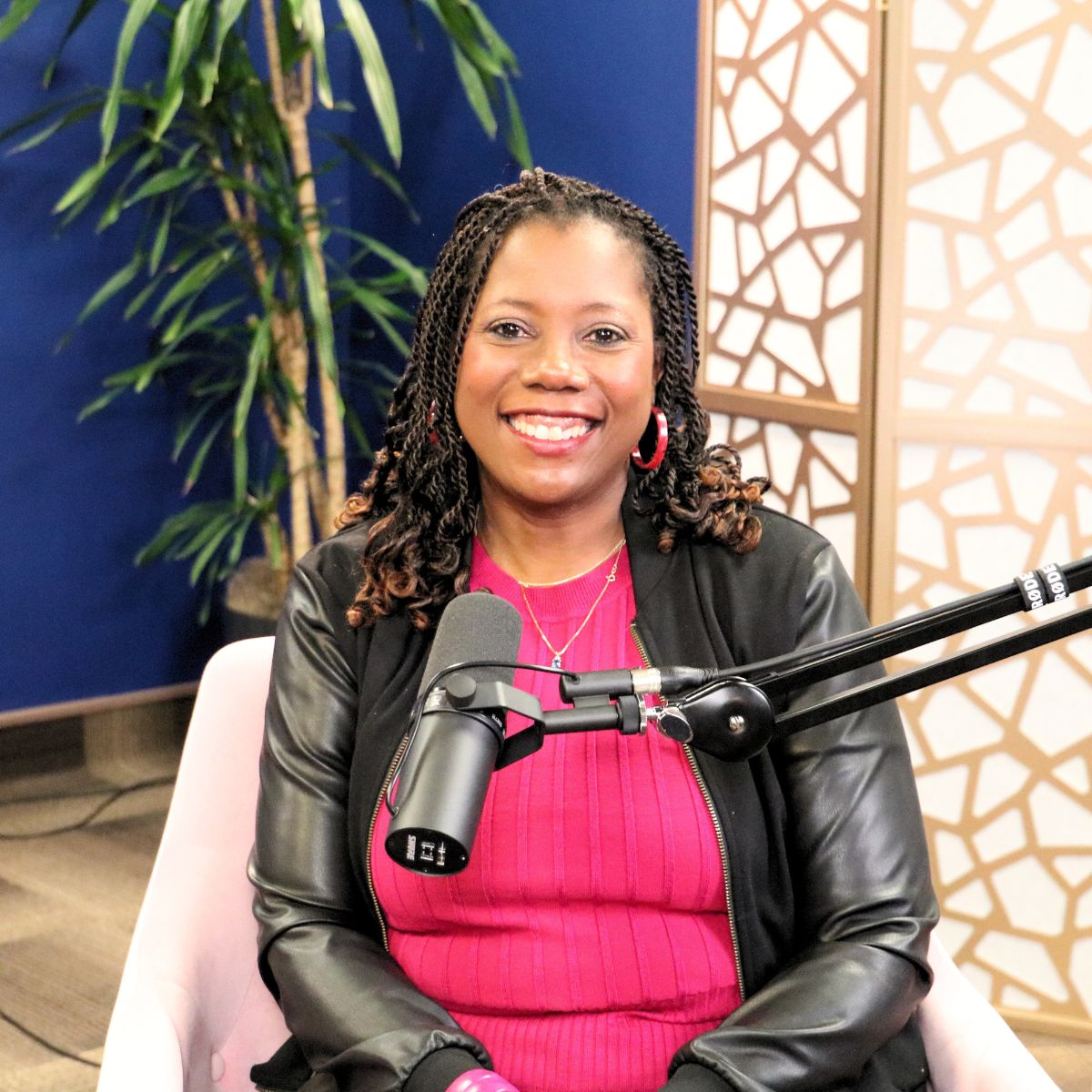
Dorothy: [00:00:00] You are about to meet Beula, and you’re gonna hear so much about how this name helped a woman get through her diagnosis and her treatment and into recovery. She was newly diagnosed with breast cancer. She was recently laid off and her insurance was as poor as it could be. In fact, it didn’t pay much of anything yet Ayanna Wilcher still found a way forward. She found The Rose. Once she did, she was taken right into treatment. She had successful surgery, saw her recovery, but what she discovered was how much mastectomy patients fall through the cracks. What would it feel like to be walking around with the drains coming out of your chest and fluid pouring out of them, and no way to manage ’em.
That was one of the first things she discovered, and that was one of the reasons that she created Rising In Grace. She [00:01:00] created comfort kits and she found ways to share them with other women who had dealt with the same issue she had. You’ll hear about how she’s now part of the leadership of Angel Surviving Cancer and how she fights to make sure that no woman has to walk this road alone. She urges women to seek second opinion. She urges them to speak up for their care, and she even found a way to give her cancer a name. You’re about to hear about Beula.
Let’s Talk About Your Breast. A different kind of podcast presented to you by The Rose, a breast center of excellence, and a Texas treasure. You’re gonna hear frank discussions about tough topics, and you’re gonna learn why knowing about your breast could save your life.
Ayanna, it’s so good to have you here today and I, I am just delighted that this work, because ever since I met you in April, I have wanted to [00:02:00] have you on the show. So thank you for being here.
Ayanna: Oh, I’m so happy to be here with you. I am delighted. And at the event of April, it was definitely very heartfelt for me because when we were showing the numbers of those who had been impacted, I was like, oh my gosh. I’m one of those individual of them.
Dorothy: Yes.
Ayanna: Yes, exactly. Which is definitely interesting.
Dorothy: Ooh, yes. I hadn’t thought about that.
Ayanna: Yes, yes.
Dorothy: Yeah. Well, now tell us just a little bit about who you are, like, you know, where you were raised, your occupation, those kind of things. Basic, high level.
Ayanna: Yeah, so I was born and raised in Chicago, Illinois. A mother of three. I married a football coach, so, Uh, what brought us to Texas was his job. Uh, we raised our kids out east in the Pennsylvania, Philadelphia area. I’ve worked in higher education for over 17 years, and then I took a leap into corporate, worked into corporate over 10 years, and then unfortunately in, uh, February of 24, I wound up losing my job, so, uh, which [00:03:00] also impacts my story Um, that I will later get into. But, uh, right now I’m currently back in higher education. I’m working at the University of Houston, which is something that just recently happened, so.
Dorothy: Oh, good!
Ayanna: Very excited about that.
Dorothy: Congratulations.
Ayanna: Yeah. 2026 is my rebuild year. It’s the, it’s the come up, it’s the rise because it’s been a challenging couple of years, so.
Dorothy: Yeah.
Ayanna: Yes.
Dorothy: Well, tell us about those challenge you, you were diagnosed with breast cancer.
Ayanna: Yes.
Dorothy: So do the story, how, when, how’d you find it? How old were you? All of those things.
Ayanna: Yeah. So my story is very recent. Um, and so I had had a clean mammogram in June of 24, I’ve always been up on my mammograms, making sure that, that it’s something that’s a, a regimen of mine. I had an aunt that passed away from breast cancer and one of the things I swore to her that I will always stay up on my mammogram.
Actually, a year ago, January 15th, I felt a lump. [00:04:00]
Dorothy: Oh.
Ayanna: And I called a good friend of mine who’s a doctor, uh, OBGYN, and she said, Hey, let’s start getting you in. ’cause if you just had a six month to go clean mammogram, now we need to do, uh, something else.
Dorothy: Yeah.
Ayanna: And so I never forget going Houston Methodist. And normally you go in the, the left was normal. I’m going to the right, which means they need to do more testing. So they’re going through their testing, they’re looking at this lump. And then when the white coat comes in, I, that’s when I really broke down and cried. And she said, why are you crying? I said, there’s too many of you all in here. Um, and so they recommended that I have a biopsy. Um, at the time my husband had lost his job. I was not working. I lost my job. We were paying for insurance, but we were technically kind of underinsured.
Dorothy: Uhhuh.
Ayanna: And so the insurance refused to pay for the biopsy. And so Houston Methodist told me about The Rose. They say, go over to The Rose. [00:05:00] They’ll do your biopsy, they’ll help you, they’ll take care of you. Um, and oftentimes you think of a organization that is helping those that are under insured or no insurance. You thinking sometimes you think less quality and things like that. It was the best experience I had ever had for one to go through that.
Dorothy: I’m glad.
Ayanna: The doctor was amazing. Everyone, they made me feel like a person, like I wasn’t just like somebody who was under, because I had insurance all my life, all my life. I was born with insurance. And so to be in a situation where now I’m needing resources and to go into an organization that provided first class resources for individuals that really needed it top-notch and so. I had another friend of mine who had, was going to have her biopsy as well, but she went to Houston Methodist. I had a better experience than she had. She was achy sore.
Dorothy: Oh my goodness.
Ayanna: My doctor talked me through. It was just a, an amazing experience. And so.
Dorothy: And you’d never had a biopsy before?
Ayanna: Never had a [00:06:00] biopsy before. Uh, and I just, I wanna thank the doctor, but he, it just made it a really great, I never saw the instruments, the tools, the conversation. You just. It you didn’t realize what you were going through.
Dorothy: Yeah, I bet you had Dr. Trevino.
Ayanna: Yes!
Dorothy: Yes.
Ayanna: Yes. Absolutely. Absolutely. So, um, and then unfortunately on March 5th, I got the unfortunate news that, um, I had breast cancer. In fact, I was actually out of town. I was going to a sorority convention and I never forget when the nurse called, I’m getting ready to board the plane, and the nurse called and she said, Hey, the doctor wants to speak to you. And I said, well, why can’t you speak to me? And she said, well, the doctor has to do this. And I knew then it was not good news. So I said, oh, I’m getting ready to board a flight. I’ll be landing in 90 minutes. Uh, I’ll call back in. So they scheduled it for then and I never get bid on that flight. It was the most turbulence flight, everybody’s on there was scared and I kept thinking, this plane’s not going down ’cause I gotta get some unfortunate news when I get on [00:07:00] the ground. So that’s, I said, terrible. They ve calm as I could have been. So I, so when I landed, um, I had one of my sorority sisters with me to take the call because I knew it wasn’t gonna be good news. And so when my primary care had gotten on to give me the news that I had breast cancer. I didn’t hear anything else after cancer.
Dorothy: Right.
Ayanna: And I remember sliding down a wall thinking, oh my God, I have breast cancer. So at that moment you think the worst? Um, I’m glad I had somebody with me.
Dorothy: Absolutely.
Ayanna: Because they were able to take down what it was. I had DCIS and, you know, able to explain to me when I was in a better state of what that doctor had just said because I didn’t hear anything else.
Dorothy: Right.
Ayanna: Um, I never forget being at that conference and I was one of the conference planning people moving around but couldn’t eat, didn’t have an appetite. I kept thinking, am I doing, is all this I’m doing for the last time? Am I not gonna be here next year at this time?
Dorothy: Oh.
Ayanna: You know, ’cause you just, [00:08:00] you automatically just think the worst.
Dorothy: You do. Yes.
Ayanna: And then I, my friend, who is my doctor friend, when I called to tell her that I had it, she went right into, okay, I want you to see this oncologist. It was just a matter, it was like, we not mourning on this. We’re not crying on, it was like she, the people around me made me feel like it was like a, a acne book that we had to, you know, and then later on I had a.
Dorothy: I’ve never heard it called that, but.
Ayanna: Yeah. But it was just like, it was mindset. It was like, I’m thinking, the end and they’re like, Nope, we just gonna get this taken care of and we’re gonna keep it moving. And then I have one of my big sisters and she knows she’s my big sister. She’s one that we not gonna cry, we’re gonna try to laugh about it. And so we gave it a name. We were calling it Beula. And so she said, we are not claim it.
Dorothy: You called it what?
Ayanna: Beula. We like, we not claiming this. We, we are not calling it breast cancer. We, is it Beula. And Beula needs to eventually find a new address at some point, like she needs to be gone. And [00:09:00] so when I got home from, um, the conference, I met with an amazing oncologist, Dr. O’Shea, who was at Houston Methodist. I even had her calling it Beula and I was like, I’m not claiming this. And even having that first meeting with her was amazing because she laid out everything that could possibly happen
Dorothy: Uhhuh.
Ayanna: With this DCIS and even down to the worst. So like even if I had at some point had to have a double mastectomy. So she laid out this, well do plan. My mother and my oldest daughter was with me. They were able to hear what was going on. I left there feeling like, okay, there is, there is life after this. And so I had to have a, first thing was the breast, MRI. Insurance refused to pay for that, which was, which is crazy. Uh, so we wound up coming out of pocket so I can, ’cause in my mind I’m, I’m fighting with the insurance company at the same time and I’m like. These, nobody’s asking for these type of tests. Nobody’s going and asking for a breast MRI. [00:10:00]
Dorothy: Right.
Ayanna: So why would, and why, how am I fraud?
Dorothy: After you had one, you sure wouldn’t have asked for it. Right?
Ayanna: Right, exactly. Like, how am I, I’m not frauding anybody.
Dorothy: Yes.
Ayanna: And so, um, in the meantime, when I talk about the biggest sacrifice anyone could have made through this journey was my husband. So my husband took a job in Pennsylvania just so I could have health insurance. So, uh, when you talk about how this impacts the family. So now my spouse, my supporter is now leaving because he has to, he does, he, my wife needs health insurance and so I had to take this job that doesn’t pay much, but she needs health insurance. And so, um, her health insurance kicked in by the time I needed surgeries and things like that.
But having an MRI came back that, and my doctor said it just like this. She said, Hey, Beula has a a passenger. I was like, okay, but Beula got somebody in the backseat. And so she said if it was just a passenger, co passenger, we could probably [00:11:00] go in and do a lumpectomy. But if that backseater is cancer, then we need to go to the next step on that plan, which was talking about having a mastectomy.
And so, um, unfortunately that Thursday before Easter, I found out that I was gonna lose my, um, left breast. And so I was, when she biopsied it, In that office at that time, I think I broke down and cried ’cause something told me that I was gonna lose my breast even before it was confirmed. And then that Thursday she called and said that I was gonna lose my breast. And so she said I didn’t have to do the Angelina Jolie. I wasn’t gonna lose both of ’em, but definitely the left one. Um, and so in my mind, um, and I had a very good therapist that I started seeing during this time. And the thought was, we’re not gonna let a piece of tissue bring the whole body down. And I know a lot of times we’re very vain about our bodies and we don’t [00:12:00] wanna lose our breasts, but if you think about the breast size compared to your whole body.
Dorothy: Body, right.
Ayanna: We’re we’re not gonna let it, let that happen. And so I wound up throwing myself a moo-moo mastectomy party on May 4th, which was the day before my surgery. So I had a, my bunch of friends come by wearing moo-moos, we had margaritas and it was just, I said, I was gonna say this is was born with his breast.
Dorothy: That’s how you said, you said goodbye.
Ayanna: Yeah. I wasn’t gonna let her leave me in without some type of celebration or, or send off. And so that was good for me because during all of this, when the nightfall, what happened, the darkness was even for some reason, the dark night I would have more anxiety. And so having that party the night before this surgery, I probably slept the best I had been since I had got my diagnosis. And so, uh, that on May 5th, Cinco de Mayo, I had my, um, surgery. [00:13:00] So I, I had a very great team. Um, again, I had a great oncologist who referred me to an amazing plastic surgeon.
And so that morning, um, I went in for surgery. They had removed my breasts. I woke up and the amazing thing was of you thinking the worst, but if you have, um. Uh, a surgeon in there. They put a, a spacer in there To preserve it until we figure out what’s next. And so now the waiting game, so now they, your breast is gone. Now the doctors and pathologists, they’re gonna go in there, dice it, type. They about to ex examine this thing.
Dorothy: Right?
Ayanna: And so it came back that I had nine invasive cancer cells.
Dorothy: Oh!
Ayanna: In that one breast. And so it was a great thing for me to have made that decision.
Dorothy: Right.
Ayanna: Um, but also too a scary thing as well, because you thinking. Nine? Like we were only.
Dorothy: Different areas.
Ayanna: Different areas. And, um, in that one breast. And so I was [00:14:00] brought up to review, um, for the, uh, cancer board at Houston Methodist.
Dorothy: The tumor board, Uhhuh.
Ayanna: They were suggesting, um, chemo. And I cried and I said, I’m not, you took my breasts. I’m not, I’m not losing other things. And especially when you tell me the side effects of chemo. And so at this point, I had a 93% chance it was not going to come back. ’cause I had the surgery. Chemo was gonna take me to 95. I’m like, wait a wait a second. And so. What I decided to do, which many people don’t think to do, is I was like, I’m getting some second opinions here. Like this can’t be the.
Dorothy: That’s true.
Ayanna: This can’t be the one. And so I went to MD Anderson and I went to Texas Oncology. And so, uh, MD Anderson. They take your samples, they’re going to have their own independent people look at it. So I think Houston Methodist said 92% Chance MD Anderson said 93% chance it [00:15:00] won’t come back.
But MD Anderson was offering baby chemo and I was like, so what’s baby chemo? I was like, well, when your hair starts to fall out and you know you get a little neuropathy, we can stop it. And I’m like, that doesn’t sound, that doesn’t sound right to me. And so the third opinion was Texas Oncology meeting with Dr. Hort. And the first thing he said to me was, we’re just gonna talk facts. He said, if your largest tumor. It was five centimeters or less. We wouldn’t even be talking chemo. And he said your largest would 0.09 centimeters. He said, so why would I put a bomb in your body? And to me that was very refreshing.
Dorothy: Oh yes.
Ayanna: For me. Um, and so. I decided to go with Texas Oncology, and so right now it’s just, it’s maintenance. It’s going in every few months. Then running tests, doing all your blood work.
Dorothy: Right.
Ayanna: Um, and so that was the best course of action for me. Um, it is still scary as you know, having cancer, you, [00:16:00] it’s still like on the back of your shoulder sometimes, and so you get a ache, you get a, a cough, you are like, oh my God, has it come back? And so.
Dorothy: Yes. Yes.
Ayanna: So I’m, I’m, so I’m working through that. And then even Dr. Darco was like, it’s. It’s gonna take time. He said, he said it like this. If you were at a casino and the table paid out 93% of the time, would you put money on it? I was like, yes. He said, that’s yourself bet on yourself 93% of the time that it’s not gonna come back. So those little aches and things that you feel don’t automatically assume.
Dorothy: Right.
Ayanna: That it’s, it’s the cancer coming back. So.
Dorothy: That’s an interesting way of looking at it.
Ayanna: Yes.
Dorothy: Yeah.
Ayanna: Yes. So I had to go through, because my family knows I’ve become a hyperconscious of something throughout. This is like when you talk about having the flu, I wasn’t feeling so well over the christmas break. Come to find out I’m allergic to this real tree we had in the house, but at the time you’re thinking, oh my God is what’s going on here? What are these new, new ailments and stuff? And [00:17:00] so, um, so yeah. So it’s, it is, it’s been a journey. It definitely, and like I said, when, when we talk about cancer, we don’t talk about how it weighs on your family. And so.
Dorothy: Right. Well, let’s talk about that Now. You have grown children.
Ayanna: I have grown children, yes.
Dorothy: How did you tell them?
Ayanna: So, uh, probably not the most sensitive way, because when I found out I was away at a conference and the first person I called was my husband, and it was just. Hey, I have some unfortunate news. I wish I could be there to tell you this in person, but it can’t wait until I get back on Sunday. And this was a fr a Wednesday and I told ’em I had, uh, cancer. And so when I went to call my two grown kids who were here. I left them messages, they didn’t answer. I was like, I had to get, I was like, I need to get this out. It probably wasn’t the best thing in the world, but it was like, Hey, wanna let you know I just found out I got breast cancer. We’ll talk more about it. You know?
Dorothy: Right.
Ayanna: And that was just my mindset. My [00:18:00] youngest daughter was a, was away in Saudi at the time, and so.
Dorothy: In the service.
Ayanna: In the service. She’s in Air Force Reserve. And I wasn’t planning on telling her anything because what could she do from.
Dorothy: Right.
Ayanna: Thousands of miles away.
Dorothy: That’s right.
Ayanna: And the sad thing was, I never forget when she got deployed that October. Our golden joke was, well mom, you gotta make sure you have a job when you get back. I was like, yes, because I had been looking for work. It was just been hard. I said, that’s what I’m gonna be. I’m gonna make sure I have a job when you get back. And I never forget when she came back. I, I was in tears. I was like, not only do I not have a job, but. I got breast cancer, like my, my goodness. So, um, my oldest daughter had been a rock in all of this.
Like, she was taking me to my doctor’s appointments and making sure that, um, I was, that she was there for me and her and I talked about this most recently. I never asked what support did she have? What was she going through? Because now I [00:19:00] can’t imagine if my mom told me she had um, breast cancer and then now I have to be here, um, for her. But she did tell me, she said it was, it was hard, but she had a great support and she knew that she had to be strong. For me. And so I never saw her sadness. I never saw any other side, but strength and support as somebody I felt like I could cry to and things like that. So, and it was good because again, my husband wasn’t there and it wasn’t often worried about him. I was like, well, how’s he dealing with this? He, he jumped in a car and took a job in Pennsylvania to help his wife, but nobody’s there because I can’t imagine if my spouse had breast cancer.
Dorothy: Right.
Ayanna: Like, it’s just, you know, you think about, um. All of those things. And then my mom, my mom is still alive and she, she just, she just moved right in. It was, she didn’t, it was, I’m there. Um, which was a blessing in itself. But again, I couldn’t put myself in her. She, I couldn’t imagine one of my [00:20:00] daughters had.
Dorothy: Right.
Ayanna: Breast cancer what, uh, she would be going through. But she was.
Dorothy: Oh, that’s so true though. We. We sometimes overlook the caregiver. We, we realize that I think in more and more, one of the things that we found on this show is. People wanna know how did the caregiver get through?
Ayanna: Yes.
Dorothy: How, what did they need? How?
Ayanna: Yes.
Dorothy: What can we do to make that an easier time for them?
Ayanna: Yes. Yes.
Dorothy: ’cause we, we’ve al, you know, we’re always focused on the person going through it.
Ayanna: Yes. But those are around. So Yeah.
Dorothy: Those are really good points.
Ayanna: Yes, yes. So, but they were, they were troopers. They, you know. Everybody, God put them in the positions that they needed to be to help me, um, through what I was going through. So I, I definitely, truly appreciated that. And I also had friends, I had, you know, amazing support system, even when it was like I had to come up with monies for treatments and things like that [00:21:00] before the insurance had kicked in. And I’m not one that’s gonna ask. And so I had a friend that started a, a meal train.
Dorothy: Oh.
Ayanna: For me and donations was coming in. That was used to help, you know, pay off bills and things like that. So that was very helpful.
Dorothy: Now did you get involved with the Angels?
Ayanna: Yes. So through all of this, so, uh, through all this, it was someone had to introduced me to, uh, Janice, uh, and who’s been amazing. Um, and just being a part of that organization has been. The support I needed because now I’m around individuals who have gone through it because it is one thing, um, when your family and friends, they’ve never been through it. So they don’t necessarily know the after what you go the mental to that is taken. But to be in an organization around women. That really support you, they understand you. Um, which was really helpful. And it had gotten me involved. And so I started off as the [00:22:00] fundraiser chair and then most recently be recently had been appointed, um, vice president of organization.
Dorothy: I saw that. So how did that happen?
Ayanna: Yes.
Dorothy: But we are talking about angel surviving cancer.
Ayanna: Yes.
Dorothy: Very strong organization here in Houston.
Ayanna: Yes.
Dorothy: Uh, very active. Have so many resources.
Ayanna: Yes, yes.
Dorothy: For people. And now with you.
Ayanna: Yes.
Dorothy: In that position, I know it’s just gonna be even more valuable to our community.
Ayanna: So I’m very excited. And through that organization I became a patient advocate, a navigator through Susan g Komen. So I gotten certified, um, through that as well. So, um, which this is great, which has really been great.
Dorothy: Well now. You’re also involved in starting another organization.
Ayanna: Yes.
Dorothy: And I want to hear about that.
Ayanna: Yes. So.
Dorothy: Tell us what prompted that. I know it’s brand new, but.
Ayanna: Yes.
Dorothy: What, what inspired that? How did you even think about doing something like that?
Ayanna: Yeah, so
Dorothy: its name is:
Ayanna: Rising in Grace. And it’s to help [00:23:00] women with support and resources after having a mastectomy.
Dorothy: Okay.
Ayanna: And so one of the things that, as I’m going through it, you don’t hear people talking much about the women or the resources for those who’ve had a mastectomy. And it’s many of us that are out here. And I was even thinking about the, just the, some of the simple care things that you need while you are even going through the healing process. And so I happened to be at the doctor where a woman couldn’t get her drain out. And for those who understand, like once you lose your breasts, you have drains that are placed there.
The biggest joy is when those drains come out. And some cases you may have two, four, or however many. And I was hearing a woman, she said, what do you mean I can’t get my drains out? And they said, well, you’re still producing too much fluid. Are you resting? Are you saying, she said, I can’t rest. I, I have to do my dishes. And I was just like, oh my God. And I was, I was thinking about. [00:24:00] That like something as simple as not being able to sit down so your body could heal, so you can get these drains out. Everybody doesn’t have the luxury, right? Or for me, I was thinking about all of these items for comfort. And so one of the biggest things I had, I had a wedge pillow and that’s very expensive, but it helped me at night. It helped me to lay on the couch. Um, another resource I had was just even having another bra. Those brass are expensive.
Dorothy: Yes.
Ayanna: And so I was thinking about women like this individual, like they don’t have the money or resources for these aftercare items. And so while I’m going through it, I decided to, crowdsource, crowdfund, and did an Amazon wishlist and put all these different items where we would create kits. And so my goal was to do at least have enough for 50 kits. And I hit that goal. But the crazy thing is the [00:25:00] distribution. And so i’ve distributed over 25 kits already, and this is just free for any woman who has had a mastectomy.
Um, I have a link, um, and I have an email address. I also too started a Facebook page that I’m gonna be actively growing in a 2026 year, which will provide resources for women to just not to feel alone. Because, uh, that’s another thing too. It’s like you don’t wanna feel isolated alone in this journey. Uh, I, I met a coach’s wife who just had a double mastectomy and. I never forget when I saw her name came across to request a kit. I kept thinking this name looks familiar. And what I try to do is if they’re not in the area, I always try to call or I’ll hand deliver the kits. And this one was in Michigan, and when her name popped up in my phone, I knew exactly who she was.
And so she was somebody in my network that was going through it. And so, um, I had sent her a kit and, um, everybody who I’ve talked [00:26:00] to talk about how the, the, the things, the items in the kit have been so helpful. So it’s an extra bra, it’s the wedge pillow, um, it’s a drainage log ’cause we gotta keep track of, of that type of stuff. And so just some comfort items that really helps them.
Dorothy: So many women don’t even know that’s gonna be the next step.
Ayanna: Yes.
Dorothy: After their surgery, they’re very surprised. I.
Ayanna: Drain belt. I had one when I went to visit her, her drains was up here and I said, lemme take out this. This first item in this kit for you, and it’s a drain belt, just so that the drains are down and they’re tucked away and it gives you some comfort, uh, because sometimes you feel like, one of the things that was most memorable for me, I never forget, after having my mastectomy, was how the doctor made me feel. So a I don’t wanna say secure, but made me feel special. But just the way they, when they, um, [00:27:00] fasten your bra and they check you, and then just the way they just tucked me back together and it wasn’t, it was done in such a very caring way because you feel like when you go through that, it’s like. You feel something different like I don’t wanna take butcher shopable. You just don’t feel like yourself.
Dorothy: Right. Right.
Ayanna: And to have that care. And so I wanted to make sure that any woman that receives that kit, they have that almost hug, that care that you’re okay, you know, you gonna make it through. It’s just some tissue. You just as beautiful. And here are some items that’s gonna make sure that you, that you heal in comfort. And so that’s what it’s about.
Dorothy: So many times that’s kind of a dip in that woman’s psychological.
Ayanna: Yes.
Dorothy: That time with the drains.
Ayanna: Yes.
Dorothy: That that becomes so, I don’t wanna say mechanical, but it’s just so alien and.
Ayanna: Yes. Yes.
Dorothy: And you have to have it and you know, you do everything else. You could almost get through.
Ayanna: Yes. But that period, you’re right. Because you are [00:28:00] like, oh my God, these are hanging outta me. It’s just, yeah. Just. It is a constant reminder.
Dorothy: Right.
Ayanna: So once they come out, it’s a little bit of a freedom.
Dorothy: Right.
Ayanna: Um, and.
Dorothy: And most very few people have ever had it. So it’s not like you can talk about it easily.
Ayanna: Exactly. Exactly. Exactly, exactly.
Dorothy: When it’s such a service or.
Ayanna: Yes.
Dorothy: For women. My goodness.
Ayanna: Yes. So my goal in 2026 is to continue to grow it. Um, like I said. I started it as I, as I was going through it.
Dorothy: Right.
Ayanna: And, um, just seeing the notes that I received from those that had donated, I kept those. And then just some of the women who I’ve helped, uh, they have been even more inspiring for me. ‘Cause again, everything is still new. Everything is from, we’re not talking about me years out, but it was one of those down moments, and I’ve always been taught that when you’re feeling down, try to figure out how to focus on helping others. And so, When it was in that dark period. It’s like, how can I help other women that so they don’t feel this way?
I don’t want another [00:29:00] woman to have to feel like they’re alone. They’re in this by themselves. No one understands them. Um, but it’s not, I didn’t realize it, it’s not many resources or support groups out there to say, Hey, I lost my breast, and who do I go and talk to? Or what resources out here to help me feel comfortable or, you know, even the next stage. And one of the things I’m gonna talk about on the Facebook pages. Finding brass like after this it’s a whole new, new journey.
Dorothy: Yes.
Ayanna: It’s like, but I didn’t want this to help me before my surgery. I got rid of all my bras.
Dorothy: Ah.
Ayanna: Um, because mentally I needed a fresh start. I didn’t wanna. After surgery, look and see. Oh, what I used to. No, no. It’s a, it’s a fresh start. We’ll start with those, those pink ones that they give you from the hospital.
Dorothy: Right, right. That are soft and Yeah.
Ayanna: And soft and, yes, exactly. And then, and then we go from there. And so, but yeah, shopping for bras in this after, it’s a, it is a whole journey. Like.
Dorothy: Yes. It’s so, [00:30:00] you’re so right. And that, and again, these, this is such a. I don’t want to minimize it, but it’s a short period of time.
Ayanna: Yes.
Dorothy: In the whole recovery, survival.
Ayanna: Yes.
Dorothy: That it has been overlooked.
Ayanna: Yes.
Dorothy: It, it has been minimized.
Ayanna: Yes.
Dorothy: In, in so many ways.
Ayanna: Yes. Yes.
Dorothy: And yet it can set the stage for the rest of that woman’s recovery.
Ayanna: Exactly. It sure can. It sure can.
Dorothy: Wow.
Ayanna: Yes, because we, we feel like they define us.
Dorothy: Yes.
Ayanna: They make us who we are. They really don’t. But, but like you said, to have a, a small period of time where you feel like. Yeah, I’m still me. I can bounce and leap from this.
Dorothy: Right.
Ayanna: And there’s some comfort in that. And I’m not alone. And that’s the biggest thing too, is you’re not alone.
Dorothy: Right.
Ayanna: So. Unfortunately.
Dorothy: That’s very innovative.
Ayanna: Yes. Thank you.
Dorothy: You know, I really, I’m really impressed and, and I listen after starting The Rose, I know that first year or so.
Ayanna: Yes. Yes.
Dorothy: You have so many [00:31:00] dreams, but just as many concerns and.
Ayanna: Yes.
Dorothy: Doubts and yes. So I really admire what you’re trying to do. That is.
Ayanna: Thank you so much. I appreciate that.
Dorothy: That truly amazing. And there is such a need.
Ayanna: Yes. Thank you. Thank you so much.
Dorothy: Well, we’re gonna put all of this information in our show notes.
Ayanna: I appreciate it.
Dorothy: So people will know how to find you.
Ayanna: Yes.
Dorothy: And take advantage of this.
Ayanna: Yes.
Dorothy: And uh, uh, a parting message for someone who’s been diagnosed?
Ayanna: I would say a party message is, if you’ve been diagnosed, don’t run from it. I think a lot of individuals, first of all, they’re afraid once they even find something.
Dorothy: Right.
Ayanna: For me, because I found it early and I took care of it early, I was able to have a better result on the end, um, in terms of my care and treatment. Um. But to, to get it looked at [00:32:00] and to do your research. Understand that once you have it. What does that mean in terms of who do I see next? Uh, thoroughly check your doctors. And it’s okay to get those second opinions if you, you have to be your own advocate, uh, for yourself.
Dorothy: Right.
Ayanna: But also to, to realize it’s not a death sentence. It’s.
Dorothy: Yeah.
Ayanna: That back in the day, I think we felt like it was, and now I’m going through this, and even with metastatic is not a death sentence.
Dorothy: No.
Ayanna: Stage four is not a death sentence. It’s uh, you just have to live life a little differently. But it’s not the, it’s not the end of the world. And I think we have to be, we have to think about it that way, but to just, to know that you’re gonna be okay and find, I get the support you need, come to The Rose. Like.
Dorothy: No, thank you.
Ayanna: I highly, it’s, I really talk about how, and I get emotional and I think about it, that it really was the best in terms of the foundation that started me in this. And I think, me even thinking about how to help other [00:33:00] women was because of me going to the roles.
Dorothy: Oh.
Ayanna: And so it was just like, well, how do I help and become more involved and help others that are going through this, especially those that can’t afford, I think.
Dorothy: Right.
Ayanna: No matter if you can afford or not, you should have the best quality care possible.
Dorothy: Oh, thank you for that. Thank you.
Ayanna: Yeah.
Dorothy: Well it’s been a joy to visit with you.
Ayanna: It’s been a pleasure speaking to you as well.
Dorothy: We’ve gotta have you back in like six, seven months.
Ayanna: Yes.
Dorothy: To see how Rising With Grace has come along.
Ayanna: Yes, I would love that. I would love that. Thank you so much for having me here and again, uh, it’s been a pleasure. It’s a pleasure.
Dorothy: Thank you.
Ayanna: Thank you.
Post-Credits: Thank you for joining us today on Let’s Talk About Your Breasts. This podcast is produced by Speke Podcasting and brought to you by The Rose. Visit therose.org to learn more about our organization. Subscribe to our podcast. Share episodes with friends and join the conversation on social media using #LetsTalkAboutYourBreasts. We welcome your feedback and suggestions. Consider supporting The Rose. [00:34:00] Your gift can make the difference to a person in need. And remember, self-care is not selfish. It’s essential.